
When a clip will not play or throws errors, choosing the right online video repair tool matters. This guide compares Repairit Video Repair Online with Timbrica Video Repair, focusing on how each handles corrupted or unplayable videos in the browser. You will see how the workflows differ, what types of broken files each tool suits best, and where their limits appear so you can pick the most practical option for your situation.
In this article
- Repairit Video Repair Online vs Timbrica Video Repair: Quick Verdict
- Repairit Video Repair Online vs Timbrica Video Repair: Key Differences
- Repairit Video Repair Online vs Timbrica Video Repair: Comparison Table
- What Repairit Video Repair Online and Timbrica Video Repair Are Best For
- Repairit Video Repair Online vs Timbrica Video Repair: Online Video Repair Capabilities
- Repairit Video Repair Online vs Timbrica Video Repair: Supported Video Formats and Use Cases
- Repairit Video Repair Online vs Timbrica Video Repair: Upload Workflow and Ease of Use
- Repairit Video Repair Online vs Timbrica Video Repair: Cloud Repair, Privacy, and File Handling
- Repairit Video Repair Online vs Timbrica Video Repair: Repair Quality and Limitations
- Who Should Choose Repairit Video Repair Online Video Repair Online Video Repair Online
- Who Should Choose Timbrica Video Repair
- Pros and Cons of Repairit Video Repair Online and Timbrica Video Repair
- How to Repair Corrupted Videos Online After Choosing the Right Tool
Repairit Video Repair Online vs Timbrica Video Repair: Quick Verdict
The main difference is that Repairit Video Repair Online emphasizes a guided cloud workflow for fixing corrupted or unplayable clips, while Timbrica Video Repair leans toward more technical, structure-focused repairs for truncated or partially broken files.
Repairit Video Repair Online is more suitable when you want a straightforward upload, repair, preview, and download experience without digging into low-level video details. Timbrica Video Repair may be enough if you are comfortable with browser-based FFmpeg-style processing and want more control over how broken video structures get rebuilt.
In most real-world cases, users deciding between these tools look at three things: how simple the upload workflow feels, whether they prefer cloud or browser-side handling, and how damaged their videos are. For quick online corrupted video repair, many people will favor the guided flow of Repairit Video Repair Online, while technically inclined users working on truncated captures can benefit from Timbrica Video Repair.
Repairit Video Repair Online vs Timbrica Video Repair: Key Differences
The key difference is that Repairit Video Repair Online focuses on approachable cloud video repair, whereas Timbrica Video Repair is positioned as a browser-based FFmpeg utility for advanced structural reconstruction.
- Online workflow:Repairit Video Repair Online guides you through upload, online repair, then preview and download, which helps when you just need broken clips to play again. Timbrica Video Repair follows an upload, rebuild, export sequence that exposes more of the underlying structure-focused process.
- Repair depth and style:Repairit Video Repair Online aims to cover many common corruption patterns without requiring technical input, while Timbrica Video Repair targets truncated or partially broken recordings using a browser-side, FFmpeg-powered approach.
- Ease of use and skill level:Repairit Video Repair Online is designed for non-technical users who want clear guidance. Timbrica Video Repair is better suited to users who already understand how video containers and streams are organized.
- Privacy and handling expectations: Both rely on uploading files and processing them with online workflows, but Timbrica Video Repair emphasizes in-browser processing for structural fixes, while Repairit Video Repair Online uses a more typical cloud pipeline.
This matters if you are deciding between quick, guided online video repair for everyday broken MP4 or MOV files and a more technical utility tailored to complex or truncated videos.
Repairit Video Repair Online vs Timbrica Video Repair: Comparison Table
This comparison table summarizes how Repairit Video Repair Online and Timbrica Video Repair differ across key decision factors like workflow, repair capability, and user skill level.
| Dimension | Repairit Video Repair Online | Timbrica Video Repair |
|---|---|---|
| Best for | Users who want a guided cloud video repair workflow to fix corrupted or unplayable clips with minimal technical steps. | Advanced users repairing truncated or partially broken video files who are comfortable with more technical controls. |
| Online workflow | Web based interface focused on straightforward upload, online repair, then preview and download. | Browser based corrupted video repair utility powered by FFmpeg workflows with a structured upload-rebuild-export process. |
| Repair capability | Balanced approach aimed at repairing many common corruption issues in a guided way without needing low level knowledge. | Browser side processing approach useful for rebuilding damaged video structures in truncated or partially broken files. |
| Ease of use | Designed to be approachable for non technical users with clearer guidance through each online step. | More technical workflow for casual users and better suited to people who understand how video structures work. |
| Privacy and file handling | Cloud video repair workflow where users upload files, process them online, then download repaired versions. | In browser processing of uploaded files, with FFmpeg based workflows focusing repair on the uploaded video structure. |
| Strengths | Guided cloud repair, simple steps, and a user friendly interface for fixing many everyday corrupted clips. | Strong at rebuilding damaged video structures for advanced users dealing with truncated or partially broken recordings. |
| Weaknesses | Less control for users who want to manually tune low level repair parameters. | More technical workflow for casual users and may feel complex for quick, one off repairs. |
What Repairit Video Repair Online and Timbrica Video Repair Are Best For
The main difference is that Repairit Video Repair Online is best for everyday users repairing corrupted or unplayable clips, while Timbrica Video Repair focuses on advanced scenarios involving truncated or partially broken files.
According to its overview, Timbrica Video Repair is a browser based corrupted video repair utility powered by FFmpeg workflows and best for advanced users repairing truncated or partially broken video files. It uses a browser side processing approach that is useful for rebuilding damaged video structures but comes with a more technical workflow that can challenge casual users.
By contrast, Repairit Video Repair Online targets people who want to repair corrupted, damaged, broken, or unplayable videos without learning structural video concepts. In most real-world cases, that includes phone clips, camera recordings, and exported videos that suddenly stop playing or throw playback errors.
Repairit Video Repair Online vs Timbrica Video Repair: Online Video Repair Capabilities
The key difference is that Repairit Video Repair Online emphasizes guided fixes for common corruption issues, while Timbrica Video Repair emphasizes structural reconstruction workflows for technically minded users.
Both tools focus on repairing corrupted videos online, but they differ in how much guidance they provide and how technical their workflows feel. The main difference is that Timbrica Video Repair leans toward structural reconstruction for advanced users, while Repairit Video Repair Online aims for a smoother guided experience for everyday broken clips.
Repairit Video Repair Online capabilities include:
- Offers a guided online video repair process that walks users from upload to preview without requiring deep technical knowledge.
- Designed to fix many everyday issues with corrupted, damaged, or unplayable videos through a cloud video repair workflow.
- More suitable when you want straightforward repair of broken MP4 or MOV files rather than manually managing low level parameters.
Timbrica Video Repair capabilities include:
- Follows a workflow of uploading the corrupted video, rebuilding the video structure, then exporting a repaired file.
- Uses a browser based, FFmpeg powered approach that can help advanced users reconstruct truncated or partially broken recordings.
- May be enough if you understand technical video structure concepts and prefer fine grained reconstruction behavior.
This becomes important when you are dealing with more severe corruption: if you prefer not to handle structural settings, Repairit Video Repair Online is usually a stronger choice, whereas advanced users may lean toward Timbrica Video Repair for deeper reconstruction.
Repairit Video Repair Online vs Timbrica Video Repair: Supported Video Formats and Use Cases
The main difference in formats and use cases is less about file extensions and more about how each tool handles the condition of those files.
Both Repairit Video Repair Online and Timbrica Video Repair are used in practice on common digital formats such as MP4, MOV, AVI, MKV, or 3GP, especially when these files become unplayable or show errors. Instead of listing exact formats, it is better to test a sample clip and focus on whether the tool can repair your specific camera, phone, or screen recording source.
In most real-world cases:
- Repairit Video Repair Online fits users who want to upload broken MP4 or MOV files and let a guided system attempt the repair.
- Timbrica Video Repair is oriented toward damaged or truncated files where the container structure itself needs rebuilding.
This matters if you work with mixed devices or multiple cameras. When you are unsure about specific formats but need a simple path to fix unplayable videos, starting with the guided Repairit Video Repair Online workflow is often more comfortable, while Timbrica Video Repair is more of a targeted option for complex structural issues.
Repairit Video Repair Online vs Timbrica Video Repair: Upload Workflow and Ease of Use
The key difference is that Repairit Video Repair Online focuses on a simple, guided upload experience, while Timbrica Video Repair follows a more technical sequence that assumes users understand structural repair steps.
Timbrica Video Repair follows a clear but technical sequence: upload corrupted video, rebuild video structure, export repaired file. Repairit Video Repair Online also starts with an upload, but the interface focuses on guiding users with simpler steps and prompts, which makes it easier for non technical people to fix unplayable videos without needing to interpret structural repair options.
Users often notice that:
- Repairit Video Repair Online feels like a linear, step-by-step assistant for repairing corrupted videos online.
- Timbrica Video Repair feels more like a utility where you are responsible for understanding what each stage of the workflow is doing.
This difference matters if you are troubleshooting under time pressure. For quick, one-off repairs of broken clips, the guided Repairit Video Repair Online flow can reduce confusion, while Timbrica Video Repair may suit users who are already comfortable running or interpreting FFmpeg-based repair tasks.
Repairit Video Repair Online vs Timbrica Video Repair: Cloud Repair, Privacy, and File Handling
The main difference is that Repairit Video Repair Online is framed as a cloud video repair workflow, while Timbrica Video Repair emphasizes in-browser, FFmpeg-powered processing of the uploaded file structure.
In most real world cases, both tools follow a cloud video repair workflow where you upload a damaged clip, let the service process it online, then download the repaired file. Some operations may run in the browser, but users should always review each tool's upload and privacy terms before submitting sensitive or confidential footage, since exact handling details are not fully described here.
From a practical point of view:
- Repairit Video Repair Online is aimed at everyday clips where you are comfortable with standard cloud handling and want a predictable upload, repair, and download routine.
- Timbrica Video Repair is framed around browser-side processing, which may appeal to users who prefer a more transparent, FFmpeg-style process.
Whichever you choose, it is important to test with non-sensitive samples first and check how each service describes storage, processing, and deletion of your uploaded videos.
Repairit Video Repair Online vs Timbrica Video Repair: Repair Quality and Limitations
The key difference is that Repairit Video Repair Online focuses on guided fixes for many everyday corruption cases, while Timbrica Video Repair focuses on technically complex, truncated, or structurally broken recordings.
Online video repair can often fix header issues, index problems, or structural glitches, but it cannot always restore content lost to severe corruption or recording failures. Timbrica Video Repair's more technical workflow may help with truncated files, while Repairit Video Repair Online focuses on guided fixes. In both cases, severe damage, missing metadata, interrupted recordings, or very broken streams can still limit repair results.
Common limitations users should keep in mind include:
- Neither tool can recreate video frames that were never recorded.
- Badly damaged or repeatedly re-encoded files may only be partially repairable.
- Some files may become playable but still show visual glitches at the point of failure.
This becomes important when you are deciding how much time to invest in a single clip. For many day-to-day problems, Repairit Video Repair Online offers a practical balance between effort and outcome, while Timbrica Video Repair may be worth exploring when you have a few heavily broken files and the technical knowledge to experiment with structural repair behavior.
Who Should Choose Repairit Video Repair Online
Repairit Video Repair Online is more suitable when you want a guided, cloud based way to repair corrupted or unplayable videos with minimal configuration.
- Users who want a guided, less technical way to repair corrupted videos online.
- People fixing common playback errors on phone, camera, or action cam clips.
- Creators and support teams who need a repeatable cloud video repair workflow for clients.
- Anyone who prefers a simple upload, repair, preview, and download experience.
In practice, this means Repairit Video Repair Online is a stronger choice when you are dealing with multiple broken clips from mixed devices and want a consistent experience, instead of tuning FFmpeg-style parameters for each individual file.
Who Should Choose Timbrica Video Repair
Timbrica Video Repair may be enough if you are an advanced user dealing with truncated or partially broken recordings and are comfortable with more technical, structure-focused workflows.
- Advanced users repairing truncated or partially broken video files.
- People comfortable with a browser based, FFmpeg powered workflow for structural fixes.
- Users who want a browser side processing approach to rebuild damaged video structures.
- Technically inclined editors or engineers who do not mind a more technical workflow.
In most real world cases, Timbrica Video Repair is not the first stop for casual users. Instead, it fits situations where you already know that the file is structurally damaged and you are prepared to work through a more detailed, reconstruction-style process.
Pros and Cons of Repairit Video Repair Online and Timbrica Video Repair
This section highlights the main pros and cons of each tool so you can quickly decide which better matches how you handle online corrupted video repair.
Repairit Video Repair Online Pros and Cons
Timbrica Video Repair Pros and Cons
How to Repair Corrupted Videos Online After Choosing the Right Tool
After comparing Repairit Video Repair Online and Timbrica Video Repair, the next step is actually repairing your corrupted, damaged, or unplayable clips through an online workflow. Once you know whether you prefer a guided experience or a technical reconstruction utility, you can move from evaluation to action.
For users who want a practical, step-by-step way to fix broken videos without deep technical knowledge, Repairit Video Repair Online offers a focused, browser-based repair experience. The process runs through a cloud video repair workflow, but from your perspective it feels like a simple sequence of uploading files, starting repair, and checking the result.
Key Features
The main benefit of Repairit Video Repair Online is that it narrows the process down to the core actions needed to get a broken video playing again.
- Straightforward online workflow that focuses on repairing corrupted, damaged, or unplayable clips.
- Cloud video repair approach that avoids installing extra software on your computer.
- Preview of repaired videos before saving, so you can confirm that key moments play correctly.
Step-by-step guide
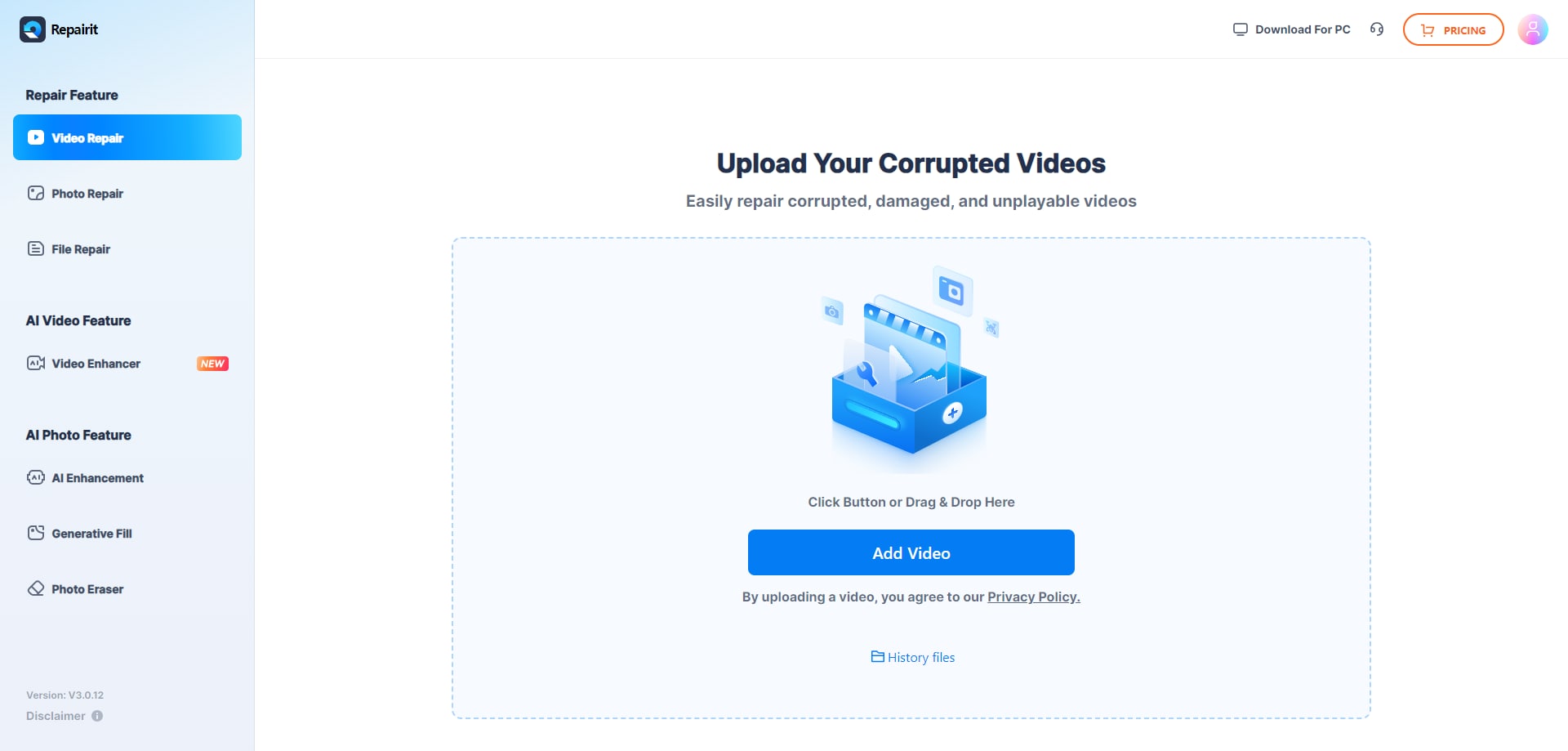
Step 1. Upload the damaged or unplayable videos you want to repair through Repairit Video Repair Online.
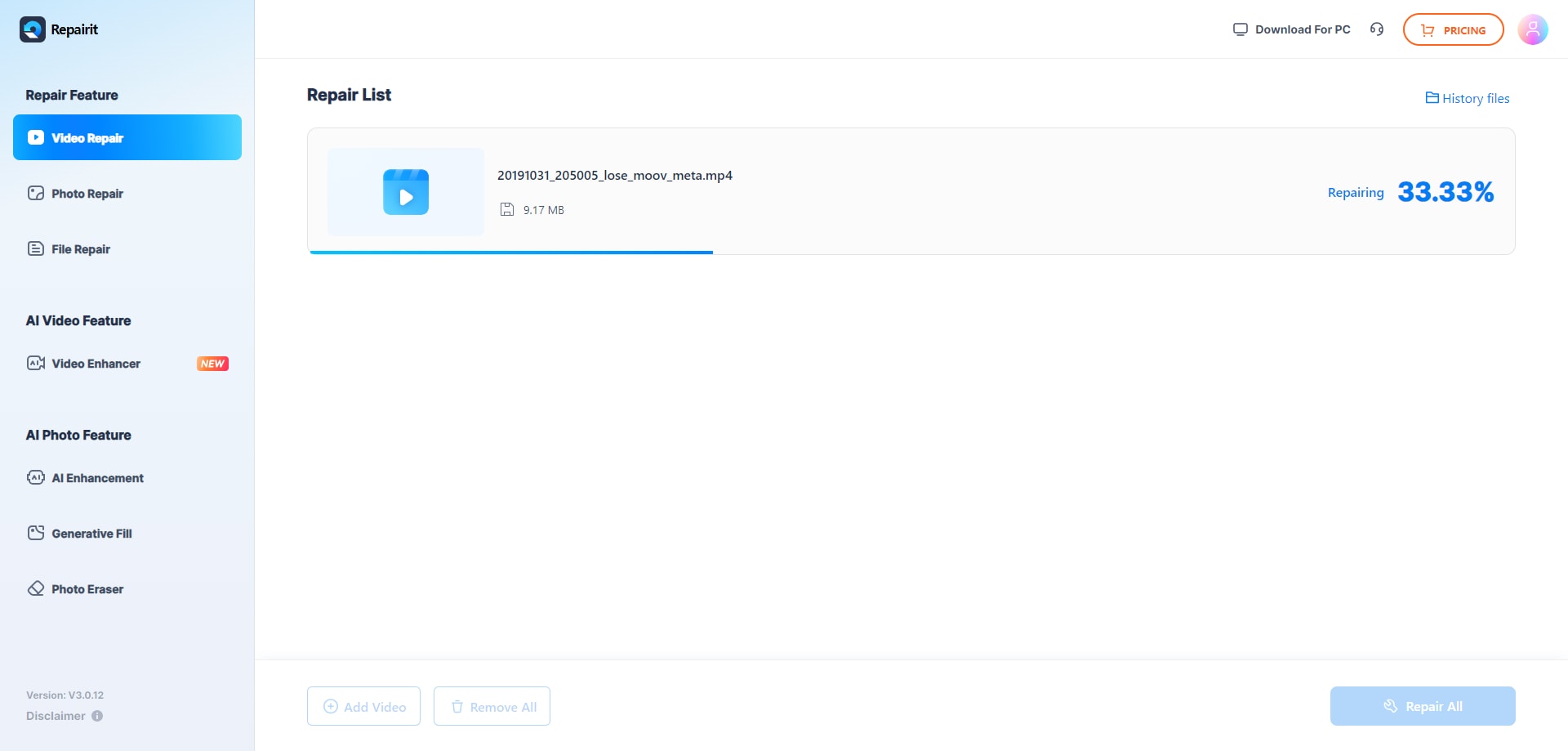
Step 2. Start the online repair process and let Repairit Video Repair Online analyze the corrupted video files.
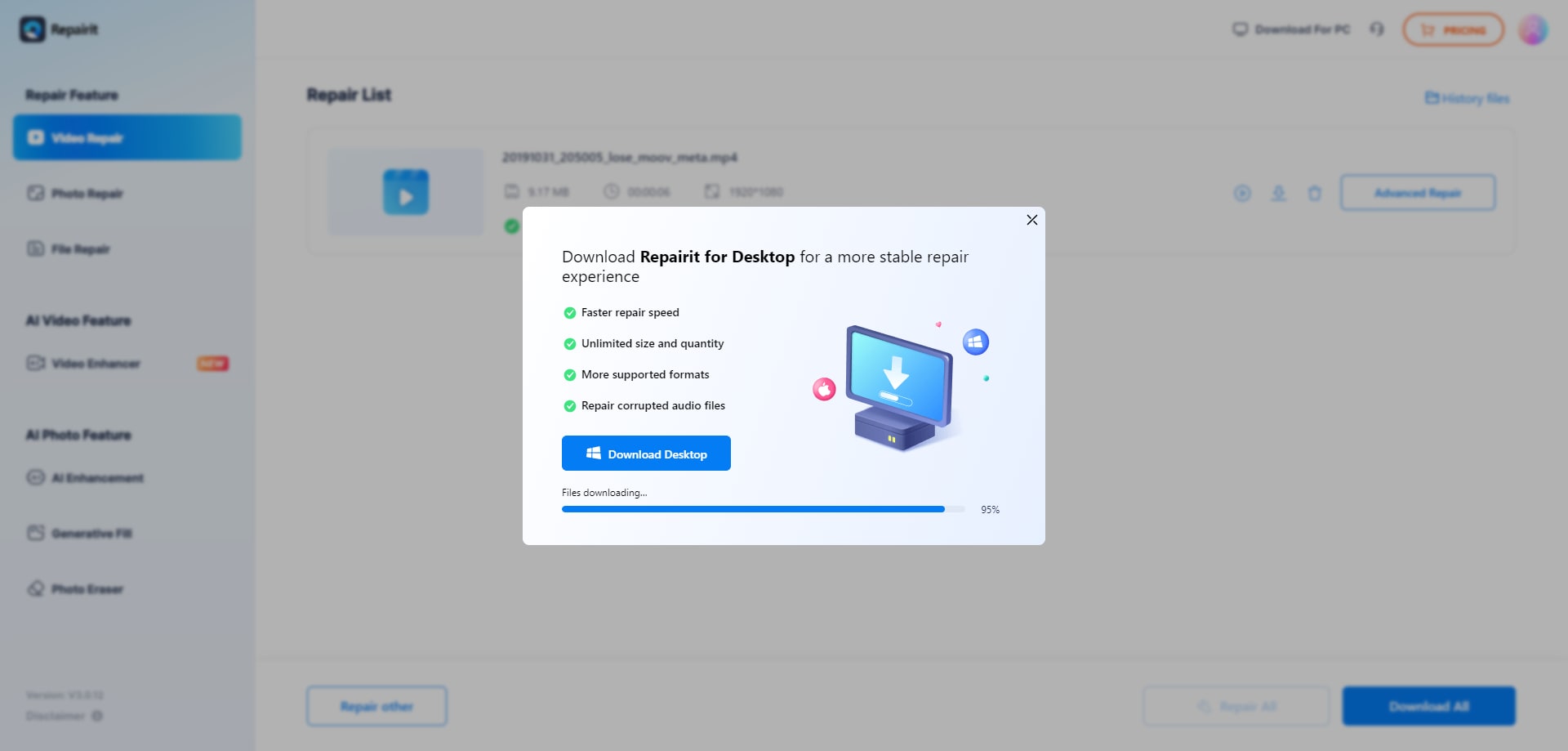
Step 3. Preview the repaired video result when available, then save the repaired videos to your device.
Final Verdict
The key difference between Repairit Video Repair Online and Timbrica Video Repair is how technical the workflow feels and which type of damaged file each is designed to handle best.
Repairit Video Repair Online is more suitable when you want a guided cloud video repair experience to fix corrupted or unplayable clips with minimal setup. It fits users who value clear steps and a consistent upload, repair, preview, and download routine, especially for broken MP4 or MOV clips from phones, cameras, or exported projects.
Timbrica Video Repair may be enough if you are an advanced user dealing with truncated or partially broken recordings and you are comfortable with a browser based, FFmpeg powered workflow. Its browser side processing approach can help rebuild damaged video structures, but the more technical handling can slow down casual users who simply want fast, straightforward online repair.
In most real world cases, the choice comes down to whether you prefer a user friendly guided interface or a more technical, reconstruction-focused environment. For quick and repeatable online corrupted video repair, Repairit Video Repair Online will usually feel more approachable, while Timbrica Video Repair stays a strong option for those who already understand low level video structure concepts.
Next: Repairit Video Repair Online vs Edittools Repair Video
FAQ
-
1. Is Repairit Video Repair Online better than Timbrica Video Repair for fixing corrupted videos?
Neither tool is universally better for every situation. Repairit Video Repair Online is more suitable when you want a guided, user friendly workflow for repairing corrupted or unplayable clips, while Timbrica Video Repair may be enough if you are experienced and need a more technical, structure focused approach for truncated or partially broken files. -
2. How do the online workflows of Repairit Video Repair Online and Timbrica Video Repair differ?
Repairit Video Repair Online focuses on a simple upload, repair, preview, and download flow that keeps technical details in the background. Timbrica Video Repair follows an upload, rebuild video structure, export repaired file sequence that leans on a browser based, FFmpeg powered process and can feel more technical for casual users. -
3. Can these tools repair broken MP4 or MOV files from cameras and phones?
Both Repairit Video Repair Online and Timbrica Video Repair are commonly used to repair broken MP4 or MOV files, especially when they refuse to play or show errors. In most real world cases, you pick the tool based on your comfort with technical settings and whether you prefer a guided or advanced workflow. -
4. What is the difference between online video repair, video recovery, and video enhancement?
Online video repair tools like Repairit Video Repair Online and Timbrica Video Repair focus on fixing corrupted, damaged, or unplayable files you already have. Video recovery deals with finding lost or deleted files, and video enhancement or upscaling tries to improve quality rather than fix structural playback errors. You should choose an online video repair tool when the file exists but will not play correctly.