
![0xC00D36C4 Video Error Solutions: Windows 10 & 11 [Complete Guide]](https://images.wondershare.com/repairit/0xc00d36c4-video-error-1.jpg)
 TL;DR:
⚡ Quick Fix: Fix 0xC00D36C4 Video Playback Error
Run a Quick Diagnosis: Test the video in VLC, copy it from USB or SD card to an internal drive, and check whether other files from the same device can play normally.
Fix Codec or Format Issues: If VLC plays the file but Windows does not, convert the video to MP4 with H.264 or install only the trusted codec components you actually need.
Update System Playback Support: Update display drivers and reinstall USB controllers if the error appears during hardware decoding or when playing videos from removable storage.
Repair Corrupted Videos: If the same video fails in multiple players, use Repairit video repair tool to fix damaged headers, broken indexes, sync errors, or corrupted MP4, MOV, AVI, and MKV structures.
Ask AI for a summary
 ChatGPT
 Perplexity
 Gemini
 Claude
 Grok
Grok
If Windows throws the 0xC00D36C4 error code when opening a video, it indicates that your media player cannot decode or read the file stream. This playback interruption is typically triggered by unsupported video codecs, a media player format limitation, unstable USB/SD card data transfer, or severe video file corruption. According to Microsoft community technical guidance, missing codec extensions and structural file damage are the primary root causes.
Fortunately, error 0xC00D36C4 doesn't mean your valuable footage is permanently lost. This comprehensive guide provides an immediate quick diagnosis framework, followed by verified solutions ranging from system codec configuration to advanced algorithmic video repair.
In this article
-
- Fix 1: Move Video From USB/SD to Internal Drive
- Fix 2: Try Another Media Player (e.g., VLC)
- Fix 3: Check Format & Convert to MP4 (H.264)
- Fix 4: Install Missing Codecs (Avoid Risky Codec Packs)
- Fix 5: Update Display/Graphics Drivers
- Fix 6: Remove and Reinstall USB Controllers
- Fix 7: Repair a Possibly Corrupted Video File
Quick Diagnosis (Before Trying All Fixes)
Before executing technical system changes, use these three quick validation checks to isolate whether the root cause is player compatibility, hardware connection, or file-level corruption.
Does the Video Play in VLC?
Open the unplayable file using VLC Media Player instead of the default Movies & TV app.
- If the video plays flawlessly in VLC, your file structure is healthy. The problem lies in Windows Media Player's native codec limitations.
- If VLC also fails or drops an error, file-level data corruption or bad sectors are heavily implied.
Does the Video Work After Copying to the Internal Drive?
If your video is stored on an external hard drive, USB flash drive, or camera SD card, copy the file entirely to your internal local disk (C: or D: drive) before opening it.
- If it plays smoothly after the local transfer, your file is fine. The error is caused by a faulty USB port, a slow storage read speed, or connection drops.
- If the error persists on your internal drive, move to software and codec troubleshooting.
Do Other Videos from the Same Device Work?
Test other alternative video files recorded by the same camera or stored on the exact same external storage media.
- If other files play fine and only one specific video triggers error 0xC00D36C4, you are dealing with an isolated file corruption or an unexpected compression encoding crash.
- If all files from that source fail simultaneously, the storage card file system or the camera's hardware encoder is likely malfunctioning.
Quick Decision Table
| Situation | More likely cause | Try this first |
| VLC plays the file | Windows player/codec issue | Fix 2, Fix 3, Fix 4 |
| VLC also fails | File corruption or incomplete transfer | Fix 7 |
| File fails only from USB/SD | Storage or connection issue | Fix 1, Fix 6 |
| Only one file fails, others work | File-level issue | Fix 3 or Fix 7 |
| Several files from same source fail | Source device/card/controller issue | Fix 1, Fix 6 |
Part 1. Overview of 0xc00d36c4 Video Error on Windows 10 and 11
To implement the correct troubleshooting strategy, it is vital to understand the exact parameters of the 0xC00D36C4 error and identify which specific system component is failing to decode your video file stream.
What Is 0xC00D36C4 Error?
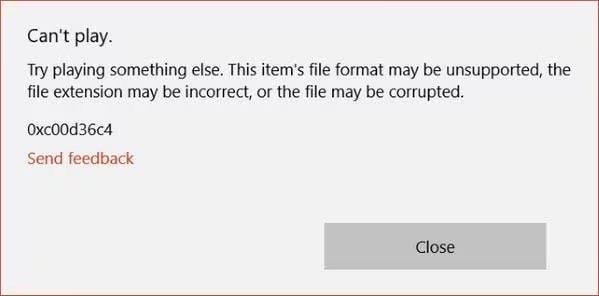
The 0xC00D36C4 error is a standard Microsoft Windows multimedia framework error. It actively blocks playback when the built-in system architecture cannot parse a video container. Typically encountered within native Windows applications like Movies & TV, Windows Media Player, or Xbox Video, the prompt explicitly states: “Can’t play. This file isn’t playable. That might be because the file type is unsupported, the file extension is incorrect, or the file is corrupt. 0xC00D36C4.”
Why Does 0xC00D36C4 Error Happen?
So, to know why you encounter the video can't play 0xC00D36C4 error in the Windows Media Player or Movies & TV, review the 6 causes given below:
- Unsupported Video Codec or Format: Some players, such as Windows Media Player or Movies & TV, do not support all video codecs or formats. So, if the video uses unsupported codecs like HEVC without extensions, the Windows error 0xC00D36C4 may show, even if the file is fine.
- Video File Stored on USB/SD Card with Transfer Issues: A USB, SD card, or external drive may have loose connections, bad sectors, or power issues. In this case, Windows may fail to read the video data well, so the play shows error 0xC00D36C4.
- Corrupted or Incomplete Video File: Know that a bad download, failed copy, or sudden power loss can damage a file. So, when the player reads the broken part of the file, Windows cannot open it and shows the error.
- Outdated Or Faulty Graphics Drivers: Windows uses the GPU to help play videos through the graphics driver. Thus, an old or faulty driver can stop proper video decoding and cause the 0xC00D36C4 error.
- USB Controller Malfunction: The USB controller manages data flow between Windows and USB devices. If the controller driver has faults, Windows may fail to read the video stream correctly.
- Media Player Component Glitches: Sometimes the problem comes from a glitch in Windows Media Player or Movies & TV. In this case, a system update, wrong settings, or cache issues can cause Windows to treat a valid video as unsupported.
Part 2. 7 Quick Fixes for 0xC00D36C4 Video Playback Error
To understand how you can fix the unsupported video format Windows error issues with advanced solutions, review the 7 fixes given below:
Fix 1: Move Video From USB/SD to Internal Drive
Best For: Videos stored on removable media
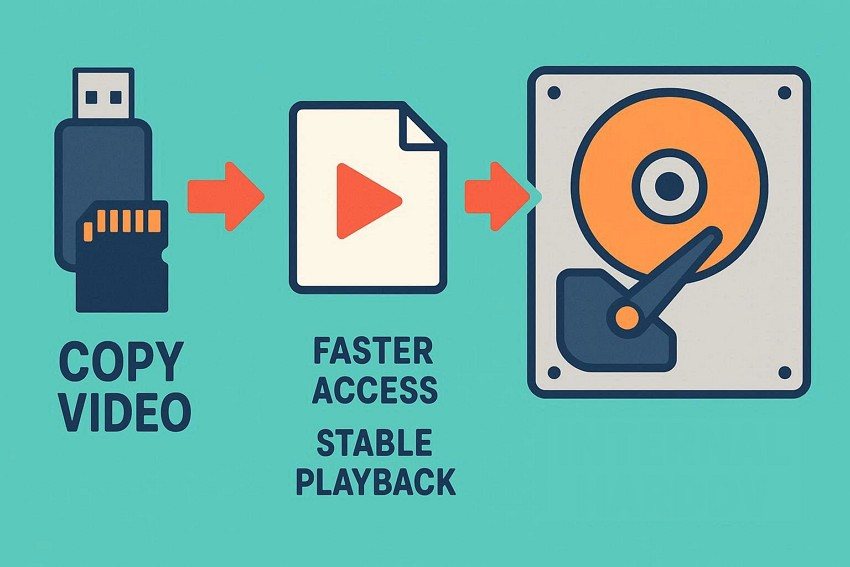
Files played from USB sticks, SD cards, or external drives may fail because of loose connections, power fluctuation, slow reads, or controller issues.
If the file plays internally, the problem is more likely with the removable media or connection path than the file itself.
Fix 2: Try Another Media Player (e.g., VLC)
Best For: Determining whether the issue is player-specific
VLC includes built-in codec support and can play many formats that Windows Media Player or Movies & TV may not support. This is one of the most common first-line checks recommended for this type of media error.
What to do:
- Open the file in VLC
- If it works, your file may still be fine
- Then continue with codec/player-related fixes below instead of jumping straight to file repair
Fix 3: Check Format & Convert to MP4 (H.264)
Best For: Overcoming codec compatibility issues on older media platforms.
Transcoding specialized file containers into a universal MP4 container with standard H.264 video and AAC audio compression resolves the 0xC00D36C4 error instantly. Utilizing a dedicated multimedia manager like Wondershare UniConverter ensures seamless formatting without losing original quality.
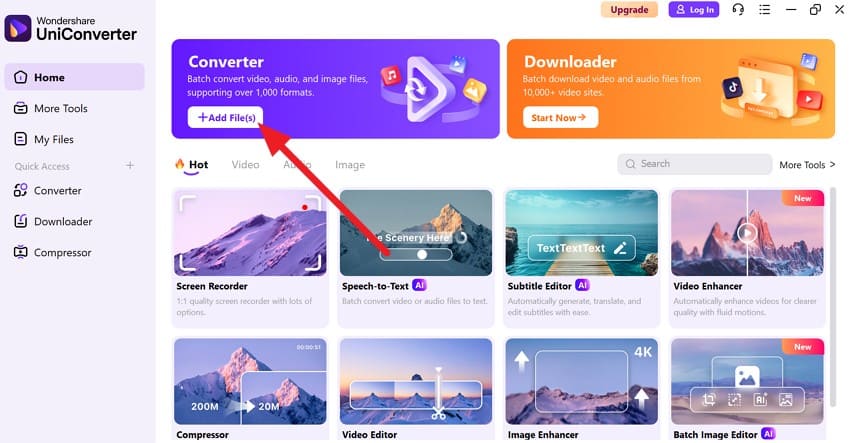
Step 1. Launch Wondershare UniConverter, navigate to the “Video Converter” module on the dashboard, and click the “Add Files” icon to import your unsupported MKV or HEVC video.
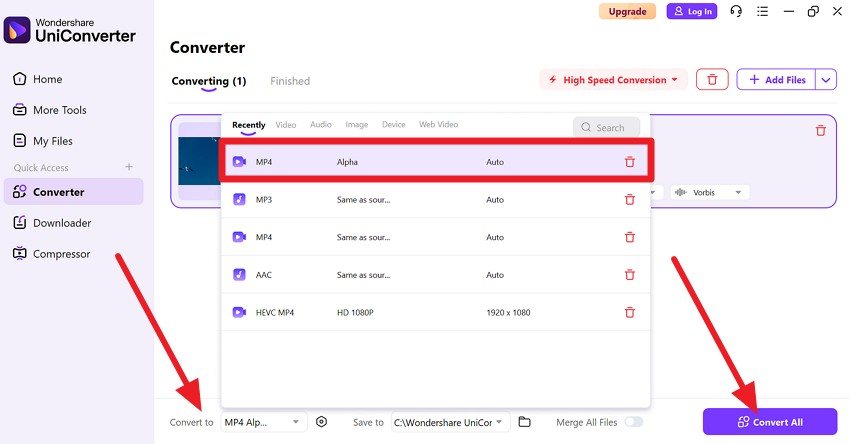
Step 2. Expand the “Output Format” dropdown menu and select “MP4 (H.264)”. Click “Start All” to initiate high-speed batch conversion. Once complete, your new video will play perfectly in any standard Windows player.
Fix 4: Install Missing Codecs (Avoid Risky Codec Packs)
Best For: Files that use a codec Windows cannot decode
A missing codec can stop Windows Media Player or Movies & TV from opening an otherwise healthy video. Microsoft also notes that codec issues are a common reason for playback failures.
⚠ Warning: Installing random codec packs can create new playback conflicts or system instability. Only install trusted components you actually need. Microsoft's codec guidance also warns against unnecessary third-party codec installations.
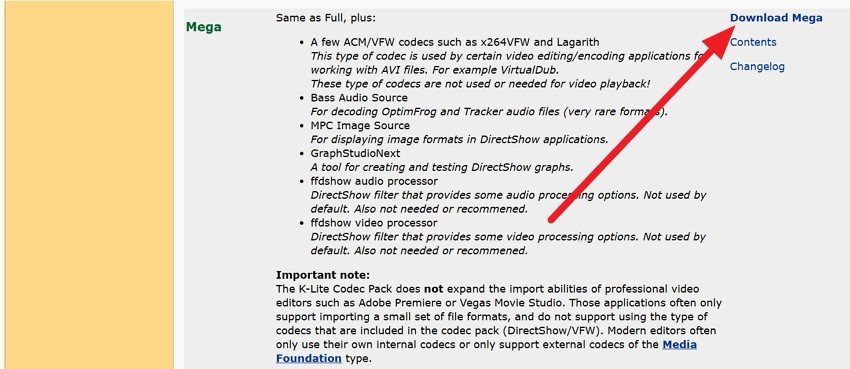
Step 1. On the K-Lite Codec Pack site, locate the codec version you need and choose the latest one by pressing the "Download Mega" button.
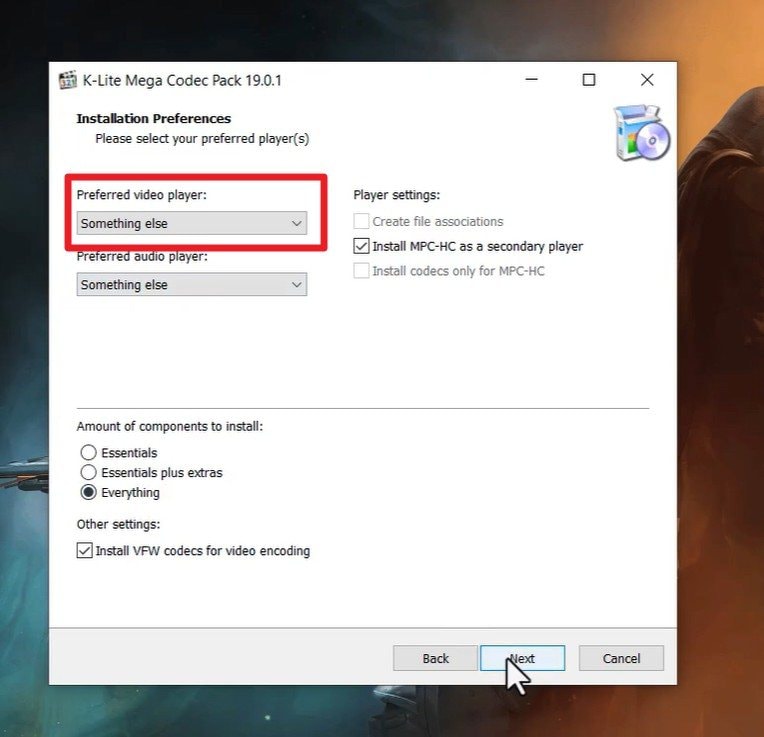
Step 2. After it is downloaded, install the codecs by choosing the "Preferred Video Player" and pressing the "Next" button. On all upcoming pop-ups, choose the required settings until you reach the "Finish" interface.
Fix 5: Update Display/Graphics Drivers
Best For: Playback problems tied to hardware decoding
Windows often uses GPU acceleration during playback. If the graphics driver is outdated or malfunctioning, video decoding may fail even when the file itself is valid.
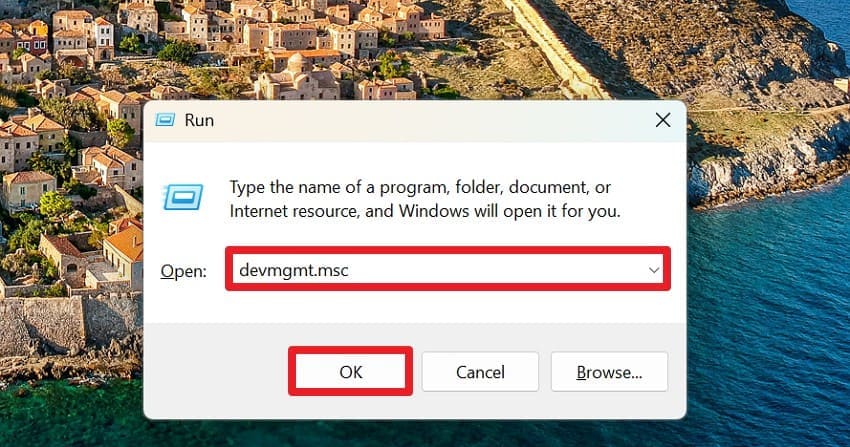
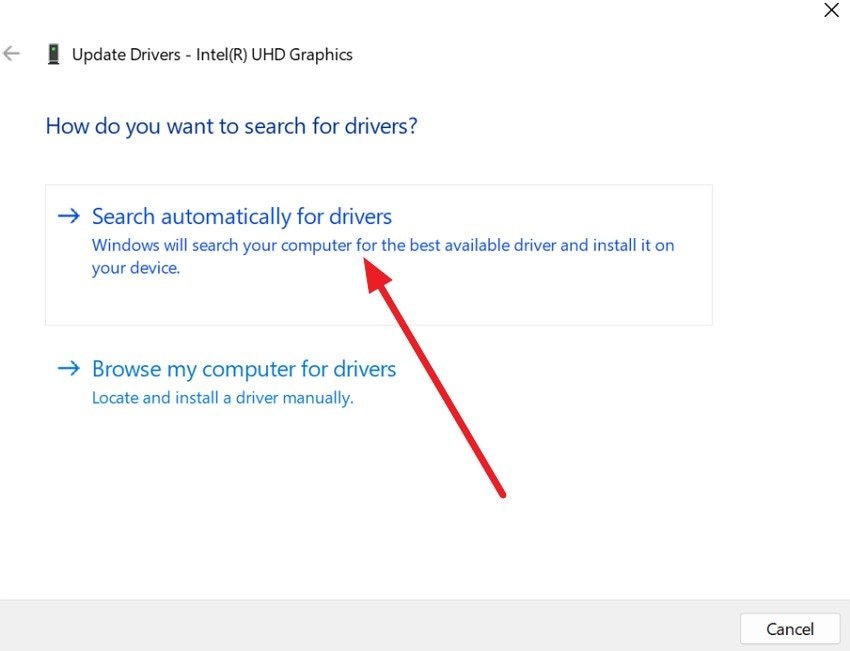
Step 1. Either search for Device Manager in the Start menu or press "Win + R," type "devmgmt.msc," and press "Ok."
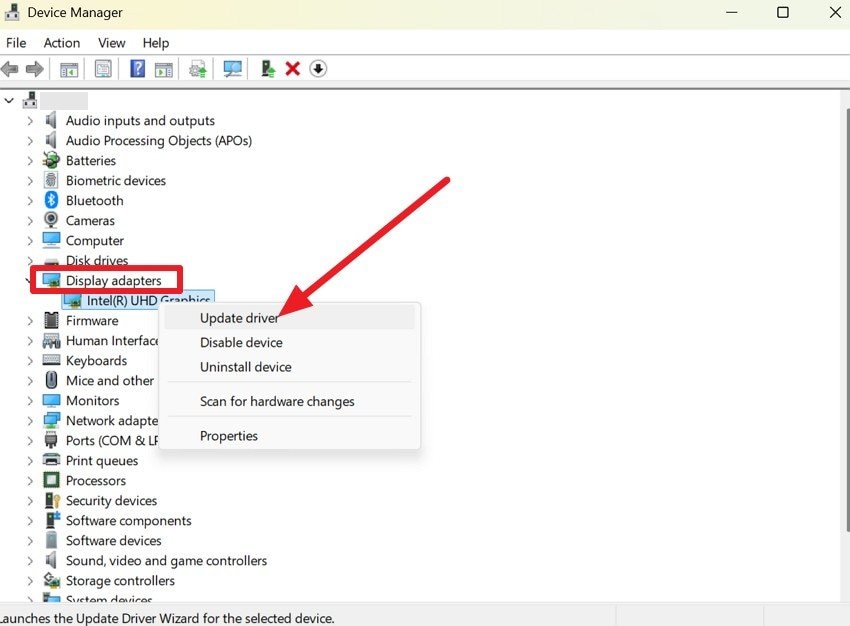
Step 2. Once directed to the Device Manager, locate the "Display Adapter" menu and right-click on the listed adapters to pick "Update Driver."
Step 3. After that, tap on the "Search Automatically for Drivers" option and follow prompts to update.
Fix 6: Remove and Reinstall USB Controllers
Best For: Videos that fail only from USB, SD, or external devices
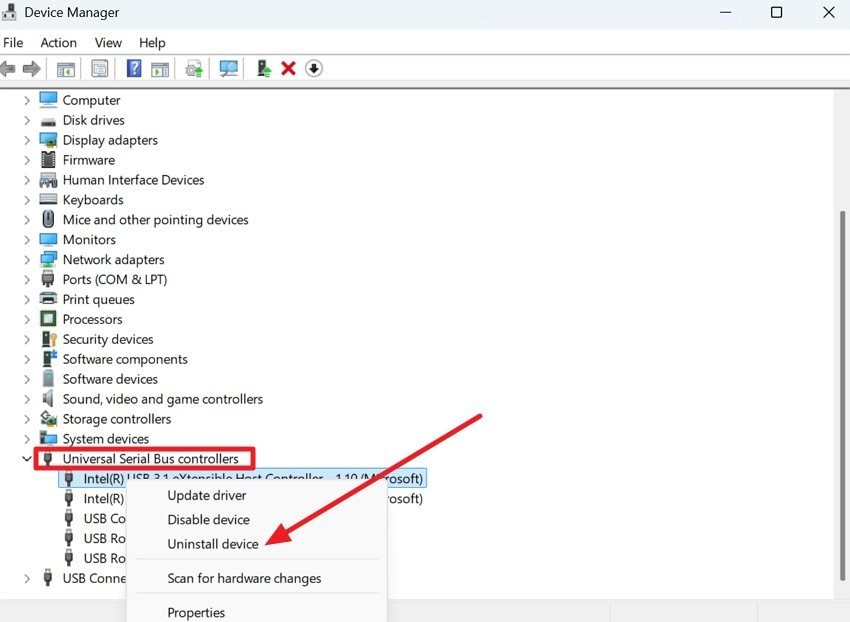
If the error occurs with videos on a USB drive, SD card, or external drive, remove and reinstall your USB controllers to fix 0xC00D36C4 Windows 11. The reinstallation will restore stable data transfer, so files play normally.
Step 1. As you choose the Device Manager, by pressing "Win + X" keys, head to the "Universal Serial Bus Controllers" menu. There, right-click on each item under this section and choose the "Uninstall Device" option.
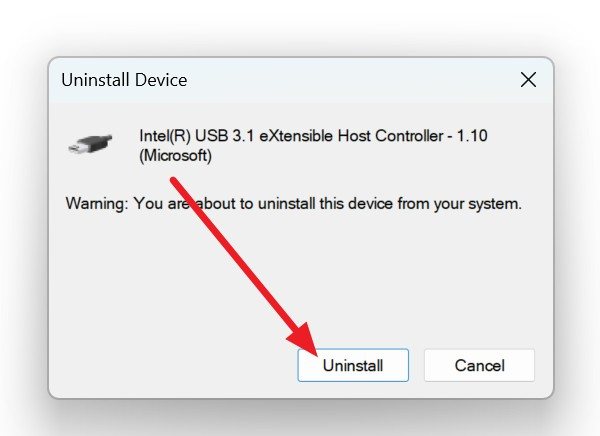
Step 2. Press the "Uninstall" button to confirm the action. Repeat the process for all listed USB controllers, then restart the PC. After that, Windows will automatically detect the hardware and reinstall all USB controllers and hubs. Wait for it to be recognized, then play the video again to see if you still get the 0xC00D36C4 video error.
Fix 7: Repair a Possibly Corrupted Video File
Best For: Videos that fail in multiple players or were damaged during transfer, download, or recording
If the file will not play in VLC, Windows Media Player, or other players, the problem may be structural file damage rather than a codec issue. A video repair tool may help in that situation. One option is Repairit Video Repair.
What video repair can help with
- damaged headers
- broken index information
- audio-video sync issues
- corrupted MP4, MOV, AVI, MKV, and similar file structures
What it cannot fix
- missing codecs in Windows
- unsupported player features
- unstable USB connections
- format issues that only require conversion
When the file corruption is the cause of the video can't play 0xC00D36C4 error, here is how Repairit fixes videos of any format in 3 simple steps:
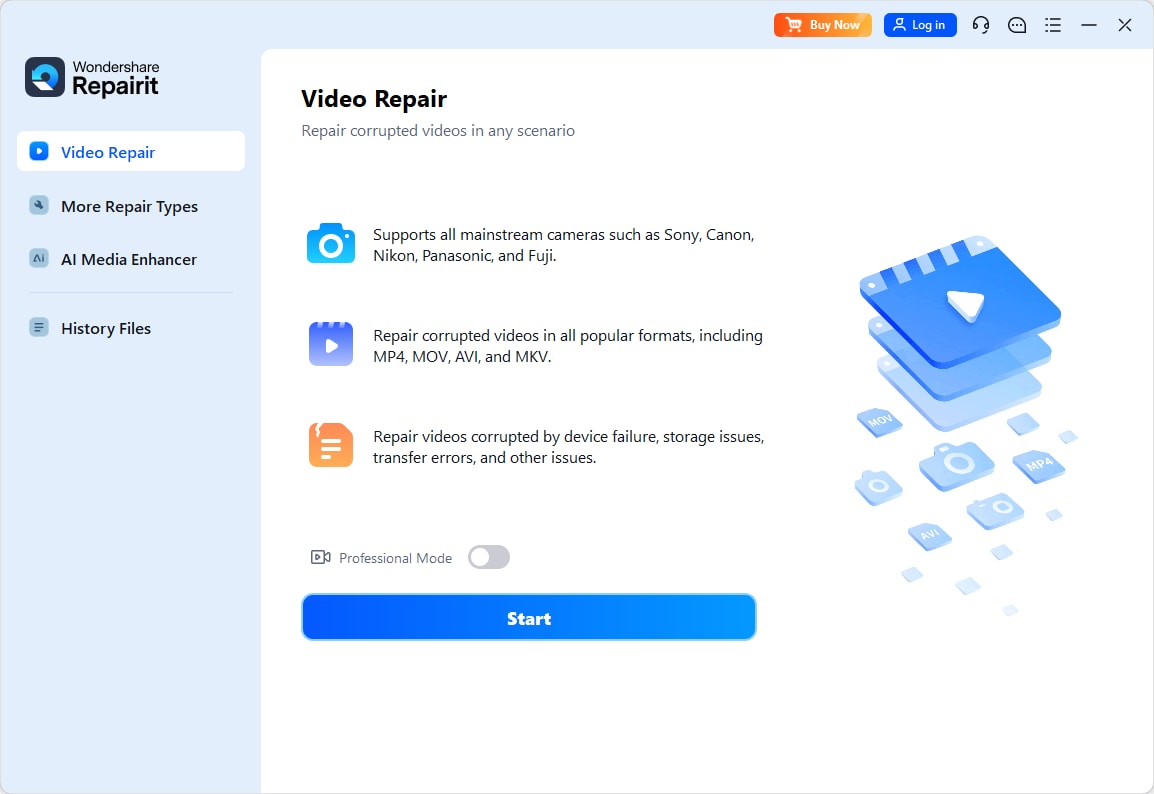
Step 1. Add the Corrupted Videos to Fix 0xC00D36C4 Error
On the "Video Repair" interface, tap the "Start" button to add the damaged video files causing the 0xC00D36C4 video error.
Step 2. Start the Quick Repair for Your Videos
After that, press the "Repair" button to let the tool initiate the Quick Repair for common video formats.
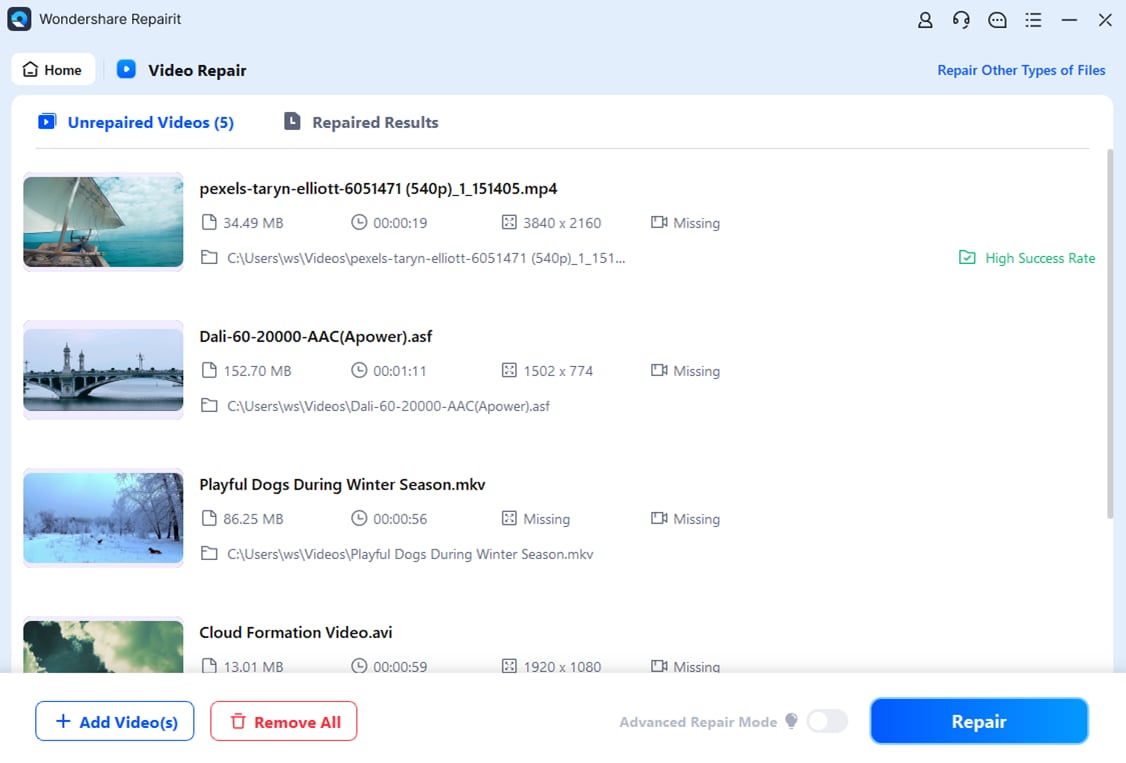
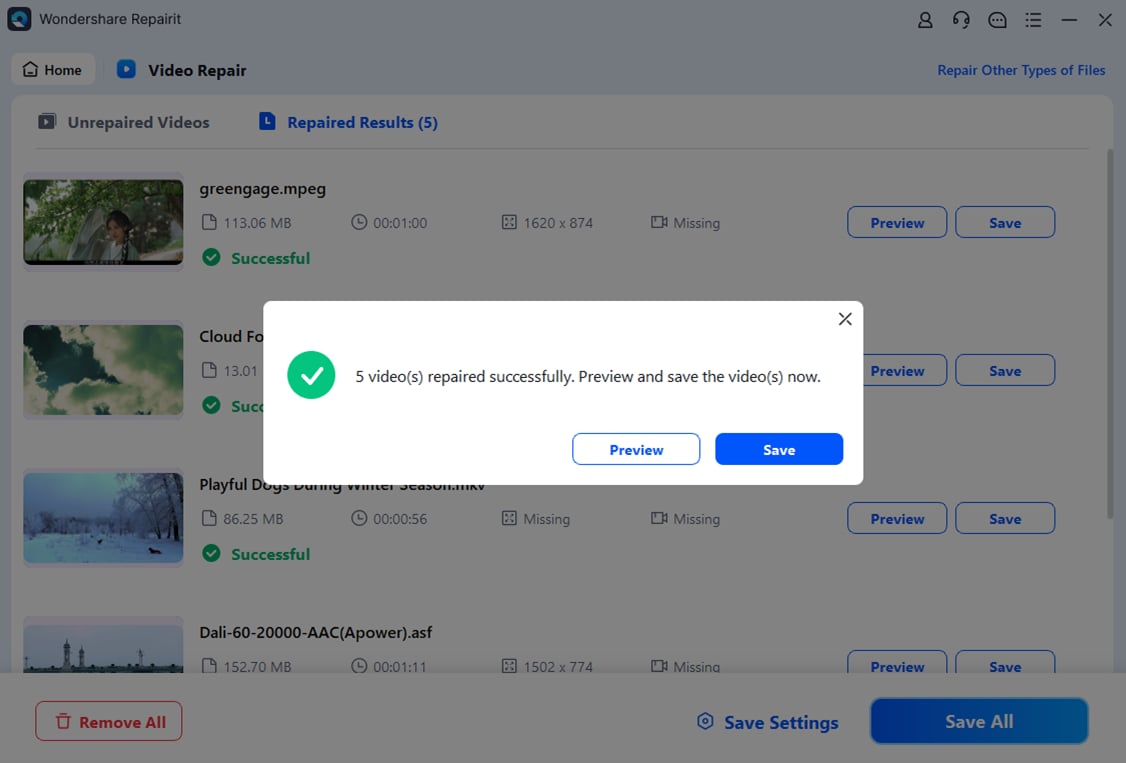
Step 3. Preview the Video & Determine If 0xC00D36C4 Error Persists
Once the scan and repair process has successfully ended, preview the fixed video and tap on the "Save" button to export.
Conclusion
The 0xC00D36C4 video error usually appears when Windows cannot properly play a file because of codec limitations, player-side issues, removable storage problems, or file corruption. In many cases, the file itself is still usable, especially if it plays in VLC or after being copied to the internal drive.
The best way to fix it is to start with quick diagnosis first: test the file in another player, move it off USB or SD storage, check whether other files from the same source work, then move on to conversion, codec support, driver updates, or USB controller repair. Only if the same file fails in multiple players should you treat it as a likely corruption case and use a video repair tool.
Frequently Asked Questions
-
Why does 0xC00D36C4 appear when playing from USB?
Because Windows may fail to read the file reliably from a USB stick or SD card due to loose connections, bad sectors, controller issues, or unstable transfer behavior.
-
Is 0xC00D36C4 always a codec problem?
No. It can also be caused by file corruption, removable storage issues, wrong extensions, or media player problems. Missing codecs are only one possible cause.
-
Does converting to MP4 permanently fix this error?
It can fix compatibility and codec-related playback issues, but it will not reliably solve deeper file corruption or hardware read errors.
-
Can a damaged USB drive cause 0xC00D36C4?
Yes. If the USB device or SD card has read instability, loose connection issues, or bad sectors, even a healthy video may fail to play.
-
How do I know if my video file is corrupted?
If the same file fails in multiple players, freezes, shows glitches, or does not fully open after transfer or download, file corruption becomes much more likely. At that point, repair or recovery is more relevant than codec troubleshooting.