
If videos are not playing on Windows 10 or Windows 11, first check whether the problem affects one video or every video. If only one file fails across multiple players, the file itself may be corrupted or use an unsupported codec. If many unrelated videos fail, focus on Windows, the media player, graphics drivers, codecs, or display settings before repairing the file.
This guide follows that diagnosis-first order so you can avoid unnecessary repairs and move quickly to the fix that matches the actual problem.
In this article
-
- Method 1. Test the Video in Another Player and Check the Codec
- Method 2. Update or Reinstall the Graphics Driver
- Method 3. Run the Video Playback Troubleshooter in Get Help
- Method 4. Repair or Reset Windows Media Player
- Method 5. Check Display Refresh Rate and Video Playback Settings
- Method 6. Install Available Windows Updates
- Method 7. Repair the Video If the File Itself Is Corrupted
Part 1. Why Are Videos Not Playing on Windows 10/11?
The most common causes fall into four groups: the video file, the media player, Windows or its drivers, and display or codec compatibility. Start by observing the failure pattern instead of changing multiple settings at once.
| What happens | Most likely area | Best first action |
| Only one video will not open | Corrupted file, incomplete transfer, unsupported codec, or unusual format | Try another player and re-download or re-copy the file |
| Several unrelated videos fail | Media player, graphics driver, codec, or Windows issue | Update the player and graphics driver, then run Windows troubleshooting |
| Video plays with audio but no picture | Codec, hardware acceleration, display driver, or rendering issue | Test another player and update graphics components |
| Video freezes, stutters, or stops repeatedly | Driver, refresh-rate mismatch, system load, storage, or streaming issue | Update drivers and check display/video playback settings |
| The same video fails in several players | Possible file corruption | Try another copy, then use video repair if the file remains unreadable |
Part 2. 7 Ways to Fix Videos Not Playing on Windows 10/11
Method 1. Test the Video in Another Player and Check the Codec
Best for: One or a few videos that fail while other videos play normally.
- Try the file in another trusted player, such as the current Windows Media Player or VLC.
- If another player opens it, the original player may not support the file's codec or container correctly.
- If the file came from a phone, camera, cloud drive, USB device, or website, copy or download it again before changing system settings.
- If every player fails on the same file, continue to Method 7 and check for file corruption.
Microsoft currently lists file compatibility and missing or outdated codecs among the main causes of Windows Media Player playback errors. Windows Media Player playback troubleshooting also recommends checking compatibility before moving to deeper fixes.
Method 2. Update or Reinstall the Graphics Driver
Best for: Multiple videos fail, show a black screen, stutter, or started misbehaving after a Windows or driver update.
Step 1. Right-click Start and open Device Manager. Expand Display adapters.
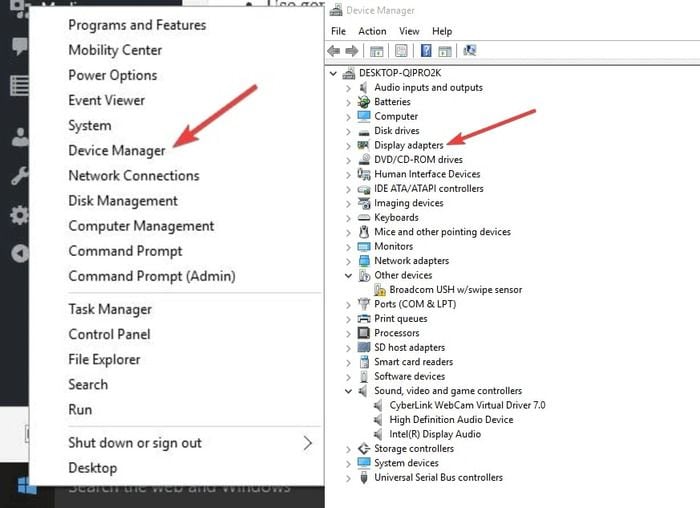
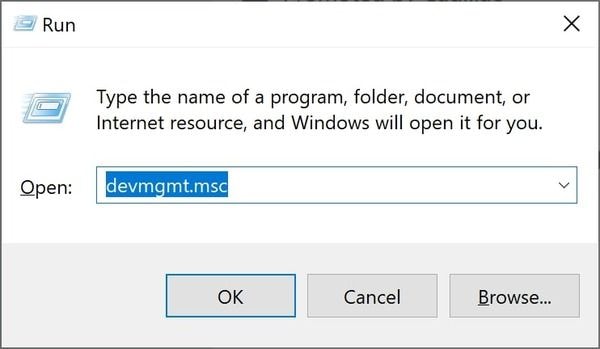
Step 2. Right-click the graphics device and choose Update driver. If the problem started immediately after a driver change, reinstalling the display adapter may also help.
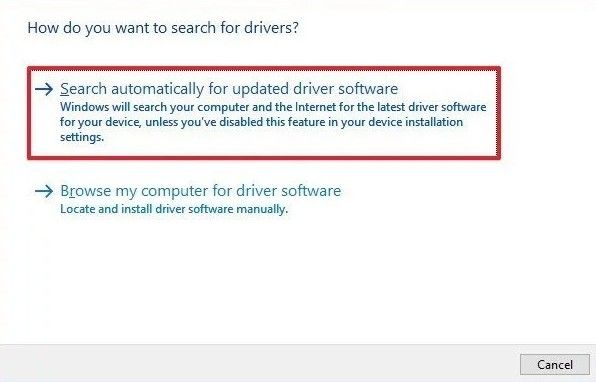
Step 3. Let Windows search for an updated driver, or install the latest driver from the GPU manufacturer's official support page when appropriate.
Microsoft currently recommends installing the latest graphics drivers when video playback problems affect Windows Media Player or other video playback.
Method 3. Run the Video Playback Troubleshooter in Get Help
Best for: Playback problems that affect Windows video apps or multiple files and do not have an obvious file-specific cause.
- Open the Get Help app in Windows.
- Search for Video playback troubleshooter.
- Follow the diagnostic prompts and apply the recommended fixes.
The current Microsoft troubleshooting flow uses the Get Help app for video playback diagnostics, replacing the older Control Panel path shown in many legacy tutorials. Microsoft's current Windows troubleshooters include both Video playback and Windows Media Player diagnostics.
Method 4. Repair or Reset Windows Media Player
Best for: Videos work in other players, but Windows Media Player itself freezes, fails to open files, or shows repeated playback errors.
- Open Settings > Apps > Installed apps.
- Locate Windows Media Player and open its advanced options when available.
- Choose Repair first.
- If Repair does not help, use Reset. This resets the app's settings but does not delete your media files.
Microsoft also documents restoring the Media Player library and clearing its cache for some playback errors. If another player works normally, focus on the player before treating the video as damaged.
Method 5. Check Display Refresh Rate and Video Playback Settings
Best for: Video stalls, starts and stops, or behaves differently when an external monitor is connected.
- Open Settings and search for Video playback.
- Review the current playback options for Windows video apps.
- If you use multiple monitors, check whether their refresh rates are mismatched.
- Test playback again after aligning display settings where practical.
Microsoft notes that different refresh rates across multiple displays can cause playback to stall or repeatedly start and stop. Windows video playback settings are therefore worth checking when the problem is display-dependent.
Method 6. Install Available Windows Updates
Best for: Playback problems caused by outdated Windows components, player components, or system drivers.
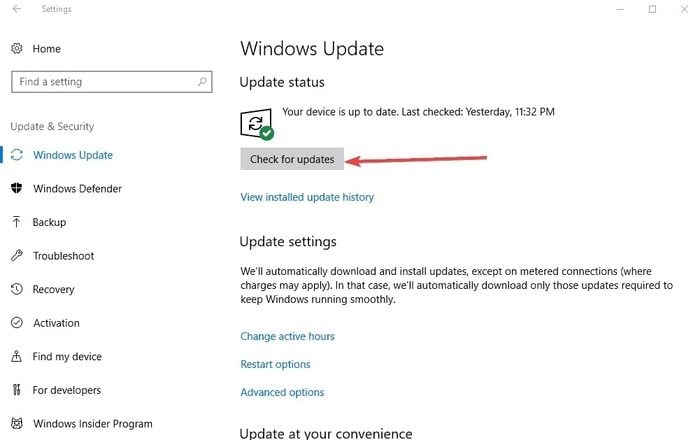
Step 1. Open Settings > Windows Update on Windows 11. On Windows 10, open Settings > Update & Security > Windows Update.
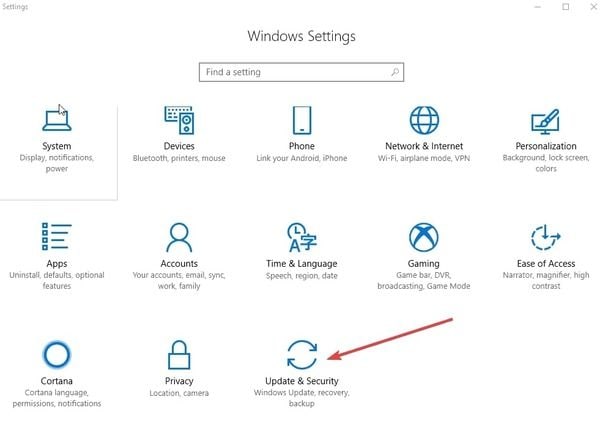
Step 2. Select Check for updates, install available updates, and restart the PC when required.

Method 7. Repair the Video If the File Itself Is Corrupted
Best for: The same local video fails in multiple players, shows damaged frames, freezes at the same point, or remains unreadable after you re-copy or re-download it.
For a small corrupted file, Repairit Online Video Repair offers a browser-based repair workflow for supported formats. If you prefer a desktop workflow or need broader format and file-size support, Repairit Video Repair provides local repair and advanced repair options. The Wondershare Repairit homepage also links to the wider repair toolkit.
Online option: Upload the corrupted video, let the service process it, then preview and save the repaired result.
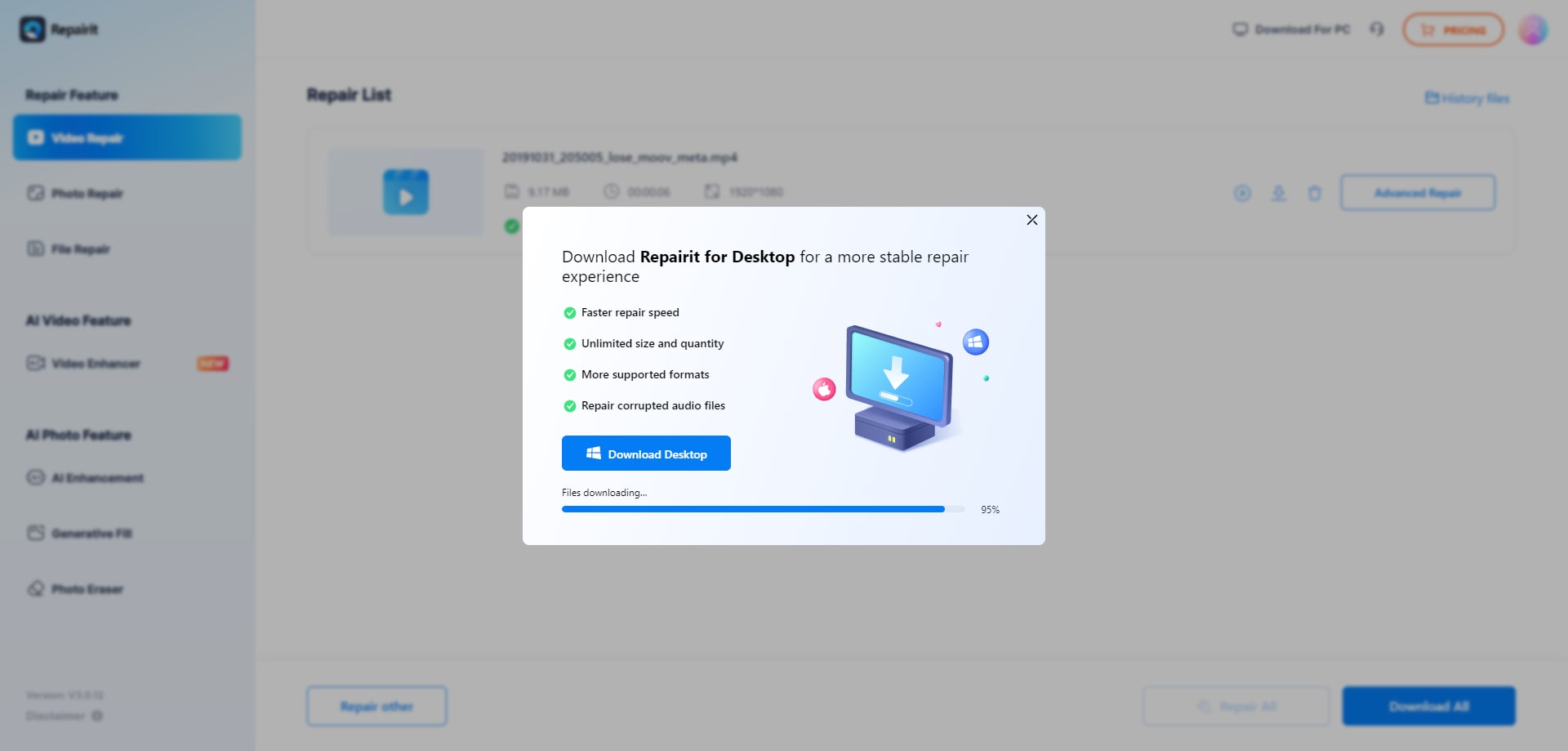
If you want the desktop workflow, use the steps below.
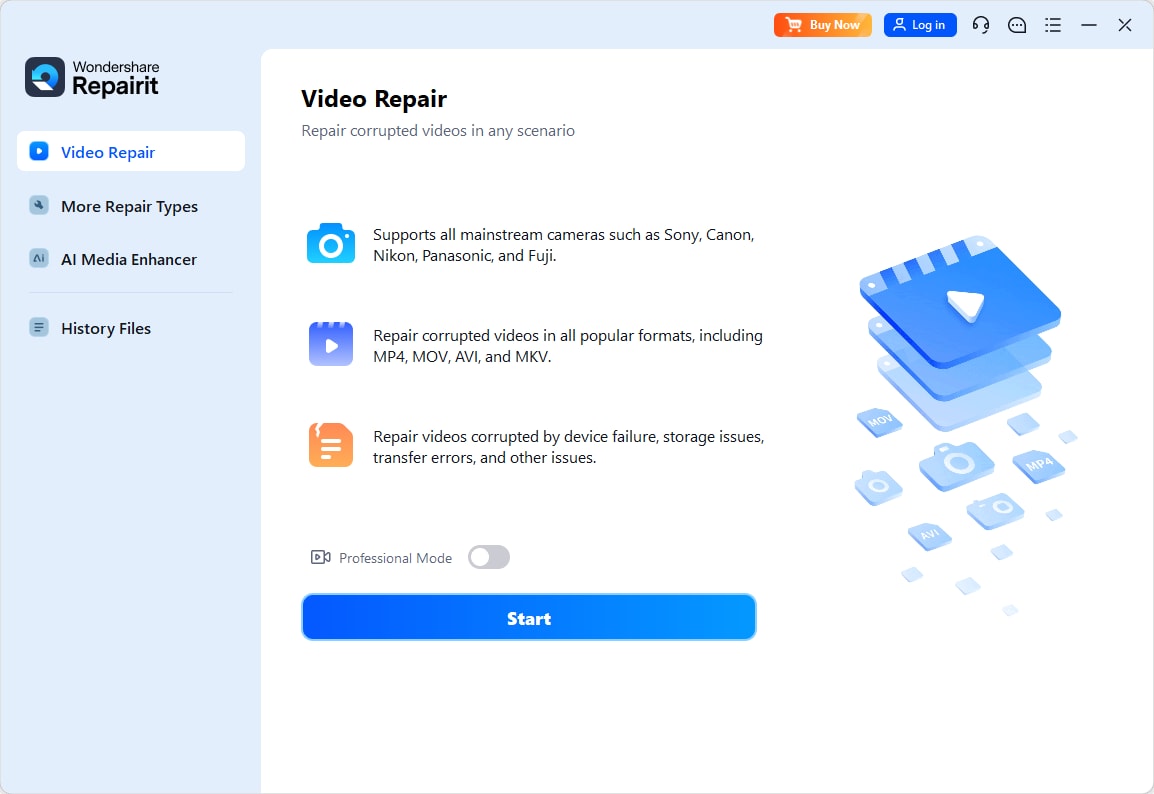
Step 1. Add the corrupted video. Launch Repairit Video Repair and import the video that will not play.
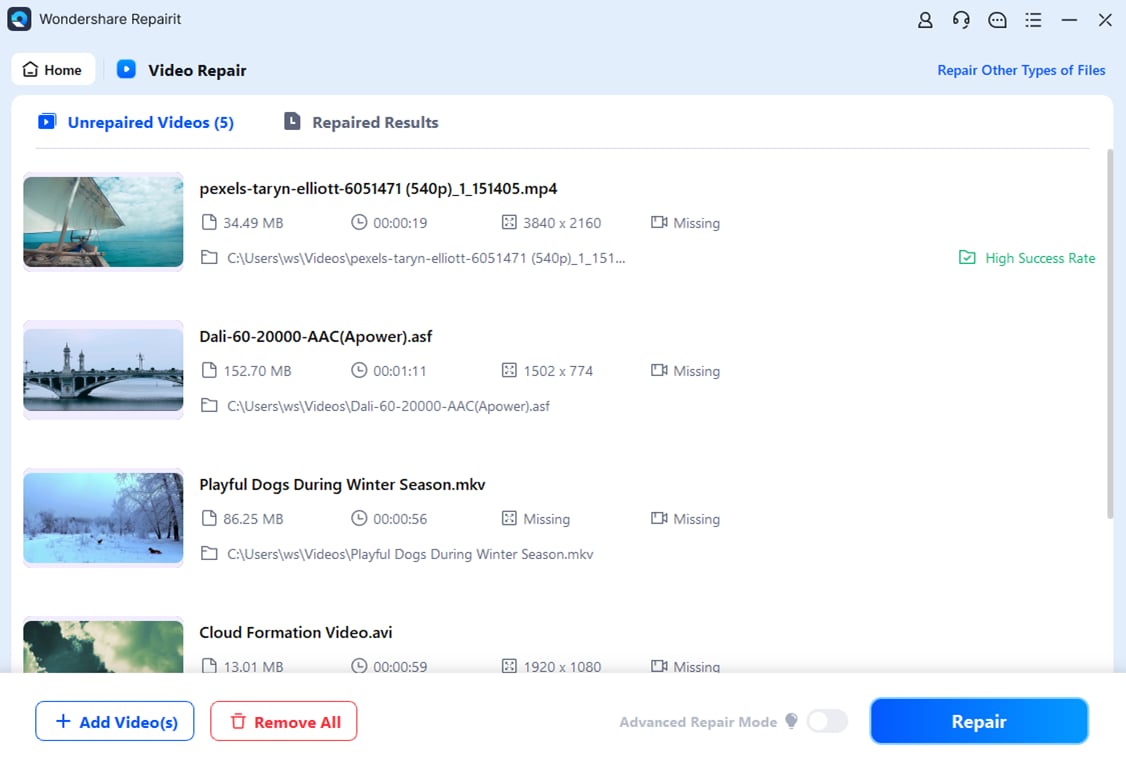
Step 2. Start the repair. Select the affected video and click Repair.
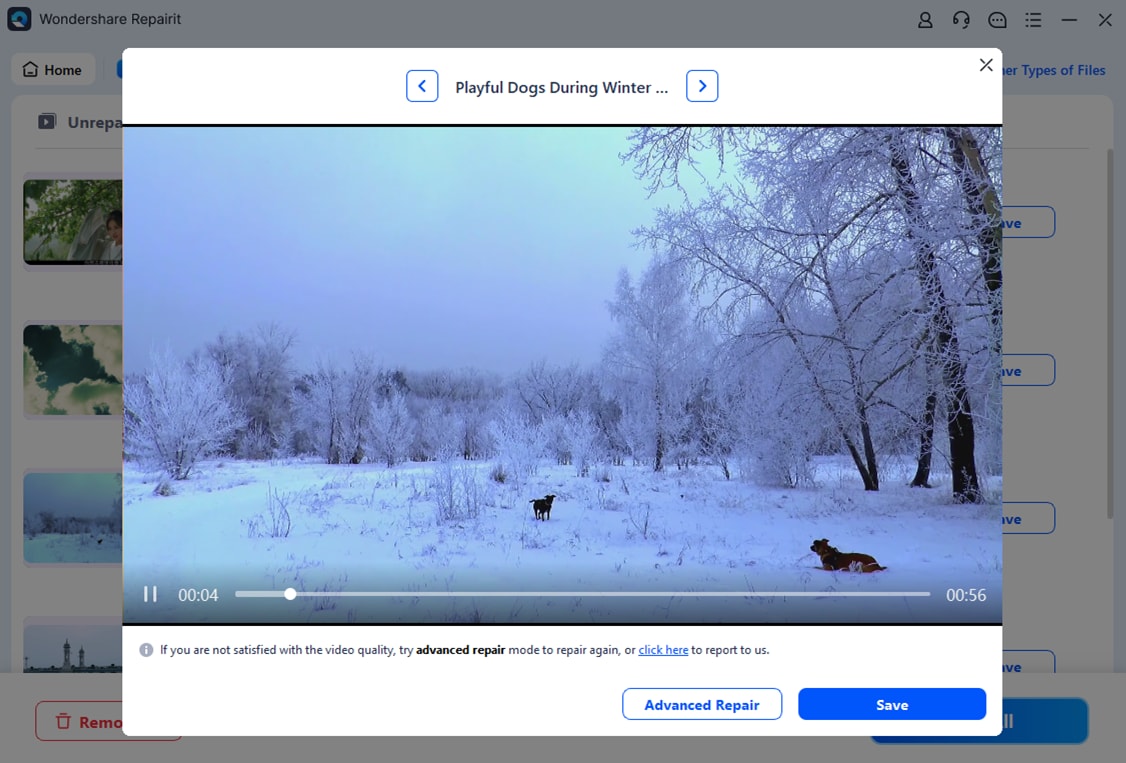
Step 3. Preview the repaired video. Check playback before saving the result.
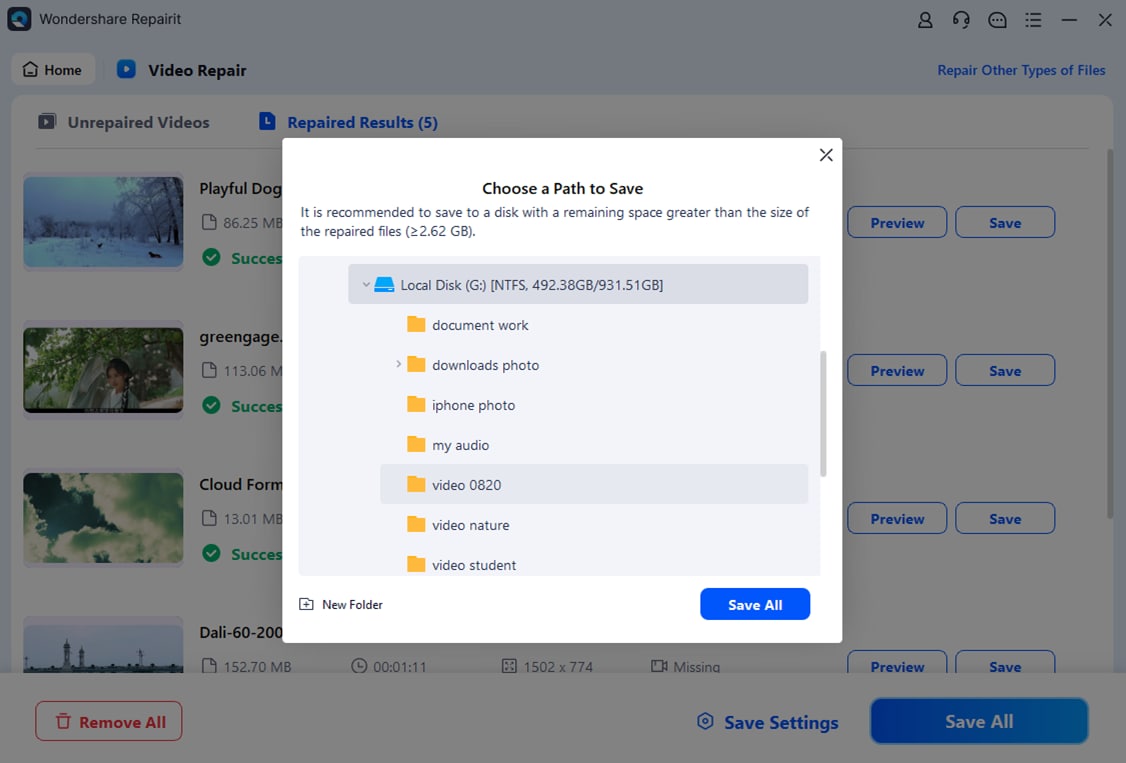
Step 4. Save the repaired video. Choose a destination folder and save the repaired file separately from the damaged source.
Part 3. What to Do If Only One Video Will Not Play on Windows
When one file fails but other videos play normally, avoid changing Windows-wide settings first. Use this order:
- Try the file in another player.
- Re-copy or re-download the file if another source is available.
- Check whether the container and codec are supported by the player.
- Test the file on another device if practical.
- If the same file still fails everywhere, treat it as a possible corruption case.
This is the point where video repair becomes relevant. It is not the first step for a system-wide playback problem.
Part 4. What to Do If No Videos Play on Windows 10/11
If many unrelated videos fail, the problem is more likely to be Windows, the player, the display driver, codecs, or rendering settings. Work through this order:
| Priority | Action | Why |
| 1 | Restart the PC and test another player | Rules out a temporary player or session problem |
| 2 | Update the graphics driver | Addresses common rendering and playback failures |
| 3 | Run Get Help video playback troubleshooting | Checks Windows-specific playback problems |
| 4 | Repair or reset Windows Media Player | Useful when the issue is isolated to Microsoft's player |
| 5 | Check display refresh rates and video settings | Useful for stutter or monitor-dependent playback |
| 6 | Install available Windows updates | Updates Windows playback and system components |
If the issue is not specific to Windows and you need broader troubleshooting across devices, browsers, and video files, use the guide for videos that cannot be played.
If browser streaming works but local video files do not, focus on player, codec, and file-format compatibility. If local files work but YouTube or another website does not, troubleshoot the browser, extensions, hardware acceleration, and network separately rather than repairing the video file.
Part 5. Windows 10 Support Status in 2026
Windows 10 still runs in 2026, but Microsoft ended standard Windows 10 support on October 14, 2025. That means ordinary technical assistance, feature updates, and standard security updates are no longer provided for unsupported Windows 10 installations.
If the PC supports Windows 11, upgrading gives you the current supported Windows platform. If you must remain on Windows 10, review Microsoft's Extended Security Updates options and avoid assuming that an old playback problem will receive a new Windows 10 fix.
Conclusion
When videos are not playing on Windows 10 or Windows 11, diagnose the scope before choosing the fix. One failing file points more strongly to codec, transfer, or file corruption; many failing videos point to the media player, graphics driver, Windows, or display settings. Update drivers, use the current Get Help troubleshooting flow, repair the player, and check Windows updates before repairing a file that is not actually damaged.
FAQ
-
Why are videos not playing on my Windows laptop?
The cause may be an unsupported codec, a media-player problem, an outdated graphics driver, Windows playback settings, or a corrupted video file. Test more than one video first to determine whether the problem is file-specific or system-wide. -
Why does one video not play while other videos work?
That usually points to the individual file, its codec, or its container rather than Windows itself. Try another player, re-download or re-copy the file, and test it on another device before using file repair. -
Why do I get audio but no video on Windows?
Audio-only playback can be caused by a missing or incompatible video codec, a graphics-driver problem, or a rendering issue. Test another player and update the graphics driver before assuming the file is corrupted. -
Is the old Control Panel Video Playback troubleshooter still the best method?
No. Microsoft's current guidance uses the Get Help app for the Video playback troubleshooter. Search for Video playback troubleshooter inside Get Help and follow the diagnostic steps there. -
Does Windows 10 still receive normal updates in 2026?
Standard Windows 10 support ended on October 14, 2025. Windows 10 PCs can still function, but normal Microsoft support and standard security updates have ended unless the device is covered by an eligible Extended Security Updates option. -
When should I use a video repair tool?
Use video repair when the same local file remains unreadable, damaged, or broken across multiple players and devices after you rule out transfer and codec problems. If many unrelated videos fail, troubleshoot Windows and the player first.