

Gamma curve is a term you will see in camera menus, color grading software, monitor settings, and even streaming platforms. It controls how digital signal values turn into visible brightness, influencing contrast, midtones, and overall mood. Understanding video gamma and display behavior helps you keep your photos and clips from looking too flat, overly contrasty, or wildly different between your camera, editing monitor, TV, and phone.
Repair Corrupted Files To Save Your Data
 Security Verified. Over 7,302,189 people have downloaded it.
In this article
What Is Gamma Curve?
A gamma curve is a mathematical curve that describes how input signal values (0–100% or 0–255) are translated into visible brightness on a camera, monitor, TV, or projector. Instead of mapping signal to brightness in a straight, linear way, the curve bends to match how our eyes actually perceive light.
In photography and videography, gamma correction is a core imaging concept. It sits between the sensor and what you see on-screen, and is embedded in standards such as Rec 709 and Rec 2020. When you choose a standard, cine, or log profile, you are picking a particular gamma curve that defines how tones and contrast are encoded into your files for recording, editing, exporting, streaming, and playback.
On a practical level, the gamma curve controls how much of your digital signal is dedicated to shadows, midtones, or highlights. This impacts how much detail you can keep in a scene with high dynamic range, how natural skin tones look, and how consistent your footage appears across different devices and platforms.
How Does Gamma Curve Affect Your Image or Footage?
Brightness and contrast distribution
The most obvious impact of a gamma curve is how it distributes brightness and contrast across the image:
- Midtones and perceived brightness: Gamma primarily reshapes midtones, which is where faces, skies, and everyday objects live. Changing image brightness with exposure pushes the whole signal, but changing video gamma bends the curve so midtones appear brighter or darker without moving black and white equally.
- Shadows and black levels: A steeper curve in the dark region makes shadows look richer and more contrasty, but can crush detail. A gentler curve lifts shadows, revealing more information but possibly making the image look flat or washed out.
- Highlights and roll-off: Gamma also shapes how highlights roll into white. Standard gamma (like Rec 709) reaches peak white quickly, which can clip bright skies or lights. Log gamma stretches highlight information, preserving more detail for grading, but it looks dull before correction.
Because of this, gamma affects whether your footage looks punchy or soft, cinematic or video-like, and whether it survives heavy color grading without falling apart.
Color, dynamic range, and platform consistency
The gamma curve also interacts with color, dynamic range, and where your media will be viewed:
- Color grading latitude: Log gamma profiles compress highlights and lift shadows, squeezing more scene contrast into the limited recording space. This gives colorists more room in post to push saturation, adjust white balance, and apply creative looks without banding or clipping.
- Noise and shadow texture: Lifted shadows from flat or log profiles can reveal sensor noise. If the gamma is too aggressive in dark areas, graded footage may look grainy or murky, particularly after compression by editing, exporting, and streaming platforms.
- Standard curves and display matching: Curves like Rec 709 are designed to look correct on calibrated SDR monitors with a gamma of about 2.2–2.4. If your display gamma is off, your footage may look too dark or bright even if it is technically correct.
- Streaming and platform compatibility: Different operating systems, browsers, and devices treat gamma slightly differently. If your footage was graded for a reference gamma but played back on a display with a different curve, midtones may shift. Good color management and awareness of monitor calibration help you avoid surprises across phones, laptops, and TVs.
| Gamma type | Typical use |
|---|---|
| Standard gamma (e.g., Rec 709) | Quick turnaround video, live streaming, web and TV delivery where minimal grading is needed. |
| Log gamma (S-Log, C-Log, V-Log, etc.) | Professional work needing heavy grading, maximum dynamic range, and precise control in post. |
| HDR gamma (e.g., PQ, HLG) | High dynamic range delivery for HDR-capable TVs, platforms, and streaming services. |
How Does Gamma Curve Work in Real Shooting?
In real workflows, you interact with the gamma curve at nearly every stage: capture, monitoring, editing, encoding, and playback.
- On the camera: In photo styles or picture profiles, you choose options like Standard, Neutral, Cine, or Log. These presets combine color and video gamma settings. Log or flat profiles are common on cinema cameras and advanced mirrorless bodies when maximizing dynamic range for grading.
- Exposure decisions: When shooting log, you might expose differently (e.g., exposing to protect highlights or slightly overexposing to reduce noise). You rely on exposure tools such as histograms, waveforms, or false color rather than judging by the washed-out log preview.
- On external monitors: Field monitors often let you apply LUTs or gamma transforms. You may record in log but monitor with a Rec 709 LUT so the image looks normal on set while still preserving flexible gamma in the recorded file.
- In editing and color grading: NLEs and grading tools read the embedded gamma or color space (such as Rec 709 or Rec 2020). You then convert log gamma to a display gamma (via LUTs or color management) so your timeline preview matches typical viewing conditions.
- Encoding and exporting: When you export, you choose the color space and gamma compatible with your target platform. For SDR deliveries, Rec 709 with gamma around 2.4 is common. For HDR workflows, you use HDR transfer functions like PQ or HLG with Rec 2020.
- Streaming and playback: YouTube, Vimeo, and social apps assume standard gamma for most uploads. If you accidentally export in a strange gamma or mis-tag the color space, your video can appear milky, overly dark, or oversaturated once compressed and streamed.
In still photography, RAW files often use a linear representation internally, but your camera preview, editing software, and final exports all apply their own gamma correction to create familiar contrast and brightness.
Best Uses, Common Mistakes, and Quick Tips
When gamma curve matters most
- High-contrast scenes where you risk blown highlights or blocked shadows.
- Projects requiring strong color grading, such as narrative films, music videos, and commercials.
- Work aimed at both SDR and HDR platforms, where dynamic range and tone mapping are critical.
- Collaborative workflows with multiple cameras and displays that must match.
Common mistakes with gamma
- Shooting log without understanding that it must be corrected or transformed in post, resulting in dull, low-contrast exports.
- Mixing different gamma curve profiles (Standard, Log, HLG) on a multi-camera shoot without proper color management, leading to mismatched shots.
- Grading footage on a non-calibrated monitor with an incorrect display gamma, then discovering the video looks wrong on other screens.
- Exporting in the wrong color space or gamma tag, so streaming platforms and devices interpret the signal incorrectly.
Quick tips for using gamma curves correctly
- Match the capture gamma to your project: use standard curves for quick edits, log gamma for heavy grading, and HDR curves for true HDR delivery.
- Enable correct viewing transforms (LUTs or color management) when working with log gamma, so what you see in the viewer reflects your intended final look.
- Calibrate your monitor and set an appropriate display gamma (2.2 or 2.4) for color-critical work and consistent results.
- Watch your histogram and scopes to ensure shadows are not crushed and highlights remain under control, especially when shooting log or HLG.
- Before a big job, run short tests: shoot, grade, export, and watch on several devices to confirm your gamma curve and export settings behave as expected.
The takeaway: understand what gamma profile you are using, how it affects your midtones and dynamic range, and how it will be transformed from capture to final playback.
How to Use Repairit to Fix a Corrupted Photo File
Why choose Repairit
Even if you perfectly manage gamma correction, technical issues like card errors, interrupted transfers, or software crashes can still corrupt photos. When this happens, you need a reliable tool to recover your visuals before you revisit color, contrast, or image brightness. Wondershare Repairit is designed exactly for this job, offering a simple interface that walks you from damaged file to clean, viewable photo with minimal effort. You can explore it on the Repairit official website and keep it ready for your next emergency.
Key features of Repairit
- Repairs corrupted or unplayable photos in a wide range of formats.
- Offers automated repair with clear previews before you save.
- Provides a streamlined process suitable for beginners and pros alike.
Step-by-step: Fix corrupted photo files
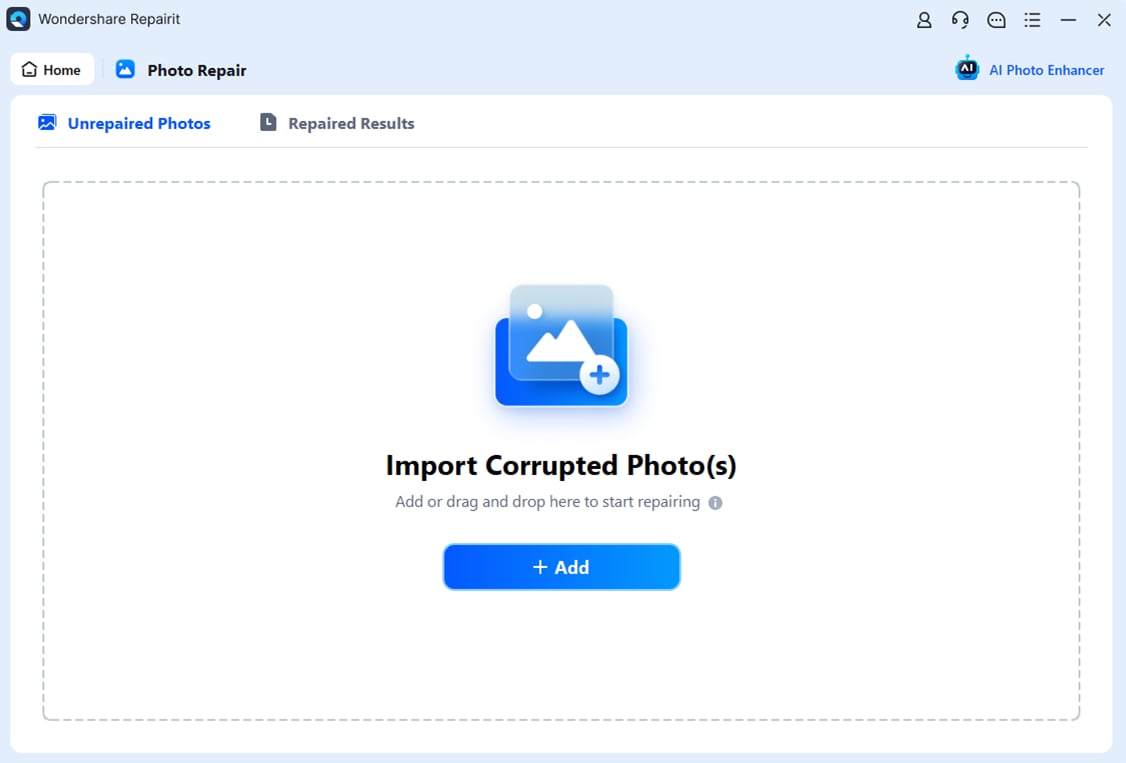
- Add corrupted photo files
Open Repairit and go to the Photo Repair section from the main interface. Click the option to add files, then browse to the folder where your corrupted images are stored. Select one or multiple damaged photos and load them into the repair list so Repairit can analyze them together.
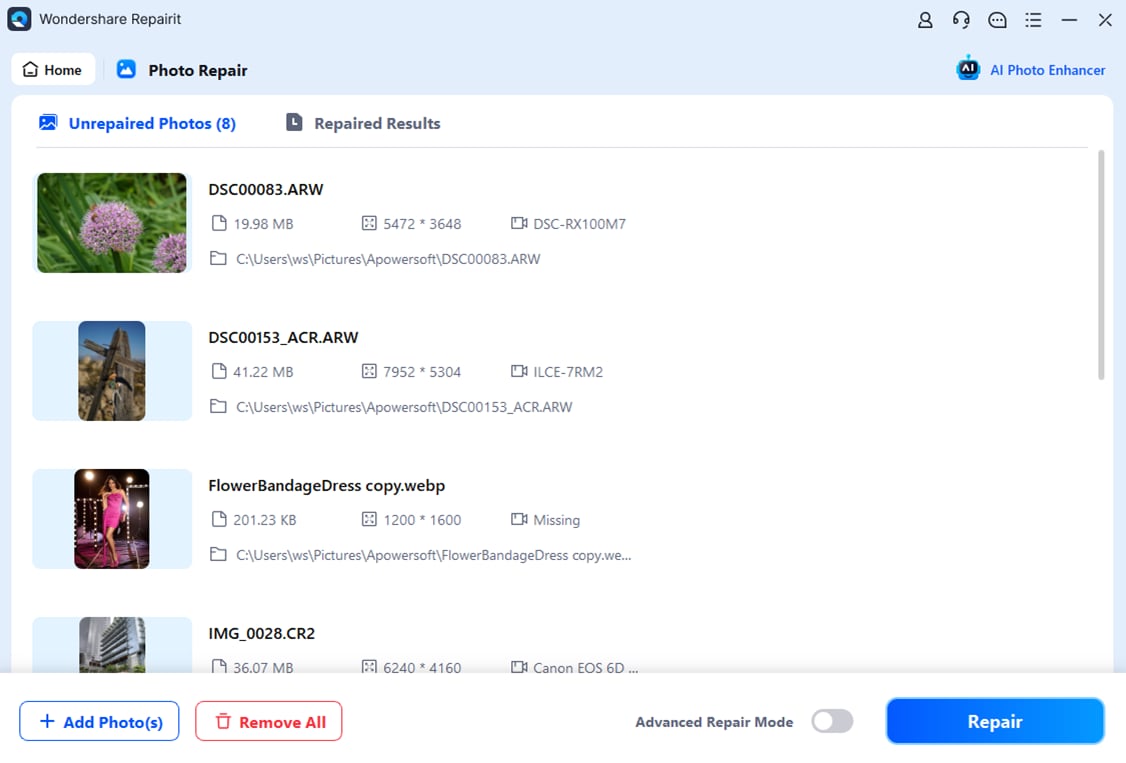
- Repair photo files
After your files are listed, start the repair with a single click. Repairit automatically scans each image, reconstructs damaged headers and data where possible, and restores viewable content. When the process finishes, use the built-in preview window to check how each repaired photo looks before saving anything.
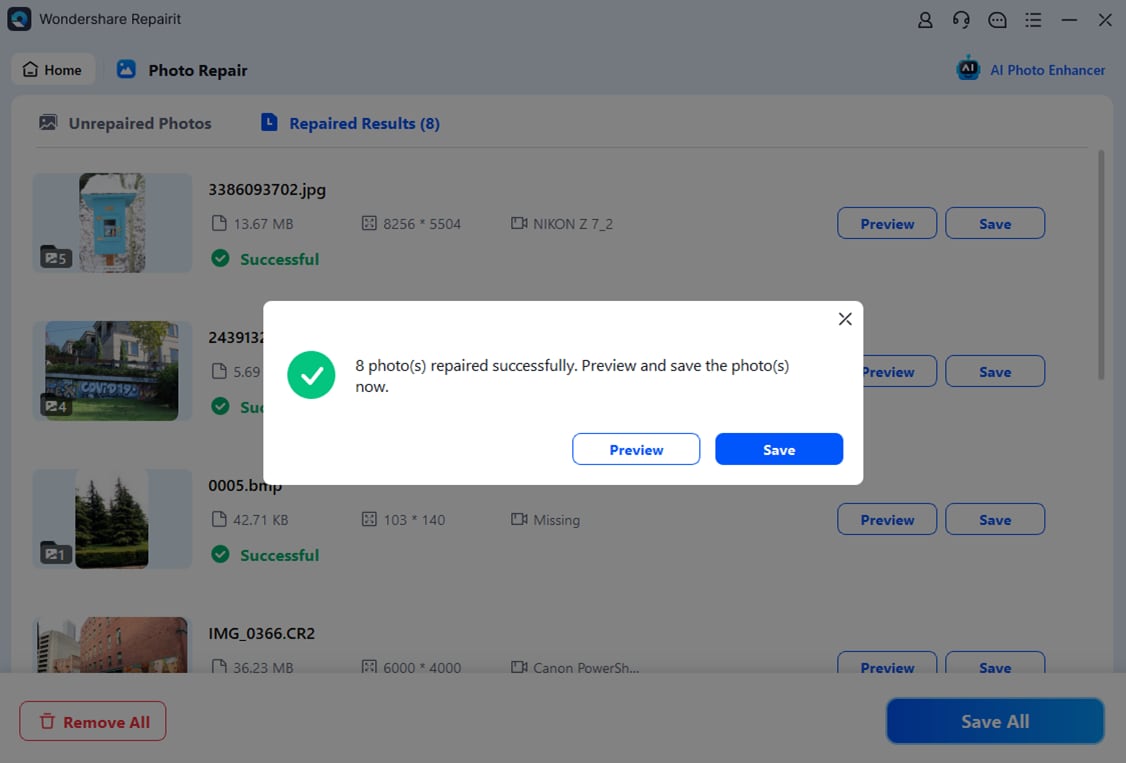
- Save the repaired photo files
If you are happy with the previews, choose an output folder that is different from the original storage location. Click to save your repaired files, and Repairit will export clean copies you can safely archive, edit, grade, and share without worrying about corruption issues.
Conclusion
The gamma curve is the bridge between raw digital signal and how bright, contrasty, and detailed your images and videos appear. From standard profiles like Rec 709 to advanced log gamma options, your curve choice shapes midtones, manages dynamic range, and determines how well your content travels from camera to editor, export, streaming platform, and final display.
By pairing suitable gamma settings with calibrated monitoring and proper color management, you can preserve detail, control mood, and maintain consistency across devices. And if technical issues corrupt your photos along the way, Wondershare Repairit gives you a straightforward path to recover those files so all your careful imaging and tone decisions are not lost.
Next: Motion Blur In Video
FAQ
-
1. What is a gamma curve in simple terms?
A gamma curve describes how input signal values are translated into brightness on a camera or display. Instead of a straight line, it bends the response so midtones, shadows, and highlights are distributed in a visually pleasing way that matches how our eyes perceive light. -
2. How is gamma different from brightness?
Brightness is a global adjustment that moves the entire image lighter or darker. Gamma reshapes the relationship between dark, mid, and bright areas, changing contrast and midtone emphasis without shifting all tones equally. -
3. Why do cameras offer log or flat gamma profiles?
Log and flat gamma curve profiles compress highlights and lift shadows to capture more dynamic range. They look washed out straight from the camera but give colorists extra flexibility for grading in post production and for matching different cameras. -
4. Should I change the gamma curve on my monitor?
Most users should stick with a standard display gamma such as 2.2 or 2.4. If you do color-critical work, calibrate your monitor and set gamma according to your delivery standard and viewing environment so your grading decisions translate reliably to other screens. -
5. Can wrong gamma settings ruin my footage?
Incorrect gamma choices can make images look flat, overly contrasty, or inconsistent between devices, but they rarely destroy footage beyond repair. With proper color management, transforms, and grading, many gamma issues can be corrected later, especially if you recorded using log or high bit-depth formats.




