

Subject tracking autofocus has become a staple in modern cameras, from mirrorless bodies to smartphones. You will see it promoted as subject tracking AF, tracking focus, Eye AF, or face detection focus in spec sheets, menus, and YouTube reviews. Understanding what it does, how it behaves in photos and video, and when to rely on it can transform how many sharp shots you keep from action, portraits, vlogs, and live events.
Repair Corrupted Files To Save Your Data
 Security Verified. Over 7,302,189 people have downloaded it.
In this article
What Is Subject Tracking Autofocus?
Subject tracking autofocus is an advanced camera autofocus mode that recognizes a chosen subject and automatically keeps it in focus as it moves around the frame. Instead of focusing once and hoping the subject stays still, the camera continuously adjusts focus distance in real time.
In camera manuals and menus it may be labeled as subject tracking AF, tracking AF, AF-C with tracking, Eye AF, or face/eye detection AF. It is part of the broader family of continuous autofocus tools designed for moving subjects in photography and video.
In stills, subject tracking AF helps you keep athletes, kids, pets, and performers sharp even when they move toward or away from you. In video, it works throughout recording so your main subject remains in clear focus during movement, reframing, or when you switch from one subject to another.
How Does Subject Tracking Autofocus Affect Your Image or Footage?
Enabling subject tracking autofocus directly influences the sharpness, consistency, and overall look of your images and clips. It changes how reliably the camera can maintain accurate focus across a sequence, which matters for both single photos and long-form recording.
Practical impact on photos
For still photography, subject tracking AF mainly affects:
- Sharpness and keeper rate: By constantly refocusing on your subject, tracking AF drastically raises the number of frames where the eyes or key details are truly sharp, especially with fast lenses and shallow depth of field.
- Motion blur vs. focus blur: Motion blur comes from a slow shutter; focus blur comes from missed focus. Tracking AF reduces focus blur so you can use wider apertures or slightly slower shutter speeds without losing your subject in a sequence.
- Depth of field control: When you trust tracking AF, you can confidently shoot at wide apertures (like f/1.8 or f/2.8) for creamy backgrounds while keeping your subject tack sharp, even as they move.
- Framing freedom: Instead of keeping a single AF point over the subject, you can compose more creatively, knowing the system will follow the subject across the frame.
Practical impact on video and playback
For video and streaming workflows, subject tracking autofocus affects:
- Focus stability during recording: In interviews, vlogs, or live streams, tracking AF holds focus on the face or eye so you do not drift soft if you lean forward, turn, or move slightly off-center.
- Focus breathing and pulsing: Poorly tuned AF can hunt or pulse, which is very visible on playback. Modern tracking AF reduces unnecessary refocusing, giving more natural-looking footage for editing and export.
- Editing flexibility: If focus stays locked on the subject, you have more usable frames for slow motion, reframing, crops, or vertical exports without revealing out-of-focus frames.
- Platform compatibility and perception: On platforms like YouTube, TikTok, and Instagram, sharp eyes and consistent focus help your videos look more professional on both phones and large displays, regardless of compression or streaming quality.
How Does Subject Tracking Autofocus Work in Real Shooting?
While different brands implement subject tracking AF in their own way, the core idea is similar: the camera identifies a subject, locks onto it, then continuously estimates its distance and position as you record or shoot a burst.
Where to find and enable tracking AF
You will typically find subject tracking autofocus in one of these places:
- AF mode menu: Look for AF-C with tracking, Tracking AF, or similar terms. Some cameras separate stills AF modes and video AF modes, each with its own tracking settings.
- AF area or subject detection: Options such as Face/Eye AF, Animal AF, Vehicle AF, or Subject Detection often activate tracking when a subject is detected.
- Touchscreen or joystick: On many cameras and monitors, you can tap the screen or use the joystick to choose a subject. The camera then starts tracking that subject as it moves.
- Custom buttons: Some users assign a custom button to enable tracking AF or temporarily engage it while held, which is common in sports and wildlife shooting.
External video monitors or recorders with focus tools may also display boxes or overlays showing what the camera is tracking, helping you confirm that the system is locked onto the right subject before you hit record.
Real-world shooting examples
Here is how subject tracking AF shows up in typical workflows:
- Portraits and events: You select Eye AF, half-press the shutter, and the camera locks onto an eye. As the subject turns or walks, the AF box follows the face or eye, keeping it sharp across a burst.
- Sports and wildlife: You enable tracking AF with a wide AF area, point at the athlete or animal, and start continuous shooting. The camera tracks them as they sprint across the frame or move toward you.
- Vlogging and talking-head video: In video AF mode, you turn on face/eye tracking and start recording. The camera keeps your face in focus while you move around the room, stand up, or lean toward the lens.
- Gimbal and run-and-gun setups: When you cannot manually pull focus, tracking AF maintains usable focus while you walk or follow a subject, reducing the risk of focus hunting in your final edit.
In all these situations, the core benefit is similar: the camera handles focus adjustments so you can concentrate on timing, framing, audio, and story.
Best Uses, Common Mistakes, and Quick Tips
Subject tracking autofocus shines when your subject moves or when you cannot reliably refocus between shots.
Best uses for subject tracking AF
- Fast action: sports, kids, pets, and wildlife where subjects change distance quickly.
- Events: weddings, concerts, conferences, and ceremonies where key moments unfold unpredictably.
- Vlogs and livestreams: talking directly to camera while moving, or switching between speakers.
- Shallow depth of field: portraits or product shots at wide apertures where focus tolerance is tiny.
Common mistakes and misunderstandings
- Relying on tracking in very low light: In dim scenes or backlighting, the camera may struggle to detect eyes or faces, causing focus jumps or hunting.
- Confusing continuous AF with subject tracking AF: Regular continuous AF keeps refocusing but may switch to the background. True subject tracking AF tries to stay on one chosen subject.
- Using the wrong AF area: A very wide AF area without subject detection can let the camera pick the wrong person in a crowd.
- Ignoring obstacles: If another person or object passes in front of your subject, tracking can jump to the closer object or lose the original subject.
- Setting unrealistic expectations: Even advanced Eye AF can fail with glasses glare, masks, fast erratic motion, or when the subject turns fully away.
Quick tips for better tracking focus
- Choose Face/Eye AF for people, Animal AF for pets and wildlife, and general tracking AF for non-human subjects.
- Give the system a clean, high-contrast subject to lock onto before you start shooting or recording.
- Use a slightly higher shutter speed to avoid motion blur, especially for sports or children.
- Do test clips and bursts before critical moments to see how your specific camera behaves.
- When possible, keep your subject reasonably large in the frame so the tracking system has enough detail to follow.
Takeaway: Used correctly, subject tracking autofocus greatly increases your percentage of sharp, usable shots and clips, especially when action or movement is involved.
How to Use Repairit to Fix a Corrupted Photo File
Repairit introduction
Even with perfect subject tracking autofocus, your best shots can be lost if a photo file becomes corrupted during recording, transfer, or editing. Wondershare Repairit is a dedicated media repair tool that helps you fix damaged or unreadable images in a guided, beginner-friendly workflow. You can learn more and download it from the Repairit official website.
Key features
- Repairs corrupted or unplayable photo and video files in multiple formats.
- Simple, guided workflow suitable for both beginners and professionals.
- Allows preview of repaired media before saving the fixed files.
Step-by-step: repair a corrupted photo
- Add corrupted photo files
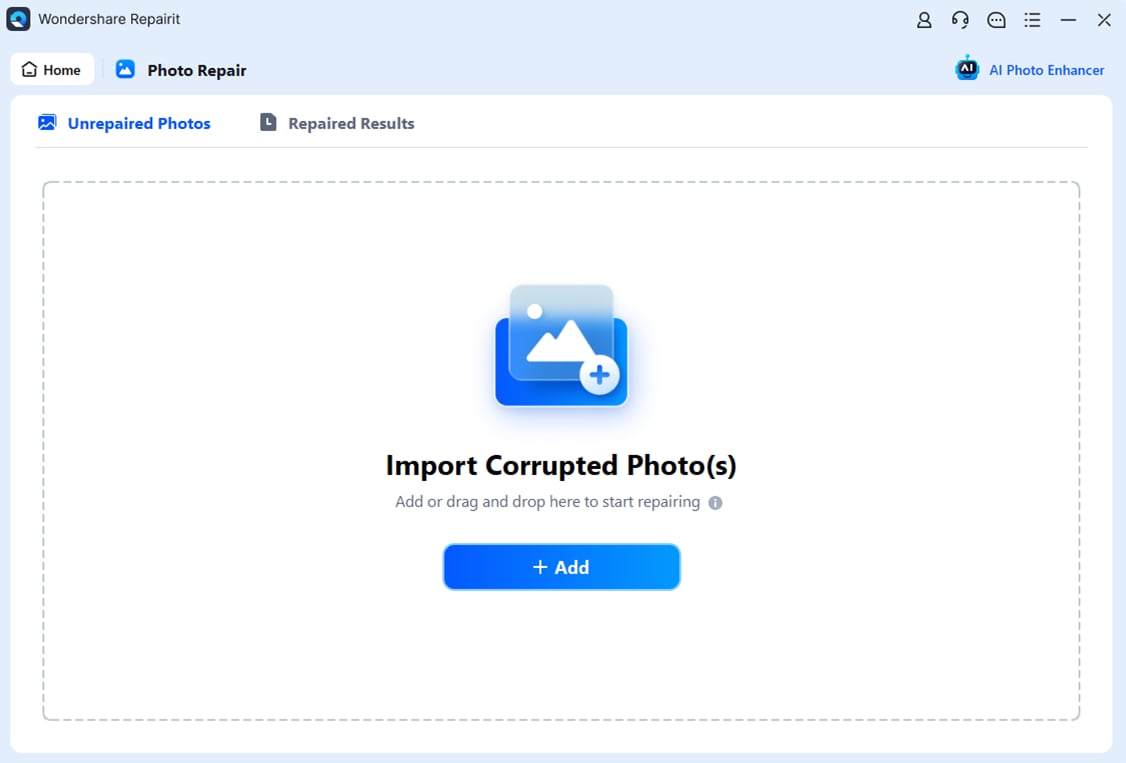
Open Wondershare Repairit on your computer and go to the Photo Repair section. Click the "Add" button or drag-and-drop all the corrupted or unreadable image files into the main window. Repairit will list each file so you can check formats, sizes, and paths before starting the repair.
- Repair photo files
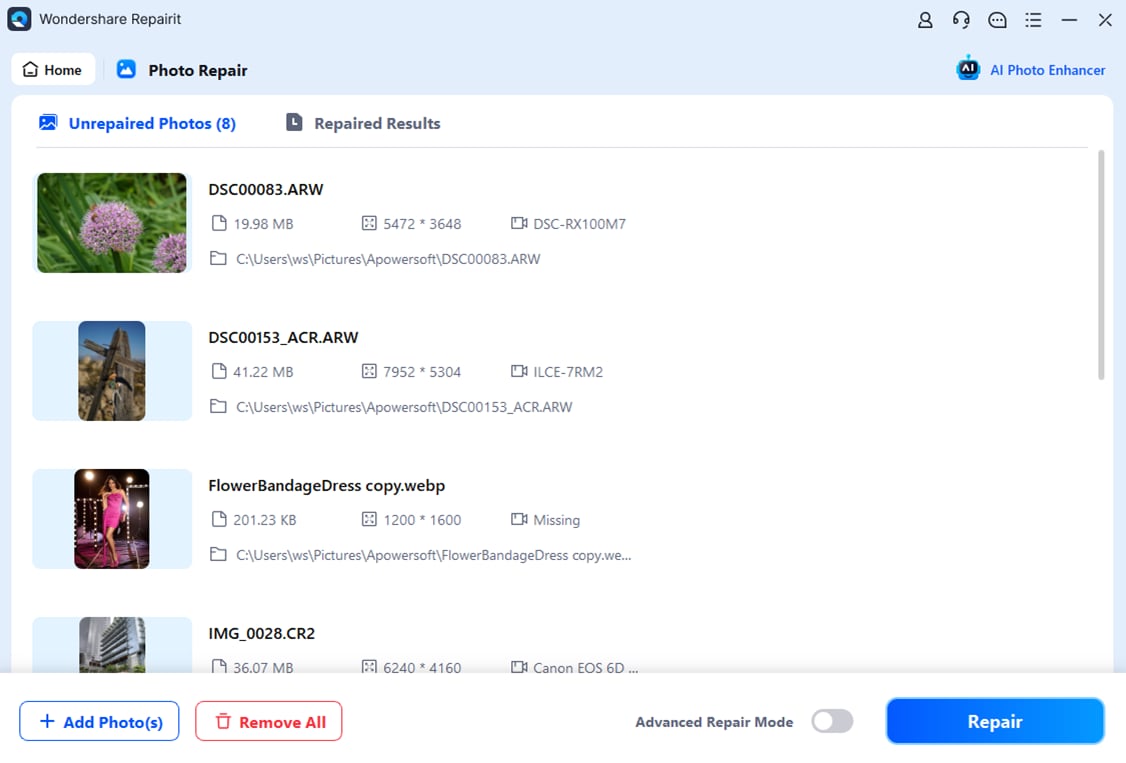
After importing, select the photos you want to fix and click the "Repair" button. Repairit will analyze each file structure, rebuild broken data where possible, and restore image information. When the process finishes, you can preview the repaired results to confirm that key details and clarity are back.
- Save the repaired photo files
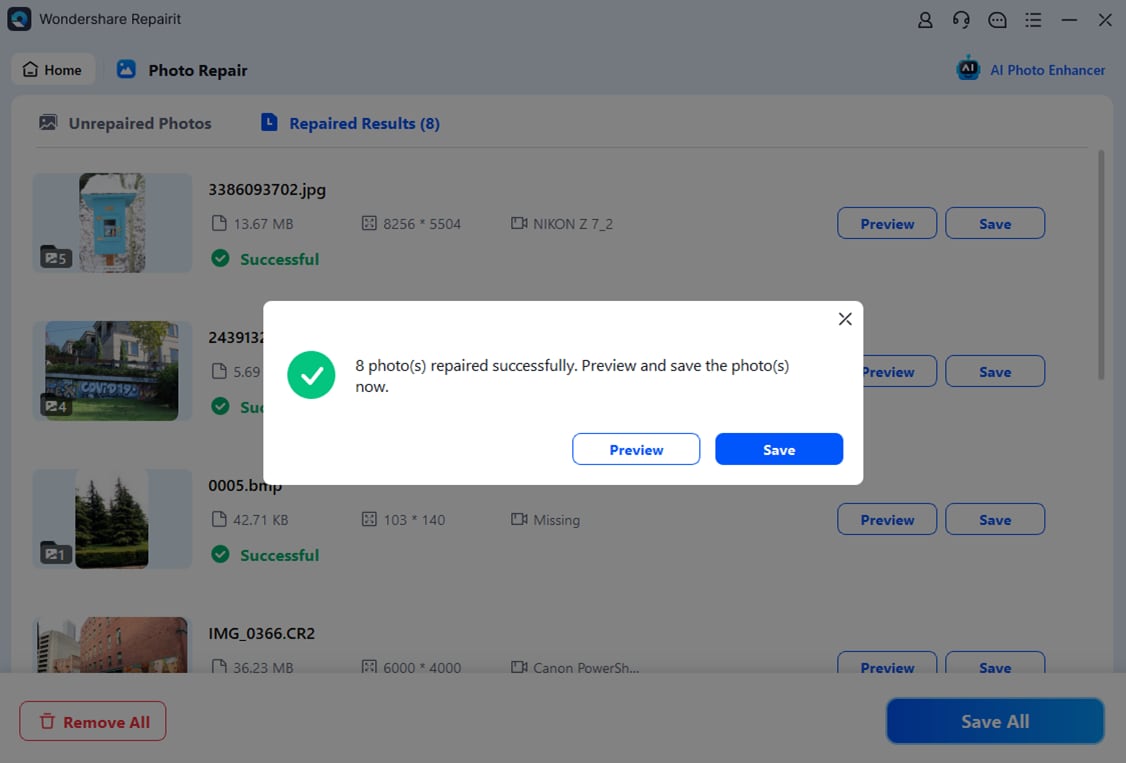
Once you are satisfied with the previews, choose the photos you want to keep and click "Save". Pick a safe output folder, preferably different from the original location, and let Repairit export the fixed files. You can now open these repaired images in your usual viewer, editor, or catalog software and continue your workflow without losing those sharp, well-focused shots.
Conclusion
Subject tracking autofocus helps your camera lock onto moving subjects and keep them sharp as they cross the frame, move toward you, or change direction. Understanding how it works, when to rely on it, and its limits allows you to get more consistent focus for both still photos and video clips.
Combined with careful backup habits and a reliable repair tool, your autofocus skills will translate into more finished work. If file corruption ever threatens important images or footage, Wondershare Repairit gives you a second chance to recover and use your best tracked shots.
Next: In-Body Image Stabilization (Ibis)
FAQ
-
1. What is subject tracking autofocus in a camera?
Subject tracking autofocus is a focus mode where the camera locks onto a chosen subject, then continuously adjusts focus to keep that subject sharp as it moves within the frame. It uses advanced detection algorithms to follow faces, eyes, animals, or other objects instead of simply focusing on whatever is closest.
-
2. Is subject tracking autofocus good for video?
Yes. Subject tracking AF is especially helpful for video because subjects rarely stay still. It keeps focus on your main subject during interviews, vlogs, action scenes, and live streams, so you do not need to manually pull focus every time someone moves.
-
3. What is the difference between continuous AF and subject tracking AF?
Continuous AF constantly updates focus while the shutter button is half-pressed or during recording, but it may switch between different objects in the frame. Subject tracking autofocus goes further by identifying and following a specific subject (such as a face or eye) so the camera prioritizes that subject rather than the nearest object.
-
4. Why does my subject tracking autofocus lose focus sometimes?
Tracking can fail in very low light, with fast erratic motion, when the subject is briefly blocked, or when it blends into the background. Using the right AF area, enabling face/eye detection, keeping the subject reasonably large in the frame, and doing quick tests before critical moments all help improve stability.
-
5. Can I fix a photo or video that will not open after a shoot?
If the file is corrupted but still accessible, you can often repair it with dedicated tools like Wondershare Repairit. The software analyzes damaged media data, attempts to reconstruct missing or broken structures, and lets you preview results before saving, giving you a chance to recover important shots.