
Motion blur in video is something you notice in movies, YouTube clips, livestreams, and even smartphone videos when moving subjects or the camera look smeared instead of crisp. Understanding why this blur appears, how it changes during recording, editing, exporting, streaming, and playback, and how to control it helps you create clearer, more professional-looking footage on any platform.
Repair Corrupted Files To Save Your Data
 Security Verified. Over 7,302,189 people have downloaded it.
In this article
What Is Motion Blur in Video?
Motion blur in video is the visible streaking, smearing, or softness that appears when a moving subject, or the camera itself, is captured while the shutter (or electronic exposure) is open long enough for motion to be recorded across multiple positions in a single frame.
It is a core exposure and motion-rendering concept in videography and cinematography, closely tied to shutter speed, frame rate, and how fast things move in front of the camera. When you press record, each frame is not an instant snapshot; it has a tiny exposure time. If something moves significantly during that time, its edges blur.
You encounter this effect in many places:
- In-camera, when choosing shutter angle or shutter speed for movies or slow motion.
- While editing, when you add or remove motion blur with effects or plugins.
- During encoding and exporting, where compression can exaggerate or soften existing blur.
- On streaming platforms, where lower bitrates may make blurred or fast-motion areas look even mushier.
- In playback on TVs, monitors, or phones, where refresh rate or motion-smoothing features can change how blur feels to the eye.
Used deliberately, motion blur gives a natural, cinematic feel. Used carelessly, video blur simply looks like poor focus or bad camera work.
How Does Motion Blur in Video Affect Your Image or Footage?
The amount and type of motion blur in a clip directly affect sharpness, perceived smoothness, and even how bright your footage appears.
1. Sharpness and detail
- More blur: Fine textures such as hair, text on signs, or distant objects become smeared during movement, reducing apparent resolution and video clarity.
- Less blur: Edges stay crisp frame-to-frame, but fast movement can look choppy or stuttery, especially at lower frame rates.
2. Perceived smoothness of motion
- At cinematic frame rates like 24 fps, a moderate degree of blur (following the "180-degree shutter rule") makes pans and moving objects feel fluid.
- At high frame rates (60 fps or 120 fps), minimal blur can work well, especially for sports or gaming content, giving a hyper-real, ultra-clear look.
3. Exposure and brightness
- Longer exposure time (slower shutter) lets in more light, brightening your video but increasing motion blur in video.
- Shorter exposure time (faster shutter) darkens the frame but reduces blur, often requiring more light or higher ISO to compensate.
4. Compression and encoding artifacts
- Heavy blur means large, low-detail areas, which are easier for codecs to compress.
- But in low-bitrate streaming, combined blur and compression can cause muddy blocks that make moving subjects hard to recognize.
5. Perception on different playback devices
- TVs with motion-smoothing settings can make blurred footage appear "soap-opera-like" by inserting frames, changing how motion blur feels.
- On mobile devices, smaller screens hide mild blur but reveal severe video blur on faces and text.
In short, motion blur is not just a stylistic choice; it reshapes detail, exposure, and how your footage survives editing, export settings, and streaming compression.
How Does Motion Blur in Video Work in Real Shooting?
In real-world production, motion blur in video is mainly controlled by shutter speed (or shutter angle), frame rate, and subject or camera movement. Each frame is captured for a specific fraction of a second, and that window defines how much motion gets smeared.
Real-world examples of motion blur
1. Handheld walking vlog
- If you shoot at 24 fps with 1/48–1/50s shutter, your footsteps, swinging arms, and background movement have a soft, natural blur. It feels like a movie.
- If you change shutter to 1/500s in the same light, each frame is ultra-crisp, but your walk may feel jittery, especially when viewed on a big screen.
2. Sports or action filming
- Shooting fast-moving athletes at a slow shutter (e.g., 1/60s at 60 fps) makes limbs and the ball streak, so it's hard to freeze the action in any frame.
- Using 1/1000s or faster reduces motion blur dramatically, making it easier to analyze motion frame-by-frame, useful for replays or social media highlights.
3. Night city time-lapse or light trails
- Intentionally slow shutter speeds make car headlights stretch into artistic trails, turning real-world motion into graphic shapes.
- Here, blur is the entire point; without it, the effect disappears.
4. Streaming and gaming captures
- Game engines often simulate motion blur as a post-effect. When you record or stream, that blur is baked into the image before encoding.
- If your streaming bitrate is low, that simulated blur plus compression can create smudged scenes during fast camera moves.
Where you control motion blur on your camera
1. Shutter speed (phones and consumer cameras)
- On DSLRs, mirrorless cameras, and many apps, shutter speed is labeled in fractions (1/50, 1/100, 1/250, etc.). Slower = more blur; faster = less blur.
- On smartphones, manual or "Pro" mode lets you directly pick shutter speed for video on many models.
2. Shutter angle (cinema cameras)
- Cinema cameras often show shutter as an angle (180°, 90°, 360°). At 24 fps:
- 180° ≈ 1/48s (classic cinematic motion blur)
- 90° ≈ 1/96s (crisper, more staccato motion)
- 360° ≈ 1/24s (very smeared movement)
3. Frame rate choices
- 24 fps: Needs moderate blur (around 1/48s) to look smooth; too little blur makes pans stutter.
- 30 fps or 60 fps: Frames are closer together in time; you can use faster shutters and still get relatively smooth motion.
- 120 fps and higher: Great for slow motion; controlling blur per frame determines whether slowed-down clips look dreamy or ultra-sharp.
4. Stabilization and camera movement
- Gimbals, optical stabilization, and in-body stabilization reduce shake, but if your shutter is very slow, you still get blur from residual motion.
- Fast tracking shots or whip pans require especially careful shutter control; too slow and the frame becomes a smear, too fast and it looks harsh and jittery.
5. From shooting to editing, encoding, and playback
- Once recorded, blur is mostly "baked in." You can sharpen or denoise, but heavy blur cannot be fully undone.
- Exporting at lower bitrates can worsen mushy areas; heavy compression tends to break down detail in blurred motion regions first.
- Different platforms (YouTube, Instagram, TikTok) apply their own compression, so motion-heavy, blurry clips often look worse after upload.
Best Uses, Common Mistakes, and Quick Tips
When motion blur matters most
- Cinematic scenes at 24 fps, where blur defines the "film look."
- Sports and action, where you decide between artistic streaks and analysis-friendly frozen action.
- Low-light shooting, where shutter, ISO, and aperture trade-offs decide whether you accept more blur or more noise.
- Content for social media, where viewers watch on small screens and bad blur can make faces and text unreadable.
Common mistakes with motion blur in video
- Using auto mode at night, which often slows shutter too much, making handheld videos very smeared.
- Mixing clips with wildly different blur levels in the same edit (e.g., 1/50s and 1/2000s), leading to inconsistent feel.
- Assuming blur can be "fixed in post" easily. While you can sharpen, heavy blur means lost detail that cannot be recreated.
- Ignoring how shutter speed, frame rate, and stabilization interact, especially when planning camera movement.
Quick tips to control motion blur in video
- Start with the 180-degree rule: Set shutter to roughly double your frame rate (e.g., 1/50s for 25 fps, 1/60s for 30 fps) for a natural look.
- For fast action, increase shutter a bit (e.g., 1/250s or 1/500s) to keep detail while staying bright enough.
- In bright daylight, use ND filters so you can keep a cinematic shutter speed without overexposing.
- In low light, decide what matters more: motion clarity (faster shutter, more ISO noise) or smoother blur (slower shutter, less noise but more smear).
- Before final export, preview your video at the target resolution and bitrate to see how blur behaves after compression.
The takeaway: treat motion blur in video as a creative tool, not just a side effect. Decide how much blur supports your story, then set your camera and workflow to match.
How to Use Repairit to Fix a Corrupted Photo File
Even if you carefully manage motion blur while shooting, your files can still become corrupted during recording, transfer, or editing. Wondershare Repairit is a dedicated repair toolkit for photos, videos, and other files that fail to open, stutter, or display visual artifacts. You can learn more and access the latest version on the Repairit official website.
Key features of Repairit
- Repairs multiple image formats from cameras, phones, and storage devices so you can rescue important shots.
- Supports batch repair, letting you fix many corrupted media files in a single, efficient workflow.
- Offers a clear interface with built-in preview so you can check repaired results before saving them.
Step-by-step: Fix corrupted photo files with Repairit
- Add corrupted photo files
Open Repairit and choose the Photo Repair module. Click the add button to browse your computer, memory card, or external drive, then select all the corrupted photos you want to fix. They will appear in a list, ready for repair.

- Repair photo files
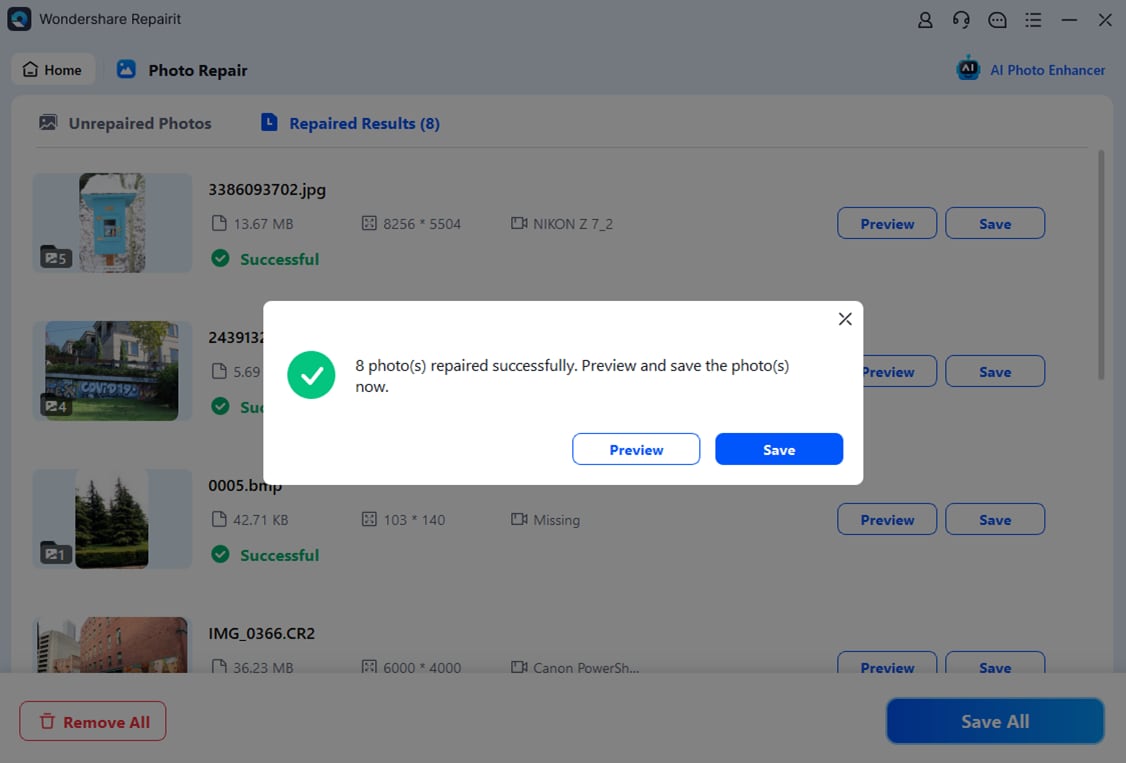
After your damaged images are loaded, start the repair process. Repairit analyzes each file structure, rebuilds missing or broken data where possible, and generates a preview for you. This lets you confirm that key details and colors look correct before moving on.

- Save the repaired photo files
When you are satisfied with the previewed results, click to save your repaired photos. Choose a safe destination folder different from the original source, so the corrupted versions remain untouched in case you need them later.
Conclusion
Motion blur in video is a natural consequence of how cameras capture movement. It is primarily shaped by shutter speed, frame rate, and how quickly subjects or the camera move, and it influences how your footage looks from recording through editing, encoding, streaming, and final playback.
By understanding how shutter speed and frame rate interact, you can choose whether blur adds cinematic energy or simply makes your footage look soft. When technical problems leave your clips or photos corrupted on top of being blurry, tools like Repairit help you repair damaged files so your work remains usable and ready to share.
Next: Low-Light Performance
FAQ
-
1. What is motion blur in video?
Motion blur in video is the streaking or smearing of moving subjects or camera motion that happens because each frame is exposed for a finite amount of time. If something moves significantly during that exposure, it appears blurred within that frame.
-
2. Is motion blur always bad for video quality?
No. Controlled motion blur can make movement look natural and cinematic, especially at 24 fps. It becomes a problem when it is excessive or unintentional, making key details like faces, text, or small objects hard to see.
-
3. How can I reduce motion blur while filming?
Use a faster shutter speed, add more light or raise ISO to keep exposure balanced, stabilize your camera with a tripod or gimbal, and reduce subject or camera speed when possible. These steps help keep motion sharp in each frame.
-
4. Can I remove motion blur completely in editing?
You can soften its impact with sharpening filters or specialized deblur plugins, but heavy video blur cannot be fully reversed because the original detail was never captured. The most reliable fix is to control blur at the shooting stage.
-
5. What should I do if my video is corrupted as well as blurry?
First, copy and back up the corrupted file. Avoid repeatedly opening it in different apps, which can make recovery harder. Then use a repair tool such as Wondershare Repairit to attempt to restore the file. Once repaired, you can edit and apply any sharpening or enhancement you need.