
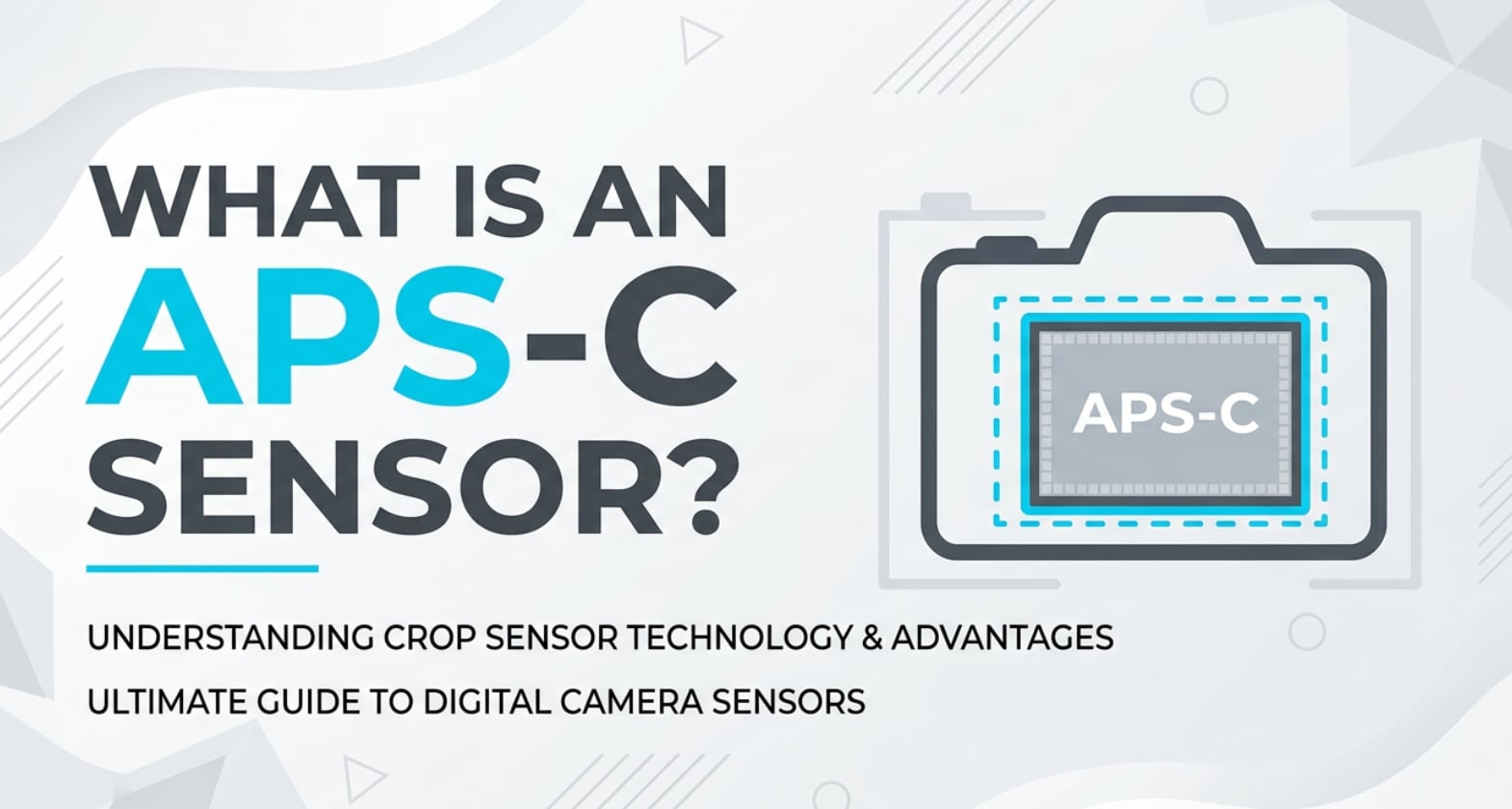
You will often see the term APS-C sensor on camera spec sheets, review videos, and online store listings for DSLR and mirrorless bodies. It describes the size of the image sensor that records your photos and video clips. Understanding what APS-C means helps you predict how your camera will frame a scene, behave in low light, and match with lenses for both photography and video production.
Repair Corrupted Files To Save Your Data
 Security Verified. Over 7,302,189 people have downloaded it.
In this article
What Is APS-C Sensor?
An APS-C sensor is a medium-sized image sensor used in many DSLR and mirrorless cameras. It is smaller than a aps-c vs full frame sensor but larger than the tiny sensors in most smartphones and compact cameras. APS-C comes from the old Advanced Photo System (APS) film format and describes a sensor around 22 x 15 mm, depending on the camera brand.
In photography and videography, the image sensor is the "digital film" that converts light into pixels. The camera sensor size directly affects framing, image quality, and how your lenses behave. An APS-C sensor captures a narrower portion of the scene compared to full frame, which is why it is often described as having a crop factor (usually 1.5x or 1.6x).
When you shoot stills, record video, stream to platforms, or export footage from your editor, every frame started on the sensor. Knowing that your camera uses APS-C helps you judge lens choices, low light performance, and how your footage will look on different screens and platforms.
How Does APS-C Sensor Affect Your Image or Footage?
Field of view and crop factor
The main visual effect of an APS-C sensor is its crop factor. Because the sensor is smaller than full frame, it only uses the center part of the image circle projected by the lens. This creates a tighter field of view as if you zoomed in slightly.
Most APS-C cameras have a crop factor of 1.5x (Nikon, Sony, Fujifilm) or 1.6x (Canon). To find how a lens behaves on APS-C, you multiply the focal length by this factor:
- A 35 mm lens on APS-C looks like about 50–56 mm on full frame.
- A 50 mm lens on APS-C looks like about 75–80 mm on full frame.
- A 200 mm lens on APS-C looks like 300–320 mm on full frame, great for sports and wildlife.
This directly influences your framing in photos and video clips, including YouTube content, streaming layouts, and multi-camera setups. On APS-C, wide shots are a bit tighter, while telephoto shots get extra "reach" without changing your lens.
Noise, detail, and depth of field
Sensor size also affects noise, fine detail, and background blur. Compared with a full frame dslr sensor or mirrorless camera sensor of the same generation:
- Low light performance: Full frame sensors usually handle high ISO better, with cleaner shadows and less color noise. Modern APS-C bodies are still very capable for indoor events, night cityscapes, or documentary work, especially when you expose carefully.
- Dynamic range and color: Full frame has a small advantage in recovering blown highlights and lifting shadows, but many APS-C cameras now offer enough dynamic range for most real-world scenes and video grading workflows.
- Depth of field (background blur): For the same framing and f-stop, APS-C gives a bit deeper depth of field than full frame. To get similar blur, you often use a slightly wider aperture or longer focal length. This matters when you want creamy bokeh in portraits or a strong separation between subject and background.
For video, these differences show up in how clean your footage looks after compression, streaming, or re-encoding. A cleaner APS-C image will survive platform compression (YouTube, Instagram, TikTok) better than a noisy one from a very small sensor.
How Does APS-C Sensor Work in Real Shooting?
In real shooting, you do not change the APS-C sensor itself, but you feel its effect every time you compose a shot, choose a lens, or set ISO and aperture. Here is how it shows up in typical workflows:
- On the camera body: The spec sheet or menu will state "APS-C" or a brand-specific term (DX, EF-S, X-mount APS-C, etc.). Once you know the crop factor, you can quickly translate any focal length into its full frame equivalent for framing comparisons.
- With lenses: Many systems sell APS-C-only lenses that project a smaller image circle, plus full frame lenses that work on both. On an APS-C body, a 16–55 mm zoom might act like a 24–82 mm equivalent, perfect for general-purpose shooting and vlogging.
- Framing for video: If you are recording 4K for YouTube or streaming, APS-C lets you place the camera closer while still filling the frame with your subject. For talking heads, a 24–35 mm lens on APS-C gives a natural look without heavy perspective distortion.
- Stabilization and handheld work: Because APS-C cameras and lenses are often smaller and lighter than full frame equivalents, they are easier to balance on gimbals and rigs. That is helpful when shooting run-and-gun footage or long handheld sessions.
- Post-production and export: Files from APS-C cameras are handled just like any other in editing software. The sensor size mostly influences initial sharpness, noise level, and depth of field, which you will see when color grading, sharpening, and exporting to your final format and platform.
In multi-camera productions, you may mix APS-C and full frame cameras. Understanding APS-C crop factor helps you match angles and maintain consistent framing across B-cams and C-cams in timelines and live-switching setups.
Best Uses, Common Mistakes, and Quick Tips
When APS-C shines
- Travel and street photography: Lighter bodies and lenses with good image quality are ideal when you walk all day or work discreetly.
- Sports and wildlife: The effective telephoto boost from the crop factor helps you fill the frame with distant subjects using more affordable lenses.
- Everyday content creation: For vlogging, tutorials, and streaming, APS-C offers a balanced mix of quality, size, and price, especially for 4K video shooting.
Common mistakes and misunderstandings
- Misreading focal length: Beginners often forget to apply crop factor and expect a 35 mm lens to be very wide. On APS-C, it behaves more like a "normal" view.
- Comparing ISO numbers directly: ISO 6400 on APS-C may look noisier than ISO 6400 on full frame, especially in very low light. It is better to compare at the same brightness and consider exposure technique.
- Expecting extreme background blur: APS-C can give nice bokeh, but not quite as shallow as full frame at the same aperture and framing. Use faster lenses (f/1.4–f/2) if you want stronger subject separation.
Quick tips
- Learn your camera's crop factor (usually 1.5x or 1.6x) and mentally convert common focal lengths.
- Choose fast prime lenses (like 23 mm, 35 mm, 50 mm equivalents) to get good low light performance and background blur on APS-C.
- When possible, keep ISO moderate and expose carefully to minimize noise, especially for footage that will be heavily compressed or streamed.
The takeaway: APS-C is a flexible, practical sensor format that can deliver excellent results for stills and video when you understand how crop factor, lens choice, and exposure work together.
How to Use Repairit to Fix a Corrupted Photo File
If something goes wrong while you are shooting on an APS-C sensor camera, copying files from an SD card, or editing on your computer, photos can become unreadable or corrupted. Instead of losing important work, you can use Wondershare Repairit to bring damaged images back. Visit the Repairit official website to download the tool for Windows or Mac and follow a simple guided repair process.
Key features of Repairit
- Fixes corrupted photos and videos from cameras, phones, and memory cards.
- Supports batch repair so you can process many damaged files at once.
- Offers a preview of repaired files before you save the final versions.
Step-by-step: repair corrupted photo files
- Add corrupted photo files
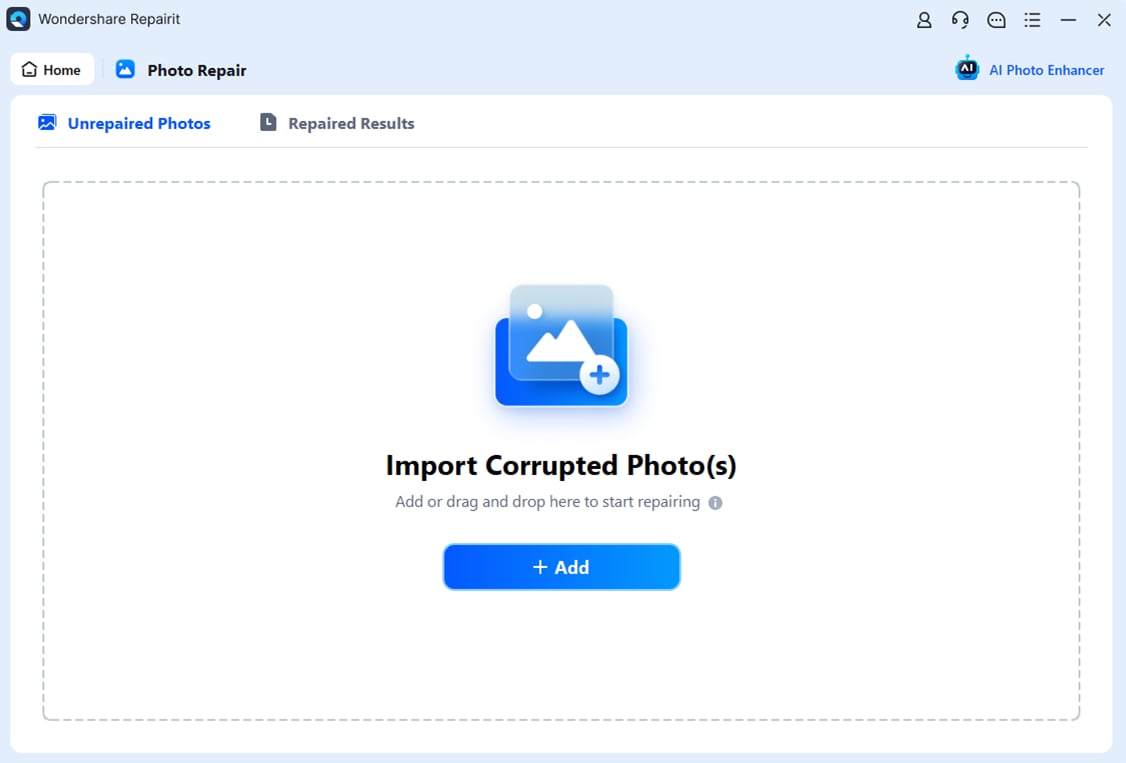
Open Wondershare Repairit and go to the Photo Repair module on the main screen. Click the button to add files, then browse to your memory card, external drive, or local folder and select the corrupted images you want to fix. The selected files will appear in the list, ready for repair.
- Repair photo files
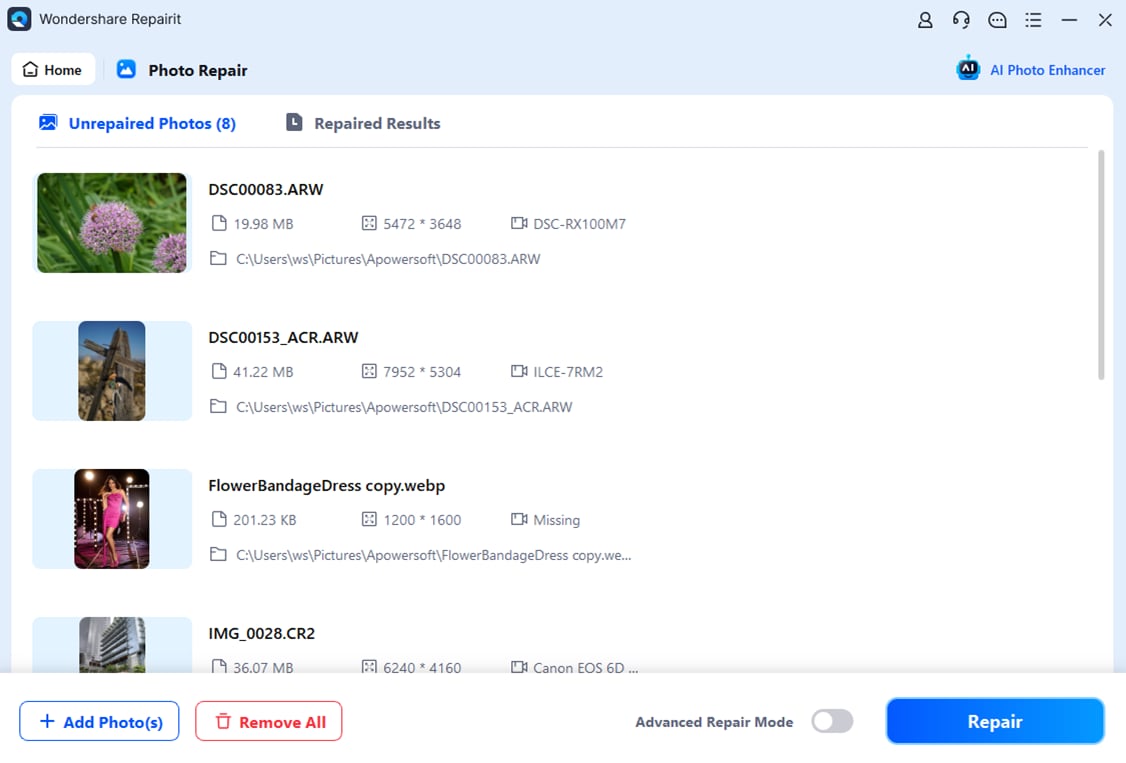
Next, start the repair by clicking the Repair button. Repairit quickly analyzes each photo, rebuilds damaged data structures, and restores as much visual detail as possible. Once the first pass is complete, you can preview the repaired images to confirm that they now open correctly and look the way you expect.
- Save the repaired photo files
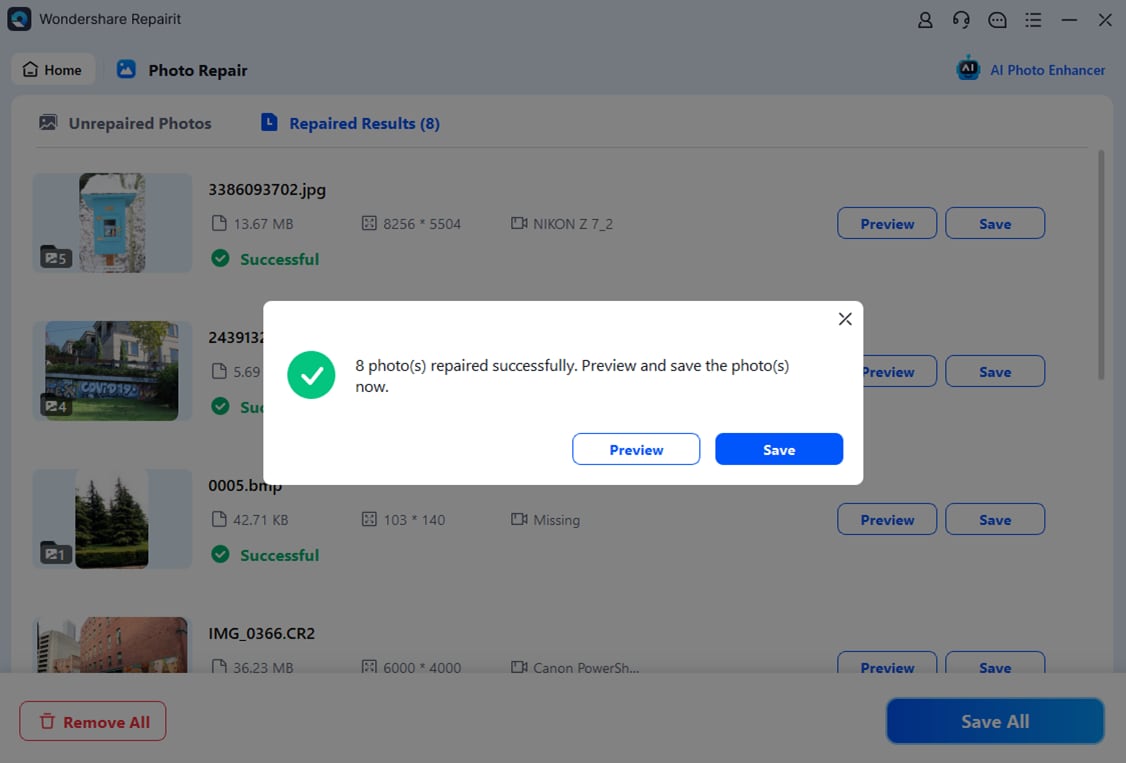
After checking the previews, select the photos you want to keep and click Save. Choose a safe output folder that is different from your original location to avoid overwriting files. Repairit then writes out clean copies of your repaired images so you can back them up, edit, and share them without worrying about corruption.
Conclusion
The APS-C sensor sits between small smartphone chips and larger full frame sensors, providing a smart balance of image quality, reach, size, and cost. Its crop factor shapes your field of view, depth of field, and lens behavior, influencing everything from casual snapshots to cinematic video work.
By understanding how APS-C compares in aps-c vs full frame discussions and how it impacts low light performance, framing, and bokeh, you can build a kit that truly fits your style. And if technical problems ever leave your photos or footage corrupted, Wondershare Repairit is there to help you recover and protect your visual work across all your projects.
Next: Aperture
FAQ
-
1. What is an APS-C sensor in simple terms?
An APS-C sensor is a mid-sized image sensor used in many DSLR and mirrorless cameras. It is smaller than full frame but larger than most phone sensors, so it slightly crops the scene, giving your lenses more apparent telephoto reach while still delivering strong image quality. -
2. How does APS-C compare to full frame for image quality?
Full frame sensors usually offer cleaner high-ISO performance, a bit more dynamic range, and shallower depth of field. However, modern APS-C cameras can still produce excellent photos and 4K video, especially in good light, and are more than enough for most photographers and creators. -
3. What is crop factor on an APS-C sensor?
Crop factor describes how much smaller an APS-C sensor is than a full frame sensor. Most APS-C systems use a 1.5x or 1.6x crop factor. To estimate full frame equivalent focal length, you multiply the lens focal length by this number (for example, 35 mm x 1.5 ≈ 52.5 mm). -
4. Is an APS-C sensor good for video shooting and streaming?
Yes. APS-C is very popular for video because it provides a cinematic angle of view, good detail, and smaller, lighter lenses. Many APS-C mirrorless bodies record high-quality 4K and work well for YouTube, live streaming, vlogging, and indie filmmaking. -
5. Can I use full frame lenses on an APS-C camera body?
In most systems, you can mount full frame lenses on an APS-C camera from the same brand or with the correct adapter. The lens will function normally, but the APS-C sensor will crop the image by the crop factor, making the lens behave more telephoto than it would on a full frame body.