
Whether you shoot weddings, vlogs, concerts, or night cityscapes, you will hear people talk about low-light performance when comparing cameras and lenses. It describes how confidently your gear can capture clean photos and video in dim scenes, affecting everything from family clips on your phone to Netflix-ready footage. Understanding it helps you avoid noisy, unusable results and choose better settings for recording, editing, exporting, and sharing across platforms.
Repair Corrupted Files To Save Your Data
 Security Verified. Over 7,302,189 people have downloaded it.
In this article
What Is Low-Light Performance?
Low-light performance describes how well a camera system (sensor, processor, and lens) can capture usable images or video when there is very little light available. It is a core image quality concept in both photography and videography.
In practice, low-light performance is about how clean, detailed, and color-accurate your files look at higher ISO values, slower shutter speeds, or wide apertures. It directly influences how far you can push your gear when shooting indoors, at night, or in other dim conditions without your footage falling apart in editing, grading, or when compressed for streaming platforms.
This concept matters whenever you:
- Shoot indoors without flash or strong continuous lighting
- Record concerts, weddings, parties, or events in dark venues
- Capture night cityscapes, astrophotography, or blue-hour scenes
- Film documentary or run-and-gun video where you cannot control the light
- Export and stream content to platforms that heavily compress your files
How Does Low-Light Performance Affect Your Image or Footage?
Low-light performance has a direct impact on how your photos and videos look, and on how flexible they are during editing, encoding, and playback on different devices.
Noise and ISO performance
The most visible effect is image noise. With better iso performance, you can raise ISO to brighten your scene without turning it into a grainy mess.
- Good low-light performance: Fine, tight noise pattern, more detail retained, skin tones stay smooth, gradients look clean.
- Poor low-light performance: Blotchy color noise, mushy textures, banding in shadows, and visible crawling noise in video, especially after compression on platforms like YouTube, TikTok, or Instagram.
When you encode and export video, noisy footage needs more bitrate to look acceptable. If the platform re-compresses your upload, heavy noise often turns into ugly macro-blocking and flickering artifacts.
Dynamic range and shadow detail
Low-light performance also influences dynamic range: how much detail your camera retains from deep shadows to bright highlights in a single frame.
- Stronger performance preserves texture and color in dark areas, so you can lift shadows in RAW photo editors or log video color grading without severe banding or noise.
- Weaker performance forces you to choose between clipping highlights or crushing shadows, limiting how cinematic or natural your final image can look after editing and exporting.
Color accuracy and banding
In dim light, sensors struggle to capture enough information per pixel. Colors can shift, skin tones can look gray or green, and smooth gradients (such as night skies or stage lights) may show banding when you adjust exposure in post.
High-quality low light photography and video keep colors believable even in dark scenes, which is crucial when your footage will be viewed on HDR TVs, calibrated monitors, or large projections.
Sharpness, motion blur, and stability
To compensate for low light, you often lengthen shutter speed or lower frame rate, which increases the risk of unwanted blur:
- Photos: Slower shutter speeds may soften fine details due to handshake or subject movement.
- Video: To avoid blur, you may be forced to raise ISO instead, trading sharpness for noise.
- Stabilization: In-body and lens stabilization help you handhold slower shutter speeds, but moving subjects can still blur if the light is too low.
Ultimately, low-light performance decides how much you can rely on slower shutters, lower light levels, or smaller apertures before your footage becomes too blurry or noisy to use.
How Does Low-Light Performance Work in Real Shooting?
Where you see low-light controls in cameras and apps
In actual shooting workflows, low-light performance shows up through the controls and modes you use every day.
- ISO setting: Raising ISO tells the camera to amplify the sensor signal. Better low-light cameras can handle higher ISO values with manageable noise, making them ideal for night photography tips like handheld street shooting.
- Aperture (f-stop): A wider aperture (e.g., f/1.4, f/1.8) lets more light reach the sensor, improving exposure without pushing ISO too high.
- Shutter speed / frame rate: Still shooters may drop shutter speed to 1/30s or slower; videographers may use 1/50s at 25 fps, or 1/60s at 30 fps. The better your low-light performance, the less you have to compromise.
- Special modes: Many phones and cameras offer Night mode, HDR, or multi-frame noise reduction. These modes combine multiple frames to simulate stronger sensor sensitivity and cleaner shadows.
- Monitoring tools: Histograms, zebras, waveforms, and false color help you judge exposure precisely to maximize dynamic range in the dark.
Real-world examples in photo and video workflows
Here is how low-light performance affects different stages of a project.
- Recording a night vlog: With a camera that has strong video low light performance, you can shoot at ISO 6400–12800 while walking under streetlights and still get clean, stable footage that compresses well for streaming.
- Event photography indoors: A large-sensor camera with a fast prime lens (e.g., 35mm f/1.4) lets you keep ISO moderate, freeze motion, and still deliver sharp, clean images that withstand retouching and printing.
- Live streaming concerts: In dim venues, you may push ISO high and use log or flat profiles. Cameras with better low-light performance preserve more information, so the final stream looks smooth after real-time encoding and platform compression.
- Post-production and grading: Clean source material gives you more room to adjust exposure and color while keeping clean footage for delivery in H.264, HEVC, or other codecs without ugly artifacts.
Best Uses, Common Mistakes, and Quick Tips
When low-light performance matters most
- Night street and travel photography: Capturing handheld shots of city lights, markets, or nightlife.
- Weddings and events: Working in dim receptions or candlelit ceremonies where flash is distracting or banned.
- Documentary and run-and-gun video: Shooting unpredictable situations, often indoors or at dusk, where you cannot control lighting.
- Live streaming and social content: Creating video that must look good after heavy compression and playback on phones.
Common mistakes and misunderstandings
- "High megapixels always mean better low light": Not necessarily. High resolution on a small sensor can increase noise if each pixel is tiny.
- Underexposing and brightening later: Severely underexposed files, then pushed in editing, usually look worse than correctly exposed images at a higher ISO.
- Ignoring lens choice: A slow kit zoom (e.g., f/3.5–5.6) can cripple low-light shooting compared with a fast prime lens, even on the same camera.
- Relying only on in-camera noise reduction: Heavy reduction can smear detail and create plastic-looking skin, which becomes obvious after export.
Quick low-light performance tips
- Use the widest practical aperture your lens allows.
- Keep shutter speed as slow as you can without introducing unacceptable blur, using stabilization or a tripod where possible.
- Do not fear higher ISO; aim for a bright, well-exposed image and handle mild noise in post.
- Shoot in RAW (photos) or log/flat profiles (video) to maximize editing latitude and dynamic range.
- Use proper exposure tools (histogram, zebras, waveform) rather than judging brightness only by the LCD.
- Test your own camera to find the highest ISO you are happy to use for delivery on your usual platforms.
Takeaway: Low-light performance is about smart exposure choices working together with your camera's sensor and lens so you get usable, flexible files from dim scenes.
How to Use Repairit to Fix a Corrupted Photo File
Repairit introduction
When you regularly shoot in dark venues or on long nights, you record many clips and photos on multiple cards and drives. Power loss, faulty cards, or interrupted transfers can corrupt important files. Wondershare Repairit offers an easy, guided way to restore damaged photo and video files so they open and play correctly again. You can learn more and download it from the Repairit official website.
Key features of Repairit
- Repairs corrupted or unplayable photo and video files in popular formats
- Simple, guided workflow suitable for beginners and professionals alike
- Preview repaired files before saving to confirm the restored quality
Step-by-step guide
- Add corrupted photo files
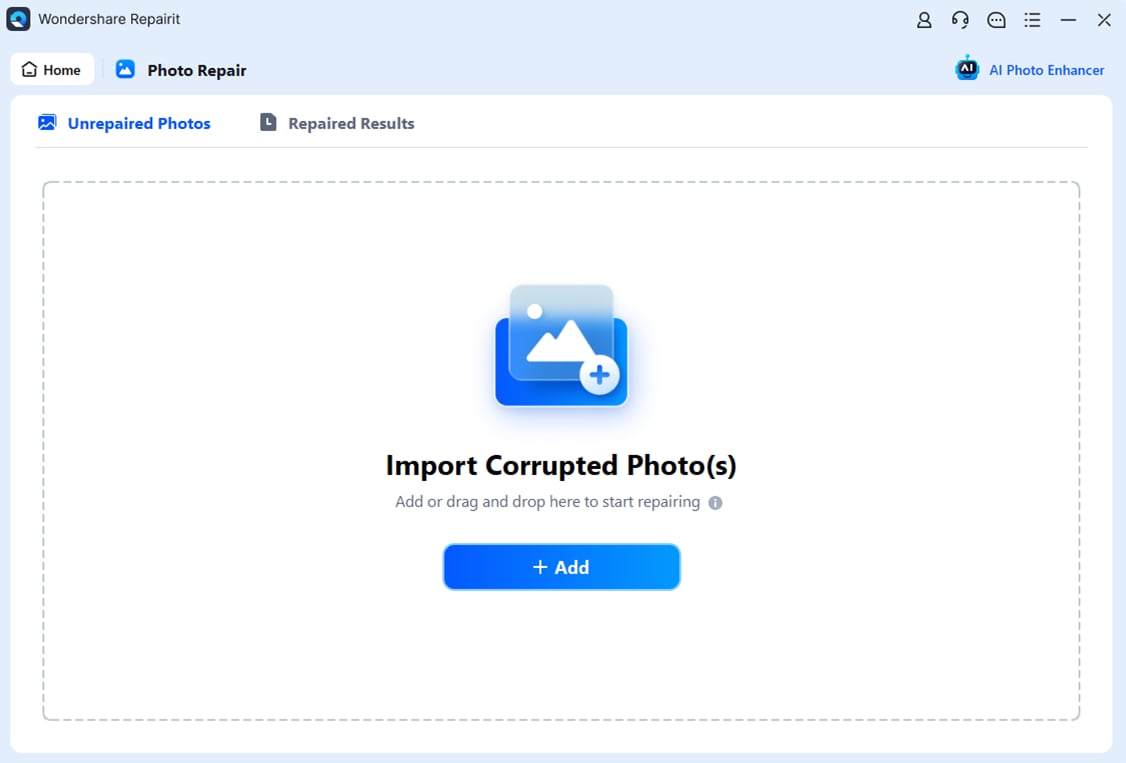
Launch Wondershare Repairit and choose the Photo Repair option on the main screen. Click the button to add files, then browse to the folder where your damaged images are stored. Select one or multiple corrupted photos that fail to open or show errors and load them into the program.
- Repair photo files
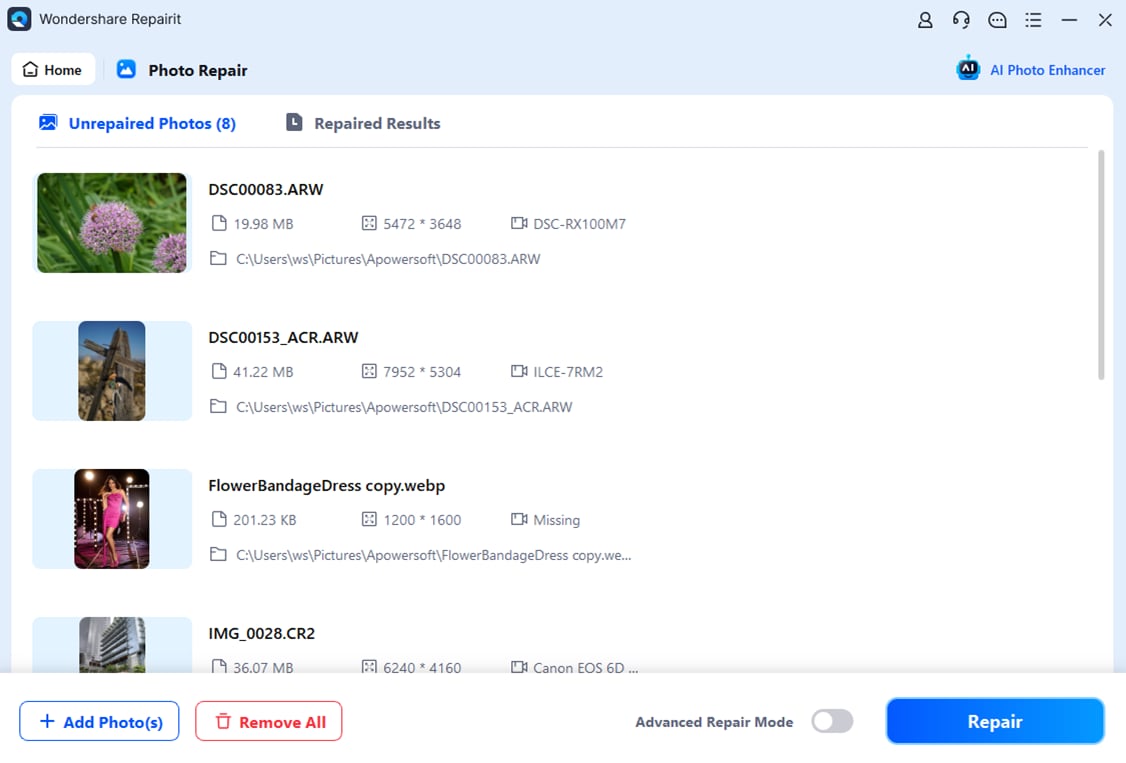
After the photos are imported, check the ones you want to fix and start the repair. Repairit analyzes each file structure, locates the issues, and reconstructs the data so your images can be viewed again. You can monitor the progress in the interface while the software works in the background.
- Save the repaired photo files
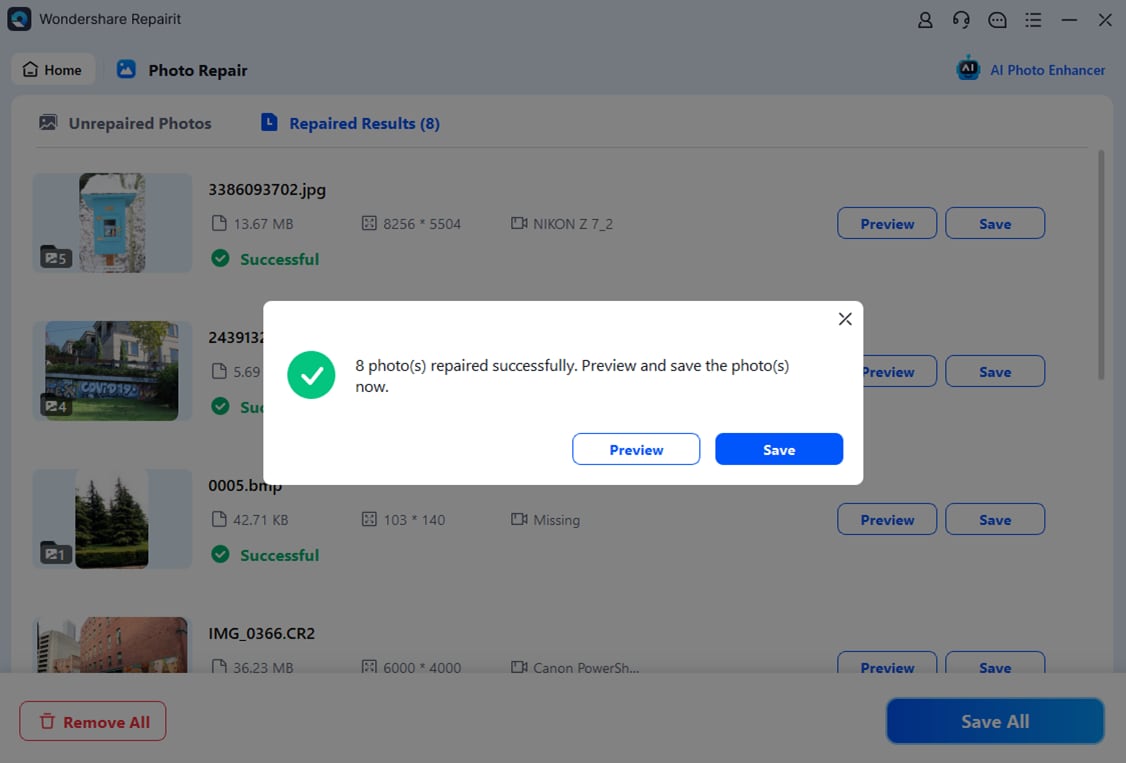
When the repair finishes, preview the restored pictures directly inside Repairit to ensure they look correct. If you are satisfied, choose a secure destination folder that is different from the original source and save the repaired files there. Keeping them separate helps protect your recovered photos from further corruption.
Conclusion
Low light photography and video put your gear under real pressure, exposing every weakness in sensor design, lens speed, and processing. Understanding how low-light performance shapes noise, dynamic range, color, and sharpness helps you set realistic expectations, choose better lenses, and dial in smarter settings in the field.
By balancing aperture, shutter speed, ISO, and stabilization, you can consistently capture clean, detailed images and clips even when the light seems unusable. And if any important photos or videos become corrupted along the way, Wondershare Repairit gives you a practical path to recover your files and protect the results of your hard work.
Next: Full Frame Sensor
FAQ
-
1. What is low-light performance in a camera?
Low-light performance describes how clean, detailed, and accurate a camera can capture images or video when there is very little available light. It is mainly judged by noise levels, dynamic range, focus reliability, and color accuracy in dark scenes, as well as how robust the files remain through editing, encoding, and streaming. -
2. Does a larger sensor always mean better low-light performance?
A larger sensor generally collects more light, which usually improves low-light performance, but it is not the only factor. Sensor design, pixel size, image processing, and lens aperture also play big roles in how clean the results look, especially at higher ISO values. -
3. How can I improve low-light performance without buying a new camera?
Use a faster lens with a wide aperture, stabilize the camera with a tripod or gimbal, lower your shutter speed carefully, optimize in-camera noise reduction, and shoot in RAW or log so you can recover shadows and fine-tune noise during editing. -
4. Why are my night photos so noisy?
Night photos often look noisy because the camera must raise ISO to brighten the image, which also amplifies sensor noise. Underexposure, very small apertures, and aggressive brightening in post-processing can make noise and banding even more visible, especially after export and compression. -
5. Is high ISO always bad for low-light shooting?
High ISO is not automatically bad. It is a tool to get a usable exposure when you cannot slow the shutter or open the aperture further. Aim to use the lowest ISO that still gives you a sharp, properly exposed image for your situation; mild noise is usually easier to fix than motion blur or heavy underexposure.




