

The 0xC10100AA error usually appears when Windows cannot properly play a video in Movies & TV or Media Player. In many cases, the issue is caused by unsupported codecs, app glitches, outdated playback components, or unstable file paths. In other cases, the file itself may be incomplete or damaged.
The fastest way to fix this error is to first determine whether the problem comes from Windows playback support or from the video file itself. This guide starts with low-risk checks, then moves to codec fixes, app resets, and file repair only when necessary.
In this article
-
- Fix 1: Try Another Video Player (e.g., VLC)
- Fix 2: Restart / Reset Movies & TV or Media Player App
- Fix 3: Convert Media to a Compatible Format (MP4 H.264)
- Fix 4: Install or Update Required Codecs
- Fix 5: Update or Reinstall GPU/Display Drivers
- Fix 6: Clear Temp Files and App Cache
- Fix 7: Repair the Corrupted Video File Efficiently with Repairit
Quick Fix (Try These First – 2 Minutes)
- 1. Try the video in VLC first
Open the same file in VLC Media Player.
Why this matters:
- If the file plays in VLC, the file is often still healthy.
- That usually means the problem is with Movies & TV / Media Player, codecs, or Windows playback components.
- If VLC also fails, then file corruption or incomplete download/transfer becomes more likely.
- 2. Move the file to a local disk
If the video is stored on a USB drive, SD card, external disk, network share, or cloud-synced folder, copy it to Desktop or Videos and test again.
Why this helps:
- External storage can disconnect or slow down
- Network/cloud paths can have permission or sync issues
- Local playback removes those variables
- 3. Restart your PC
A restart clears stuck playback processes and refreshes Windows app services.
Part 1. What Causes the 0xC10100AA Video Error?
The 0xC10100AA error means that Windows cannot properly decode or open the media file in its built-in player. It often shows messages such as:
- “Can't play”
- “This file isn’t playable”
- “The file extension may not be supported, the file extension may be incorrect, or the file may be damaged”
Common Causes Behind 0xC10100AA
| Cause | What it means |
| Unsupported codec or format | The built-in player cannot decode the audio/video stream |
| Corrupted or incomplete file | The file is damaged during recording, transfer, or download |
| Outdated Windows media components | The system lacks updated playback support |
| GPU/display driver issues | Hardware decoding fails or conflicts with playback |
| Movies & TV / Media Player app glitches | Cache, temp data, or app settings are corrupted |
| Storage or permission issue | The file location is unstable or access is blocked |
Part 2. Quick Diagnosis: Find the Right Fix Faster
Before trying every fix, use this table to identify the most likely cause.
| Situation | What it usually means | Try this first |
| The file plays in VLC but fails in Movies & TV | App or codec issue | Reset the app, update Windows, or install codec support |
| The file fails in all players | File may be damaged or incomplete | Re-download it or repair it |
| Only MKV files fail | Codec/container support issue | Try VLC or convert to MP4 |
| The file works after moving to C: drive | Storage path or permission issue | Play from local disk and check access rights |
This diagnosis step helps you avoid unnecessary repairs and focus on the right solution.
Part 3. 7 Step-by-Step Solutions for 0xc10100aa Playback Error
If you want to learn simple and effective ways to fix 0xc10100aa Windows 10/11, follow the 7 simple fixes given in this section. From a simple restart to conversion or file repair, determine which solution can help you play your video smoothly again.
Fix 1: Try Another Video Player (e.g., VLC)
Best For: Confirming whether the issue is with the Windows player or the file itself
Why it helps: VLC includes built-in codecs, so it can play formats and streams that Movies & TV cannot. If VLC plays the file normally, the file itself is usually fine.
What to do:
- Open the video in VLC
- If it plays, move to app/codec fixes below
- If it fails, try Fix 2 or Fix 7
Fix 2: Restart / Reset Movies & TV or Media Player App
Best For: App-specific playback glitches
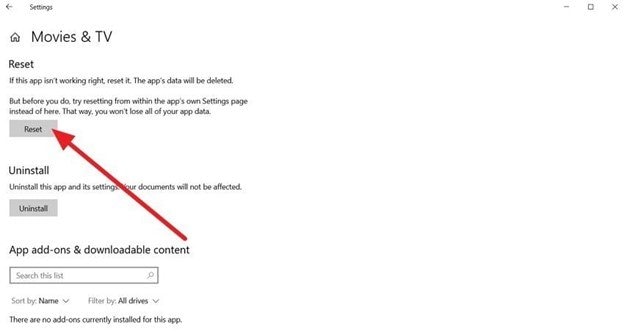
Why it helps: Resetting the app can clear corrupted cache, temporary settings, and broken playback states. Microsoft guidance and user reports commonly recommend trying Repair first, then Reset if necessary.
Step 1. Open Settings > Apps > Installed apps / Apps & features.
Step 2. Find Movies & TV or Media Player.
Step 3. Open Advanced options.
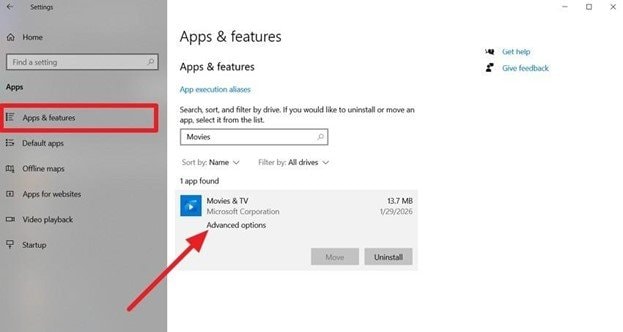
Step 4. Click Repair first. If the error remains, click Reset.
Fix 3: Convert Media to a Compatible Format (MP4 H.264)
Best For: MKV files or videos that use uncommon codecs
If you still encounter the 0xc10100aa video playback error, it's best to convert the file to MP4 (H.264). This can be effective, as MP4 with H.264 and AAC works in Movies & TV and Media Player and avoids errors caused by format or new codecs.
In addition, this fix also removes dependency on missing or broken codecs, rewrites file headers, and indexes, as guided ahead for guidance:
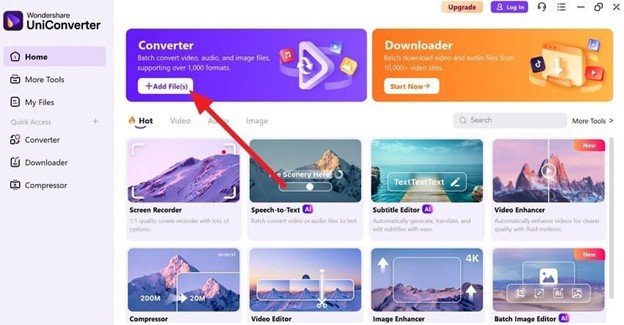
Step 1. For conversion to (MP4 H.264), launch UniConverter and press on the “Add Files(s)” option under the “Converter” tool.
Step 2. Now, tap on the “Convert To” option and in the pop-up menu, choose “MP4 with H.264” or “ACC” format and press on “Convert All.”

⚠️ Warning:
- Conversion may reduce quality depending on settings
- Keep the original file before converting
- This method is best for compatibility problems, not severe corruption
Fix 4: Install or Update Required Codecs
For the Windows Media Player 0xc10100aa, know that if the codec is missing, Movies & TV or Media Player cannot play the file, even if it is fine. So, either add the correct codecs to let the app play video without conversion or update. It makes other files using the same codecs work and can replace broken or outdated codec installs.
Note: Let Windows/Windows Media Player download codecs automatically.
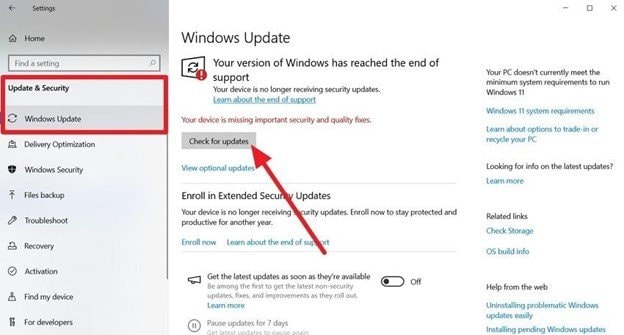
Step 1. In the “Update & Security” tab, go to the “Windows Update” section and press “Check For Updates.”
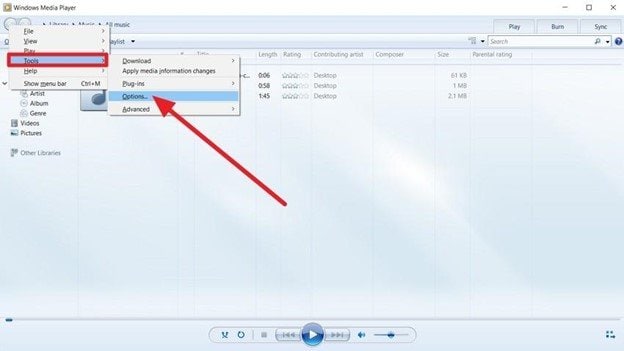
Step 2. If you use Windows Media Player, go to “Tools and “Options” by pressing the “Alt” key or via the “File" menu. In the pop-up menu, go to the "Player" section and choose "Download codecs automatically.”
Fix 5: Update or Reinstall GPU/Display Drivers
Best For: Playback problems linked to hardware decoding or rendering
Why it helps: Windows video playback often depends on GPU acceleration. Microsoft notes that driver updates are commonly delivered through Windows Update and can also be handled in Device Manager.
Step 1. As you press “Win + X,” choose Device Manager and locate the “Display Adapters” menu. Right-click on the one you seek to update and tap on the “Update Driver” option.
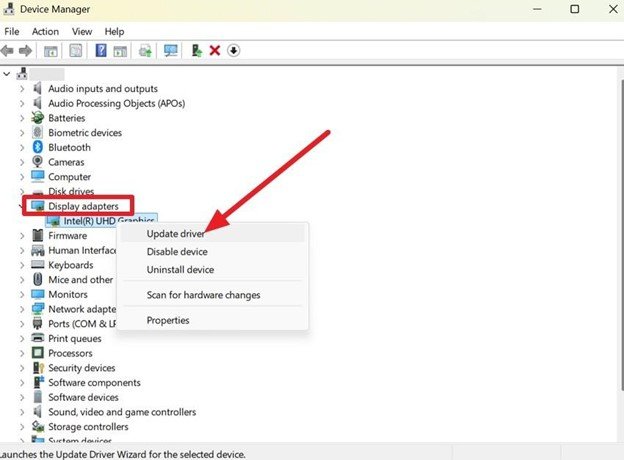
Step 2. When directed to the pop-up menu, choose the "Search Automatically for Drivers” option and follow the given instructions.

Fix 6: Clear Temp Files and App Cache
Best For: System resource issues or app cache corruption
As you clear the Temp files and app cache, it can fix the 0xc10100aa error when it comes from low resources or app glitches. As you delete these files, it can free memory and disk space, and let Windows process videos more smoothly. Furthermore, it removes corrupted temp data that can make Movies & TV or Media Player fail. So, to rebuild the fresh files and play videos smoothly, follow the instructions mentioned:
From Settings
Step 1. In your settings, go to the “System” tab and choose the “Storage” option. After that, tap on the “Temporary Files” menu as the scan ends.

Step 2. Here, choose “Temporary Files” along with other data and press the “Remove Files” button.

From Run Box
Step 1. Type “temp” as you press “Win + R” and press the “Ok” button.

Step 2. In the File Explorer interface, select all the fields and choose the “Delete” option upon right click.

Step 3. Once done, press the “Win + R” key again, type “%temp%,” and choose the “Enter” key.

Step 4. Follow the same process to select the files (via Ctrl + A), then select the “Delete” icon to remove them.

Fix 7: Repair the Corrupted Video File Efficiently with Repairit
Best For: Files that fail in multiple players, were partially downloaded, or were interrupted during transfer
If the same file fails in VLC, Movies & TV, and other players, the issue may be the file itself. In that case, a video repair tool may help rebuild the damaged structure. One example is Repairit Video Repair.
What video repair tools can help with
- Damaged video headers
- Broken metadata
- Corrupted MP4/MOV/AVI/MKV containers
- Files interrupted during transfer or recording
What they cannot fix
- Missing codecs in Windows
- App-only glitches in Movies & TV
- 0 KB files
- Problems caused only by unstable USB/network playback
To deal with the 0xc10100aa error, learn how Repairit can repair damaged or corrupted videos in 3 simple steps:
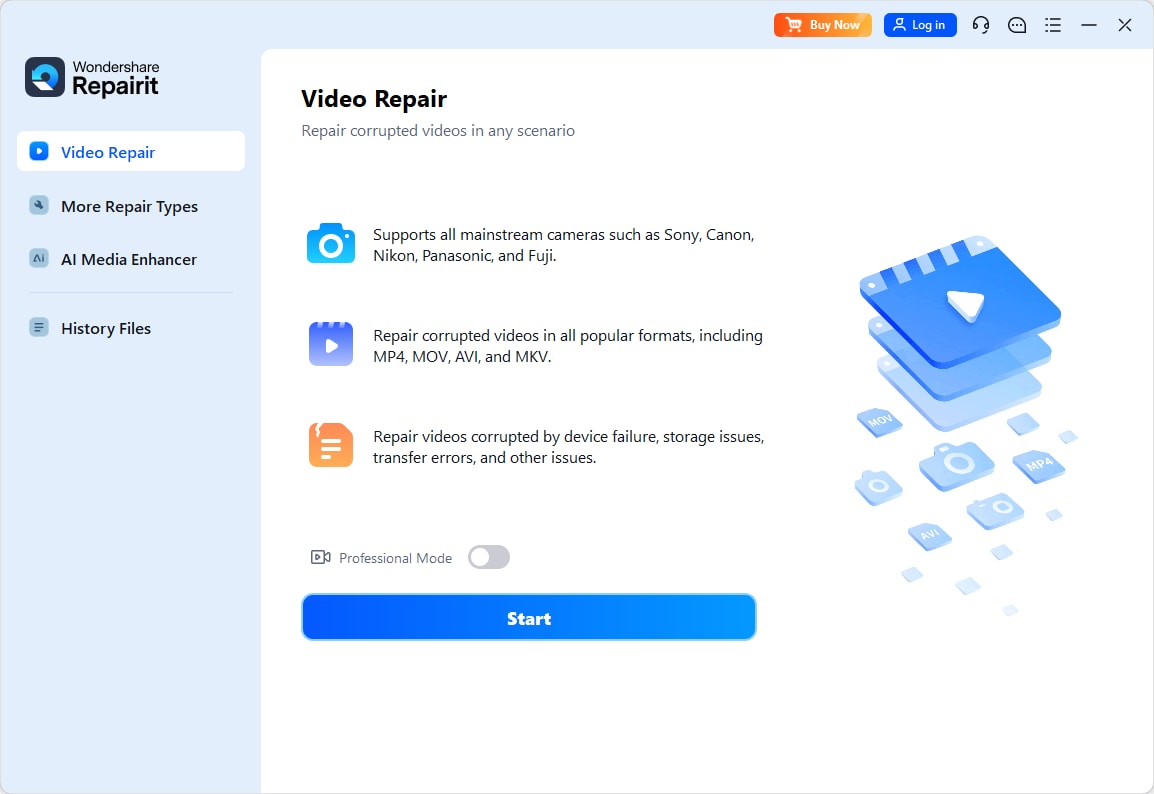
Step 1. Choose the “Start” button located in the “Video Repair” section to add the corrupted video files.
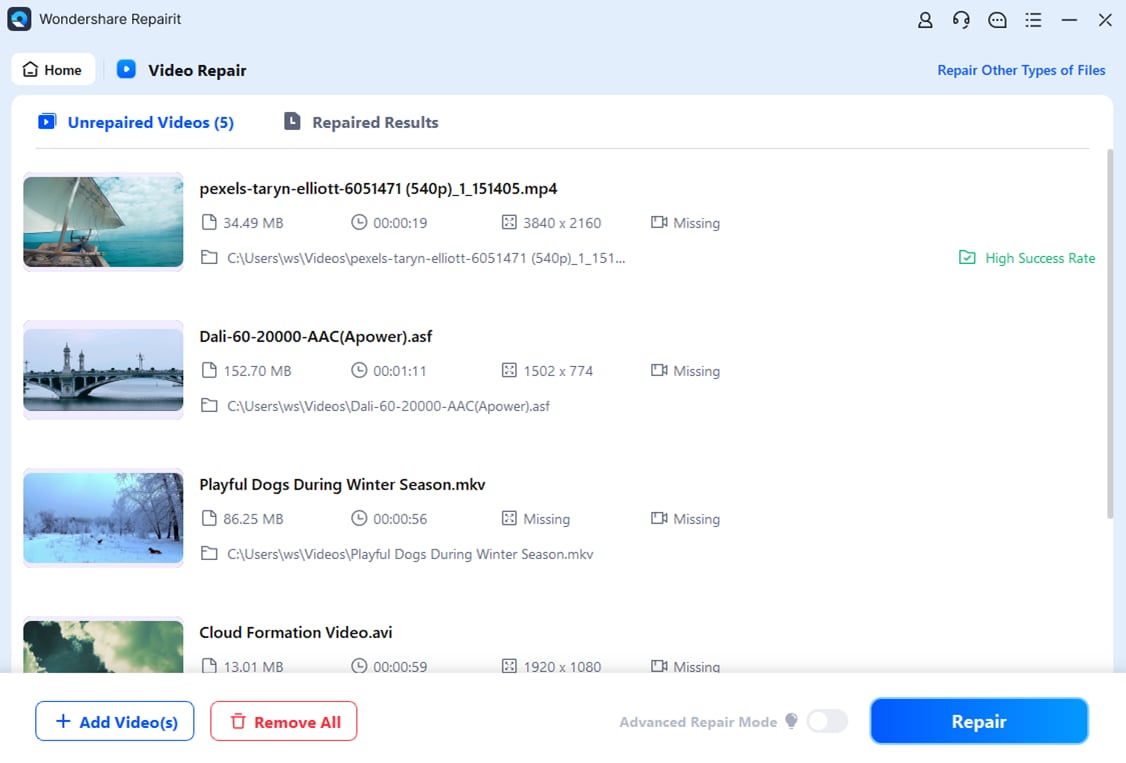
Step 2. Pick the “+Add File(s)” button if you want to add more damaged video files, and press the “Repair” button to resolve the 0xc10100aa error.
Step 3. When the Quick Repair ends, tap on the “Preview” and “Save” buttons to check and export the repaired video files.
Part 3. Keep Your Media Files Safe and Error-Free (7 Practical Tips)
If you want to prevent having 0xc10100aa video playback error repeatedly, follow the 7 practical tips given ahead:
- Prefer MP4 (H.264) Format for Compatibility: Always use MP4 with H.264 video and AAC audio because it works on Windows, phones, TVs, and browsers. Additionally, this format reduces playback errors caused by containers or new codecs that some players cannot read.
- Avoid Interrupting File Transfers: Never stop a copy, unplug a drive, or lose power while saving a file. Know that partial or corrupted files from interrupted transfers often cause errors and prevent proper playback.
- Always Safely Eject USB Drives: Use “Safely Remove” before unplugging USB or SD cards to finish all writes. Additionally, remove the drivers properly, as a single wrong action can damage files or indexes and cause playback problems later.
- Keep Windows and Drivers Updated: Outdated Windows builds or GPU drivers can cause errors, crashes, or missing codecs. Thus, new updates can fix media components, add support for new codecs, and improve graphics stability.
- Avoid Installing Unknown Codec Packs: Untrusted codec packs can overwrite system files and add unstable filters. Additionally, they often introduce more errors or crashes rather than fixing playback issues.
- Back Up Important Videos: Make sure to keep copies of videos on another drive or cloud storage for safety. Moreover, backups protect files from corruption, disk failure, or errors that repair tools cannot fix.
- Verify File Integrity After Downloading: Always check new downloads by playing once or using the provided hashes/checksums. Hence, this ensures the file is complete and avoids errors when it is opened later.
If Nothing Works
If none of the fixes above work, try these last checks:
- Test the file on another Windows PC
- Test it under another Windows user profile
- Check whether the external drive or USB device disconnects or slows down
- If the file comes from Microsoft Movies & TV purchases or protected content, consider that licensing or playback entitlement may be part of the issue rather than the file itself.
If the file fails everywhere, it is more likely incomplete or corrupted. If it only fails on your PC, the issue is more likely local playback support.
Conclusion
The 0xC10100AA video error is a common Windows playback problem that usually appears when the built-in player cannot properly decode the file, the app is glitched, or the playback environment is unstable. In many cases, the file itself is still fine and can be opened in VLC or after resetting Movies & TV, updating Windows, or moving the file to a local disk.
If the same file fails in multiple players, then file damage becomes more likely. In that case, re-downloading the file or using a repair tool may help. The safest approach is to start with quick diagnostics first, then move to codec, app, and file-level fixes only when needed.
Frequently Asked Questions
-
What does 0xC10100aa mean in Windows?
It means Windows cannot properly play the file in Movies & TV or Media Player. The cause may be missing codec support, an app issue, outdated playback components, or a damaged file. -
Does 0xC10100AA always occur due to file corruption?
No. It can also be caused by unsupported codecs, app cache problems, or outdated drivers. File corruption is only one possible cause. -
Why does VLC play the video, but Movies & TV doesn’t?
Because VLC includes its own codecs. If VLC works, the file is often still fine and the problem is more likely with Windows playback support. -
Can updating drivers fix 0xC10100aa?
Yes. GPU or display driver updates can restore hardware decoding and remove rendering-related playback issues. Microsoft recommends keeping drivers current through Windows Update or Device Manager. -
How can I tell if a video file is damaged?
A damaged file may fail in multiple players, freeze at the same point, show a black screen, or stop unexpectedly. In that case, try re-downloading it first before using repair software.