
![Ultimate Guide to Fix 0xc00d36cb Video Error Code [Windows 10/11]](https://images.wondershare.com/repairit/article/0xc00d36cb-video-error-code-1.jpg)
Many Windows 10 and 11 users run into the 0xC00D36CB error when trying to play a video in Movies & TV, Media Player, or similar built-in playback apps. In most cases, this error appears because the player cannot properly decode the file, the app is temporarily broken, or Windows playback components are out of sync.
A smaller number of cases are caused by the video file itself being damaged or incomplete. That’s why the fastest way to fix 0xC00D36CB is to first determine whether the problem comes from Windows playback support or from the file itself.
This guide walks through the safest fixes first, then moves to format conversion and file repair only when they are actually needed.
In this article
-
- Fix 1: Test the Video in VLC or Another Player
- Fix 2: Move the Video to a Local Disk and Test Playback
- Fix 3: Re-download or Restore the Video File
- Fix 4: Repair or Reset Movies & TV App
- Fix 5: Run Windows Video Playback Troubleshooter
- Fix 6: Reset Microsoft Store Cache
- Fix 7: Update Windows and Graphics Drivers
- Fix 8: Install Missing Codecs or Convert the File
- Fix 9: Repair Corrupted Videos
- Fix 10: Play Video from Local Disk & Check Permissions
Quick Fix (Try These First – 2 Minutes)
Before going into full troubleshooting, try these quick checks first.
- Try Playing the Video in VLC
The fastest way to test this error is to open the same file in VLC Media Player.
VLC includes its own built-in codecs, so it can often play files that fail in Movies & TV or Media Player. This makes it a useful way to separate a Windows player issue from a bad video file.
If the video plays in VLC, the file is usually fine.
If the video fails in VLC too, the file may be incomplete, damaged, or unsupported across multiple players.
- Restart Your PC
A restart can clear stuck player processes, refresh Microsoft Store components, release file locks, and apply pending updates.
Instructions: Open the Start menu, click the Power icon, and select Restart.
- Move the File to a Local Disk
If the video is stored on a USB drive, external disk, network location, or cloud-synced folder, copy it to a local folder such as Videos or Desktop and test playback again.
If it works locally, the problem is more likely related to the original storage path, permissions, or unstable media access.
Part 1. What is the 0xc00d36cb Error?
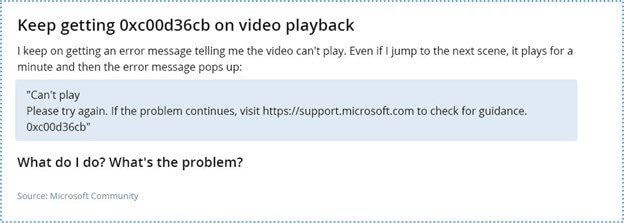
The 0xC00D36CB error means that Windows cannot properly play the video or audio stream in the file. It often appears with a message like “Can’t play. Please try again.”
This error is most commonly seen in:
- Movies & TV (Films & TV)
- Windows Media Player
- Media Player on Windows 11
What Causes the 0xC00D36CB Error?
So, if you are eager to know what causes it, dive into the sequential table before you uncover advanced fixes:
| Cause Category | Brief Explanation |
| Unsupported/Missing Codecs | The player cannot decode the video or audio stream. |
| Unsupported Format | The file container, such as MKV, may include streams the app does not support well. |
| Corrupted Video File | The file is incomplete or structurally damaged. |
| App Glitches | Movies & TV, Media Player, or Store components are malfunctioning. |
| Windows System Issues | Outdated Windows components, broken playback services, or graphics driver conflicts. |
| Storage/Path Problems | The file is on a slow, unstable, or permission-restricted location. |
| Permission/Access Issues | The player or current user does not have proper access to the file. |
Part 2. Quick Diagnosis: Find the Right Fix Faster
Before trying every solution, identify which scenario best matches your issue.
| Situation | What It Usually Means | Try This First |
| The file plays in VLC but fails in Movies & TV | Codec or app-specific issue | Reset the app, update Windows, or install codec support |
| The file fails in all players | Possible file corruption or incomplete download | Re-download the file or try repair |
| Only MKV files fail | Missing codec or unsupported stream | Try VLC or convert to MP4 |
| The file works after moving to C: drive | Storage path, permission, or unstable external media issue | Play from local disk and check access rights |
This quick check helps you avoid unnecessary repairs and choose the right solution faster.
Part 3. Top 9 Step-by-Step Methods to Fix 0xc00d36cb Error
When basic ways fail to fix the 0xc00d36cb can’t play error, here are some innovative ways you can try:
Fix 1: Test the Video in VLC or Another Player
Best For: Quickly separating player issues from file damage
In many cases, 0xC00D36CB appears because Movies & TV or Media Player cannot decode the file correctly. VLC can often play the same file without any issue.
If VLC plays the file normally, the problem is usually related to:
- Missing codec support in Windows
- A broken Movies & TV or Media Player app
- Outdated playback components
If VLC also fails, move to file-level fixes later in this guide.
Fix 2: Move the Video to a Local Disk and Test Playback
Best For: Files on USB drives, external disks, network folders, or cloud storage
Playback errors sometimes come from the file location, not the file itself. A video stored on removable or network media may fail because of:
- Unstable connection
- Slow read speed
- Permissions problems
- Sync conflicts
What to do:
- Copy the file to a local folder such as Desktop or Videos.
- Open it again in Movies & TV or Media Player.
- If it works, the original storage path was likely the problem.
Fix 3: Re-download or Restore the Video File
Best For: Files downloaded from the internet, copied from backup, or transferred from another device
If the file was only partially downloaded or interrupted during transfer, Windows may fail to decode it even though the format looks correct.
What to do:
- Download the file again from the original source
- Restore it from backup if available
- Re-copy it from the original device or drive
If the fresh copy plays normally, the original file was the issue.
Fix 4: Repair or Reset Movies & TV App
Best For: App‑specific glitches
If the video works in VLC but not in Movies & TV, the app itself may be corrupted or stuck in a bad state. Resetting the app can remove broken cache, damaged settings, and temporary playback issues.
Step 1. Open Apps & Features in Windows Settings.
Step 2. Search for “Movies & TV” and pick the “Advanced Options” option.
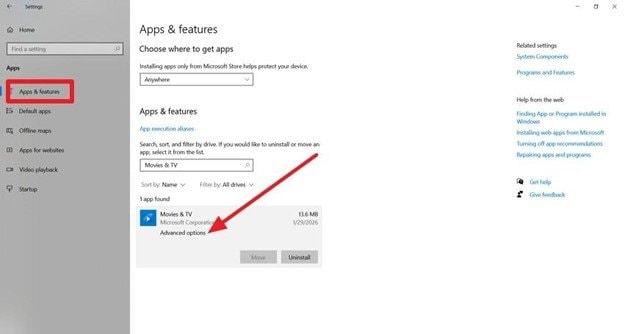
Step 3. Choose Repair first.
Step 4. If the issue continues, choose Reset, then test the file again.

Note: Resetting the app may clear cached data and preferences, but it will not delete your personal video files.
Fix 5: Run Windows Video Playback Troubleshooter
Best For: System playback settings and component issues
As another 0xc00d36cb error code solution, run the Windows Video Playback Troubleshooter. It scans playback settings, including HDR, hardware decoding, and stream protection, and resolves conflicts with Movies & TV or Media Player.
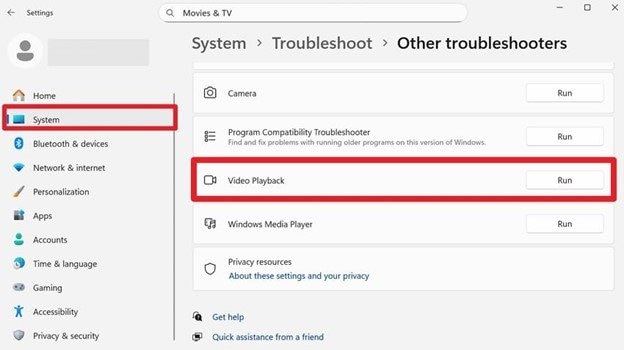
Go to Settings > System > Troubleshoot > Other troubleshooters.
Find Video Playback, click Run, and follow the on-screen instructions.
Fix 6: Reset Microsoft Store Cache
Best For: Store-related app issues
Movies & TV and some Windows media components depend on Microsoft Store services. If the Store cache is corrupted, updates or playback-related app components may stop working properly.
Step 1. Press Win + R, type wsreset.exe, and click OK.
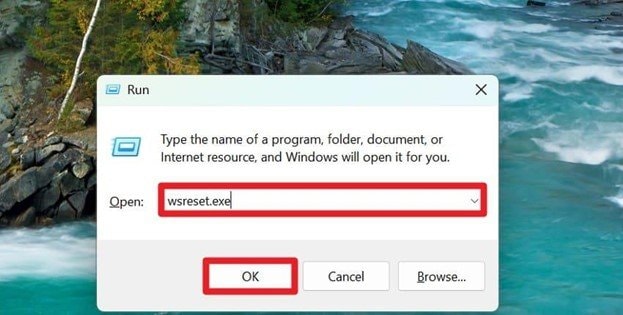
Step 2. A blank Command Prompt window may appear briefly. When it closes and Microsoft Store opens, the reset is complete.
Note: This helps with Store-related app issues, but it does not repair the video file itself.
Fix 7: Update Windows and Graphics Drivers
Best For: Outdated playback components or GPU decoding issues
Outdated Windows builds or graphics drivers can cause playback failures, especially with modern codecs or hardware decoding.
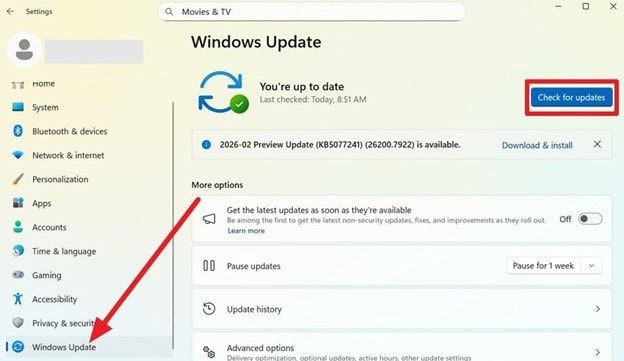
Update Windows: Go to Settings > Windows Update and click Check for updates.
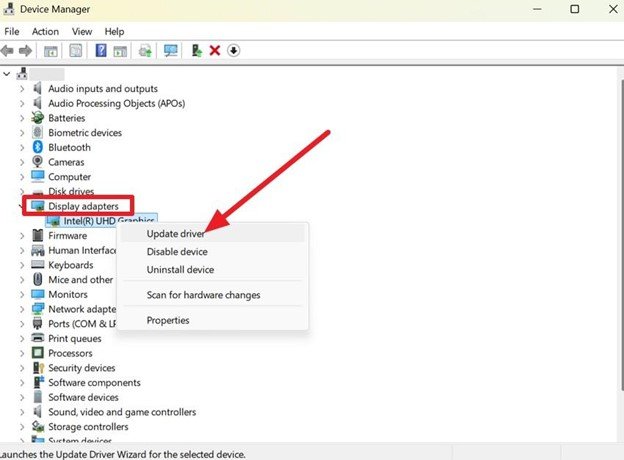
Update Graphics Drivers (Device Manager)
Step 1. Open Device Manager, expand Display adapters, right-click your graphics device, and select Update driver.
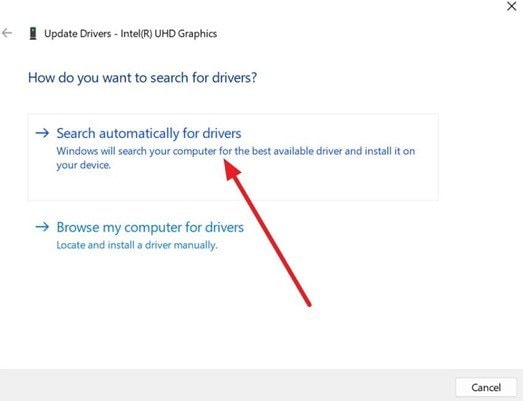
Step 2. Choose Search automatically for drivers and follow the prompts.
Fix 8: Install Missing Codecs or Convert the File
Best For: MKV files, unusual formats, or unsupported streams
If VLC plays the file but Windows shows the error, the problem is likely missing codecs, not a corrupted file. So, installing the codecs via the listed guide solves the issue and lets the built-in player play the video normally:
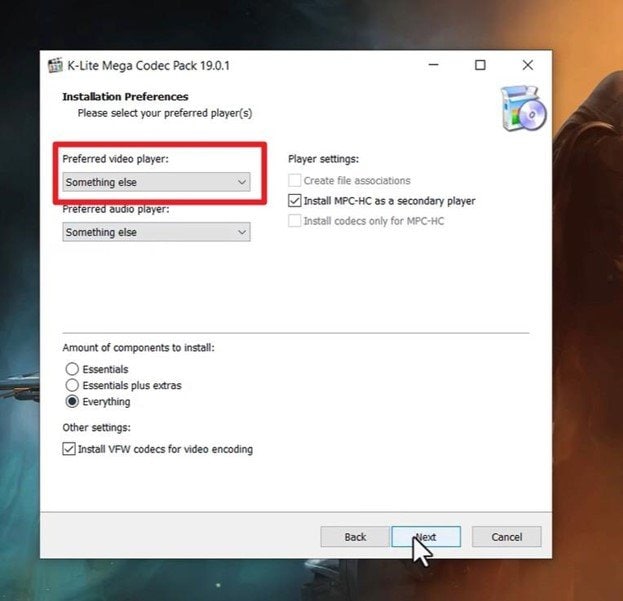
Step 1. Head to the official site for K‑Lite Codec Pack and scroll down to choose any version, like “Download Mega.”
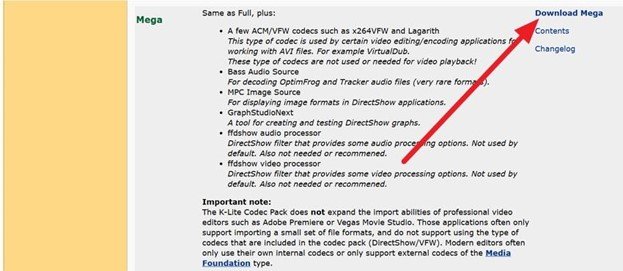
Step 2. Once downloaded, choose the “Normal” mode, and pick the “Movies & TV” or “Something Else” option in the “Preferred Video Player” menu. Next, choose the given settings according to your preferences until you reach the “Finish” interface.
If the file format or codec is too unusual for Movies & TV, converting it to MP4 with H.264 video and AAC audio often resolves the issue.
Important:
- Keep the original file before converting
- Conversion may reduce quality if you choose aggressive compression
- This method is best for compatibility problems, not true file corruption
You can use a standard video converterto create a new MP4 copy, then test the converted file in Movies & TV or Media Player.
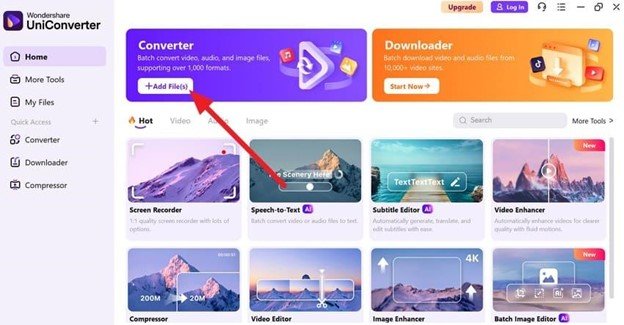
Step 1. On the Converter tool, click the “+Add Files(s)” button and add the video that shows the 0xC00D36CB error.
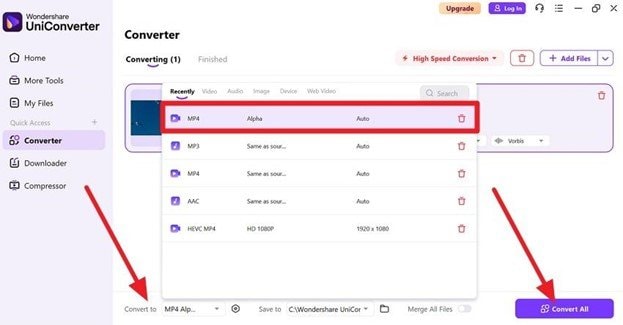
Step 2. Expand the “Convert To” menu to choose “MP4” and “H.264 (or AVC) video + AAC Audio” settings and press the “Convert All” button. Once done, open Movies & TV / Media Player, then open the new MP4 file.
Fix 9: Repair Corrupted Videos
Best For: Videos that fail in multiple players, freeze repeatedly, or were interrupted during download/transfer
If the same video fails in VLC, Movies & TV, and other players, the issue may be the file itself rather than Windows. In that situation, a video repair tool may help rebuild damaged headers, container structures, or playback metadata.
One example is Repairit Video Repair. It is useful when the file is incomplete, partially downloaded, or structurally damaged. Other than that, the tool is designed to fix issues like video not playing, no sound, out-of-sync, playback errors, flickers, corrupt headers, and artifacts.
What Video Repair Can and Cannot Do
A video repair tool can help when:
- the file freezes or stutters in multiple players
- the video has damaged headers or metadata
- the container structure is corrupted after interrupted transfer or export
It cannot help when:
- Windows is missing the required codec
- the problem is limited to Movies & TV only
- the file is 0 KB or permanently overwritten
- the issue comes from unstable USB/network playback
To know how this AI -powered tool can fix 0xc00d36cb, review the listed 3-step guide:
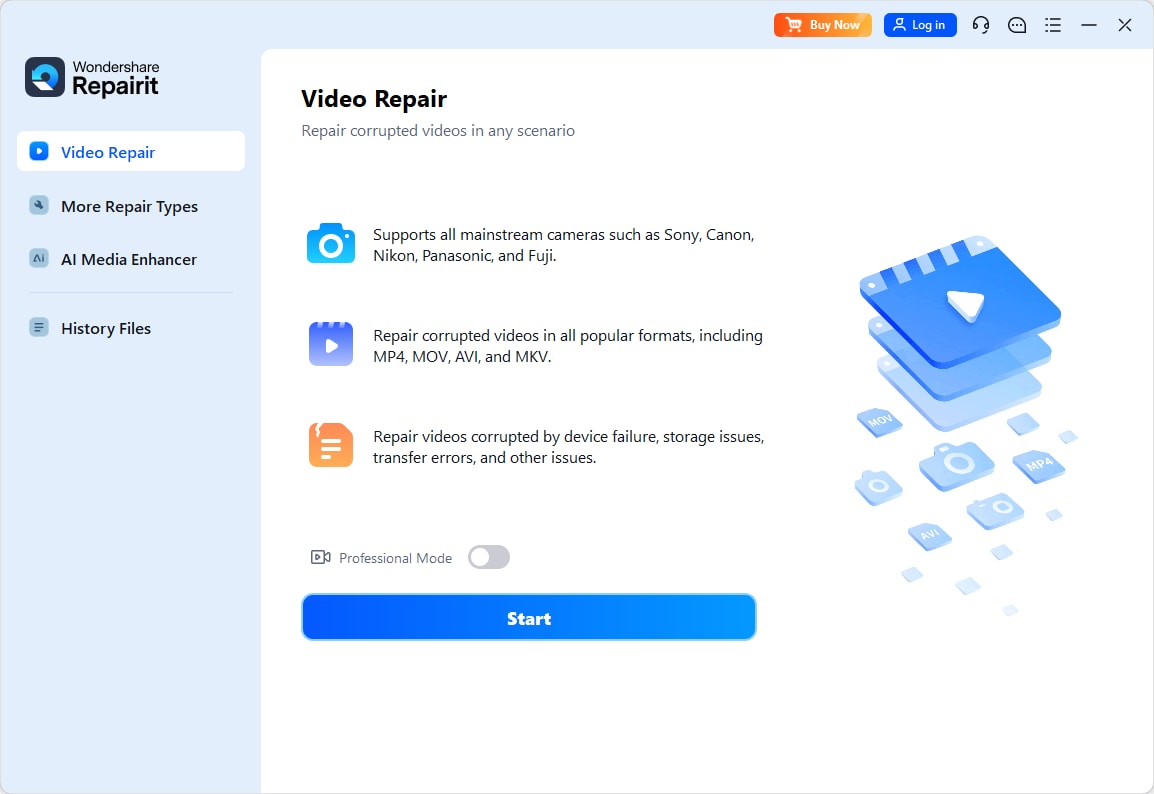
Step 1. Choose to Add Video to Fix 0xc00d36cb Error
Press the “Start” button in the “Video Repair” section, then add the corrupted videos that are causing the 0xc00d36cb error.
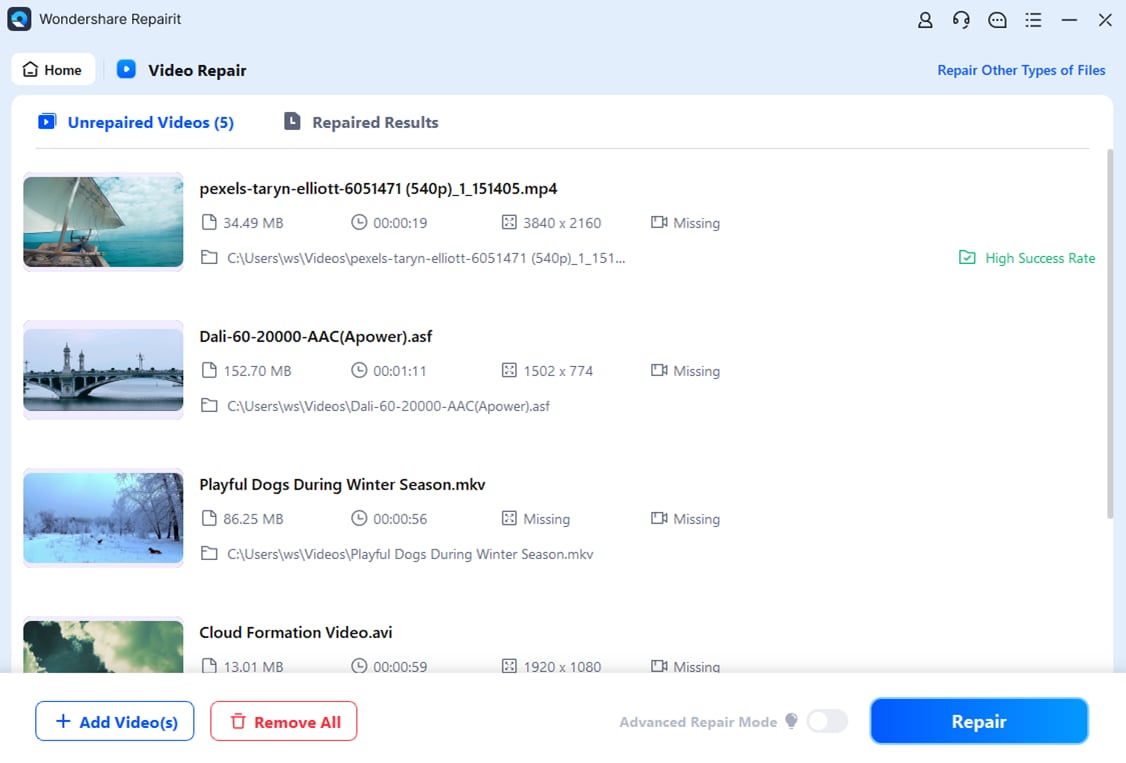
Step 2. Start the Quick Scan to Fix Videos
On the new interface, tap the “Repair” button or add more videos via the “Add File(s)” button.
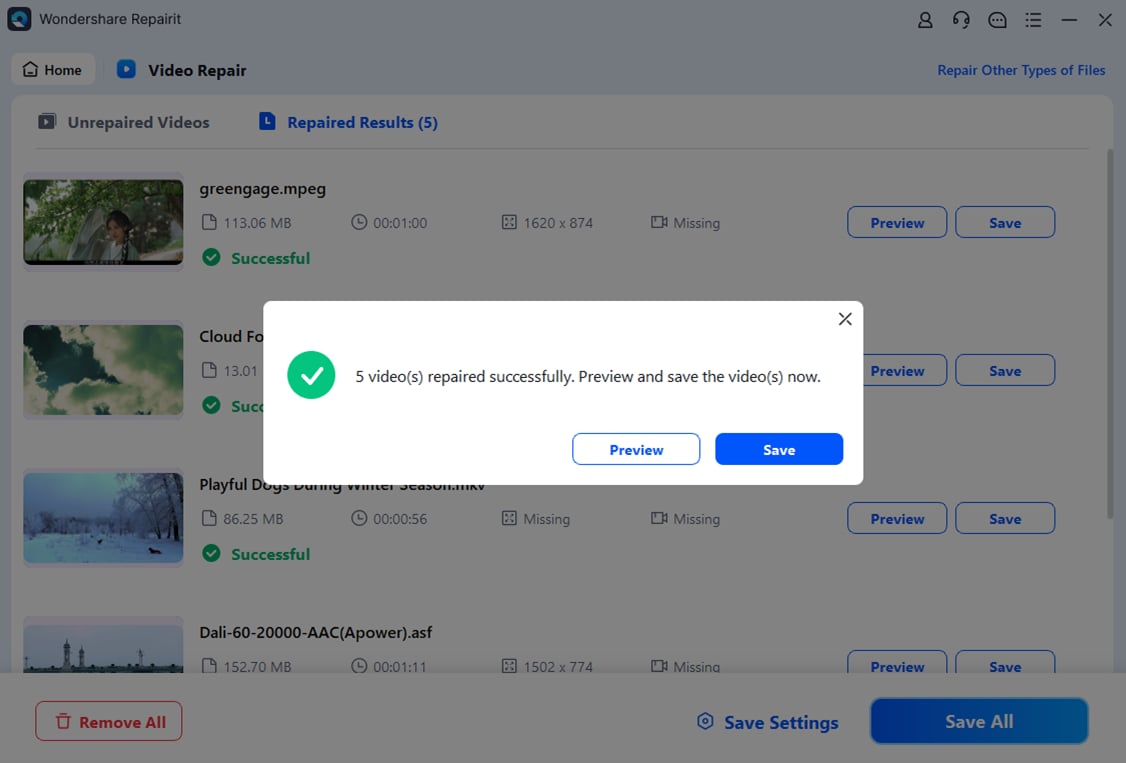
Step 3. Save Fixed Videos to Resolve 0xc00d36cb Error
Once the damaged videos are fixed, choose between the “Preview” and “Save” options to see if it resolves the 0xc00d36cb error.
Fix 10: Play Video from Local Disk & Check Permissions
Best For: Path/permission problems
As a last option to resolve the 0xc00d36cb error, play the video from a local disk and check permissions. When you move files from network drives, USBs, SD cards, or cloud folders to a local folder, it removes slow or disconnected storage issues. In addition, ensuring your account or the Movies & TV app has read access helps resolve permission issues that may trigger the error.
Check and Adjust File Permissions (If Still Failing)
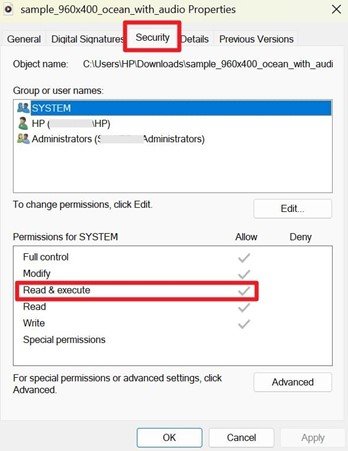
Step 1. If the issue persists after moving the file, right-click it and select “Properties”. Now, go to the “Security” tab and see if you have “Read & Execute” permission in the “Permissions for SYSTEM” tab.
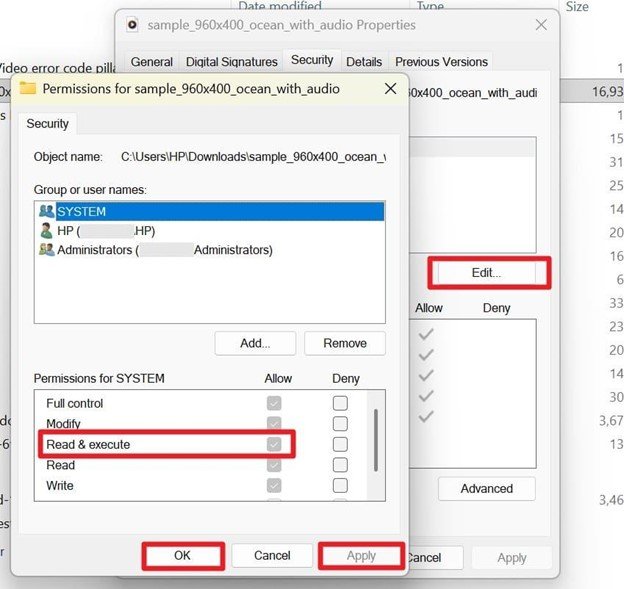
Step 2. In case of no permission, choose the “Edit” button and tick “Read & Execute” in the “Permissions for SYSTEM” tab. Then, choose the “Apply” and “Ok” buttons to save the changes.
Part 4. How to Prevent 0xC00D36CB Error (6 Practical Tips)
To ensure you don’t get the need to fix 0xc00d36cb in the future, follow the 6 practical expert tips:
- Download Videos Completely Before Playback: As mentioned, partial or interrupted downloads can corrupt files and trigger 0xC00D36CB. So, always wait until the file finishes 100% before playing.
- Prefer MP4 (H.264) Format: Windows players work best with MP4 using H.264 video and AAC audio. Therefore, using this format avoids most codec-related playback errors.
- Keep Windows Updated: Know that updates fix bugs in media components and DRM. So, keep Windows up to date to prevent errors in Movies & TV or Media Player.
- Periodically Update Graphics Drivers: Hardware decoding and efficient video playback rendering depend on updated graphics drivers today. Consequently, it is implied that drivers should be kept up to date to minimize the likelihood of video errors, stutters, black screens, or even the "Cannot play" messages.
- Do Not Play off Unstable USB Drives: USB drives, SD cards, or external drives may fail, come loose, or corrupt files. Therefore, make copies of any large or important videos you want to play on your internal disk before accessing the file, so they are available to you.
- Back up valuable videos: Video recordings may be destroyed due to accidents, disk failures, or file damage. In this way, it is always preferable to have a backup, so you can recover a clean copy and avoid competing with permanent 0xC00D36CB errors.
If Nothing Works
If you still see 0xC00D36CB after trying all the fixes above, test the file on another Windows PC or under another user profile.
- If the file works elsewhere, the issue is probably with your local Windows environment
- If the file fails everywhere, the file is more likely damaged or incomplete
- For videos stored on external drives, also check whether the drive disconnects, slows down, or shows other read errors.
If the error affects content purchased through Microsoft Movies & TV, the problem may also be related to store licensing or a title-specific playback issue rather than your local file.
Conclusion
The 0xC00D36CB video error usually appears when Windows cannot properly play a file because of codec limitations, app glitches, playback component conflicts, or unstable storage paths. In many cases, the file itself is still fine and can be opened in VLC or after resetting Movies & TV, updating Windows, or moving it to a local drive.
If the same video fails across multiple players, then file corruption becomes more likely. In that case, re-downloading the file or using a repair tool may help. The safest approach is to start with quick player and app checks first, then move to conversion or file repair only when simpler fixes do not work.
Frequently Asked Questions
-
Is 0xC00D36CB a codec error?
Often, yes. This error commonly appears when Movies & TV or Media Player cannot decode the video or audio stream properly. However, it can also be caused by app glitches, storage issues, or file corruption. -
Why does MKV show 0xC00D36CB in Movies & TV?
Many MKV files contain video or audio codecs that Movies & TV does not handle well. That is why the same file may fail in the Windows player but still open in VLC. -
Does VLC permanently fix 0xC00D36CB?
No. VLC is mainly a diagnostic workaround because it includes its own codecs. If VLC plays the file, it usually means the problem is with Windows playback support, not the file itself. -
How do I know if my video file is corrupted?
A file is more likely corrupted if it fails in multiple players, freezes at the same point, shows black screen, or was interrupted during download or transfer. In that case, try re-downloading it first before using repair software. -
Can resetting Movies & TV delete my videos?
No. Resetting the app only clears its own settings and cached data. It does not remove the videos stored on your PC.