
When a video won’t play in Windows, you may see 0xC004F011 or 0xC1010103 in Movies & TV or Media Player. In many cases, the file itself is still usable, but the built-in player cannot decode it correctly because of missing codec support, an incompatible container, app glitches, or outdated playback components. Windows Media Player and Media Player rely on codec support that may come from built-in components, the Microsoft Store, or the Media Feature Pack on some editions of Windows.
In other cases, the file may actually be incomplete or damaged after export, download, or transfer. That is why proper troubleshooting matters: before repairing the file, you need to determine whether the problem comes from Windows playback support or from the video file itself.
This guide walks through the safest fixes first, then moves to codec, conversion, and file-repair options only when needed.
In this article
-
- Fix 1. Use a Different Media Player
- Fix 2. Install Required Codecs
- Fix 3. Convert Video to Compatible Formats
- Fix 4. Update Display/Audio Drivers
- Fix 5. Run Video Playback Troubleshooter
- Fix 6. Clean Temporary Files
- Fix 7. Update Windows & Media Player Apps
- Fix 8. Re-Download / Repair or Replace Video
- Fix 9: Repair a Corrupted Video File
Part 1. What is 0xc004f011(0xc1010103)?
0xC004F011 and 0xC1010103 are Windows playback errors that usually appear when Movies & TV or Media Player cannot properly open a video file.
Typical messages include:
- “Can’t play”
- “Choose something else to play”
- “The file extension may not be supported”
- “Missing codec”
These errors usually point to one of these causes:
- Unsupported or Missing Codecs: Windows does not support certain codecs, such as HEVC/H.265 or off-the-record audio, which are found in some videos. Where the gamer fails to decode these streams, it displays 0xc004f011/0xc1010103 rather than the file.
- Problematic Container or Format: Files containing MKV, MOV, or TS containers can contain several tracks or different frame rates. Therefore, Windows players consider such files as non-compatible and give errors even in the case of supported codecs.
- Bad or Damaged Video File: Half-downloaded or damaged files contain broken headers or damaged data blocks, which cannot be read by the player. The player is unable to decode frames or timecodes, so it gives 0xc004f011/0xc1010103.
- Glitches in the Media App or System Stack: Movies and TV or Media Player might have broken down because of a corrupt cache, updates, or incorrectly set playback options. Valid files may cause 0xc004f011/0xc1010103 when the components of the app or media are damaged.
- Driver or System Configuration Problems: Playback may be blocked by outdated graphics drivers, a wrong setting of hardware acceleration, or incomplete Windows upgrades. In addition, decoding and rendering result in the player displaying 0xc004f011/0xc1010103 when the file is good.
Part 2. Quick Diagnosis: Find the Right Fix Faster
Before trying every method, identify which situation matches your error.
| Situation | What it usually means | Try this first |
| VLC plays the file, but Movies & TV does not | Codec or Windows player issue | Fix 2, Fix 6, or Fix 7 |
| The file fails in VLC too | File may be damaged or incomplete | Fix 3 or Fix 9 |
| Only MKV, MOV, or unusual formats fail | Container/codec compatibility issue | Fix 7 or Fix 8 |
| The file works on the camera or another device but not Windows | Windows playback support issue | Fix 1, Fix 6, or Fix 7 |
| The file fails only from USB, SD, or external drive | Path or unstable storage issue | Copy it to local disk first |
This quick check helps you avoid unnecessary repair attempts and choose the right solution faster.
Part 3. Can't Play Videos? Fix 0xc004f011(0xc1010103) Easily
For those who want to fix the 0xc1010103 error, try the 9 practical methods mentioned below, as they help identify the root cause and restore normal video playback on Windows 10 and 11.
Fix 1. Use a Different Media Player
Best For: Confirming whether the issue is with Windows playback or the file itself
Why It Helps: VLC has built-in codec support and can often play files that Movies & TV or Media Player cannot. This is one of the most common and fastest diagnostic steps recommended in guides covering 0xC1010103 and 0xC004F011.
What to do:
- Open the same video in VLC
- If it plays, the file is usually fine
- If it fails there too, move to file-level fixes later in this guide
Fix 2. Install Required Codecs
Best For: Missing codec support or unusual containers
Windows Media Player and Media Player can use additional codec support, but Microsoft explicitly warns against random third-party codec packs because they can create compatibility problems and even system instability.
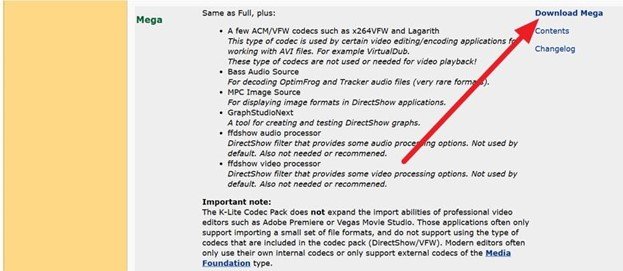
Step 1. On the K‑Lite Codec Pack site, look for the suitable version and click on the “Download Mega” option.
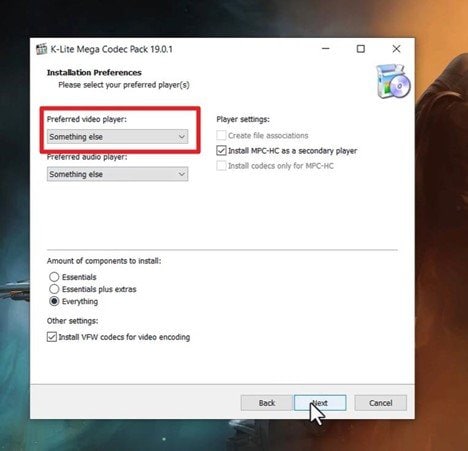
Step 2. After downloading, install the codecs by selecting your “Preferred Video Player” and any other settings.
⚠️ Warning:
- Avoid unknown codec packs
- Prefer official Microsoft Store codec extensions or a known-safe player like VLC
- Third-party codec packs can change associations and add unstable filters
Fix 3. Convert Video to Compatible Formats
Convert the video to MP4 with H.264 video and AAC audio, which is one of the most widely supported combinations on Windows.
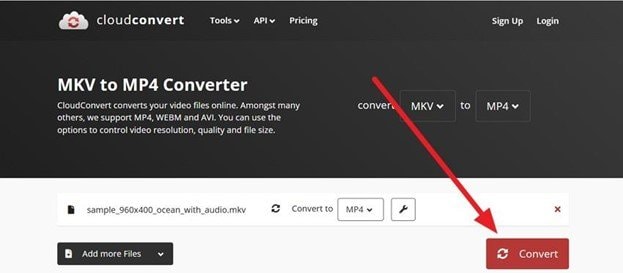
Step 1. Use an online converter like CloudConvert that lets you pick video codecs, resolution, quality, and aspect ratio during MKV to MP4 conversion. So, whether you upload the video from a computer, Dropbox, or add a URL, choose the “Convert” button to continue.
Step 2. On the new interface, preview the video converted to MP4 with H.264 video and AAC audio, and choose the “Download” button to export.
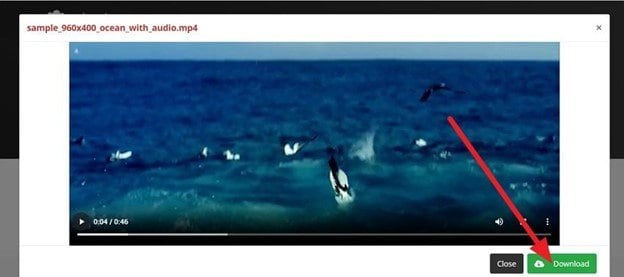
⚠️ Note:
- Conversion may reduce quality depending on settings
- Keep the original file before converting
- This method is best for compatibility problems, not severe corruption
Fix 4. Update Display/Audio Drivers
Best For: Playback problems related to hardware decoding or rendering
Why It Helps: Windows video playback can depend on current GPU and audio drivers. Microsoft recommends keeping drivers updated through Device Manager or Windows Update.
Update Display (GPU) Drivers
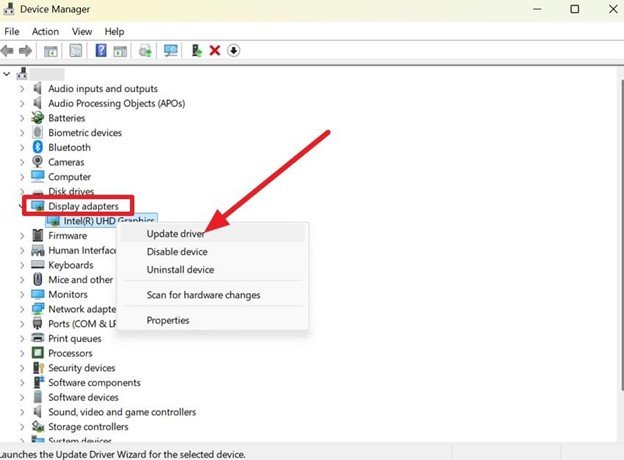
Step 1. In the Device Manager, locate the “Display Adapter” menu and right-click on it to tap on “Update Driver.”
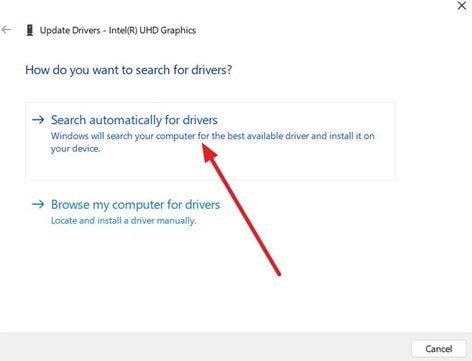
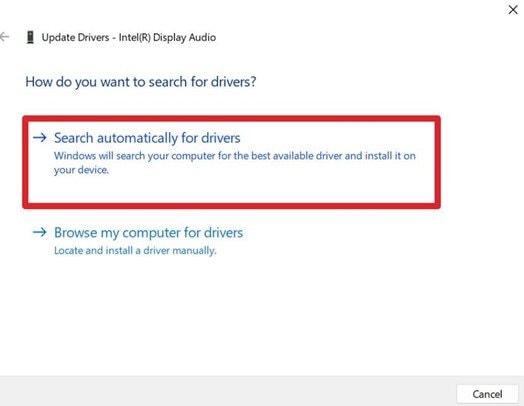
Step 2. When prompted for a pop-up, choose the “Search Automatically for Drivers” option and follow the prompts.
Update Audio Drivers
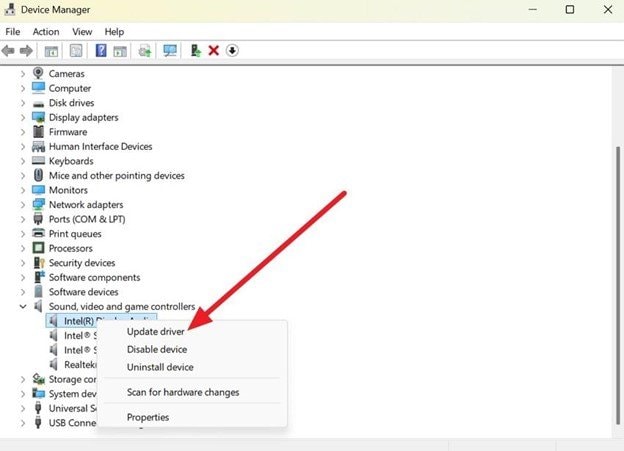
Step 1. Choose the “Sound, Video and Game Controllers” menu in the Device Manager, and after selecting your device, right-click to tap on “Update Driver.”
Step 2. Here, choose the “Search Automatically for Drivers” option and follow the listed prompts to complete the action.
Fix 5. Run Video Playback Troubleshooter
Best For: Windows playback settings and media component issues
Why It Helps: The troubleshooter can scan for common playback-related configuration problems and reset certain video playback settings in Windows. Microsoft also documents Windows video playback settings as a troubleshooting path for playback problems.
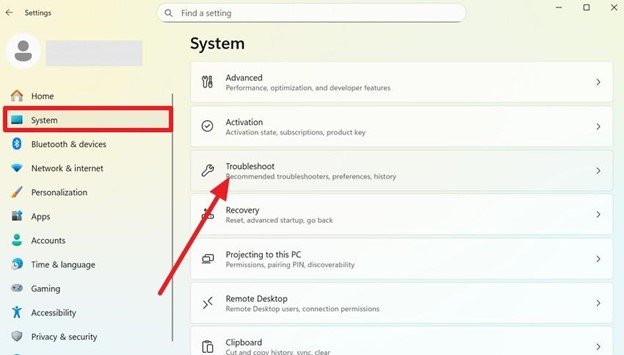
Step 1. Within the settings, choose the “System” menu and pick the “Troubleshoot > Other Troubleshooters” options.
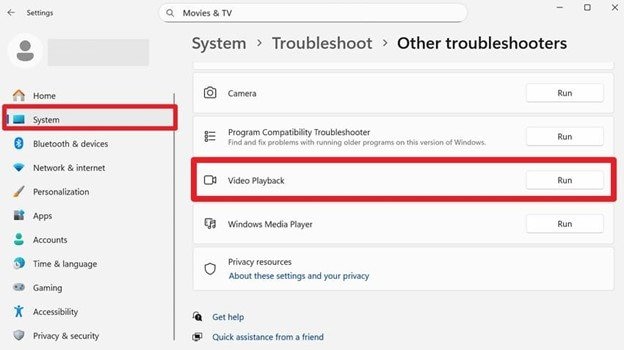
Step 2. Here, locate the “Video Playback” troubleshooter and tap the “Run” button to follow the on-screen instructions.
Fix 6. Clean Temporary Files
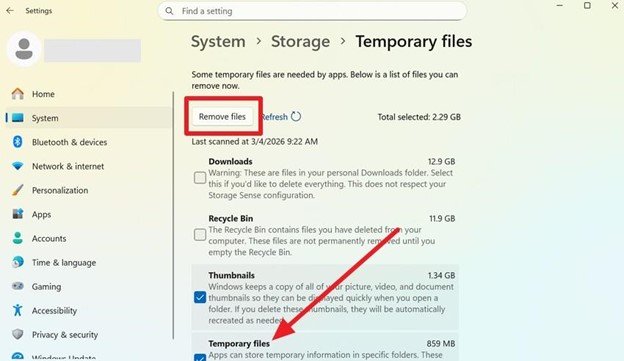
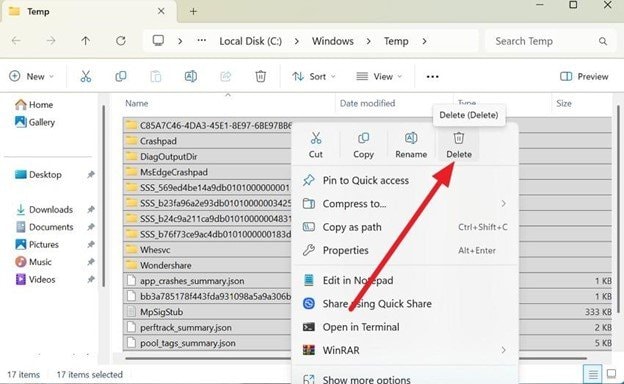
Try to clean temporary files to fix 0xc004f011/0xc1010103, as corrupted or bloated cache data can disrupt video playback in Windows Media Player and Movies & TV. So, use built-in tools such as Disk Cleanup or Storage Sense to clear temporary files and free up space. This can restore smooth playback, remove damaged cache files, and improve system speed, as shown ahead:
Using Settings (Temporary Files)
Step 1. Under the “System” and “Storage” settings, go to the “Temporary Files” section and wait for Windows to scan for temporary data.
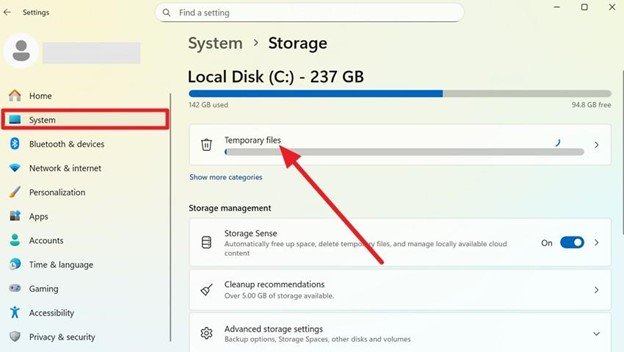
Step 2. Choose “Temporary Files” and other safe categories as per your preferences, and pick the “Remove Files” button.
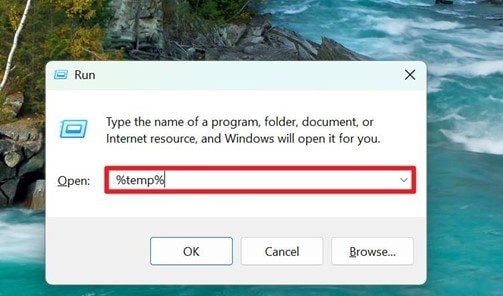
Manually Via Temp Folders
Step 1. After pressing “Win + R,” type “%temp%” and hit the “Enter” key.
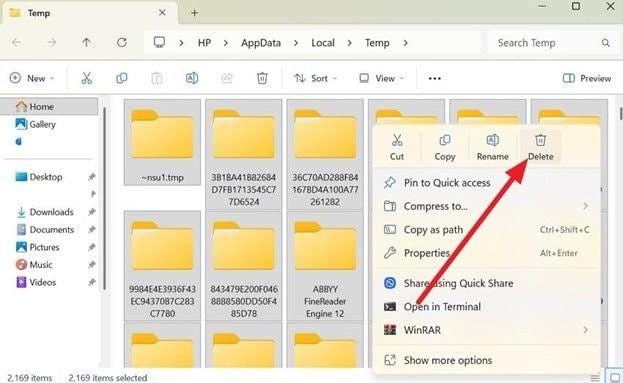
Step 2. Now, in the File Explorer, highlight all files via “Ctrl + A” action and right click to pick the “Delete” option.
Step 3. Again, press “Win + R” keys, but type “temp” and choose the “Ok” option.
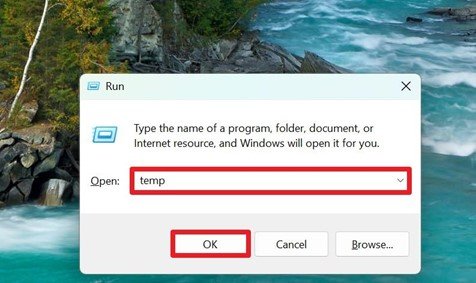
Step 4. Select all the files in the listed folder and right-click to tap on the “Delete” option.
Fix 7. Update Windows & Media Player Apps
Best For: Outdated media frameworks, codecs, or app builds
Why It Helps: Windows updates may refresh media frameworks, playback components, and support for newer formats. Microsoft notes that Media Player supports many codecs out of the box, while others can come from the Microsoft Store.
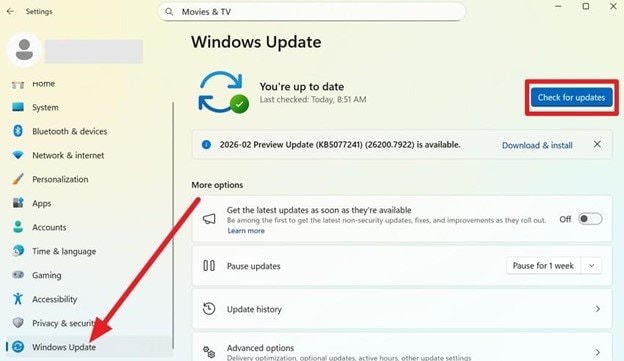
Update Windows: As you choose the “Windows Update” section, tap on the “Check for Updates” option to let the update fix 0xc004f011 (0xc1010103) error.
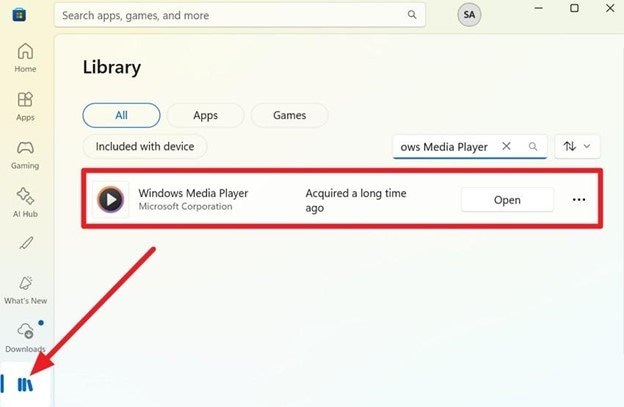
Update Windows Media Player: On the Microsoft Store, go to the “Library” and search for the “Windows Media Player.” If the update is there, press the “Update” button and follow the same steps to update other media apps.
Fix 8. Re-Download / Repair or Replace Video
Best For: Files that may be incomplete after export, transfer, or download
Why It Helps: Partially downloaded or interrupted exports often produce files that look normal but fail during playback.
What to do:
- Re-download the file from the original source
- Re-export it from your editor if you still have the project
- Re-copy it from the original camera, phone, or backup source
If the fresh copy plays normally, the original file was the problem.
Fix 9: Repair a Corrupted Video File
Best For: Files that fail in multiple players or were interrupted during transfer/export
If the video fails in VLC, Movies & TV, and other players, the file itself may be damaged. In that case, a video repair tool may help rebuild the damaged structure. One example is Repairit Video Repair. It allows you to fix it in 3 simple steps.
What video repair tools can help with
- Damaged headers
- Broken metadata
- Corrupted MP4/MOV/AVI/MKV containers
- Files interrupted during download, export, or transfer
What they cannot fix
- Missing codecs in Windows
- App-only playback glitches
- 0 KB files
- Player compatibility issues when the file itself is fine
Those who want to fix 0xc004f011(0xc1010103) because of corrupted files, review the listed guide for Repairit:
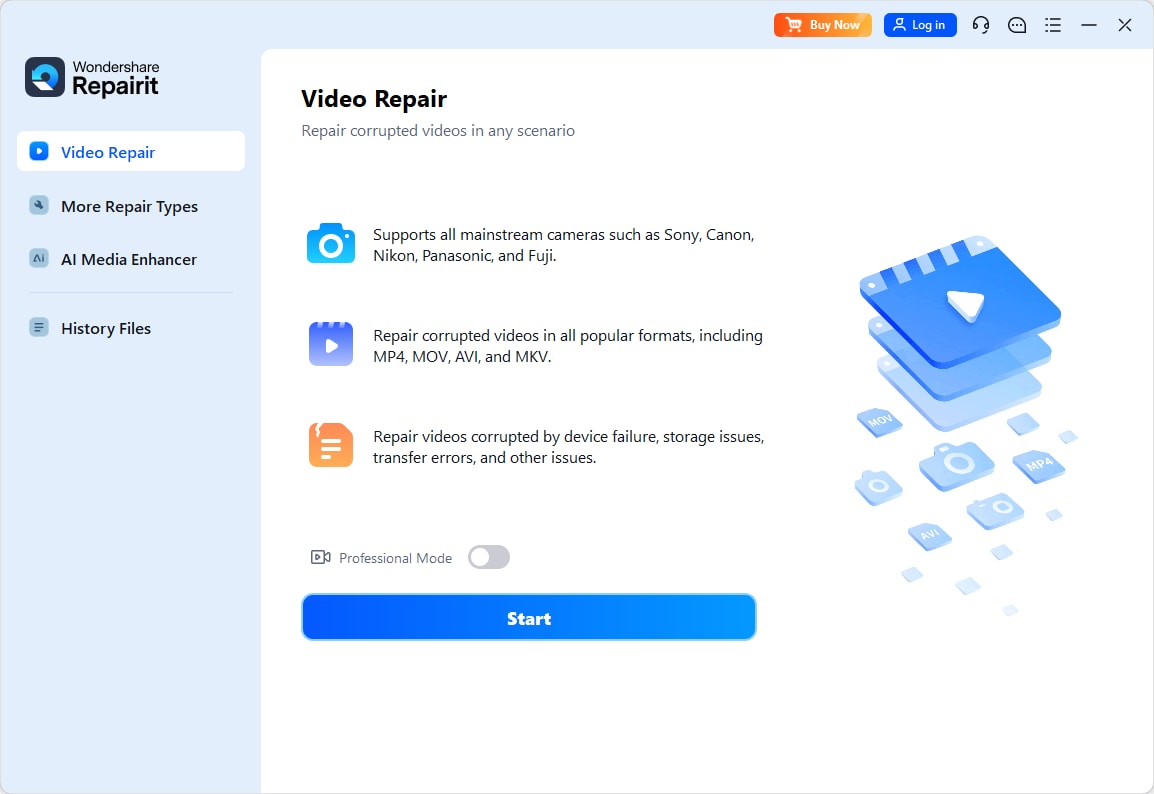
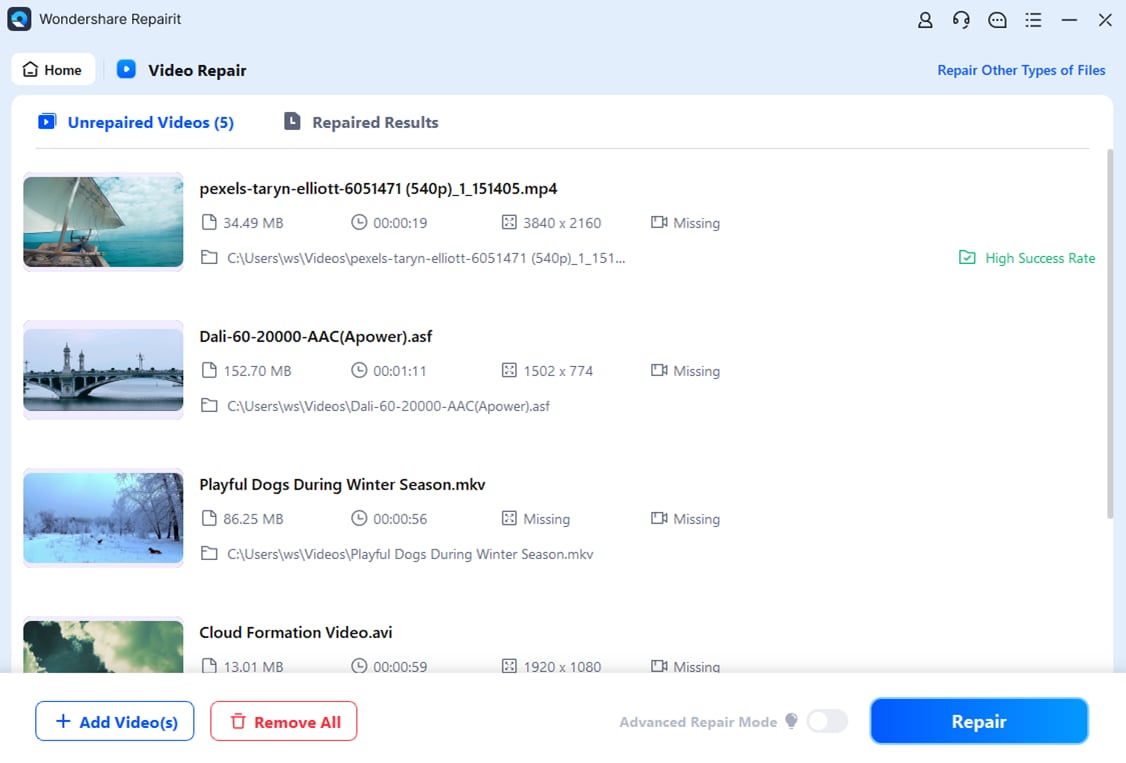
Step 1. Choose the Video Repair Tool to Fix 0xc004f011(0xc1010103)
As you are directed to the “Video Repair” tab, press the “Start” button to add damaged files that cause 0xc004f011(0xc1010103) error.
Step 2. Start Fixing Your Damaged Video Errors
Now, press the “Repair Now” button to let the tool scan and start the Quick Repair.
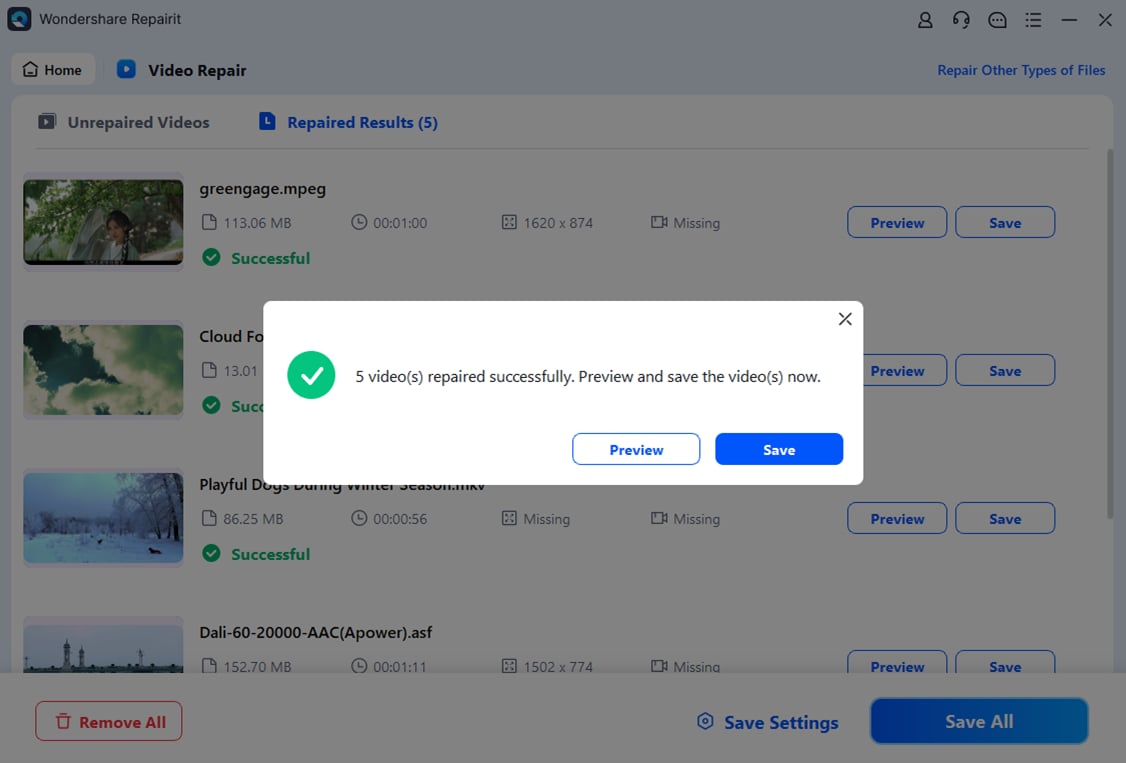
Step 3. Preview the Fixed Video and See If the Error Persists
When the scan ends, choose to “Preview” the file to review the changes. Next, click the “Save” button and see if the 0xc004f011(0xc1010103) error persists.
Part 4. Try 6 Tips to Avoid 0xc004f011(0xc1010103) Error
Now that you know how to fix 0xc1010103, follow the 6 given tips to ensure you don’t get this error in the future:
- Keep Windows and Media Apps Up to Date: Updates add bug fixes and better media components for Movies & TV or Media Player. This is why staying current reduces crashes, codec problems, and playback failures that trigger error codes.
- Install Appropriate Codecs Proactively: Adding trusted codecs or using a player like VLC allows Windows to read more video formats. In addition, fewer unknown codecs reduce “can’t play” errors like 0xc004f011 (0xc1010103).
- Avoid Playing from Unstable External Sources: Videos about failing USB drives, network shares, or cloud folders may be corrupted or incomplete. So, copy files to the internal disk first, and safely eject drives to avoid corruption or errors.
- Regularly Clean Temp/Junk Files: Know that caches and temporary files can become corrupted or bloated over time in media apps. So, as you clear them, apps run more smoothly and are less likely to experience unusual playback failures.
- Backup Important Video Files: Disks can fail, or sudden shutdowns can corrupt video files beyond repair. Thus, backup lets you restore clean copies and avoid repeated 0xc004f011 errors.
- Prefer Widely Supported Formats (MP4 H.264): MP4 with H.264 video and AAC audio works reliably in Windows players. So, using this format lowers the chance of codec or container errors causing playback failure.
If Nothing Works
If none of the above fixes solve the problem:
- Test the file on another Windows PC
- Try it under another Windows user profile
- Check whether the external drive, SD card, or USB device is unstable
- If the file was exported from editing software, verify the export completed successfully
- If only Windows built-in players fail, you can use VLC as a temporary workaround while you troubleshoot codec or app support
Conclusion
The 0xC004F011 / 0xC1010103 errors usually mean Windows cannot properly read or decode the file in its built-in media apps. In many cases, the file itself is still fine and the problem comes from codec support, media app glitches, outdated playback components, or unstable storage paths.
If VLC can play the file, focus on Windows playback fixes first. If the same file fails in multiple players, re-downloading or repairing the file becomes more relevant. The best approach is to start with low-risk diagnostics, then move to app, codec, and file-level fixes only when necessary.
Frequently Asked Questions
-
What exactly do 0xc004f011 & 0xc1010103 mean?
They are Windows playback errors that usually appear when Movies & TV or Media Player cannot properly decode or open the file. -
Does this error always mean the video is corrupted?
No. The file may still be fine, especially if VLC can play it. Missing codecs, unsupported containers, or app issues are also common causes. -
Can installing VLC permanently fix it?
VLC can often play the file because it includes built-in codecs, but it does not change Windows’ native playback support. -
Are these codes specific to Windows 10 or 11?
No. They can appear on both Windows 10 and Windows 11 when similar playback conditions exist. -
How do I check installed codecs?
If the same file fails in multiple players, freezes repeatedly, or was interrupted during export or transfer, file damage becomes more likely.