Audio services not running on Windows 10 usually means that Windows Audio or one of its required services has stopped, a sound device is misconfigured, or an audio driver is not working correctly. Start with the low-risk checks below: confirm the correct output device, run the Windows audio troubleshooter, and restart Windows Audio and Windows Audio Endpoint Builder. If Windows sound works but one MP3, M4A, WAV, AAC, or FLAC file still will not play, that is a file-corruption problem rather than a Windows service problem.
The steps below explain why you may see "The Audio Service Is Not Running," how to fix Windows audio services not running on Windows 10/11, and when a damaged audio file needs a separate repair workflow. Keep the original audio file before repairing, converting, or replacing it.

In this article
What Does "The Audio Service Is Not Running" Mean?
Windows Audio is the system service that lets Windows applications send sound to speakers, headphones, Bluetooth devices, HDMI displays, and other audio outputs. When it stops or a dependency fails, Windows may show a red X on the speaker icon, report that the audio service is not running, or play no sound from any application.
Identify the Symptom Before Changing Windows Services
| What you see | Most likely area | First action |
| All apps are silent and Windows shows "The Audio Service Is Not Running" | Windows Audio service or a dependency | Run the troubleshooter, then restart Windows Audio and Endpoint Builder. |
| Windows Audio says Running but headphones or speakers are silent | Output device, mute state, volume mixer, or driver | Choose the correct output and test another device. |
| Only one MP3, M4A, WAV, AAC, or FLAC file will not play | Audio file damage, incomplete transfer, or unsupported encoding | Test another player and repair a copy of the affected file if needed. |
| No device appears in Sound settings or Device Manager | Connection, hardware, driver, or firmware | Reconnect the device and use the manufacturer's driver; Repairit does not repair hardware. |
Common Causes of Windows Audio Services Not Running
- Windows Audio or Endpoint Builder is stopped: a service startup failure can disable sound for every application.
- Required dependencies are unavailable: Remote Procedure Call (RPC), RPC Endpoint Mapper, DCOM Server Process Launcher, or Plug and Play may not be running correctly.
- Driver changes or updates: an outdated, incompatible, or partially installed driver can prevent an audio device from starting.
- Output selection or mute state: Windows may be sending sound to a monitor, Bluetooth device, dock, or disconnected output.
- System component damage: corrupted Windows files can affect services and device initialization.
Quick Checks Before Restarting Windows Audio
Before changing service settings, confirm that the problem is not simply a muted application, a disconnected headset, or an incorrect output. These checks are reversible and can prevent unnecessary driver changes.
1. Check the Output Device and Volume
Click the speaker icon on the taskbar, select the intended speaker or headset, and make sure the master volume and the affected app are not muted. Disconnect and reconnect USB, Bluetooth, HDMI, or 3.5 mm audio devices, then test with another known-working headset or speaker.

Drag the volume slider up and play a system sound. If the selected device is missing, check Sound settings and Device Manager before attempting audio-file repair.

2. Run the Windows Audio Troubleshooter
On Windows 10 or Windows 11, open Settings and search for the audio or sound troubleshooter. Follow the Get Help or Troubleshoot prompt, allow it to test the selected output, and apply only the recommended changes. On older Windows builds, open Troubleshoot settings, choose Playing Audio, and run the troubleshooter.


For current Windows-specific checks, compare the steps with Microsoft's official guide to fixing sound and audio problems before replacing drivers.
How to Fix Audio Services Not Running on Windows 10/11
If the quick checks do not restore sound, work through the following fixes in order. Test audio after each fix so you know which change solved the problem.
Fix 1. Restart Windows Audio and Endpoint Builder
Restarting the services is the most direct fix for the message "The Audio Service Is Not Running."
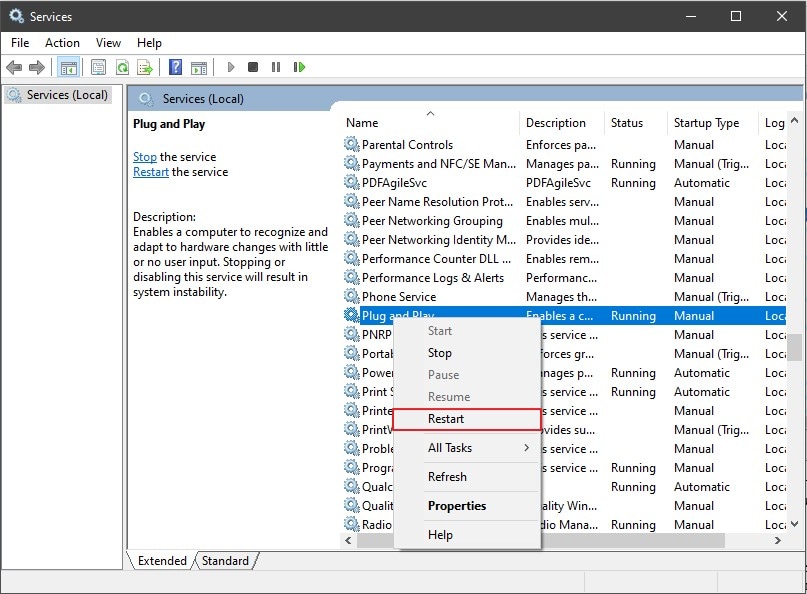
Step 1: Press Windows + R, type services.msc, and press Enter.

Step 2: Find Windows Audio, double-click it, set Startup type to Automatic when available, and select Start or Restart.

Step 3: Return to the services list, right-click Windows Audio Endpoint Builder, and choose Restart. Restart Plug and Play only if Windows allows it and the service is not actively being used.

Step 4: If Windows Audio immediately stops again, do not repeatedly restart it. Continue to dependency and driver checks below, because the service may be failing during device initialization.
Fix 2. Check RPC and Audio Service Dependencies
Windows Audio depends on system services. In services.msc, check that Remote Procedure Call (RPC), RPC Endpoint Mapper, and DCOM Server Process Launcher show a running status. Do not change permissions or add service accounts to the local Administrators group unless a qualified administrator has confirmed a specific error and a rollback plan.
Double-click a service to review its Dependencies tab. If a dependency is stopped, record the exact error, start that dependency first when Windows permits it, and then retry Windows Audio.


Fix 3. Update or Roll Back the Audio Driver
If the problem started after Windows Update, a driver update, or a device change, update the driver from Device Manager or install the current driver supplied by the computer or motherboard manufacturer. If the problem began immediately after an update and the Roll Back Driver option is available, use it instead of installing an unverified driver package.
Step 1: Press Windows + R, type devmgmt.msc, and press Enter.

Step 2: Expand Sound, video and game controllers, right-click the audio device, and choose Update driver. If the device has an error icon, note the displayed code before changing it.

Step 3: Choose the update or rollback option that matches the evidence. Restart Windows and test both the built-in speakers and another output device.

Fix 4. Reinstall the Audio Driver
Reinstall the driver only after recording the device name and downloading a compatible driver from the computer or motherboard manufacturer. Uninstalling the wrong device can remove sound until the correct driver is installed.
Step 1: Open Device Manager with devmgmt.msc, expand Sound, video and game controllers, right-click the affected device, and choose Uninstall device.

Step 2: Confirm the uninstall only when you have a compatible replacement or know that Windows can reload the driver. Do not select a delete-driver option unless you understand the recovery path.

Step 3: Restart Windows. If the device does not return automatically, use Scan for hardware changes or install the manufacturer's driver package.

Fix 5. Install Updates and Check Windows System Files
Install pending Windows updates and restart the computer. If Windows services still fail, an administrator can run the System File Checker and Deployment Image Servicing and Management tools from an elevated Command Prompt. These commands address Windows component integrity; they do not repair a damaged MP3 or restore a failed speaker.
Record any error code before running system repair commands. If the issue began after a recent update and driver rollback does not help, consider System Restore or the manufacturer's support instructions before making broader changes.
Use Command Prompt only when you understand the administrator prompt and have saved your work.


What If Windows Audio Is Running but There Is Still No Sound?
If Windows Audio and Endpoint Builder are running but the computer remains silent, the service error is no longer the only likely cause. Check the selected output, app-specific volume, Bluetooth or HDMI routing, physical connections, and the audio device status in Device Manager. Test a second output device to separate a Windows configuration problem from a speaker, headset, dock, or cable problem.
If every sound works except one recording, download, or project file, do not reinstall Windows Audio repeatedly. Copy the affected file to a separate folder, test it in a compatible player, and use the file-repair workflow in the next section only if the file itself appears damaged.
How to Repair a Corrupted Audio File
Wondershare Repairit is relevant when Windows sound works normally but a supported audio file remains unplayable, distorted, clipped, noisy, out of sync, or incomplete. It cannot start Windows Audio, repair a sound card or speaker, reinstall a Windows driver, or fix a permissions problem. Keep the original file and work on a copy.
When Repairit Is the Right Tool
Use a file-repair workflow when the same player can open other files, the affected file was interrupted during recording or transfer, or the file shows symptoms such as missing audio, severe clipping, humming, rumbling, or a playback error. If the file is zero bytes, was never saved, or was overwritten, repair software may not have enough data to reconstruct it.
Wondershare Repairit - Audio Repair
 Security Verified. Over 7,302,189 people have downloaded it.
-
Repair damaged audio with all levels of corruption, such as audio not working, clipping audio, humming audio, rumbling audio, sibilant audio, out-of-sync audio, etc.
-
Repair audios of diverse formats, including MP3, M4A, FLAC, AAC, WAV, etc.
-
Repair damaged or corrupted audio from multiple devices: portable voice recorder, recording software, shooting apparatus, SD cards, phones, hard drives, USB flash drives, etc.
-
Support Windows 11/10/8/7/Vista, Windows Server 2003/2008/2012/2016/2019/2022, and MacOS 10.13~MacOS 27.
Steps to Repair a Corrupted Audio File Using Repairit
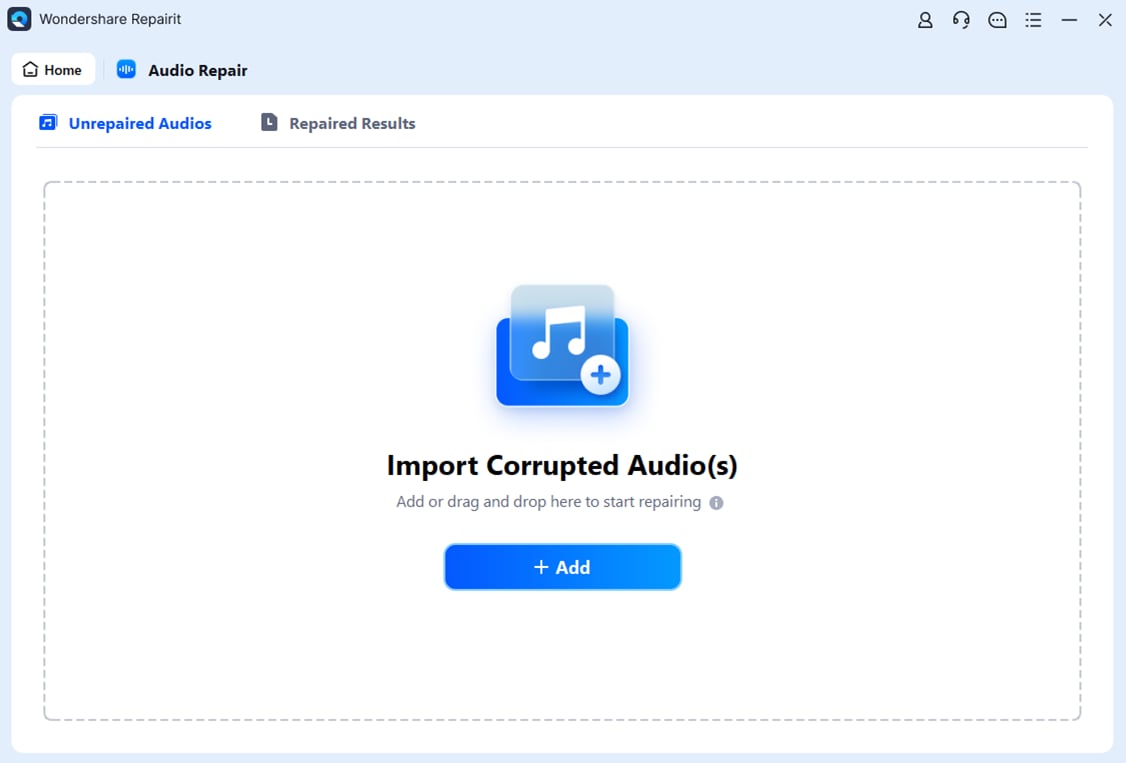
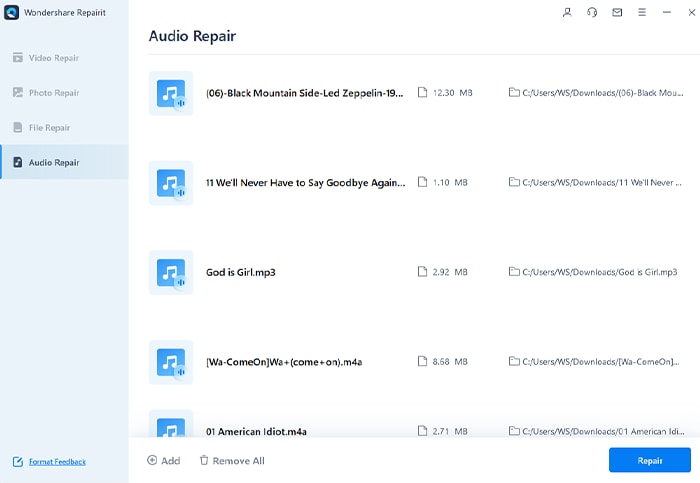
Step 1: Import a copy of the corrupted audio file. Open Repairit, select Audio Repair, choose Add, and import the duplicate. Do not overwrite the only original.
Step 2: Start the repair. Select Repair. If Advanced Repair asks for a healthy sample, use a sample created by the same recorder or workflow with a matching format and settings.
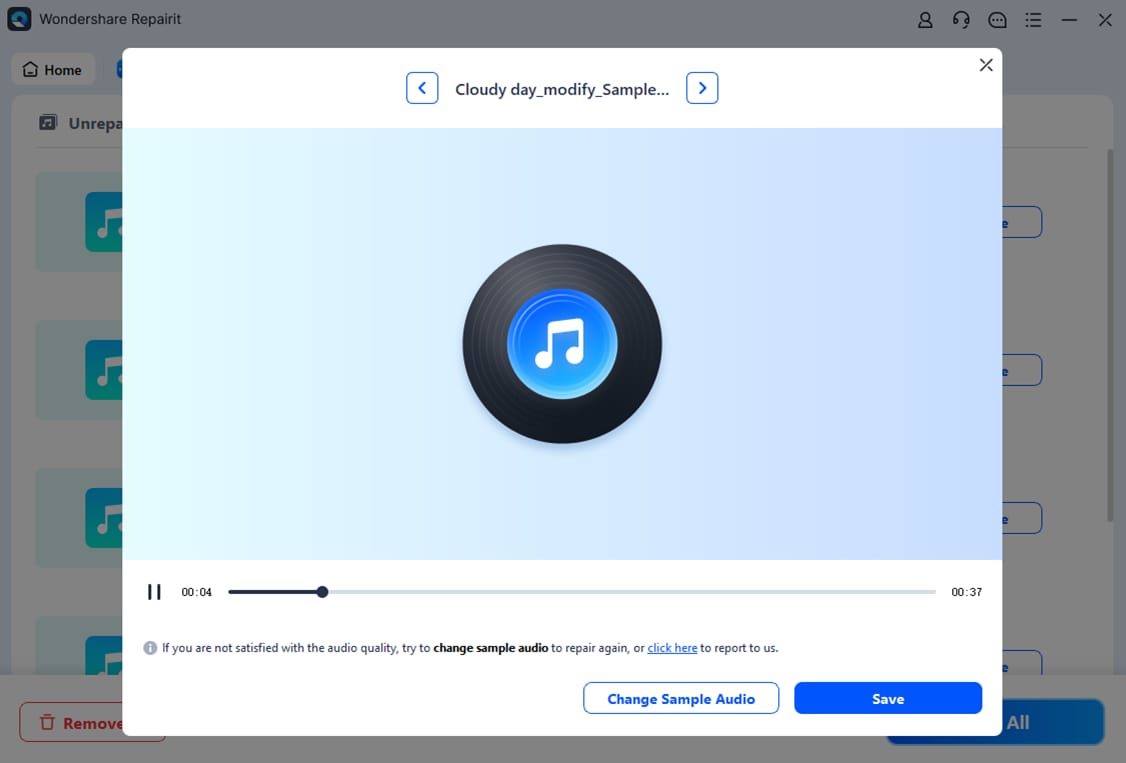
Step 3: Preview the result. Check the beginning, middle, and end of the repaired audio, including volume, clarity, synchronization, and the section you need. Save the output to a new folder only after it plays correctly.
Conclusion
Audio services not running on Windows 10 is usually a Windows service, output-device, dependency, or driver problem. Check the selected output first, run the audio troubleshooter, restart Windows Audio and Endpoint Builder, then work through dependencies and drivers. If Windows sound works but one audio file still fails, treat that as a separate file-corruption issue and repair a copy with an appropriate audio-repair tool. Keeping these two problems separate helps you avoid unnecessary system changes and protects the original recording.
FAQ
-
Why does my computer say "The Audio Service Is Not Running"?
The Windows Audio service or a required dependency may have stopped, or an audio driver or output device may be misconfigured. Check the output device, run the audio troubleshooter, and restart Windows Audio and Windows Audio Endpoint Builder. -
How do I restart Windows Audio in Windows 10?
Press Windows + R, enter services.msc, open Windows Audio, and choose Start or Restart. Check that Startup type is Automatic when available, then restart Windows Audio Endpoint Builder and test the sound. -
What if Windows Audio is already running but there is still no sound?
Select the correct speaker or headset, check master and app volume, reconnect Bluetooth, USB, HDMI, or 3.5 mm devices, and test another output. If only one file fails, investigate file corruption instead of repeatedly restarting the service. -
How do I fix Windows audio services not responding after an update?
Check Windows Update, update or roll back the audio driver in Device Manager, restart Windows Audio and Endpoint Builder, and run the Windows audio troubleshooter. Use the computer or motherboard manufacturer's driver when Windows cannot find a compatible one. -
Can Repairit fix the Windows Audio service?
No. Repairit is intended for supported corrupted audio files. It does not start Windows services, repair audio hardware, restore Windows drivers, or resolve a system permission problem. -
Can Repairit repair a corrupted MP3, M4A, WAV, AAC, or FLAC file?
Repairit can attempt to repair supported corrupted audio files in these formats. Results depend on the format and available data. Work on a copy, preview the complete output, and keep the original file unchanged.