
 TL;DR:
Fix distracting profile picture backgrounds using the Relumi App's Clean Background tool within Scene Retake to remove visual clutter while preserving a natural, believable environment instead of an artificial cutout.
● This correction works best on casual headshots, indoor portraits, or travel photos where your expression and angle are already usable, but background noise weakens the subject's clarity.
● Focus the AI Retake cleanup specifically on harsh contrast patches, messy room edges, signs, or secondary people that steal visual priority from your face.
● Results may be limited if the subject is too small in the original frame, the background tightly overlaps with hair and shoulders, or the photo is heavily cropped from a larger noisy scene.
Ask AI for a summary
 ChatGPT
 Perplexity
 Gemini
 Claude
 Grok
Grok
A profile picture has a different job from most other portraits. It is small, quickly judged, and usually seen before anything else you say about yourself. That means background problems become more serious, not less. A chair edge, a bright wall object, a cluttered room corner, a random person behind you, a busy shelf, a mirror reflection, a strong sign, or an awkward patch of visual noise can all compete with your face long before anyone notices your expression. The portrait may still be technically usable, but it stops working as a profile image the moment the background begins telling a louder story than you do.
This is why profile-picture cleanup is not just about aesthetics. It is about first impression, clarity, and visual trust. In online communities, people openly admit that they notice profile-photo background cues more than they expect. Discussions on Reddit about judging the background of personal photos and on Quora about how profile pictures affect public image point to the same reality: people read background details as part of the person, even when they do not mean to. That is exactly where the Relumi App framing becomes useful. Relumi positions AI Retake around photos that were almost right, where the camera caught the wrong emphasis and the result needs to feel closer to what the moment actually felt like. For a profile picture, that usually means the face and overall presence should read first, while the background should support rather than compete.
In this article
Part 1. Why profile pictures fail when the background says too much
A profile picture is usually seen small, fast, and out of context. That changes how the image is judged. In a full-size portrait, a background detail can be minor. In a profile image, the same detail can become surprisingly loud because the frame is compressed and the viewer has very little time to decide where to look. This is why random background elements matter so much more here than in other portrait categories. A shelf behind the head, a bright lamp, a messy room edge, a sign, a crowded café wall, a mirror reflection, or even a second person partly visible in the back can all weaken the face’s visual priority immediately.
That effect becomes even stronger because profile images are often used in spaces where the viewer is forming an instant impression: social accounts, messaging apps, community platforms, work profiles, dating apps, personal brands, and creator identities. People do not usually analyze the background in words, but they still react to it. In a Reddit thread about whether people judge the background of personal photos, the underlying point is clear: background details become part of how the person is interpreted. That is why a profile portrait can feel “off” even if the face itself is perfectly fine.
Part 2. Why a better profile picture is not the same as a blank or generic portrait

Relumi Lighting Enhancer
Retake photo lighting naturally with AI-powered scene relighting.
 Balance harsh facial shadows without flattening the portrait
-
Improve hard light, patchy light, and low-visibility street portraits naturally
-
Keep urban mood while making the subject easier to see
-
No editing skills required — upload, relight, preview, and save
When users realize the background is hurting the image, they often assume the answer is to make the portrait look as empty and neutral as possible. But that is not always the best result. A completely stripped-down image can lose warmth, personality, and realism. It can start to feel like a passport photo, a stiff corporate headshot, or an awkwardly cut-out portrait with no environmental truth left in it. A good profile picture does not need to be empty. It needs to be legible.
A profile photo needs subject clarity, not artificial emptiness
The most effective profile pictures usually do not remove all context. They simply make sure the subject wins the visual competition. A little environmental softness or a calm background tone can actually help the image feel more human. The problem begins when the background starts sending stronger signals than the face does. A colorful object, cluttered corner, harsh contrast patch, or attention-grabbing shape can pull the eye away before the portrait has a chance to do its job. That is why “clean background” for a profile picture should mean fewer distractions, not no context whatsoever.
This is where public Relumi Photo Lighting Enhancer language is helpful. Relumi describes Scene Retake as rebuilding the feeling of better light without making the image look fake, and says the portrait should feel as if it were retaken under more flattering conditions. That same standard is useful for profile pictures too. A profile image should feel polished and intentional, but still natural enough that it looks like a real person, not a heavily processed avatar.
The best result keeps the portrait believable while making the face the obvious priority
A strong profile photo should guide the eye instantly to the subject. The face should be the clearest message in the image. Everything else should come second. This is especially important in professional or social contexts where the portrait stands in for the person before any conversation happens. Public profile-photo discussions on Quora about public image and Reddit about the impact of profile photos both point toward the same reality: the image shapes impression quickly. The best correction therefore does not try to impress with heavy editing. It simply removes what keeps the face from reading clearly.
This also matches the public Relumi App promise that AI Retake can fix what the camera caught wrong while blending corrected areas with original skin texture and environmental lighting. That matters for a profile photo because once the result looks artificial, the trust value of the portrait starts to drop.
Part 3. How Relumi helps clean a profile picture background without making it feel fake
The best profile-picture correction is not the one that makes the frame emptiest. It is the one that makes the person read most clearly. In practical terms, that means the face should be easier to notice, the image should feel more intentional, and the background should stop competing with the subject in a way that feels unnecessary. The portrait still needs to look like a real photo of a real person, not a cut-out pasted on a blank surface.
This is where a Scene Retake mindset works well. A good profile picture is often already close to usable. The expression may be right. The angle may be flattering. The lighting may be decent. The only issue is that the background is undermining the portrait’s job. In those cases, the smartest fix is not to replace the photo but to rescue it. That logic also aligns with Relumi’s broader social-photo language around results that feel polished enough to share without needing heavy filters or obvious post-processing.
Step 1. Add the portrait that already feels like you
Start with the image where your expression, angle, and general presence already feel right. This correction works best when the portrait already represents you well, but the background keeps lowering the quality of the first impression.
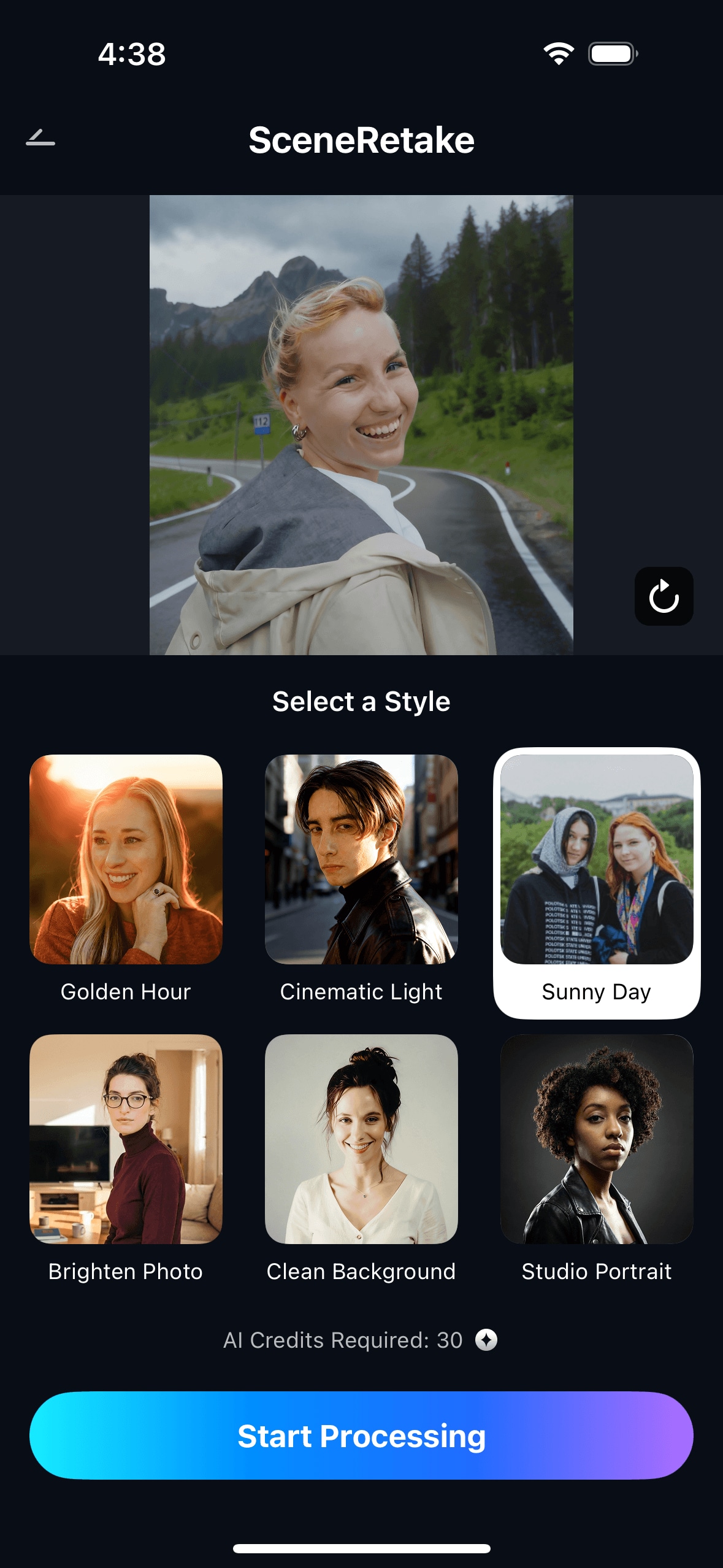
Step 2. Choose Clean Background in Scene Retake
At this stage, focus on what is stealing attention from the face. The problem may be room clutter, a strong object near the edge, a second person, a bright sign, background text, an awkward shelf, a mirror reflection, or visual noise that feels harmless in full size but distracting in a profile crop. The ideal result is a portrait that keeps its realism while making the subject immediately readable.
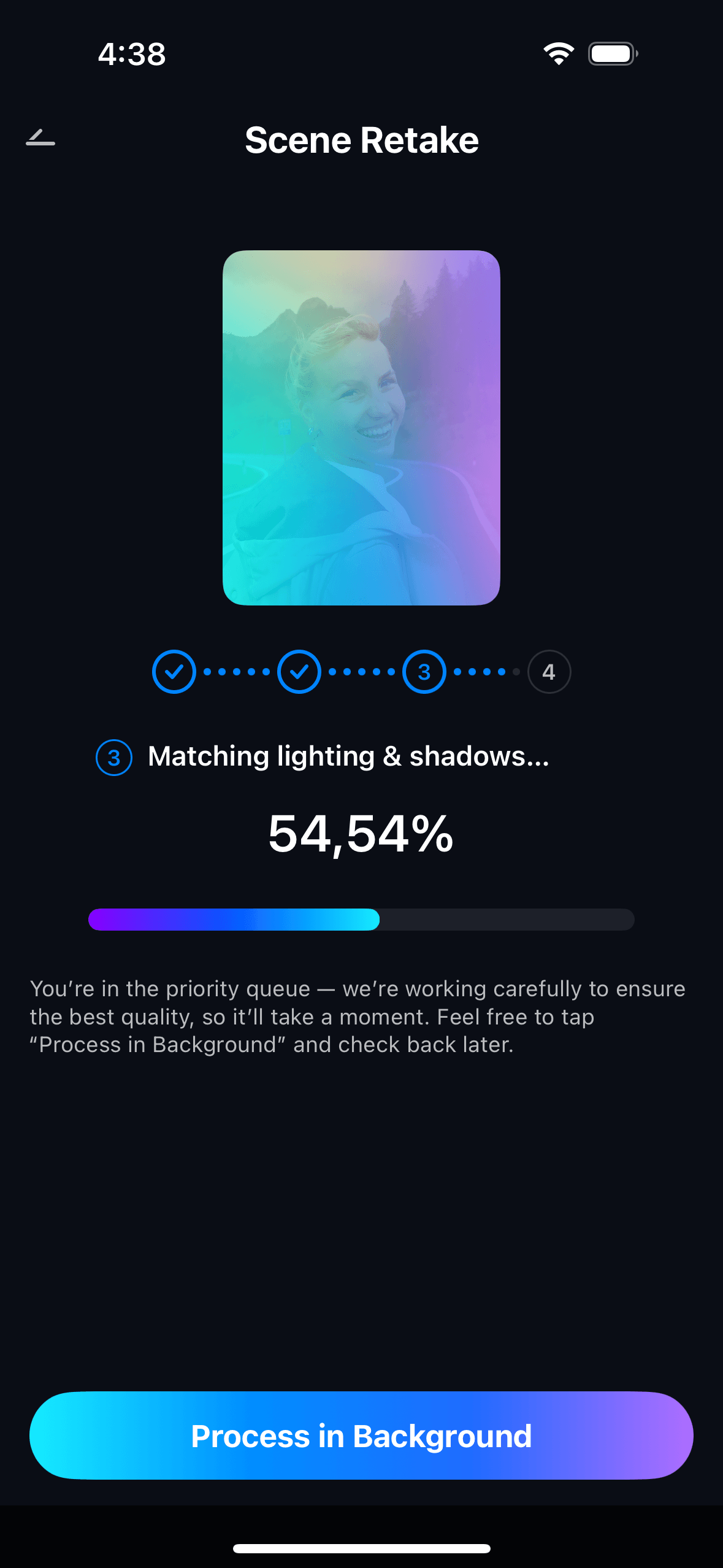
Step 3. Preview and save the version where attention lands on you first
The final test should be fast and practical. If someone sees the image small, do they notice you first? Does the portrait still feel like a real photo rather than a cut-out? Does it feel more trustworthy, more intentional, and easier to use across a profile context? If yes, the correction is doing its job. A successful profile-picture cleanup should improve focus without damaging authenticity.
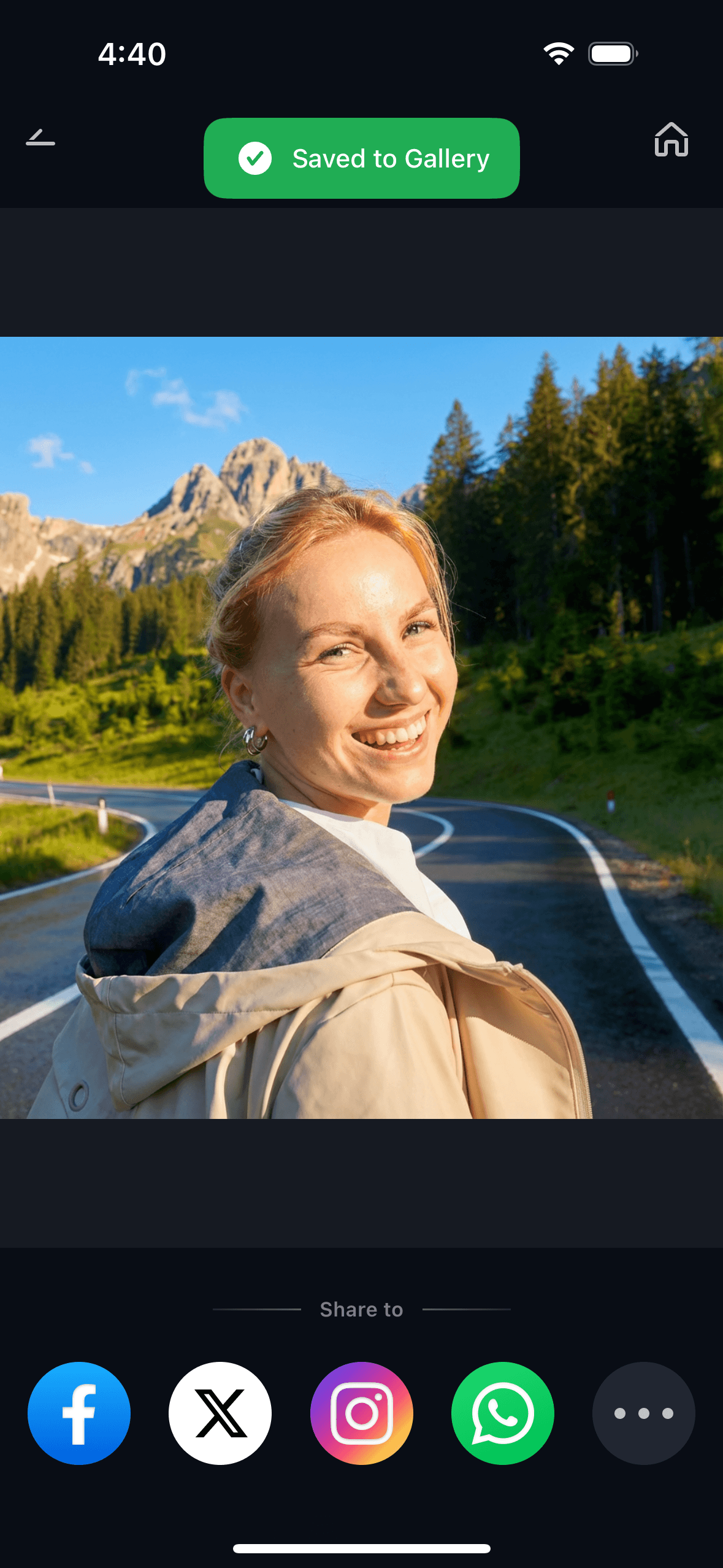
Part 4. Which profile pictures benefit most from this correction
This kind of cleanup works best when the portrait is already basically right. The face is clear enough, the expression fits the user’s identity, and the angle works. The only problem is that the background introduces noise, confusion, or unwanted signals. In those cases, background cleanup is not changing who the portrait is about. It is removing what keeps the image from doing its job quickly.
Common profile-photo situations where the background weakens first impression
The most common examples are casual headshots taken at home with distracting room corners, profile images cropped from a larger social photo, café or restaurant portraits with busy details behind the subject, travel portraits where the place overpowers the face, indoor portraits with signage or background text, and otherwise flattering images where a second person or object makes the frame look less intentional. These concerns line up with real user questions on Quora about professional-looking backgrounds and Reddit about whether an unprofessional profile picture is better than none. The shared concern is not perfection. It is whether the image supports the impression the user actually wants to give.
Quick checklist before saving
- Does your face attract attention before the background details do?
- Does the portrait still look like a real photo of you rather than an over-cleaned graphic?
- Has the image become clearer and more intentional without losing warmth or naturalness?
- Would you feel comfortable using this version across social, work, or personal profile spaces?
Part 5. When results may be limited
Results may be more limited when the subject is too small in the original image, when the background overlaps tightly with hair or shoulders, when the portrait is heavily cropped from a much larger noisy scene, or when the original image quality is already weak. In those situations, the goal should still be believable improvement rather than artificial perfection. Even moderate cleanup can make a profile picture feel much more focused and trustworthy.
Conclusion
A profile picture should help people notice you, not the objects behind you. The strongest ones feel immediate, readable, and believable. They do not need to be empty. They just need the background to stop competing for attention. That is why this kind of correction fits a Scene Retake mindset so well. The goal is not to turn your portrait into a generic headshot. It is to make the image feel closer to the version you thought you had taken: you first, everything else second.
Related Reading
How to Clean Up a Portrait Background Naturally Without Making It Look Over-Edited
Why Your Portrait Background Feels Messy Even When the Subject Looks Fine
How to Make the Subject Stand Out When the Background Keeps Stealing Attention
How to Clean Up a Selfie Background Without Cropping Away the Frame
How to Make a Mirror Selfie Look Cleaner Without Losing the Outfit Context
How to Clean Up a Travel Portrait Background While Keeping the Place Feel
How to Make a Home Portrait Look Cleaner Without Making It Feel Staged
How to Make a Casual Café or Restaurant Portrait Look Less Distracting
FAQ
-
1. Does the background really matter that much in a profile picture?
Yes. Because profile pictures are usually viewed small and quickly, even minor background distractions can have a bigger effect on first impression than users expect. -
2. Should a profile picture always have a completely blank background?
No. A blank background is not always necessary. What matters most is that the face remains the clear focus and that the portrait still feels natural and believable. -
3. What kinds of photos work best for profile-picture background cleanup?
Casual headshots, cropped portraits, indoor portraits, café portraits, social portraits, and travel portraits can all work well if the face already looks right but the background feels too noisy. -
4. What should a successful cleaned profile picture feel like?
It should feel clearer, more intentional, and easier to trust at a glance, while still looking like the same real person in the same real photo.



