
 TL;DR:
Relumi App's Clean Background tool improves messy portraits by naturally reducing visual clutter to restore focus on the subject without artificially replacing the original setting.
● This feature is optimal for casual selfies, profile photos, and home portraits where the subject's expression is ideal but everyday distractions like cords, laundry, or bright wall marks compete for attention.
● Unlike total background replacement or aggressive object removal, the Scene Retake workflow preserves the original framing and requires a final visual check to ensure the physical space remains believable.
● Cleanup results face specific limitations and will struggle to produce natural edits in extremely crowded scenes, low-resolution images, complex textures, or when background details tightly overlap with hair and shoulders.
Ask AI for a summary
 ChatGPT
 Perplexity
 Gemini
 Claude
 Grok
Grok
A portrait can feel disappointing for a reason that is easy to miss at first: the person looks fine, but the background keeps interrupting the photo. It may be a chair edge, a bright sign, a pile of clothes, a shelf full of small items, a bag near the frame, or just too many details competing with the face. In those situations, most people are not asking for a new background. They are asking for the same portrait to feel cleaner, calmer, and more centered on the person.
This is why clean-background editing matters. It is less about making a photo empty and more about restoring subject priority. In portrait discussions on Reddit and Quora, people keep coming back to the same concern: if the background is too distracting, the subject stops feeling like the clear center of the frame. That logic also fits the broader Relumi App promise that AI Retake helps fix what the camera caught wrong so the moment looks the way it actually felt, rather than simply applying a generic edit.
In this article
Part 1. Why portrait backgrounds often feel messier than the moment felt
Many portraits do not fail because the subject looks bad. They fail because the background keeps asking for attention. In real life, people often ignore small visual interruptions. A cable near the floor, a bright bottle, a crowded shelf, a chair corner, a cluttered counter, a wall mark, or a stray object near the edge may barely register when the photo is taken. But once the image is frozen, those details become much louder. This is why a portrait that felt perfectly normal in the moment can suddenly feel awkward, busy, or low-effort on screen.
Official Repairit cleanup content uses very similar user-facing language when describing portrait problems: backgrounds with laundry, cords, bags, shelves, random people, wall marks, and messy room details can make portraits feel less flattering and less focused. That wording matters because it sounds like how users actually describe the problem. They usually do not say the background lacks hierarchy. They say the photo feels messy, the room looks too busy, or the background ruins what would otherwise be a good portrait.
The same pain shows up in real question threads. In one Reddit discussion about making a background less distracting, the problem is not that the subject is wrong. It is that the setting pulls too much attention. In another discussion about judging the background of personal photos, users openly react to messy or poorly considered surroundings because the background changes how the whole picture feels. For a portrait, that reaction is crucial: if the background competes with the subject, the image loses clarity even before anyone can explain why.
Part 2. How Relumi helps clean up a portrait background without making it look over-edited


Relumi Lighting Enhancer
Retake photo lighting naturally with AI-powered scene relighting.

 Balance harsh facial shadows without flattening the portrait
-
Improve hard light, patchy light, and low-visibility street portraits naturally
-
Keep urban mood while making the subject easier to see
-
No editing skills required — upload, relight, preview, and save
The strongest way to think about Clean Background is not as object removal for its own sake, but as a scene-level correction. The larger Relumi product language supports this approach. On the Relumi App page, AI Retake is framed around rescuing shots that were almost right and making the moment look the way it actually felt. On the Photo Lighting Enhancer page, Relumi explains its retake logic by reading face brightness, shadow direction, background contrast, and scene atmosphere so the result feels closer to a better retake than a fake effect. That same philosophy is the right one for background cleanup.
If a portrait already has the right expression, timing, and general composition, the goal is not to turn it into a different photo. The goal is to remove the visual friction that keeps the image from feeling complete. This is especially important for casual portraits, home photos, profile shots, and social photos, where users usually want to keep the original frame and location intact.
Why portrait cleanup is really about focus and realism together
A portrait background should support the person, not challenge them. That sounds simple, but it changes how the edit should be judged. A technically aggressive cleanup is not necessarily a good one. If the cleaned area looks empty, smudged, inconsistent, or unnaturally simplified, the portrait may be less distracting but still less believable. Real users on Quora and Reddit keep circling the same idea: the background matters because it affects how easily the subject stands out. Clean Background works best when it improves that subject emphasis without destroying the feeling of a real place.
What a believable cleaned portrait should feel like
A believable result does not look aggressively repaired. It looks like the photo was always meant to feel this clean. The eye reaches the face faster. The frame feels calmer. The room, café, street, or travel setting still makes sense, but it no longer pulls equal attention. That is also consistent with the way Relumi describes natural-looking improvement in its public pages: the image should feel more polished and worth keeping, not heavily processed or obviously filtered.
Part 3. How to use Clean Background in Relumi
Scene Retake-style workflows on public Relumi pages follow a very clear pattern: add the photo, choose the relevant scene adjustment, preview and save. For Clean Background, that same rhythm makes sense because the user is not starting from scratch. They are refining a portrait that already matters.
Step 1. Add the portrait you want to keep
Start with the image that already has the expression, timing, or pose you care about. Clean Background is most useful when the portrait is emotionally or socially worth saving, but the background makes it feel less polished than the real moment did.
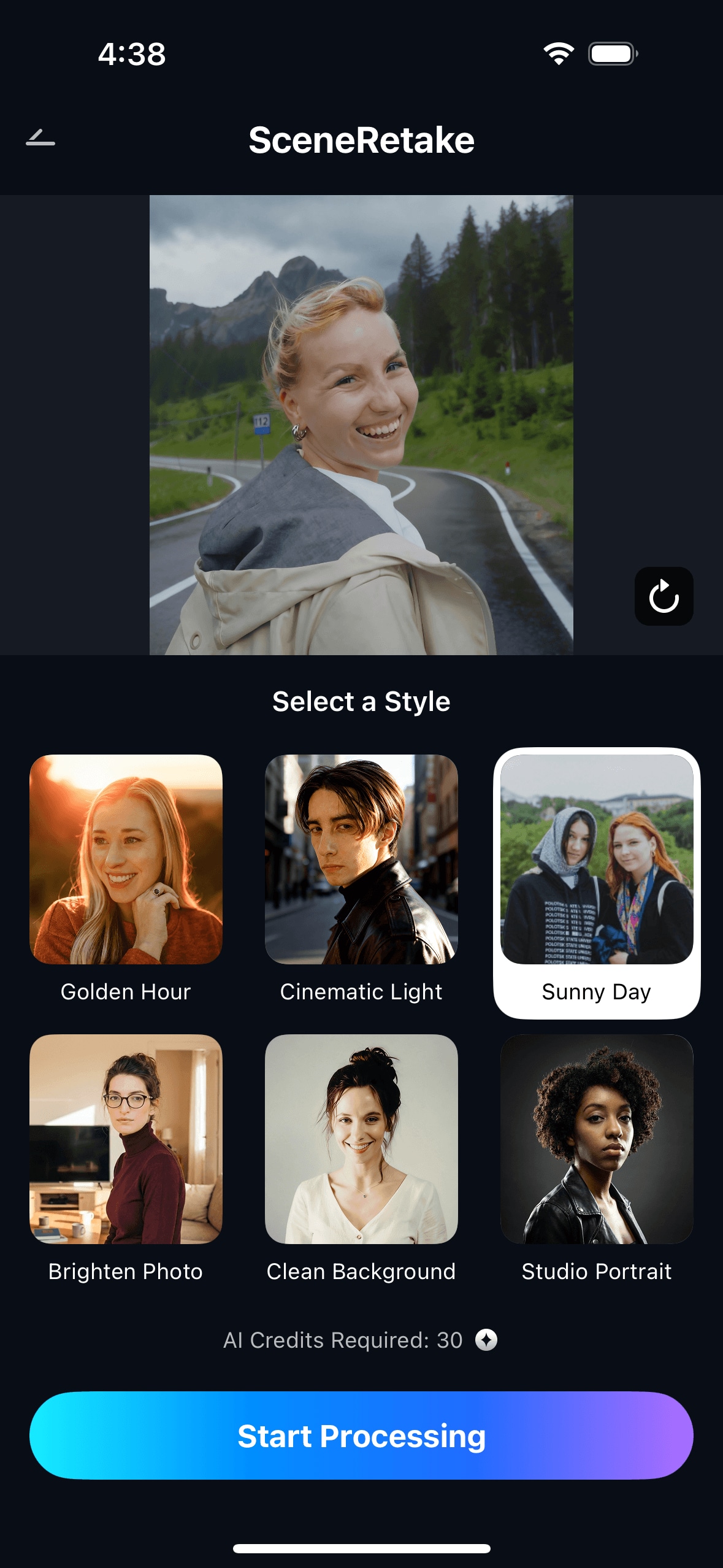
Step 2. Choose Clean Background in Scene Retake
This is the decision point where the edit should move toward simplification, not overcorrection. A strong clean-background result reduces the details that steal attention from the face or body language while keeping the environment believable. The purpose is not to erase all evidence of real life. It is to make the subject the clear visual priority again.
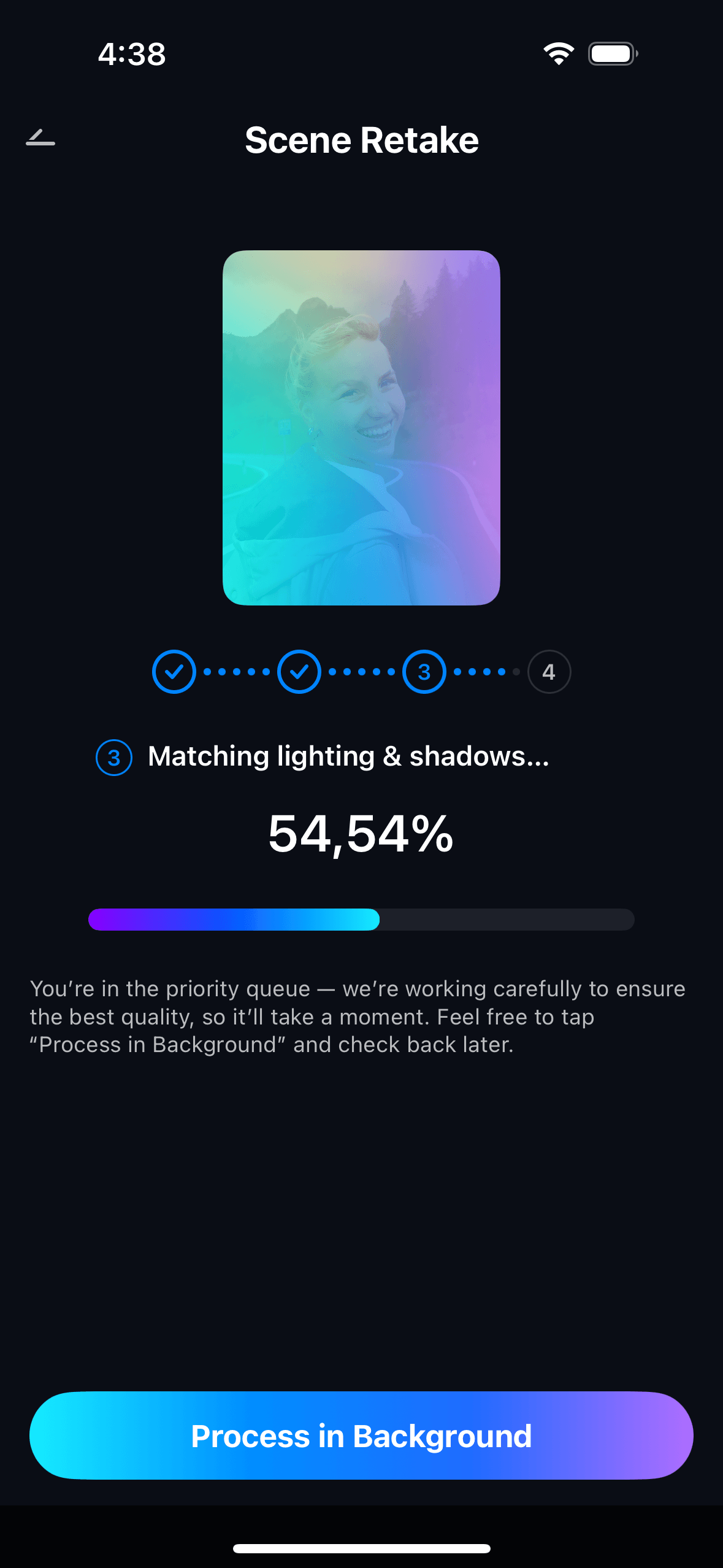
Step 3. Preview and save the version that still feels like the real photo
When you preview the result, do not ask only whether the background is cleaner. Ask whether the portrait still feels like the same moment. Public Relumi scene-based articles repeatedly end with preview-and-save because the last judgment should always be visual and human: does the new version feel more intentional without feeling fake? If yes, it is ready to keep or share.
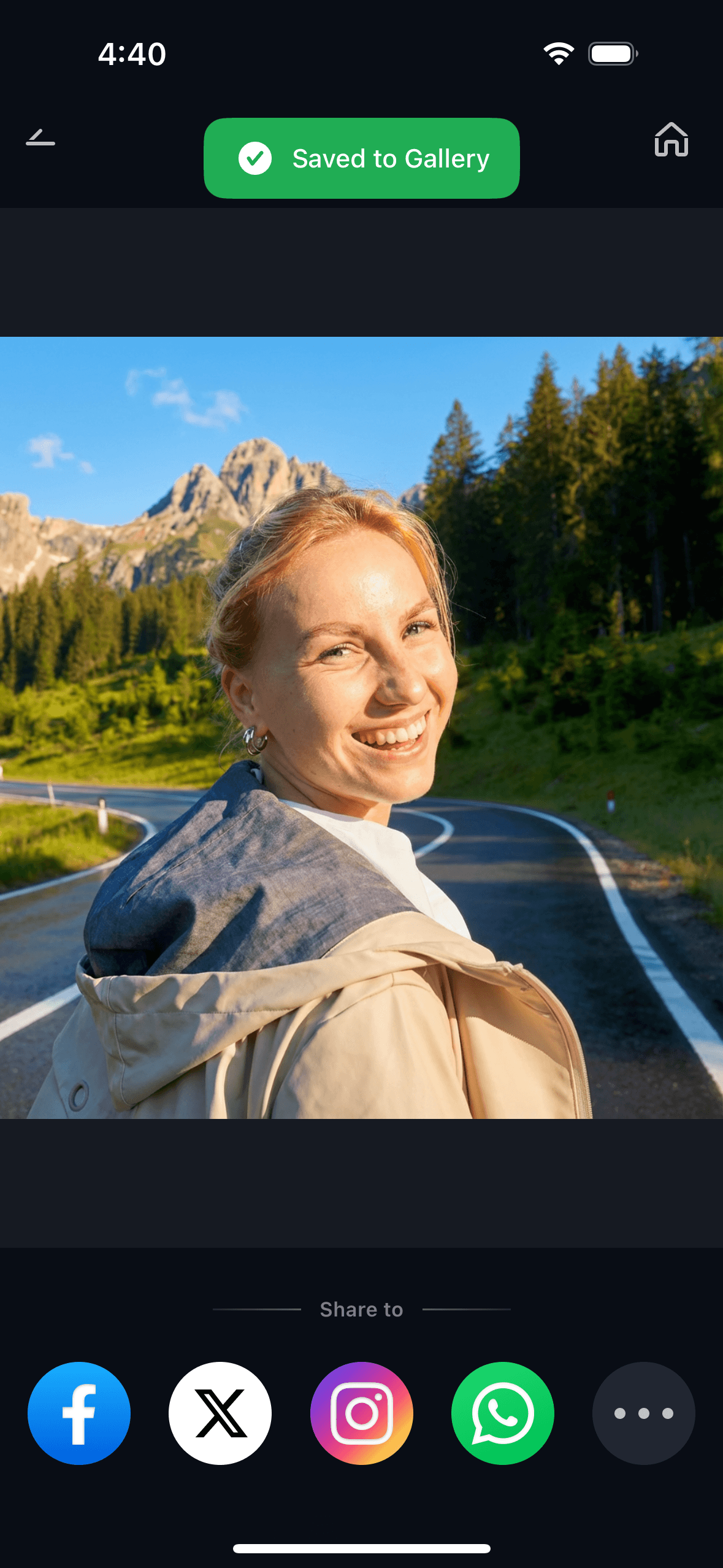
Part 4. When this works best
Clean Background works best when the portrait already has a strong reason to survive. The user likes the expression, the frame, the outfit, or the atmosphere, but the scene around the person is a little too loud. In those cases, cleanup is not replacing the photo. It is helping the good photo become easier to see.
Best portrait situations for this kind of background cleanup
This kind of correction is especially effective for casual selfies, mirror selfies, profile photos, home portraits, café portraits, and everyday social portraits where small environmental details can quickly weaken the image. It is also relevant for users asking practical questions like whether a messy selfie background affects perception or how to make a portrait stand out more clearly. In all of these cases, the user is not chasing perfection. They are trying to remove whatever keeps the portrait from feeling finished.
Quick checklist before saving
- Does the subject catch your eye faster than before?
- Does the background still feel like the same real place?
- Does the image look cleaner without looking obviously edited?
- Would you share this version without feeling the need to explain the background?
Part 5. When results may be limited
Not every portrait background can be improved with the same ease. Results may be more limited when the background is extremely crowded, when important details overlap tightly with hair or shoulders, when the image is very low resolution, or when the scene depends on complex textures that are hard to simplify cleanly. A realistic clean-background workflow should improve the portrait’s focus, not promise impossible perfection. That is part of what makes the result believable.
Conclusion
A strong portrait background does not need to disappear. It only needs to stop fighting the subject. That is the real value of Clean Background inside a Scene Retake-style workflow: not replacing the photo, but helping the original image feel more like the one the user thought they had captured. When the face becomes easier to notice, the frame feels less noisy, and the place still feels real, the portrait usually moves from almost good to clearly worth keeping.
You can’t miss:
How to Make a Dating Photo Background Look Cleaner and Less Distracting
FAQ
-
1. Is Clean Background the same as replacing the whole background?
No. In portrait use cases, the point is usually to simplify the original scene, not to swap it out completely. A good result keeps the setting believable while making the person easier to notice. -
2. Why can a portrait still feel weak even when the person looks fine?
Because the background may be pulling too much attention. Small details like clutter, bright objects, messy room edges, or visual noise can make the whole image feel less polished even if the expression is good. -
3. Why is cropping often not enough?
Because cropping may remove useful composition, outfit context, body language, or atmosphere. Many users want the original frame to stay intact while the background becomes less distracting. -
4. What is the best sign that the cleanup worked?
The portrait should feel calmer and more focused, but still real. If the subject stands out faster and the scene still looks believable, the result is usually heading in the right direction.