
 TL;DR:
To rescue outfit-focused mirror selfies without destroying body proportions through harsh cropping, use the Clean Background feature in the Relumi App Scene Retake tool to reduce room clutter while preserving the full-body frame and styling context.
● Cropping inherently ruins outfit legibility by cutting off shoes and altering garment lengths, whereas this approach reduces visual competition from dirty mirrors or sink items so the styling leads the photo.
● The cleanup is specifically tailored for bedroom OOTD, bathroom, hotel, or fitting-room shots where the clothing silhouette and pose are already valuable but the room feels too chaotic to share.
● Results may be limited if mirror marks heavily cover important outfit areas, if clutter tightly overlaps with body edges and hemlines, or if the space contains extreme repeated reflections.
Ask AI for a summary
 ChatGPT
 Perplexity
 Gemini
 Claude
 Grok
Grok
A mirror selfie has a different kind of value from a close-up selfie. It is not only about the face. It is about the whole read of the image: outfit shape, body line, shoes, proportions, hand placement, room attitude, and the casual “this is how it looked in the moment” feeling that a mirror shot can capture better than a posed portrait. That is also why mirror selfies get ruined so easily. The user may love the clothing, the silhouette, the pose, or the mood, but the final photo keeps dragging the eye toward everything else: the towel hanging off the door, the shoes on the floor, the sink clutter, the fingerprints on the mirror, the open closet, the laundry pile, the random shopping bag, or the bright object that ends up louder than the person.
What makes this problem especially frustrating is that the obvious fix often backfires. If you crop tighter, you may hide the background, but you also destroy the reason the mirror selfie existed in the first place. The outfit loses shape. The length of a coat becomes unreadable. The proportions of top and bottom stop making sense. The room context disappears so abruptly that the image no longer feels like a mirror selfie at all. In fashion communities and selfie discussions, people constantly post versions of the same apology: ignore the dirty mirror, ignore the background, ignore the mess. That repeated language, visible in threads like this Reddit outfit post about a dirty mirror and background and this Reddit outfit post apologizing for the mirror and room, says something important: users often like the outfit shot itself, but feel the background makes it look less polished than it deserves. That same frustration fits the broader Relumi App idea that some photos are almost right, but the camera held on to the wrong details.
In this article
Part 1. Why mirror selfies fail when the outfit is good but the room is not
A mirror selfie is often taken because the user wants to show more than just a face. It might be about a new dress, a layered outfit, a jacket length, a bag pairing, the fall of wide-leg pants, a gym progress look, a before-going-out moment, or a full silhouette that only makes sense when the body and outfit are seen together. That is exactly why the background becomes so important. A mirror selfie captures more of the room than a normal selfie, and once the room enters the frame, it starts sending its own signals. Shoes by the bed, a half-open wardrobe, toiletries spread across the sink, stacked boxes, hanging towels, and reflections of random items all compete with the styling message the user wanted to show.
This is not just a cleanliness issue. It is an impression issue. Mirror selfies are often judged by whether they feel put together. If the outfit looks intentional but the background looks chaotic, the whole image can feel less premium, less stylish, or less ready to share. That is why so many people attach disclaimers to the photo instead of feeling satisfied with it. In everyday online behavior, users do not say “the visual hierarchy collapsed.” They say “ignore the dirty mirror,” “ignore the room,” or “ignore the background.” Those phrases are valuable because they describe the real friction point. The subject is not missing. The styling is not missing. The problem is that the room is interrupting the read of the photo.
Part 2. Why cropping is usually the wrong fix for outfit-focused mirror selfies

Relumi Lighting Enhancer
Retake photo lighting naturally with AI-powered scene relighting.
 Balance harsh facial shadows without flattening the portrait
-
Improve hard light, patchy light, and low-visibility street portraits naturally
-
Keep urban mood while making the subject easier to see
-
No editing skills required — upload, relight, preview, and save
Cropping feels like a convenient solution because it removes evidence quickly. But mirror selfies are composition-sensitive in a way many people underestimate. The mirror shape, distance from the camera, position of the phone, visible floor line, headroom, and negative space around the body all contribute to how the outfit reads. Remove too much of that and the photo stops working. A long coat can start looking awkwardly cut off. The relation between top and bottom can become unclear. Shoes disappear. Body proportions shift. The shot turns into a compromise rather than a stronger version of itself.
Mirror selfies need space to keep outfit proportions readable
This is especially true for full-length outfits, layered looks, dress silhouettes, wide or oversized styling, and any mirror selfie where the user cares about how clothes fall on the body. Outfit context is not an extra detail in those photos. It is the reason the photo exists. If you crop away the lower frame, side space, or mirror edges too aggressively, the outfit becomes less legible. What looked balanced in the original can suddenly feel cramped. That is why “clean the background but keep the frame” is a very different request from “just remove distractions.” It is not about producing a generic cleaner image. It is about protecting the styling information that gives the mirror selfie its point.
That logic fits well with the broader Relumi App positioning around rescue shots. Public Relumi copy explains that some photos are almost perfect until the camera catches the wrong thing, and that AI Retake helps the moment look the way it actually felt. For a mirror selfie, the wrong thing is often not your expression or your pose. It is the room detail that ends up competing with the outfit.
A better mirror selfie should still feel like the same real room and same real look
A strong result should not make a mirror selfie feel sterile or detached from reality. A bedroom mirror selfie should still feel like a bedroom mirror selfie. A fitting-room photo should still feel like a fitting-room moment. A bathroom mirror shot should still look like a real captured scene, only less interrupted by the wrong details. This is where the Scene Retake mindset matters. On the Photo Lighting Enhancer page, Relumi describes improvement as reading face brightness, shadow direction, background contrast, and scene atmosphere so the image feels as if it were retaken under better conditions rather than artificially rebuilt. That same philosophy is the right benchmark for a cleaned mirror selfie too. The environment can stay believable while the distractions stop dominating.
Part 3. How Relumi helps clean a mirror selfie without removing the reason you took it
The best mirror selfie correction is not the one that removes the most. It is the one that preserves the outfit, proportions, and pose while calming the room enough that the styling finally becomes the main subject again. That is why this type of edit belongs in a Scene Retake mindset. You are not trying to erase your environment out of existence. You are trying to get the image closer to what you meant to show when you lifted the phone: the outfit, the silhouette, the look, and the overall vibe.
Mirror selfies are also more exposed than ordinary selfies because the user often wants them to be post-ready. A mirror shot might be intended for outfit sharing, a story upload, a profile refresh, a fashion diary, or a private record of a look that still deserves to feel polished. The social portrait guidance on Repairit is useful here too, because it emphasizes something mirror-selfie users also care about: a result that feels polished enough to share, but not so processed that it stops feeling real.
Step 1. Add the mirror selfie that already has the right outfit or pose
Start with the photo where the outfit, silhouette, or overall body balance already works. Maybe the clothes fall well, the proportions feel right, the mirror angle is flattering, or the shot captures exactly the look you wanted to remember. This correction works best when the image is already valuable but visually interrupted by the room around it.
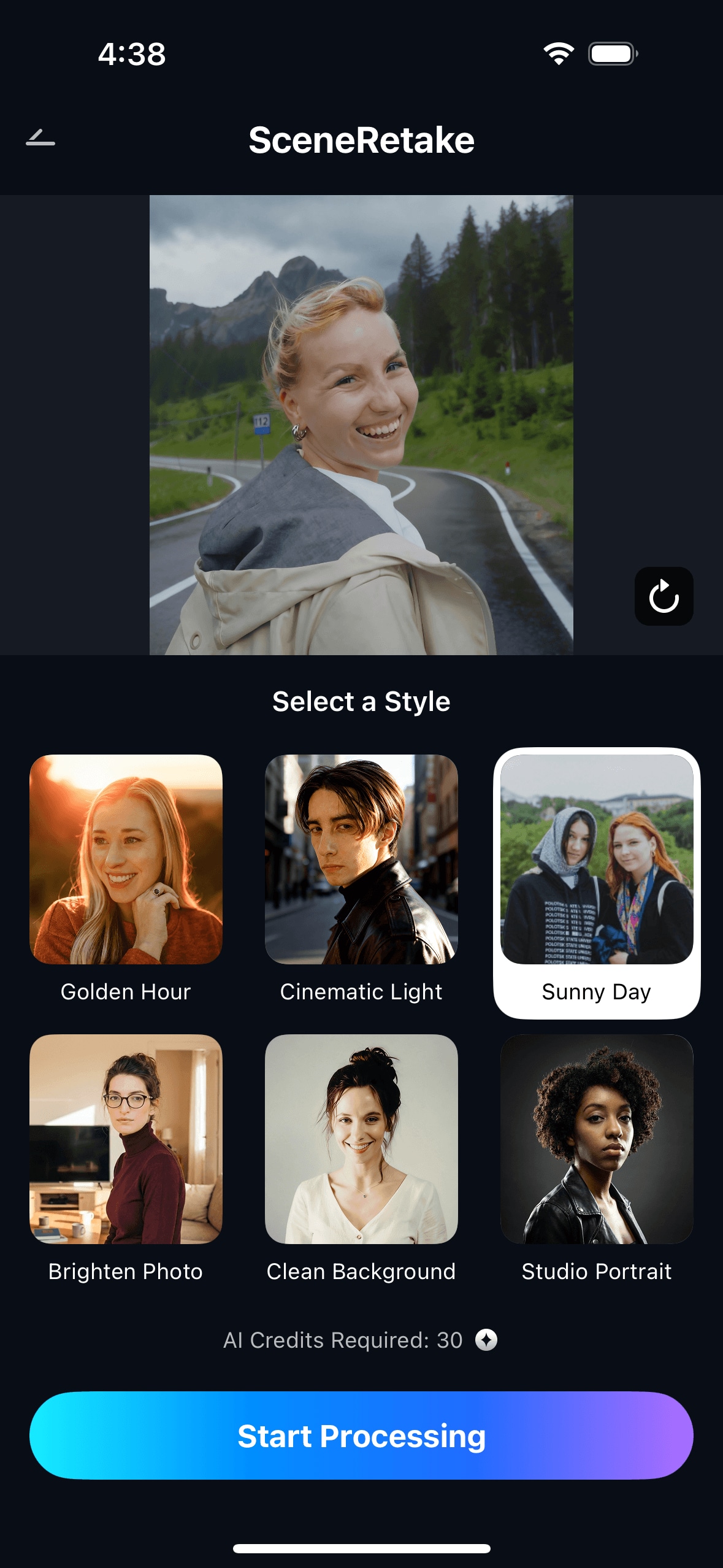
Step 2. Choose Clean Background in Scene Retake
At this point, think less about removing “mess” in the abstract and more about restoring attention to the outfit. What is competing with the look? It may be sink clutter, dirty mirror marks, bed edges, floor items, door-side towels, bright packaging, stacked storage, or mirror reflections of random objects. The strongest result is not a blank room. It is a calmer room that stops interrupting the read of the outfit.
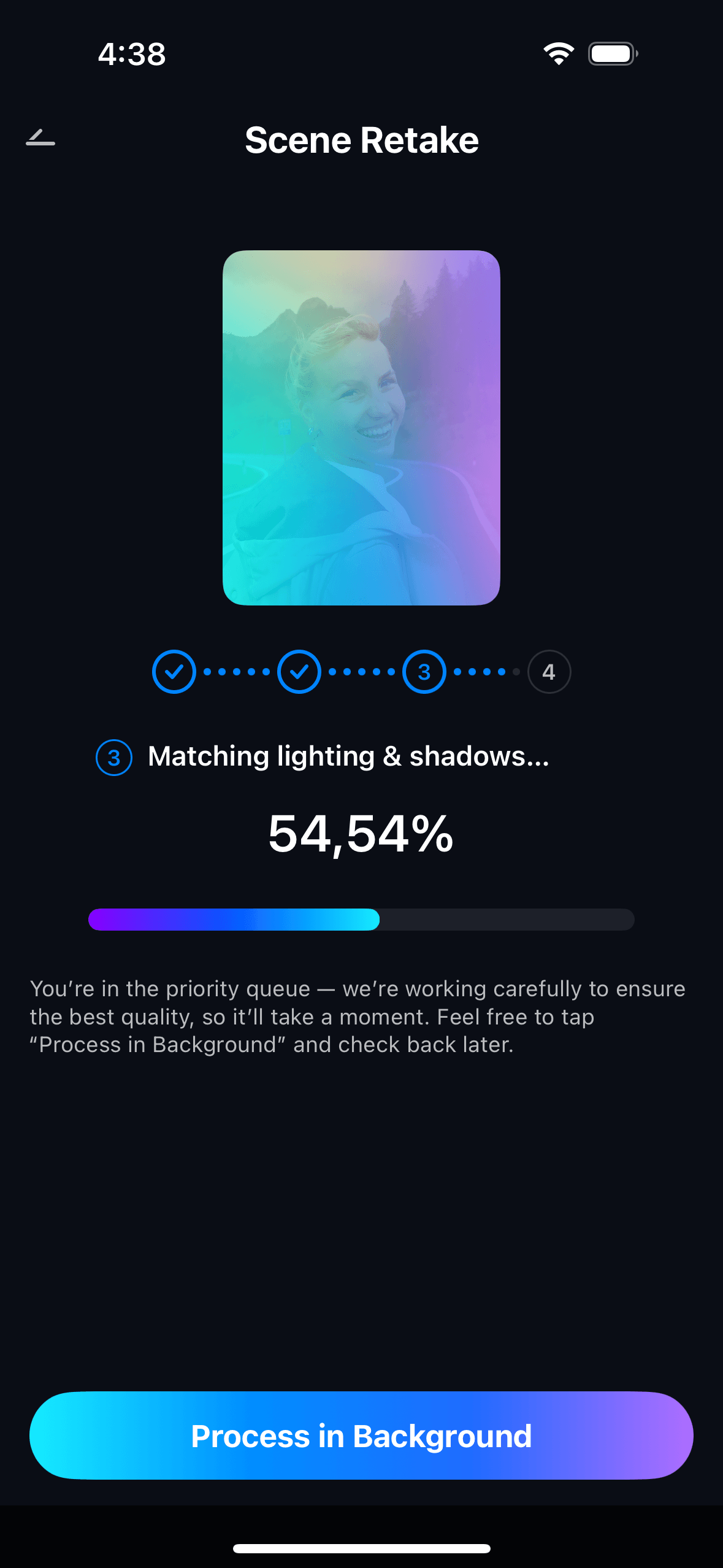
Step 3. Preview and save the version where the outfit still leads and the room stops interrupting
The final evaluation should be practical. Does the outfit read faster than the room? Do the proportions still make sense? Does the mirror selfie still feel like the same spontaneous shot, only cleaner and easier to share? If yes, the correction has succeeded. The best mirror selfie cleanup does not make the room disappear. It makes the styling easier to understand before the room starts talking over it.
Part 4. Which mirror selfies benefit most from this correction
This kind of cleanup helps most when the mirror selfie is already doing something useful. The outfit is worth showing. The styling is clear. The silhouette matters. The user likes the pose or the overall feel of the shot. In other words, the image has real value before editing. What is lowering that value is not the person or the clothes, but the surrounding distractions that make the whole photo feel less intentional.
Common situations where background clutter weakens an otherwise good outfit selfie
The most common examples are bedroom OOTD mirror selfies with visible laundry or floor clutter, bathroom mirror selfies where sink products and towels dominate the lower half of the frame, fitting-room selfies where extra items outside the outfit distract from the styling, hotel mirror selfies where travel clutter weakens the polished look, and casual night-out selfies where the outfit is good but the room feels too messy for sharing. These use cases also match how users present their own photos in communities like Reddit fashion threads and outfit-sharing mirror selfie posts, where the clothing is clearly the point but the background still needs to be excused.
Quick checklist before saving
- Does the outfit or body silhouette attract attention before the room clutter does?
- Does the photo still preserve enough frame to make the outfit readable from top to bottom?
- Does the mirror selfie still feel like a real room, rather than a flattened or unnatural space?
- Would you feel comfortable posting this version without apologizing for the mirror or background?
Part 5. When results may be limited
Results may be more limited when the mirror is heavily dirty across important outfit areas, when clutter overlaps tightly with shoes, hemlines, hands, or body edges, when the room is extremely crowded with repeated reflections, or when the original photo quality is already low and the outfit details themselves are not very readable. In those cases, the right goal is not perfection. It is a cleaner styling read and a better overall impression. Even moderate background simplification can make a mirror selfie feel much more intentional without sacrificing the reason the photo was taken.
Conclusion
A mirror selfie is rarely just a face photo. It is a styling photo, a proportion photo, a mood photo, and often a record of how a look came together in a real place at a real moment. That is exactly why harsh cropping often solves the wrong problem. It removes clutter, but it also removes outfit context. A better result is one where the room stops competing and the look starts reading clearly again. That is why Clean Background makes sense in a Scene Retake framework: the goal is not to make the mirror selfie less real, but to make it feel closer to the version you meant to capture when the outfit was the whole point.
Related Reading
How to Clean Up a Portrait Background Naturally Without Making It Look Over-Edited
Why Your Portrait Background Feels Messy Even When the Subject Looks Fine
How to Make the Subject Stand Out When the Background Keeps Stealing Attention
How to Clean Up a Selfie Background Without Cropping Away the Frame
FAQ
-
1. Why is a mirror selfie harder to fix than a normal selfie?
Because a mirror selfie usually includes more of the room and more of the body. That means more visual clutter can enter the frame, but the extra space is also important for showing the outfit and proportions correctly. -
2. Why not just crop a mirror selfie tighter?
Because tight cropping often removes shoes, outfit balance, mirror shape, and the negative space that helps the look read properly. The image may become cleaner, but it can also become less useful as an outfit photo. -
3. What kinds of mirror selfies benefit most from background cleanup?
OOTD mirror selfies, bedroom outfit shots, bathroom mirror selfies, fitting-room selfies, hotel outfit photos, and casual full-body mirror shots benefit the most when the styling works but the room weakens the impression. -
4. What should a successful cleaned mirror selfie feel like?
It should still feel like the same mirror selfie, with the same look and same room, but with fewer distractions competing against the outfit. The result should feel easier to read, not artificially rebuilt.