
 TL;DR:
To rescue cluttered café or restaurant portraits without losing their warm social atmosphere, use the Clean Background feature within the Relumi App's Scene Retake to remove competing table items and background noise while preserving the original environmental lighting.
● Target specific visual friction like stacked plates, bright menus, or neighboring diners, prioritizing a natural reading order where the subject stands out without making the table look completely empty.
● This technique is best suited for candid coffee-shop window shots or dinner portraits that already possess strong emotional value but suffer from immediate foreground clutter.
● The cleanup effect is naturally limited when tableware tightly overlaps with the subject's body, the scene contains highly reflective surfaces, or the original image suffers from weak low-light quality.
Ask AI for a summary
 ChatGPT
 Perplexity
 Gemini
 Claude
 Grok
Grok
A café or restaurant portrait often looks good for exactly one second before the distractions take over. The expression feels natural. The outfit works. The table-side light may even look flattering in the moment. Then you check the photo and notice the glassware, unfinished plates, bright menu corners, condiment bottles, chair backs, strangers at the next table, the neon sign behind the head, or the cluttered table edge that somehow became louder than the person. The photo is not bad because the place is wrong. In fact, the place is often the whole reason you took it. The problem is that the frame is carrying too many signals at once.
This is what makes café and restaurant portraits different from home portraits and different from travel landmarks. These scenes are supposed to feel social, effortless, and a little atmospheric. You want the setting to stay recognizable because the setting adds mood, lifestyle context, and memory value. But if the background and table details become too busy, the portrait starts looking accidental instead of intimate. That is exactly where the Relumi App framing is useful. Public Relumi copy repeatedly leans on the idea of the “shot that was almost perfect,” where AI Retake helps fix what the camera caught wrong so the moment looks the way it actually felt. That logic fits café portraits very well: the problem is often not the person, but the wrong things the camera kept competing around them.
In this article
Part 1. Why café and restaurant portraits become distracting so easily
Café and restaurant portraits are usually taken in live environments, not controlled ones. That means the scene is full of elements that look normal in person but start competing once they are frozen into a still image. Glasses catch reflections. Plates stack visual weight near the bottom of the frame. Menus bring hard edges and bold text. Candles, condiment bottles, utensils, receipt folders, and table numbers all create little focal points. Nearby chairs, other diners, servers passing behind the subject, and interior signs add even more competition. By the time the photo is taken, the person may only be one visual element among many.
This is why so many café portraits feel weaker than the actual moment. In person, your attention was on the person across from you. In the photo, the camera gives almost equal importance to the person, the plate, the water glass, the neighboring table, the wall lamp, and the bright lettering behind them. The image ends up less intimate than the memory. You can see the same frustration in real user behavior. In one Reddit request to remove coffee mugs, a phone, and a coaster from a candid café photo, the complaint is not that the photo is unusable. It is that the clutter keeps an otherwise charming image from feeling as clean as it should. That is a very familiar café-portrait problem.
Part 2. Why a cleaner restaurant portrait should not lose its mood

Relumi Lighting Enhancer
Retake photo lighting naturally with AI-powered scene relighting.
 Balance harsh facial shadows without flattening the portrait
-
Improve hard light, patchy light, and low-visibility street portraits naturally
-
Keep urban mood while making the subject easier to see
-
No editing skills required — upload, relight, preview, and save
The easiest mistake in this kind of correction is to remove so much that the portrait stops feeling like it happened in a real café or restaurant. That would solve one problem by creating another. A dining portrait often depends on atmosphere: warm light, table distance, a sense of conversation, evening intimacy, a casual brunch mood, or the social energy of the space. If you flatten the scene too aggressively, the image may look cleaner but also less believable, less personal, and less tied to the occasion that made it meaningful.
The atmosphere matters, so the setting cannot disappear completely
A good café portrait should still feel like it happened somewhere specific. The cup, the soft lamp, the booth seating, the bar backdrop, the outdoor café light, or the restaurant’s evening glow can all help the image feel grounded. The issue is not that the setting exists. The issue is when too many details inside the setting compete equally with the person. This is why “cleaner” does not mean “emptier.” It means that the social space is still present, but the wrong distractions are no longer pulling the eye away first.
This logic lines up with the broader Relumi Photo Lighting Enhancer philosophy. Relumi describes Scene Retake as rebuilding the feeling of better lighting without making the image look fake, and specifically says it can preserve the intimate mood of evening, restaurant, and home photos while making people easier to see. Even though that official page is about light, the underlying standard is exactly right for Clean Background in a restaurant portrait too: keep the mood, reduce the interference, and let the person read more clearly inside the same scene.
The best result keeps the social place believable while giving the subject clearer priority
A strong result should guide the eye in a more natural order. You should notice the person first, then take in the table and the room as part of the setting. If the first thing you notice is the pile of plates, the bright menu board, the bottle cluster, or the stranger at the next table, the portrait feels less intentional. But if the correction becomes too severe, the café stops feeling alive. The best image stays between those two failures. It still feels like a restaurant portrait, just one where the visual hierarchy finally makes sense.
This is also where the public Relumi App description helps. Official product language talks about the “shot that was almost perfect” and emphasizes that corrected areas should blend with original skin texture and environmental lighting. That matters in a café scene, where the ambient light and surrounding atmosphere are part of why the photo felt worth taking in the first place.
Part 3. How Relumi helps clean a café portrait without making it feel fake
The best café-portrait correction is not the one that makes the table empty or the room blank. It is the one that brings the image back toward what the moment felt like. Maybe it was a warm dinner, a casual coffee date, a birthday brunch, a quiet solo portrait by the window, or a candid restaurant moment that felt flattering in real life. If the final photo feels weaker, it is usually because the scene contains too many competing details, not because the memory itself was wrong. Cleaning the background should restore the mood, not replace it.
This is why a Scene Retake mindset is especially useful here. Restaurant portraits are often not retakeable in the same way. The food is gone, the light changes fast, the candid expression disappears, and the social ease of the moment is hard to recreate once people become self-conscious. If the photo is almost right, the smartest correction is to rescue it rather than rebuild it. That approach also matches the broader social-photo logic in Relumi’s portrait content, where a result should feel polished enough to share without crossing into obvious over-editing.
Step 1. Add the portrait that already has the right expression or mood
Start with the café or restaurant photo that already feels worth keeping. Maybe the expression is natural, the seating angle works, the outfit looks right, or the atmosphere of the place adds something to the portrait. This correction works best when the social mood is already there, but the background or table details are weakening the image.
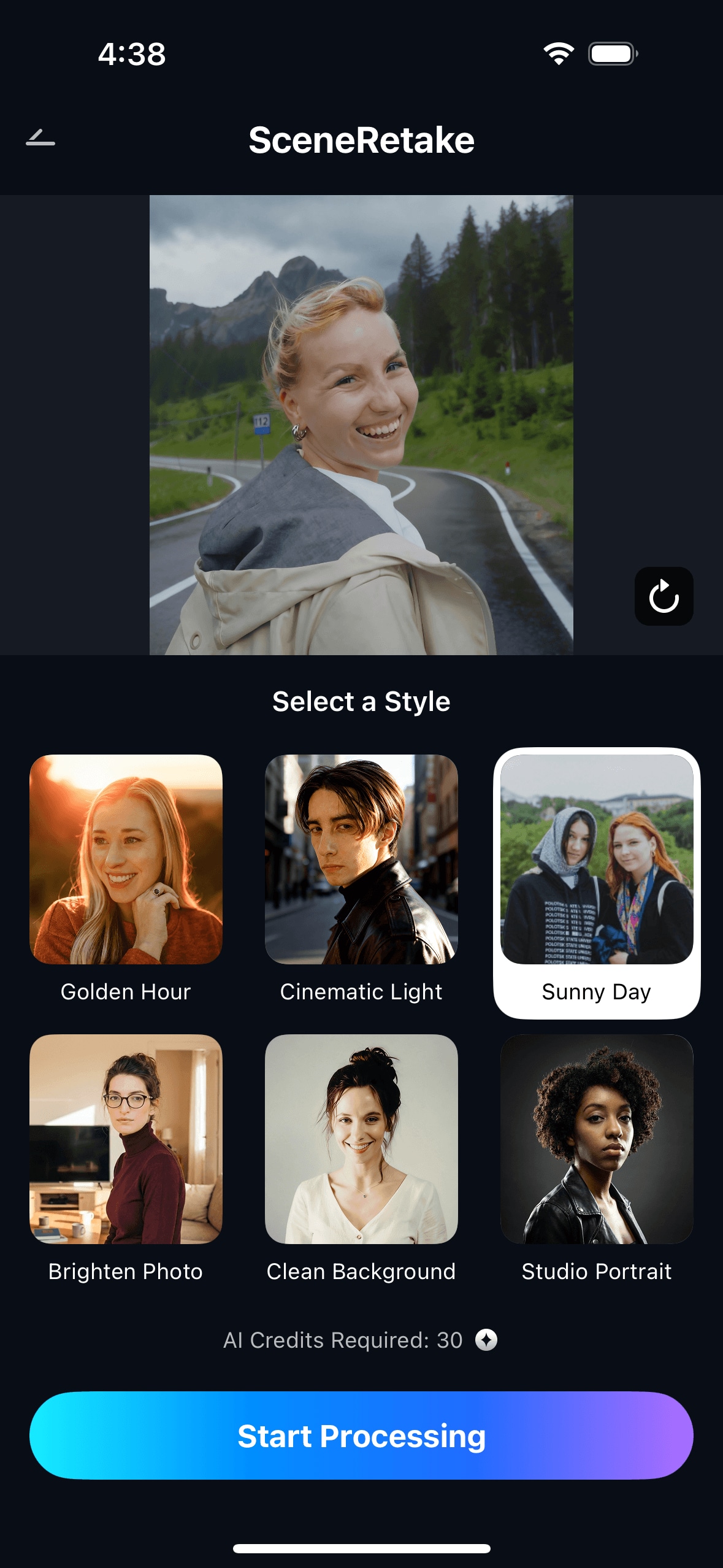
Step 2. Choose Clean Background in Scene Retake
At this point, focus on what is competing with the subject rather than what simply belongs to the place. The issue may be extra dishes, glasses, cluttered table items, menus, strong background text, neighboring diners, chair backs, or bright interior elements that steal the eye. The strongest result keeps the dining setting believable while reducing the details that make it feel too crowded to read as a portrait.
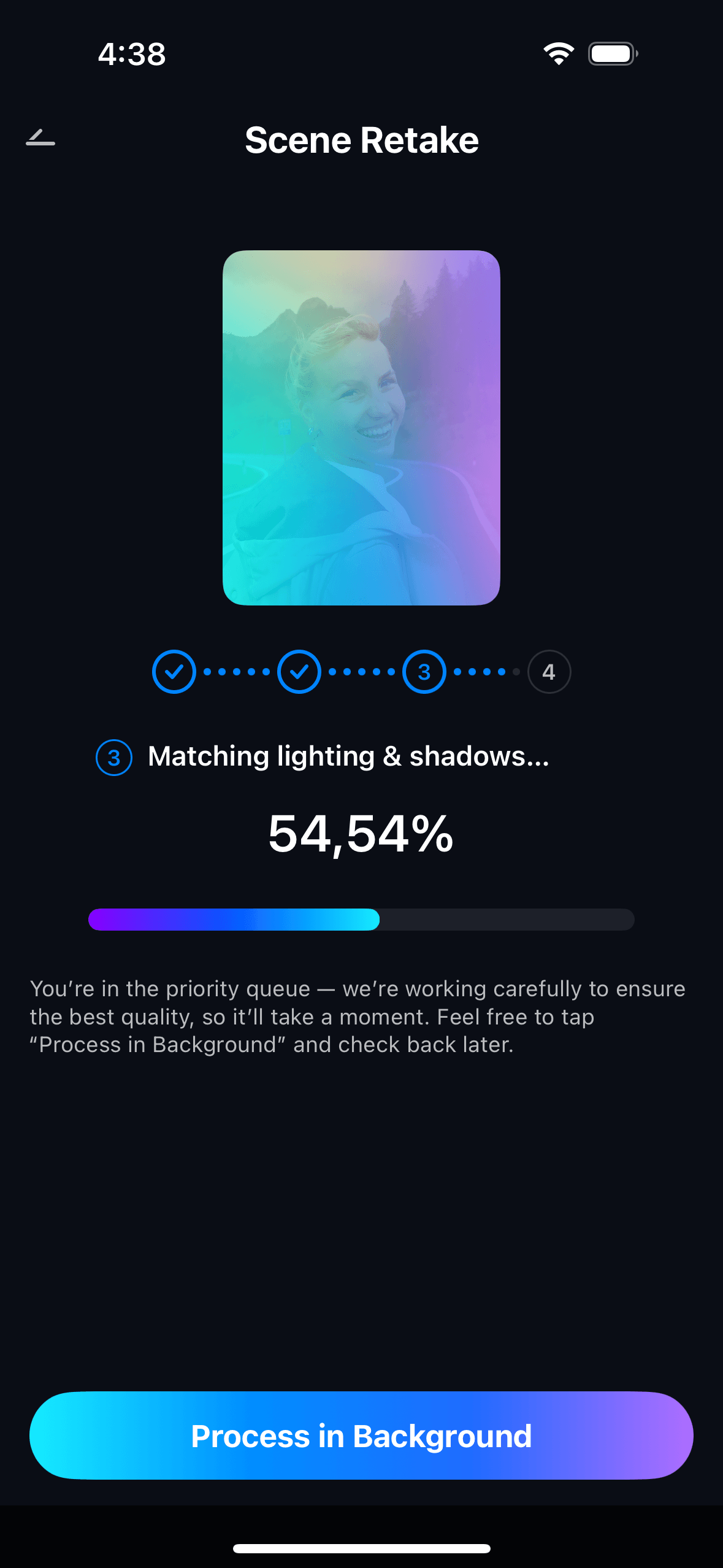
Step 3. Preview and save the version that feels calmer, not empty
The final test is simple. Does the portrait now feel easier to look at without losing its social atmosphere? Does the person stand out more naturally? Does the restaurant or café still feel like a real place rather than a flattened backdrop? If yes, the correction is working. A successful café cleanup keeps the memory, keeps the mood, and removes only the visual friction that was never the point of the photo.
Part 4. Which café or restaurant portraits benefit most from this correction
This kind of cleanup works best when the portrait already has social or emotional value before editing. The expression works, the atmosphere matters, the occasion is real, and the setting adds something to the image. The only problem is that the frame contains too many competing details. In those situations, cleaning the background is not changing the story. It is helping the story read correctly.
Common dining and café situations where the scene weakens the portrait
The most common examples are café window-seat portraits where cups and trays dominate the table, dinner portraits with too many glasses and plates in the foreground, brunch photos where menus and cutlery break the composition, restaurant candids where neighboring tables distract from the person, date-night portraits where warm atmosphere is good but the table clutter is not, and social portraits where the place feels stylish but the image is weakened by too many small objects. These patterns line up with real user requests on Reddit asking to clear dishes and bottles from a strong photo and with broader discussions on Quora about why distracting backgrounds hurt portraits. The recurring point is not that restaurant scenes are bad. It is that restaurant scenes get busy faster than people expect.
Quick checklist before saving
- Does the person attract attention before the table clutter or background details do?
- Does the setting still feel like the same café or restaurant, not a fake empty room?
- Have the distracting details calmed down without killing the mood of the place?
- Would this version feel more natural to post, share, or keep as a memory of the occasion?
Part 5. When results may be limited
Results may be more limited when the table is extremely crowded, when dishes or objects overlap tightly with hands or body edges, when the scene contains many bright reflective surfaces, when the background is packed with people across large portions of the frame, or when the original image quality is already weak in low light. In those situations, the right goal is not perfection. It is a cleaner reading order and a more flattering balance between the subject and the place. Even moderate improvement can make a café portrait feel much more intentional.
Conclusion
A café or restaurant portrait should not have to choose between atmosphere and clarity. The best ones keep both. They still feel social, warm, and tied to a real table, a real room, and a real moment. What weakens them is usually not the place itself, but the extra visual noise that makes the frame harder to read. That is why this kind of correction belongs inside a Scene Retake mindset. The goal is not to empty the restaurant. It is to bring the portrait closer to the version you remember: you, or the person you photographed, looking right in a place that still feels worth being in.
Related Reading
How to Clean Up a Portrait Background Naturally Without Making It Look Over-Edited
Why Your Portrait Background Feels Messy Even When the Subject Looks Fine
How to Make the Subject Stand Out When the Background Keeps Stealing Attention
How to Clean Up a Selfie Background Without Cropping Away the Frame
How to Make a Mirror Selfie Look Cleaner Without Losing the Outfit Context
How to Clean Up a Travel Portrait Background While Keeping the Place Feel
Relumi: How to Make a Home Portrait Look Cleaner Without Making It Feel Staged
FAQ
-
1. Why do café portraits get distracting so quickly?
Because tables and interiors naturally contain many small visual elements: cups, glasses, menus, plates, bottles, text, lights, and nearby people. Once photographed, they can compete with the subject much more than they did in real life. -
2. Should a cleaned restaurant portrait remove all signs of the table and room?
No. The atmosphere of the café or restaurant is often part of the image’s appeal. The goal is to reduce the distractions that weaken the portrait, not erase the place itself. -
3. What kinds of café or restaurant portraits benefit most from this kind of cleanup?
Coffee-shop portraits, brunch portraits, dinner candids, window-seat café photos, date-night portraits, and stylish restaurant portraits benefit most when the mood works but the table or background is too busy. -
4. What should a successful cleaned café portrait feel like?
It should still feel like the same social place and the same occasion, but with fewer distracting details competing against the person. The mood should remain intact while the portrait becomes easier to read.