To fix a video black screen on Windows 11 or Windows 10, first test the same video in another compatible player. If it works there, troubleshoot the original player's codec or display settings. If only online videos are black, check the browser. When one complete video stays black across compatible players while other files play normally, investigate the file itself and consider video repair.
Hearing sound without seeing a picture does not automatically mean your video is corrupted. Use the checks below to find the relevant fix instead of changing unrelated Windows settings.
In this article
Part 1: Identify Which Kind of Video Black Screen You Have
A video black screen means the picture area stays blank while the player or browser may remain usable. This is different from the entire Windows desktop disappearing. Start by comparing one video in two players, then two videos in the same player.
| What you notice | What to investigate first | Where to start |
| The same video displays correctly in another player. | The original player's codec support or video output. | Media player checks |
| Several otherwise playable files show a black picture on this PC. | Player settings and the graphics driver. | Video output and driver checks |
| Web videos are black, but downloaded videos play normally. | Browser extensions, site data, updates, or graphics acceleration. | Browser checks |
| One file stays black across compatible players, while other files work. | An incomplete transfer, a problematic export, or damaged video data. | Check the original file first, then consider video repair. |
| The entire desktop disappears, not just the video. | A display, connection, or Windows problem. | Stop treating it as an individual video-file issue. |
These comparisons narrow the investigation; they do not prove a single cause. For example, two players can both lack support for the same video encoding. Microsoft documents codec and playback problems separately in its Windows Media Player troubleshooting guide.
Part 2: Fix Black Videos in Your Media Player
For a downloaded video, camera recording, or saved MP4 or MOV file, first establish whether the problem follows the file or stays with one application. Try one change at a time so you can tell what helped.
1. Compare the Same File in Another Player
Start here when: One video plays sound but no picture, or a recently transferred video appears black.
- Confirm that the download, transfer, or export has finished. For your own footage, check whether the original still plays on the camera, phone, or computer that created it.
- Open the same file in another updated player that supports its format. Also play a known-working video in the application that showed the black screen.
- Compare the results. If the original works but the transferred version does not, transfer it again and test the new file before using repair software.
What the result means: A video that works in another player points toward a playback-environment issue. A problem that follows one file deserves a codec and file-integrity check, not an immediate Windows reinstall.
2. Check the Video Codec
A codec is the technology used to encode and decode media. MP4 and MOV are containers: the extension alone does not tell you which video decoder is required.
- Identify the video codec. In VLC for Windows, open the file and select Tools > Codec Information, as described in VideoLAN's Windows FAQ.
- Check whether your preferred player supports that codec. For example, an HEVC/H.265 video may need an additional extension in a Windows player.
- Use the matching extension linked from Microsoft's official codec guidance, or use a compatible player. Reopen the video afterward.
Do not install a random codec bundle or rename a file from .mov to .mp4 as a repair method. Changing the extension does not change the encoding or fix damaged video data.
3. Check the Player's Video Output
Use this check when: The video displays in another player, but VLC still shows a black picture.
- In VLC for Windows, open Tools > Preferences > Video.
- Note the existing Output setting. Try a different available output module, keeping other settings unchanged.
- Save, close VLC completely, and reopen the same video. Restore the previous output setting if the change does not help.
VideoLAN includes output-module changes in its black or garbled video troubleshooting. Treat this as a player-specific test, not a repair to the file.
4. Update or Roll Back the Graphics Driver
Use this check when: Multiple videos or applications are affected, especially after a graphics-driver change.
- Right-click Start, open Device Manager, and expand Display adapters.
- Right-click the relevant graphics adapter, select Update driver, and choose the automatic search option.

If Windows cannot find a suitable update, check your PC or graphics-device manufacturer's official support page for your exact model and Windows version. Restart after installation and retest.
If playback broke immediately after a driver update, open the adapter's Properties > Driver tab and use Roll Back Driver when available. Administrator permission may be required. Follow Microsoft's driver update and rollback instructions.

Part 3: Fix Black Videos in Your Browser
If local videos work and only website playback is black, focus on the browser. A file-repair application is not the first fix for a stream that fails to display.
1. Update the Browser and Compare Playback
- Reload the page and test a different video on the same website. This helps distinguish one problematic upload from a broader playback issue.
- In Chrome, open Menu > Help > About Google Chrome. Apply an available update and select Relaunch. See Google's Chrome update instructions.
- Test the same video in another browser supported by the website. Keep the account and network the same where possible.
If the video works in the other browser, continue with the affected browser's settings. If one particular video fails everywhere, check the website or uploader before changing more settings on your PC.
2. Check Extensions and Clear Relevant Browser Data
Google recommends checking extensions and browser data when videos appear blank. Start with a comparison that does not erase your settings.
- Open a Chrome Incognito window with Ctrl + Shift + N and test the video. Use the same account when the service requires a login.
- If it works, return to a normal window, open Extensions > Manage extensions, and temporarily disable extensions. Re-enable them individually, testing playback each time.
- If necessary, open Menu > Delete browsing data and clear Cached images and files. Leave unrelated categories unchecked.
Follow Google's video playback troubleshooting. A private-window result is a clue, not proof that an extension caused the problem.
For a persistent problem on one site, use Settings > Privacy and security > Third-party cookies > See all site data and permissions, find that site, and delete its data. This may sign you out and remove site preferences. Google explains the effects in its cookie and site-data guide. Incognito also blocks third-party cookies by default, so it is not an identical playback environment.
3. Test Graphics Acceleration
When another browser works but Chrome still shows a black picture, a reversible acceleration test can help narrow down the rendering issue. Google includes this option in its Chrome troubleshooting guidance.
- Open Chrome Settings > System.
- Find the graphics or hardware acceleration setting and note its current state.
- If enabled, turn it off, relaunch Chrome, and replay the same video.
- Restore the setting if nothing improves. If it helps, review browser and graphics-driver updates before retesting with acceleration enabled.
This changes how Chrome uses your computer's graphics hardware; it does not repair the video. Do not change experimental browser flags or unrelated registry settings as part of this test.
Part 4: Repair a Corrupted Video That Still Shows a Black Screen
Consider file repair when you have the complete video, compatible players still cannot display it, and other videos work normally. An interrupted recording or transfer strengthens the reason to investigate damaged video data, although those symptoms alone do not confirm corruption.
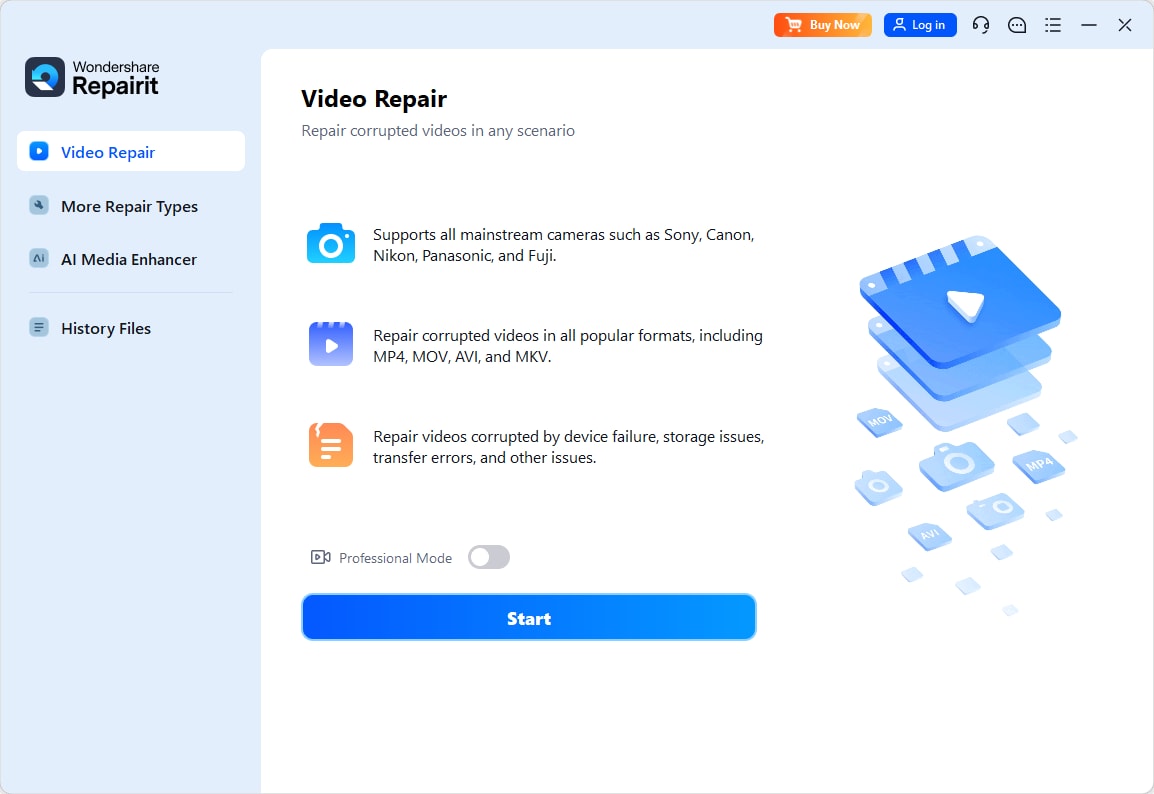
Wondershare Repairit Video Repair can help repair supported corrupted videos, including files that show black-screen playback problems. It offers a repair-and-preview workflow and an Advanced Repair option for cases that need a matching sample. It does not install a missing Windows codec or fix a graphics driver.
Repair the Video with Repairit on Windows
Step 1. Add the video. Open Repairit's Video Repair feature, select Add, and choose the affected file.
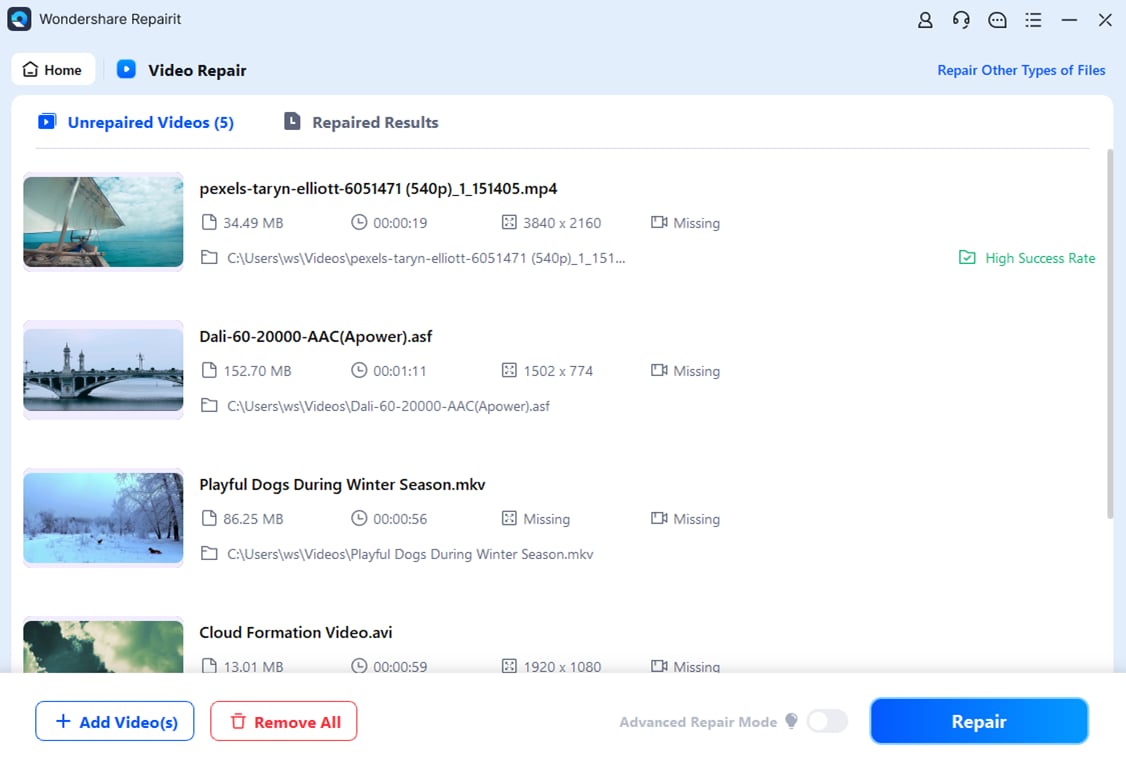
Step 2. Start the repair. Confirm the loaded file and select Repair. Wait for the process to finish.
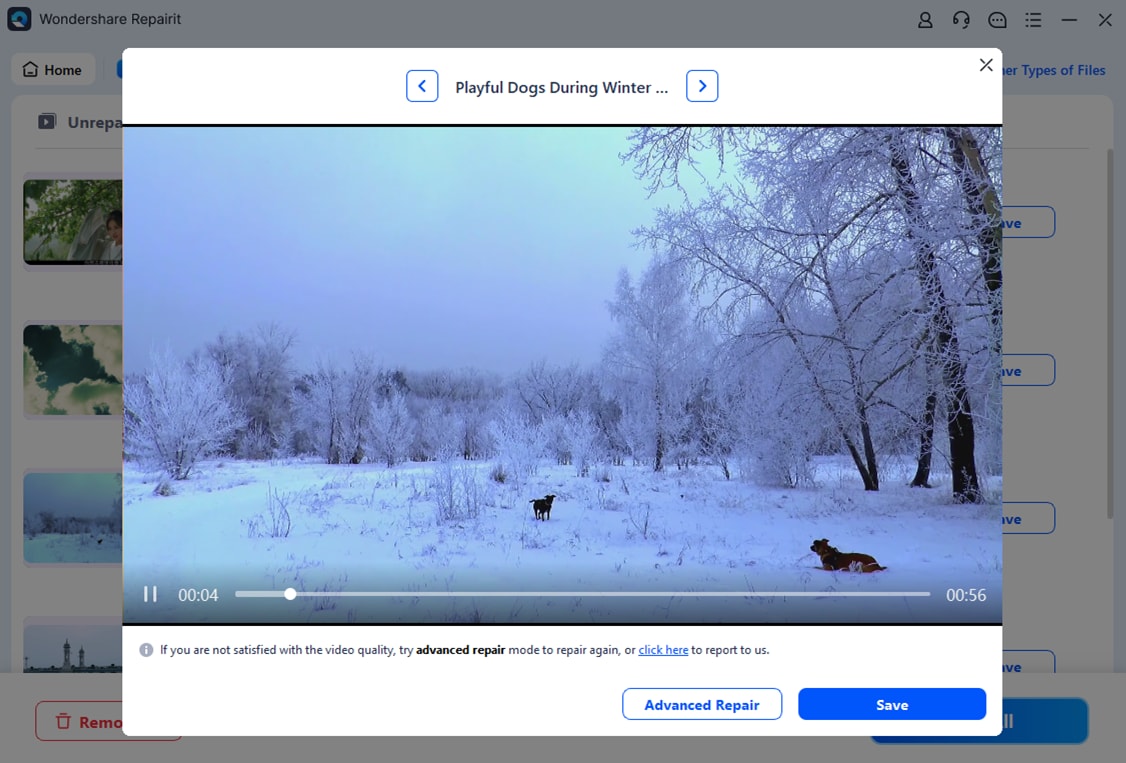
Step 3. Preview the result. Select Preview to assess the repaired output. Check the available picture and sound before deciding whether to save.
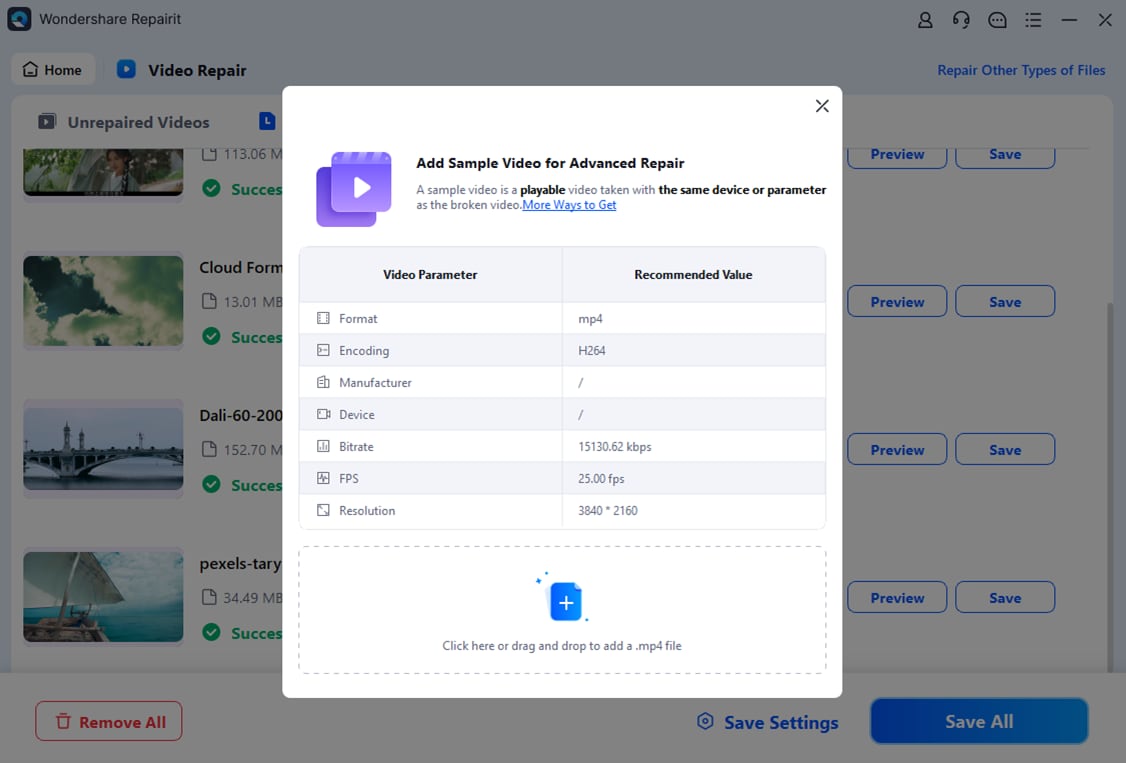
Step 4. Use Advanced Repair if needed. If offered for an unsuccessful repair, add a working sample recorded with the same device and in the same format. Run the repair and preview again.
Step 5. Save the repaired video. Select Save and choose a different folder from the damaged file. Test the saved result in your usual player.
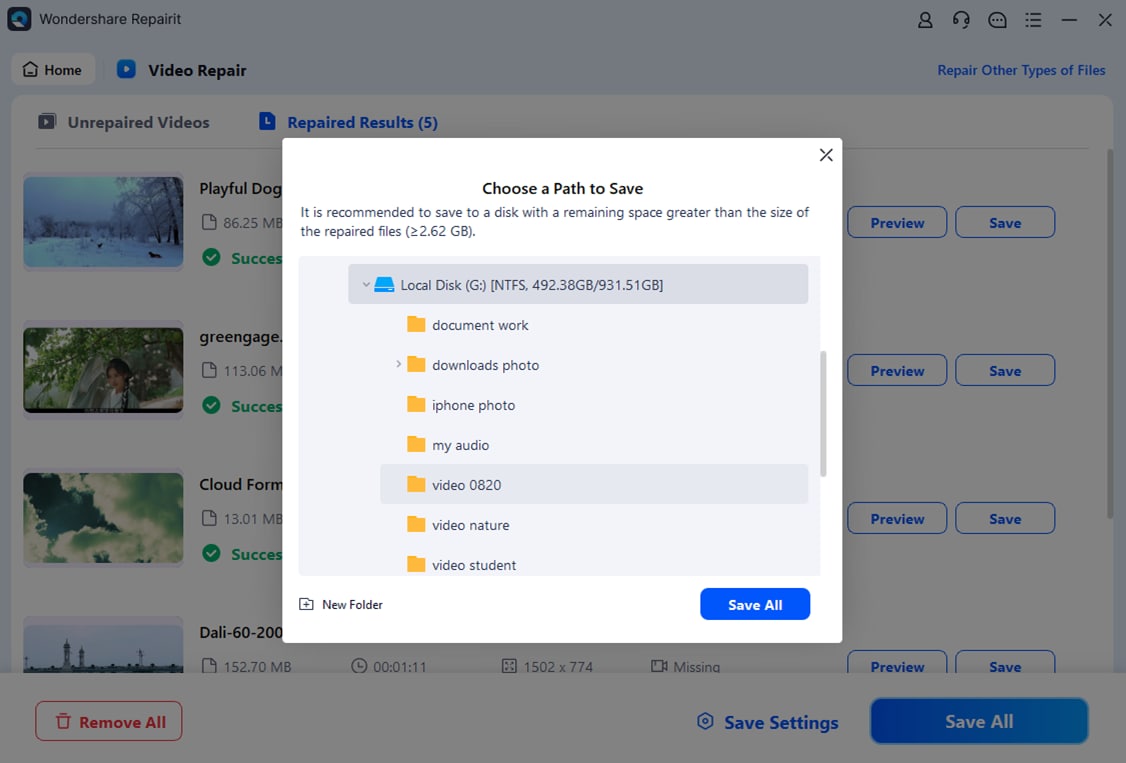
Choose Online Repair for a Supported File
For a supported video you are comfortable uploading, Repairit Video Repair Online offers a browser-based alternative. Its current free option is limited to one video up to 50 MB; the Premium online option supports files up to 3 GB.
Check the current format and plan requirements before uploading. For a larger file or a desktop workflow, review the desktop version instead. Follow your organization's file-handling rules for confidential footage.
Part 5: Reduce Repeat Playback and File Problems
Once playback works, keep the fix that addressed your actual problem rather than leaving several unrelated settings changed.
- After a transfer: Test the destination video before deleting the recording from the source device.
- After a codec fix: Record the encoding that caused trouble so you can choose a compatible player or export setting next time.
- After a browser or driver fix: Keep a note of the setting or version change that restored playback.
- After a repair: Check the saved video's beginning, middle, and end, including any timestamp that previously went black.

7 Best Solutions to Videos Not Playing in Windows 10/11
How to Recognize and Fix Windows 10/11 Video Problems
If File Explorer is also crashing, see Windows 10 Explorer Keeps Crashing? 10 Workable Fixes!
Conclusion
The right fix for a video black screen depends on where the picture disappears. Compare players for local files, check extensions and settings for browser playback, and investigate the graphics driver when several applications are affected. When the problem follows a supported damaged file, Repairit's repair-and-preview workflow provides a way to assess whether it can produce usable output.
For a format-specific repair walkthrough, see how to repair MOV video files.
FAQ
-
Why does my video have sound but show a black screen?
A player may handle the audio while failing to decode or display the picture. Compare another compatible player, then check the video codec and output settings. Damaged video data is another possibility, but sound without a picture does not prove corruption. -
How do I fix an MP4 video that plays with a black screen?
Check that the file transfer or export finished, then compare playback in another compatible player. Identify the video codec rather than relying on the .mp4 extension alone. If one complete file remains unusable while other videos work, investigate the original or try repair for a supported damaged file. -
Why do videos turn black only in Chrome?
Compare the same video in another browser, update Chrome, and check extensions and site data. A reversible graphics-acceleration test is another option when the problem stays with Chrome. Repairing a local file will not resolve an unrelated browser playback fault. -
Can Repairit fix a video that was recorded as a black picture?
Repairit is intended to repair supported damaged video files. If a recording contains valid black frames because the intended image was never captured, file repair cannot recreate that missing scene. Check the original recording or editing project and capture or export it again when possible. -
What if my entire screen turns black when I play a video?
If the desktop and other applications also disappear, investigate the display, graphics driver, and Windows environment rather than assuming one video is corrupted. A video-file repair tool is not a substitute for diagnosing a whole-screen display failure.