
If Outlook shows pst is not an outlook data file, it cannot recognize or read the selected file as a valid Outlook data file. Corruption is one possible cause, but an incomplete copy, wrong file, read-only attribute, inaccessible location, or an Outlook data-file mismatch can produce the same message. First make a copy of the original PST, close Outlook, and identify whether the problem affects a PST, an OST, or only one Outlook profile.
This guide explains what the error means, what to check before repair, how to use Microsoft's Inbox Repair Tool (SCANPST.EXE), and when a supported PST/OST repair workflow may help. Do not overwrite the only copy of your mailbox file while testing any solution.
In this article
Part 1. What Does "PST Is Not an Outlook Data File" Mean?
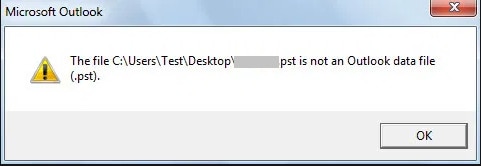
The message means that Outlook cannot parse the selected file as a usable Outlook data file. It can appear when you open, import, or attach a PST. The message does not prove that every byte is permanently lost: the selected file may be the wrong file, an incomplete copy, unavailable to Outlook, or structurally damaged.
A PST (Personal Storage Table) can contain locally stored messages, contacts, calendars, and other mailbox items. A PST is different from an OST (Offline Storage Table), which is commonly an offline cache for an Exchange or Microsoft 365 account. The correct next step depends on which type of file you have and whether the mailbox still exists on the server.
PST and OST are not interchangeable
| File | Typical role | First path to try |
| PST | Local archive, export, backup, or personal mailbox data | Back up the file, then use SCANPST and verify the repaired copy |
| OST | Offline cache associated with Exchange or Microsoft 365 | Check account connectivity and synchronization; Outlook may recreate an OST cache |
| 0-byte or overwritten file | No usable mailbox data remains in the selected file | Locate another copy or backup; repair software may not have enough data |
Common causes of the error
- Damaged file structure: An interrupted export, abrupt shutdown, failed copy, storage read error, or other event can damage the PST header or internal tables.
- Incomplete or incorrect copy: The file may still be transferring, truncated, renamed from another format, or only a shortcut to a file that is no longer available.
- Read or path restrictions: Outlook may not be able to write to or fully read a PST stored on a removable, network, synchronized, or protected location.
- File size pressure: Large PST files can be slower to open and more vulnerable to errors. The practical limit depends on the Outlook version, file format, and organization settings; do not assume one fixed limit applies to every installation.
- Account and profile mismatch: An OST from an Exchange account is not a portable PST archive. A profile or synchronization issue can also be confused with a damaged local file.
Part 2. Quick Checks Before Repairing a PST
Complete these low-risk checks before running a repair tool or changing the only source file.
- Make a backup copy. Copy the PST to a separate local folder or external backup location. Keep the original read-only until you have verified a result.
- Close Outlook completely. Exit Outlook and check Task Manager if the application remains open. A PST that is still in use may not scan or copy correctly.
- Confirm the extension and file size. Make sure the file is actually a PST and is not 0 bytes or unexpectedly small. Renaming a different file to
.pstdoes not convert it into an Outlook data file. - Move a working copy locally. If the file is on a network share, USB drive, cloud-synchronization folder, or removable disk, copy it to a local folder before testing.
- Check the Read-only attribute. The attribute should not prevent Outlook or a repair utility from creating a backup or writing a repaired copy.
- Identify the data file in Outlook. In Outlook, open File > Account Settings > Account Settings > Data Files and confirm which data file belongs to the profile.

Part 3. How to Repair a PST with SCANPST.EXE
Microsoft's Inbox Repair Tool, SCANPST.EXE, is the first tool to try when Outlook cannot open a PST or you suspect that the file is damaged. Microsoft recommends backing up the existing data file before scanning. The tool diagnoses local data-file errors; it does not repair Outlook itself or analyze data that remains only in an Exchange mailbox.
For current details, see Microsoft's Repair Outlook Data Files (.pst and .ost) guidance. File paths can vary by Office version, installation type, Windows architecture, and Microsoft 365 update.
Locate the Inbox Repair Tool
Exit Outlook, then search Windows for SCANPST.EXE. Common Office 2016, 2019, and Microsoft 365 installations may use an Office16 folder such as:
C:\Program Files\Microsoft Office\root\Office16C:\Program Files (x86)\Microsoft Office\root\Office16
Older installations may use Office15, Office14, or Office12 folders. If Windows Search does not find the tool, use the Microsoft installation directory for your installed Office version rather than downloading an unknown copy from a third-party site.
Scan and repair a backed-up PST
- Close Outlook and start SCANPST.EXE.
- Select Browse and choose the copied PST file.
- Start the scan and review the reported errors.
- Before selecting Repair, confirm that the backup option and backup location are enabled.
- Run the repair and wait for the tool to finish. Microsoft notes that multiple scans may be needed in some cases.
- Open Outlook with the profile associated with the repaired data file and check the folders, messages, contacts, and calendar items.
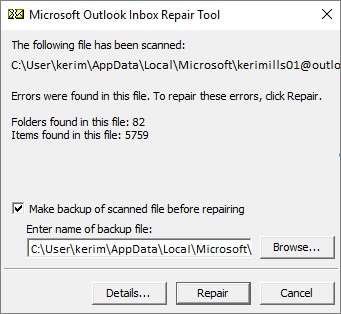
After a repair, Outlook may create Recovered Personal Folders or Lost and Found folders. Review those folders and the generated .bak backup before deciding whether the repaired PST is usable. Some items may remain missing if they were permanently deleted or corrupted beyond repair.
Part 4. Additional Fixes When Outlook Still Rejects the PST
If SCANPST cannot open the file or the error appears before a scan starts, try the following checks on a copy.
Remove the Read-only attribute
Locate the copied PST in File Explorer, right-click it, and select Properties. In the General tab, clear Read-only if it is selected, choose Apply, and then test the copy again.
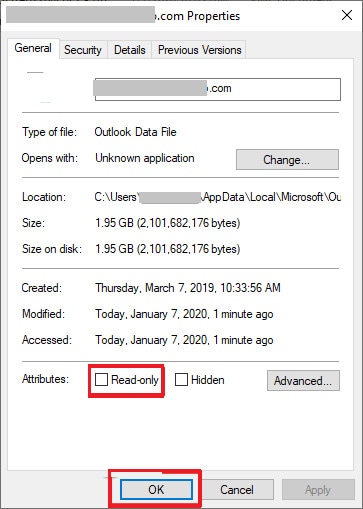
This setting only changes file permissions. It cannot repair a missing header or reconstruct incomplete mailbox data.
Copy the PST to a local folder
A PST on a network, removable, or actively synchronized location may be unavailable or only partially readable. Copy it to a local folder such as a dedicated Outlook data directory, wait for the copy to finish, and compare the file size before opening it. If the copy operation reports read errors, stop making changes to the source and locate a healthy backup.
Check the file size and source
Very large data files can take longer to scan and may expose existing structural errors. Do not delete messages or compact the only copy just to reduce its size. First create a backup, confirm the Outlook version and file format, and use Outlook's own archive or export workflow after the file is accessible again.
If the file came from an Exchange or Microsoft 365 account and is an OST, verify that the account can connect and synchronize. An OST is usually a local cache, so a profile or server-side issue may require account troubleshooting rather than PST repair.
Part 5. How to Repair a Supported Corrupted PST or OST with Repairit
If Outlook and SCANPST still reject a copied PST or OST, a dedicated email-repair workflow may be worth trying. Wondershare Repairit for Email can attempt to repair supported corrupted Outlook data files, but results depend on the file type, damage level, remaining data, and available file structure. It does not repair Outlook, Windows, Exchange servers, storage hardware, or a file that has been deleted or overwritten.
Repair Email Files on Windows

-
Repair damaged PST & OST Files in Outlook in all Email corruption scenarios, such as hard disk crashes & bad sectors, virus attacks & tojan horse, outlook corruption & malfunctions, improper shutdown procedure, etc.
-
Restore Outlook emails deleted for a long time and extract the email messages, folders, calendars, etc. within seconds.
-
Restore Outlook Emails deleted for a long time with a very high success rate.
-
Repair emails in bathes without size limits and support to preview all of them before saving.
-
Compatible with Windows 7/8/8.1/10/11, Windows Server 2012/2016/2019, and MacOS X 10.11~ MacOS 12 (Monterey).
Step 1: Select the damaged email file. Launch Repairit for Email and choose the option to add a PST or OST file. Select a copy of the file from a local folder.
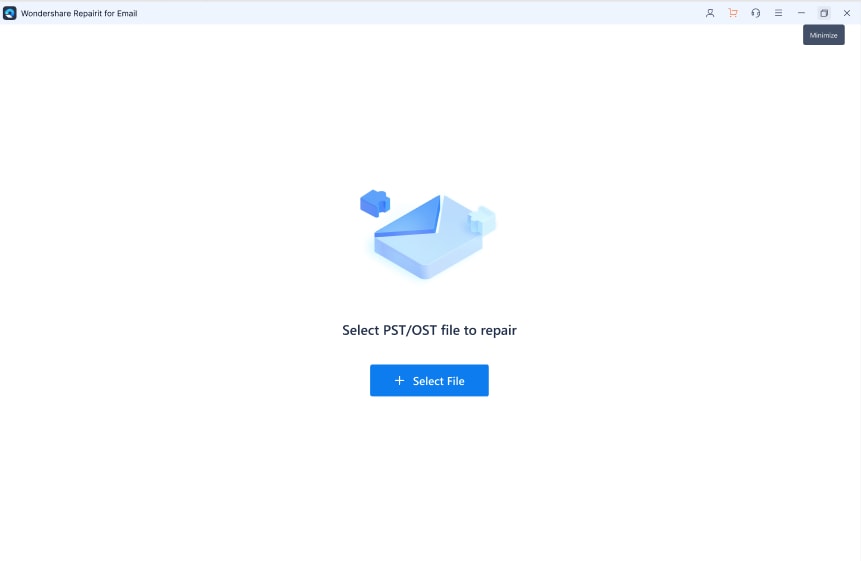
Use the file browser to locate the copied data file. Do not select the only original if the program offers to modify or save over it.
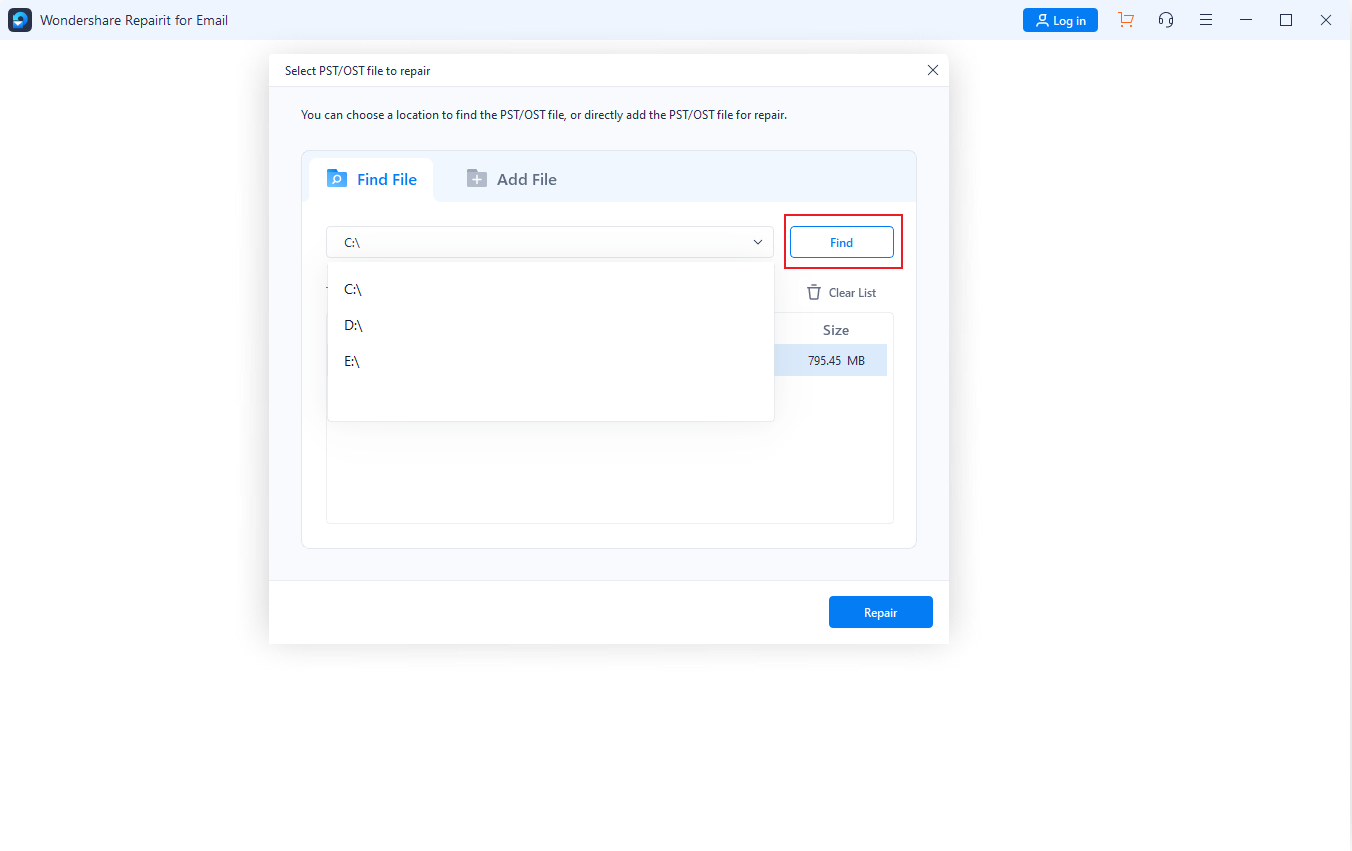
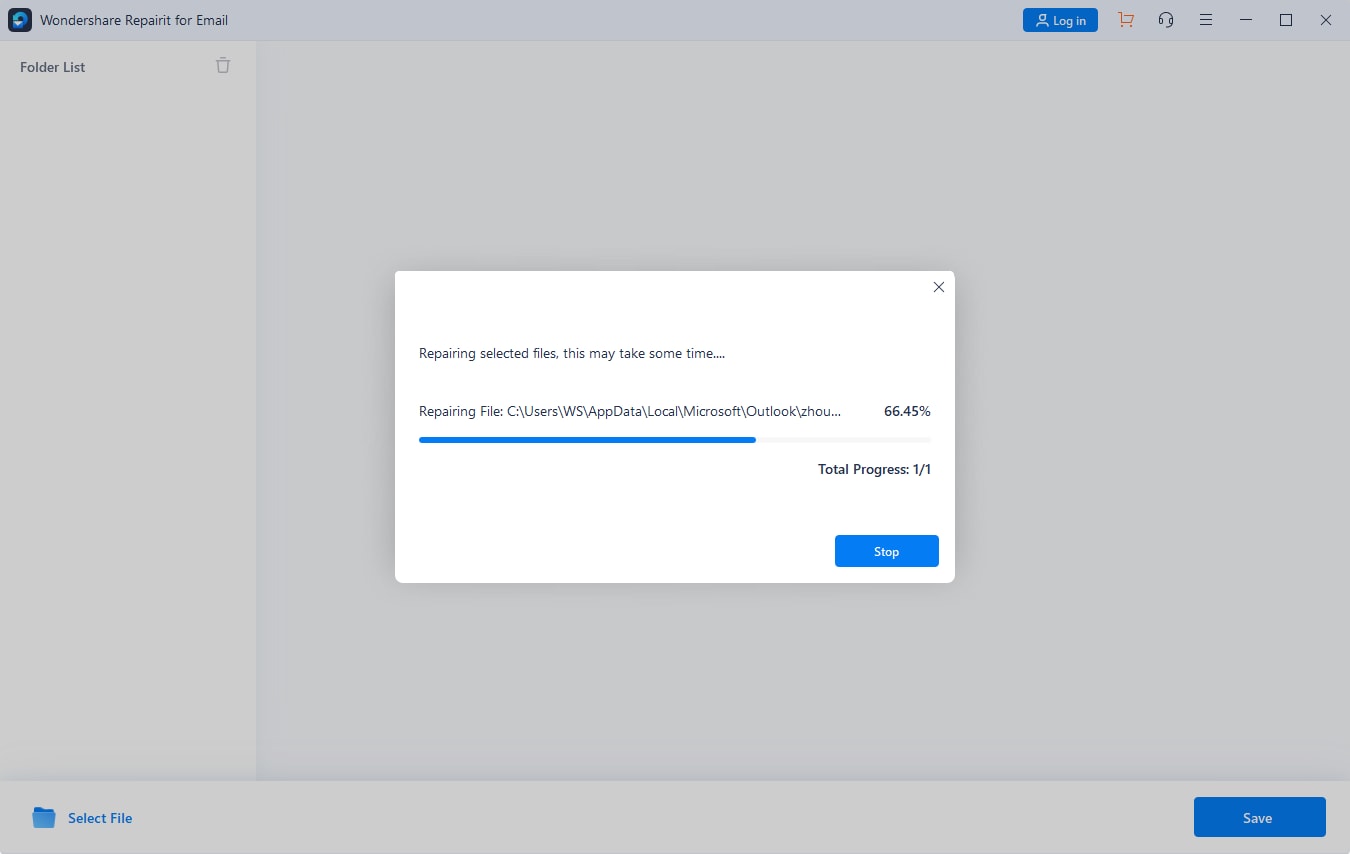
Step 2: Start the repair. Select Repair and let the program process the file. Avoid shutting down the computer or disconnecting the storage location during the operation.
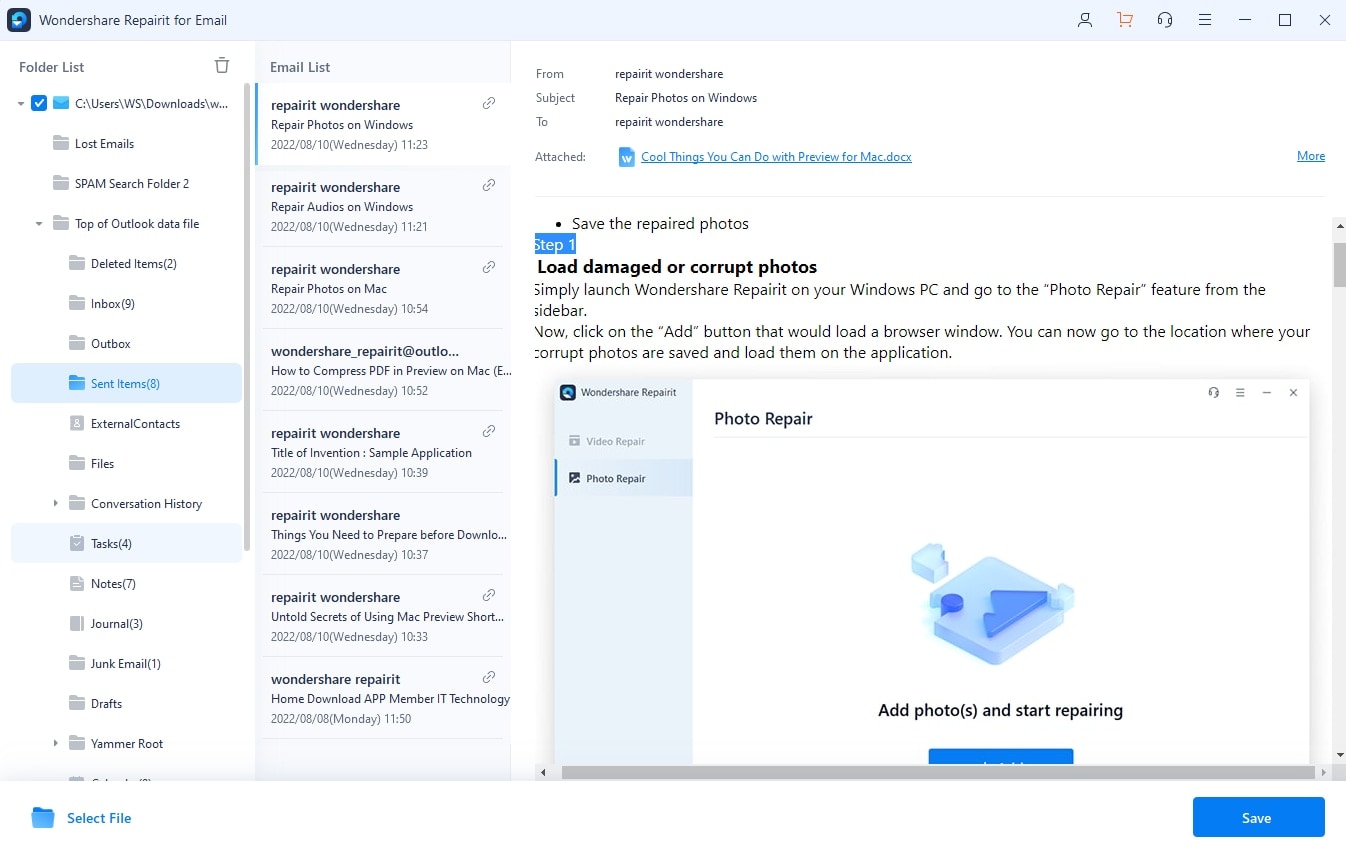
Step 3: Preview and save a new copy. Review the folders and messages that can be previewed, then choose a separate output location. Open the output in Outlook only after the export has completed.
Repair Email Files on Mac
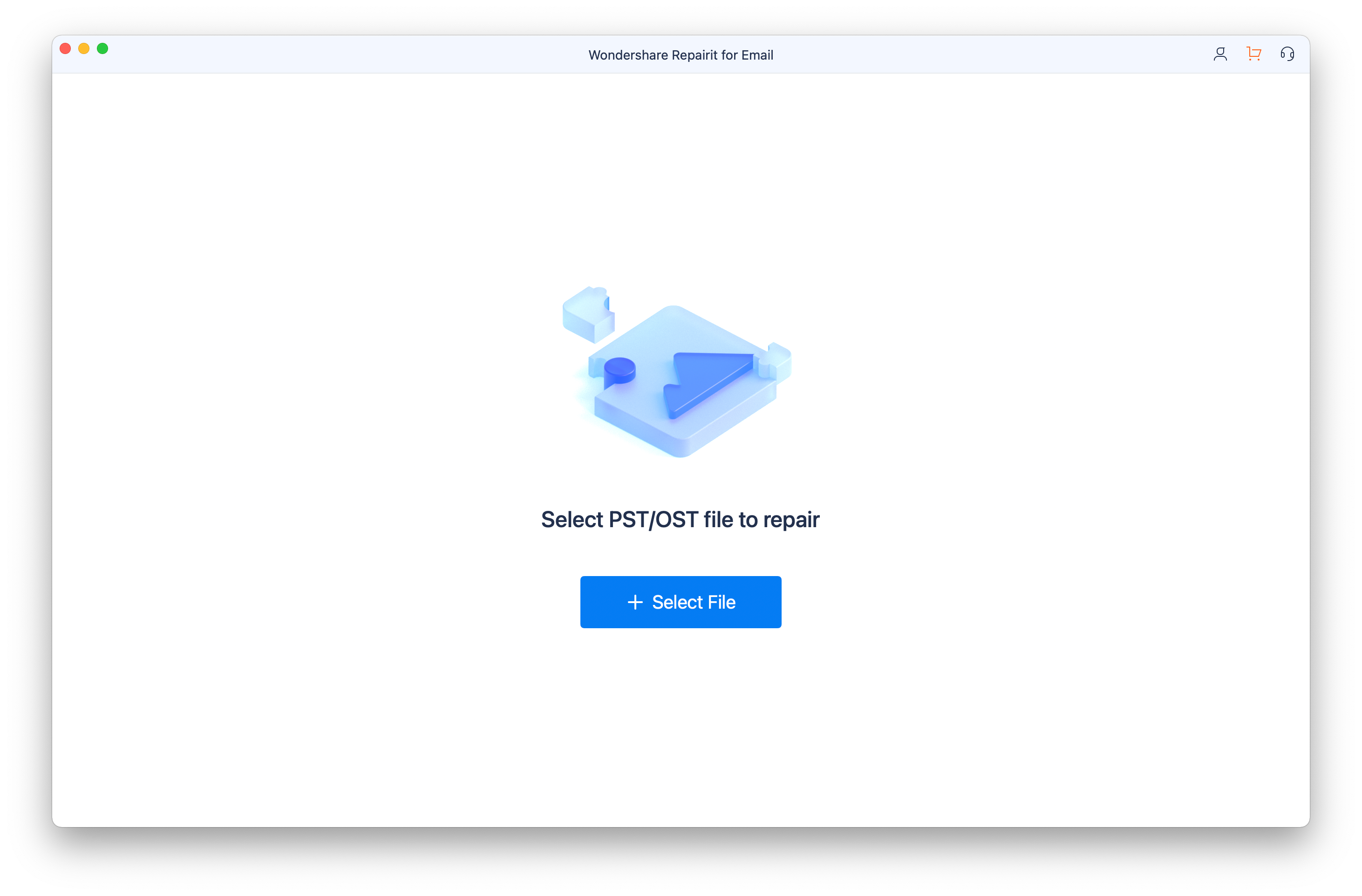
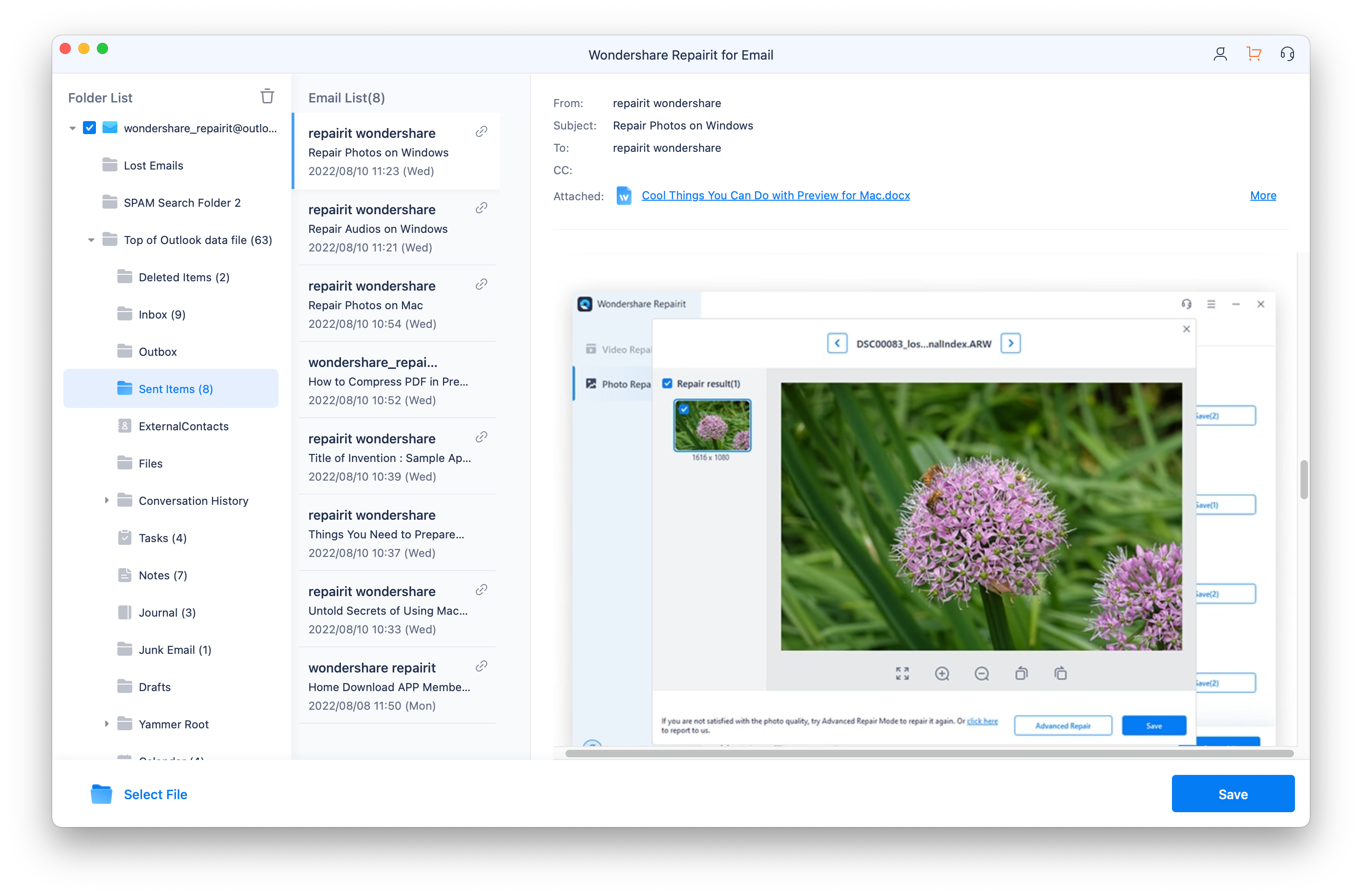
On a Mac, add a copied PST or OST file, start the repair, preview the available mailbox items, and save the result to a new location. The visible labels may differ by product version, so verify the current interface before following a step literally.
Step 1: Add a PST or OST file. Select Select File and choose the copied data file.

Step 2: Start the repair. Select Repair and wait for the process to finish without closing the application.
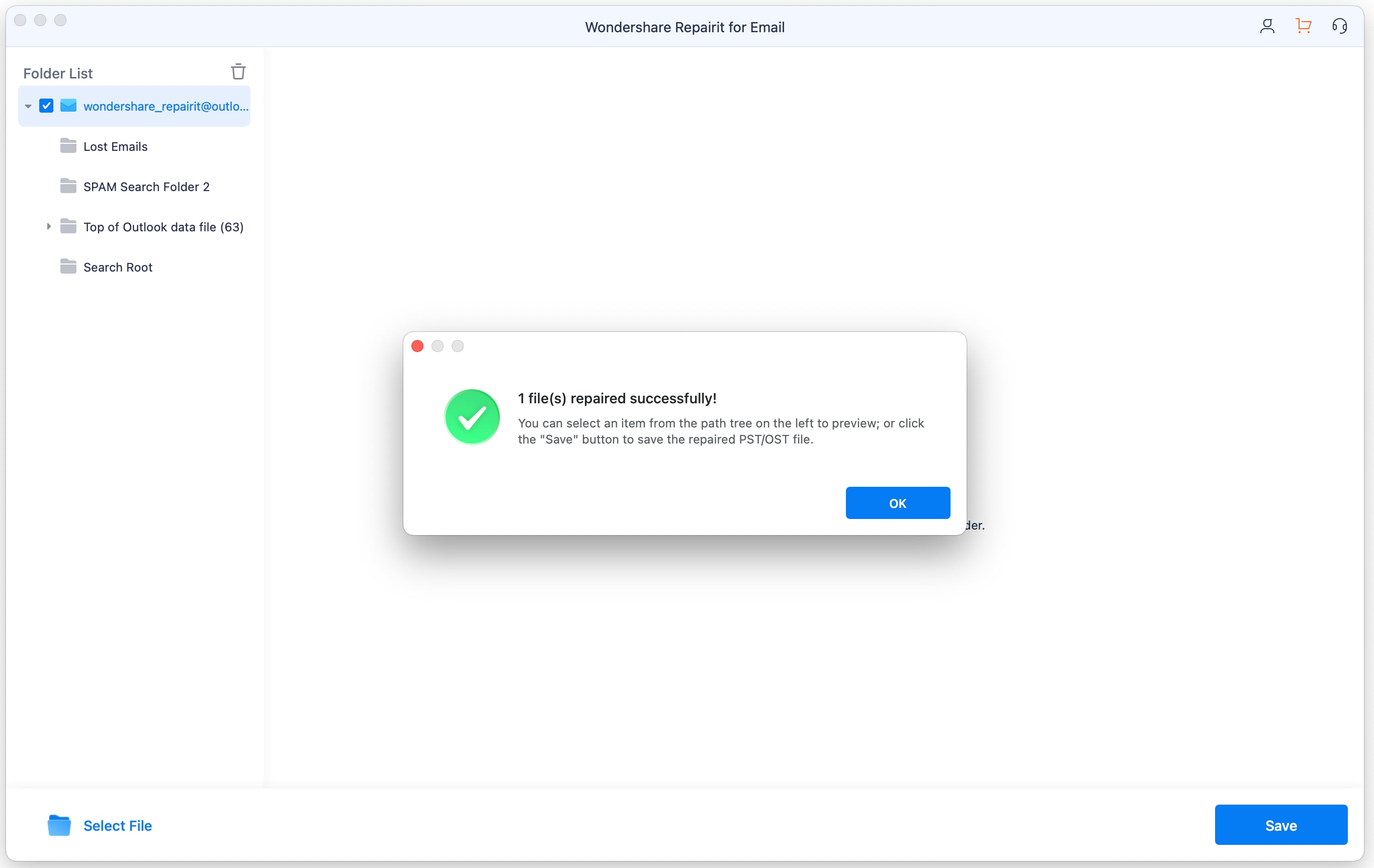
Step 3: Preview and save the result. Check the available email folders and save the output as a new file. Keep the original PST or OST and any repair backup until the result has been tested in Outlook.
PST vs. OST: Which Repair Path Should You Use?
Use the file type and account configuration to select the least risky path.
| Situation | Recommended next step | What not to assume |
| A local PST will not open or import | Back it up, run SCANPST, and verify the repaired copy | The error does not prove every item is unrecoverable |
| An OST for an Exchange or Microsoft 365 account will not sync | Check connectivity, account status, and profile synchronization | Do not treat an OST as a portable PST archive |
| SCANPST cannot read a copied PST | Check file source, permissions, path, and a healthy backup; then consider supported email repair | Do not download an unknown SCANPST copy or overwrite the source |
| The file is 0 bytes, deleted, or overwritten | Locate another backup or export | Repair software cannot recreate data that is not present |
1. Fix Cannot Create PST File the Path Is Too Long
Conclusion
When pst is not an outlook data file appears, start by preserving the original, closing Outlook, checking the file type and location, and confirming whether you are working with a PST or an OST. Run Microsoft's SCANPST tool on a backup before trying a third-party repair workflow. If the copied file remains unreadable, Repairit can attempt to repair supported corrupted PST or OST data, but the result depends on the remaining file structure and does not replace a backup.
After any repair, open the output in the correct Outlook profile, review the folders and messages, and keep the original and repair backup until the result is verified. Do not expect a repair tool to recover permanently deleted or overwritten data, fix a failing drive, or repair Outlook and Exchange themselves.
FAQ
-
What does "PST is not an Outlook data file" mean?
It means Outlook cannot recognize or read the selected file as a valid Outlook data file. The cause may be corruption, an incomplete copy, a wrong file, a path or permission problem, or a mismatch between a PST and an OST. -
Why does Outlook say the file I chose is not an Outlook data file?
Outlook may show this message when the file is damaged, truncated, inaccessible, incorrectly renamed, or not the data file associated with the current profile. Copy the file locally and verify its type before repairing it. -
Can SCANPST repair every PST file?
No. SCANPST can diagnose and repair some Outlook data-file errors, but it may not recover items that were permanently deleted or corrupted beyond repair. Always keep the original and the backup created during repair. -
Should I back up a PST before running SCANPST?
Yes. Make a separate copy before scanning or repairing. A backup protects the original if the repair changes the file structure or produces an incomplete result. -
What is the difference between a PST and an OST?
A PST is commonly used for local archives, exports, or mailbox data. An OST is commonly an offline cache for Exchange or Microsoft 365. An OST synchronization or profile issue may require account troubleshooting instead of PST repair. -
Can Repairit repair a corrupted PST or OST?
Repairit can attempt to repair supported corrupted PST or OST files. Results depend on the format, damage level, and remaining data, so verify the repaired output before importing or replacing any mailbox file. -
Can Repairit recover deleted or overwritten emails?
No. A permanently deleted, 0-byte, or overwritten file may not contain enough source data for a repair tool to reconstruct the missing mailbox items. -
Why does Outlook still reject a PST after repair?
The output may still contain structural damage, may not be the correct file, or may be associated with a different profile or account. Keep the original, test another backup, and verify the file path and Outlook profile before repeating a repair.




