
If you have ever exported a video from editing software, tweaked streaming settings, or configured a capture card, you have probably seen the term Variable Bitrate (VBR). It shows up in cameras, streaming platforms, and encoders like OBS or Adobe Media Encoder. Understanding what VBR does helps you balance video and audio quality against file size and upload or streaming performance.
Repair Corrupted Files To Save Your Data
 Security Verified. Over 7,302,189 people have downloaded it.
In this article
What Is Variable Bitrate (VBR)?
Variable Bitrate (VBR) is a video and audio compression method that automatically changes the bitrate depending on how complex the content is at any moment. Bitrate is the amount of data used per second to store or transmit media. VBR belongs to the category of encoding and video/audio parameters and is used when recording, editing, exporting, or streaming. Instead of using the same bitrate all the time, VBR increases it for complex scenes and lowers it for simple ones to get better quality for the same or smaller file size.
What Does Variable Bitrate Affect?
Impact on Quality and File Size
When you export or encode using VBR, the encoder analyzes each frame (for video) or segment (for audio) and allocates bits where they are needed most. This has several effects:
- Visual and audio quality: Complex scenes (fast motion, lots of detail, noisy footage) receive a higher bitrate, which reduces blockiness, banding, and artifacts. Simple scenes (slides, talking heads on plain backgrounds) use fewer bits without visible quality loss.
- File size: Compared with Constant Bitrate (CBR) at the same target quality, VBR usually creates smaller files because it does not waste bits on easy content.
- Consistency: Quality tends to look more consistent from scene to scene, but the bitrate graph (if you inspect it) will fluctuate depending on the content.
| Setting | Typical Result |
|---|---|
| Low VBR target with low max bitrate | Smaller files but more visible compression in fast or detailed scenes |
| Balanced VBR target and higher max bitrate | Good quality for most videos with moderate file size |
| High VBR target and high max bitrate | Near-lossless quality but much larger files |
Impact on Streaming and Compatibility
Using Variable Bitrate also affects how your footage behaves when streamed or played back on different platforms and devices:
- Streaming stability: VBR can cause sudden spikes in bitrate during very complex scenes. If your upload bandwidth or your viewer's connection cannot handle those spikes, it may cause buffering or quality drops.
- Platform rules: Some platforms (for example, certain live-streaming services or older hardware players) prefer or require CBR to maintain predictable network usage, while others happily accept VBR.
- Editing workflow: Modern editors work fine with VBR video, but extremely aggressive or poorly encoded VBR can still lead to laggy scrubbing or decoding issues in heavy projects.
How Variable Bitrate Works in Real Use
In real-world workflows, you will see VBR vs CBR options in cameras, capture cards, editing software, and streaming tools. Here is how it shows up across different stages.
Variable Bitrate in Recording and Capture
Many modern cameras and smartphones record using some form of video bitrate control, often labeled as VBR, "adaptive bitrate," or "high efficiency" modes.
- Action cameras and DSLRs: They often use VBR internally to maximize battery and card space while keeping fast motion reasonably clean.
- Screen recorders and capture cards: Tools like OBS, game capture devices, or built-in OS recorders provide choices like "VBR," "CBR," or "CQP" (constant quality). Selecting VBR lets them dynamically react to changing scene complexity.
Variable Bitrate in Editing, Exporting, and Streaming
Popular NLEs (non-linear editors) and encoders integrate VBR encoding options directly into export presets.
- Editing/export tools: Adobe Premiere Pro, DaVinci Resolve, and Final Cut Pro offer VBR with options like "1-pass" or "2-pass." Two-pass VBR analyzes the entire video first, then allocates bits more optimally, usually improving quality at the same target bitrate.
- Audio rendering: In audio encoders (e.g., MP3, AAC), VBR adjusts the audio bitrate per segment based on complexity, often giving better sound for podcasts or music at smaller sizes.
- Streaming software: OBS Studio and similar tools let you choose between CBR (for strict platform rules) and VBR (for more flexible usage like local recording). For live streaming, VBR with a capped maximum bitrate can work if your platform and network are stable.
Common Mistakes and Quick Tips
- Assuming VBR always looks better than CBR: At very low bitrates, both can look bad. You still need a reasonable target and max bitrate for your resolution and frame rate.
- Setting only the target bitrate and ignoring max bitrate: In many encoders, you set both "target" and "maximum" bitrates for VBR. If the max is too low, complex scenes will still suffer; if it is too high, you may create streaming spikes.
- Using VBR for strict streaming requirements: When a platform or employer specifically asks for CBR, do not replace it with VBR just because it is "better." Follow the specification.
- Overlooking audio quality: People often focus only on video bitrate, but low audio VBR settings can cause swishy or muffled sound even when the picture looks fine.
- Skipping test exports: Export a short section with different VBR settings to find the best balance between size and quality before encoding a full project.
Quick takeaways:
- Use VBR for uploads, archives, and offline playback when you want high quality and manageable file sizes.
- Use CBR when your streaming service demands it or when you need the most predictable bandwidth usage.
- Always set a sensible maximum bitrate to avoid sudden spikes that cause buffering or playback issues.
How to Use Repairit to Fix a Corrupted Video File
Repairit Introduction
Even a perfectly balanced VBR video can become corrupted due to sudden power loss, incomplete downloads, storage errors, or faulty transfers. When your player refuses to open a file, shows glitches, or keeps stuttering, Wondershare Repairit is designed to bring those damaged clips back to life. You can access all its capabilities from the desktop app or start from the Repairit official website, then repair broken video files from cameras, phones, computers, memory cards, or external drives.
Key Features of Repairit
- Repairs corrupted videos in various formats (MP4, MOV, M2TS, MKV, and more), including files with variable bitrate encoding.
- Provides both quick and advanced repair modes to handle minor glitches or severely damaged video structures and headers.
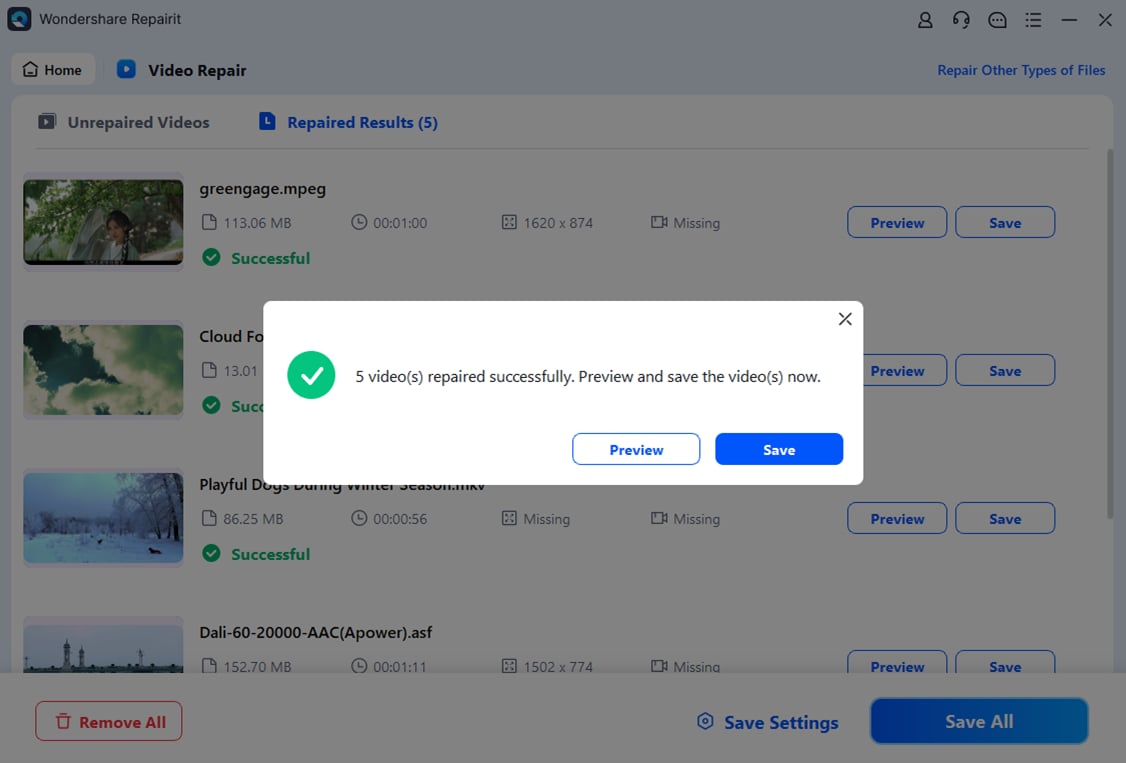
- Lets you preview the repaired video before saving, ensuring audio, picture, and playback are restored properly.
Step-by-Step Guide: Fix a Corrupted Video with Repairit
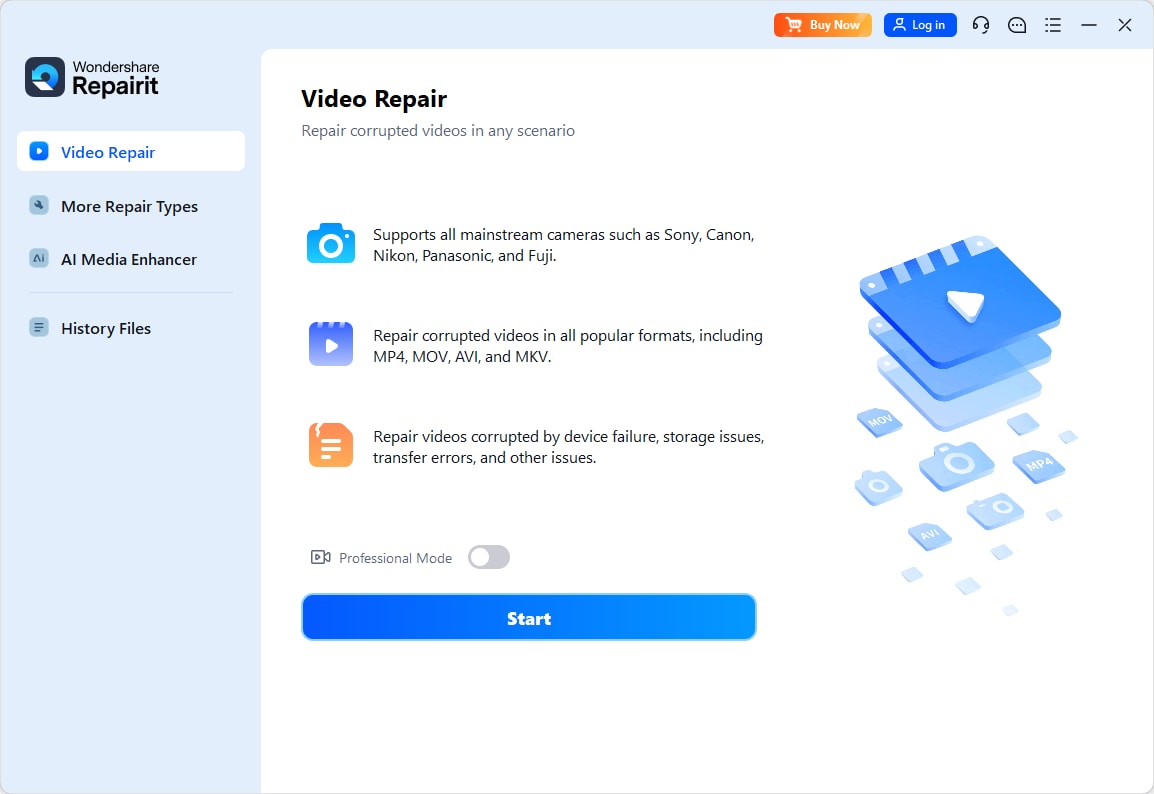
- Add corrupted video files
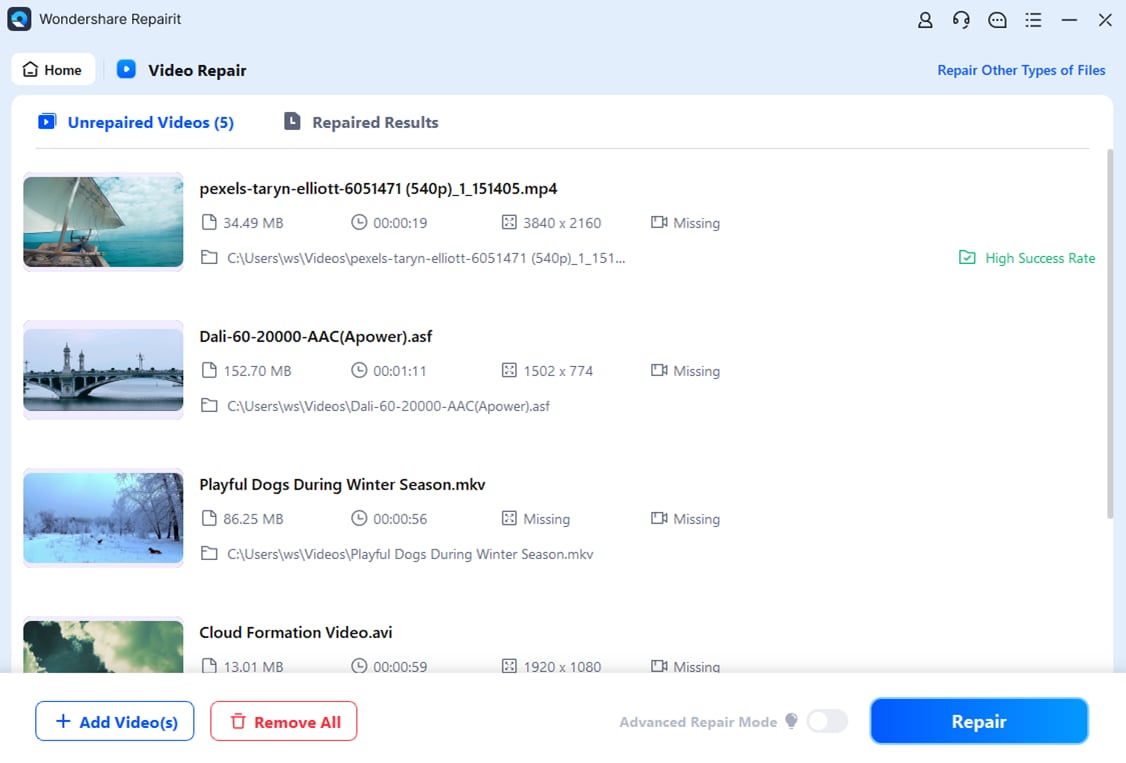
- Repair video files
- Save the repaired video files
Conclusion
Variable Bitrate (VBR) is a smart encoding method that changes bitrate according to content complexity, helping you achieve better quality at a given file size compared with a strictly constant bitrate. It influences how your videos and audio look, sound, and stream across cameras, editors, upload platforms, and playback devices.
Used correctly, VBR is ideal for exports, uploads, and offline viewing, while CBR still has its place for strict live streaming and platform-specific requirements. And if your VBR or CBR files ever become corrupted, tools like Wondershare Repairit can restore them so your footage and audio remain safe and usable.
Next: What is CBR?
FAQ
-
1. Is Variable Bitrate (VBR) better than Constant Bitrate (CBR)?
VBR is usually more efficient because it allocates more bits to complex scenes and fewer to simple ones, giving better quality for a given average bitrate. However, CBR can be preferable for strict live-streaming requirements where platforms need a stable, predictable bitrate. The best choice depends on your use case: VBR for most uploads and archives, CBR for certain streams. -
2. What VBR settings should I use for YouTube uploads?
For 1080p 30 fps uploads, many creators use a VBR target of 8–12 Mbps with a max of 16–20 Mbps. For 4K, targets of 30–45 Mbps and higher max bitrates are common. Always check YouTube's current recommended bitrates and run short test exports to see how your content looks after YouTube recompresses it. -
3. Does VBR affect playback compatibility on TVs or older devices?
Most modern TVs, media players, and phones handle VBR video and audio without issues, especially in MP4 containers using H.264 or H.265. Very old or constrained devices may struggle with high-bitrate spikes or certain profiles, so using moderate VBR settings and standard presets (like "High Profile" H.264) improves compatibility. -
4. Can VBR cause audio and video to go out of sync?
Properly encoded VBR should not cause sync problems. Sync issues usually come from bad encodes, unstable recording conditions, or corrupted files, not from VBR itself. If you have desynchronization due to corruption, a tool like Wondershare Repairit can often reconstruct damaged streams so audio and video line up again. -
5. My VBR file will not play. How can I fix it?
First try a different media player such as VLC to rule out simple compatibility issues. If the file is still unreadable, it may be corrupted due to transfer, storage, or power problems. In that case, use Wondershare Repairit, add the problematic video, run a repair, preview the result, and then save a newly fixed copy that should play normally.