
A macroblock is a term you often meet when talking about compressed video from cameras, editing software, streaming platforms, or exports like H.264. When videos look blocky or smeared at low bitrate, you are essentially seeing macroblocks on screen. Understanding how they work helps you tune quality, avoid ugly artifacts, and spot when a video is simply over-compressed versus actually corrupted and in need of repair.
Repair Corrupted Files To Save Your Data
 Security Verified. Over 7,302,189 people have downloaded it.
In this article
What Is Macroblock?
A macroblock is a fixed-size block of pixels, traditionally 16x16, used by many video codecs such as MPEG-2, MPEG-4 Part 2, and H.264/AVC. It belongs to the category of block-based compression units used for motion estimation, prediction, and transform coding.
During video encoding, the encoder breaks each frame into these blocks, analyzes how they move between frames, and then stores only the changes plus some correction data. This structure makes it much easier for software and hardware encoders to compress, store, stream, and play back digital video efficiently on cameras, editors, and online platforms.
Why Is Macroblock Important in Video Compression?
The main problem video compression must solve is how to shrink huge amounts of pixel data into a smaller, streamable file without destroying visual quality. A macroblock gives the encoder a simple, repeatable unit to analyze instead of dealing with every pixel individually.
Here is how macroblocks affect your video:
- Bitrate efficiency and file size: By treating nearby pixels as a single block, encoders can describe motion and detail with fewer bits, allowing smaller files at the same resolution.
- Motion handling: Macroblocks move around between frames using motion vectors. This helps capture camera pans, subject movement, and scene changes without encoding each frame from scratch.
- Encoding speed and decoding complexity: Fixed-size blocks allow hardware chips in cameras, phones, TVs, and GPUs to implement compression and playback in a predictable and fast way.
- Streaming performance: Block-based compression works well with constant or variable bitrate schemes, making it easier for streaming services to adapt quality to your network speed.
Macroblocks also have clear limitations:
- Visible "blockiness": When the bitrate is too low, the encoder cannot describe smooth gradients and fine textures, so 16x16 or 8x8 block patterns become visible, especially in dark areas or fast motion.
- Banding and smeared detail: Over-compressed macroblocks can blur or smear detail, making footage look soft or "mushy" after editing and re-exporting.
- Editing friendliness: Since content is stored as blocks and prediction from other frames, scrubbing and frame-accurate editing can feel less responsive than with intraframe codecs like ProRes or DNxHR.
How Does Macroblock Work in the Encoding Workflow?
In a typical encoding pipeline for recording, editing, exporting, or streaming, macroblocks sit at the heart of how pictures are analyzed and compressed. The overall workflow looks something like this:
- The camera sensor or editing timeline produces a full-resolution frame.
- The encoder divides the frame into a grid of macroblocks.
- Each macroblock is compared with blocks in reference frames (previous and/or future) to estimate motion.
- The encoder predicts what the block should look like and only stores differences plus motion vectors.
- Residual data is transformed, quantized, and entropy coded, then packed into a bitstream.
Macroblocks inside modern codecs and tools
In widely used standards like MPEG-2 and H.264/AVC, the macroblock is a fundamental concept:
- In H.264, a h.264 macroblock is usually 16x16 luma samples plus corresponding chroma blocks, which are further subdivided into smaller partitions for more precise motion.
- In MPEG-2 (DVD, broadcast TV), macroblocks work similarly but with less flexible partitioning and less advanced prediction.
Newer codecs like H.265/HEVC or AV1 switch to more flexible units (for example, Coding Tree Units), but the idea is still block-based compression. You may run into macroblock-related options or behavior in:
- FFmpeg and x264: Command-line options influence block size, motion search range, and partitioning, which can change how macroblocks are chosen and how visible artifacts become.
- OBS Studio: When you select x264 or a hardware encoder (NVENC, Quick Sync), presets such as "fast" or "slow" indirectly affect macroblock decisions and how your stream looks at a given bitrate.
- HandBrake: Quality slider (RF), presets, and tune settings influence how aggressively macroblocks are compressed during exports for YouTube or social media.
- Adobe Premiere Pro / Media Encoder: Choosing H.264 and bitrate/quality presets controls how much information is kept inside each macroblock, which you see as cleaner gradients or blocky artifacts.
From camera sensor to streaming platform
Across the full lifecycle of a video, macroblocks appear in many stages:
- Recording: Cameras and phones often record in H.264 or H.265. When scenes are noisy or underexposed, macroblocks can become more apparent because the encoder struggles to compress random noise cleanly.
- Editing: Dropping compressed footage into Premiere or DaVinci Resolve means the software has to decode macroblock-based streams. Heavy color grades or rescaling may highlight pre-existing block artifacts.
- Exporting: Re-encoding an already compressed file to H.264 again can "lock in" or amplify blockiness, especially at lower bitrates.
- Streaming and playback: Platforms like YouTube, Vimeo, or social networks re-encode uploads for streaming. When bandwidth drops, the service may push lower-bitrate variants, making video artifacts like macroblock blocking much more obvious on your TV, phone, or browser.
In short, macroblocks are deeply involved from capture through delivery, shaping how your videos look on every device.
When Should You Care About Macroblock? Common Mistakes and Quick Tips
Not everyone needs to understand macroblocks in detail, but certain users benefit a lot from it:
- Video editors and colorists: Need to recognize when blocky noise is baked into the source versus created by an export setting.
- Streamers and gamers: On platforms like Twitch or YouTube Live, aggressive bitrates can cause blocky backgrounds and smeared fast motion.
- Content creators and marketers: Must balance quality and file size for social uploads, ads, and stories, where blocky video can hurt brand perception.
- Archivists and production teams: Care about avoiding repeated lossy encodes that keep damaging macroblock detail each generation.
Common misunderstandings include:
- Confusing normal compression artifacts with actual corrupted video. Consistent, uniform blockiness across the frame usually points to low bitrate, not file damage.
- Assuming a higher resolution automatically means better quality. A 4K file with heavily compressed macroblocks can look worse than a clean 1080p encode at a higher bitrate.
- Overusing noise reduction and filters to hide macroblocks, which can remove real detail and create plastic-looking footage.
Quick tips to manage macroblocks:
- Use a higher bitrate or lower compression (for example, lower CRF value in x264) when you see large blocky areas, especially in dark or fast-moving shots.
- Avoid re-exporting the same H.264 clip multiple times; instead, keep a high-quality master in an intraframe or lightly compressed format.
- For live streaming, start from platform-recommended bitrates and test your scene; busy games and fast sports need more bitrate than static talking-head shots.
- If only certain segments show frozen or wildly corrupted macroblocks, suspect file damage and consider a video repair tool.
The takeaway: think of macroblocks as the "tiles" of your video. The more information and bitrate you give each tile, the cleaner your image will look across editing, exporting, and streaming.
How to Use Repairit to Fix a Corrupted Video File
Repairit introduction
When macroblock glitches, random color blocks, or frozen areas come from true corruption instead of normal compression, specialized repair software can help. Wondershare Repairit is designed for this exact situation, fixing playback errors, stuck frames, and files that will not open from cameras, phones, drones, and memory cards. You can download the latest version directly from the Repairit official website for a clear, guided repair process.
Key features of Repairit
- Video repair for corrupted or unplayable clips from various cameras, phones, and storage devices.
- Support for many digital video formats and resolutions, including HD and 4K recordings used in modern workflows.
- Simple repair steps with an intuitive interface and preview before saving to confirm the result.
Step-by-step guide to repair corrupted videos
- Add corrupted video files
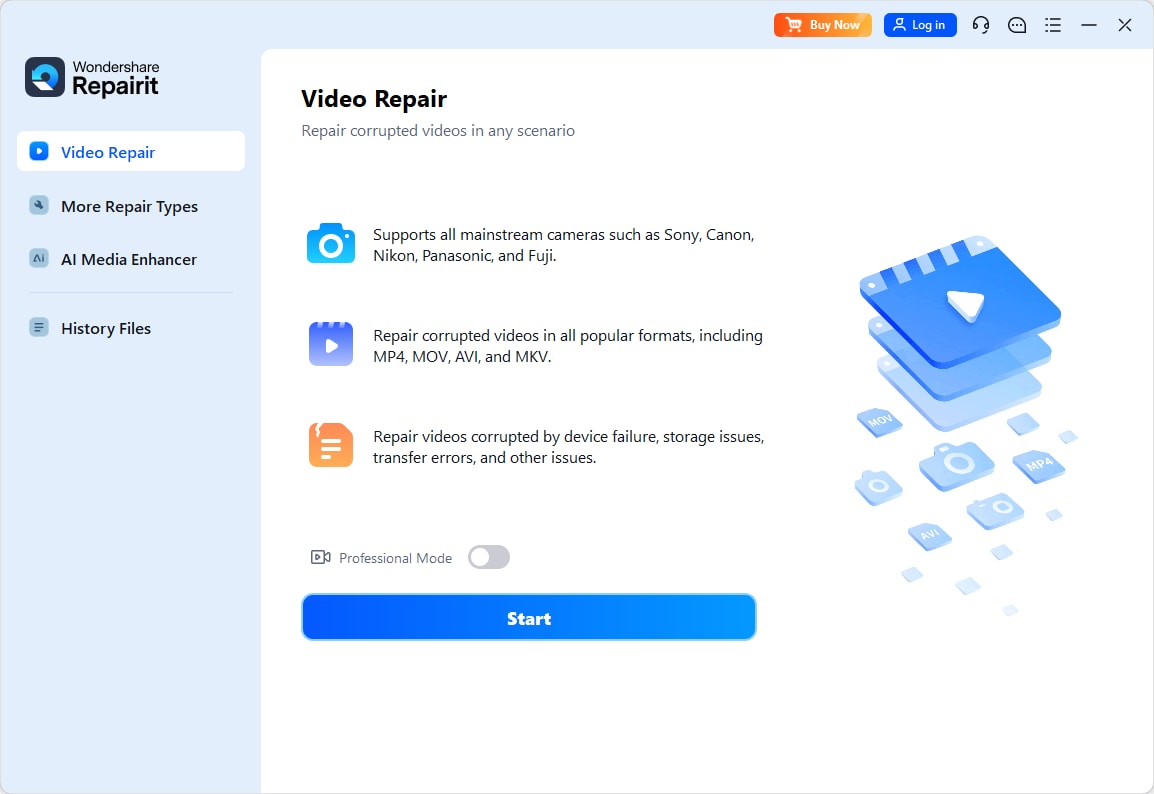
Open Wondershare Repairit, switch to the Video Repair section, and click the button to add files. In the file browser, select one or multiple problematic videos that show macroblock glitches, playback errors, or refuse to open. The files will appear in a list with basic information so you can confirm you are repairing the right clips.
- Repair video files
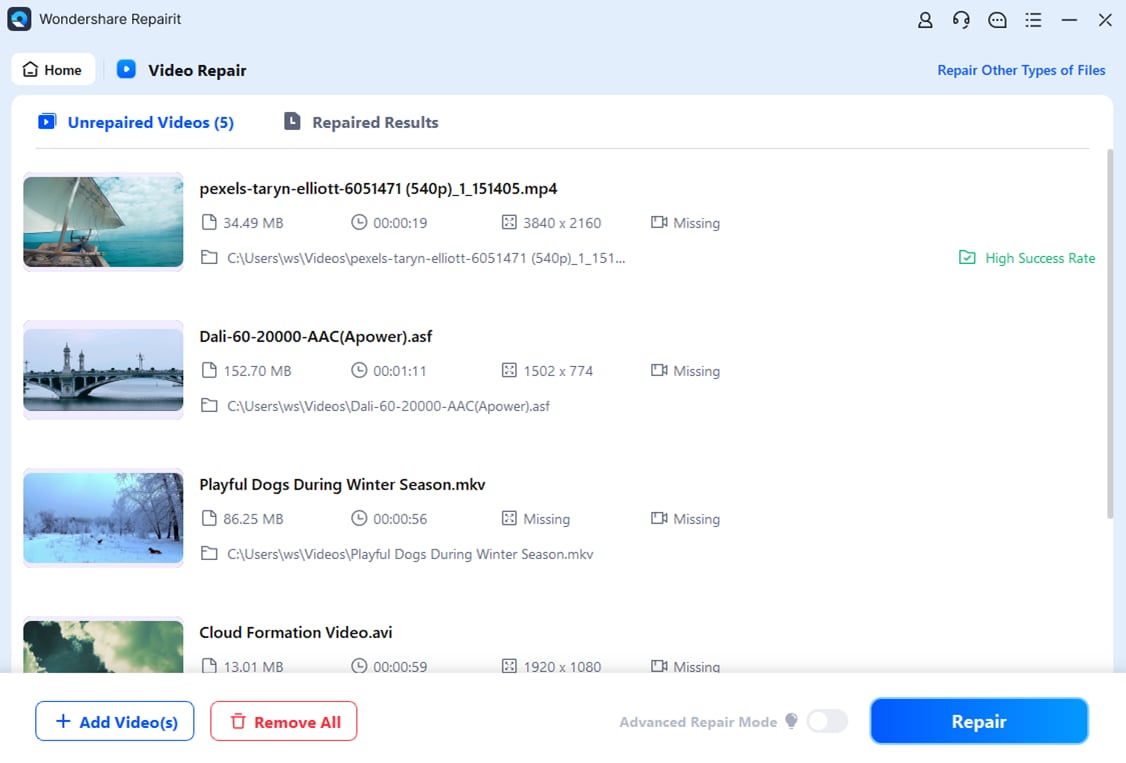
After loading your clips, start the repair with a single click. Repairit scans each file, reconstructing damaged headers, index information, and broken data segments that can cause block corruption or frozen frames. When the process finishes, use the built-in preview window to play the repaired version and check whether the macroblock errors or other glitches are gone.
- Save the repaired video files
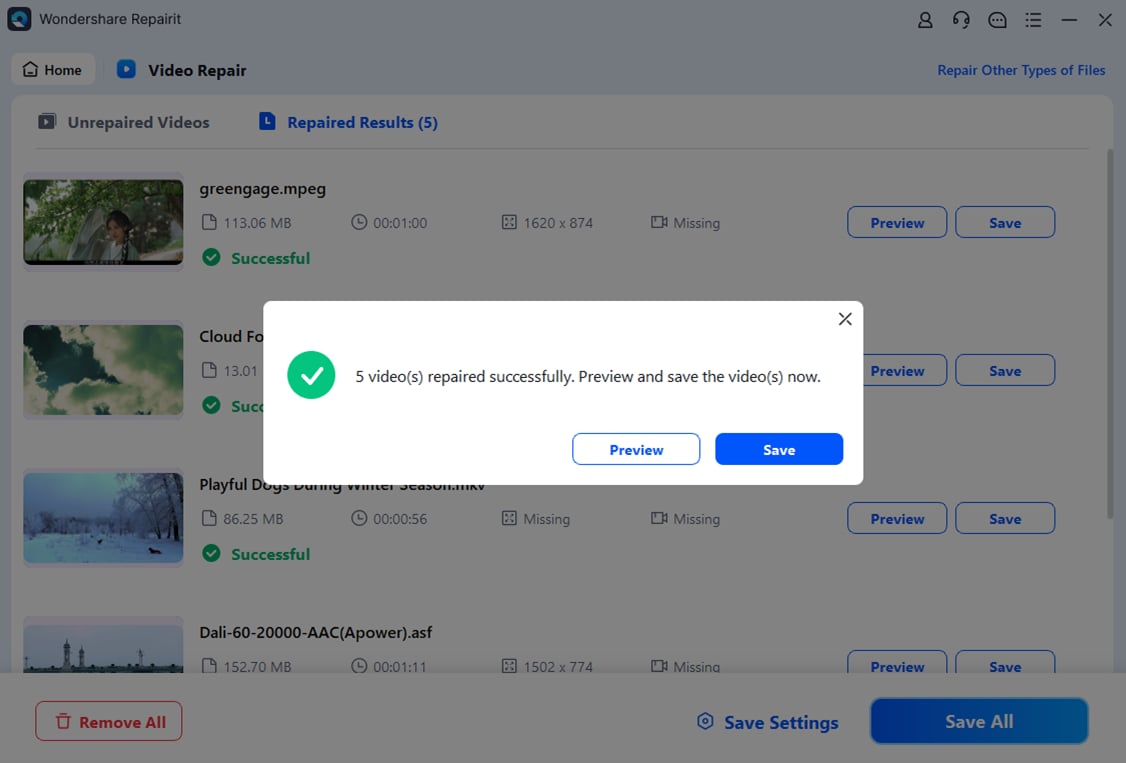
If the preview looks correct, choose a safe destination folder that is different from where the damaged files are stored. Confirm to save, and Repairit will export clean, playable copies of your clips. You can then import them into your editing software, re-encode them for streaming, or archive them without the corruption that previously caused visible macroblock artifacts.
Conclusion
Macroblocks are fundamental units inside many traditional codecs, grouping pixels into manageable pieces so encoders can analyze motion and compress data efficiently. When compression is pushed too far, these blocks become visible as banding and blocky shapes, revealing how your video compression choices affect final quality on every device.
By understanding how macroblocks shape recording, editing, exporting, and streaming, you can pick better settings, reduce artifacts, and tell the difference between normal compression limits and genuine video artifacts from corruption. When footage is actually damaged and will not play properly, Wondershare Repairit offers a straightforward way to repair those files and recover watchable results.
Next: Coding Tree Unit (Ctu)
FAQ
-
1. What is a macroblock in video compression?
A macroblock is a fixed block of pixels, often 16x16, that video codecs like MPEG-2 and H.264 use to group image data. The encoder analyzes each block for motion and detail, then stores only the needed information to reconstruct it efficiently during playback. -
2. Which video formats still use macroblocks?
Macroblocks are used in older and widely deployed standards such as MPEG-2, MPEG-4 Part 2, and h.264 macroblock-based encoding. Newer codecs like H.265/HEVC and AV1 move to more flexible block structures, but they still rely on the same basic block-based compression principles. -
3. Why do I see blocky artifacts in my video?
Blocky artifacts usually appear when video encoding is done at too low a bitrate or with overly aggressive compression settings. The encoder cannot represent smooth gradients and fine textures correctly, so the underlying macroblock grid becomes visible, especially in dark scenes or fast motion. -
4. How can I tell if macroblock glitches mean my file is corrupted?
If the entire video looks consistently blocky, that is normally heavy compression. If you see sudden blocks of frozen image, random color squares, or areas that distort for a few frames and then recover, that often indicates corrupted video data and not just low bitrate. -
5. Can Repairit fix macroblock-related corruption?
Yes. When macroblock glitches are caused by damaged data instead of normal compression, Wondershare Repairit can help. It rebuilds broken headers and structures inside the file, which can remove frozen blocks, random color artifacts, and playback errors so your video becomes viewable again.