

A coding tree unit (CTU) is a behind-the-scenes concept you may notice in export presets, encoder logs, or streaming settings when working with HEVC/H.265 video. Whether you shoot on a mirrorless camera, edit in Premiere, stream via OBS, or encode with FFmpeg, CTUs help decide how each frame is broken into blocks. Understanding them a bit can explain why some videos look cleaner at the same bitrate and why others show blocky artifacts or playback issues on weaker devices.
Repair Corrupted Files To Save Your Data
 Security Verified. Over 7,302,189 people have downloaded it.
In this article
What Is Coding Tree Unit (CTU)?
A CTU in HEVC/H.265 is the largest basic block into which each video frame is divided during compression. It belongs to the family of block-based compression structures used by modern codecs to analyze, predict, and encode images efficiently. Instead of using the fixed 16x16 macroblocks from older standards, HEVC uses flexible video compression blocks called CTUs, usually up to 64x64 pixels, as the starting point for all further splitting and prediction.
During video encoding, every frame is tiled into a grid of HEVC CTU blocks. Each CTU can be recursively split into smaller coding units and transform blocks. These smaller pieces are then predicted from neighboring blocks or other frames, transformed, quantized, and entropy coded. In practical terms, CTUs are how the encoder decides where to spend bits and where it can safely throw detail away while keeping the video watchable.
Why Is Coding Tree Unit (CTU) Important in Video Compression?
How CTUs improve efficiency and quality
Block-based codecs must balance three things: image quality, bitrate/file size, and computational complexity. H.265 CTU design directly targets this balance.
- Higher compression efficiency: Large CTUs (for example 64x64) are efficient for flat or slowly changing areas like skies, walls, or gradients. The encoder can describe big regions with fewer bits, reducing overall video bitrate optimization pressure.
- Adaptive detail preservation: Within each CTU, the encoder can split down to much smaller blocks in complex or high-motion areas. This preserves detail in hair, foliage, or text overlays while still saving bits in simpler zones.
- Better motion handling: Motion estimation and compensation work on CTU-derived blocks. Flexible splitting lets the encoder track objects and camera moves more precisely than older macroblock designs, improving clarity during pans or fast action.
- More control for encoders and tools: Professional encoders expose CTU-related settings (like maximum CTU size or depth of splitting) so you can tune the trade-off between speed, quality, and file size for recording, streaming, or delivery.
This flexible block structure is a major reason why HEVC can deliver similar or better quality than H.264 at roughly half the bitrate, especially at higher resolutions like 4K and 8K.
Limitations and trade-offs of CTUs
Even though CTU structures are powerful, they are not perfect.
- Decoder complexity: Very large CTUs with deep splitting trees increase decoding complexity. Low-power devices such as older phones, set-top boxes, or budget TVs may struggle with heavy HEVC profiles, causing stutter or higher battery drain.
- Potential artifacts: Aggressive compression with big CTUs and minimal splitting can create visible video artifacts like block edges, banding, or smeared motion, especially in streaming scenarios with tight bitrates.
- Slower encoding: Letting the encoder explore many possible CTU splits improves quality but slows encoding. This matters when exporting high volumes of content, performing live encoding, or running on limited hardware.
- Editing and compatibility: Some NLEs and playback devices handle simpler block structures more smoothly. Highly complex CTU trees at extreme settings can cause choppy scrubbing or laggy playback during editing.
For real-world workflows, the goal is not just to maximize compression but to choose CTU-related settings that remain friendly for your target platforms, from social media and OTT apps to broadcast playout servers.
How Does Coding Tree Unit (CTU) Work in the Encoding Workflow?
In a typical HEVC workflow, from camera capture to final playback, coding tree unit behavior fits into several key stages.
1. Frame input and pre-processing
The encoder first receives a raw or lightly processed video frame from your camera, editing timeline, or rendering pipeline. Color space conversions, scaling, and noise reduction may happen here. After that, the frame is divided into a grid of CTU blocks according to the chosen CTU size (commonly 64x64, sometimes 32x32 on constrained hardware).
2. CTU partitioning into smaller blocks
Within each CTU, the encoder decides how to break the block down into smaller coding units (CUs), prediction units (PUs), and transform units (TUs). This decision depends on:
- Local texture complexity (edges, detail, noise)
- Motion characteristics between frames
- Rate control goals like constant bitrate (CBR) or variable bitrate (VBR)
- Encoder presets (like "fast" vs "slow" in x265 or HandBrake)
Simple areas may stay as big blocks; detailed regions get recursively split into smaller units. This tree-like partitioning is why the structure is called a "coding tree."
3. Prediction and transform inside CTUs
For each final block inside a CTU, the encoder chooses a prediction mode:
- Intra prediction: Uses neighboring blocks in the same frame to predict the current block, common for still areas or I-frames.
- Inter prediction: References blocks from previous or future frames (using motion vectors) and is crucial for video efficiency.
After prediction, the difference (residual) is transformed, quantized, and entropy-coded. The CTU structure tells the encoder exactly how blocks are arranged and how they relate, which affects compression efficiency and decoding effort.
4. Interaction with bitrate control and GOP structure
Rate control modules look at CTU activity to decide how many bits each region of the frame can use. High-detail CTUs may get more bits; low-detail CTUs may get fewer. This interaction strongly affects video encoding outcomes such as visible noise, macroblocking, and banding.
The Group of Pictures (GOP) structure (I, P, B frames) also influences CTU decisions, since CTUs in B-frames can leverage prediction from both past and future frames, improving efficiency but raising complexity.
5. Where CTUs show up in real tools
- FFmpeg / x265: You may encounter options like "ctu 64" or "ctu 32" or presets that indirectly set CTU sizes and depth. Slower x265 presets typically perform more exhaustive CTU partitioning for better quality.
- OBS Studio: When you choose HEVC/H.265 for streaming or recording, underlying CTU settings are handled by the encoder (like x264/x265 or a hardware encoder), but your "quality" and "performance" presets influence how aggressively CTUs are split.
- HandBrake: Advanced encoders profiles expose x265 options; using higher quality or slower presets encourages smarter CTU decisions for Blu-ray backups, archival files, or high-quality online uploads.
- Premiere Pro / Media Encoder / camera encoders: Presets such as "High Quality 4K HEVC" or "Match Source – Adaptive Bitrate" implicitly define CTU behavior based on profile level and performance targets.
When Should You Care About Coding Tree Unit (CTU)? Common Mistakes and Quick Tips
Not everyone needs to tweak CTU settings manually, but certain users benefit from understanding them.
Who should care most?
- Editors and colorists: Working with long-GOP HEVC footage in 4K/8K may expose performance limits. High CTU complexity can slow scrubbing and grading unless you use proxies or optimized media.
- Streamers and live encoders: When sending HEVC streams to OTT platforms or low-latency applications, CTU-related decisions influence encoding speed and viewer device compatibility.
- Encoding specialists and post supervisors: Delivery specs for VOD platforms or broadcasters may constrain profiles and levels, indirectly affecting CTU size and tree depth.
- Content creators exporting for the web: Understanding that CTUs are why "slow/high quality" HEVC presets look better at the same bitrate can help you choose smarter export settings.
When CTUs matter less
- If you export using simple H.264 presets for social media, CTUs are not directly involved.
- If you rely solely on default "match source" or automatic device presets without touching advanced parameters, CTU control is essentially handled for you.
- For short clips where encoding time and file size are not critical, micro-optimizing CTUs offers little benefit.
Common misunderstandings about CTUs
- "Bigger CTUs always mean better quality." Larger CTUs can be more efficient, but if the encoder is forced to keep them large in complex areas, you may see more blocking artifacts.
- "CTU settings alone fix every artifact." Many video artifacts come from low bitrates, poor rate control, or bad deblocking/SAO settings, not just CTU configuration.
- "Playback issues are always a CTU problem." Crashes or non-playable files are more often due to container corruption, broken headers, or transmission errors rather than how CTUs were partitioned.
Quick tips and takeaway
- For HEVC exports, favor presets that balance "slow" or "medium" speed with quality instead of forcing the fastest mode; this allows smarter CTU splitting.
- Test HEVC files on older or mobile devices if using very aggressive CTU-based compression to ensure smooth playback.
- When in doubt, keep default CTU sizes but adjust bitrate and preset speed to refine quality and performance.
- If a file becomes unplayable after encoding, treat it as a corruption issue first and consider dedicated tools instead of re-tuning CTU parameters only.
The key takeaway: CTUs are one of the main reasons HEVC is so efficient, but they work best when combined with appropriate bitrates, profiles, and device-aware presets.
How to Use Repairit to Fix a Corrupted Video File
Repairit introduction
Even perfectly tuned video encoding settings and CTU choices cannot prevent every problem. Power loss during export, incomplete camera writes, bad transfers, or container errors can leave your HEVC or H.264 files unplayable. Wondershare Repairit is purpose-built to fix corrupted, damaged, or non-playing media so you can recover footage from cameras, smartphones, drones, action cams, and editing systems. To learn more or download the tool, visit the Repairit official website.
Key features of Repairit
- Fix corrupted video clips from many sources, including cameras, phones, memory cards, and external drives.
- Support for multiple formats and damage scenarios, such as header corruption, playback errors, and interruption-related issues.
- Built-in preview so you can check the repaired video files before saving them permanently.
Step-by-step guide
- Add corrupted video files
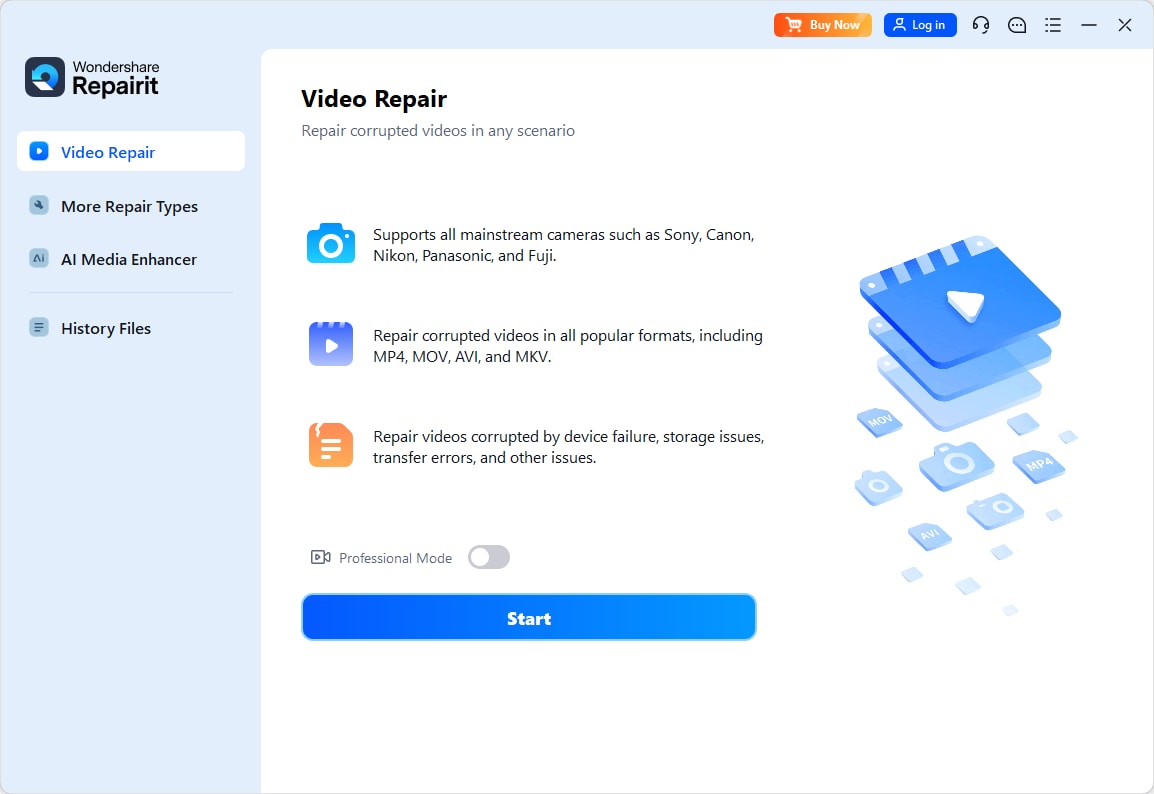
Open Wondershare Repairit and switch to the Video Repair module. Click the add button or drag and drop your problematic clips into the window. You can load multiple damaged files at once, whether they come from a camera card, local drive, or downloaded archive.
- Repair video files
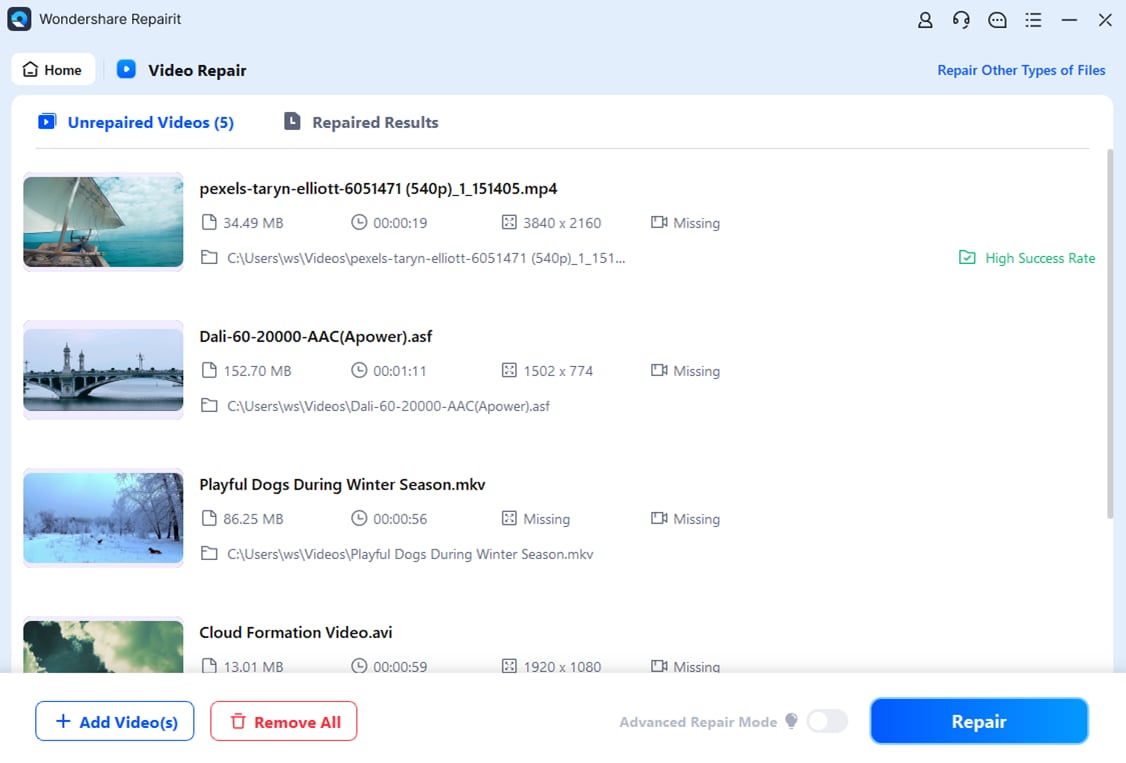
After adding your clips, hit the Repair button to start analysis. Repairit scans the structure of each file, identifies issues with headers, streams, and metadata, and applies suitable repair strategies. When the process finishes, use the preview option to quickly check whether playback and audio have been restored.
- Save the repaired video files
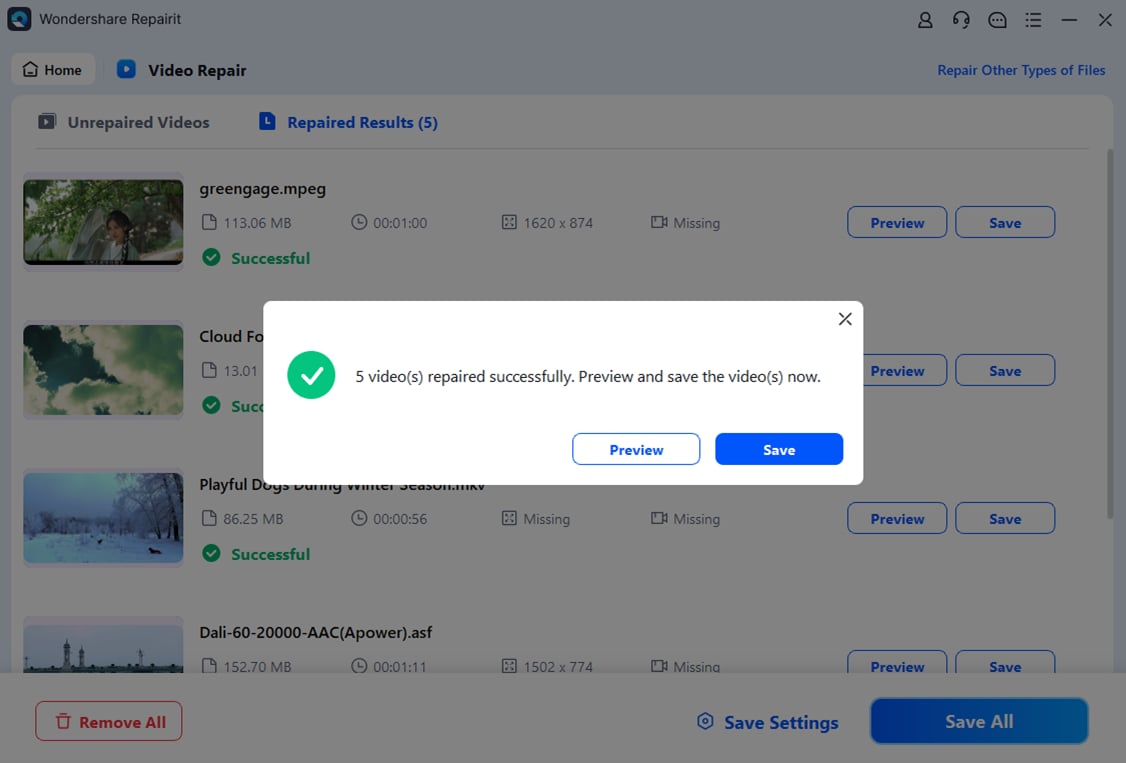
If the previews look good, select the videos you want to keep and choose a secure destination folder, such as a local drive with enough free space or a backed-up storage location. Save the repaired outputs, then open them in your usual player or editing software to confirm that the corruption issues are gone.
Conclusion
The coding tree unit is the fundamental block structure that lets HEVC and related codecs deliver high-quality video at comparatively low bitrates. By breaking each frame into flexible CTU trees, the encoder can reserve bits for detailed regions while compressing simpler areas more aggressively, improving streaming, storage, and delivery efficiency across modern resolutions.
You do not need to be a codec engineer to benefit from this concept, but knowing how CTUs influence artifacts, bitrate, and device load can help you choose better presets and diagnose quality issues. When encoding problems go further and your clips become corrupted or refuse to play, dedicated repair software like Wondershare Repairit gives you a practical way to restore access to valuable footage without diving into low-level codec internals.
Next: Reference Frame
FAQ
-
1. What is a Coding Tree Unit (CTU) in HEVC?
In HEVC, a Coding Tree Unit (CTU) is the largest block used to partition each frame for compression. Each CTU, often up to 64x64 pixels, can be split into smaller coding units that are then predicted, transformed, and encoded. This flexible structure replaces the fixed 16x16 macroblocks used in older codecs. -
2. How is a CTU different from a macroblock in H.264?
Traditional H.264 macroblocks are fixed at 16x16 pixels, with more limited splitting options. A CTU in HEVC can be larger (commonly 64x64) and is recursively divided into smaller units following a tree structure. This added flexibility lets HEVC adapt block sizes to the content, improving compression efficiency and quality at a given bitrate. -
3. Does CTU size affect video quality and bitrate?
Yes. Larger CTUs are efficient for smooth or low-detail regions, reducing bitrate and file size. However, the encoder must still split CTUs into smaller blocks in detailed or fast-moving areas to preserve quality. Poorly chosen or overly constrained CTU settings can lead to blockiness, banding, or wasted bits. -
4. Can CTU configuration cause visible artifacts or playback issues?
Aggressive compression with large CTUs and minimal splitting can create visible artifacts such as block edges or smeared textures, especially at low bitrates. Playback failures or files that will not open, however, are usually due to corruption or container/stream errors rather than CTU structure itself. -
5. How can I fix a video that will not play after encoding or transfer?
If a video fails to play because of corruption, interrupted export, or damaged headers, you can attempt to repair it with specialized software like Wondershare Repairit. The tool is designed to fix corrupted or unplayable video files so they can be opened again in standard players and editing applications.