An INDD file is the main layout document used by Adobe InDesign to build professional print and digital publications. It stores page sizes, typography, colors, images, and interactive elements in one structured project. When these files fail to open or become corrupted, important design work can appear to be lost. This guide explains what an INDD file is, how to open it correctly, the most frequent error messages, and practical ways to repair damaged InDesign documents so you can get your layouts back.
Repair Corrupted Files To Save Your Data
 Security Verified. Over 7,302,189 people have downloaded it.
In this article
What Is INDD File
An INDD file (InDesign Document) is the native project format created by Adobe InDesign. It is used to design and manage multi-page layouts such as magazines, catalogs, books, brochures, posters, interactive PDFs, and digital publications.
Unlike simple image or text files, an Adobe InDesign file stores a wide range of elements:
- Page dimensions, columns, margins, and master pages
- Styles for text, objects, and tables
- Placed images, logos, and vector artwork (usually linked, not embedded)
- Color swatches, transparency settings, and effects
- Interactive features like hyperlinks, buttons, and page transitions
Because INDD documents coordinate so many resources, they are sensitive to version changes, missing fonts, damaged links, and sudden system crashes. When something goes wrong, you may see an INDD not opening issue or errors indicating the file is corrupted.
| Format | Key Details |
|---|---|
| File extension | .indd |
| Primary program | Adobe InDesign (Windows and macOS) |
| Typical use cases | Magazines, books, brochures, reports, flyers, interactive PDFs, digital publishing |
| Related formats | IDML, INDT (template), PDF, EPUB |
How to Open INDD Files
To avoid compatibility problems and unexpected INDD error messages, it is important to open your layout in suitable software and with the right workflow.
Open INDD files in Adobe InDesign
The best way to open INDD documents is with a matching or newer version of Adobe InDesign on Windows or macOS.
- Launch Adobe InDesign on your computer.
- Click File > Open from the top menu.
- Browse to the folder containing your INDD file.
- Select the file and click Open.
- If prompted, allow InDesign to update the document to your current version and save a new copy.
To reduce the risk of issues later, save your project under a new name and consider exporting an IDML backup via File > Save As > InDesign CS4 or Later (IDML).
Open or export INDD content without InDesign
You cannot fully edit an INDD file without InDesign, but there are a few workarounds if you mainly need to view or reuse the content.
- Ask for an IDML version. Someone with InDesign can export the layout as an IDML file, which opens in older InDesign releases and some third-party layout tools.
- Request a PDF or image export. A PDF gives you a reliable view of the design and can often be edited in apps like Adobe Acrobat, Affinity Publisher, or other PDF editors, though with limitations.
- Use compatible layout software. Some non-Adobe tools support importing IDML or PDF so that you can adjust text and basic layout structures.
- Convert assets individually. If all else fails, export linked images and text from a PDF or backup and rebuild the layout in software you own.
While these methods cannot replace full native editing, they may help you keep working when InDesign is unavailable or when an INDD file refuses to open but a PDF or IDML version still works.
Common INDD File Errors
Because of their complexity, INDD documents can fail in several ways, from minor warnings about missing fonts to full-blown corruption that prevents the file from opening at all.
Typical INDD error messages
Some of the most common problems users see include:
- File is damaged. InDesign reports that the document is damaged and cannot be opened.
- Cannot open the file. The message may say the file was created in a newer version or is not recognized.
- InDesign quit unexpectedly. The application crashes while you are saving, opening, or exporting a document.
- Missing links. Linked images or graphics cannot be found, causing layout issues or empty frames.
- Missing fonts or plug-ins. InDesign loads the document but warns that required components are unavailable.
These issues range from minor warnings to serious fix corrupted INDD situations that put your entire publication at risk.
Main causes of INDD file corruption
Understanding what damages an Adobe InDesign file helps you prevent repeat problems:
- Interrupted saves or power loss. If your computer shuts down or InDesign crashes during a save, the resulting file may be incomplete and unreadable.
- Version conflicts. Opening an INDD file created in a much newer InDesign version can trigger incompatibilities or partial corruption.
- Disk or storage errors. Bad sectors, failing drives, or unreliable network storage can corrupt documents as they are written or copied.
- Problematic plug-ins or fonts. Unstable third-party plug-ins or corrupted fonts may crash InDesign and damage your active file.
- Virus or malware activity. Malicious software can modify or encrypt your files, leaving you with INDD not opening errors.
When these issues arise and you do not have a recent backup, a dedicated INDD repair tool can be the difference between losing a project and getting most of it back.
How to Use Repairit to Fix a Corrupted INDD File
Why choose Repairit for INDD repair
If your INDD file is corrupted or keeps crashing in InDesign, a specialized repair utility can help. Wondershare Repairit is designed to scan damaged storage locations, locate broken files, and reconstruct usable versions of your data. You can download it directly from the Repairit official website and use it to restore photos, videos, documents, and other assets related to your InDesign projects.
Key features of Repairit
- Repairs many file types, so you can tackle corrupted INDD documents along with linked images, videos, and other project assets.
- Offers flexible scanning modes that handle both light damage and severe corruption on local and external drives.
- Lets you preview recoverable files before saving, so you only restore the versions that actually look usable.
Step-by-step: Repair INDD files with Repairit
The steps below show how to use Repairit to locate and repair corrupted InDesign files and related resources on your computer.
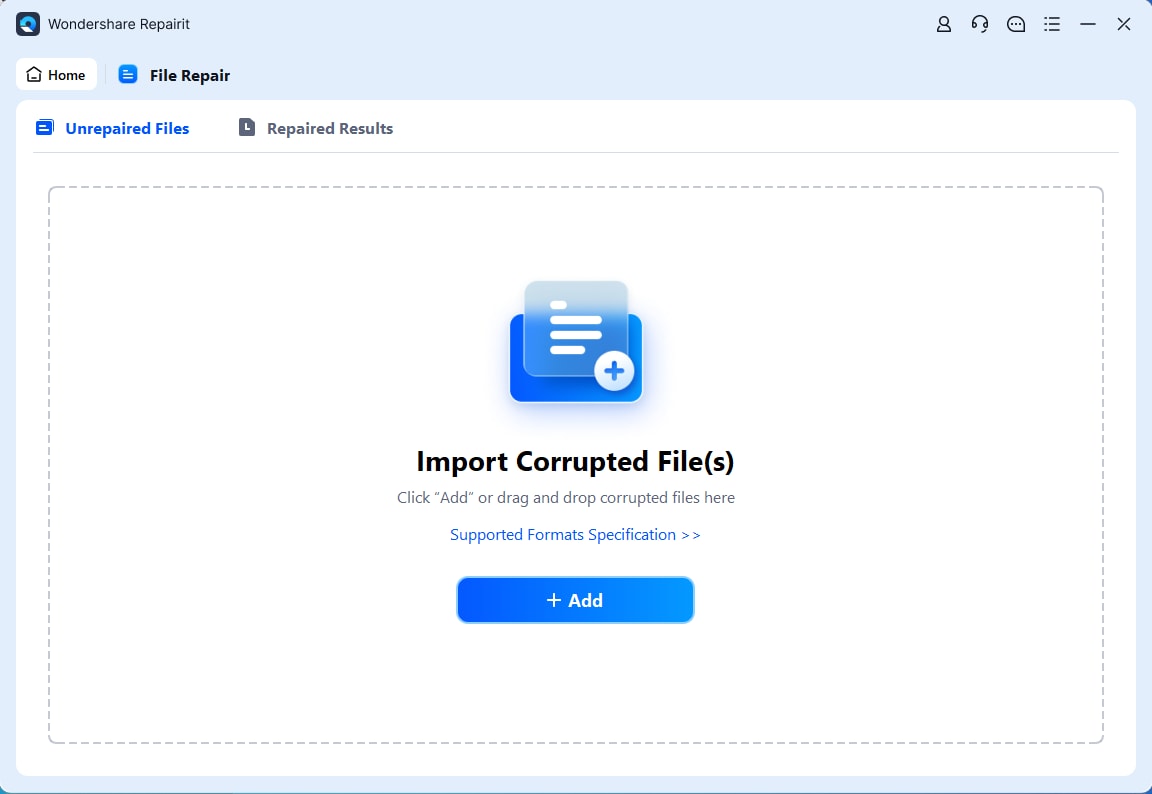
- Load your corrupted files on Repairit
Install and open Wondershare Repairit. From the main screen, select the data repair option that matches the files you want to recover, such as documents or a general file repair module. Next, browse through your drives and folders and highlight the specific disk, partition, or directory where your damaged INDD projects and linked assets are stored. Confirm your selection so Repairit knows exactly where to look for corrupted items.
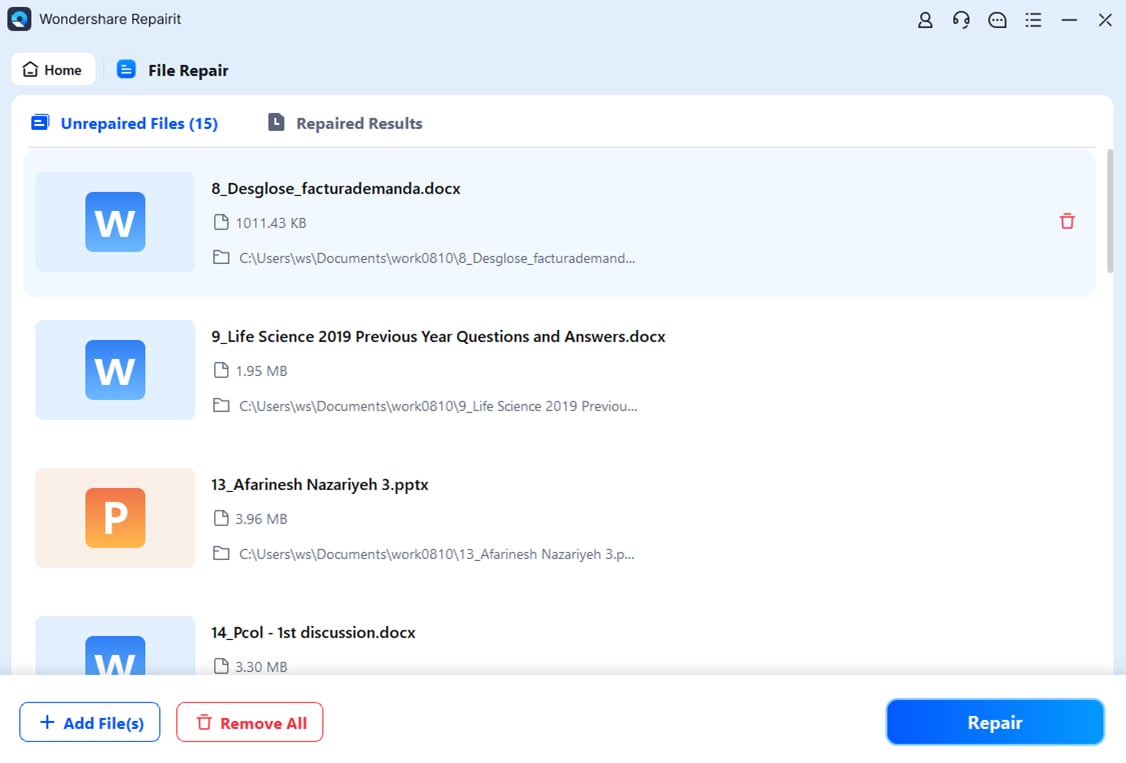
- Start the repair process
Click the scan button to start a thorough analysis of the chosen location. Repairit will methodically check file structures, metadata, and content to detect incomplete or corrupted items, including INDD files and supporting graphics. You can watch the progress bar as new files appear in the results list. Let the deep scan finish so the tool has the best chance of finding every repairable document.
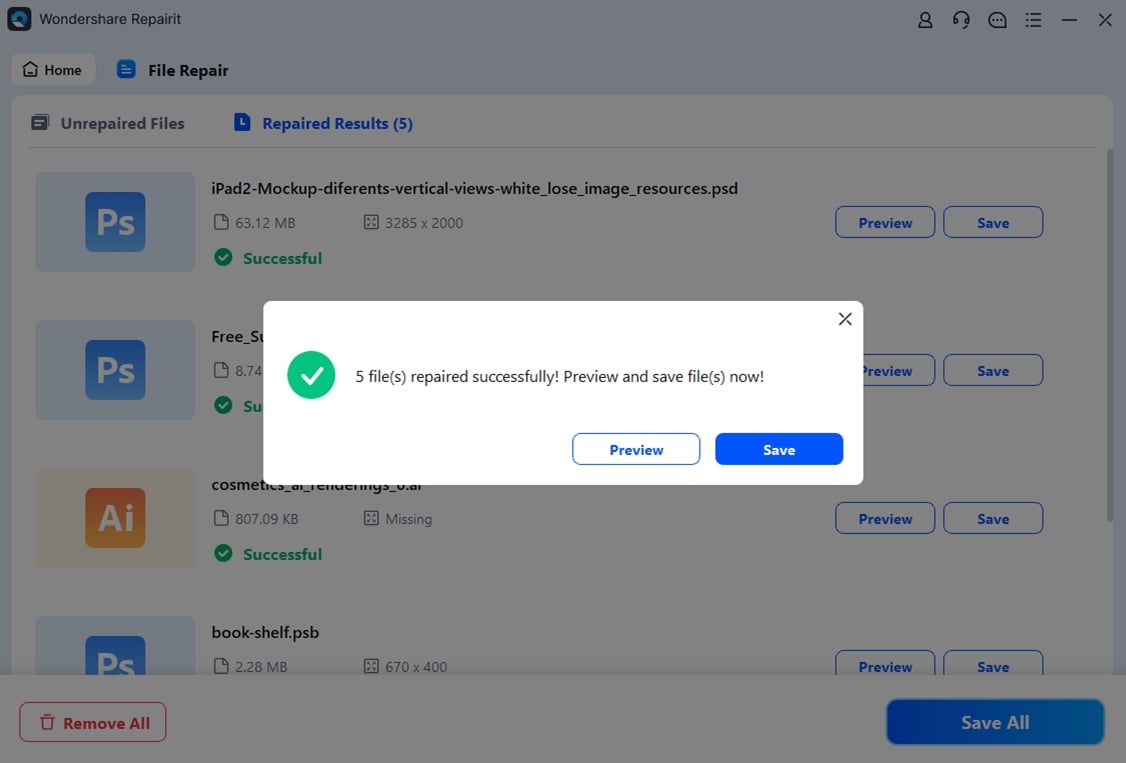
- Save Your Desired Data
When the scan ends, you will see a categorized list of files that Repairit can restore. Use the preview feature to open key results and confirm that the layout, pages, and images of your recovered Adobe InDesign file look acceptable. Tick the checkboxes next to the items you want to keep, then click the repair or recover button. Finally, choose a safe destination folder on a different drive or path from the original to save your repaired data securely.
Conclusion
INDD files are central to professional page layout work, combining text, images, and design rules into a single, flexible document. Knowing what an INDD file is, how to open it correctly, and which warning signs to watch for helps you avoid disruption in your publishing workflow.
When a crucial INDD file becomes damaged or refuses to open, you still have options. Built-in InDesign features, good backup habits, and a reliable repair utility such as Wondershare Repairit together give you a realistic chance to recover INDD file content and continue your project without starting over.
Next: What is Aep File?
FAQ
-
1. What is an INDD file used for?
An INDD file is the native document format for Adobe InDesign and is used to create complex page layouts for magazines, books, brochures, flyers, catalogs, reports, and interactive PDFs. It stores your pages, styles, images, and design settings in one place. -
2. How can I open an INDD file without Adobe InDesign?
You cannot fully edit an INDD file without InDesign, but you can ask someone with InDesign to export an IDML or PDF version. IDML can often be opened in older InDesign versions or compatible third-party layout software, while PDFs let you view and sometimes lightly edit the design. -
3. Why will my INDD file not open in InDesign?
Your INDD file may not open if it was created in a newer InDesign version, if required fonts or plug-ins are missing, if the file is corrupted from a crash or power loss, or if it resides on a damaged drive. Updating InDesign, restoring assets, or repairing the file can often resolve the issue. -
4. Can I repair a corrupted INDD file?
Yes. You can try opening an IDML export, letting InDesign auto-recover recent versions, restoring from backups, or running a dedicated tool like Wondershare Repairit to scan the storage location and reconstruct damaged Adobe InDesign files and related assets. -
5. How do I prevent INDD file corruption in the future?
To reduce the risk of fix corrupted INDD situations, keep InDesign updated, save incremental versions of important projects, work on reliable local or well-managed network storage, avoid forcing your system to shut down, and maintain frequent backups of both your INDD documents and linked files.