
In design workflows, AI file usually refers to the native Adobe Illustrator format, not artificial intelligence. This vector-based format stores logos, icons, and illustrations that can be scaled for web or print without losing clarity. If you regularly exchange artwork with clients or printers, understanding how AI format works, how to open AI files, and what to do when they are damaged or refuse to open will help you protect your creative projects and avoid unnecessary rework.
Repair Corrupted Files To Save Your Data
 Security Verified. Over 7,302,189 people have downloaded it.
In this article
What Is AI File
AI file format basics
An AI file is the proprietary vector graphics format used by Adobe Illustrator. Rather than storing images as pixels, it uses mathematical paths, curves, and shapes to describe artwork. This allows designs to be scaled from tiny icons to billboard size without becoming blurry. A typical Adobe Illustrator AI file can contain multiple artboards, layers, typography, color profiles, and embedded or linked images, making it ideal for branding systems, marketing materials, and print-ready layouts.
Most modern AI files are based on PDF or EPS technology under the hood. This means some applications can read part of the content even if they do not support the full Illustrator feature set. However, advanced elements such as live effects, complex transparency, and custom brushes may only be editable inside Illustrator itself.
AI vs other vector formats
Designers frequently compare the AI format to other vector file types like SVG, EPS, and PDF. Each has strengths and trade-offs depending on how the artwork will be used and shared.
| Format | Main use and notes |
|---|---|
| AI | Native Illustrator working format with full editability, layers, effects, and color management; best for ongoing design projects. |
| SVG | Web-friendly vector format supported by browsers; excellent for icons and responsive graphics but may not preserve all Illustrator effects. |
| EPS/PDF | Print-oriented exchange formats used with many layout and RIP systems; good for sharing final artwork but less flexible for editing. |
When you need maximum editability and future-proof control over your artwork, saving and maintaining a clean AI file is usually the safest choice. You can then export secondary versions like SVG or PDF for developers, printers, or clients as required.
How to Open AI Files
Opening AI files in Illustrator
The most reliable way to open AI file content is to use Adobe Illustrator. This ensures that layers, type, effects, and appearance settings remain editable and as close as possible to what the original designer intended.
- Launch Adobe Illustrator on your computer and make sure it is updated to the latest available version.
- Go to File > Open, browse to your AI file, and select it.
- Click Open and wait while Illustrator loads fonts, linked images, and color profiles; review the Layers and Links panels for missing assets.
If an AI project was created with a newer Illustrator release than the one you are running, you might see compatibility warnings. Updating Illustrator can often resolve odd rendering or missing-feature issues.
Opening AI files without Illustrator
If you do not have Illustrator, there are still several ways to view or lightly edit an AI file, though advanced effects may flatten or change appearance.
- Adobe Acrobat or Acrobat Reader: Many AI files saved with PDF compatibility can be opened as PDFs for viewing and basic commenting.
- Alternative vector editors: Apps like Affinity Designer, CorelDRAW, and Inkscape can import some Adobe Illustrator AI files with varying levels of fidelity.
- Online preview tools: Certain web-based viewers and converters let you upload an ai file and export it to formats like SVG or PNG for quick sharing.
- Rename to PDF: If the AI was saved with PDF compatibility, changing the extension from .ai to .pdf can sometimes make it viewable in PDF readers.
These workarounds are useful for clients or collaborators who only need to review artwork. When you require full editing control, however, opening the AI file in Illustrator remains the best approach.
Common AI File Errors
Typical causes of AI file problems
Even though the AI format is robust, problems can still occur and prevent Illustrator from opening the file correctly. Common triggers for ai file errors include:
- Interrupted saves: Power loss, crashes, or forced restarts while saving can corrupt the AI document header or internal structure.
- Storage issues: Bad sectors on hard drives, unstable USB drives, or failing SD cards may damage parts of your AI file.
- Version conflicts: Files created in newer Illustrator versions may use features your older version cannot interpret properly.
- Network or sync glitches: Saving directly to cloud drives or network shares can occasionally produce partial or incomplete files.
- Malware or system errors: Viruses and OS-level problems sometimes modify or truncate project files.
When these issues hit, you might see error messages such as "The file is damaged and could not be repaired" or Illustrator might simply freeze when attempting to open the project.
Quick checks before repair
Before diving into full ai file repair, it is worth running a few quick checks. These simple steps can sometimes resolve the issue without additional tools.
- Try another machine or Illustrator version: Open the same AI file on a different computer or with a newer Illustrator build.
- Check permissions and path: Copy the file to a local folder with a short path and verify you have read/write access.
- Open as PDF: Rename the .ai extension to .pdf and try opening it in Acrobat or another PDF viewer to see if some content is still intact.
- Restore from backup: Look in backup systems such as Time Machine, cloud sync history, or earlier saved versions for a healthy copy.
If these checks fail and you still cannot open your important ai file, it is time to consider using a dedicated repair solution to salvage as much data as possible.
How to Use Repairit to Fix a Corrupted AI File
Why use Repairit for AI file repair
When manual tricks do not restore your project, a specialized tool like Wondershare Repairit can help you recover corrupted AI files more safely. Repairit is a dedicated data repair solution that works across various file types, including graphics and creative project formats. Its smart scan engine analyzes damaged files, reconstructs broken structures where possible, and lets you preview the results before saving. You can learn more and download the software directly from the Repairit official website.
Key features of Repairit for AI projects
- Automatically scans selected drives or folders for damaged items, including vector artwork and project-based files such as ai file assets.
- Repairs corrupted files while striving to preserve original layout, layers, and visual quality wherever the data is still recoverable.
- Offers a built-in preview so you can verify the repaired content and confirm that critical Illustrator artwork has been brought back before exporting.
Step-by-step: repair corrupted AI files with Repairit
-
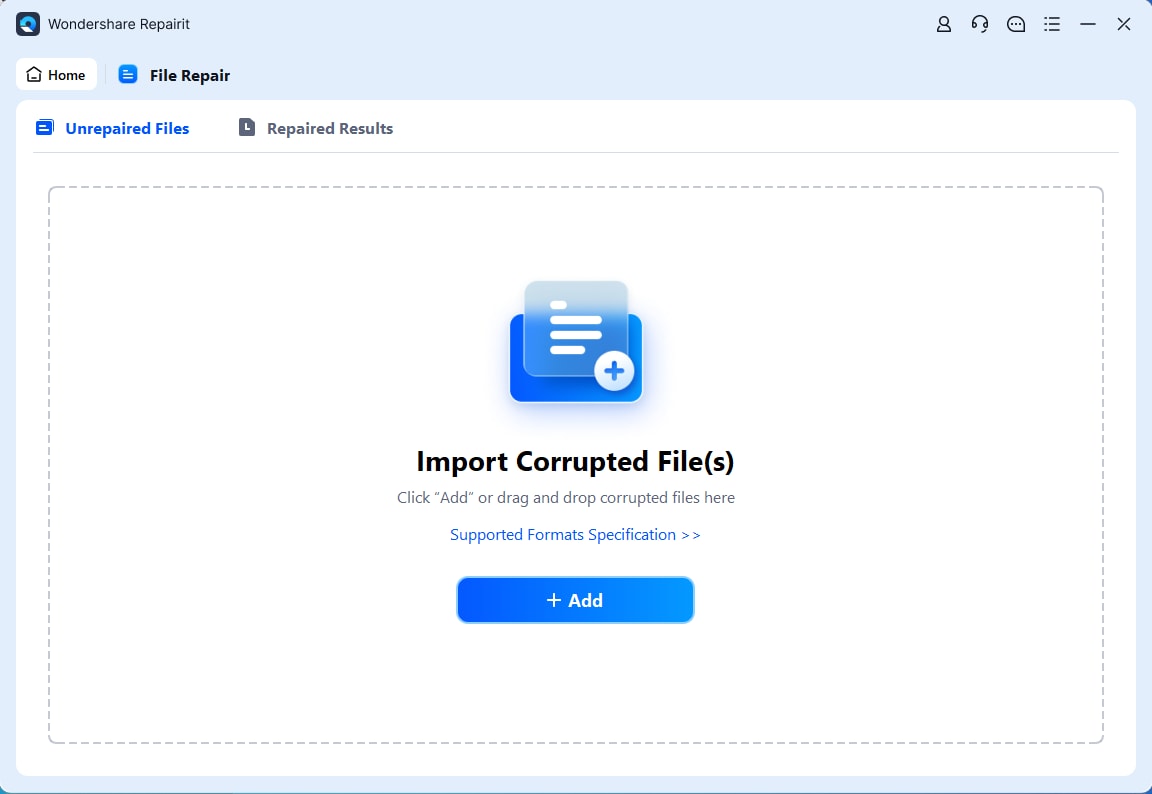
Load your corrupted files on Repairit
Install and open Wondershare Repairit on your computer. On the main interface, select the drive, folder, or external device where your problematic AI file is stored. This could be your desktop, a project directory, or a removable drive from a client. Confirm the target so Repairit knows exactly where to search for damaged Illustrator projects and related assets.
-
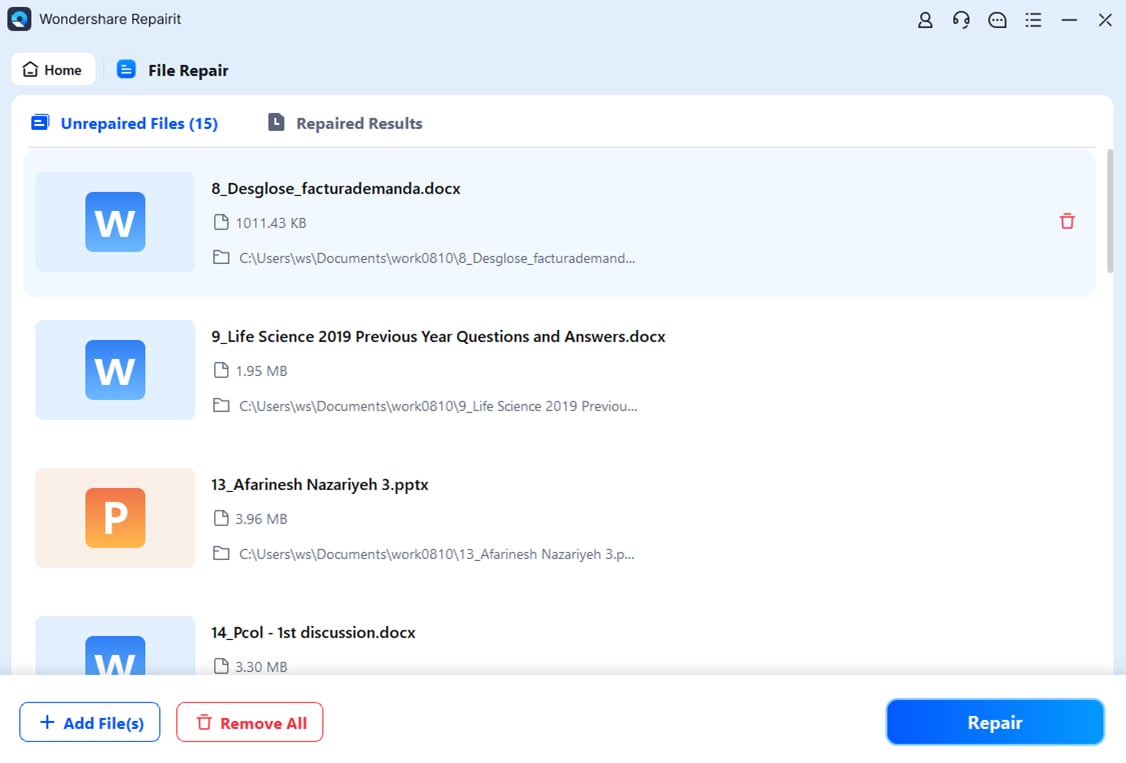
Start the repair process
Start the scan to let Repairit thoroughly inspect the selected location. During this deep analysis, the software looks for signs of file corruption, missing fragments, or structural inconsistencies that affect ai format files. You can watch as discovered items appear in the results list, and you can pause or stop the scan if you already see the AI projects you want to repair.
-
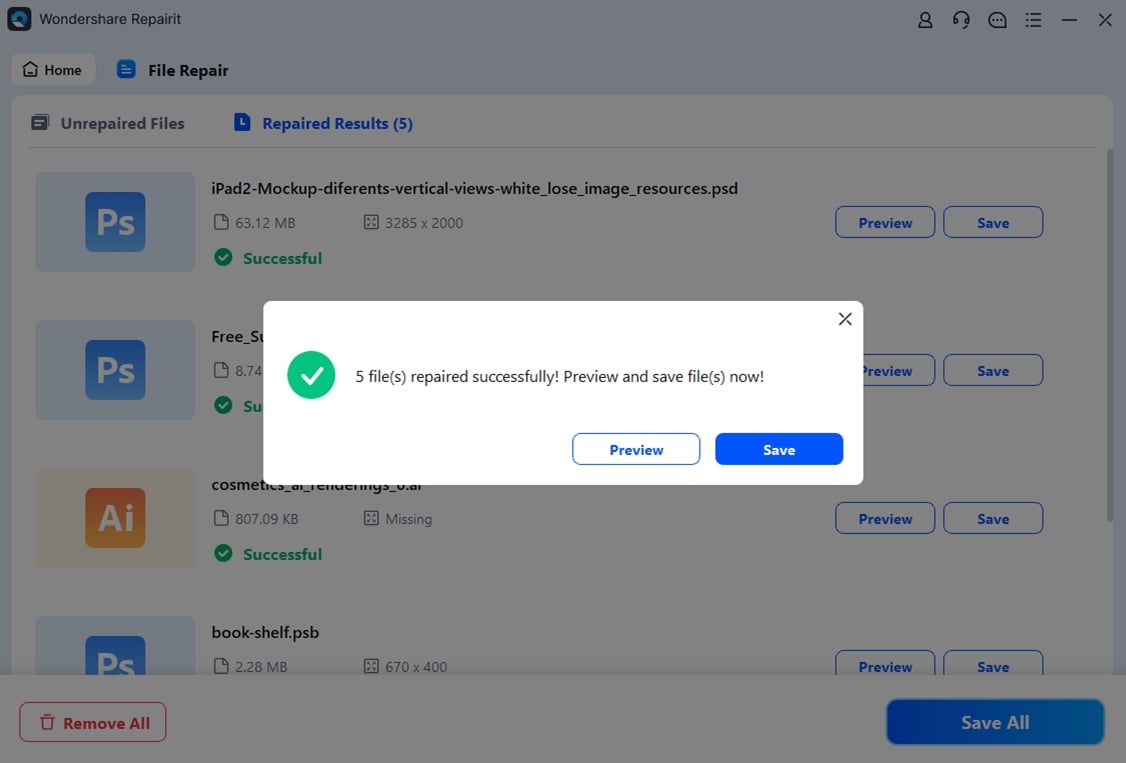
Save Your Desired Data
When the scan completes, browse through the recoverable items and locate your critical AI files. Use the preview feature, where available, to confirm that the artwork, layout, and key elements look acceptable. Select the files you want to restore, then choose a safe output folder on a different drive to minimize further risk. Click to save the repaired versions and open them in Adobe Illustrator to continue your design work.
Conclusion
The AI file sits at the center of many design and branding workflows, providing crisp, scalable artwork for both digital and print use. Knowing what the AI format is, how to open it with and without Illustrator, and how it compares to formats like SVG or PDF helps you choose the right files for collaboration and delivery.
When an ai file refuses to open or shows errors, you can try quick fixes such as renaming it to PDF, testing on another computer, or restoring a previous version. If those steps do not work, Wondershare Repairit offers a practical way to scan storage, repair corrupted project data, and rescue valuable Illustrator files so your creative work remains accessible.
Next: What is Indd File?
FAQ
-
1. What is an AI file and what is it used for?
An AI file is the native Adobe Illustrator vector graphics format. It stores scalable artwork such as logos, icons, and illustrations that can be resized without losing quality, making it ideal for branding, print layouts, and digital interfaces. -
2. How can I open an AI file without Adobe Illustrator?
You can often open an AI file using Adobe Acrobat (if saved with PDF compatibility), alternative editors like Affinity Designer, CorelDRAW, or Inkscape, or by converting it through online viewers. However, complex effects or live text may not remain fully editable outside Illustrator. -
3. Why does my AI file say it is damaged or cannot be opened?
This usually indicates corruption caused by interrupted saving, storage errors, system crashes, or version conflicts. Illustrator may report that the file is damaged, freeze while opening, or show missing data. Trying a different machine, restoring from backup, or using an ai file repair tool like Wondershare Repairit can help. -
4. Can I repair a corrupted AI file myself?
You can attempt manual fixes, such as renaming the extension to .pdf, importing the file into another vector program, or recovering an earlier version from backups. If these steps fail, using Repairit to scan and repair the underlying ai format structure offers a more advanced recovery method. -
5. How do I prevent AI file corruption in the future?
Save frequently and use incremental versions, avoid force-shutting Illustrator or your computer, keep software and plugins up to date, and store projects on reliable drives. Back up critical AI files to external or cloud storage so you always have a safe copy if something goes wrong.