
Secure Reliable Transport, or the SRT protocol, is a modern way to move live and recorded video across unpredictable networks such as Wi-Fi, public internet, or mobile data. You will see SRT streaming options in cameras, encoders, contribution links, and cloud platforms when setting up live broadcasts, remote production, or monitoring feeds. Understanding how secure video transport works helps you deliver smoother, lower-latency streams and avoid glitches during important events, webinars, or professional productions.
Repair Corrupted Files To Save Your Data
 Security Verified. Over 7,302,189 people have downloaded it.
In this article
What Is Secure Reliable Transport (SRT)?
The SRT protocol is an open-source transport technology used to move compressed video and audio (H.264, H.265/HEVC, AAC, etc.) across IP networks with low latency and high resilience. Unlike legacy methods that expect a stable connection, secure reliable transport constantly measures network conditions and adjusts how data packets are re-sent, buffered, and timed.
SRT builds an encrypted tunnel between sender and receiver. Video frames are wrapped into small packets that include timing and recovery information, so if some packets are delayed or lost, the receiver can request them again quickly. This approach makes srt streaming suitable for real-time applications like sports, news, and remote production where delays must stay low but the public internet is the only practical connection.
From a workflow perspective, SRT works at the transport layer, below your recording, editing, and encoding tools. You still compress your video to a typical format (MP4, MOV, MKV container; H.264/H.265 codec), but once it is ready to be transported for live viewing, secure video transport via SRT ensures that stream packets arrive reliably and are protected with AES encryption.
How Does Secure Reliable Transport (SRT) Work in the Real Workflow?
SRT in capture, encoding, and contribution
In a real production, SRT video usually becomes relevant right after capture and encoding, when you need to send the signal to another location or platform.
- On-camera support: Many modern broadcast and cinema cameras now include SRT output. You choose SRT as the output protocol, set the receiver IP, port, and latency, then the camera pushes an encrypted feed directly to your studio, cloud switcher, or CDN.
- Hardware encoders and backpacks: Field encoders from live streaming vendors often expose SRT as a profile alongside RTMP and RTSP. You plug SDI/HDMI from the camera, select SRT profile, configure the destination, and the encoder turns SDI/HDMI into a compressed, low latency streaming feed over cellular or wired networks.
- Software encoders: Tools like OBS Studio, vMix, and other live production apps can send or receive srt streaming feeds. In the output or input settings, you select SRT as the protocol, define listener/caller mode, add passphrases for AES encryption, and match latency with your network quality.
At this stage, SRT handles jitter and packet loss. If the mobile network fluctuates during an outdoor shoot, the protocol dynamically re-sends missing packets while respecting the latency you configured. Editors and technical directors see a cleaner, steadier live preview, even if the connection is far from perfect.
SRT in distribution, recording, and playback
After contribution, SRT streaming can be used again for moving signals inside a facility or to cloud services, and it also affects how recordings are created for later playback.
- Cloud mixing and remote production: Remote production platforms accept SRT inputs from multiple locations, mix them in the cloud, and then output over SRT, RTMP, or HLS. Operators can cut cameras and add graphics while relying on SRT to keep latencies predictable.
- Monitoring and return feeds: Facilities use SRT to send confidence monitors or program returns back to field crews. Because of its security and adaptability, it is ideal for sending clean feeds across VPNs or direct internet paths.
- Recording and VOD creation: Many systems record incoming srt video feeds to MP4, MOV, or TS files for on-demand editing and export. If the receiving system or storage encounters problems, these files may end up partially written or corrupted, which can later cause playback issues in players or NLEs.
Although SRT ensures robust live transport, it does not control how local disks or NAS devices handle recorded streams. If the machine crashes, the encoder stops unexpectedly, or the storage disconnects mid-session, the resulting files might refuse to open. In those cases, a dedicated video repair utility like Repairit becomes essential for restoring the recorded content.
Where Is Secure Reliable Transport (SRT) Commonly Used?
You will encounter secure reliable transport across a wide range of live and file-based environments where stable, secure links matter.
| Use case | How SRT is applied |
|---|---|
| Broadcast and sports production | Sending contribution feeds from venues, OB vans, or remote commentators to central control rooms over public internet while keeping latency low. |
| Corporate and education streaming | Delivering town halls, product launches, and lectures from offices or classrooms to cloud platforms when private fiber links are unavailable. |
| Cloud-based editing and review | Transferring proxy or live preview feeds from on-premise encoders to cloud NLEs and review platforms for remote teams. |
Content creators also see SRT streaming embedded in services that connect cameras, encoders, and platforms using relay servers. Some consumer live streaming services offer SRT ingest for creators who want tighter control than typical RTMP workflows, especially when streaming from higher-end hardware or multi-camera rigs.
Post-production teams may rely on SRT to send preview feeds to clients in other cities, while OTT platforms use it in their internal chains to move mezzanine or contribution-level feeds between regions. Anytime video must cross the open internet for live consumption, secure video transport using SRT is a strong candidate.
How to Use Repairit to Fix a Corrupted Video File
Why choose Repairit for damaged SRT video recordings
Even when your live workflow uses SRT streaming flawlessly, the final recording on your computer, recorder, or server can still become corrupted because of power loss, system crashes, file system errors, or sudden disconnects. These issues may leave valuable clips from events, webinars, or remote interviews unplayable in standard players or editing software.
Wondershare Repairit is built specifically to handle such situations. It focuses on video repair for many common formats (MP4, MOV, M4V, MKV, and more) and can often restore structure, headers, and timecode so the file opens normally again. You can learn more and download the tool directly from the Repairit official website, keeping it ready whenever a critical recording from an SRT workflow or any other source refuses to play.
Key features of Repairit
- Video repair support for various formats affected by corruption, playback errors, or missing frames.
- Guided repair process with a clear interface that works for both beginners and professional editors.
- Built-in preview so you can verify repaired videos before exporting the final fixed copies.
Step-by-step: repair a corrupted video file
Follow these steps to rescue a damaged recording created in an SRT video workflow or any other capture setup.
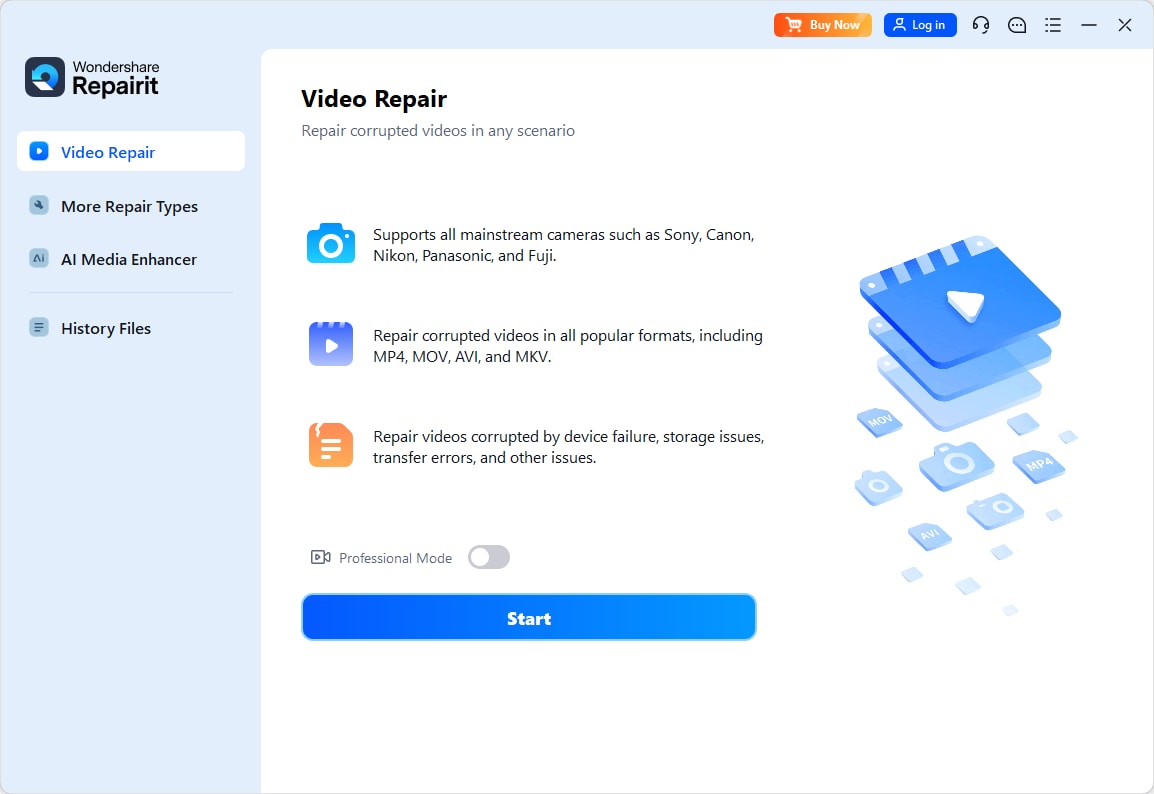
- Add corrupted video files
Open Repairit on your computer and choose the Video Repair option from the main screen. Click the button to add files, then browse to the folder where your problematic recordings are stored. Select one or multiple corrupted clips that fail to play or import into your NLE, and confirm so they appear in Repairit's file list with their basic details visible.
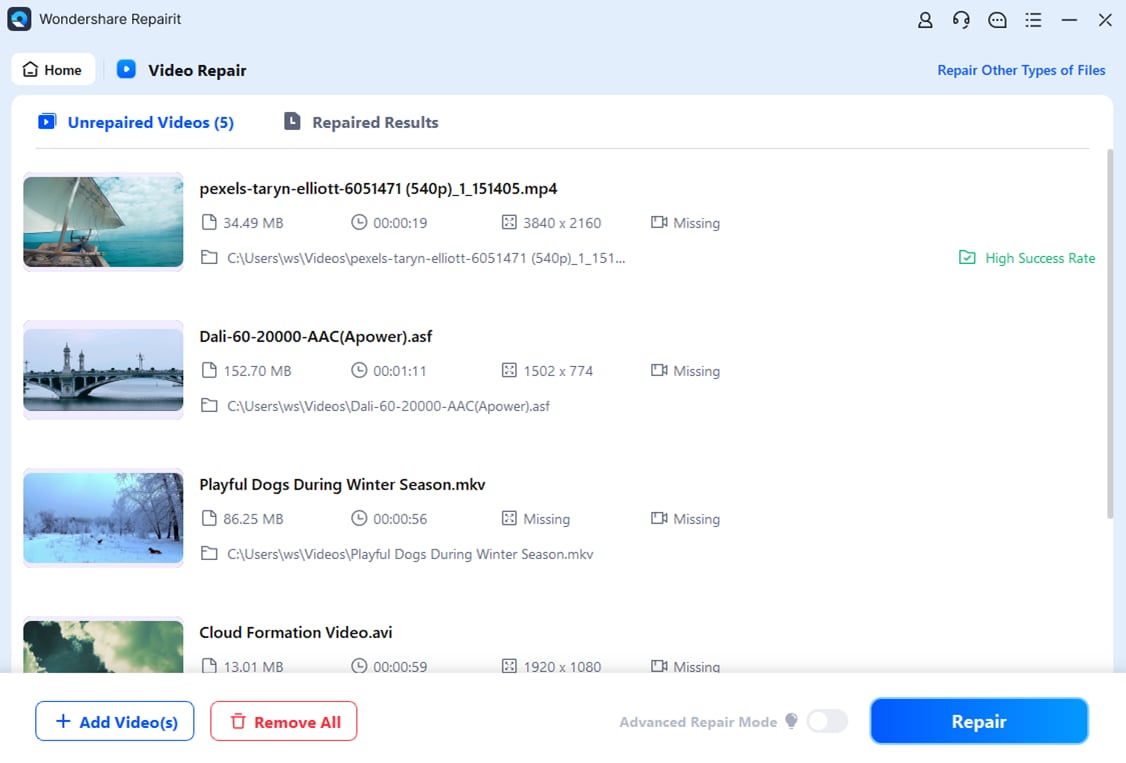
- Repair video files
After adding the clips, start the repair process. Repairit will scan each file, rebuild damaged headers and indexes, and attempt to correct structural problems that prevent smooth playback. When the first pass is finished, use the preview option beside each entry to inspect the result. Check that the image, audio, and timeline behave correctly from start to finish before moving on.
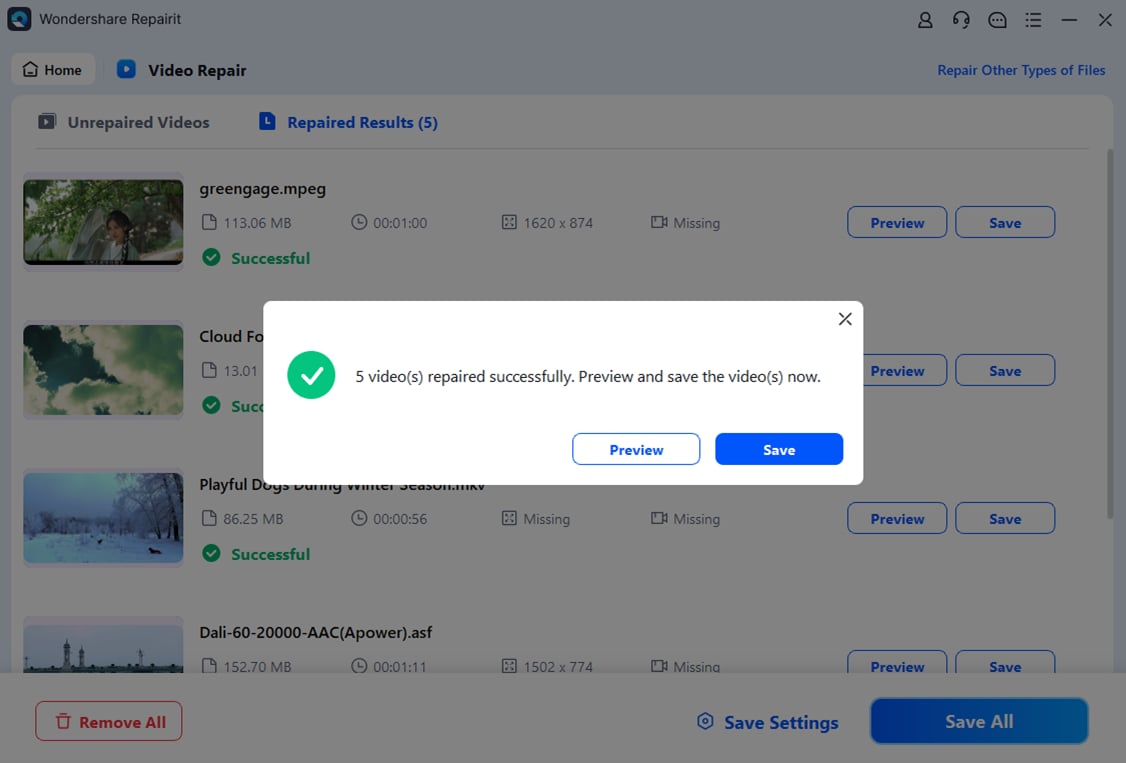
- Save the repaired video files
Once you are satisfied with the previewed results, click to export the fixed versions. Choose a secure output folder different from the original location, ideally on a healthy drive with enough free space. Saving to a separate folder helps you keep the repaired files organized, compare them against the damaged ones if needed, and back them up as part of your archive or media library.
Conclusion
The SRT protocol has become a cornerstone of modern live production, letting creators, broadcasters, and organizations move high-quality video over ordinary networks while keeping latency and errors under control. By addressing packet loss, jitter, and security at the transport level, secure reliable transport enables workflows that used to require costly private links, from remote commentary to cloud-based mixing and monitoring.
However, no protocol can fully protect recordings from local corruption caused by storage failures, sudden shutdowns, or software crashes. When crucial SRT-based recordings or other clips become unplayable, a dedicated video repair tool like Repairit helps you restore those files, safeguard your projects, and maintain a reliable archive for both live and on-demand use.
Next: Webrtc Streaming
FAQ
-
1. What is Secure Reliable Transport (SRT)?
Secure Reliable Transport (SRT) is an open-source transport protocol for delivering compressed audio and video over IP networks with low latency, encryption, and mechanisms to recover from packet loss and jitter, making it ideal for live streaming over the public internet.
-
2. How is SRT different from traditional streaming protocols like RTMP?
SRT focuses on low latency streaming and adaptability. It continuously measures network conditions, adjusts buffering, and retransmits missing packets while supporting AES encryption. RTMP, by contrast, was designed for older platforms, struggles more on unstable networks, and does not natively offer the same level of resilience or security.
-
3. Do I need special hardware to use SRT?
No. Many workflows use software encoders and decoders on standard computers, while others rely on cameras and hardware encoders with built-in srt streaming support. As long as your equipment or software supports SRT, you can run it over typical internet connections.
-
4. Can SRT stop my video files from becoming corrupted?
SRT greatly improves reliability while video is traveling across the network, but it cannot prevent file corruption caused by drive failures, power loss, crashes, or disconnections on the recording device. When that happens, you need dedicated video repair software to attempt recovery.
-
5. How can I repair a corrupted recording from an SRT live stream?
Export or copy the damaged recording from your encoder or server, then open it in Wondershare Repairit. Add the file, run the repair process, preview the result to confirm smooth playback, and finally save the fixed version to a safe location separate from the original.