
The RIST streaming protocol is becoming a key piece of modern video production, especially when teams send live feeds over the open internet instead of expensive leased lines. You will see it in contribution encoders, cloud production platforms, and broadcast gateways used to move low-latency HD or UHD video between studios, remote cameras, and streaming services. Understanding how RIST works helps you design more reliable live workflows and avoid glitches that can ruin recordings or on-air output.
Repair Corrupted Files To Save Your Data
 Security Verified. Over 7,302,189 people have downloaded it.
In this article
What Is RIST Streaming Protocol?
The Reliable Internet Stream Transport protocol, commonly shortened to reliable internet stream transport or simply RIST, is an open standard for moving professional audio and video over unmanaged IP networks like the public internet. Unlike basic UDP or HTTP-based delivery, rist streaming protocol focuses on low-latency, broadcast-grade reliability while remaining interoperable between vendors.
In a typical setup, an encoder or gateway takes live SDI, HDMI, NDI, or other IP-based video, compresses it with a codec such as H.264 or HEVC, then wraps it in a rist video stream. RIST adds mechanisms to request missing packets, handle jitter, and apply encryption without forcing heavy buffering. This makes it well suited to contribution feeds, return video, remote production, and inter-facility links where every frame and millisecond counts.
Because RIST is defined by the Video Services Forum as an open and interoperable standard, different encoders, decoders, cloud routers, and monitoring solutions can exchange streams without being locked into a single vendor. For teams working in hybrid on-prem and cloud environments, that flexibility is a major advantage over proprietary link protocols.
How Does RIST Streaming Protocol Work in the Real Workflow?
RIST in contribution, editing, and monitoring
In real-world production, RIST sits in the chain between acquisition and editing or playout. Imagine a sports event with remote cameras sending feeds back to a central gallery:
- Each camera connects to a small field encoder that turns SDI/HDMI into compressed IP video and encapsulates it as reliable internet stream transport.
- The encoder sends that stream over the venue network and public internet to a receiver in the broadcast center or a cloud production environment.
- The receiver outputs SDI, NDI, or SMPTE ST 2110 to the switcher or replay server, where operators cut the show and record ISO feeds for later editing.
During this process, the RIST protocol actively monitors for video packet loss. If packets go missing, the receiver requests retransmission within a very short time window. That keeps end-to-end latency low enough for live switching while still delivering clean frames suitable for post-production and VOD export.
From an editor's viewpoint in tools like Adobe Premiere Pro or DaVinci Resolve, RIST is mostly invisible. They simply import recorded files from the RIST receiver. However, if there were network problems, recordings may contain glitches, missing frames, or even fail to open. Those are moments when a specialized video repair tool becomes essential in the workflow.
RIST in encoding, transport, and playback platforms
On the encoding side, RIST support is typically found in hardware encoders, software-based contribution apps, and some cloud gateways. You might see it exposed in settings under labels like "RIST main/simple profile," where you configure IP addresses, ports, encryption keys, and latency targets.
In the middle of the chain, RIST can run point-to-point or through hubs and routers that aggregate multiple feeds. Cloud-based routing platforms or on-prem IP gateways can receive several RIST inputs, apply switching or failover, and send outputs to downstream facilities, CDNs, or playout automation.
For playback and distribution, RIST usually hands off to other protocols. A headend or master control room receives rist video, converts it to SDI for legacy infrastructure, or transcodes it into HLS/DASH for OTT platforms. Viewers on televisions, mobile apps, and browsers rarely see RIST directly, but they benefit from its stability; cleaner contribution feeds translate into fewer artifacts on final live streams and VOD assets.
When recordings from these pipelines are archived, transcoded, or moved between storage systems, they can still become damaged. Network drops, sudden power loss, or disk errors may leave you with partially written or corrupted containers. This is where tools that can fix corrupted video files are critical to keep the overall RIST-enabled workflow reliable from ingest to long-term playback.
Where Is RIST Streaming Protocol Commonly Used?
The most visible use cases for low latency streaming with RIST are in broadcast, streaming, and professional content production. The protocol is designed to replace or complement satellite and dedicated fiber links in situations where cost, flexibility, or speed of deployment matter.
- Live broadcast contribution: News crews, sports OB units, and remote studios use RIST to send live camera feeds, program returns, and commentary audio over the internet back to centralized control rooms.
- Remote and cloud production: Production teams route RIST feeds into cloud-based switchers and replay tools, mixing events from multiple locations while maintaining tight latency budgets.
- Inter-facility links: Media companies connect regional offices, playout centers, and disaster recovery sites with broadcast over internet links based on RIST instead of leased lines.
- Contribution to streaming platforms: Some encoders and gateways push RIST feeds into cloud ingest points, which then transcode and package them for CDN delivery as HLS or DASH.
- Monitoring and QC: Engineering teams use RIST to deliver confidence feeds, multiviewer outputs, or test loops between labs and operations centers.
Content creators and smaller streaming operations may encounter RIST through integrated encoders in all-in-one production appliances, SRT/RIST-compatible software, or when working with service providers that accept or deliver contribution feeds in RIST format.
How to Use Repairit to Fix a Corrupted Video File
Brief introduction to Repairit
Even when the transport layer is robust, recordings from RIST links can be corrupted by power failures, misconfigured recorders, or storage problems. Wondershare Repairit is designed to step in at that point, helping you fix corrupted video files from any workflow, including RIST-based contributions. You can learn more and download it directly from the Repairit official website, where both beginners and seasoned broadcast engineers will find tools to restore unplayable or glitchy media with minimal manual effort.
Key features of Repairit video repair
- Repairs various video repair scenarios across popular formats such as MP4, MOV, M2TS, and more, including files affected by header corruption, missing frames, or playback errors.
- Offers a fast automatic repair mode plus an advanced mode that uses a sample clip as a reference for reconstructing severely damaged recordings.
- Provides built-in preview so you can verify that the entire timeline plays smoothly before exporting clean copies of your recovered assets.
Step-by-step: repair a corrupted RIST recording
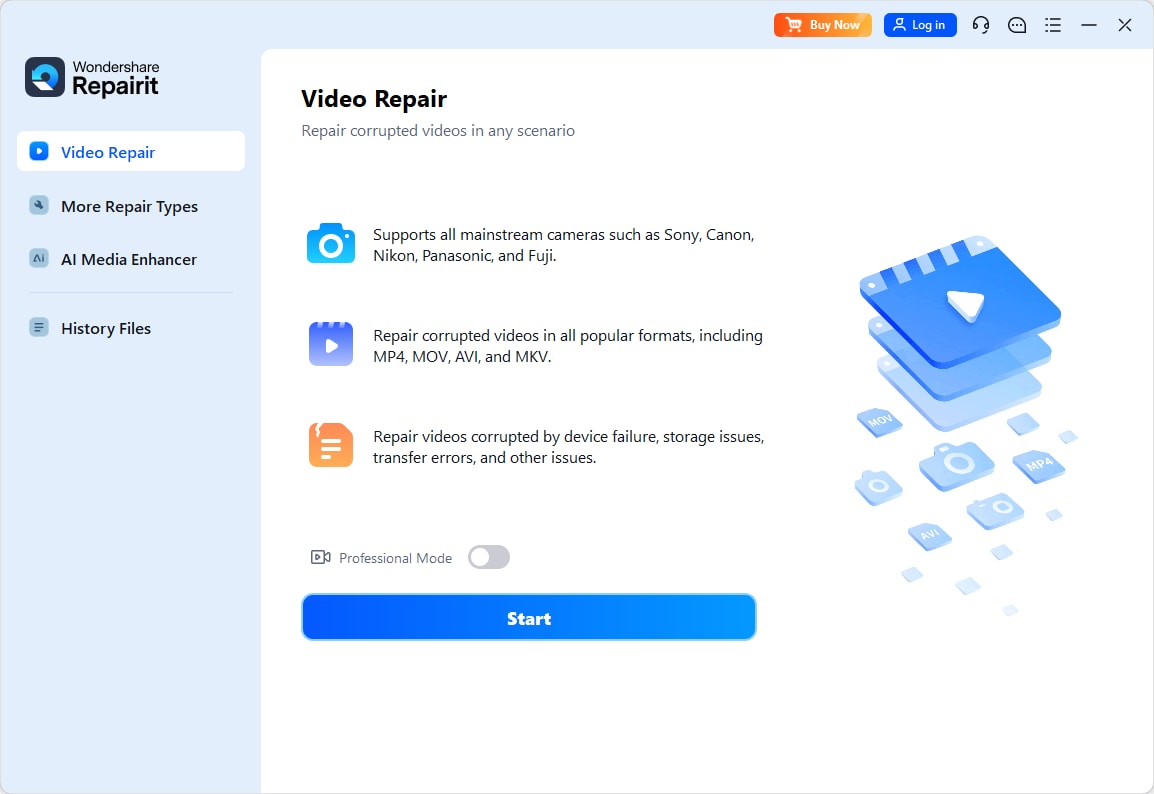
- Add corrupted video files
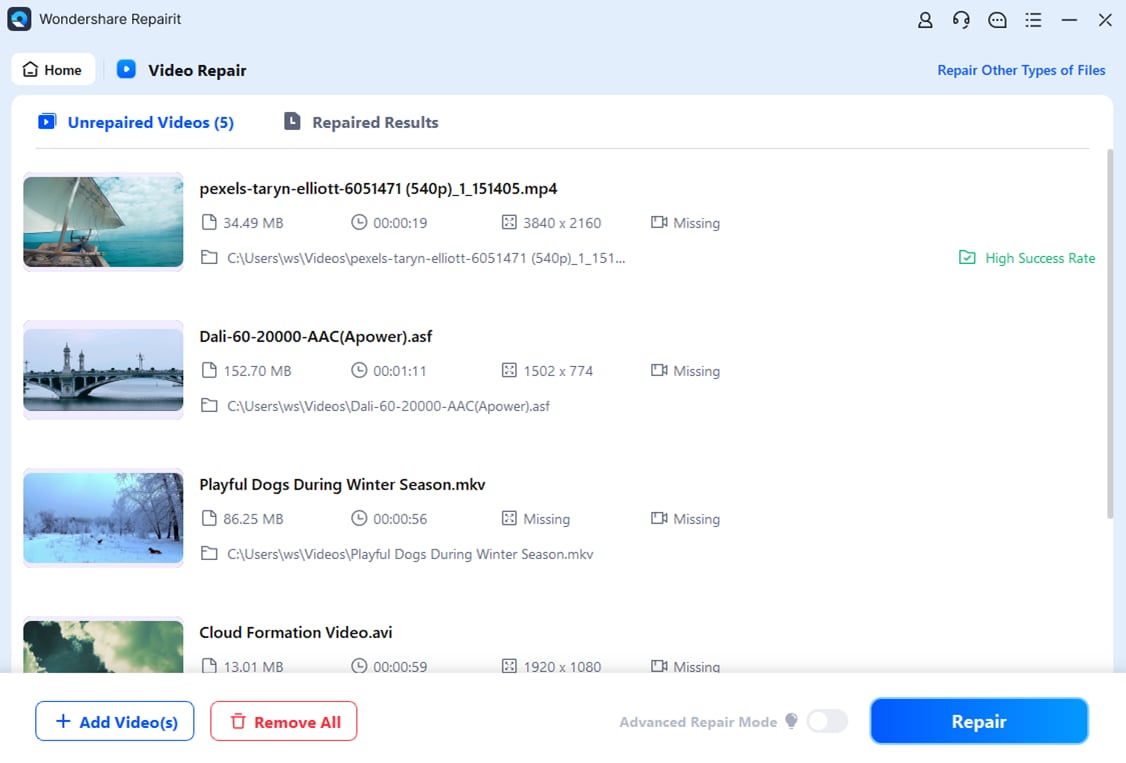
- Repair video files
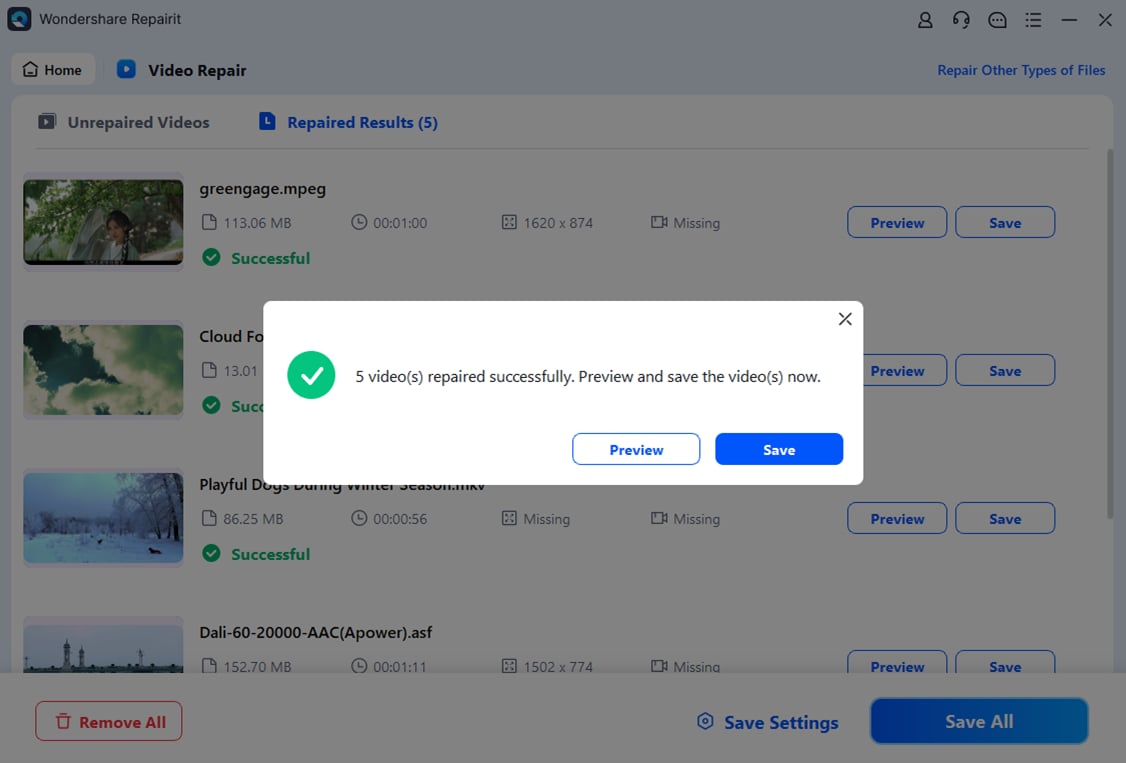
- Save the repaired video files
Conclusion
The rist streaming protocol gives broadcasters, streaming services, and production teams a powerful way to move professional video over unreliable networks with minimal latency. By combining packet retransmission, jitter handling, and optional encryption in an open standard, it has become a cornerstone of modern IP-based contribution and remote production.
However, no matter how robust your transport is, recordings can still become corrupted during ingest, transfer, or storage. Adding Wondershare Repairit to your toolkit ensures that when critical clips from your RIST workflows do fail, you have a straightforward way to recover them and keep your productions on schedule.
Next: Hesp Streaming Protocol
FAQ
-
1. What is the main benefit of using RIST over basic UDP streaming?
RIST adds packet retransmission, jitter handling, and optional encryption on top of UDP, which lets you send professional video over the public internet with much lower packet loss and without relying on large buffers that increase latency. -
2. Does RIST work with existing broadcast and editing tools?
Yes. RIST is typically used between encoders, gateways, and receivers, which then output SDI, NDI, ST 2110, or standard files for use in existing switchers, playout servers, and NLEs such as Adobe Premiere Pro or DaVinci Resolve. -
3. Is RIST an open and interoperable standard?
RIST is specified by the Video Services Forum as an open standard. Multiple vendors implement it, allowing you to mix encoders, decoders, and routers from different manufacturers in the same workflow. -
4. Can RIST secure my streams over the public internet?
Yes. RIST includes encryption and authentication options so you can protect contribution links against unauthorized access or tampering while still maintaining low latency. -
5. How can I repair a corrupted recording from a RIST feed?
If a recording from a RIST contribution link becomes unplayable or glitchy, you can use Wondershare Repairit. Import the damaged file, run a standard or advanced repair, preview the result, and then export a clean version for editing or archiving.