

The HESP streaming protocol is a modern way to deliver ultra low-latency video over the web, especially for live recording, interactive broadcasts, and second-screen experiences. You will see it mentioned in streaming platforms, encoder settings, CDN documentation, and player SDKs when tuning latency for sports, gaming, or live events. Understanding HESP helps creators, editors, and platform owners keep live and recorded video responsive, in sync, and compatible across devices without sacrificing scalability or quality.
Repair Corrupted Files To Save Your Data
 Security Verified. Over 7,302,189 people have downloaded it.
In this article
What Is HESP Streaming Protocol?
The HESP low latency protocol (High Efficiency Streaming Protocol) is an HTTP-based video streaming standard designed to deliver live content with delays close to real time while staying compatible with large-scale web delivery. Like HLS or DASH, it uses fragmented media segments over CDNs, but it structures streams so players can start quickly, switch channels fast, and keep latency extremely low.
From a recording and encoding perspective, HESP works with familiar video formats such as H.264/AVC or H.265/HEVC and common audio codecs. The difference is in how these compressed frames are packaged and signaled. In HESP, streams are split into an initialization stream and a continuation stream, allowing a player to join at almost any point without waiting for long segments, which is a common delay source in HLS and DASH.
Compared with HESP vs HLS, both travel over HTTP and work with CDNs, but HLS traditionally uses longer segments (often 2–6 seconds each) and playlist updates that introduce noticeable delay between encoder output and viewer playback. HESP uses short, fine-grained chunks and special stream entry points to minimize startup time and end-to-end latency, making it more suitable for ultra low-latency streaming than classic HLS presets.
For tools and platforms, the protocol appears as an output option in encoders, an ingest or origin format in streaming servers, and a supported protocol in web players or SDKs. Editors and operators might not adjust HESP directly, but they feel its impact in smoother monitoring feeds, more responsive live switching, and recordings that better match the timing of in-venue events.
How Does HESP Streaming Protocol Work in the Real Workflow?
Capture, encode, and HESP packaging
In a typical production, cameras or screen-capture tools record the event and send video to an encoder such as OBS, dedicated broadcast appliances, or cloud encoders. The encoder compresses the footage into a streaming codec and passes it to a packager that prepares HESP streaming protocol outputs.
The HESP packager creates multiple bitrates (ABR ladder) and splits each into very small chunks. It also maintains a reference stream that helps players join mid-stream with minimal buffering. When you configure latency settings in your live streaming software, enabling a HESP profile often tunes GOP length, keyframe cadence, and chunk sizes to favor ultra-low delay while keeping files suitable for recording and later editing.
On the server side, an origin or HESP-aware streaming server exposes these chunks over standard HTTP endpoints. CDNs cache them as they arrive, so viewers worldwide can request the closest copy. Because the protocol sits on top of HTTP, it fits well into existing caching, load balancing, and security setups without needing entirely new infrastructure.
Distribution, playback, and recording
On the viewer side, a HESP-capable player (web player, mobile SDK, set-top box app) retrieves the manifest and quickly locks onto the current live edge. Unlike classic HLS or DASH, the player does not wait for full multi-second segments; instead, it uses HESP structures to start rendering almost immediately and stay closely aligned with the live encoder.
Interactive platforms integrate HESP into their end-to-end workflows. For example, a sports betting site can ingest contribution feeds via SRT or WebRTC, transcode them in the cloud, then distribute them over ultra low latency streaming via HESP to browsers and mobile apps. Editors monitoring the feed for highlights see action nearly in real time, making it easier to cut clips, insert replays, and schedule social media posts that feel live rather than delayed.
Many workflows also archive HESP-based live streams to MP4, MKV, or similar containers for replay, editing, or compliance review. If a network drop, server crash, or disk issue interrupts recording, those files may become unplayable or show visual artifacts. In such cases, a dedicated repair tool is needed to reconstruct damaged headers, timelines, or frames without having to re-record the event.
Where Is HESP Streaming Protocol Commonly Used?
The live streaming protocol landscape is crowded, but HESP stands out wherever latency and scale both matter. Broadcasters and OTT platforms use it to stream premium sports, e-sports, and live shows to global audiences that expect in-stadium timing on consumer devices. Its HTTP foundation makes it easier to deploy through existing CDNs than some real-time protocols.
Gaming and interactive entertainment services rely on HESP for features such as live polls, real-time score overlays, co-viewing, and synchronized watch parties. Every second of delay can break the illusion of shared presence, so these platforms prioritize protocols that keep people closely in sync across TVs, phones, and browsers.
Financial trading, live auctions, and betting platforms also adopt HESP because delays of even a few seconds can have serious business consequences. In these cases, the protocol helps ensure that all participants see the same picture with minimal delay, while operators still benefit from HTTP caching, load balancing, and observability.
On the production side, HESP appears inside contribution monitoring tools, low-latency preview players, and cloud-based switching or replay systems. Editors and QC teams may not explicitly choose it, but the low-latency confidence feeds they rely on often ride over HESP or similar protocols to minimize lag between the venue and remote workstations.
How to Use Repairit to Fix a Corrupted Video File
Why choose Repairit for streaming workflows
When low-latency workflows fail, the result is often a corrupted recording: incomplete files, missing audio, or clips that refuse to open in your NLE or player. Repairit from Wondershare offers a focused way to recover these assets without deep technical knowledge. You can learn more on the Repairit official website, where the tool is presented for both everyday users and professional media teams.
Repairit is particularly helpful after live HESP events where VOD copies are saved to local disks, NAS, or cloud storage. Power cuts, encoder crashes, or sudden network interruptions can damage containers or metadata even though the underlying video data is still present. Repairit analyzes each file structure, tries to rebuild missing or broken information, and lets you preview the repaired result before exporting, so you can quickly restore deliverables for editing, archiving, or replay.
Key features of Repairit
- Repairs corrupted or unplayable videos from a wide range of devices and formats, including recordings created from low-latency streaming setups.
- Supports batch processing so you can fix multiple damaged clips from the same event in a single workflow.
- Provides an intuitive preview and export process to verify repaired footage and save clean copies without altering the original files.
Step-by-step: repair corrupted video files
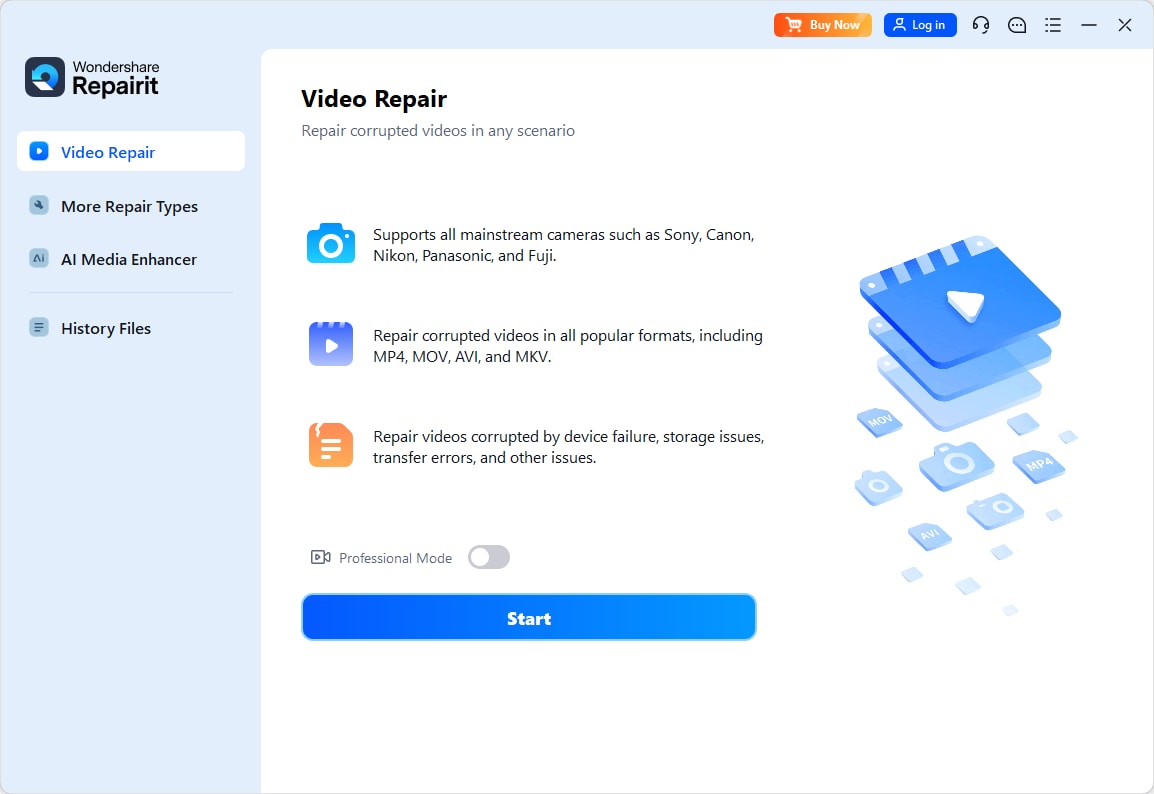
- Add corrupted video files
Start by launching Repairit on your computer and select the video repair module from the main interface. Click the option to add files, then browse to the folder where your problematic recordings are stored. You can select a single damaged clip from a HESP-based live event or load several corrupted files together, which is useful when multiple program feeds or angles were affected by the same issue.
- Repair video files
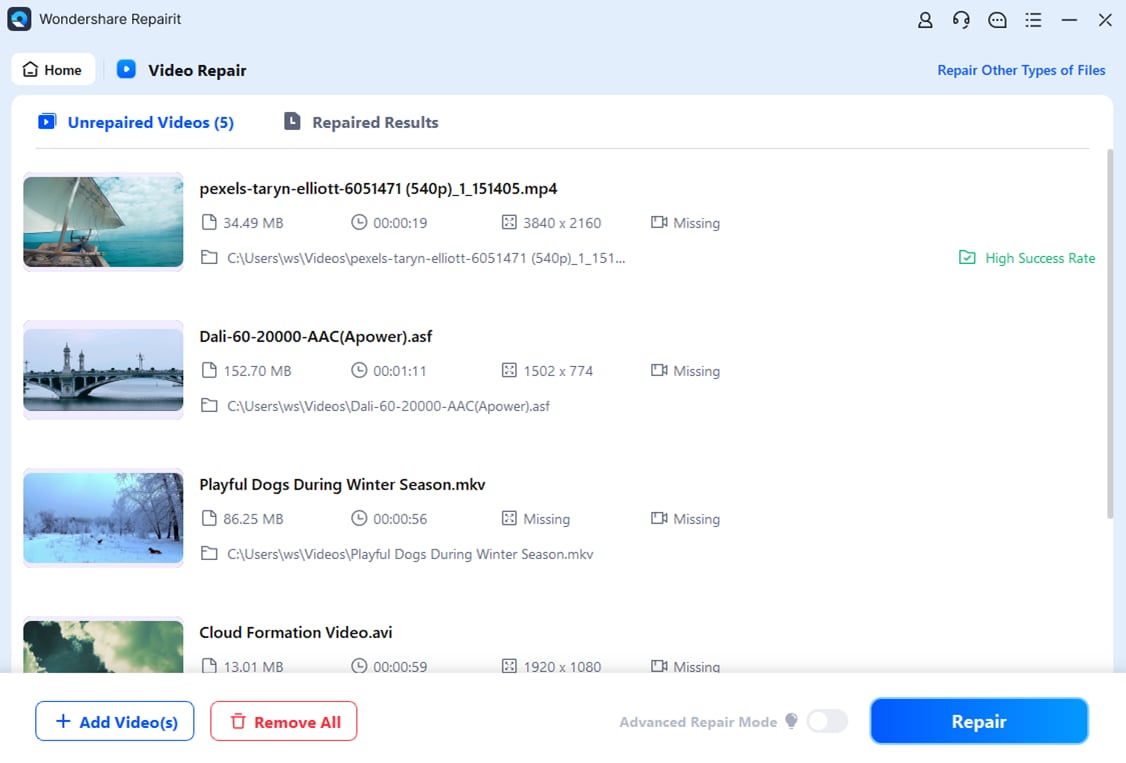
Once the files appear in the list, check that their formats and durations look correct, then start the repair process with one click. Repairit will scan each video, detect structural damage such as broken headers, index issues, or missing timestamps, and attempt to reconstruct a playable stream. When the process finishes, use the built-in preview window to watch segments of the repaired clips, verifying that video and audio play smoothly without severe glitches or stutters.
- Save the repaired video files
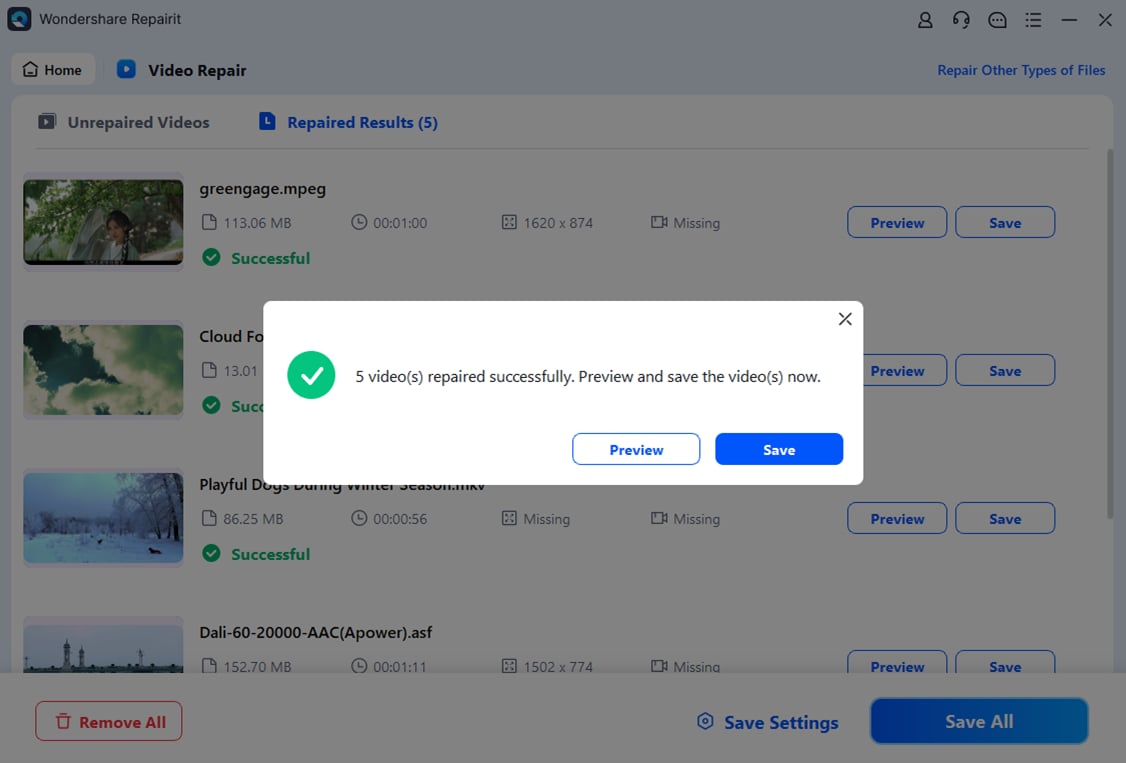
If the preview confirms that the video plays normally, click to export and choose a safe destination folder that is different from where the damaged files are stored. Repairit will save new, repaired copies of your recordings there, leaving the original corrupted versions untouched so you can archive them or delete them later. With this done, you can import the restored clips into your editing software, re-upload them to your streaming platform, or keep them as reliable VOD assets from your low-latency live event.
Conclusion
The HESP streaming protocol gives video platforms a way to balance ultra low-latency playback with the robustness and scalability of HTTP-based delivery. From capture and encoding through CDN distribution and multi-device playback, it helps live workflows stay responsive enough for sports, gaming, auctions, and other interactive scenarios where traditional HLS or DASH often feel too slow.
However, no matter how modern the protocol, real-world issues like power failures, encoder crashes, or storage errors can still corrupt your recordings. Using a dedicated repair solution such as Repairit lets you recover damaged files quickly, preserve valuable footage from HESP-driven events, and keep your live and on-demand library consistent across editing, exporting, and playback platforms.
Next: Whip For Webrtc Ingest
FAQ
-
1. What is HESP used for in video workflows?
HESP is used to deliver live video with ultra low latency over HTTP, making it ideal for sports, gaming, betting, live auctions, and interactive shows. It allows viewers to see action almost in real time while platforms still benefit from CDN caching and standard web delivery. -
2. How does HESP compare to HLS or DASH?
Compared with traditional HLS or DASH, HESP uses shorter chunks and a dual-stream structure that lets players join and switch channels quickly. This design lowers glass-to-glass latency and startup times, while still using HTTP and existing CDNs like other ABR formats. -
3. Does HESP replace WebRTC for real-time streaming?
HESP does not directly replace WebRTC. WebRTC is optimized for sub-second, interactive communication such as calls or contribution, whereas HESP targets scalable, broadcast-style low-latency delivery. Many workflows combine them, using WebRTC for ingest and HESP for large audience distribution. -
4. What can corrupt a HESP-based live stream recording?
Recordings can be corrupted by power failures, interrupted writes to disk, encoder or server crashes, or unstable networks during capture. The result may be incomplete files, broken headers, or missing index data that prevent smooth playback or import into editing software. -
5. How does Repairit help with corrupted low-latency recordings?
Repairit analyzes corrupted video files, repairs container structures and metadata, and reconstructs playable streams whenever possible. This lets you recover recordings generated in HESP or similar low-latency workflows so they can be edited, archived, or re-streamed without repeating the live event.




