

Real-time Transport Protocol (RTP) is a core media technology used whenever you capture, encode, stream, and play video or audio in real time. You will encounter RTP streaming behind live broadcasts, IP cameras, video conferencing, telemedicine, and many professional production workflows. Understanding how it moves compressed video frames and audio samples between encoders, media servers, and players helps you design low-latency, reliable delivery from camera sensor to viewer screen and troubleshoot issues when recordings or files become corrupted.
Repair Corrupted Files To Save Your Data
 Security Verified. Over 7,302,189 people have downloaded it.
In this article
What Is Real-time Transport Protocol (RTP)?
Real-time Transport Protocol is an IP-based transport protocol designed for low-latency delivery of time-sensitive media, such as compressed video frames and audio samples. Instead of guaranteeing every packet arrives (like TCP), RTP typically runs over UDP so packets are sent continuously without retransmission delays that would hurt live viewing.
Each RTP packet carries a media payload (for example, H.264 or H.265 video, or AAC audio) plus timing information. Sequence numbers and timestamps help receivers reconstruct frame order, synchronize multiple tracks, and detect loss or jitter. This makes RTP streaming ideal where real-time interaction matters more than perfect delivery.
RTP is usually paired with companion and signaling protocols:
- RTP vs RTCP: RTP carries the actual media, while RTCP (Real-time Transport Control Protocol) sends statistics and quality feedback (packet loss, jitter, round-trip time) so endpoints can adapt bitrate or alert operators.
- Signaling (SIP, WebRTC signaling, RTSP, or proprietary APIs) negotiates codecs, ports, and session parameters before RTP begins sending media.
In video production, RTP sits after encoding and before final packaging or playback. An encoder creates compressed streams, wraps them into RTP packets, and sends them to a receiver, media server, or monitoring tool over IP networks.
How Does Real-time Transport Protocol (RTP) Work in the Real Workflow?
RTP in capture, encoding, and contribution
In a typical video workflow, RTP shows up once your images have been captured and encoded but before they are delivered to end viewers.
Example: live studio to cloud workflow
- Capture: Cameras or PTZ units capture images and audio. In photo/video hybrid cameras, HDMI/SDI output feeds a hardware encoder.
- Encoding: A hardware encoder or software like OBS Studio, vMix, or Wirecast compresses video (H.264/H.265) and audio (AAC/Opus) and prepares an RTP streaming session.
- RTP packetization: The encoder takes each encoded frame, splits it into network-friendly chunks, and wraps them in RTP headers with sequence numbers, timestamps, payload types, and SSRC identifiers.
- IP video transport: The RTP packets travel over UDP across the studio LAN, via contribution links (fiber, satellite IP, public internet with VPN), or to a cloud ingest point.
- Receiving / decoding: At the other end, a decoder, media server, or production switcher reads the RTP stream, uses sequence numbers to rebuild frame order, and hands decoded frames to the mixer or recording system.
Professional broadcast and remote production rely on this low-latency IP video transport to replace legacy SDI links. Tools such as hardware encoders, STBs, and contribution gateways often expose configuration screens where you enter RTP destination IPs, ports, and payload types.
RTP in delivery, monitoring, and playback
Once contribution streams are in the network or cloud, RTP continues to play a role in distribution and quality control.
- Gateway to viewer-friendly formats: In many OTT workflows, RTP is used inside the contribution or production layer, and then a server converts it to HLS/DASH for mass distribution. An encoder sends RTP to a media server (Wowza, Nimble Streamer, SRT gateways, etc.), which then repackages the same compressed media into HTTP-based segments.
- Monitoring and confidence feeds: Engineering teams often subscribe to RTP feeds to monitor latency, lip sync, and overall stability. RTCP reports highlight jitter and loss; waveform and vectorscope tools show how the image survives the network path.
- Playback endpoints: In conferencing and WebRTC-style scenarios, viewers receive RTP directly. Browsers, softphones, and mobile apps decode RTP packets into real-time playback. Timing data ensures audio stays in sync with video, and packet loss concealment masks missing frames.
- Recording and archiving: RTP streams are frequently recorded at ingest or output points for compliance, VOD creation, or editorial reuse. If capture hardware, network instability, or storage issues occur while writing RTP-derived data, the resulting video files can become corrupted and need repair later.
This is where a reliable repair tool matters: even though RTP is optimized for live delivery, the final proof of quality is whether your recorded file plays correctly in NLEs, media players, and distribution platforms.
Where Is Real-time Transport Protocol (RTP) Commonly Used?
The design of RTP makes it the backbone of many low-latency and interactive media workflows.
| Use case | How RTP is involved |
|---|---|
| Video conferencing and VoIP | Soft clients and room systems send audio and video using RTP over UDP for real-time conversation, with RTCP reporting call quality. |
| Broadcast contribution and remote production | Cameras and encoders send high-quality feeds over IP using RTP, often with FEC, RIST, or SRT tunneling to protect against loss. |
| IP cameras and surveillance | Security cameras stream compressed video via RTSP sessions that carry RTP packets to NVRs or VMS platforms. |
| Telemedicine and remote collaboration | Medical devices and conferencing tools use RTP streaming to transport camera feeds, scopes, and audio with minimal delay. |
| Real-time mixing, editing, and review | Studios send live preview or program outputs as low latency video feeds over RTP between control rooms, editing suites, and cloud services. |
Different user groups rely on RTP in different ways:
- Broadcasters and live event producers use RTP to move camera ISOs, return feeds, and program outputs around facilities or into the cloud.
- Security and industrial monitoring teams depend on IP cameras streaming via RTP/RTSP into NVRs or analytics systems.
- IT and collaboration teams manage conferencing platforms that build on RTP vs RTCP flows to measure and improve call quality.
- Post-production and VOD teams often work with content originally delivered over RTP, later edited in NLEs (Premiere Pro, Final Cut Pro, DaVinci Resolve) and exported for playback on players, OTT apps, or social platforms.
How to Use Repairit to Fix a Corrupted Video File
Repairit introduction
Even with robust live streaming protocol setups, network drops, encoder glitches, and storage failures can leave you with corrupted or unplayable video files from cameras, recorders, or RTP-based workflows. Wondershare Repairit is a dedicated video repair tool that focuses on recovering those assets so you can keep editing, exporting, and delivering on schedule. It supports many professional and consumer formats from cameras, drones, and capture cards, and its interface is designed so editors, technicians, and producers can repair clips without deep technical knowledge. Learn more from the Repairit official website.
Key features of Repairit
- Repairs corrupted or unplayable videos from popular formats and devices commonly used in RTP-based capture and recording.
- Provides both quick repair for typical damage and advanced repair for severely broken container or codec structures.
- Lets you preview results and selectively export only the clips that meet your playback and quality needs.
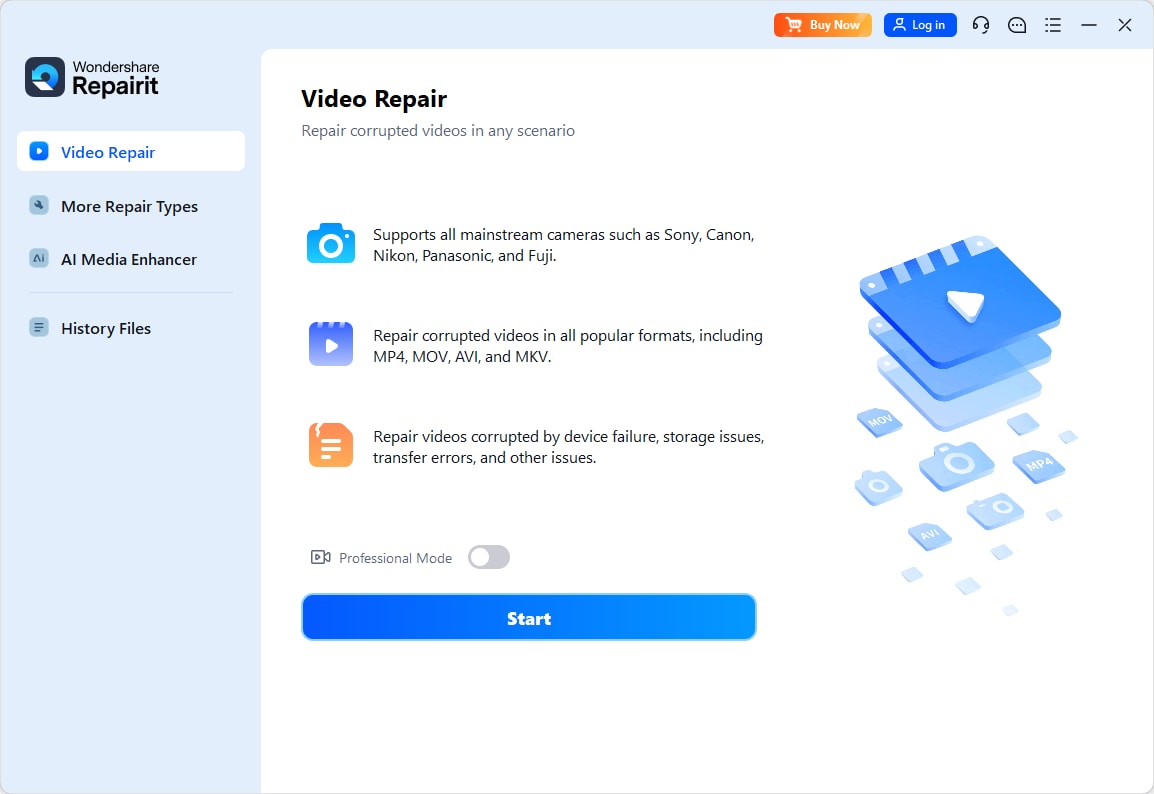
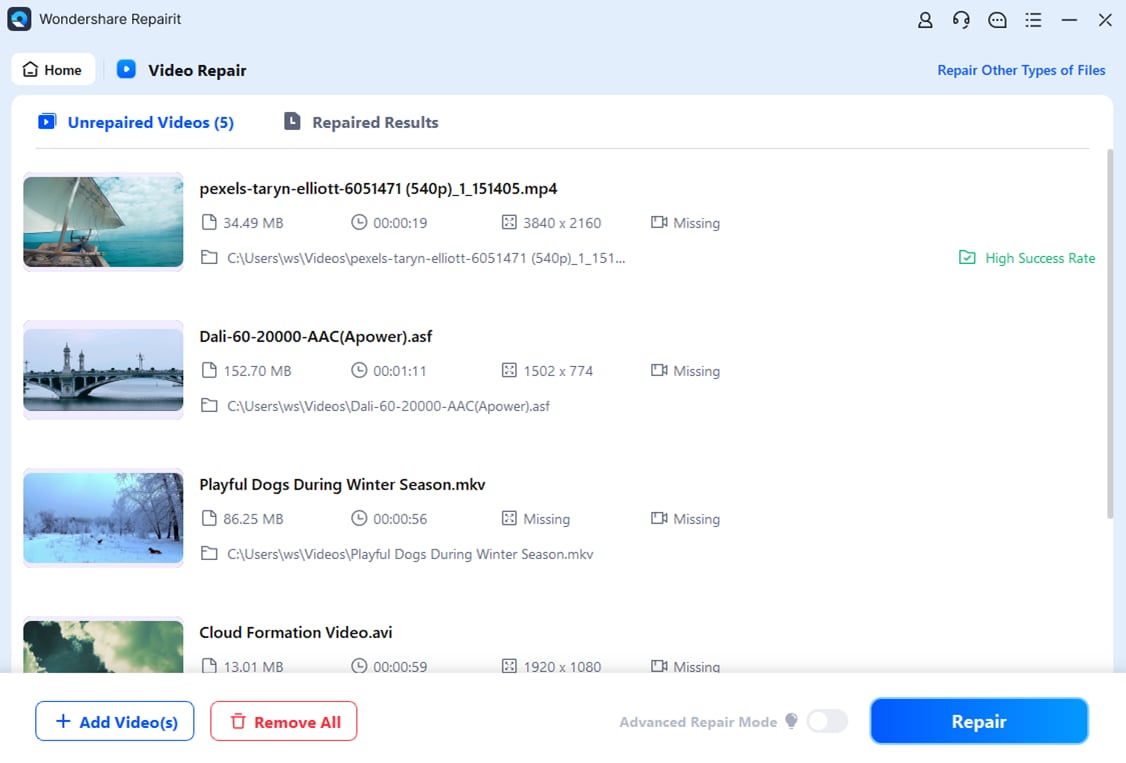
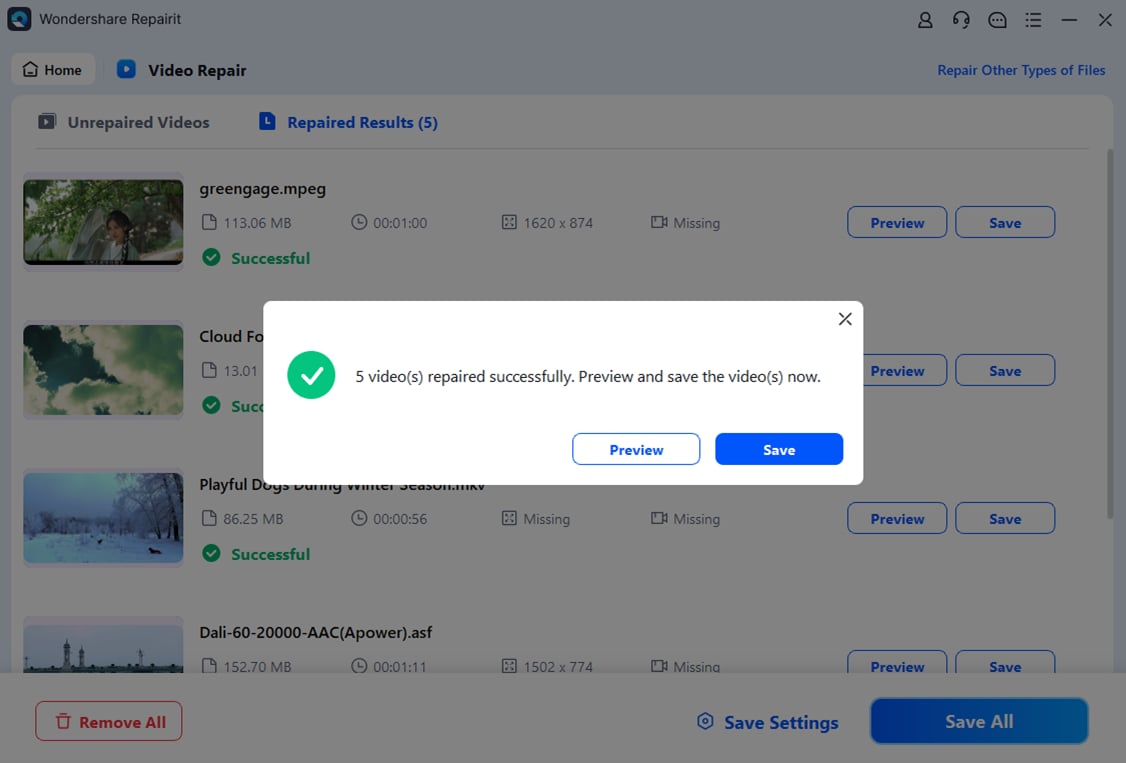
Step-by-step guide to repair corrupted video
- Add corrupted video files
- Repair video files
- Save the repaired video files
Conclusion
Real-time Transport Protocol is a fundamental building block for low latency video over IP, moving compressed audio and video between encoders, servers, and players with precise timing. By layering sequence numbers and timestamps over UDP, RTP enables smooth, synchronized media delivery for live streaming, conferencing, broadcasting, and IP camera workflows.
Yet no protocol can fully prevent every failure. Power loss, unstable networks, and write errors can still corrupt files produced from RTP streaming sessions. When that happens, a specialized tool like Repairit gives you a practical way to recover damaged recordings so you can continue editing, exporting, and publishing without reshooting or losing critical content.
Next: Rist Streaming Protocol
FAQ
-
1. What is Real-time Transport Protocol (RTP) used for?
RTP is used to carry real-time audio and video over IP networks. Typical applications include live streaming, VoIP, video conferencing, IP cameras, broadcast contribution links, and any workflow that needs interactive or low-latency media delivery.
-
2. Is RTP the same as RTCP?
No. RTP vs RTCP describes two different roles: RTP carries the media payload (video and audio), while RTCP sends control and quality feedback packets that report jitter, packet loss, and round-trip delay to help manage and optimize the session.
-
3. Why does RTP typically use UDP instead of TCP?
Real-time Transport Protocol usually runs over UDP because UDP does not retransmit lost packets or enforce strict ordering, which avoids extra delays and head-of-line blocking. This keeps latency low for live audio and video, even if some packets are dropped.
-
4. Can RTP be encrypted for secure streaming?
Yes. RTP can be secured using SRTP (Secure RTP), which adds encryption, authentication, and integrity protection. SRTP is widely used in conferencing platforms and secure contribution paths to protect media over untrusted networks.
-
5. How can I fix video files corrupted during RTP streaming or recording?
First, copy the affected files to a safe location and stop writing new data to the same storage. Then open a dedicated video repair tool such as Repairit, add the corrupted clips, run a repair (using Advanced Repair when needed), preview the results, and save the restored files for editing, exporting, or playback.