

Open GOP is a setting you may notice in camera menus, export presets, or encoder options when working with H.264, H.265, or other modern codecs. It controls how frames reference each other over time and can change how your footage compresses, edits, streams, and even how easy it is to repair after corruption. Understanding it helps you choose safer settings for recording, editing, and publishing.
Repair Corrupted Files To Save Your Data
 Security Verified. Over 7,302,189 people have downloaded it.
In this article
What Is Open GOP?
Open GOP stands for Open Group of Pictures, a specific kind of GOP structure used in modern video compression standards like H264 and H265. A GOP is a repeating sequence of I, P, and B frames that define how video is compressed over time.
With an open gop, some frames at the start or end of a GOP are allowed to reference frames from a neighboring GOP. That means the group is not fully self-contained. This is a prediction and structural setting in the encoder that tells it how frames can depend on each other to save bits while keeping quality.
In practical terms, open gop vs closed gop is a choice you face when configuring cameras, NLE exports, hardware recorders, streaming encoders, or transcoders. It mainly affects how efficiently your video is encoded and how independent each GOP is for editing and playback.
Why Is Open GOP Important in Video Compression?
The main problem open gop tries to solve is: how do you get better image quality at a given bitrate without dramatically increasing file size? By allowing frames to reference across GOP boundaries, the encoder has more choices when predicting motion and texture, which usually leads to cleaner images at the same or lower bitrate.
Here is how it impacts different aspects of your workflow:
- Bitrate efficiency and file size: Open GOP lets the encoder reuse information from neighboring GOPs, often squeezing more detail into the same bitrate. For constrained bandwidth (online uploads, OTT platforms), this can reduce file size for the same visual quality.
- Image quality and motion handling: Because predictions can cross GOP borders, motion and gradients can look smoother, especially in fast action, camera pans, sports, or detailed scenes.
- Editing friendliness: The downside is that GOPs become less independent. Frame-accurate cuts at GOP boundaries might require extra re-encoding, and partial file damage at boundary frames can affect more than one GOP.
- Streaming performance and seeking: Some streaming and broadcast workflows prefer fully independent GOP segments for fast seeking, ad insertion, and clean splicing. In those cases, a closed GOP may be safer even if it is slightly less efficient.
- Decoding complexity: Decoders handle open GOP structures well, but they need to manage cross-GOP references. On weak devices, this can add a bit of complexity, though modern hardware decoders are designed for it.
So, the benefit is better compression and potential visual gains at low bitrates. The limitation is reduced independence of each GOP, which affects editing, trimming, error recovery, and in some cases streaming segmentation.
How Does Open GOP Work in the Encoding Workflow?
Open GOP inside a GOP structure
In every encoder, the video is first split into frames, then into GOPs. A typical GOP might look like:
I B B P B B P B B I B B P ...
With a gop structure set to open, the encoder is allowed to do these things:
- Use frames from the previous GOP as references for the first B or P frames of the new GOP.
- Let the last B frames of one GOP reference future frames that formally belong to the next GOP.
Internally, this happens during the motion estimation and prediction steps of video encoding. After color conversion and block partitioning, the encoder searches for similar blocks in other frames. With open gop enabled, the search area can extend beyond the current GOP to neighboring GOPs, which improves prediction accuracy.
Later steps such as transform, quantization, and entropy coding (CABAC, CAVLC, or HEVC equivalents) do not change conceptually because of open GOP. The difference lies in which frames are allowed to be references.
Where you see Open GOP in real tools
You can encounter open gop across many tools used for recording, editing, exporting, and streaming:
- FFmpeg / x264 / x265: Command-line options and presets let you toggle open vs closed GOP, set GOP length, and control reference behavior. For x264/x265, some presets automatically enable open GOP for higher efficiency.
- OBS Studio: When streaming with encoders like x264 or some hardware encoders, GOP settings are exposed in the output/advanced dialogs. Some streaming platforms recommend closed GOP for strict segment independence.
- HandBrake: Advanced encoding options expose GOP-related parameters. Presets tuned for small file size or high quality often rely on open GOP style behavior.
- Adobe Premiere Pro / Media Encoder: Export presets for H.264 and HEVC may include options such as keyframe distance and closed GOP toggles. When preparing content for broadcast or some OTT specs, you may be instructed to use closed GOP instead.
- Hardware cameras and recorders: Certain cameras (especially broadcast or cinema models) and external recorders describe their long-GOP modes as open or closed, influencing how easy their footage is to cut and conform in post.
In the workflow, choosing open gop is essentially choosing a more efficient but slightly more interdependent structure between your frames and segments.
When Should You Care About Open GOP? Common Mistakes and Quick Tips
Not everyone needs to think deeply about open gop, but it becomes important for certain creators and technical roles:
- Editors and post-production teams: If you do heavy editing, frame-accurate conforming, VFX, or round-tripping between tools, closed GOP can simplify precise cuts and reduces weirdness at GOP boundaries.
- Streamers and OTT engineers: For HLS/DASH with strict segment boundaries, ad insertion, or broadcast specs, you may be required to use closed GOP or shorter GOPs. Open GOP might conflict with certain platform rules.
- Camera operators and DITs: When deciding recording formats on set, knowing that open GOP may complicate recovery after card errors or corruption can influence which codec profile you choose.
- YouTubers and online creators: For simple record-edit-upload workflows, using encoder presets that happen to use open gop is usually fine and may even improve quality at your target bitrate.
Common misunderstandings include:
- "Open GOP always looks better." It often helps at low bitrates, but at high bitrates the difference may be minimal compared to a well-tuned closed GOP.
- "Open GOP automatically breaks editing." Most NLEs can handle open GOP footage; issues show up mainly with unusual trims, damaged media, or strict delivery specs.
- "Open GOP causes corruption."
Corruption usually comes from storage errors, bad transfers, crashes, or container problems, not directly from open GOP. However, if a boundary frame in an open GOP is damaged, visible artifacts can extend into the neighboring GOP, making the damage seem worse.
Quick tips and takeaway:
- For final delivery at tight bitrates: open GOP can be a good choice for higher efficiency.
- For intermediate editing masters: use intraframe or closed GOP to keep things simple.
- For strict streaming specs: follow your platform guidelines; many recommend closed GOP and fixed GOP length.
- For archival and safety: shorter GOPs and closed GOP structures can make partial damage easier to contain and repair.
How to Use Repairit to Fix a Corrupted Video File
Repairit introduction
Even well-encoded open gop videos can become corrupted due to interrupted recording, power loss, file transfer errors, or storage failures. When that happens, specialized repair software is much more effective than general media players or editors. Wondershare Repairit is designed for exactly this scenario. It repairs damaged or unplayable video, photo, and audio files, including content encoded with h264, h265, and other advanced codecs. You can learn more on the Repairit official website, where both desktop and online versions are available.
Key features of Repairit
- Repairs videos from many cameras, phones, recorders, and formats, including clips using complex gop structure and long-GOP compression.
- Supports batch processing so you can fix corrupted video files in groups instead of one by one, saving time on large projects.
- Lets you preview the repaired result before saving, so you can quickly confirm the restored playback quality and integrity.
Step-by-step guide: Repair corrupted open GOP videos
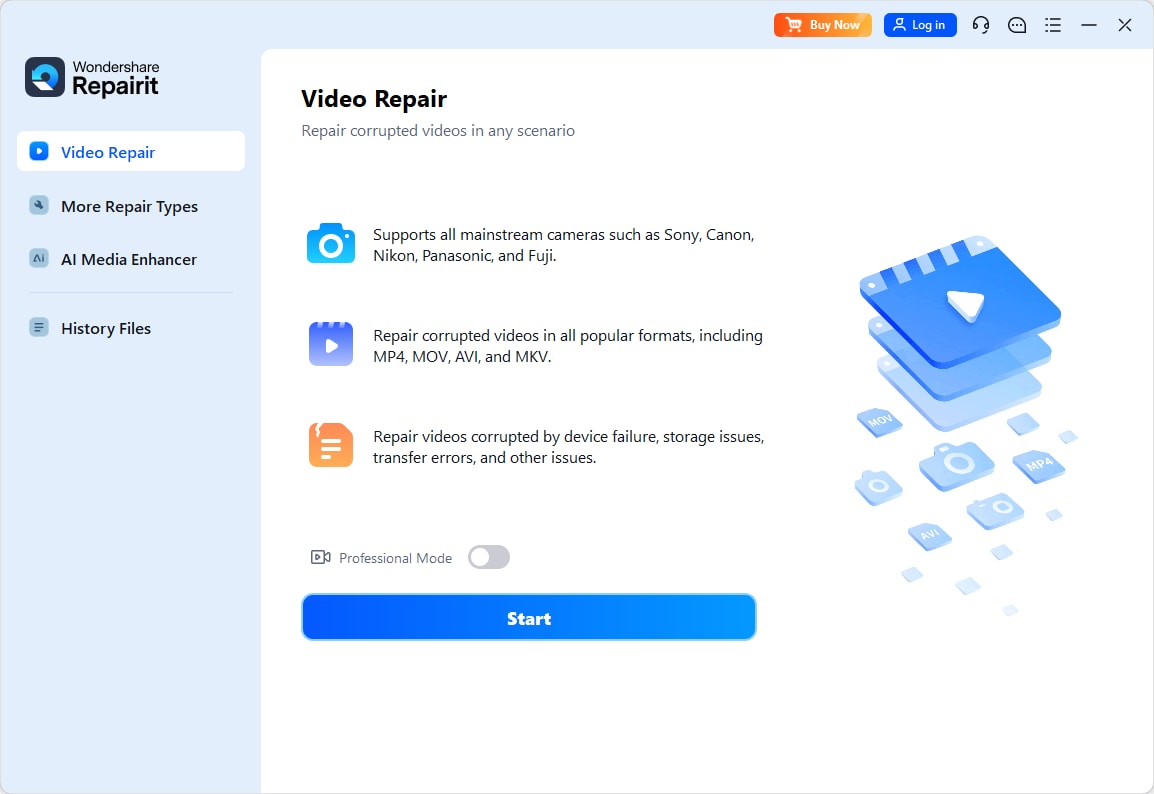
- Add corrupted video files
Install and launch Wondershare Repairit, then go to the Video Repair module. Click the "Add" button or drag and drop to load the corrupted or unplayable clips into the list. You can import footage from memory cards, local drives, or backup folders, including files encoded with open gop settings from cameras or editors.
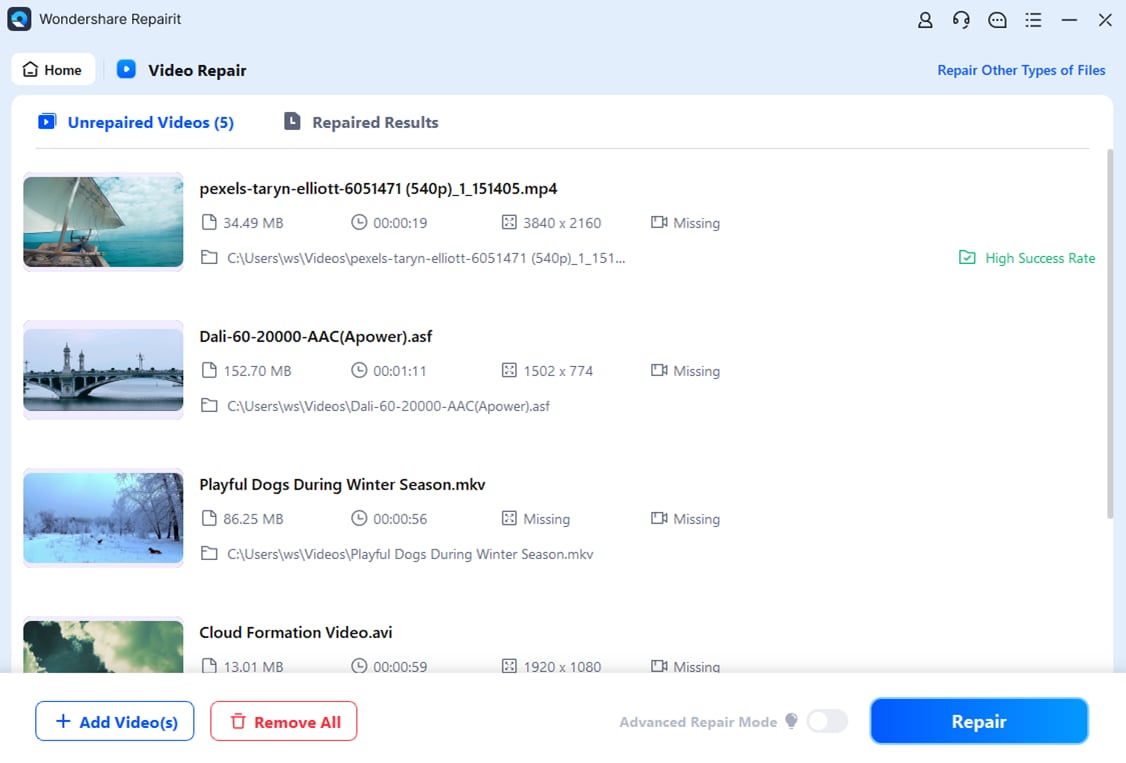
- Repair video files
After all damaged videos are listed, check the ones you want to repair and click the "Repair" button. Repairit analyzes the container and stream structure, attempts to rebuild headers, frame order, and timestamps, and fixes issues that prevent smooth playback. When the process finishes, you can instantly preview each repaired video to verify that frames, audio, and timing look correct.
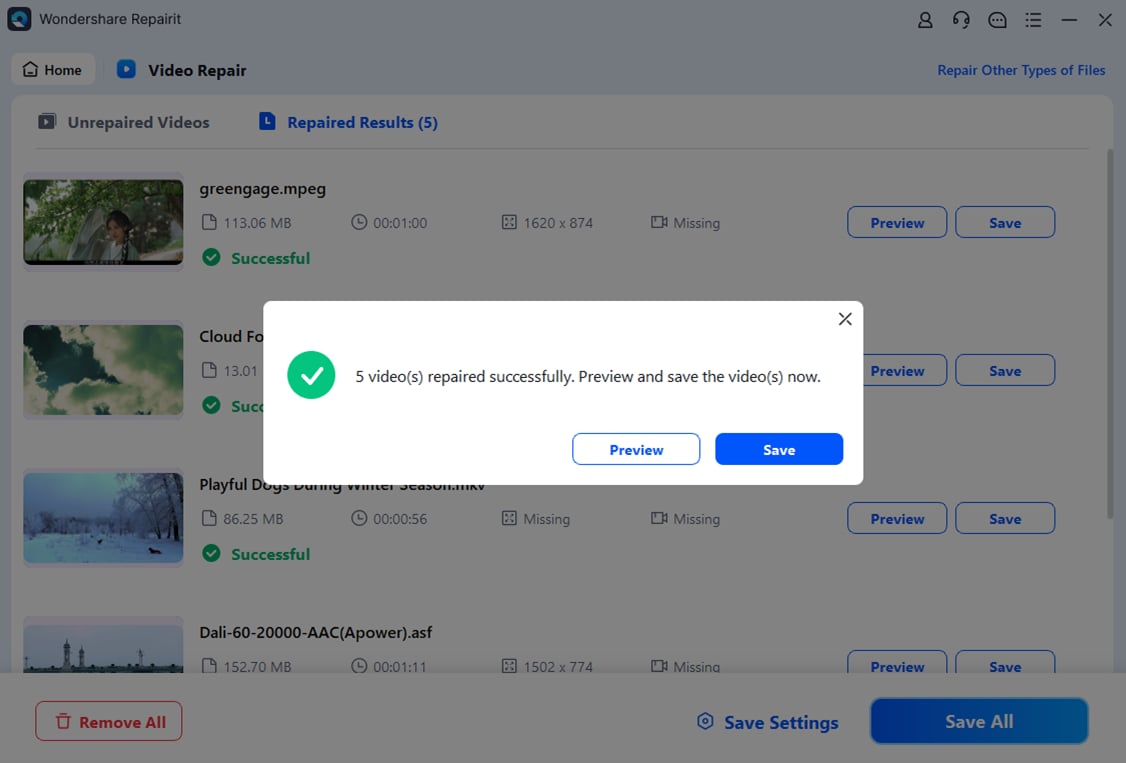
- Save the repaired video files
If the preview looks good, click "Save" to export your fixed videos to a safe location, such as a different drive or project folder. Avoid overwriting the original files so you keep a backup. The repaired clips can then go back into your NLE, encoding pipeline, or streaming workflow just like any other healthy file.
Conclusion
Open GOP is a powerful option in modern video encoding, letting encoders share information across GOP boundaries for better compression efficiency. It can improve visual quality at lower bitrates, especially for online delivery, long-form content, and complex motion, but it also reduces the independence of each GOP, which matters for editing, trimming, streaming segmentation, and error handling.
If you understand how open gop vs closed gop affects your recording, editing, exporting, and streaming workflows, you can choose the right setting instead of relying blindly on presets. And if a file encoded with an open GOP structure becomes corrupted or refuses to play, using a dedicated repair solution like Wondershare Repairit gives you a practical way to restore your footage, protect your deadlines, and avoid re-shooting.
Next: Closed Gop
FAQ
-
1. What is Open GOP in simple terms?
Open GOP, or Open Group of Pictures, is a way of organizing frames in compressed video where some frames at the boundaries of a GOP can reference frames in a neighboring GOP. This improves compression efficiency but makes each GOP less independent than in a closed GOP structure. -
2. How is Open GOP different from Closed GOP?
In an open GOP, boundary frames can depend on frames from adjacent GOPs, while in a closed GOP all references stay within the same group. Closed GOP is better for precise editing, seeking, and fully independent segments. Open GOP is typically chosen for better quality at a given bitrate. -
3. Should I enable Open GOP for streaming or editing?
For low-bitrate final delivery or uploads, enabling open GOP often improves visual quality. For heavy editing, strict broadcast specs, or segment-based streaming (HLS/DASH with clear boundaries), closed GOP is usually safer. If in doubt, test both approaches with your actual platform or client requirements. -
4. Can Open GOP cause video corruption or playback issues?
Open GOP itself does not cause corruption. Problems usually come from storage errors, crashes, or incomplete transfers. However, when a boundary frame in an open GOP file is damaged, artifacts may spread across neighboring GOPs, so the issue can appear more severe than with fully independent closed GOPs. -
5. How can I repair a corrupted Open GOP video file?
You can use tools like Wondershare Repairit to scan and repair damaged containers, headers, and stream structures. Import the corrupted clip, start the repair process, preview the result to confirm playback, and then save the fixed file to a new, safe location.




