

Closed GOP is a video compression setting you will see in cameras, NLE export dialogs, streaming encoders, and tools like FFmpeg. It controls how self-contained a group of frames is, which directly affects editing accuracy, seek behavior on platforms, and how clean your cuts and transitions look. Understanding it helps you pick safer settings for recording, post-production, OTT delivery, and archiving.
Repair Corrupted Files To Save Your Data
 Security Verified. Over 7,302,189 people have downloaded it.
In this article
What Is Closed GOP?
A closed GOP (Closed Group of Pictures) is a way of organizing frames in compressed video where every frame in the group can be decoded using only frames inside that same GOP. In other words, no frame in a closed GOP references frames from the next GOP.
In modern codecs like H.264/AVC and H.265/HEVC, the GOP structure defines how I, P, and B frames are arranged and how they depend on each other. A closed GOP is an encoding workflow setting that tells the encoder to keep all prediction references self-contained within each group.
This setting plays a basic but important role in video encoding by controlling how random access, seeking, and editing behave. Closed GOPs are especially relevant in professional recording, TV broadcast, OTT delivery, and when you export timelines from editors such as Premiere Pro or Final Cut Pro.
Why Is Closed GOP Important in Video Compression?
The core problem a closed GOP helps solve is how to balance efficient compression with reliable seeking, editing, and stream switching. Open GOPs can squeeze a bit more quality out of the same bitrate, but they make frame dependencies cross GOP boundaries, which can complicate cuts and playback.
Here is how closed GOPs influence your media:
- Editing friendliness and trimming: Because all dependencies stay inside the GOP, you can cut on GOP boundaries with fewer visual glitches. This is crucial when re‑editing H.264/H.265 camera originals or long-form recordings.
- Seek accuracy and scrubbing: Players and platforms can jump to a keyframe (I-frame) at the start of a closed GOP and decode forward without needing data from neighboring GOPs. This often leads to smoother scrubbing in NLEs and more predictable seeking in players.
- Streaming stability: For linear broadcast, FAST channels, or live streaming, closed GOPs make it safer to switch between feeds, insert ads, or recover from dropped segments with fewer artifacts at switch points.
- Platform compatibility: Some broadcast specs and OTT guidelines explicitly require closed GOP structures to ensure uniform behavior across different decoders and STBs (set-top boxes).
However, closed GOPs do have limits:
- Slightly less compression efficiency: Blocking cross-GOP references can reduce how much the codec can reuse information, potentially needing a touch more bitrate for the same visual quality compared with an open GOP.
- Not always necessary: For one-pass web uploads or personal archives that will not be re-edited or used in broadcast, the advantages of closed GOP may be less noticeable than just picking a good bitrate and resolution.
How Does Closed GOP Work in the Encoding Workflow?
Within the encoding pipeline, deciding whether to use a closed GOP comes after you choose the codec, resolution, and overall GOP length, and before the encoder actually writes compressed frames to the file or stream.
Closed GOP inside GOP structure and prediction
To see how a closed GOP behaves, it helps to look at the typical frame structure in inter-frame compression:
- I-frames (Intra frames): Full pictures that do not depend on other frames. They are usually at the start of each GOP.
- P-frames (Predicted frames): Use data from previous frames (often motion-compensated) to save bitrate.
- B-frames (Bi-predictive frames): Use data from both past and future frames for maximum compression.
In an open GOP, some of the B-frames at the edges of a GOP can reference frames in the next GOP. This gives the encoder more options for motion prediction and can slightly improve quality per bit, but it creates cross-GOP dependencies.
In a closed GOP structure:
- The I-frame at the start of the GOP is a clean entry point.
- All P and B frames only reference frames within the same GOP.
- The last frames in the GOP avoid looking into the next GOP for prediction.
When the encoder builds the GOP structure, it enforces these self-contained rules. During decoding, the player can start at the I-frame of any closed GOP and correctly reconstruct all following frames in that group without needing data from adjacent GOPs. This is why channel changes, ad insertions, and splices tend to look cleaner with closed GOPs.
Closed GOP in real tools and export settings
You will encounter the closed GOP concept under slightly different labels in various tools:
- FFmpeg / x264 / x265: x264/x265 use options like "open-gop" on or off. Setting open-gop=0 effectively forces a closed GOP, while open-gop=1 allows cross-GOP references.
- OBS Studio and hardware encoders: Some streaming encoders expose controls like "Keyframe Interval," "GOP Size," or toggles related to "Closed GOP/B-frames." Many broadcast presets implicitly use closed GOPs to match platform requirements.
- HandBrake: Advanced settings or custom encoder strings let you enable or disable open GOP. Presets oriented toward Blu-ray or archival might allow open GOP, while streaming profiles may prefer closed GOP.
- Adobe Premiere Pro / Media Encoder / DaVinci Resolve: You may see checkboxes like "Closed GOP," "Use Open GOP," or GOP-related fields in H.264/H.265 export templates. Choosing a closed GOP is common when preparing files for broadcast or ad delivery.
- Cameras and recorders: Some professional camcorders, cinema cameras, and external recorders expose GOP parameters in their recording formats (AVCHD, XAVC, LongGOP ProRes, etc.). Rec modes targeting broadcast workflows often default to closed GOPs.
In short, the closed GOP choice is applied during the prediction and frame-order planning stage of encoding, and then baked into the stream. Once exported, that decision shapes how easily the file can be trimmed, concatenated, or repackaged without re-encoding.
When Should You Care About Closed GOP? Common Mistakes and Quick Tips
Not everyone has to worry about closed GOP settings, but for some workflows it is critical.
Who should care most:
- Editors and post houses working with long-GOP H.264/H.265 or XAVC footage.
- Broadcast engineers preparing TV or streaming channel playout files.
- OTT and VOD pipeline owners defining encoding presets for platforms.
- Live streamers who insert mid-roll ads, scene changes, or stream stitching.
When it really matters:
- When you need clean cuts at ad breaks, program boundaries, or playlist switches.
- When files will be repurposed, rewrapped, or smart-rendered without full re-encoding.
- When you must comply with a broadcast spec that explicitly calls for closed GOP structure.
When it matters less:
- Simple YouTube or social uploads that will not be re-edited once published.
- Personal recordings or screen captures where a small glitch at a cut point is acceptable.
- Intermediate mezzanine formats already using intra-only codecs (like ProRes 422 HQ or DNxHR HQX), which do not rely on GOP structure in the same way.
Common misunderstandings:
- "Closed GOP always gives better quality." In reality, it mainly improves reliability of cuts and seeks. Open GOP can be slightly more efficient in terms of quality per bit.
- "Closed GOP prevents all glitches." You can still get artifacts from low bitrate, poor motion estimation, or decoding errors, even with closed GOP.
- "Wrong GOP settings always corrupt video." Incorrect settings usually cause playback or compatibility issues, not true file corruption. Corruption more often comes from interrupted writes, damaged media, or software crashes.
Practical tips and takeaway:
- For broadcast, ads, and professional OTT: favor closed GOP unless your spec clearly allows open GOP and you know why you need it.
- For editing long-GOP camera files: if your camera or recorder offers a closed GOP mode, it can make smart rendering and interchange more reliable.
- For simple web delivery: prioritize sensible bitrate, resolution, and codec; GOP openness will usually have a small visible impact compared with these basics.
- If export files behave oddly (bad seeks, glitches at cuts), check the GOP/open-GOP setting in your encoder presets and test a version using closed GOP.
How to Use Repairit to Fix a Corrupted Video File
Even with the ideal GOP structure and encoding settings, your videos can still become corrupted due to interrupted transfers, storage errors, power loss, or buggy encoders. Wondershare Repairit is designed to rescue such files, rebuilding damaged headers, indexes, and frame data so your video can play normally again. You can learn more or download it from the Repairit official website.
Key features of Wondershare Repairit
- Repairs videos from common corruption issues such as header damage, playback errors, and missing frames.
- Supports a wide range of formats and devices, including camera, action cam, and smartphone footage.
- Provides a simple guided workflow with preview options before you save repaired videos.
Step-by-step guide: Repair a corrupted video with Repairit
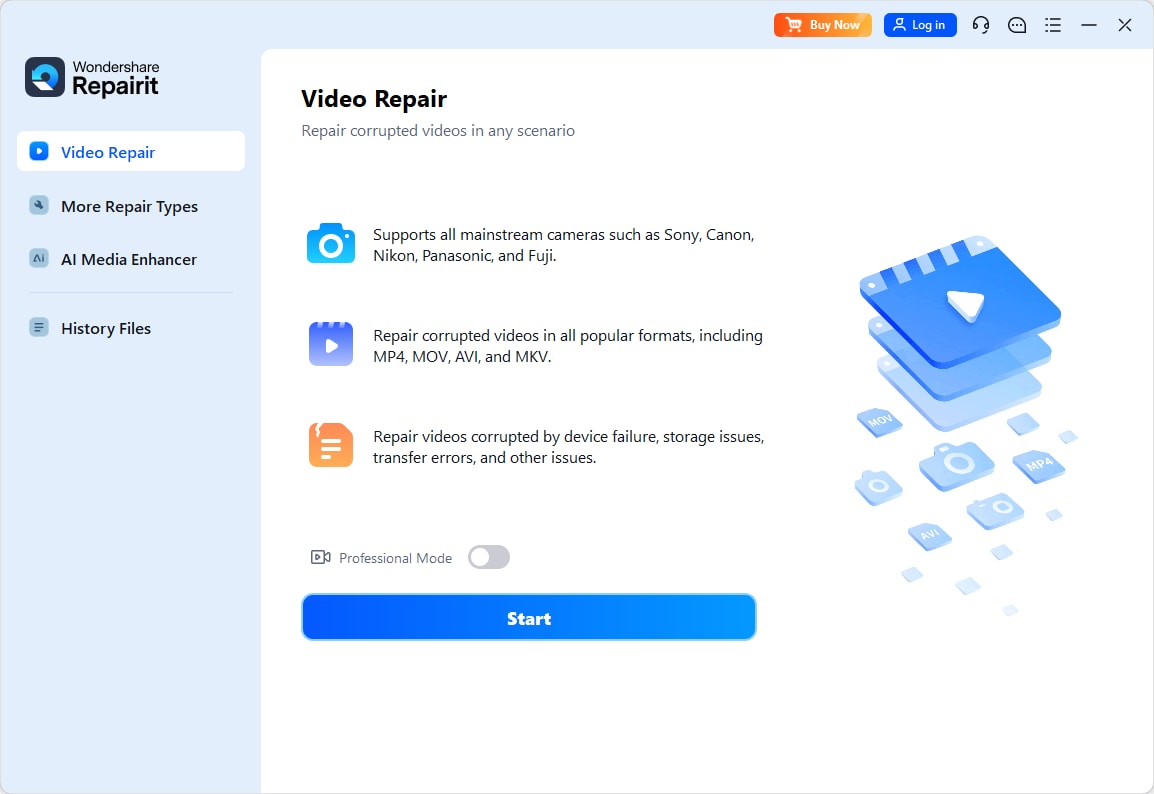
- Add corrupted video files
Open Wondershare Repairit and go to the Video Repair module. Click the add button in the center of the window and choose the corrupted or unplayable clips from your computer, memory card, or external drive. You can load several files at once if multiple videos are affected.
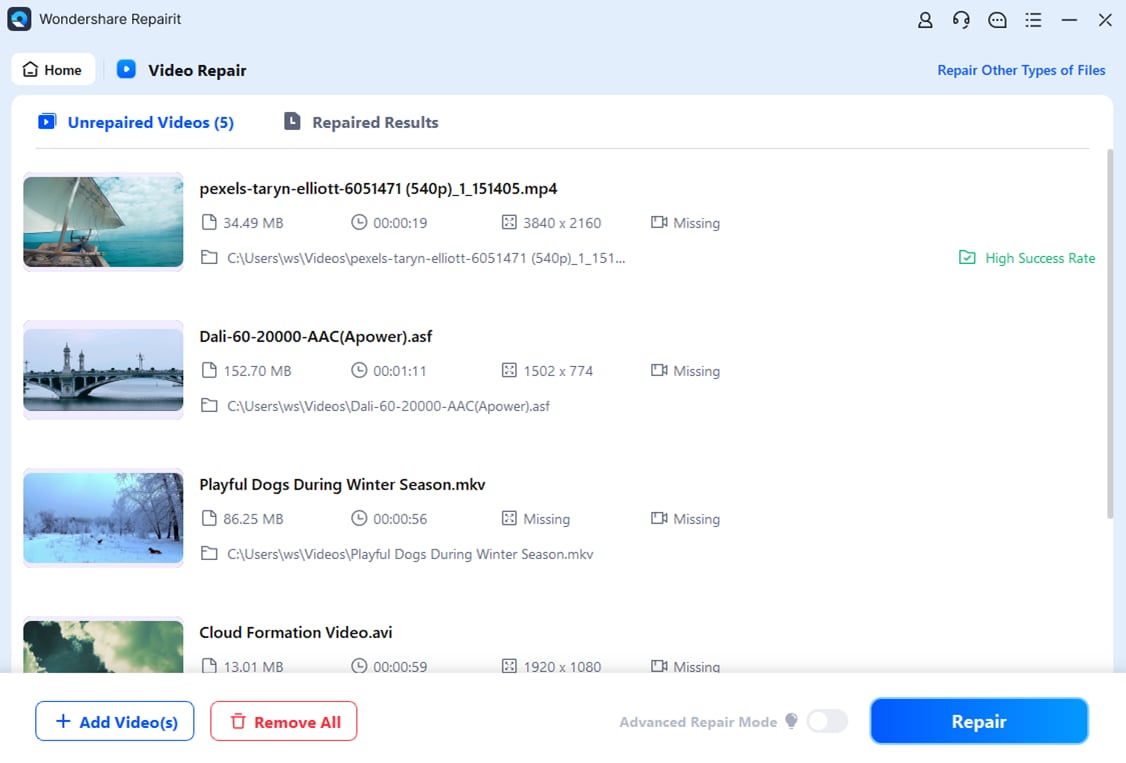
- Repair video files
After your damaged clips appear in the list, start the repair process. Repairit analyzes the file structure, locates issues in headers, indexes, and frames, and then reconstructs the video and audio streams. When the repair completes, use the built-in preview window to confirm that playback is smooth and that sound and picture are in sync.
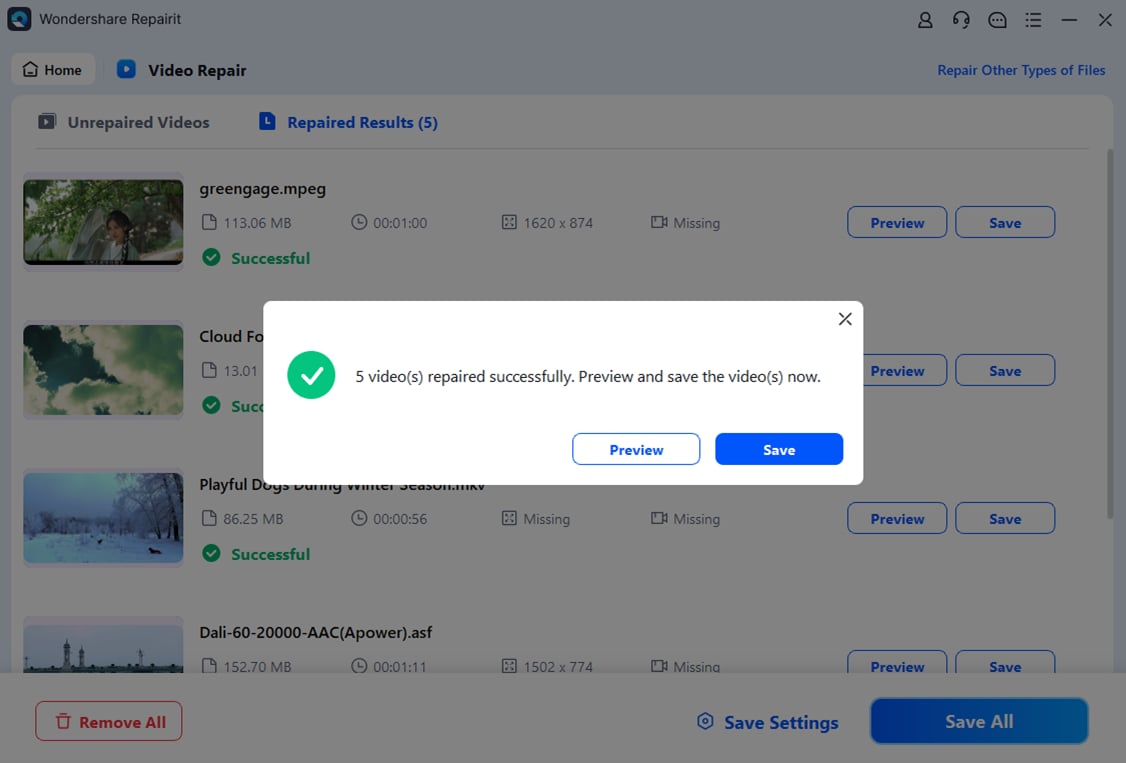
- Save the repaired video files
If the preview looks correct, click Save and select a safe destination folder that is different from the original source location. Repairit will export the fixed copy there so you can open it in your usual player or NLE and continue editing or sharing without the previous errors.
Conclusion
A closed GOP defines how self-contained each group of pictures is in your compressed stream. By keeping all dependent frames inside the same group, closed GOPs make cutting, seeking, and stream switching more predictable and reduce the risk of visible artifacts at edit points.
Once you understand when to use closed versus open GOP, you can better tune your encoding settings for broadcast, streaming, or post-production and avoid many compatibility headaches. If damaged files or encoder failures still leave you with unplayable or glitchy footage, a specialized repair tool such as Wondershare Repairit can help you restore your videos and safeguard your finished work.
Next: Motion Estimation
FAQ
-
1. What is a Closed GOP in simple terms?
A closed GOP is a group of compressed video frames where every frame can be decoded using only frames inside that group. No frame in a closed GOP depends on frames from the next GOP, which makes the group self-contained and easier to use for accurate seeking and cutting. -
2. How is a Closed GOP different from an Open GOP?
In a closed GOP, all prediction references stay inside the GOP. In an open GOP, some B-frames are allowed to reference frames in the next GOP. Open GOPs can be slightly more efficient in terms of compression, but they make editing, splicing, and random access more complex. -
3. Why do broadcasters often prefer Closed GOP?
Broadcasters favor closed GOP because it creates clean entry points at GOP boundaries. This improves reliability when switching channels, inserting ads, or recovering from dropped segments, and reduces the risk of blocking or smearing artifacts at cut points in linear playout. -
4. Does using Closed GOP always improve video quality?
No. Closed GOP mainly improves editability, seek behavior, and compatibility. Open GOP can sometimes deliver slightly better compression at the same bitrate, which may translate to marginally better visual quality in scenes with complex motion. -
5. Can a wrong GOP setting cause video corruption?
Incorrect GOP settings typically cause playback, seeking, or compatibility issues rather than deep file corruption. True corruption is more likely from interrupted writes, storage problems, or encoder crashes. If a file will not play or shows severe glitches, a repair tool such as Wondershare Repairit can often rebuild the damaged structure.