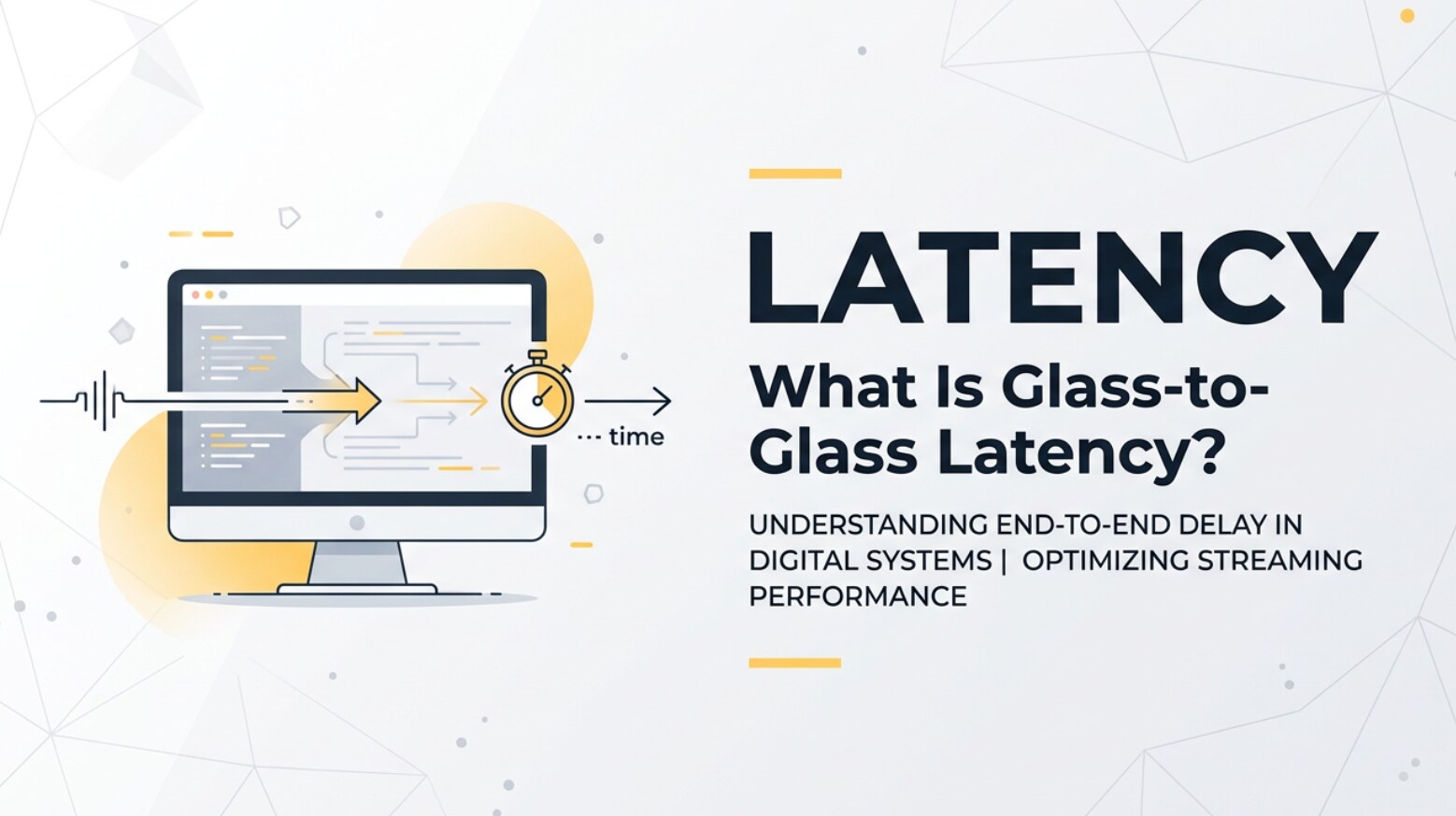
Glass-to-glass latency describes the delay from the instant your camera lens captures a scene to the moment it appears on a viewer's screen. You will hear this term in live streaming platforms, video conferencing apps, remote production tools, and even interactive events like esports or auctions. Understanding how this end-to-end delay works helps streamers, broadcasters, and businesses keep conversations natural, reactions timely, and viewing experiences smooth.
Repair Corrupted Files To Save Your Data
 Security Verified. Over 7,302,189 people have downloaded it.
In this article
What Is Glass-to-Glass Latency?
Glass-to-glass latency is the total end-to-end delay between the "glass" of the camera lens that records a scene and the "glass" of the display where viewers watch it. It spans every stage: camera capture, encoding, network transport, CDN distribution, decoding, and final playback.
Unlike simple network ping or encoder delay, live streaming latency is measured across the entire video pipeline. For example, if you clap in front of your camera and hear that clap on a remote viewer's device 3 seconds later, your glass-to-glass latency is roughly 3 seconds. This metric is crucial for interactive formats such as live Q&A, remote directing, or gaming streams, where even small delays can make conversations feel out of sync.
In modern video workflows, you will see this concept appear in encoder settings, streaming protocols (HLS, DASH, WebRTC, RTMP, SRT), and player buffers. Vendors often advertise "ultra-low low latency video" or "sub-second end-to-end delay" to highlight optimized end-to-end delay from production to screen.
How Does Glass-to-Glass Latency Work in the Real Workflow?
Capture, encode, and upload stages
The first part of glass-to-glass latency starts where content is recorded. A camera sensor converts light into digital data, which is then processed internally before it can leave the device. High frame-rate or high-resolution modes may add extra processing time, especially in 4K or HDR workflows.
Next comes encoding latency. Hardware or software encoders compress raw video into delivery formats such as H.264, HEVC, AV1, or VP9. In many tools, you will see presets like "ultrafast," "very fast," or "slow" in encoders such as OBS Studio, FFmpeg, or dedicated broadcast encoders. Faster presets reduce delay but may sacrifice compression efficiency and quality; slower presets deliver better quality at the cost of higher latency.
Once encoded, video segments or packets are sent across the network. Protocols such as RTMP, SRT, RIST, and WebRTC are widely used to bring streams from capture locations to cloud services or on-premise control rooms. Network congestion, packet loss, and routing all contribute to overall live streaming latency. For example, a remote camera feeding an online switcher may add hundreds of milliseconds of delay before the signal even reaches your main streaming platform.
Distribution, decode, and playback stages
In the cloud or on a media server, your stream is usually packaged into adaptive bitrate (ABR) formats. HLS, DASH, and their low-latency variants create short segments or chunked transfers at multiple bitrates to handle different viewer conditions. Segment length (for example 6 seconds vs 2 seconds) and buffering policy have a direct impact on glass-to-glass latency.
CDN edges then deliver these segments to viewers worldwide. Additional buffering is introduced at the CDN to smooth spikes in demand and ensure stable playback. The trade-off is that the more conservative the buffer, the higher the end-to-end delay users experience.
On the viewer side, player software or apps must download, decode, and render each frame. HTML5 players, smart TV apps, mobile streaming apps, and set-top boxes implement their own buffering rules to avoid rebuffering or stalls. Activities such as scrubbing, pausing, or switching quality levels can also affect effective live streaming latency.
In real workflows, engineers adjust encoder presets, GOP length, segment duration, and player buffer targets together. For example:
- A sports streaming platform might use 1–2 second GOPs, 2-second segments, and low-latency HLS to target under 3 seconds of glass-to-glass latency.
- An interactive webinar platform might adopt WebRTC with aggressive buffering to reach sub-500 ms low latency video while limiting participants to smaller audience sizes.
- A remote editing setup could use SRT feeds from capture cards directly into NLE or monitoring software to keep end-to-end delay tolerable for live decision-making.
Where Is Glass-to-Glass Latency Commonly Used?
Glass-to-glass latency is a key metric anywhere that real-time interaction, timing, or synchronization matter. You are most likely to encounter it in these scenarios:
- Live streaming platforms and social video – Services such as YouTube Live, Facebook Live, Twitch, and similar platforms constantly balance live streaming latency against scalability and reliability. Streamers choose between "normal latency," "low latency," and "ultra-low latency" modes depending on how much chat interaction they want.
- Video conferencing and collaboration – Tools like Zoom, Microsoft Teams, and Google Meet aim for well under 500 ms low latency video so conversations feel natural. Higher delays cause people to talk over each other or pause awkwardly.
- Remote and cloud production – Broadcasters, esports organizers, and event producers monitor and switch multiple feeds from different locations. Here, predictable end-to-end delay is essential for syncing commentary, graphics, and camera angles.
- Sports, betting, and live auctions – Sub-second glass-to-glass latency is critical when real money or competitive advantage depends on seeing action as close to real time as possible.
- Interactive classrooms and training – In virtual classrooms, language learning, or remote music lessons, latency affects how natural it feels to respond to questions, play instruments together, or share feedback.
- Platform compatibility and playback – Different devices handle buffering and decoding differently. A stream viewed on a smart TV app might be several seconds behind a desktop browser, even from the same platform. Understanding glass-to-glass latency helps teams test and tune experiences across TVs, web players, mobile devices, and set-top boxes.
How to Use Repairit to Fix a Corrupted Video File
What is Wondershare Repairit?
Even the best-engineered low-latency workflow can fail if your source or recorded media becomes damaged. Power outages, faulty SD cards, interrupted transfers, or crashes during recording can leave you with corrupted video files that will not play, go out of sync, or show visual artifacts. Wondershare Repairit offers a dedicated repair toolkit to rescue these assets before or after your live session.
You can explore everything it can do on the Repairit official website, including specialized modules for videos, photos, documents, and more. By repairing problematic clips before ingesting them into your encoder or editing timeline, you avoid glitches that can look like extra latency or stuttering to your viewers.
Key features of Repairit for video workflows
- Video repair for corrupted footage from cameras, phones, drones, capture cards, and screen recordings used in streaming pipelines.
- Support for multiple formats and high-resolution recordings, including files you rely on for VOD versions of live events.
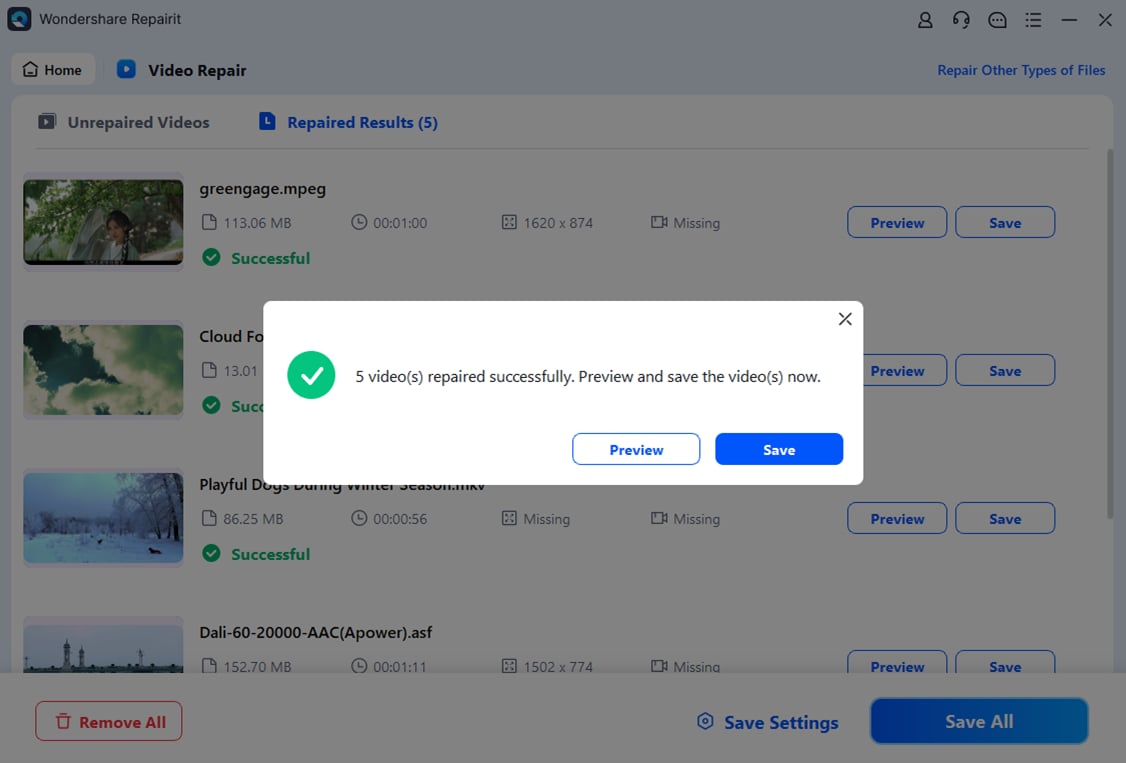
- Preview repaired videos before saving them, so you can confirm that timing, audio, and motion look correct.
Step-by-step guide to repair corrupted videos
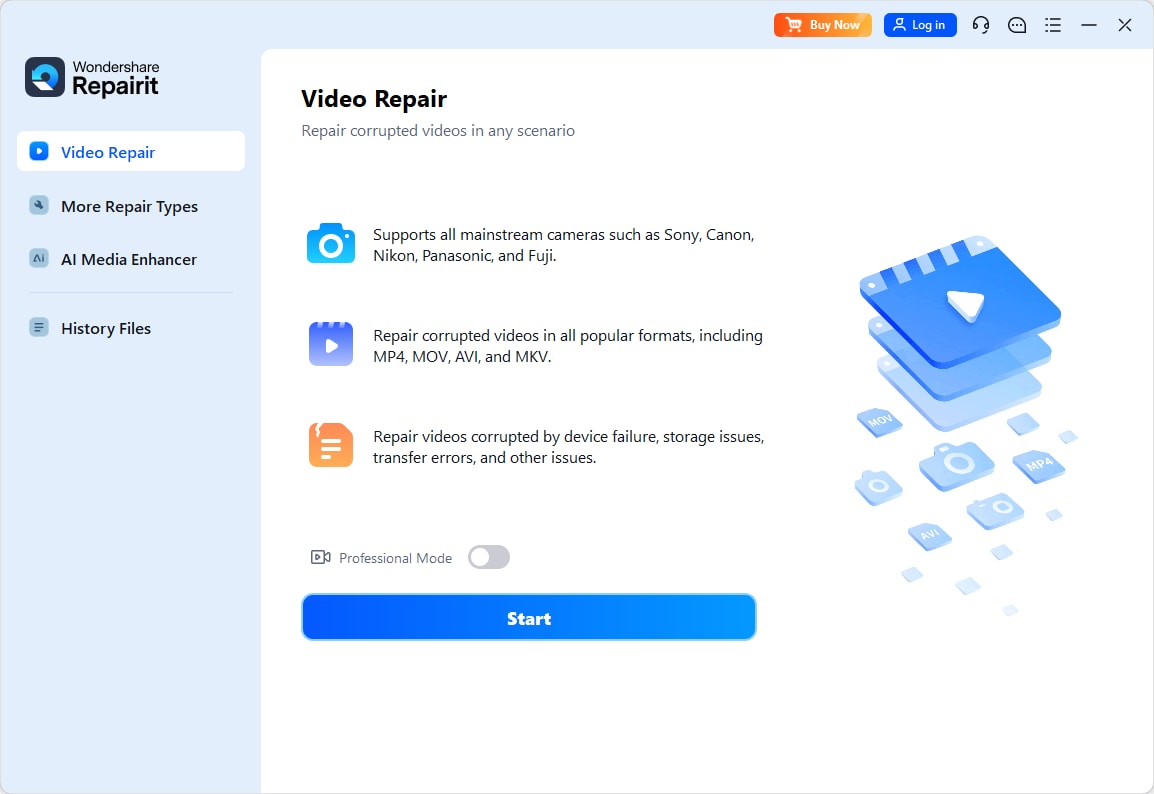
- Add corrupted video files
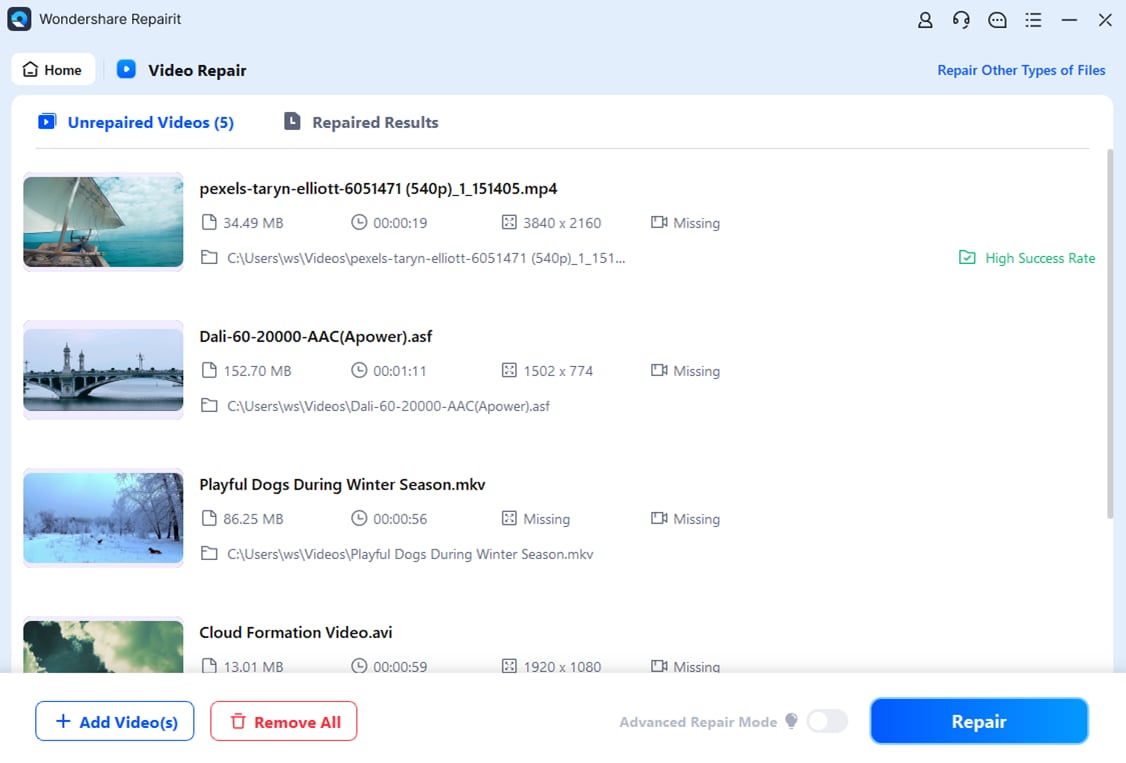
- Repair video files
- Save the repaired video files
Conclusion
Glass-to-glass latency summarizes everything that happens between camera capture and viewer display, across recording, encoding, transport, decoding, and playback. By measuring and tuning this end-to-end delay, you can align tools, presets, and protocols so that your streams feel more immediate and interactive, whether you are producing live sports, virtual classes, or daily content for social platforms.
At the same time, corrupted video sources or recordings can ruin the viewer experience, making even low-latency streams appear frozen or choppy. Integrating a repair workflow with tools like Wondershare Repairit helps you keep both latency and reliability under control, so your audience sees sharp, uninterrupted video across devices and platforms.
Next: Bitrate Ladder
FAQ
-
1. What is a good glass-to-glass latency target for live streaming?
For interactive uses such as video calls, auctions, or live classrooms, aim for glass-to-glass latency under 500 ms to about 1 second. For general entertainment streaming, 3–5 seconds is usually acceptable, while high-stakes sports or betting workflows often pursue sub-second low latency video. -
2. How can I measure glass-to-glass latency accurately?
Display a running timer or rapidly changing pattern on a screen in front of your camera, then watch the live stream on a separate device. Capture a photo or recording of both screens and compare the time codes. The time difference gives you your end-to-end delay from capture to display. -
3. What factors increase glass-to-glass latency the most?
Major contributors include long encoder buffers, heavy compression, long GOP structures, large HLS/DASH segment durations, conservative player buffering, CDN propagation, and unstable network routes. Using traditional HLS with 6–10 second segments usually results in higher live streaming latency than low-latency protocols or configurations. -
4. Can I reduce glass-to-glass latency without severely hurting video quality?
Yes. You can shorten segment durations, tune GOP length, choose faster encoder presets, and adopt low-latency delivery formats while slightly increasing bitrate to preserve quality. Testing across devices and networks helps you find a balance between glass-to-glass latency, stability, and visual clarity. -
5. How do corrupted video files affect perceived latency in streams?
Even if your technical end-to-end delay is low, corrupted media can cause freezes, repeated frames, error messages, or buffering loops that feel like additional latency to viewers. Repairing damaged source or VOD files with Wondershare Repairit helps keep playback smooth so perceived delay stays close to your engineered glass-to-glass latency.