

Common Media Application Format (CMAF) shows up when you record high-quality video, export it from an editor, or publish it to streaming platforms that must reach phones, TVs, and browsers efficiently. By unifying how segments are stored and delivered, CMAF helps lower costs and improve playback so your audience sees smooth, reliable streams instead of buffering or errors.
Repair Corrupted Files To Save Your Data
 Security Verified. Over 7,302,189 people have downloaded it.
In this article
What Is Common Media Application Format (CMAF)?
CMAF is a standardized container and segment format created to make online video streaming more efficient. Technically, it defines how video and audio are split into small chunks, wrapped in an MP4-based container, and referenced by streaming protocols like HLS and MPEG-DASH.
In a typical workflow, you start by recording video with a camera, phone, or capture card. That source footage may be edited in tools like Adobe Premiere Pro, DaVinci Resolve, or Final Cut Pro, then exported as high-quality mezzanine files (often ProRes or high-bitrate H.264/H.265). From there, transcoding software converts that master into multiple resolutions and bitrates, and a packager organizes those encodes as CMAF streaming segments.
The key idea is that Common Media Application Format lets different adaptive streaming protocols share the same encoded chunks. Instead of storing separate segment sets for HLS and MPEG-DASH, you keep one set of CMAF segments and point different playlists or manifests to them.
This helps with:
- Reducing duplicate storage of the same content on origin servers and CDNs.
- Simplifying encoding and packaging pipelines, especially at scale.
- Enabling low-latency playback when used with chunked transfer in supported players and CDNs.
- Improving compatibility across browsers, smart TVs, OTT boxes, and mobile apps.
How Does Common Media Application Format (CMAF) Work in the Real Workflow?
CMAF in capture, editing, and encoding
CMAF does not change how you press record on a camera or phone. You still capture using familiar formats like MP4, MOV, or camera-specific RAW. Its role begins later in the distribution chain, after you have at least one high-quality master file.
In a modern workflow, the path typically looks like this:
- Capture and ingest
You shoot on DSLR, mirrorless cameras, phones, or live encoders. The material is ingested into editing or media asset management systems in its native format. - Edit and export
Editors trim, color-grade, and add graphics. They export a master file, usually a mezzanine codec that preserves quality for streaming transcodes. - Transcode to streaming codecs
Encoding software (local encoders or cloud services) converts the master into multiple bitrates and resolutions using codecs like H.264/AVC or H.265/HEVC. These representations are what will be packaged into CMAF segments. - Segment into CMAF chunks
A packager splits each bitrate ladder into small time-based segments (for example, 2–6 seconds per segment, or even sub-second chunks for low latency). It structures them as Common Media Application Format fragments, which follow an ISO-BMFF/MP4-based layout that both HLS and MPEG-DASH understand.
At this stage, you still do not see CMAF as a user-facing file extension very often. Instead, players and streaming tools interact with .m4s segments or similar, while metadata and manifests map everything together.
CMAF in packaging, delivery, and playback
Where Common Media Application Format really shines is in the delivery and playback stages.
Once your media has been packaged:
- HLS and DASH playlists reference the same CMAF segments
Your packager generates HLS playlists (.m3u8) and MPEG-DASH manifests (.mpd), but instead of pointing to two completely different sets of segments, both point at the same CMAF streaming chunks. This is the core storage and workflow saving. - CDNs cache and serve unified segment libraries
A CDN stores CMAF segments once, regardless of whether a client uses HLS or DASH. Caching efficiency improves, and origin load is reduced. For large libraries and live events, this matters significantly for cost and scale. - Players perform adaptive bitrate decisions per chunk
On the user side, video players in browsers, OTT apps, or smart TVs request CMAF segments at different resolutions and bitrates, depending on network conditions. Because the format is standardized, it simplifies interoperability across platforms. - Low-latency workflows
In low-latency setups, servers and CDNs can start sending partially completed CMAF chunks before they are fully encoded. Players then begin decoding as soon as enough data arrives, shaving seconds off end-to-end latency for live streams.
You might interact with CMAF indirectly in encoding UIs or streaming services that offer presets like "HLS/DASH CMAF" or "Unified CMAF output." Even though you do not manually edit the segments, understanding what CMAF is helps when you troubleshoot buffering, compatibility issues, or playback errors across devices.
Where Is Common Media Application Format (CMAF) Commonly Used?
Today, Common Media Application Format is widely used anywhere large-scale online video is involved, particularly where content must be delivered to many device types with adaptive streaming.
Typical use cases include:
- OTT and VOD platforms
Subscription and ad-supported streaming services use CMAF streaming to serve movies, TV series, and originals through both HLS and MPEG-DASH players without storing two parallel libraries. - Live sports and events
Broadcasters and sports leagues often choose CMAF vs HLS-only setups to reduce latency and unify delivery to mobile, web, and connected TV apps. Low latency CMAF is particularly relevant for real-time live events. - News and live channels
24/7 channels that simulcast to apps, websites, and smart TVs typically adopt CMAF to streamline operations and cut storage overhead. - Enterprise and education platforms
Corporate training portals, university lecture capture systems, and webinar platforms use Common Media Application Format to simplify support for mixed device environments and strict bandwidth budgets. - Cloud encoding and OVP services
Online video platforms and cloud encoding vendors offer presets like "cmaf workflow" or combined "CMAF vs DASH / HLS" profiles that package content once and expose multiple protocols for customer players.
As a creator, editor, or engineer, you may see CMAF mentioned in transcoder profiles, streaming presets, CDN dashboards, or player configuration files. Even if your files look like ordinary MP4 or HLS playlists, the underlying segments are often Common Media Application Format compatible so they can reach the widest possible audience.
How to Use Repairit to Fix a Corrupted Video File
A quick introduction to Repairit
Even in robust CMAF pipelines, individual video files can become corrupted during recording, transfer, editing, or export. When your MP4 or CMAF-based assets refuse to play, show glitches, or lose audio, a dedicated repair tool can save the project. Wondershare Repairit focuses on repairing damaged media files from cameras, phones, and streaming workflows without requiring deep technical skills. You can learn more and download it from the Repairit official website.
Key features of Repairit for video repair
- Repairs multiple corrupted or unplayable video files in a single batch to save time during urgent turnarounds.
- Supports popular formats used by cameras, phones, editors, and online platforms, including many MP4-based outputs used in CMAF workflows.
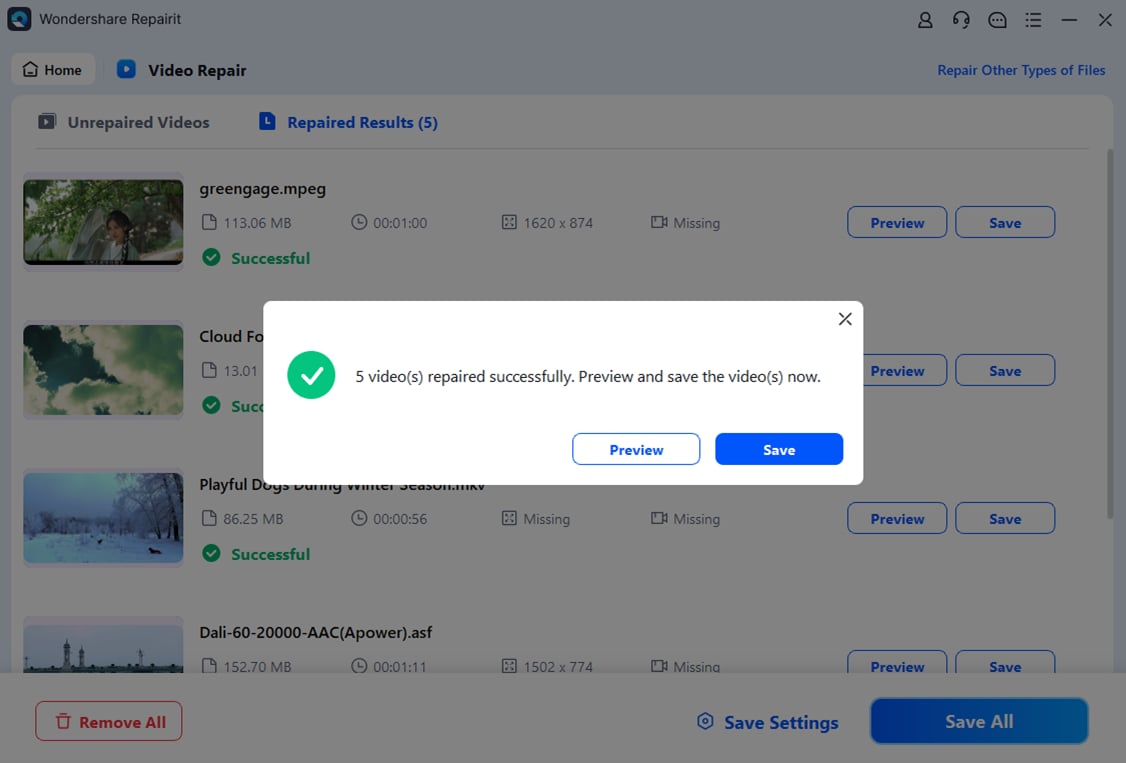
- Offers a clear preview after repair so you can verify that visual quality and audio playback are restored before saving.
Step-by-step guide: Fixing corrupted video files with Repairit
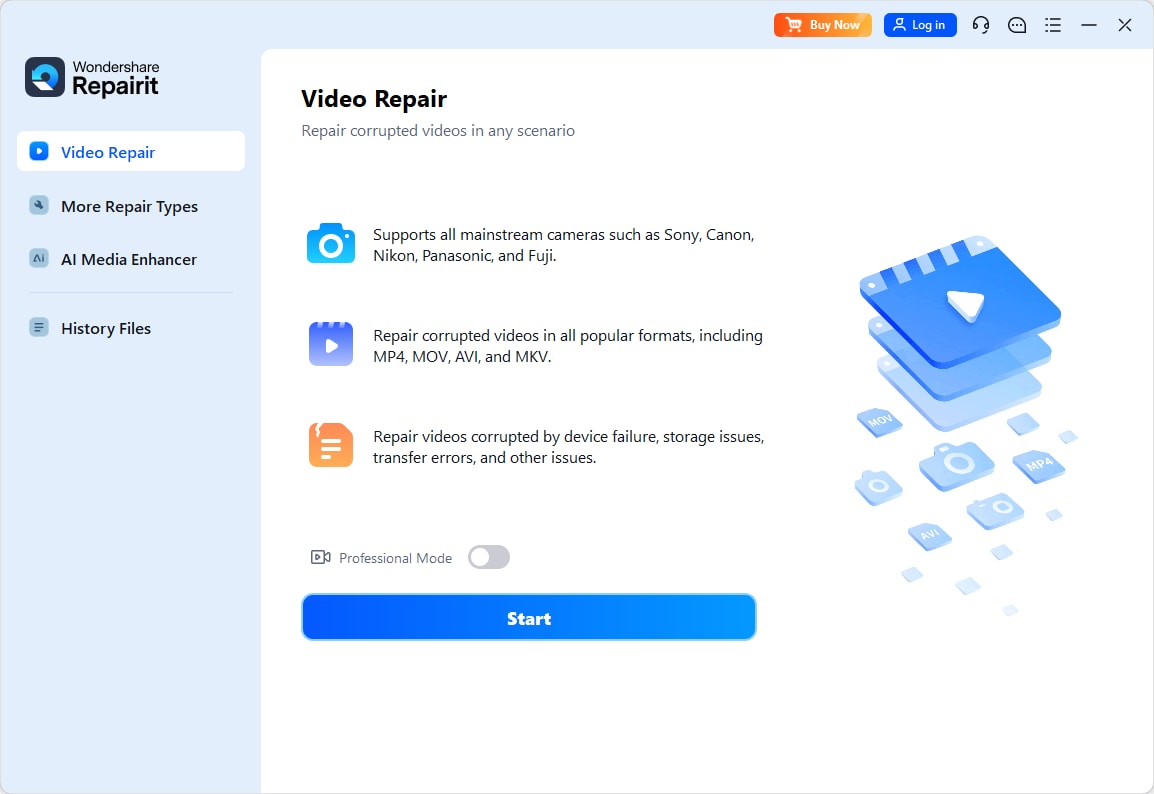
- Add corrupted video files
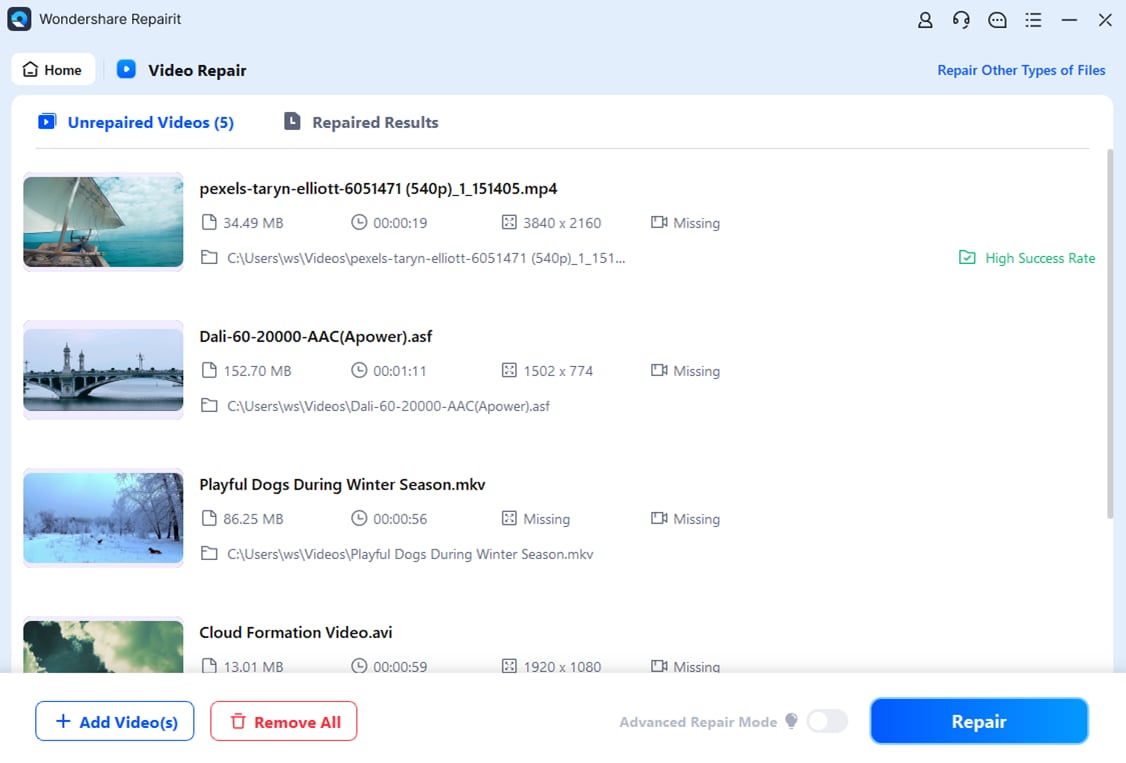
- Repair video files
- Save the repaired video files
Conclusion
Common Media Application Format brings order to the complexity of modern streaming by letting HLS and MPEG-DASH share the same standardized segments. This unified approach cuts storage, simplifies encoding and packaging, and improves performance for live and on-demand video across an increasingly diverse device ecosystem.
Understanding how CMAF fits into your recording, editing, encoding, and delivery pipeline also helps you diagnose playback issues more confidently. When individual files still become corrupted or unplayable, Wondershare Repairit offers a practical way to restore damaged clips so your content library and streaming workflows stay reliable.
Next: Adaptive Bitrate Streaming (Abr)
FAQ
-
1. What is Common Media Application Format (CMAF) in simple terms?
CMAF is a standardized way to package video and audio into small MP4-based segments that can be reused by multiple streaming protocols like HLS and MPEG-DASH. Instead of storing separate copies for each protocol, you keep one common set of segments, which simplifies online video distribution.
-
2. How is CMAF different from HLS or MPEG-DASH?
CMAF is a media container and segment format, while HLS and MPEG-DASH are streaming protocols. Playlists or manifests from HLS or DASH point to CMAF segments. In practice, you often use CMAF together with these protocols instead of choosing one or the other.
-
3. Does CMAF help reduce streaming latency?
CMAF supports shorter segments and chunked transfer modes that are compatible with low-latency HLS and low-latency DASH. On its own it does not guarantee low latency, but combined with proper encoder, CDN, and player settings, it enables more efficient low-latency live streaming.
-
4. Where will I most likely encounter CMAF in my workflow?
You will typically see Common Media Application Format referenced in encoder presets, packager profiles, streaming service documentation, or CDN dashboards. The actual files may appear as MP4-like segments (such as .m4s) that are referenced by HLS or DASH manifests.
-
5. How can I repair a corrupted CMAF or MP4 video file?
If a CMAF-based asset or exported MP4 becomes corrupted and will not play, you can use Wondershare Repairit. Import the damaged file, run the repair process, preview the result, and then save the repaired version so it can be edited, encoded, or streamed again normally.




