
When corrupted footage ruins an otherwise great clip, choosing the right repair tool matters. In this guide, we compare Repairit vs Tenorshare Video Repair to help you decide which option better fits your needs. Both aim to fix damaged or unplayable videos without requiring pro-level skills, but they differ in workflow, repair depth, and who they suit best. Whether you are restoring casual phone clips or more important camera recordings, this comparison walks through real-world scenarios so you can pick a tool with confidence.
Repair Corrupted Files To Save Your Data
 Security Verified. Over 7,302,189 people have downloaded it.
In this article
- Repairit vs Tenorshare Video Repair: Quick Verdict
- Repairit vs Tenorshare Video Repair: Key Differences
- Repairit vs Tenorshare Video Repair: Comparison Table
- What Repairit and Tenorshare Video Repair Are Best For
- Repairit vs Tenorshare Video Repair: Features and Capabilities
- Repairit vs Tenorshare Video Repair: Supported Formats and Compatibility
- Repairit vs Tenorshare Video Repair: Workflow and Ease of Use
- Repairit vs Tenorshare Video Repair: Pricing and Trial Options
- Who Should Choose Repairit
- Who Should Choose Tenorshare Video Repair
- Pros and Cons of Repairit and Tenorshare Video Repair
- How to Repair Corrupted Videos After Choosing the Right Tool
Repairit vs Tenorshare Video Repair: Quick Verdict
Both tools aim to make video corruption repair less intimidating, but they lean toward different users.
Repairit is designed for people who want a reassuring, guided workflow that can adapt to a range of everyday corruption levels, from glitches in casual clips to more confusing issues across many files and formats.
Tenorshare Video Repair generally suits casual creators who mostly fix short, everyday phone or camera clips and prefer a very straightforward experience without exploring extra options.
In most cases:
- Choose Repairit if you handle varied or recurring video issues, or want a tool that scales with slightly more serious corruption.
- Choose Tenorshare Video Repair if you mainly run into simple playback problems in everyday clips and want to get in and out quickly.
Repairit vs Tenorshare Video Repair: Key Differences
The key differences between Repairit vs Tenorshare Video Repair come down to workflow depth, flexibility, and how often you expect to use the software.
- Best for: Repairit suits users who want a broader safety net for different corruption levels. Tenorshare Video Repair fits casual, one-off fixes for typical phone or camera clips.
- Ease of use: Both are approachable. Repairit adds more guidance and options for repeated use, while Tenorshare Video Repair aims to stay ultra simple.
- Repair depth: Repairit is generally better positioned for a wider range of issues you might encounter over time. Tenorshare Video Repair stays focused on common, lighter problems.
- Workflow: Repairit provides a more structured, repeatable process for multiple clips. Tenorshare Video Repair keeps things lean for quick, straightforward repairs.
- Long-term value: If you expect ongoing repair needs across many projects, Repairit can feel more future-proof. If you just want an occasional repair helper, Tenorshare Video Repair may be enough.
Repairit vs Tenorshare Video Repair: Comparison Table
| Dimension | Repairit | Tenorshare Video Repair |
|---|---|---|
| Best for | Users who need a broader safety net for different corruption levels, including more serious damage across many clips and formats. | Casual creators and everyday users fixing common phone or camera clip issues. |
| Ease of use | Beginner-friendly with guidance, while still offering options for more complex scenarios. | Very approachable, focused on quick fixes with a simple layout for non-technical users. |
| Repair depth | Geared toward handling a wider range of corruption cases in most day-to-day workflows. | Well-suited for typical, lighter corruption but less compelling for high-stakes or highly technical restoration. |
| Workflow | Guided, step-based process that supports repeated repairs and multiple files. | Simple and guided workflow aimed at one-off, straightforward repairs. |
| Strengths | Versatile, consumer-friendly, and designed to cover more varied video issues with a clear flow. | Easy onboarding, accessible workflow, and convenient for everyday corruption scenarios. |
| Weaknesses | May feel more than you need for very minor, occasional fixes; still not a substitute for professional restoration labs. | Less suited to advanced or mission-critical recovery where deeper manual control might be required. |
What Repairit and Tenorshare Video Repair Are Best For
Repairit positions itself as a consumer-friendly utility focused on common damaged-video scenarios but with some room to handle trickier cases. It can be a better fit if you edit clips from different sources, regularly shoot content, or sometimes face confusing playback issues that are not fixed by basic players or codecs.
Tenorshare Video Repair is typically best for casual creators and everyday users fixing short phone or camera clips. If your main concern is getting a vacation video, birthday recording, or quick social clip to play again without digging into options, its straightforward design can feel comfortable.
In practical terms:
- For varied projects, mixed devices, or slightly more serious corruption, Repairit can offer more breathing room.
- For occasional, non-critical videos where speed and simplicity matter most, Tenorshare Video Repair can be enough.
Repairit vs Tenorshare Video Repair: Features and Capabilities
Both tools focus on repairing corrupted or unplayable video files without demanding technical skills. The difference is how they balance guidance and simplicity.
Overall capabilities
Repairit leans into versatility and a guided experience. It is designed so that non-technical users can follow a clear flow while still having enough support when dealing with recurring or slightly more complex issues.
Tenorshare Video Repair keeps things tightly aligned with everyday, common issues. It generally emphasizes a lightweight, focused interface that helps you move from import to repair to export with minimal decisions.
Core features you can expect from both
- Automatic scan and repair of corrupted video files for non-technical users.
- Support for common consumer formats used on phones, action cams, and cameras.
- Preview options so you can quickly check whether the repaired clip is usable.
How Repairit tends to differ
- Guided, multi-step flow that can better support a range of corruption levels in typical home and creator workflows.
- Cross-device flexibility, with versions that can be used across different operating systems, depending on what you install.
- Positioned for repeated use, making more sense if you regularly repair videos rather than just once or twice.
If you mostly care about a one-time fix, Tenorshare Video Repair can feel less overwhelming. If you expect ongoing issues or a mixed library of clips, the way Repairit structures its workflow can be more reassuring.
Repairit vs Tenorshare Video Repair: Supported Formats and Compatibility
In everyday use, compatibility often decides whether a tool actually helps you. Both Repairit and Tenorshare Video Repair generally cover mainstream formats used by smartphones, consumer cameras, and action cams, which is enough for many users.
Repairit often aims for broader coverage to help when you juggle clips from multiple devices or receive files from different collaborators. This can matter if you mix footage from phones, drones, and cameras in a single project and want one tool that can attempt to repair all of them.
Tenorshare Video Repair tends to stay centered on common, everyday file types. For users who mostly shoot on a single phone or a standard camera, that can be sufficient, and the simpler format set can keep the interface feeling direct.
If you are unsure which you need, think about your footage sources:
- If you regularly combine clips from several devices, Repairit can be a more flexible choice.
- If you mainly repair videos from one phone or camera model, Tenorshare Video Repair usually covers what you need.
Repairit vs Tenorshare Video Repair: Workflow and Ease of Use
Tenorshare Video Repair focuses on a simple and guided workflow that works well for users who just want to click through basic steps. You typically import the file, run the repair, and then check the result with only a few decisions along the way.
Repairit also keeps things beginner-friendly but adds more structured guidance that can feel helpful if you run repairs frequently or are unsure what to do when a clip looks badly damaged. The process is still straightforward, but it is designed for repeated use across multiple clips.
From a usability perspective:
- If you value very fast, occasional fixes, Tenorshare Video Repair may feel lighter and more to the point.
- If you prefer a clear, repeatable process that gives you more confidence when facing new or varied issues, Repairit tends to be a better match.
Repairit vs Tenorshare Video Repair: Pricing and Trial Options
Pricing for both tools can change over time, but their general approach is similar: they usually offer some kind of trial so you can test the interface, check the workflow, and preview how your repaired videos look before committing.
Instead of focusing on exact numbers, it is more practical to compare:
- What the trial lets you do (for example, whether you can preview the full repaired video or only a portion).
- Limitations such as watermarks, export caps, or number of files you can test.
- Your expected repair volume over the next year or two, not just the current broken clip.
If you mostly need a one-time solution for a small number of videos, Tenorshare Video Repair may feel adequate. If you expect to repair videos regularly, a plan for Repairit can make more sense as an ongoing tool in your workflow.
Who Should Choose Repairit
You are more likely to appreciate Repairit if you:
- Handle a mix of simple and more severe video corruption issues over time.
- Prefer a guided, repeatable workflow across many video projects rather than ad-hoc tools.
- Manage clips from multiple devices and formats, such as phones, action cams, drones, and cameras.
- Want a versatile safety net that can attempt more than just one narrow type of repair.
For creators, educators, or families who save many recordings and sometimes discover that an important clip will not play, Repairit can serve as a regular part of their toolkit.
Who Should Choose Tenorshare Video Repair
Tenorshare Video Repair is more suitable when your needs are lighter and your priority is a quick, uncomplicated fix. It is generally aimed at casual users, not those building complex production workflows.
You might lean toward Tenorshare Video Repair if you:
- Only occasionally encounter corrupted videos, usually from a phone or basic camera.
- Prioritize easy onboarding and an accessible, straightforward layout over advanced options.
- Deal mostly with everyday, non-critical clips, such as social videos, personal events, or short screen recordings.
- Do not need highly technical settings or deeper restoration features.
If that sounds like your situation, Tenorshare Video Repair can be a reasonable, simple assistant to get a few broken clips playable again.
Pros and Cons of Repairit and Tenorshare Video Repair
Each tool comes with trade-offs. Understanding them helps you match the software to your own expectations instead of chasing a one-size-fits-all solution.
Repairit Pros and Cons
Tenorshare Video Repair Pros and Cons
How to Repair Corrupted Videos After Choosing the Right Tool
Once you have compared Repairit vs Tenorshare Video Repair and decided which style suits you, the next step is actually fixing your corrupted clips. The general flow is similar in both tools: you add the damaged files, run a repair process, then preview and save the results.
To make the process concrete, the walkthrough below uses Repairit as an example because its guided workflow is easy to follow whether you are dealing with a single broken video or multiple clips from different devices.
Repairit Introduction
Repairit is built to help users fix corrupted or unplayable videos with a straightforward, step-based process. Rather than expecting you to understand codecs or container structures, it focuses on clear actions that make sense even if you are not technical.
Key Features
For everyday users who regularly shoot or receive videos, these capabilities are especially useful:
- Guided repair flow tailored to different levels of video corruption.
- Support for multiple common video formats from phones and cameras.
- Preview of repaired files so you can confirm results before saving.
Step-by-step guide
Here is how a typical repair session in Repairit can look, from first launch to exporting a playable clip.
- Add corrupted videos
Open Repairit, then drag and drop the corrupted video files into the main window or use the add button to browse and select them from your computer.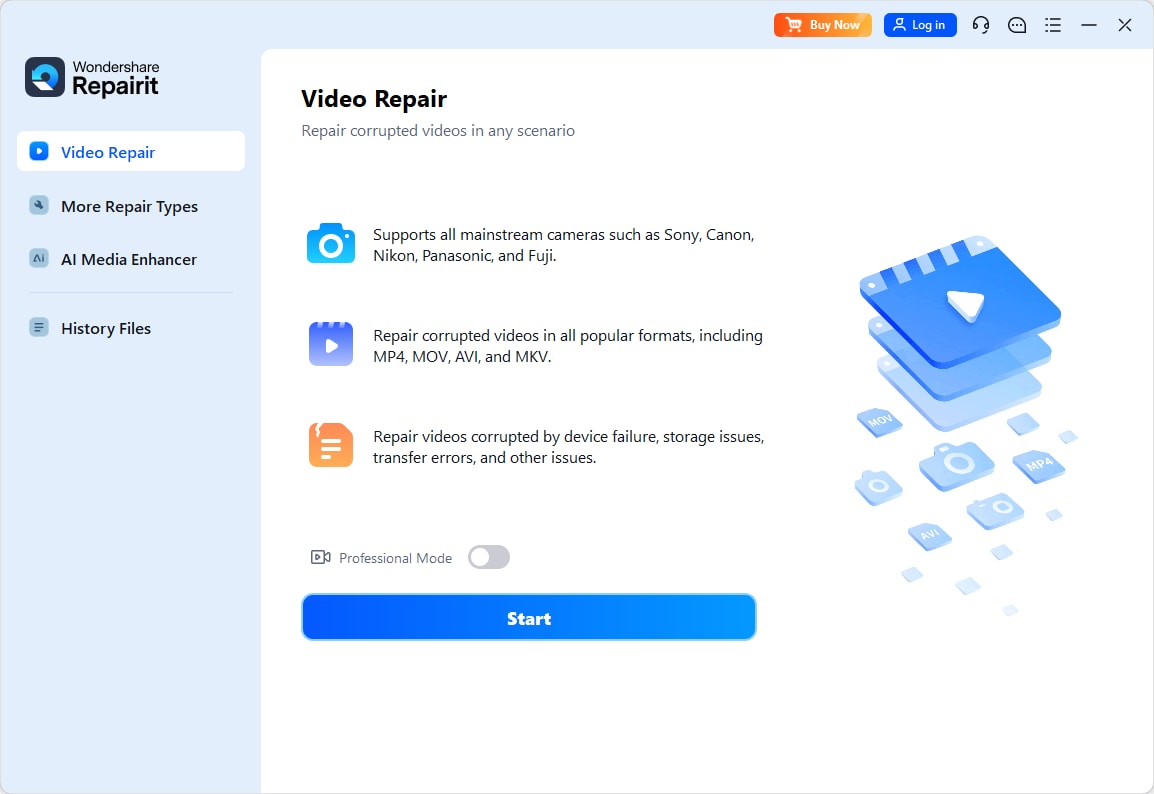
- Run the repair
Click the repair button to let Repairit analyze the selected clips and attempt to fix playback issues such as videos not opening or stopping unexpectedly.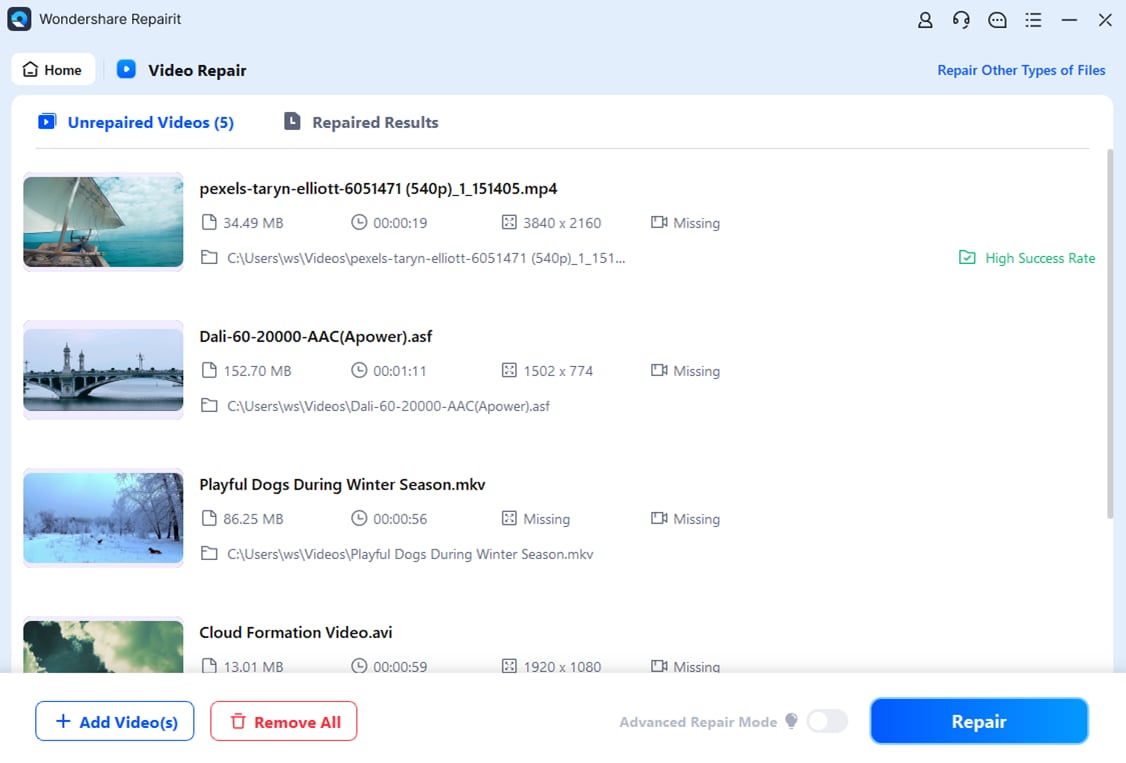
- Preview and export
After the process completes, preview each repaired video to confirm that it plays correctly, then choose a safe folder to export and save the fixed versions.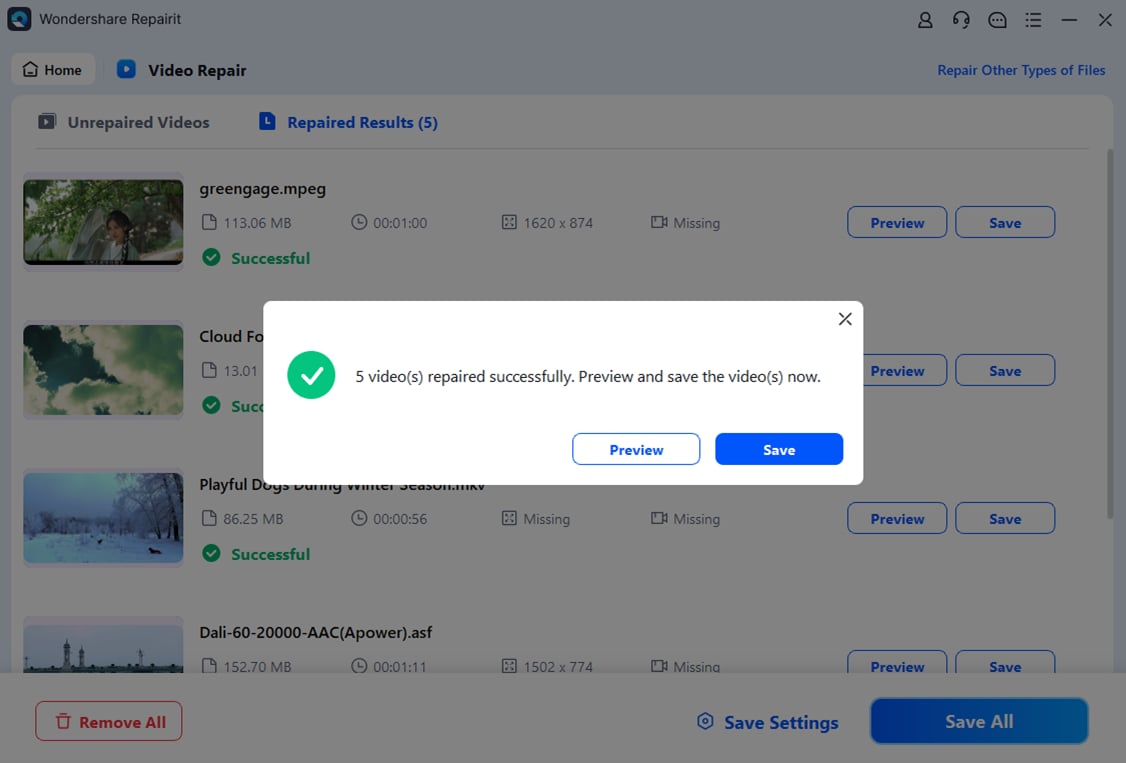
Final Verdict
Choosing between Repairit vs Tenorshare Video Repair comes down to how often you repair videos and how varied those clips are.
Repairit is a stronger choice for users who want a guided, repeatable workflow and a tool that can adapt to a wider variety of corruption scenarios. If you manage clips from multiple devices or occasionally run into more serious video problems, the extra flexibility is likely worth it.
Tenorshare Video Repair may still be enough if you are a casual creator dealing mainly with everyday phone or camera clips and you prefer a very simple, focused experience. In that case, its accessible workflow can get you from corruption to watchable video with minimal steps.
Whichever option you pick, testing a few sample files first is a good way to see which interface, workflow, and results feel right for your everyday clips.
FAQ
-
1. Which is better for beginners, Repairit or Tenorshare Video Repair?
Both are beginner-friendly. Tenorshare Video Repair may feel slightly simpler for one-off, everyday fixes, while Repairit adds more guidance and structure for varied scenarios and repeated use. -
2. Should I choose Repairit or Tenorshare Video Repair for severe corruption?
If you sometimes deal with more severe or confusing corruption, Repairit is generally a stronger choice because its guided workflow and broader positioning are better suited to a range of issues. -
3. Is Tenorshare Video Repair enough for fixing basic phone videos?
Yes, Tenorshare Video Repair can be enough if you mainly repair common phone or camera clips and do not need deeper or more technical restoration options. -
4. Can I try Repairit and Tenorshare Video Repair before buying?
In most cases you can use trial versions of both tools to test the interface, run sample repairs, and see which workflow feels more comfortable for your typical clips. -
5. What if neither tool can fully repair my video?
If neither Repairit nor Tenorshare Video Repair can restore smooth playback, the corruption might be too extensive for consumer software. You can still keep the damaged file in case future tools improve, but it is wise to also review your backup habits to reduce the risk next time.