
Video aspect ratio might sound technical, but you see it every time you watch YouTube, scroll TikTok, or edit a clip on your phone. It is the shape of your video frame, and it decides whether your footage looks cinematic, square, or vertical. Understanding it helps you avoid black bars, weird cropping, and stretched faces when recording, editing, exporting, streaming, or uploading to different platforms.
Repair Corrupted Files To Save Your Data
 Security Verified. Over 7,302,189 people have downloaded it.
In this article
What Is Video Aspect Ratio?
Video aspect ratio is the proportional relationship between the width and height of a video frame, written as two numbers like 16:9, 9:16, or 4:3. It is a core video parameter that defines the visible shape of your image, whether you are recording, editing, encoding, exporting, or streaming.
In plain English, if you think of your video as a rectangle, aspect ratio tells you how wide it is compared to how tall it is. A 16:9 video is much wider than it is tall (classic landscape YouTube). A 9:16 video is tall and narrow (typical TikTok or Instagram Reels). The ratio does not directly describe resolution or file size, but it works together with them to determine how your video looks on different screens.
What Does Video Aspect Ratio Affect?
Framing, cropping, and composition
Aspect ratio has a huge impact on how your scene fits inside the frame.
- In 16:9 landscape, you can show wide environments, side-by-side interviews, or gaming footage comfortably.
- In 9:16 vertical, the focus is on a single subject, such as a person speaking to the camera, because there is less horizontal room.
- In 4:3 or 1:1, you get a more compact, boxy feel that can be useful for older footage or stylized content.
If you choose the wrong ratio for your project settings when editing, your video may:
- Show black bars on the sides or top and bottom (letterboxing or pillarboxing).
- Be cropped automatically, cutting off text, logos, or people at the edge.
- Look stretched or squashed if the player tries to force it to fill the screen.
That is why planning aspect ratio before recording saves time and protects important visual details during editing and exporting.
Platforms, devices, and viewer experience
Different platforms and devices prefer different aspect ratios, and this directly affects how professional your content appears.
| Platform / Use | Common Aspect Ratios |
|---|---|
| YouTube, TVs, most laptops | 16:9 (landscape) |
| TikTok, Instagram Reels, Shorts | 9:16 (vertical) |
| Instagram feed, grid | 1:1, 4:5 |
| Cinematic films, trailers | 2.35:1, 2.39:1, 2.40:1 (very wide) |
When your aspect ratio matches the platform:
- Your video fills the screen without black bars.
- Captions, overlays, and UI stay visible and readable.
- Viewers are less distracted and more likely to watch to the end.
When the ratio does not match, the platform or player compensates by adding bars or auto-cropping, which can ruin carefully designed layouts or hide key information.
How Does Video Aspect Ratio Work in Real Use?
You will encounter aspect ratio decisions at multiple stages of a video workflow: recording, editing, encoding, exporting, streaming, and playback.
On cameras and phones while recording
Most phones and cameras let you switch between ratios in their settings or directly in the camera app. A few common scenarios:
- Recording YouTube tutorials or gameplay: choose 16:9 at 1080p or 4K.
- Recording TikTok or Instagram Reels: rotate your phone and record vertically at 9:16.
- Shooting cinematic content: record at 16:9 and crop later to a wider 2.39:1 for flexibility, or shoot directly in a cinema mode that simulates that ratio.
Choosing the right aspect ratio at capture time makes editing simpler and reduces quality loss from heavy cropping later.
In editing, encoding, exporting, and streaming
Video editing tools like Premiere Pro, Final Cut Pro, DaVinci Resolve, and mobile editors (CapCut, VN, etc.) use sequence or project settings that define the aspect ratio of your timeline. Typical workflows include:
- Editing for multiple platforms: You might create a 16:9 master for YouTube and then duplicate the project in a 9:16 sequence to reframe for TikTok by zooming and repositioning key subjects.
- Reframing older footage: You can convert 4:3 archive clips to 16:9 by adding side bars or cropping, depending on whether preserving the full image or filling the frame is more important.
- Encoding and exporting: When you pick a resolution like 1920x1080 or 1080x1920, you are indirectly choosing the aspect ratio (1920x1080 = 16:9, 1080x1920 = 9:16).
Streaming platforms and players also respect aspect ratio flags in the encoded file. If the metadata or encoded frame size is incorrect, viewers may see stretched images or unexpected black bars. Matching your project settings, export settings, and the platform's recommended aspect ratio guide helps ensure your video appears correctly everywhere.
Common Mistakes and Quick Tips
Frequent misunderstandings
- "Resolution and aspect ratio are the same." Resolution is the number of pixels (e.g., 1920x1080); aspect ratio is the shape (16:9). Different resolutions can share the same ratio.
- "I can switch ratios later with no downside." Changing aspect ratio usually means cropping part of the image or adding black bars. Planning ahead avoids throwing away detail.
- "Vertical video is always bad." For mobile-first platforms like TikTok, Instagram Reels, and YouTube Shorts, vertical 9:16 is actually the best choice.
- "Black bars mean my file is low quality." Bars usually indicate a mismatch between your video's aspect ratio and the screen or project settings, not necessarily a quality issue.
Quick practical tips
- Decide your primary platform before recording and pick the matching ratio (16:9 for YouTube, 9:16 for shorts and stories).
- Keep text, logos, and faces inside "safe zones" so they are not cut off if you later crop to another ratio.
- Use guides or overlays in your camera or editor to see how a 16:9 shot would look if repurposed to 9:16.
- When in doubt, shoot a little wider so you have room to crop for different video size and shape requirements.
- Test export a short clip to your target platform to confirm there are no black bars or unexpected crops before processing the full project.
How to Use Repairit to Fix a Corrupted Video File
If a critical clip becomes corrupted during recording, transfer, or export, no aspect ratio setting can save it until the file itself is repaired. Wondershare Repairit is designed to fix damaged or unplayable videos from cameras, phones, drones, and more, so you can keep your projects on track. Visit the Repairit official website to learn more and download the latest version.
Key features of Repairit for video creators
- Repairs corrupted videos from cameras, phones, drones, action cams, and other devices so your important footage is not lost.
- Supports multiple formats, resolutions, and video aspect ratio settings in a single repair session for a streamlined workflow.
- Offers an intuitive preview window to check content, audio, and framing before you save the repaired file.
Step-by-step: Fix a corrupted video file
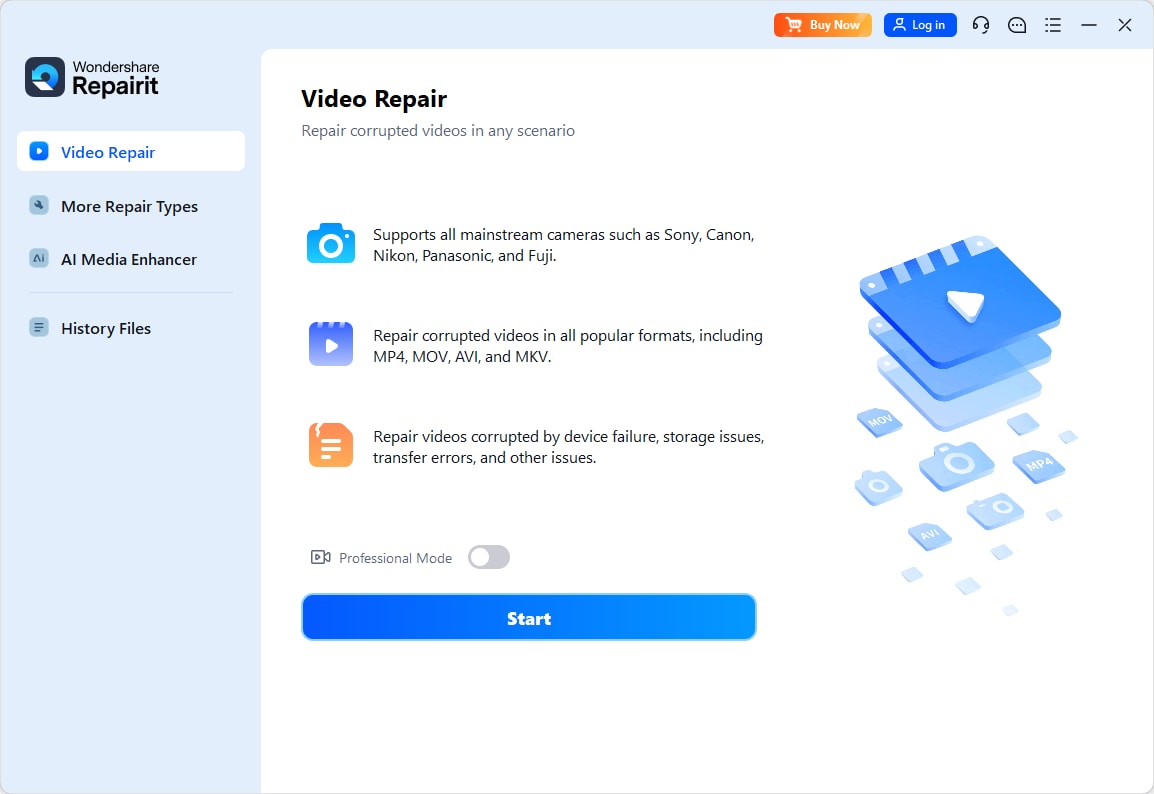
- Add corrupted video files
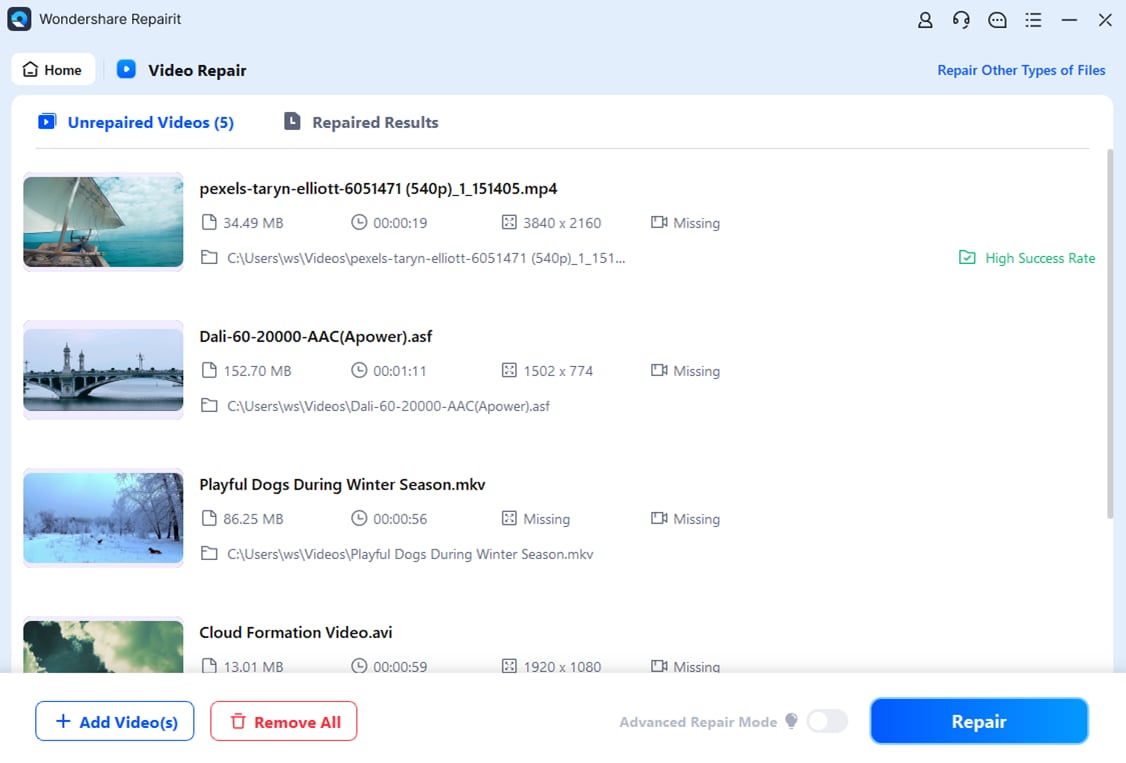
- Repair video files
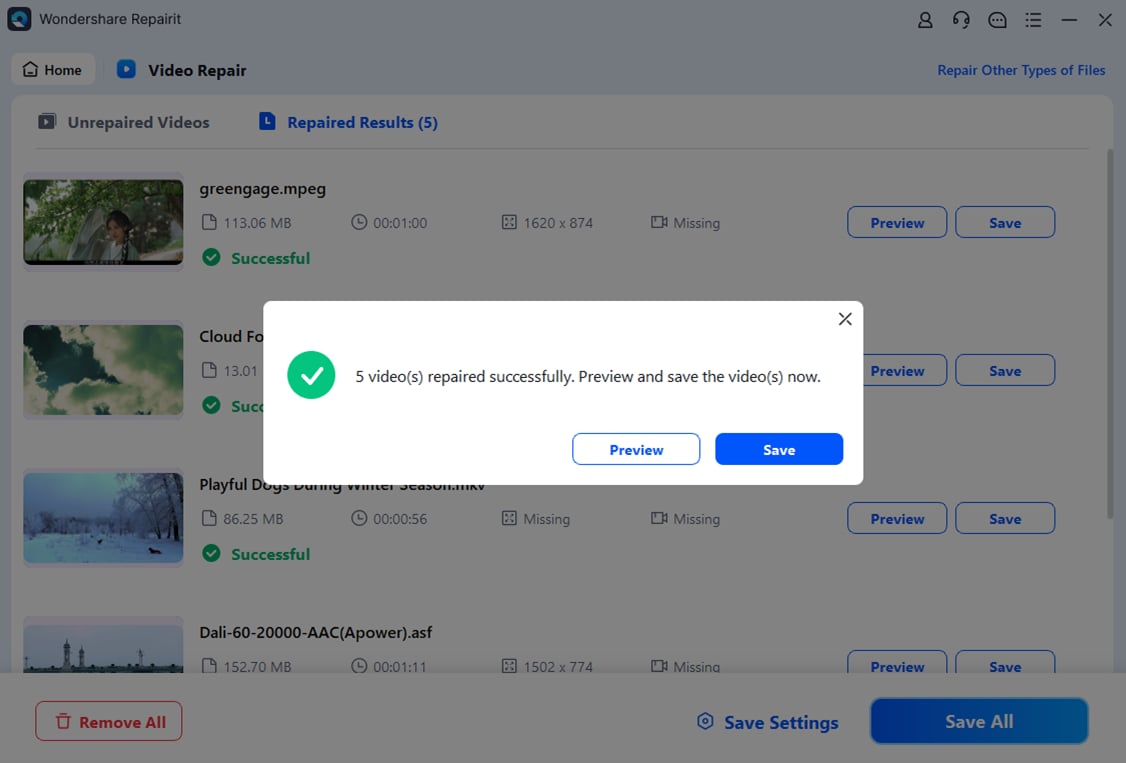
- Save the repaired video files
Conclusion
Video aspect ratio is a simple width-to-height ratio, but it shapes how every viewer experiences your content across phones, laptops, TVs, and social media feeds. Choosing the right ratio from the start helps you avoid black bars, awkward cropping, and stretched images when recording, editing, encoding, and exporting.
By understanding when to use 16:9, 9:16, 1:1, or more cinematic widescreen formats, you can match each project to its platform and audience. And if technical issues corrupt important footage along the way, Wondershare Repairit gives you a practical way to restore broken files and keep your final videos looking polished and professional.
Next: What is Video Color Depth?
FAQ
-
1. What is video aspect ratio in simple terms?
Video aspect ratio is the relationship between the width and height of your video frame, written like 16:9 or 9:16. It describes the shape of the image, not the quality or file size. -
2. Which aspect ratio should I use for YouTube videos?
For YouTube, the standard aspect ratio is 16:9 in landscape at resolutions like 1920x1080 or 3840x2160. This fills most modern screens and is ideal for tutorials, vlogs, and long-form content. -
3. What is the best aspect ratio for Instagram and TikTok?
For Instagram Reels, Stories, and TikTok, 9:16 vertical is best because it fills the entire phone screen and is optimized for mobile-first viewing. -
4. Why do my videos have black bars on the sides or top and bottom?
Black bars usually appear when your video aspect ratio does not match the screen or project settings. The player adds bars to show the full image without stretching or cutting off parts of the frame. -
5. Can I change the aspect ratio of an existing video without losing quality?
You can change aspect ratio by cropping or adding black bars in an editor, but you usually sacrifice some visible content or end up with unused space. For the best results, decide on your target ratio before recording whenever possible.




