Repairit Audio Repair and Krisp Audio solve different audio problems, even though they both use AI to clean sound. Krisp Audio shines as a real-time AI noise suppression tool for remote workers and streamers, while Repairit Audio Repair focuses on repairing corrupted audio files and fixing damaged recordings after the fact. Understanding where live enhancement ends and true file-level repair begins helps you avoid frustration and pick the right tool for your workflow.
Repair Corrupted Audio Files With Repairit Audio Repair
 Security Verified. Over 7,302,189 people have downloaded it.
In this article
- Repairit Audio Repair vs Krisp Audio: Quick Verdict
- Repairit Audio Repair vs Krisp Audio: Key Differences
- Repairit Audio Repair vs Krisp Audio: Comparison Table
- What Repairit Audio Repair and Krisp Audio Are Best For
- Repairit Audio Repair vs Krisp Audio: Audio Repair Capabilities
- Repairit Audio Repair vs Krisp Audio: Supported Audio Formats and Use Cases
- Repairit Audio Repair vs Krisp Audio: Workflow and Ease of Use
- Repairit Audio Repair vs Krisp Audio: AI Processing and Automation
- Repairit Audio Repair vs Krisp Audio: Pricing and Accessibility
- Who Should Choose Repairit Audio Repair
- Who Should Choose Krisp Audio
- Pros and Cons of Repairit Audio Repair and Krisp Audio
- How to Repair Corrupted Audio Files After Choosing the Right Tool
Repairit Audio Repair vs Krisp Audio: Quick Verdict
The key difference is that Krisp Audio focuses on live noise suppression, while Repairit Audio Repair is designed to repair corrupted audio files and restore damaged recordings after they have already been captured.
In most real-world cases, Krisp Audio may be enough if you want cleaner calls, meetings, and streams with minimal background noise. Repairit Audio Repair is more suitable when the file itself is corrupted, distorted, or unplayable and you need to repair audio at the file level instead of just cleaning it during playback.
Repairit Audio Repair vs Krisp Audio: Key Differences
The main difference is that Repairit Audio Repair works on stored audio files to fix playback issues, while Krisp Audio works in real time on your microphone and speakers to reduce noise during conversations.
Where Krisp Audio helps you avoid distracting background sounds as you talk, Repairit Audio Repair steps in when a recording is already in trouble and you need to repair unplayable, distorted, or noisy audio for editing, archiving, or delivery. This matters if you regularly receive files from clients, record interviews, or manage event audio that cannot be recorded again.
Repairit Audio Repair vs Krisp Audio: Comparison Table
This comparison table highlights how Repairit Audio Repair and Krisp Audio differ across repair depth, workflow, and typical use cases.
| Dimension | Repairit Audio Repair | Krisp Audio |
|---|---|---|
| Best for | Repairing corrupted or unplayable audio files and restoring damaged recordings | Real-time AI noise suppression for calls, meetings, and live streams |
| Ease of use | Guided file-based workflow with simple steps for importing and repairing | Very quick setup with lightweight, always-on background operation |
| Repair depth | Designed to fix unplayable, distorted, or noisy audio at the file level | Focuses on live enhancement rather than repairing damaged audio files |
| AI capability | AI-driven analysis aimed at restoring damaged audio playback | AI noise detection and suppression for voices in real time |
| Workflow | Import, repair, preview, and export files for editing or delivery | Real-time and lightweight workflow integrated into daily communication apps |
| Strengths | Strong for fixing corrupted audio files and restoring faulty recordings | Strong for on-the-fly noise reduction and voice clarity during live sessions |
| Weaknesses | Not built for real-time live call noise suppression | Not designed for repairing unplayable or corrupted audio files |
What Repairit Audio Repair and Krisp Audio Are Best For
Repairit Audio Repair is more suitable when your priority is repairing corrupted audio files and saving damaged recordings, while Krisp Audio is better when your main goal is live noise reduction and clearer voice during calls.
Krisp Audio positions itself as a real-time AI noise suppression tool that sits in your call or streaming chain, helping remote workers and streamers get cleaner live audio. Repairit Audio Repair focuses on file-level repair when recordings are already distorted, noisy, or fail to play. In most workflows, this means Krisp Audio helps you prevent noisy captures, while Repairit Audio Repair helps you fix damaged audio files afterward.
Repairit Audio Repair vs Krisp Audio: Audio Repair Capabilities
The key difference in audio capabilities is that Repairit Audio Repair is built for file-level audio repair, while Krisp Audio is centered on real-time enhancement and noise suppression.
Both tools use AI to improve listening quality, but they attack different problems:
- Repairit Audio Repair aims to repair corrupted audio files, fix unplayable clips, and restore damaged audio playback that has already been recorded.
- Krisp Audio focuses on AI noise suppression to make speech clearer as you talk in meetings, calls, or streams, without directly repairing the audio files themselves.
In most real-world cases, users notice that Krisp Audio can keep ongoing sessions quieter, but it cannot fix a file that refuses to play or is heavily distorted. Repairit Audio Repair is the option you turn to when a recording is already compromised and you need to salvage it for delivery or editing.
Repairit Audio Repair vs Krisp Audio: Supported Audio Formats and Use Cases
The main difference in format handling is that Repairit Audio Repair works directly on audio files you import, while Krisp Audio processes audio streams passing through your system in real time.
Krisp Audio typically operates at the system or app level across common communication and streaming apps. It cleans audio regardless of whether the source is MP3, WAV, M4A, AAC, or other formats, because it is enhancing the live signal rather than the file itself.
Repairit Audio Repair, by contrast, targets stored audio in formats such as MP3, WAV, M4A, AAC, or FLAC. You import the problematic files, let the tool attempt to fix damaged playback, then export repaired versions. This workflow is better suited for podcasters, interviewers, content teams, and archivists who have to deal with specific broken clips instead of live noise.
Repairit Audio Repair vs Krisp Audio: Workflow and Ease of Use
The key workflow difference is that Repairit Audio Repair uses a step-based file workflow, while Krisp Audio runs in the background during live use.
Krisp Audio follows a real-time and lightweight workflow: you install the app, select it as your microphone or speaker, and its AI noise suppression runs automatically. This makes sense for users who spend much of their day on calls and just want less noise without manual tuning.
Repairit Audio Repair instead uses a simple import, repair, preview, and save process. You add corrupted audio files, let the AI analyze them, and then export the repaired audio. This is more aligned with post-production and content handoff, where each file needs individual attention and you are not working under live-time pressure.
Repairit Audio Repair vs Krisp Audio: AI Processing and Automation
The main difference in AI processing is that Krisp Audio targets ongoing speech clarity, while Repairit Audio Repair applies AI to fix existing files with noticeable damage or playback issues.
With an AI enhancement focus, Krisp Audio prioritizes voice clarity and continuous noise reduction. It reacts to background sounds like fans, keyboard clicks, and chatter in real time, reducing distractions as you speak.
Repairit Audio Repair uses AI to analyze already recorded files, detect distortion or noise, and attempt to restore more reliable audio playback. In most real-world cases, users notice that Krisp Audio keeps live calls cleaner, while Repairit Audio Repair acts as a safety net when a recording crackles, clips, or becomes partially unplayable.
Repairit Audio Repair vs Krisp Audio: Pricing and Accessibility
The key difference in pricing is that Krisp Audio typically focuses on ongoing live usage, while Repairit Audio Repair is geared toward repairing stored files as needed.
Krisp Audio generally structures its plans around regular real-time use for calls and streams. You may pay for continued access to its noise suppression during everyday communication.
Repairit Audio Repair typically provides access oriented around working with corrupted or damaged audio files. Because pricing details can change over time, you should check the official sites for both tools before deciding which model fits your budget and how often you repair or enhance audio.
Who Should Choose Repairit Audio Repair
Repairit Audio Repair is more suitable when you need to repair corrupted audio files and restore recordings that you can not capture again.
- You need to repair corrupted audio files that do not play correctly.
- You must fix distorted or noisy audio from important past recordings.
- You work with interviews, podcasts, or event files that arrived damaged.
- You want a guided, file-based repair workflow instead of real-time cleanup.
For users in these situations, being able to import, repair, preview, and export files with Repairit Audio Repair can be a practical way to save content without deep audio engineering skills.
Who Should Choose Krisp Audio
Krisp Audio may be enough if your main challenge is noisy rooms and distracting sounds during live communication, not corrupted audio files that refuse to play.
- You are a remote worker needing clean calls in tools like Zoom or Teams.
- You stream or record live content and want real-time noise suppression.
- You want an easy, lightweight AI tool running automatically on your system.
- You mainly care about live voice clarity rather than fixing broken files.
For these use cases, keeping Krisp Audio active in the background can cut down on distractions, while more specialized repair tools like Repairit Audio Repair remain reserved for damaged file rescue work.
Pros and Cons of Repairit Audio Repair and Krisp Audio
The main tradeoff is between deeper file-level audio repair with Repairit Audio Repair and frictionless live noise suppression with Krisp Audio.
Repairit Audio Repair Pros and Cons
Krisp Audio Pros and Cons
How to Repair Corrupted Audio Files After Choosing the Right Tool
After comparing Repairit Audio Repair and Krisp Audio, the next step is deciding how you will actually repair corrupted audio files that are already distorted, noisy, or failing to play.
Krisp Audio can keep future calls and streams cleaner, but it will not fix an existing broken file. When you need a practical, guided way to work on stored recordings, Repairit Audio Repair offers a focused workflow for repairing corrupted audio and restoring more reliable playback.
Key Features
The main strength of Repairit Audio Repair lies in tackling file-level issues that simple denoise or EQ filters do not resolve.
- Targets corrupted or unplayable audio files that need repair.
- Uses AI to analyze and fix distorted or noisy audio in existing recordings.
- Provides a simple workflow for importing, previewing, and exporting repaired files.
Step-by-step guide
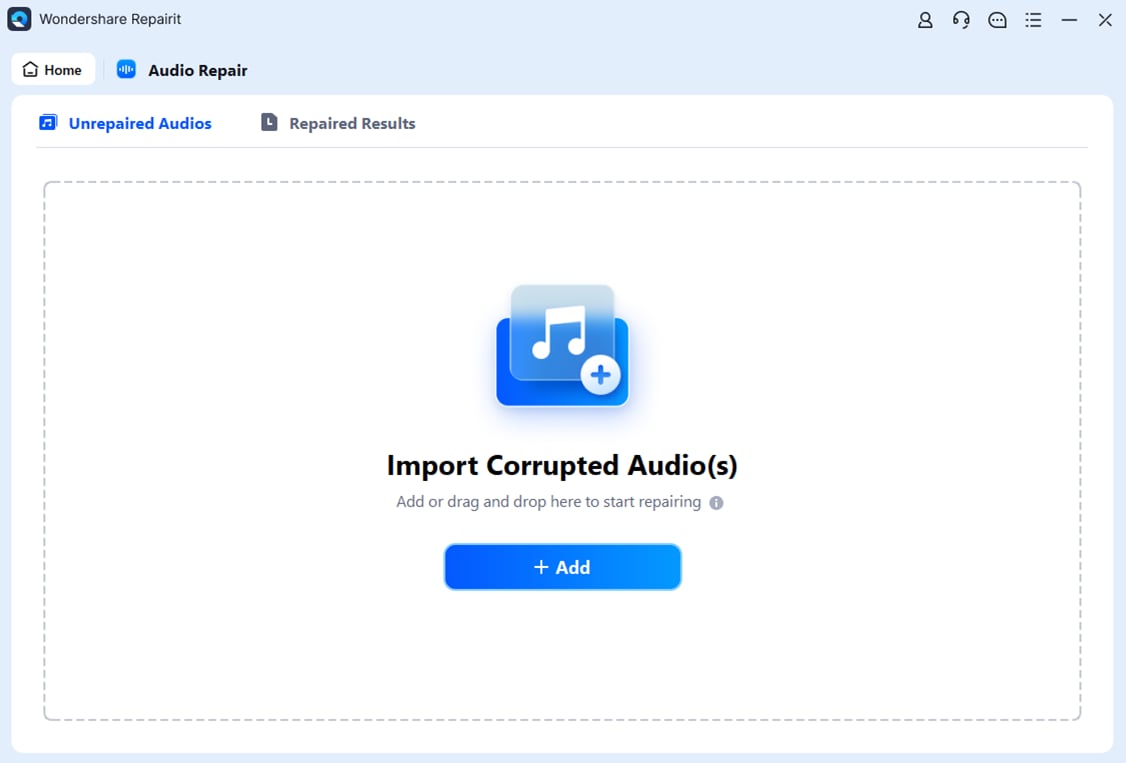
Step 1. Import the damaged audio files you want to fix into Repairit Audio Repair to begin the repair process smoothly.
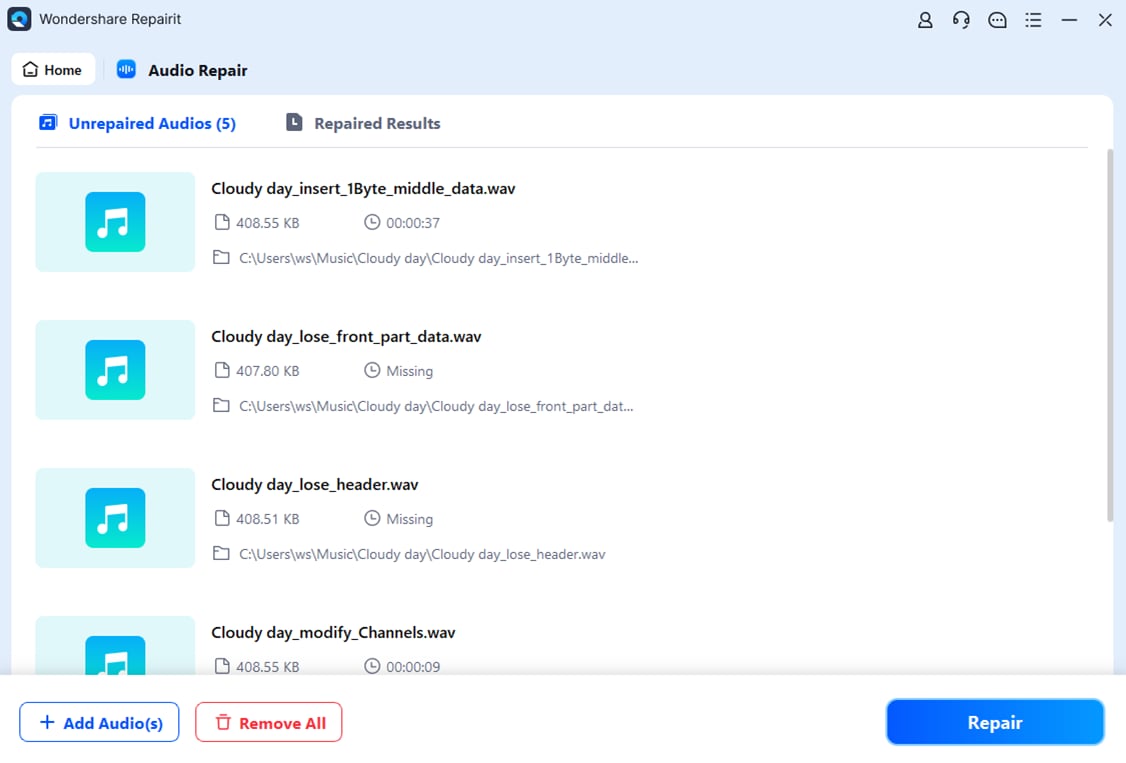
Step 2. Click the repair button to let Repairit Audio Repair automatically analyze and repair the corrupted audio files efficiently.
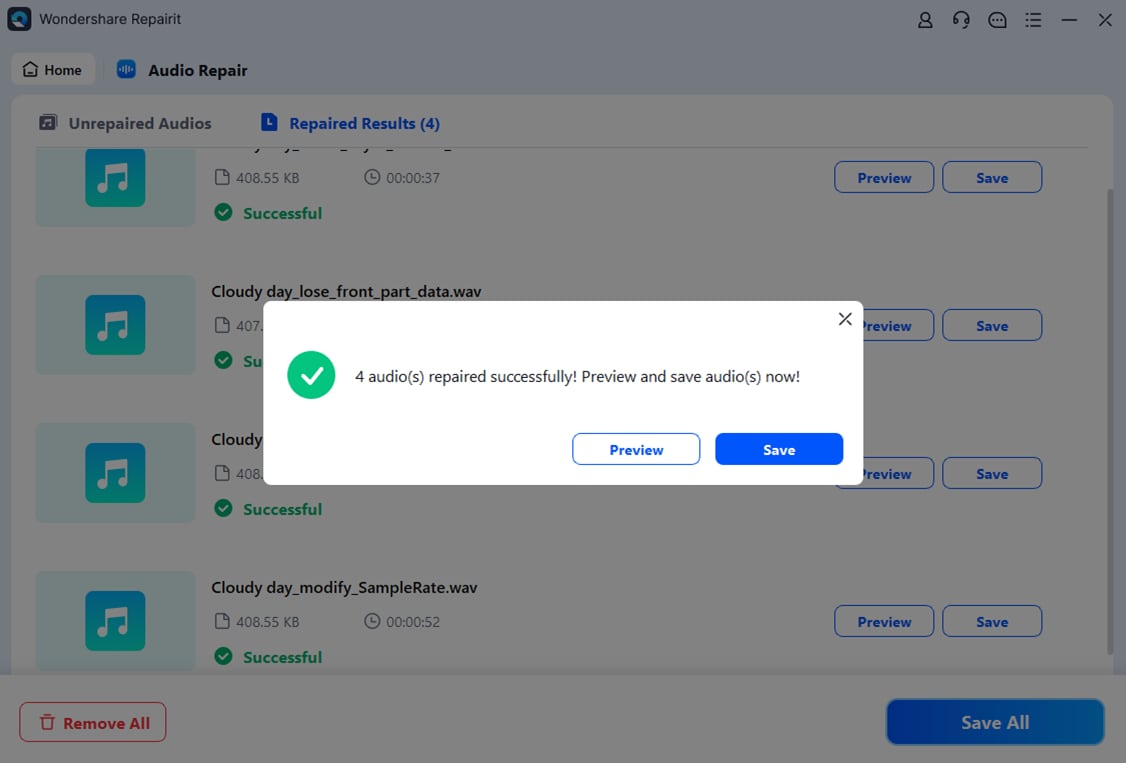
Step 3. Preview the repaired audio results, then save the successfully repaired files to your device.
Final Verdict
The key difference between Repairit Audio Repair and Krisp Audio lies in when and how they improve your audio. Krisp Audio may be enough if you mainly need real-time AI noise suppression to keep meetings, calls, and streams more listenable, and you rarely deal with corrupted or unplayable recordings.
Repairit Audio Repair is more suitable when you already have damaged audio files that crackle, distort, or refuse to play correctly and you need to repair corrupted audio files at the source. In many real-world workflows, users benefit from using Krisp Audio to prevent noisy captures and relying on Repairit Audio Repair as the safety net when a recording still ends up damaged.
Next: Repairit Audio Repair vs Auphonic
FAQ
-
1. Is Krisp Audio a full audio repair tool like Repairit Audio Repair?
Krisp Audio focuses on real-time AI noise suppression and voice clarity during calls and streams. It does not repair corrupted audio files or fix unplayable recordings. Repairit Audio Repair is designed for file-level repair when your audio is already damaged or fails to play correctly. -
2. When should I use Repairit Audio Repair instead of Krisp Audio?
Use Repairit Audio Repair when you have recorded files that are distorted, noisy, or unplayable and you need to restore damaged audio playback. This becomes important when a meeting, interview, or podcast has already been captured and you cannot re-record it. Krisp Audio is better during the live session itself, not afterward. -
3. What is the difference between audio repair and audio enhancement or cleanup?
Audio enhancement or cleanup, like the AI noise suppression in Krisp Audio, focuses on improving sound in real time or lightly cleaning a recording by reducing background noise. Audio repair goes deeper and aims to fix corrupted audio files, restore damaged audio playback, and address issues that make a file distorted or unplayable. Repairit Audio Repair is oriented around this repair task. -
4. Can I use both Krisp Audio and Repairit Audio Repair in the same workflow?
Yes. Many users run Krisp Audio to keep live calls and streams cleaner and then rely on Repairit Audio Repair if a recording still ends up damaged, noisy, or fails to play. Using both tools lets you reduce problems at the source while keeping a dedicated option for repairing broken audio files later. -
5. Do I need audio engineering skills to use Repairit Audio Repair?
Repairit Audio Repair is designed with a guided workflow so that users without deep audio engineering experience can import corrupted files, start the repair process, preview the outcome, and export repaired audio with straightforward steps.