When you compare Repairit Audio Repair vs Auphonic, you are really choosing between file-level audio repair and automated post-processing enhancement. Auphonic focuses on cloud-based leveling and cleanup for podcasters, while Repairit Audio Repair focuses on repairing corrupted or unplayable audio so that you can then enhance it with tools like Auphonic.
In most real-world cases, this choice comes down to the condition of your source files. If your recording is damaged, glitchy, or will not play, you need file-level audio repair before any AI enhancement. If your recording already plays fine and mainly needs noise reduction, loudness control, and voice clarity, an automated enhancer may be enough.
Repair Corrupted Audio Files With Repairit Audio Repair
 Security Verified. Over 7,302,189 people have downloaded it.
In this article
- Repairit Audio Repair vs Auphonic: Quick Verdict
- Repairit Audio Repair vs Auphonic: Key Differences
- Repairit Audio Repair vs Auphonic: Comparison Table
- What Repairit Audio Repair and Auphonic Are Best For
- Repairit Audio Repair vs Auphonic: Audio Repair Capabilities
- Repairit Audio Repair vs Auphonic: Supported Audio Formats and Use Cases
- Repairit Audio Repair vs Auphonic: Workflow and Ease of Use
- Repairit Audio Repair vs Auphonic: AI Processing and Automation
- Repairit Audio Repair vs Auphonic: Pricing and Accessibility
- Who Should Choose Repairit Audio Repair
- Who Should Choose Auphonic
- Pros and Cons of Repairit Audio Repair and Auphonic
- How to Repair Corrupted Audio Files After Choosing the Right Tool
Repairit Audio Repair vs Auphonic: Quick Verdict
The main difference is that Repairit Audio Repair focuses on repairing corrupted, unplayable, or damaged audio files, while Auphonic focuses on automated AI enhancement and leveling for already playable content. This matters if your recordings are failing to play or are heavily glitched, because enhancement tools alone usually cannot fix file-level damage.
In most cases, Repairit Audio Repair is more suitable when you need to restore damaged audio playback so you can safely open the files in editors or enhancers. Auphonic may be enough if your audio already plays correctly and you mainly want consistent loudness, reduced noise, and smoother voice tone for podcasts or videos.
Repairit Audio Repair vs Auphonic: Key Differences
The key difference between Repairit Audio Repair vs Auphonic is that one targets corrupted-file repair and the other targets post-processing cleanup. Repairit Audio Repair analyzes and repairs issues that prevent smooth playback, while Auphonic centers on loudness normalization, noise reduction, and balancing levels across speakers or segments.
According to the comparison inputs, both tools use AI but in different ways. Repairit Audio Repair uses AI-driven analysis for repairing damaged audio playback and artifacts. Auphonic uses AI-driven loudness normalization, noise reduction, and leveling to polish content that already opens and plays without structural problems.
In real workflows, this often means you would use Repairit Audio Repair first to fix unplayable or severely distorted files, then use Auphonic or other enhancers to fine-tune the sound. Choosing between them depends on whether your primary pain point is corruption and glitches or noise and loudness balance.
Repairit Audio Repair vs Auphonic: Comparison Table
This comparison table summarizes how Repairit Audio Repair vs Auphonic differ in repair depth, workflow, and AI enhancement focus so you can quickly see which aligns with your situation.
| Dimension | Repairit Audio Repair | Auphonic |
|---|---|---|
| Best for | Repairing corrupted, unplayable, or damaged audio files before enhancement or editing | Podcasters and content creators needing balanced, denoised, and leveled audio output |
| Ease of use | Guided repair workflow focused on a few clear steps | Very simple cloud-based presets with minimal manual control |
| Repair depth | Targets file-level issues to fix unplayable or severely distorted recordings | Focuses on enhancement and leveling, not deep corrupted file repair |
| AI capability | AI-driven analysis for repairing damaged audio playback and artifacts | AI-driven loudness normalization, noise reduction, and leveling |
| Workflow | Local repair workflow that prepares audio for later editing or mixing | Automated and cloud-based workflow for finished podcast and video audio |
| Strengths | Restores damaged audio playback so files can be used again | Automatic leveling and noise reduction with minimal setup |
| Weaknesses | Not a full podcast production or mixing environment | Limited manual control and not designed for fixing corrupted audio files |
What Repairit Audio Repair and Auphonic Are Best For
Repairit Audio Repair is more suitable when the main problem is corrupted audio that others tools cannot open, while Auphonic is better suited when your files already play and you need AI polishing. Understanding this difference helps you avoid trying to clean up audio that still has underlying structural damage.
From the overview, Auphonic is an automated audio post-processing tool best for podcasters needing balanced audio output with automatic leveling and noise reduction. Repairit Audio Repair, in contrast, is aimed at repairing corrupted or unplayable audio files before you send them into tools like Auphonic for AI enhancement and final polishing.
In many studios and content workflows, engineers and creators will keep both categories of tools: one to rescue and repair recordings that have become unplayable, and another to handle everyday noise and loudness control on already stable audio.
Repairit Audio Repair vs Auphonic: Audio Repair Capabilities
The main difference in audio repair capabilities is that Repairit Audio Repair addresses damage that stops or severely disrupts playback, while Auphonic focuses on improving the sound of audio that is already structurally intact. This matters if your files are corrupted, full of glitches, or refused by your DAW.
According to the core features summary, both tools use AI to improve audio, but they solve different problems. Repairit Audio Repair focuses on repairing damaged audio files, targeting severe glitches, artifacts, and damaged recordings that standard enhancers cannot open or fix. Auphonic focuses on automated enhancement, leveling, and noise reduction for already playable content, applying multi-step AI processing in the cloud.
Used together, a common workflow is: Repairit Audio Repair restores damaged playback, and then Auphonic refines clarity, loudness, and background noise. Trying to reverse this order usually fails if the file is not playable, because most enhancement engines rely on being able to read the audio stream without corruption.
Repairit Audio Repair vs Auphonic: Supported Audio Formats and Use Cases
The key difference in formats and use cases is that Repairit Audio Repair is centered on fixing problematic files from many sources, while Auphonic is oriented toward post-processing common delivery formats for podcasts and online content. This is important if you work with recordings from varied devices that may generate corrupted files.
In most real-world cases, both tools work with common formats like MP3, WAV, M4A, AAC, or FLAC, though exact support on Auphonic depends on its platform capabilities. Repairit Audio Repair focuses on repairing corrupted audio files from recorders, phones, or desktops so they can be opened, played, and then enhanced in tools such as Auphonic.
Typical scenarios for Repairit Audio Repair include damaged interviews, meeting recordings, or session exports that will not play correctly. Typical scenarios for Auphonic include podcast episodes, livestream replays, or talking-head videos where the audio is fine structurally but needs more consistent levels and noise control before publishing.
Repairit Audio Repair vs Auphonic: Workflow and Ease of Use
The key difference in workflow is that Repairit Audio Repair runs a focused local repair process, while Auphonic provides cloud-based presets for finished content. This matters if you prefer a guided desktop repair flow versus automated uploads and online processing.
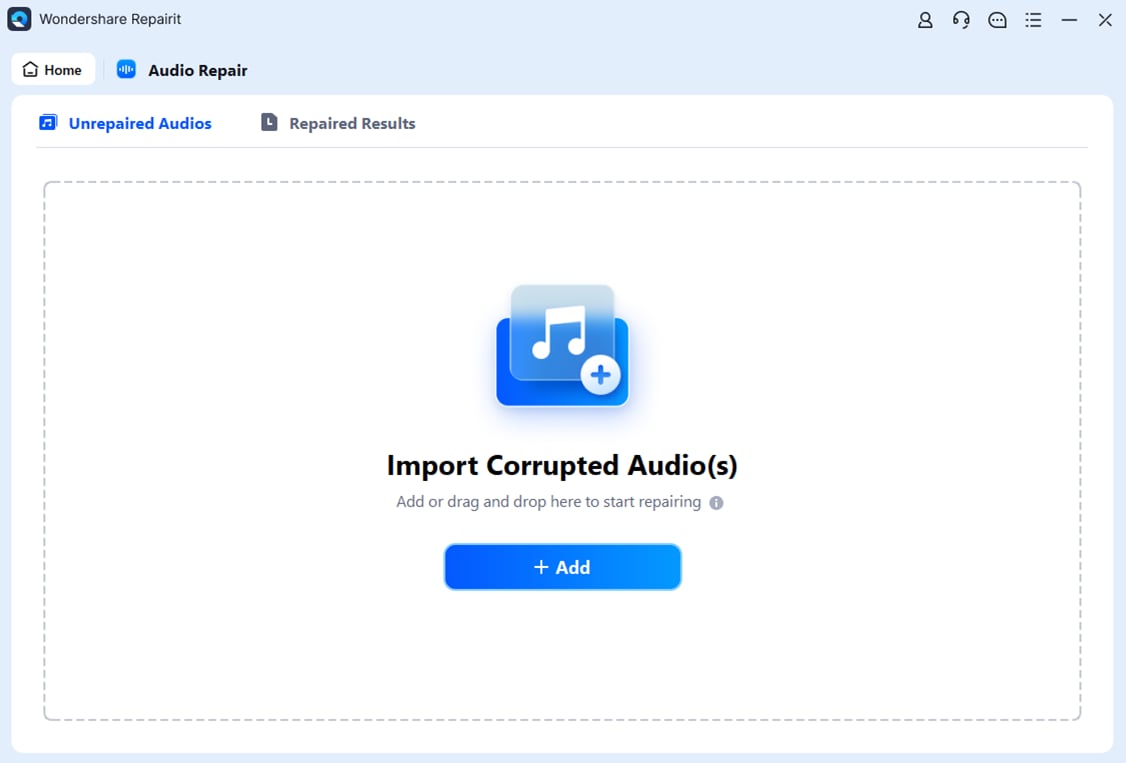
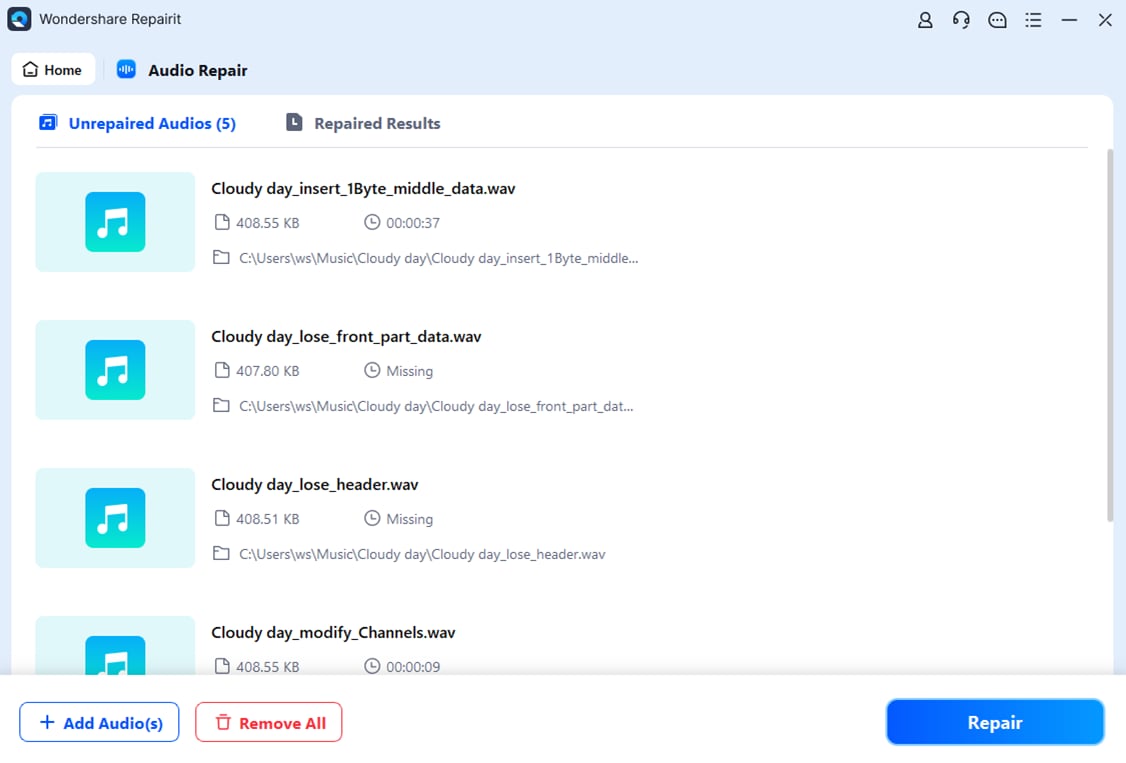
Auphonic uses an automated and cloud-based workflow: upload your audio, choose a preset, and let the system handle leveling and noise reduction. Repairit Audio Repair uses a straightforward local workflow where you add corrupted audio files, Start the audio repair process, and then export fixed files ready for further editing or enhancement.
For users who want more control over when and where files are processed, Repairit Audio Repair offers a contained environment for diagnosing and repairing issues before sending files into DAWs or AI enhancers. For users who want minimal interaction and quick polish on podcast-ready material, Auphonic streamlines the process through its web-based interface and presets.
Repairit Audio Repair vs Auphonic: AI Processing and Automation
The main difference in AI processing is that Repairit Audio Repair applies AI to detect and repair damage, while Auphonic uses AI to automate loudness and noise handling. This is crucial when corruption or glitches are present, because enhancement-only AI usually assumes the file is structurally healthy.
With AI enhancement in mind, Auphonic leans heavily on AI for automatic leveling, voice clarity, and noise reduction on already playable audio. Repairit Audio Repair also uses AI, but to detect and repair damage that stops smooth playback, which matters when clicks, glitches, or corruption prevent Auphonic or other enhancers from working effectively.
Practically, this means you can rely on Repairit Audio Repair when your priority is restoring listenability and continuity in the audio stream. Once that is achieved, Auphonic can then automate much of the manual work that used to require detailed compression, EQ, and gain staging, especially for voice-heavy content.
Repairit Audio Repair vs Auphonic: Pricing and Accessibility
The key difference in pricing and accessibility is that Repairit Audio Repair is provided as a desktop tool from Wondershare, while Auphonic is based around cloud processing time. This can influence whether you prefer one-time local access or ongoing online usage.
Auphonic offers a cloud-based model where access and usage typically depend on an account and available processing time, without requiring heavy local hardware. Repairit Audio Repair is offered by Wondershare with options that may include free trials or limited-function testing so you can see how well it repairs corrupted audio before committing.
Because exact pricing and plans can change, it is best to check each vendor directly. In most cases, users who constantly publish voice content may value Auphonic credits or plans, while users who often deal with corrupted or unplayable recordings may prioritize having Repairit Audio Repair installed locally for on-demand repair.
Who Should Choose Repairit Audio Repair
Repairit Audio Repair is more suitable when the recordings you care about are corrupted, glitchy, or unplayable, and rerecording is impossible. This is often the case for one-off interviews, live events, or field recordings.
- You have corrupted or unplayable audio files that Auphonic cannot process reliably.
- You need to fix distorted or glitchy recordings before mixing or podcast post-production.
- You want a focused tool to repair damaged audio playback rather than do full editing.
- You work with important interviews or sessions where rerecording is not possible.
For users in these situations, installing Repairit Audio Repair can be a practical first step. It helps you restore damaged playback so that your DAW, editor, or AI enhancer can then take over with typical noise reduction and mixing tasks.
Who Should Choose Auphonic
Auphonic may be enough if your audio files are already playable and your main challenge is making speech more consistent, clear, and broadcast-ready. This aligns well with podcasters, online educators, and video creators.
- You already have playable recordings and mainly need loudness and noise under control.
- You produce podcasts or online shows and want automated, cloud-based post-processing.
- You prefer automatic leveling and do not need detailed manual tweaking.
- You want a quick way to enhance talking-head audio for podcasts or video content.
In these cases, users often send their edited but unmastered exports to Auphonic as a final step, letting its AI smoothing handle overall loudness and noise. However, if any files are corrupted or fail to play properly, a tool like Repairit Audio Repair is usually needed first.
Pros and Cons of Repairit Audio Repair and Auphonic
The key difference in pros and cons is that Repairit Audio Repair excels at bringing damaged audio back to a usable state, while Auphonic excels at making already-usable audio sound more consistent. Evaluating both sides helps you decide which limitation matters less for your work.
Repairit Audio Repair Pros and Cons
Auphonic Pros and Cons
How to Repair Corrupted Audio Files After Choosing the Right Tool
Once you understand how Repairit Audio Repair vs Auphonic compare, the next step is actually fixing any corrupted or unplayable audio that is blocking your workflow. Enhancement tools like Auphonic are most effective only after the underlying file-level problems are resolved.
For users who want a guided way to restore damaged audio playback before editing or AI enhancement, Repairit Audio Repair offers a practical desktop workflow. You can repair corrupted audio, preview the results, and then send the fixed file to your DAW, Auphonic, or other processors for further cleanup and mixing.
Key Features
Repairit Audio Repair is more suitable when your priority is fixing the audio file itself rather than doing creative editing or mixing. Its main role is to give you a clean starting point.
- Repairs corrupted or damaged audio files that may not open or play cleanly.
- Focuses on fixing distorted or noisy audio caused by glitches and file issues.
- Prepares repaired audio so it can be polished in DAWs or automated enhancers.
Step-by-step guide
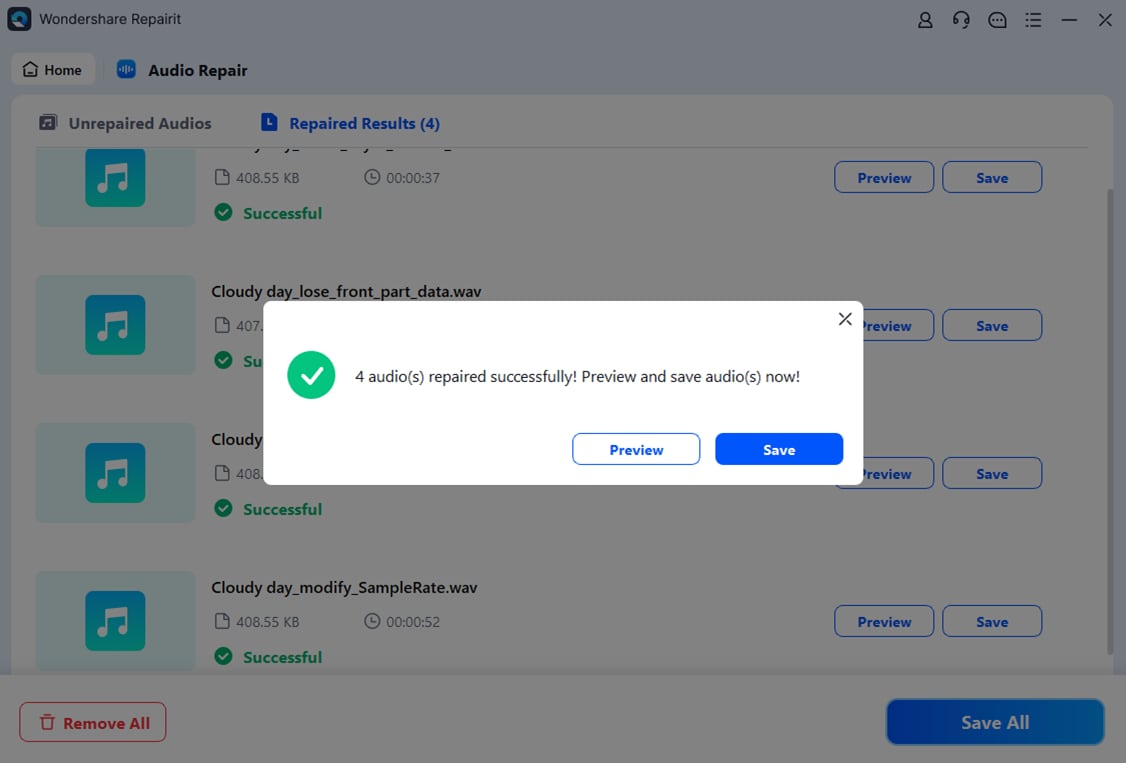
Step 1. Import the damaged audio files you want to fix into Repairit Audio Repair to begin the repair process smoothly.
Step 2. Click the repair button to let Repairit Audio Repair automatically analyze and repair the corrupted audio files efficiently.
Step 3. Preview the repaired audio results, then save the successfully repaired files to your device.
Final Verdict
The main difference is that Repairit Audio Repair focuses on repairing corrupted or unplayable audio files, while Auphonic focuses on AI enhancement, voice clarity, and noise reduction for already playable content. Repairit Audio Repair is more suitable when file damage, glitches, or playback errors are blocking your project, and you need to restore damaged audio playback before any mixing or post-processing.
Auphonic may be enough if your audio already plays correctly and you mostly want automatic leveling and denoising for podcast-style content. In many real-world workflows, users repair problematic recordings with Repairit Audio Repair first, then run the cleaned, playable audio through Auphonic for quick AI enhancement and consistent output.
Thinking in terms of workflow, Repairit Audio Repair solves the can I use this file at all question, while Auphonic helps answer does this sound polished enough to publish. Choosing the right sequence will usually give you more reliable results than relying on enhancement alone to fix corrupted audio.
Next: Repairit Audio Repair vs Veed Audio Cleaner
FAQ
-
1. Is Auphonic an audio repair tool like Repairit Audio Repair?
No. Auphonic is mainly an automated audio post-processing tool for leveling, noise reduction, and basic enhancement on playable files. Repairit Audio Repair focuses on repairing corrupted audio files, fixing damaged playback, and dealing with issues that stop smooth listening before you move to enhancement tools like Auphonic. -
2. When should I use Repairit Audio Repair instead of Auphonic?
Use Repairit Audio Repair when your audio file is corrupted, will not play, or has severe glitches and artifacts that enhancement alone cannot fix. Once the file plays reliably, you can send it to Auphonic for automatic loudness, voice clarity, and noise reduction. -
3. Can I use Repairit Audio Repair and Auphonic in the same workflow?
Yes. In most real-world cases, you would first repair damaged or unplayable audio with Repairit Audio Repair, export the fixed file, and then upload it to Auphonic for automated leveling and noise reduction. This way, Auphonic works on stable audio instead of corrupted material. -
4. What is the difference between audio repair and audio enhancement or cleanup?
Audio repair focuses on fixing technical damage at the file or signal level, such as corrupted structure, extreme distortion from glitches, or unplayable sections so the audio can be heard again. Audio enhancement or cleanup, like what Auphonic does, assumes the file already plays and then improves quality through noise reduction, leveling, and clarity boosts; it does not typically fix deep corruption that prevents playback.