
Choosing between Repairit vs Remo Video Repair often comes down to how you handle damaged camera and recorder files in a local desktop workflow. Remo Video Repair focuses on straightforward video fixes for common corruption issues, while Repairit aims to cover a wider range of scenarios with guided repair options. This comparison walks through how each tool works, their strengths and weaknesses, and who they are best suited for so you can pick the video repair software that matches your day-to-day needs.
Repair Corrupted Files To Save Your Data
 Security Verified. Over 7,302,189 people have downloaded it.
In this article
- Repairit vs Remo Video Repair: Quick Verdict
- Repairit vs Remo Video Repair: Key Differences
- Repairit vs Remo Video Repair: Comparison Table
- What Repairit and Remo Video Repair Are Best For
- Repairit vs Remo Video Repair: Features and Capabilities
- Repairit vs Remo Video Repair: Supported Formats and Compatibility
- Repairit vs Remo Video Repair: Workflow and Ease of Use
- Repairit vs Remo Video Repair: Pricing and Trial Options
- Who Should Choose Repairit
- Who Should Choose Remo Video Repair
- Pros and Cons of Repairit and Remo Video Repair
- How to Repair Corrupted Videos After Choosing the Right Tool
Repairit vs Remo Video Repair: Quick Verdict
If you frequently work with mixed video sources and want guided help through different corruption scenarios, Repairit is usually the more comfortable environment. It focuses on approachable, step-based flows that can suit beginners or non-technical users who still need to fix unplayable video files.
Remo Video Repair fits better if you mainly fix damaged camera and recorder clips on a single desktop and prefer a simple, traditional interface. It keeps the workflow focused on standard corruption issues, without many extra options that you might never touch.
In many everyday cases, both tools can repair corrupted videos effectively. The decision is less about raw power and more about which workflow, guidance level, and long-term flexibility match how you usually work with your footage.
Repairit vs Remo Video Repair: Key Differences
The main contrast between Repairit vs Remo Video Repair lies in scope and guidance. Repairit leans toward a broader, guided toolkit that can adapt to a variety of video problems, while Remo Video Repair keeps a tight focus on common, desktop-based corruption tasks.
- Best for: Repairit is geared toward users who handle a mix of simple and more involved corruption issues across different media scenarios. Remo Video Repair is aimed at those who mostly process damaged camera and recorder files on one machine.
- Ease of use: Repairit offers a clearly guided, step-based flow that helps users move from import to export with minimal guesswork. Remo Video Repair uses a straightforward desktop pattern that feels familiar if you are used to classic utilities.
- Repair depth: Repairit is positioned to handle a wider range of everyday damage types, especially when your footage comes from varied sources. Remo Video Repair is tuned more for standard corruption rather than unusual edge cases.
- Workflow style: Repairit supports more modern, guided project handling, whereas Remo Video Repair centers on opening files, running a repair, and saving results in a linear way.
- Strengths and weaknesses: Repairit shines when you want flexibility and room to grow; its downside is that it may feel more feature-rich than you need for occasional fixes. Remo Video Repair offers a clear, focused video-repair experience, but can feel limiting if your needs expand.
Repairit vs Remo Video Repair: Comparison Table
| Dimension | Repairit | Remo Video Repair |
|---|---|---|
| Best for | Users who need a broader repair toolkit for various corruption levels and media scenarios. | Users with local desktop workflows and common corruption issues in camera or recorder files. |
| Ease of use | User-friendly with guided flows, suited to beginners and non-technical users. | Straightforward interface, familiar to users comfortable with traditional desktop tools. |
| Repair depth | Positioned to handle a wider range of damage types in many everyday cases. | Geared toward standard video corruption issues rather than complex edge cases. |
| Workflow | Designed for modern, guided repair steps with flexible project handling. | Traditional desktop workflow focused on loading and repairing local files. |
| Strengths | Clear workflows, broad use cases, and support for a variety of repair needs. | Clear video-repair positioning and practical for standard desktop use with damaged recordings. |
| Weaknesses | May feel more feature-rich than necessary for one-off basic fixes. | Narrower brand pull and less distinctive advantage for broader or complex repair needs. |
What Repairit and Remo Video Repair Are Best For
Repairit and Remo Video Repair both focus on fixing corrupted video files, but they are positioned differently. Remo Video Repair is a desktop repair utility centered on damaged camera and recorder files and is best for users with local desktop workflows and common corruption issues. Repairit, in contrast, aims to cover broader repair situations while still remaining accessible for everyday video problems.
In practical terms, if you often receive clips from different cameras, editors, or environments and want a safety net for varied corruption patterns, Repairit can be a more adaptable choice. If your work is mostly about bringing back playback for standard recordings from a few known devices, Remo Video Repair may feel perfectly sufficient.
Repairit vs Remo Video Repair: Features and Capabilities
Both tools aim to repair corrupted videos, but they differ in how broadly they approach that task.
Overall feature positioning
Both tools aim to repair corrupted video files, but Repairit leans toward broader, guided repair scenarios, while Remo Video Repair keeps a tight focus on standard desktop use and damaged recordings. This creates a practical choice between a more general-purpose repair environment and a narrower, camera-file-focused option.
Core capabilities you can expect from both
- Import corrupted video files from local desktop storage for analysis and repair.
- Simple, step-based repair flow that guides users from file selection to output.
- Standard preview and export options to check repaired videos before saving.
Where Repairit tends to stand out
- Repairit typically offers broader handling for varied corruption patterns across different media scenarios.
- Repairit is often better suited when you anticipate scaling to more diverse or repeated repair tasks beyond basic fixes.
Where Remo Video Repair keeps things focused
- Remo Video Repair emphasizes a focused toolset for damaged camera and recorder outputs in desktop workflows.
- Its narrower scope can make decisions simpler if you just want to fix unplayable video files from a few devices.
Repairit vs Remo Video Repair: Supported Formats and Compatibility
Both Repairit and Remo Video Repair generally support common video formats created by cameras, recorders, and desktop editors. In most day-to-day situations, either tool can handle typical formats used by consumer and prosumer devices.
Repairit may be preferable if you deal with a wider range of sources, such as clips from different brands of cameras, screen recordings, or exported sequences from several editors. Remo Video Repair fits users who mainly work with familiar camera and recorder files and do not often encounter unusual formats.
Because exact compatibility can evolve with updates, it is sensible to check each vendor s current documentation when you rely on specific codecs or production pipelines.
Repairit vs Remo Video Repair: Workflow and Ease of Use
Repairit focuses on a guided, streamlined repair flow that can feel approachable to users who want clear next steps. From importing files to previewing results, the interface is built to minimize trial and error and gently walk you through the process.
Remo Video Repair aligns more with a traditional desktop workflow where you open the program, load local files, run the repair, and then save the output. Users comfortable with classic desktop utilities may find this familiar, especially if they prefer fewer screens and straightforward buttons.
If you are new to video repair software or you only fix corrupted clips occasionally, Repairit s extra guidance can reduce friction. If you already know what you want and do not need much hand-holding, Remo Video Repair s direct interface may be enough.
Repairit vs Remo Video Repair: Pricing and Trial Options
Both tools are typically available as paid desktop applications, often with trial or demo options that let you test the repair process on sample or limited files. Exact pricing can vary by license type, duration, or promotional offers.
In practice, it is helpful to:
- Download each trial to see how they handle your specific corrupted files.
- Compare any limits on trial repairs, such as watermarks or length caps.
- Evaluate whether you need ongoing repairs or just an occasional fix, then match that to subscription or one-time options.
Because pricing can change, the most reliable way to decide is to check each vendor s current plans and see which balance of cost, trial experience, and feature coverage aligns better with your workload.
Who Should Choose Repairit
You are likely a good fit for Repairit if:
- You handle a mix of simple and more severe video corruption issues over time and want a tool that can grow with you.
- You prefer guided, user-friendly workflows rather than manual trial and error using multiple utilities.
- You are a creator or part of a team dealing with video from multiple sources and different environments.
- You plan to rely on a broader toolkit for ongoing or varied video repair needs, not just a single one-off fix.
In these situations, Repairit s wider scope and structured interface can save time and reduce the learning curve, especially when you encounter problems that are not limited to one device or format.
Who Should Choose Remo Video Repair
Remo Video Repair is better suited to users who want a focused desktop application that zeroes in on repairing corrupted videos from typical cameras and recorders. Its positioning is straightforward: take a damaged file, run it through a simple process, and restore damaged video playback where possible.
You might lean toward Remo Video Repair if:
- You are focused mainly on repairing damaged camera and recorder files on a desktop or laptop.
- You prefer a straightforward, traditional desktop workflow without many extra features.
- You mostly face common corruption issues, such as videos that will not play or stop unexpectedly, rather than unusual or complex cases.
- You want a clearly positioned, video-only repair utility for local projects, without a larger ecosystem around it.
For users who fit this profile, Remo Video Repair can feel efficient and easy to keep in their toolkit without much configuration or adjustment.
Pros and Cons of Repairit and Remo Video Repair
Repairit Pros and Cons
Remo Video Repair Pros and Cons
How to Repair Corrupted Videos After Choosing the Right Tool
Once you have weighed Repairit vs Remo Video Repair and decided which direction suits your desktop workflow, the next step is actually repairing your corrupted videos. The comparison above helps you choose a tool; now the focus shifts to putting that tool to work so you can restore damaged video playback and get back to editing or sharing.
Even if you keep Remo Video Repair in your toolkit, it can be useful to see how a guided option like Repairit handles the process from start to finish. The example below walks through a typical Repairit workflow so you know what to expect from a structured, step-based repair experience.
Key Features
In a typical desktop workflow, Repairit offers:
- Guided video repair workflow for different corruption scenarios.
- Support for a variety of common video formats and sources.
- Preview of repaired clips before saving the final output.
Step-by-step guide
- Add corrupted videos
Open Repairit, then drag and drop or browse to add the corrupted videos from your local drive or connected media. Check the list to confirm that all clips you want to fix are included.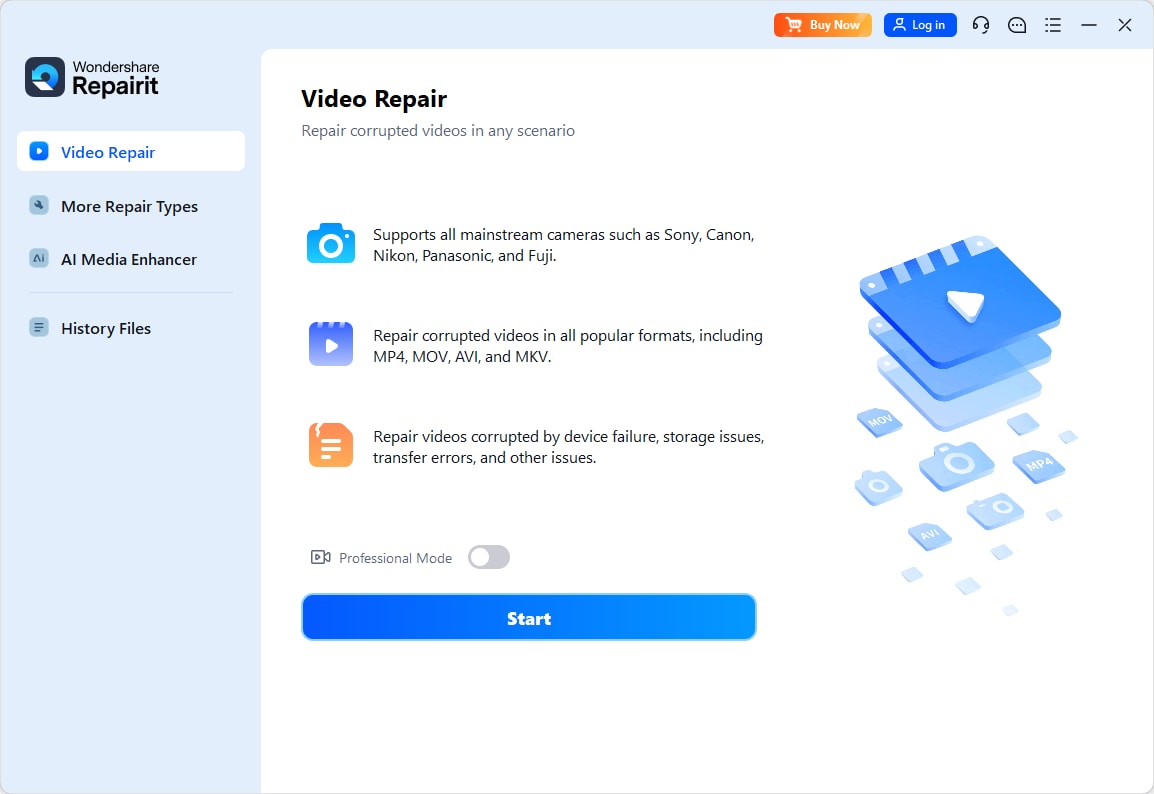
- Run the repair
Select the available repair option and start the process. Repairit will analyze the damaged files and attempt to fix issues that affect playback, following on-screen prompts so you always know what is happening.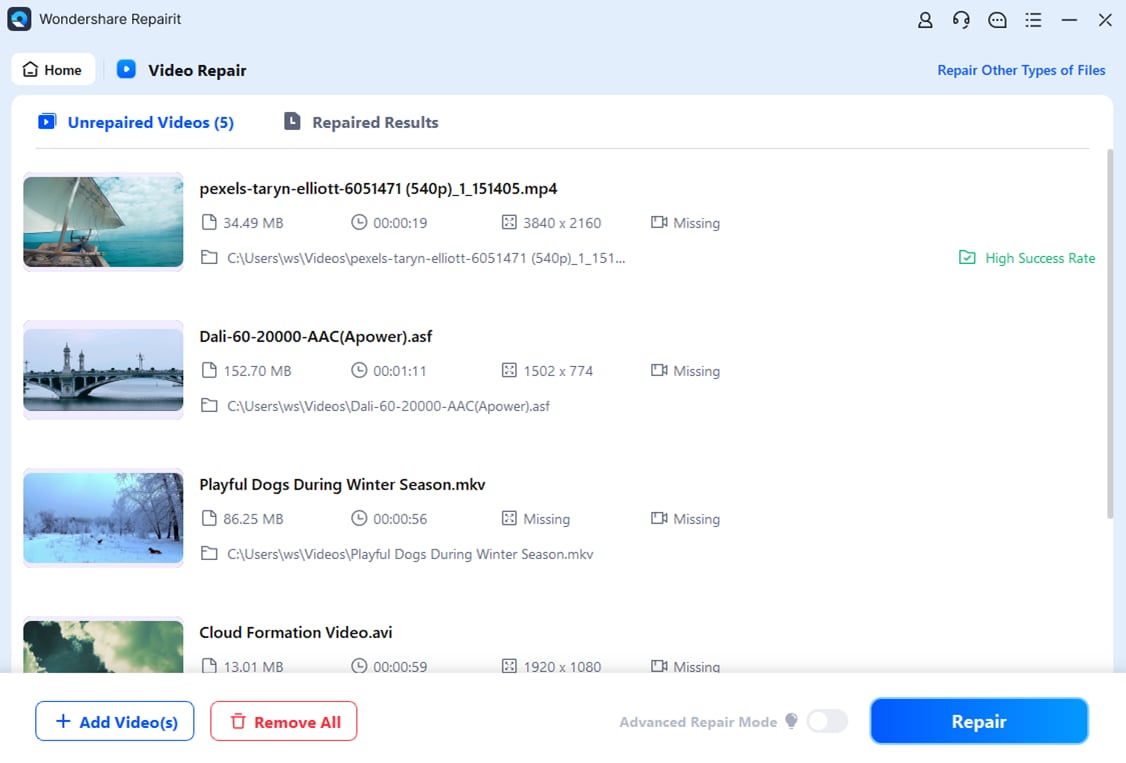
- Preview and export
When the repair is finished, play the preview inside Repairit to make sure the video looks and sounds acceptable. If you are satisfied, choose an output location and export the repaired files to your desktop or project folder.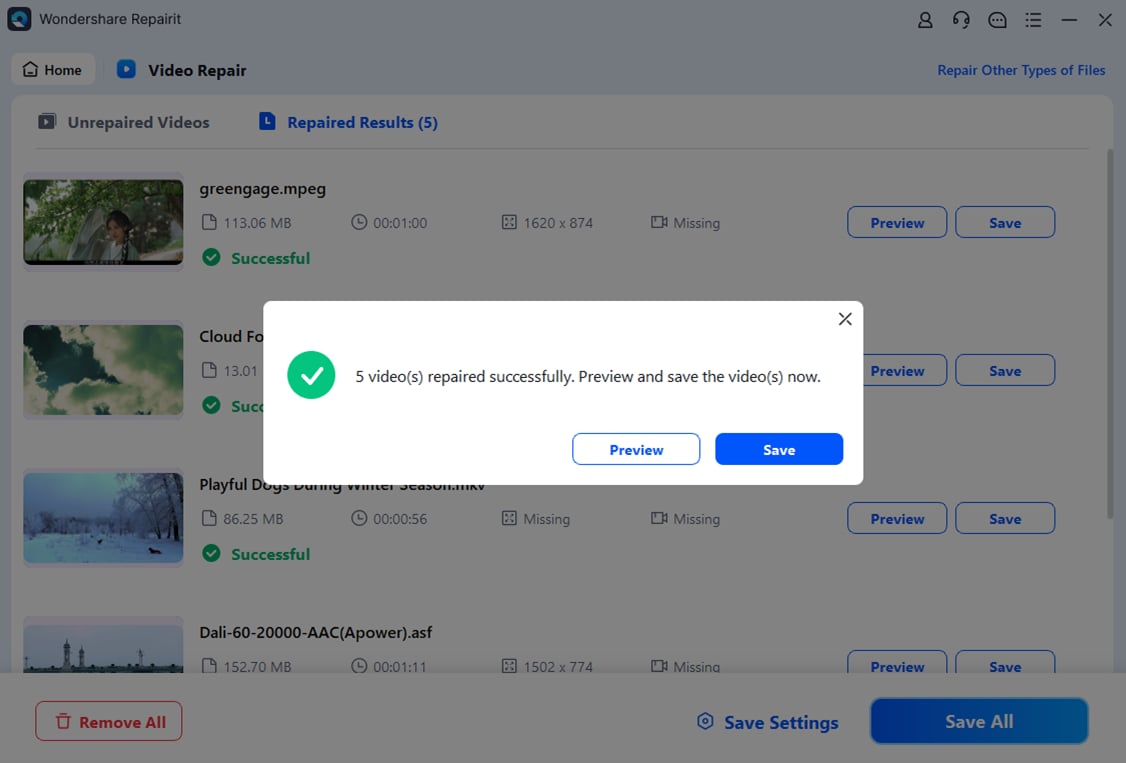
Final Verdict
Repairit is a stronger choice for users who want guided workflows, a broader safety net for different corruption scenarios, and flexibility as their video repair needs grow. It can be especially helpful when you handle content from various sources or face more complex damage over time.
Remo Video Repair may still be enough if your primary goal is to fix common corruption in camera and recorder files within a familiar desktop environment. If you mainly work on a single machine with standard footage and prefer a straightforward, focused utility, its narrower scope can be an advantage rather than a limitation.
In many cases, a practical approach is to try both tools with your own corrupted clips, compare the experience, and then decide which fits better into your long-term desktop workflow for repairing damaged videos.
FAQ
-
1. Is Repairit better than Remo Video Repair for fixing corrupted videos?
Repairit is generally stronger for broader and more varied repair needs, while Remo Video Repair may be sufficient if you mainly handle common corruption in standard camera or recorder files. The better choice depends on how complex your issues are and how often you work with different video sources. -
2. Which is easier to use, Repairit or Remo Video Repair?
Repairit emphasizes guided workflows that walk you through each step, which can be helpful for beginners or occasional users. Remo Video Repair uses a straightforward, traditional desktop layout that may feel more natural if you are already comfortable with classic utilities. -
3. Can I try both tools before deciding which to use?
In many cases, both Repairit and Remo Video Repair provide trial or demo options so you can test how they handle your corrupted files. Trying each one with the same videos is often the most reliable way to see which workflow and results fit your needs.