
When your video, photo, or document becomes corrupted, choosing the right repair tool matters more than it first seems. Repairit vs iMyFone UltraRepair is a common comparison because both are designed to fix broken media, yet they approach video repair, interface design, and feature scope in different ways. Understanding how each tool fits your workflow can help you avoid wasted time and repeated attempts on damaged clips.
Repairit leans into a guided, video-focused repair process that aims to make restoring damaged video playback feel less intimidating, even if you are not technical. iMyFone UltraRepair, by contrast, positions itself as a broader suite that can repair videos, photos, and other files in one place. In this side-by-side look, we will break down where Repairit shines as an iMyFone UltraRepair alternative, where iMyFone UltraRepair is a better fit, and how to decide based on the types of media you handle and how confident you feel working with repair software.
Repair Corrupted Files To Save Your Data
 Security Verified. Over 7,302,189 people have downloaded it.
In this article
- Repairit vs iMyFone UltraRepair: Quick Verdict
- Repairit vs iMyFone UltraRepair: Key Differences
- Repairit vs iMyFone UltraRepair: Comparison Table
- What Repairit and iMyFone UltraRepair Are Best For
- Repairit vs iMyFone UltraRepair: Features and Capabilities
- Repairit vs iMyFone UltraRepair: Supported Formats and Compatibility
- Repairit vs iMyFone UltraRepair: Workflow and Ease of Use
- Repairit vs iMyFone UltraRepair: Pricing and Trial Options
- Who Should Choose Repairit
- Who Should Choose iMyFone UltraRepair
- Pros and Cons of Repairit and iMyFone UltraRepair
- How to Repair Corrupted Videos After Choosing the Right Tool
Repairit vs iMyFone UltraRepair: Quick Verdict
If you mainly need to repair corrupted videos and want a structured, guided experience, Repairit tends to be the more comfortable choice. Its interface and repair flow are centered on video and related media, which can be reassuring when you are working with important clips.
iMyFone UltraRepair, on the other hand, makes sense if you prefer one lightweight, suite-style tool that can handle videos, photos, and other files under a single roof. It suits users who typically face light to moderate corruption issues across multiple media types rather than deep, video-only problems.
Neither tool is universally better. The practical difference is that Repairit feels more tailored when video repair is your main focus, while iMyFone UltraRepair appeals to people who want a general-purpose media repair suite with a straightforward layout.
Repairit vs iMyFone UltraRepair: Key Differences
At a high level, the differences between Repairit and iMyFone UltraRepair come down to focus, workflow, and how broad you want your toolset to be.
- Best for: Repairit is oriented toward users who mostly need to fix corrupted or unplayable videos and appreciate a clearly guided path from import to export. iMyFone UltraRepair is better suited to people who like one app for multiple media types.
- Ease of use: Both are beginner-friendly, but Repairit emphasizes a step-by-step video repair journey, while iMyFone UltraRepair uses a suite-like home screen where you choose between video, photo, or file repair modules.
- Repair depth: Repairit is positioned to handle more complex or stubborn video corruption scenarios in common, everyday use cases. UltraRepair generally focuses on day-to-day corruption issues across different media formats rather than advanced, video-only problems.
- Workflow style: Repairit feels task-focused and video-first, which can shorten the learning curve when you mostly handle footage. UltraRepair is more category-based, which is convenient if you frequently switch between repairing videos, images, and other files.
- Positioning: Repairit comes across as a specialized media repair environment, while iMyFone UltraRepair leans into a multi-format repair story with broad consumer appeal.
Repairit vs iMyFone UltraRepair: Comparison Table
| Dimension | Repairit | iMyFone UltraRepair |
|---|---|---|
| Best for | Users who want a guided way to repair heavily or repeatedly corrupted videos and other media | Users who want one lightweight tool to repair common issues across videos, photos, and other files |
| Ease of use | Beginner-friendly with clear steps and prompts | Straightforward interface with a simple, suite-style layout |
| Repair depth | Designed to handle more complex or severely corrupted video files in many day-to-day cases | Generally suited to everyday corruption issues rather than very advanced scenarios |
| Workflow | Task-focused, with a clear video-repair workflow from import to export | Suite-based and guided, moving you through different media repair options in one place |
| Strengths | Focused video repair, intuitive guidance, and extra tools around media repair | Multi-format repair story, broad consumer appeal, easy messaging across videos, photos, and files |
| Weaknesses | May feel more specialized if you only need occasional, light repairs | Not purely video-first, so it can feel less focused for users comparing only video repair tools |
What Repairit and iMyFone UltraRepair Are Best For
Both tools aim to help everyday users fix damaged media without needing deep technical knowledge, but their sweet spots are slightly different.
Repairit is better suited to people whose primary concern is repairing corrupted videos from phones, DSLRs, action cameras, or computers. If your typical problem is that a clip will not play, freezes, or shows visual issues, a video-first environment such as Repairit can feel more reassuring.
iMyFone UltraRepair tends to fit users who constantly bounce between different media types. If you often need to repair a mix of videos, photos, and documents and prefer not to install several separate utilities, its broader suite style can be more convenient, even if it feels a bit less specialized for advanced video-only workflows.
Repairit vs iMyFone UltraRepair: Features and Capabilities
Both Repairit and iMyFone UltraRepair target everyday users who need to fix corrupted or unplayable media, but their feature sets are tuned differently. Repairit concentrates on making video repair feel structured and approachable, while iMyFone UltraRepair leans into a multi-format repair story with broad consumer appeal. The trade-off is that UltraRepair is less purely video-first, whereas Repairit can feel more tailored when video files are your main concern.
In terms of core functionality, both tools generally allow you to import problematic files, run an automated repair process, and preview the result before saving.
- Repair damaged or unplayable video files from common recording devices.
- Simple import-and-repair process aimed at non-technical users.
- Preview repaired media before deciding to save the results.
Where they differ is in how focused they are and how they position their more advanced capabilities.
- Repairit offers more guided steps for dealing with trickier or repeatedly corrupted videos, which can matter if you often encounter stubborn playback issues.
- iMyFone UltraRepair supports multiple media types, including videos, photos, and other file formats in one suite, appealing to users who like all-in-one tools.
- Both tools typically provide ways to process multiple files in one go, though the depth and controls you see in real-world use will depend on your specific scenarios.
Repairit vs iMyFone UltraRepair: Supported Formats and Compatibility
Both Repairit and iMyFone UltraRepair aim to support widely used video formats and files from common cameras, phones, and computers. Repairit focuses more on video and related media, which can help if your main worry is footage from phones, DSLRs, or action cameras. iMyFone UltraRepair leans into multi-format coverage, making sense if you frequently fix a mix of videos, photos, and documents rather than just one type.
Because format support can evolve over time, it is safer to check each vendor site for the latest lists. In most situations, though, you can expect coverage of mainstream formats produced by popular recording devices, which is sufficient for many home users, vloggers, and small teams.
Repairit vs iMyFone UltraRepair: Workflow and Ease of Use
Workflow and interface design are where many users feel the biggest difference between these tools.
Repairit emphasizes a guided workflow that walks you step by step through importing, repairing, previewing, and saving your videos, which suits users who want clear direction. You can load damaged clips, run the repair, and then confirm the results in a preview window before exporting. This feels natural if video repair is something you do regularly or if you feel nervous about breaking important footage.
iMyFone UltraRepair uses a suite-based and guided interface, where you choose the category you need, such as video, photo, or file repair, and then follow a straightforward process for that type of media. The experience is simple and consumer-friendly, especially if you switch between different media categories during your work.
Both are designed for everyday users, but Repairit feels more task-focused on video repair, while iMyFone UltraRepair feels more like a hub for several related tools.
Repairit vs iMyFone UltraRepair: Pricing and Trial Options
In terms of pricing, both tools generally offer flexible licensing options and some form of trial or free preview so you can test basic repair results before paying. Exact prices, subscription terms, and bundle offers can change over time, so it is best to confirm details on the official sites before making a decision.
For many people comparing Repairit vs iMyFone UltraRepair, the choice ends up being less about small price differences and more about workflow fit and the types of files they handle. If you mainly care about video repair depth and clarity, Repairit may feel worth it. If you want a broader, suite-style application for mixed media, iMyFone UltraRepair may feel more cost-effective.
Who Should Choose Repairit
Repairit can be a stronger choice when your day-to-day problems revolve around video playback issues and corrupted media files.
- Users who mainly need to repair corrupted or unplayable videos from phones, cameras, or computers.
- People who prefer a clearly guided workflow that explains each step of the repair process.
- Anyone dealing with repeated video corruption who wants a tool focused on media repair tasks.
- Users who value a dedicated video repair environment rather than a general-purpose file suite.
If you often feel uncertain about what to do when a clip fails to play, a video-first interface like Repairit can help you move more confidently from problem to solution.
Who Should Choose iMyFone UltraRepair
iMyFone UltraRepair makes sense when you want a single, versatile tool that can handle more than just video files.
- Users who want one tool for video, photo, and file repair without juggling multiple apps.
- People who value a broader repair suite for media files with consumer-friendly positioning and messaging.
- Those with mostly light to moderate corruption issues across several file types.
- Users who prioritize a simple, suite-based and guided experience over deep, video-first controls.
If you only occasionally run into corrupted clips and often need to fix images or documents as well, UltraRepair can feel like a straightforward, do-a-bit-of-everything option.
Pros and Cons of Repairit and iMyFone UltraRepair
Both tools have clear strengths and trade-offs. Understanding these can help you quickly see which one aligns more naturally with your expectations.
Repairit Pros and Cons
iMyFone UltraRepair Pros and Cons
How to Repair Corrupted Videos After Choosing the Right Tool
Once you have compared Repairit vs iMyFone UltraRepair and decided which approach feels closer to your needs, the next step is actually repairing your corrupted videos. The comparison matters only if it leads to a smoother, more reliable way to get damaged clips playing again.
If you prefer a guided, video-first experience, Repairit offers a straightforward path from adding your broken files to exporting repaired versions. Below is an example of how that process typically looks in Repairit, so you know what to expect before you start.
Key Features
- Task-focused video repair with a straightforward interface.
- Guided steps from file import to preview and export.
- Designed for everyday users handling corrupted media files.
Step-by-step guide
Here is a concise walkthrough of repairing corrupted videos in Repairit.
- Add corrupted videos
Open Repairit and add the corrupted or unplayable video files you want to fix. You can drag and drop them into the interface or use the add button to browse and select specific clips.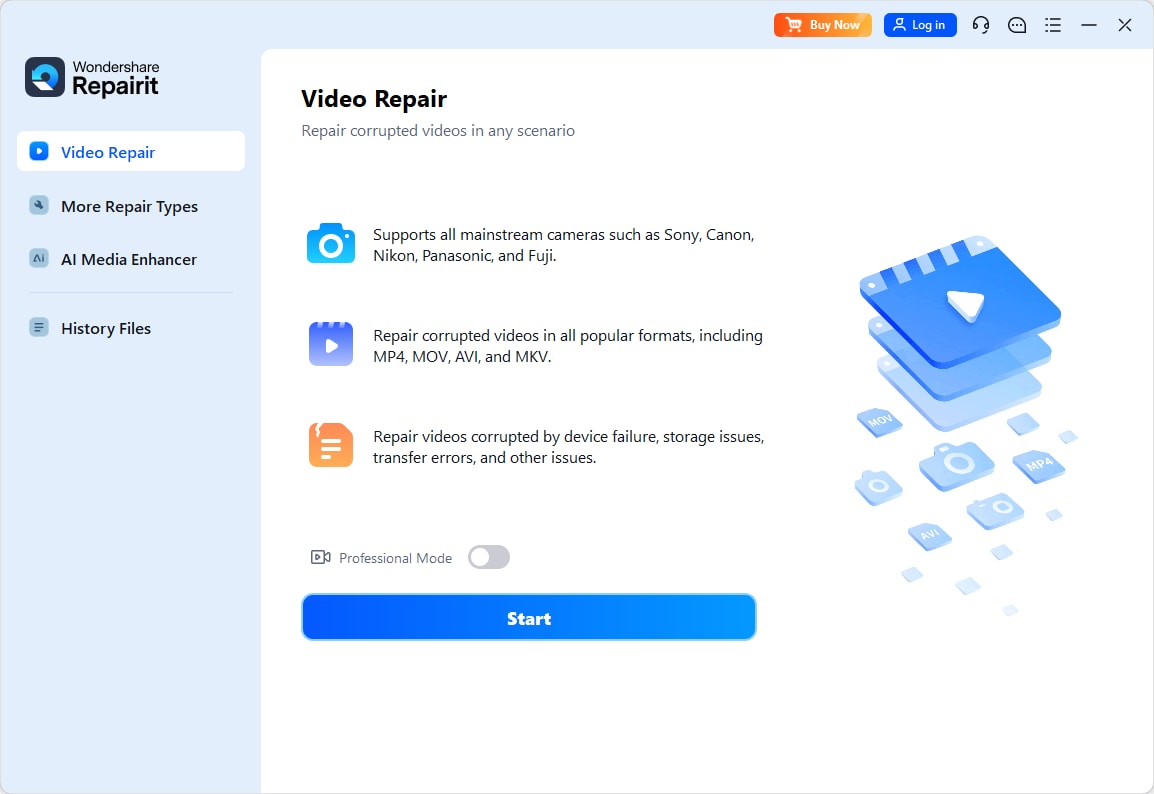
- Run the repair
Start the repair process so Repairit can analyze the damaged files and attempt to restore smooth playback. The software will work in the background to address structural issues that typically prevent videos from opening or playing correctly.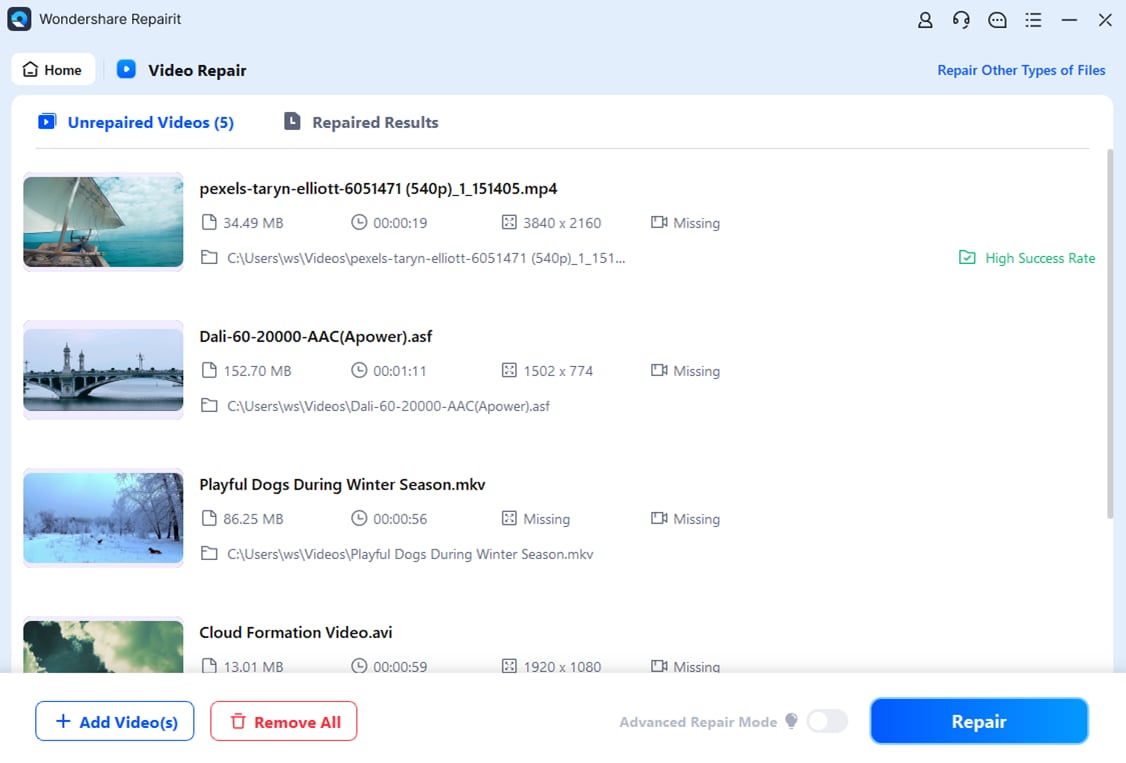
- Preview and export
When the repair finishes, preview the output to check whether the video now plays as expected. If you are satisfied with the result, choose a destination folder and export the repaired file for safe keeping or sharing.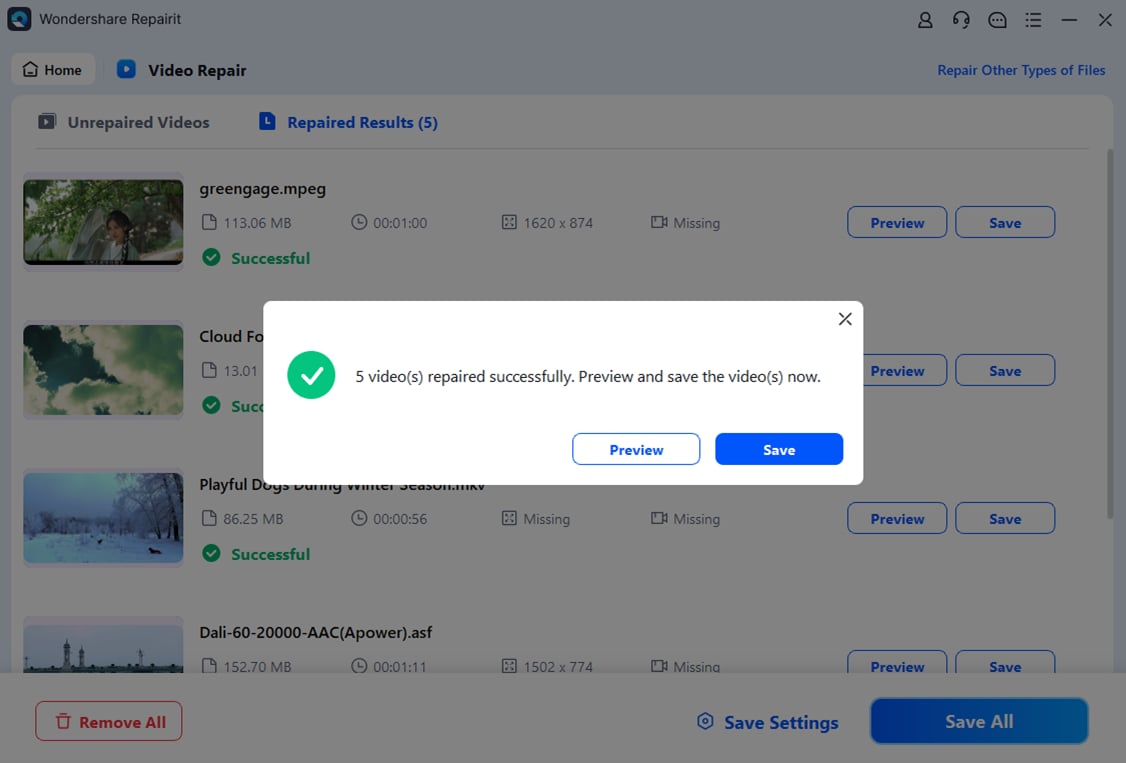
Final Verdict
Repairit is a stronger choice for users who care most about a focused, guided video repair experience and who may be dealing with more stubborn or repeated corruption in their media files. Its workflow and emphasis on video repair give it an edge when you want clear steps and reassurance through the process.
iMyFone UltraRepair may still be enough if you prefer a single, broader repair suite that can handle videos, photos, and other files together and your issues are mostly light to moderate. If you mainly repair video and want guidance, Repairit makes more sense; if you want one simple tool for mixed media, iMyFone UltraRepair can be a practical alternative.
FAQ
-
1. Is Repairit better than iMyFone UltraRepair for video repair?
Repairit is often a stronger choice if video repair is your main concern and you want a guided workflow, while iMyFone UltraRepair may be enough for lighter, mixed-media fixes. -
2. When should I choose iMyFone UltraRepair instead of Repairit?
Choose iMyFone UltraRepair if you want one consumer-friendly suite to repair videos, photos, and other files and do not need a deeply video-focused tool. -
3. Do Repairit and iMyFone UltraRepair support similar video formats?
Both aim to support common video formats from phones and cameras, though exact coverage can differ, so it is wise to check each tool’s current format list. -
4. Can I try Repairit and iMyFone UltraRepair before buying?
Both tools typically offer some kind of trial or preview so you can see basic repair results before paying, but details can change, so check their official sites.