

Choosing between Repairit vs EaseUS Video Repair often comes down to how badly your clips are damaged and which tools you already use. EaseUS Video Repair fits naturally into the EaseUS recovery ecosystem, while Repairit focuses more directly on fixing corrupted, unplayable, or glitchy videos. This guide compares both tools side by side so you can see how their workflows, repair depth, and typical use cases differ before deciding which one to run on your damaged files.
Instead of treating one option as universally better, it is more useful to look at how each tool fits your current workflow. If you mainly recover lost files and then repair them, EaseUS Video Repair may feel like a convenient add-on. If you regularly deal with damaged clips and want a guided, video-centered process, Repairit can feel more natural.
Repair Corrupted Files To Save Your Data
 Security Verified. Over 7,302,189 people have downloaded it.
In this article
- Repairit vs EaseUS Video Repair: Quick Verdict
- Repairit vs EaseUS Video Repair: Key Differences
- Repairit vs EaseUS Video Repair: Comparison Table
- What Repairit and EaseUS Video Repair Are Best For
- Repairit vs EaseUS Video Repair: Features and Capabilities
- Repairit vs EaseUS Video Repair: Supported Formats and Compatibility
- Repairit vs EaseUS Video Repair: Workflow and Ease of Use
- Repairit vs EaseUS Video Repair: Pricing and Trial Options
- Who Should Choose Repairit
- Who Should Choose EaseUS Video Repair
- Pros and Cons of Repairit and EaseUS Video Repair
- How to Repair Corrupted Videos After Choosing the Right Tool
Repairit vs EaseUS Video Repair: Quick Verdict
In many everyday scenarios, both video repair software tools can help you turn unplayable clips back into watchable files. The better option depends on how you work and how damaged your footage is.
At a glance, here is how their roles differ:
- Best for
- Repairit: Users who need dedicated video repair with guided workflows and help for more severe corruption cases.
- EaseUS Video Repair: Users already using EaseUS recovery tools who want a convenient way to repair recovered or lightly damaged videos.
- Ease of use
- Repairit: Beginner friendly with a repair-first interface and clear prompts for each step.
- EaseUS Video Repair: Moderately simple, with a utility-style approach that feels familiar to EaseUS recovery users.
- Repair depth
- Repairit: Designed to handle a wide range of corruption scenarios and more complex glitches in many everyday cases.
- EaseUS Video Repair: Generally focused on getting recovered or slightly corrupted videos playable again, with repair guided by recovery needs.
- Workflow
- Repairit: Streamlined, repair-centric workflow with clear steps from import to export.
- EaseUS Video Repair: Moderate and utility-style workflow that aligns with typical data recovery operations.
- Overall verdict: Repairit tends to suit users who want a focused, video repair environment, while EaseUS Video Repair makes sense if you already live inside the EaseUS ecosystem and treat repair as part of a broader recovery job.
Repairit vs EaseUS Video Repair: Key Differences
The key difference between Repairit vs EaseUS Video Repair is where each tool sits in your workflow. Repairit is positioned as a focused video repair solution, while EaseUS Video Repair extends a data recovery brand with video repair capabilities.
This distinction affects how you use each tool day to day:
- Focus and positioning
- Repairit: Built primarily for repairing corrupted, unplayable, or glitchy videos, with a guided flow that highlights what to do next.
- EaseUS Video Repair: Works as part of a file recovery story, where you might restore deleted or lost videos and then attempt to fix playback issues.
- Who they suit best
- Repairit: Creators, regular video users, and anyone facing frequent or noticeable corruption who wants a dedicated, repair-led workspace.
- EaseUS Video Repair: Users who already own EaseUS recovery products or mostly handle occasional, light corruption on recovered clips.
- Decision angle: If you value a video-centric interface and clear guidance during repair, Repairit can be a stronger fit. If you prefer to stay within one brand for recovery and repair tasks, EaseUS Video Repair may be more convenient.
Repairit vs EaseUS Video Repair: Comparison Table
The following high-level comparison highlights how the two tools differ across typical decision factors.
| Dimension | Repairit | EaseUS Video Repair |
|---|---|---|
| Best for | Users who need dedicated video repair with guided workflows and help for more severe corruption cases. | Users already using EaseUS recovery tools who want a convenient way to repair recovered or lightly damaged videos. |
| Ease of use | Beginner friendly with a repair-first interface and clear prompts for each step. | Moderately simple, with a utility-style approach that feels familiar to EaseUS recovery users. |
| Repair depth | Designed to handle a wide range of corruption scenarios and more complex glitches in many everyday cases. | Generally focused on getting recovered or slightly corrupted videos playable again, guided by recovery needs. |
| Workflow style | Streamlined, repair-centric workflow from import to export. | Utility-style workflow that aligns with typical data recovery operations. |
| Strengths | Specialized video repair focus, guided steps, and suitability for varied damage levels. | Familiar brand, broad recovery context, and easy entry for general users in the EaseUS ecosystem. |
| Weaknesses | May feel like an extra tool to learn if you only do occasional light repairs. | Less video-specialized; experience can feel more recovery-led than repair-led for dedicated video use. |
What Repairit and EaseUS Video Repair Are Best For
In an EaseUS Video Repair comparison, it helps to think about real situations you face rather than abstract features.
Based on typical use cases:
- Repairit is best for
- Users who repeatedly encounter corrupted, unplayable, or glitchy videos from phones, action cameras, or consumer cameras.
- People who want a repair-first environment with guided steps rather than a general recovery console.
- Creators and regular video users who prioritize video stability and need a tool they can return to whenever footage acts up.
- EaseUS Video Repair is best for
- People already using EaseUS data recovery tools who occasionally need to repair recovered video files.
- Users who see repair as one step in a larger process of restoring lost or deleted data.
- Situations where corruption is mild and the main goal is simply to get clips opening again.
In other words, Repairit typically fits a workflow centered on fixing videos, while EaseUS Video Repair fits workflows centered on recovering data that sometimes includes videos.
Repairit vs EaseUS Video Repair: Features and Capabilities
Both tools aim to make corrupted videos watchable again, but they approach the job differently. Repairit is built around a repair-first experience, while EaseUS Video Repair feels like a natural extension of file recovery. Repairit tends to emphasize guided, video-centric workflows, whereas EaseUS Video Repair leans on the comfort of a familiar brand and a broad recovery context, which can be ideal if your main concern is recovering and then repairing in one ecosystem.
Common capabilities you can expect from either tool include:
- Basic functions
- Import corrupted or unplayable videos and attempt to restore normal playback.
- Repair common issues like videos not opening, freezing, or showing visual glitches.
- Export repaired files to a new, playable copy while preserving the original.
- Advanced and workflow-oriented aspects
- Repairit offers more guided repair steps that can help when corruption appears more severe or involves multiple issues.
- Repairit generally emphasizes video-specific tuning, while EaseUS Video Repair keeps repair settings closer to a utility-style recovery tool.
- EaseUS Video Repair integrates naturally into a broader data recovery workflow, which can be helpful if you regularly recover and then fix lost videos.
For users evaluating a Repairit alternative or checking EaseUS Video Repair vs Repairit, the main feature difference is not raw power but how the tools are framed and guided during use.
Repairit vs EaseUS Video Repair: Supported Formats and Compatibility
Both tools typically support many mainstream video formats and common devices, such as clips from phones, action cameras, and consumer cameras. Repairit usually focuses on broad compatibility for everyday video formats, while EaseUS Video Repair aligns with formats commonly handled during data recovery.
In practice, this usually means:
- If you mostly shoot on smartphones, consumer cameras, or popular action cams, either tool will often handle your files.
- Repairit can be appealing if you work with a mix of varied, frequently used footage where a video-specialized orientation feels reassuring.
- EaseUS Video Repair makes sense if your main concern is recovering deleted or lost files first and then repairing whatever you get back.
For less common formats or niche recording setups, it is always wise to test with trial versions or check vendor documentation before committing.
Repairit vs EaseUS Video Repair: Workflow and Ease of Use
Workflow complexity and ease of use often matter more than small feature differences, especially for users who do not handle video issues every day.
In most cases:
- Repairit workflow and usability
- Focuses on a direct, guided repair flow, helping users move from import to fixed file with minimal guesswork.
- The interface tends to highlight the repair path first, so users are not distracted by unrelated recovery tools.
- This can be reassuring when you are stressed about a corrupted file and just want a clear next step.
- EaseUS Video Repair workflow and usability
- Follows a moderate and utility-style workflow that feels familiar if you already use EaseUS recovery products.
- Often fits best as one module in a larger suite, where you are comfortable switching between recovery and repair tasks.
- Can feel straightforward for users who like traditional dialog-based utilities and data recovery tools.
For users who value a smooth, video repair workflow above everything else, Repairit may have the edge. For those who prioritize staying within a single vendor ecosystem, EaseUS Video Repair can feel more consistent.
Repairit vs EaseUS Video Repair: Pricing and Trial Options
Pricing changes over time, so any video repair tool comparison should treat cost as a snapshot rather than a fixed number. What matters most is how you evaluate the value you get from each option.
In general:
- Both Repairit and EaseUS Video Repair typically offer trial options so you can test basic repairs or preview results before paying.
- Licenses may vary by:
- Duration (monthly, yearly, or perpetual, depending on current offers).
- Platform (Windows or macOS versions may be sold separately).
- Bundle options (EaseUS users sometimes see suites or bundles that include recovery plus repair; Repairit focuses on dedicated repair licensing).
- Users embedded in the EaseUS ecosystem may find bundle or suite pricing attractive, while users prioritizing a dedicated video repair software experience may see more long-term value in a Repairit license.
Before deciding, it is wise to confirm current pricing and feature limits directly on each vendor site, then run a trial repair on sample files from your own devices.
Who Should Choose Repairit
Repairit suits users who want a focused, repair-led environment and expect to run video fixes more than once in a while.
- Users dealing with more severe or recurring video corruption issues.
- People who want a guided, repair-led workflow rather than a general recovery utility.
- Creators and professionals who handle a wide mix of everyday video formats and footage sources.
- Anyone prioritizing a dedicated video repair environment over a broader data recovery suite.
If you are searching for a Repairit vs EaseUS Video Repair answer and your main pain point is repeated corruption or production work, Repairit will often feel more aligned with how you actually use video repair tools.
Who Should Choose EaseUS Video Repair
EaseUS Video Repair can be a sensible option when video repair is just one of many data recovery tasks you perform.
- Users already using EaseUS data recovery tools who want a familiar add-on for video repair.
- People who mainly need to repair videos right after file recovery rather than run stand-alone repair sessions.
- General users who prefer a moderate, utility-style workflow over a highly specialized repair interface.
- Those with lightly corrupted or recently recovered clips where a recovery-led verdict may be sufficient.
If your priority is to keep everything in one recovery suite and you only occasionally fix video issues, EaseUS Video Repair may be enough for your needs.
Pros and Cons of Repairit and EaseUS Video Repair
To decide between EaseUS Video Repair vs Repairit, it helps to see the main pros and cons of each tool side by side in plain language.
Repairit Pros and Cons
EaseUS Video Repair Pros and Cons
How to Repair Corrupted Videos After Choosing the Right Tool
Once you have compared Repairit vs EaseUS Video Repair and decided which approach better fits your workflow, the next step is actually fixing your damaged files. Regardless of the tool you choose, the core idea is the same: work from copies, run a repair pass, and verify results before deleting anything.
If you lean toward a guided, video-centric process, Repairit offers a practical way to put that decision into action. Below is what the experience looks like in Repairit so you can picture the steps before downloading a trial.
Repairit Introduction
Repairit from Wondershare, available at Repairit Video Repair, is a dedicated video repair tool designed to help turn corrupted, unplayable, or glitchy clips back into watchable files. It focuses on a clear, guided workflow so that both beginners and experienced users can attempt repairs on problem videos without needing deep technical knowledge.
Key Features
- Video-centric interface focused on repairing playback issues and visual glitches.
- Guided repair steps that walk you from importing to exporting fixed clips.
- Support for many common video formats from phones, action cameras, and consumer cameras.
Step-by-step guide
The following outline shows how you typically repair corrupted videos with Repairit once it is installed.
- Add corrupted videos
Open Repairit and import the corrupted or unplayable video files you want to fix using the main add button or by dragging them into the window.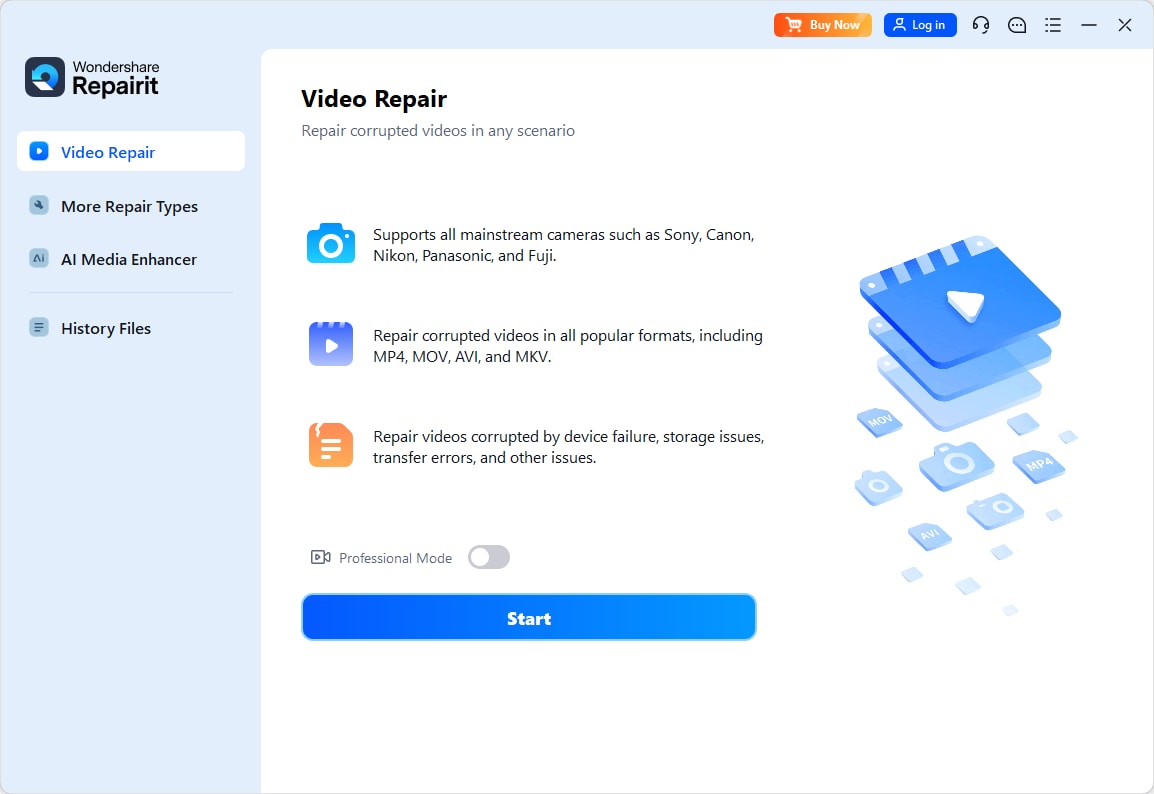
- Run the repair
Start the repair process so Repairit can analyze your selected videos and attempt to correct issues like non-playing, freezing, or visual artifacts.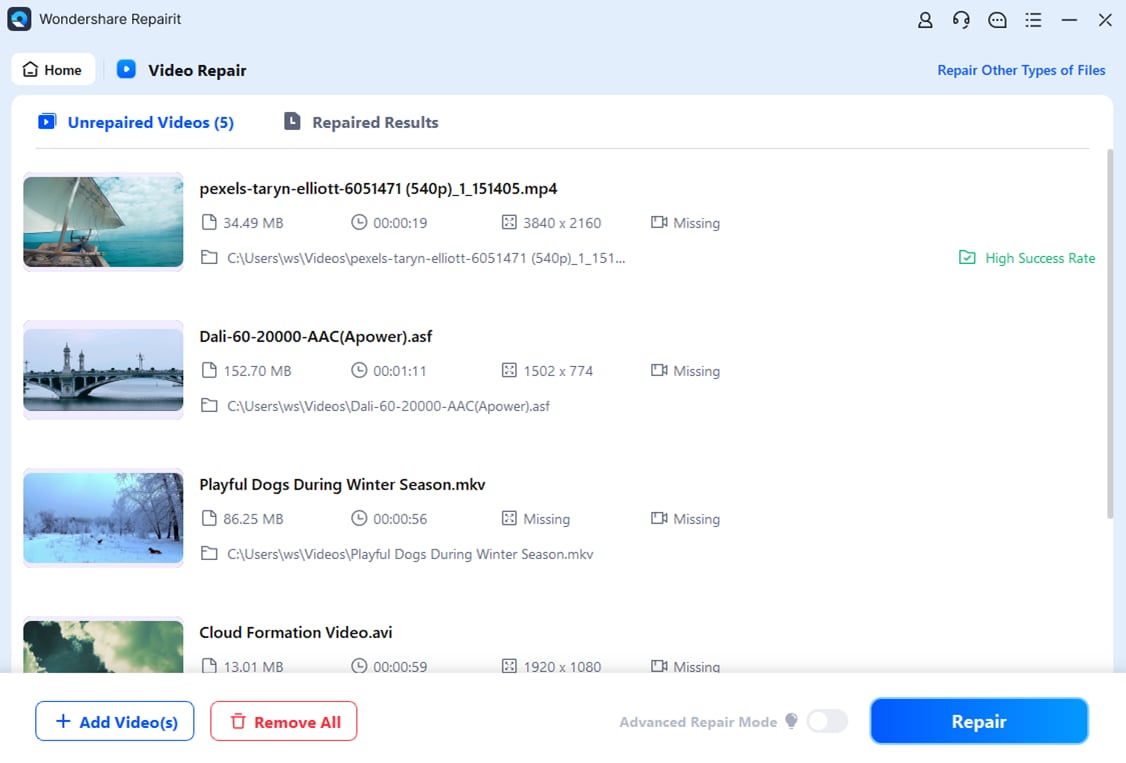
- Preview and export
Preview the repaired version; if it looks acceptable, export the fixed videos to a safe location while keeping your original files unchanged.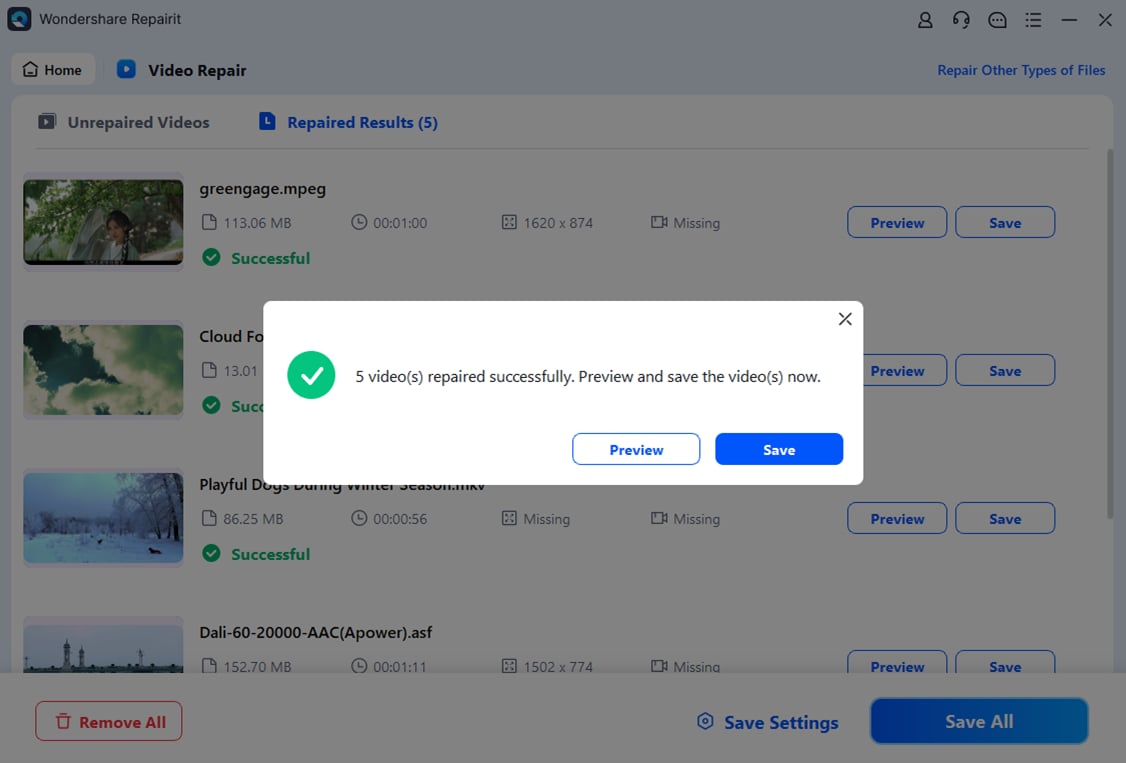
This flow preserves your originals while giving you a clear sense of how well the repair worked, which is especially important when comparing the outcomes from different tools.
Final Verdict
Repairit is a stronger choice for users who want a dedicated, repair-led environment, especially when facing more noticeable corruption or when they value guided workflows and a video-centric interface. It suits creators and regular video users who need reliable tools for a variety of damaged clips.
EaseUS Video Repair may still be enough if you already rely on EaseUS for data recovery and simply need a moderate, utility-style solution to get recovered or lightly corrupted videos playing again. In many cases, the decision comes down to whether you prefer a specialized repair tool like Repairit or a familiar recovery ecosystem that includes video repair as part of a broader toolkit.
In practice, you can even test both: try a trial repair in each tool on copies of the same corrupted file and see which workflow and results feel better suited to your everyday work.
FAQ
-
1. Is Repairit better than EaseUS Video Repair for severely corrupted videos?
Repairit is generally a stronger choice when dealing with more severe or recurring corruption because it focuses on video repair, while EaseUS Video Repair is more tied to recovery workflows. However, results can still vary by file and damage level, so testing both on copies of your footage is sensible. -
2. When does EaseUS Video Repair make more sense than Repairit?
EaseUS Video Repair can make more sense if you already use EaseUS recovery tools and mainly need to repair videos that were just recovered or show only light corruption. In those cases, staying inside one ecosystem may be more convenient than adding a separate repair app. -
3. Can I use both Repairit and EaseUS Video Repair on the same file?
You can usually try one tool and, if the result is not satisfactory, test the other. Just work with copies of your files so your originals remain unchanged and you can compare outcomes safely. -
4. Which is easier to use, Repairit or EaseUS Video Repair?
Both aim to be approachable, but Repairit focuses on a guided, repair-first experience, while EaseUS Video Repair offers a moderate, utility-style workflow that may feel more familiar to existing EaseUS users. Which feels easier will depend on whether you prefer a specialized repair interface or a recovery-style tool. -
5. How should I choose between Repairit and EaseUS Video Repair?
Think about where video repair fits into your routine. If you regularly fix corrupted clips and want a video-centric tool, Repairit is likely to feel more natural. If you mainly recover lost data and only occasionally repair videos, EaseUS Video Repair within the EaseUS ecosystem can be a practical fit.