

A PTX file can be anything from a professional audio session to a 3D point cloud or GPU code, so it is easy to feel confused when you cannot open it. This guide explains what a PTX file is, how to open different PTX formats, common PTX file errors, and reliable ways to repair a corrupted PTX file without risking more data loss.
Repair Corrupted Files To Save Your Data
 Security Verified. Over 7,302,189 people have downloaded it.
In this article
What Is a PTX File
The extension PTX file does not describe just one format. It is used by different industries and software, so understanding the context in which the file was created is essential before you try to open or repair it.
| PTX Type | Used By / Description |
|---|---|
| Pro Tools Session File (.ptx) | A Pro Tools digital audio workstation session that stores audio edits, track settings, and project structure. |
| Point Cloud Data File (.ptx) | 3D laser scan or LiDAR point cloud format used by tools like Leica Cyclone, Autodesk ReCap, and other 3D applications. |
| Parallel Thread Execution (.ptx) | Low-level GPU intermediate code for NVIDIA CUDA, mainly opened by developers and compilers. |
If you received the file from a sound engineer, it is most likely a Pro Tools PTX file. If it came from a surveyor or architect, it is probably a 3D point cloud. Developers working with CUDA will usually mean the NVIDIA GPU code type.
How to Open PTX Files
Because there are several different PTX file types, the best way to open one is to match it with the right program. Below are the most common workflows on Windows and macOS.
Open PTX Audio and Session Files
Pro Tools session PTX files contain references to audio, MIDI, plugins, and mix settings. They do not usually store raw audio themselves, so you must keep the audio folder together with the session.
Method 1: Open PTX in Pro Tools (Recommended)
- Install Avid Pro Tools (or Pro Tools Intro) on your computer.
- Store the PTX file and its associated Audio Files folder in the same project directory.
- Launch Pro Tools, then go to File > Open Session and select your PTX file.
- Allow Pro Tools to relink missing audio if prompted.
Method 2: Use an Older PT Session in Newer Pro Tools
Some users have legacy .pts or .ptf sessions that have been converted to PTX. Newer versions of Pro Tools can generally open older formats, but not the reverse.
- Open the PTX file directly in the latest Pro Tools version.
- If Pro Tools says the session is from a newer version, upgrade Pro Tools or ask the sender to save a session copy for your version.
- Once open, immediately save a backup copy in a new folder.
Method 3: Extract Audio from a PTX Project
If you do not need the session layout and only want the audio:
- Ask the Pro Tools user to export stems or individual tracks in WAV or AIFF.
- Open those audio files in any DAW (Audacity, Reaper, Logic Pro, etc.).
- Use the exported audio instead of the original PTX file for simple playback or editing.
Open PTX 3D Point Cloud and GPU Files
Method 1: Open Point Cloud PTX Files
3D PTX point cloud files store millions of coordinates captured by laser scanners. These are common in architecture, construction, and surveying projects.
- Use specialized software such as Leica Cyclone, Autodesk ReCap, Bentley Pointools, or CloudCompare.
- In your chosen viewer, go to File > Import or Open and select the ptx file.
- Wait for the point cloud to load and process; large PTX files can take some time.
- Save your project in the application’s native format once the cloud is optimized.
Method 2: Convert PTX Point Clouds to Other Formats
If your main 3D software cannot read PTX directly, you may convert the data before importing.
- Open the PTX file in CloudCompare or another compatible application.
- Export the point cloud as PLY, LAS, E57, or another commonly supported format.
- Import the converted file into tools like Blender, Revit, or other BIM/3D programs.
- Keep a backup of the original PTX file in case you need to reconvert.
Method 3: Work with NVIDIA PTX GPU Code
For developers, NVIDIA PTX (Parallel Thread Execution) is an intermediate representation of CUDA kernels.
- Open the PTX file using a text editor such as VS Code, Notepad++, or Sublime Text.
- Compile and run it through the CUDA toolkit as part of your normal build pipeline.
- Do not manually edit binary or partially compiled PTX unless you know exactly what you are doing; corruption may cause crashes.
Common PTX File Errors
Problems with ptx file access can come from software version mismatches, missing dependencies, incomplete downloads, drive errors, or real file corruption. Understanding the message you see helps you choose the right fix.
File Not Opening or Incompatible Version
Several common messages indicate that your program cannot interpret the PTX file correctly.
- Unsupported file type or cannot open this session
- The file is from a newer version of this application
- Unknown file header or file format not recognized
In these cases, the file is often structurally intact but opened with the wrong software or an outdated version.
- Verify what kind of PTX you have (audio session, point cloud, or GPU code).
- Install the correct application and update it to the latest version.
- If you still cannot open it, try another computer or OS to exclude local configuration issues.
Corrupted or Partially Downloaded PTX Files
True damage to a ptx file can occur when a transfer is interrupted, storage media is failing, or the file is edited by an incompatible tool.
- The PTX opens but crashes the program.
- Point cloud shows missing chunks or random points.
- Pro Tools session opens with missing tracks, blank regions, or sudden errors.
- File size is suspiciously small or much smaller than expected.
Before attempting repairs, you should:
- Check whether you have a backup, older version, or an original export.
- Run a disk check on the drive where the PTX is stored.
- Copy the file to another healthy drive and try opening it from there.
If the issue persists even on a healthy disk, the file structure is likely damaged. In such situations, using professional repair software like Wondershare Repairit to recover data from the affected location is a practical option.
How to Use Repairit to Fix a Corrupted PTX File
Repairit Introduction
Wondershare Repairit is a dedicated data repair toolkit that can scan disks, folders, and storage devices for damaged items and then attempt to repair them, including documents, photos, videos, and project files stored in those locations. Instead of experimenting with risky manual edits, you can use the streamlined interface to diagnose issues and bring corrupted ptx file data back to a usable state. To learn more or download the latest version, visit the Repairit official website.
Key Features of Repairit
- Supports repairing a wide range of corrupted files from different locations, including local drives, external disks, and memory cards.
- Provides an intuitive preview function so you can verify recoverable content before saving repaired data.
- Uses advanced repair algorithms designed to minimize data loss and keep the original file structure as intact as possible.
Step-by-Step Guide to Repair Data Related to a PTX File
- Load your corrupted files on Repairit
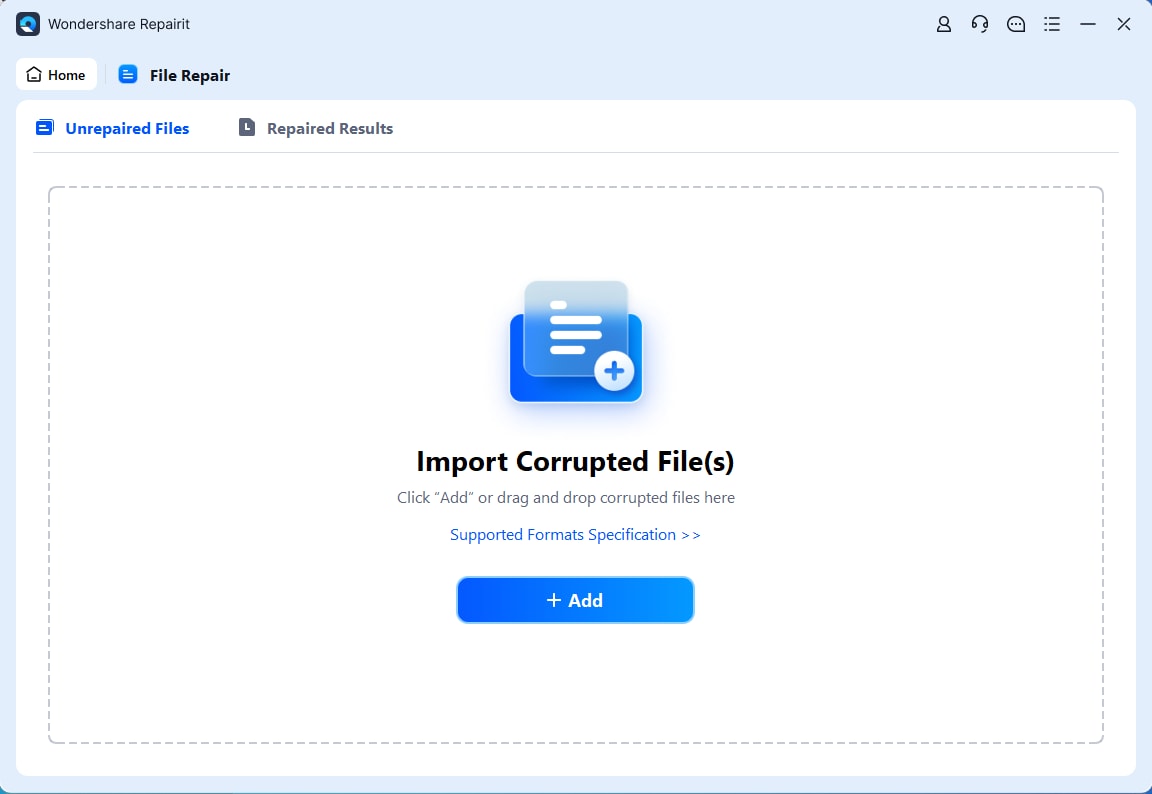
Start Repairit and, from the main interface, select the disk, folder, or external device that holds your problematic ptx file. If you know the exact project or workspace directory used by Pro Tools or your 3D application, select that folder so Repairit can focus on all related files. Confirm your choice to let the program prepare for scanning.
- Start the repair process
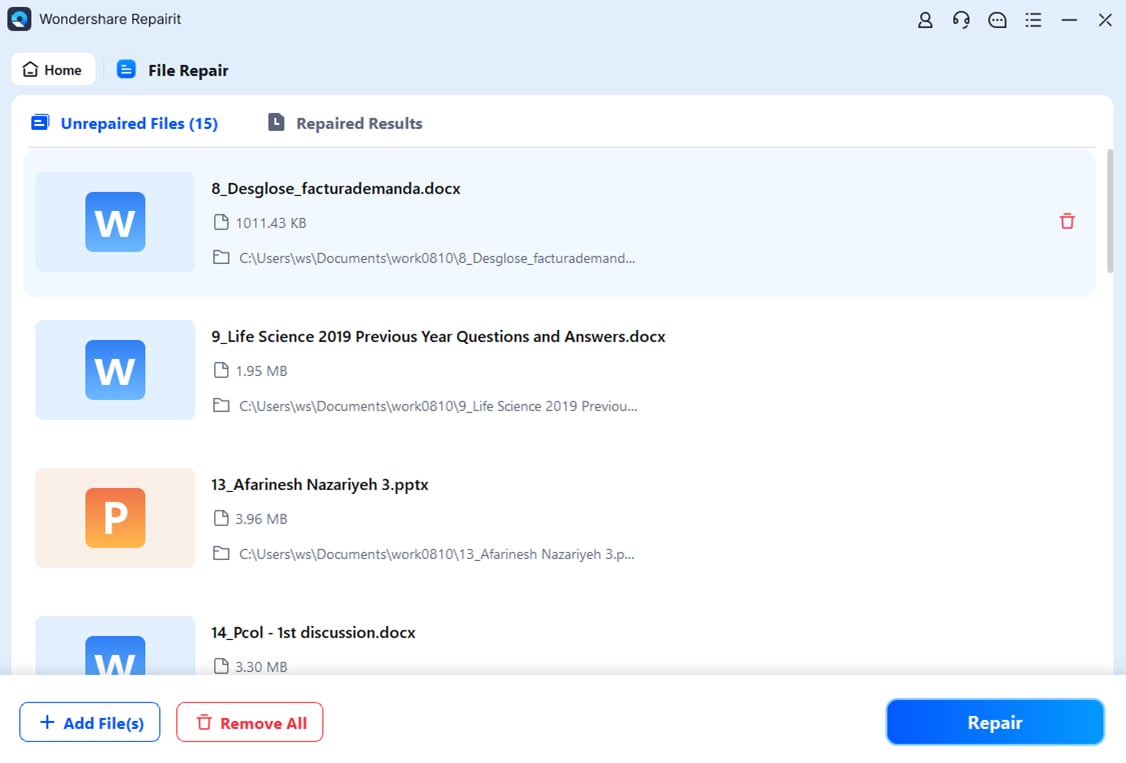
Click the scan button to start a deep analysis of the selected location. Repairit will examine the file system, look for corrupted, inaccessible, or abnormal items, and list objects it can attempt to repair. You can watch the progress bar, pause if needed, or allow the scan to finish to make sure every affected project or media file linked to your ptx file is detected.
- Save Your Desired Data
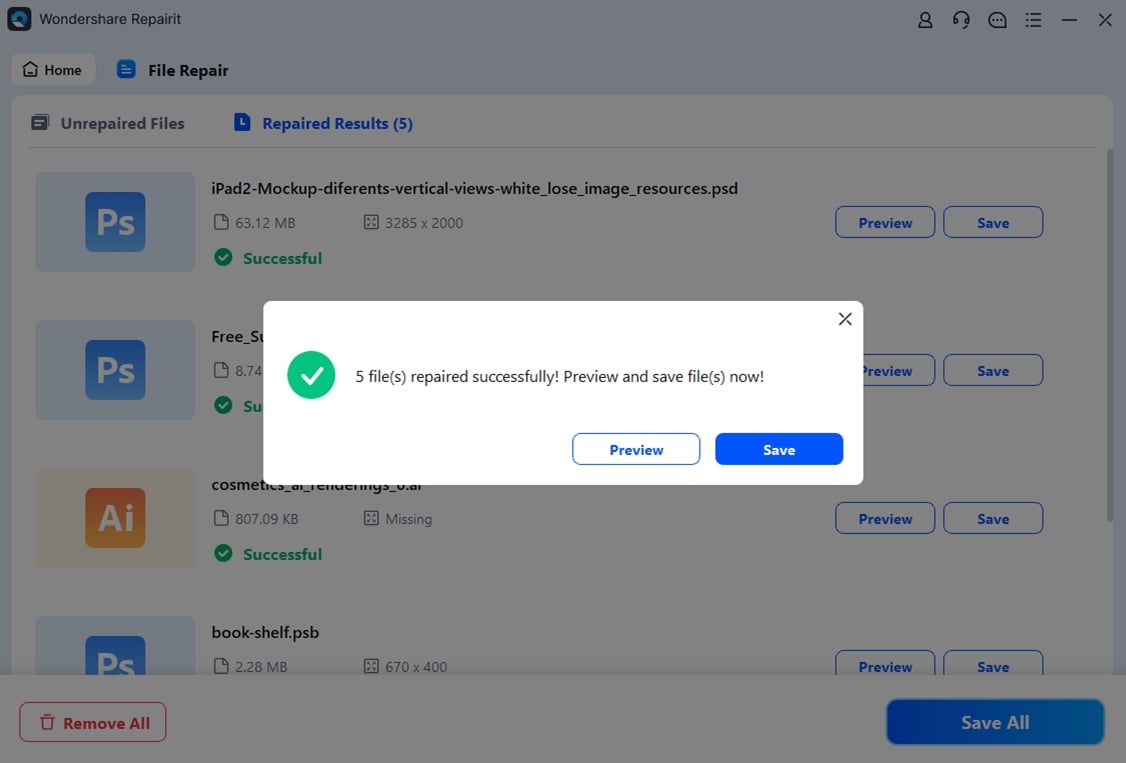
Once the scan completes, browse the results and choose which files you want to recover. Use the preview window, where available, to verify content before committing. When satisfied, click Repair to process the selected items and then save them to a safe output folder, preferably on a different drive. After this, try opening your Pro Tools session or point cloud again; in many cases, the PTX project becomes accessible once its dependent files are repaired.
Conclusion
Because the extension covers several formats, answering the question "what is a ptx file?" starts with context. It may be a Pro Tools audio session, a laser-scanned point cloud, or NVIDIA GPU code, each requiring different software and workflows.
When your PTX file will not open or behaves unpredictably, first confirm the correct application and version, then rule out incomplete downloads or failing storage. If the problem points to real corruption, tools like Wondershare Repairit can scan your drives, repair damaged project dependencies, and help you regain access to valuable sessions, scans, and other data with minimal manual effort.
FAQ
-
1. How do I know which kind of PTX file I have?
Check where the file came from and which tools were used. If it is from an audio engineer or studio, it is likely a Pro Tools session. If it is from a surveyor, architect, or laser scanner, it is probably a point cloud. Files in development folders for CUDA projects are usually NVIDIA PTX GPU code. You can also open the file in a text editor: human-readable assembly-like text points to CUDA PTX, while unreadable binary is more likely a session or point cloud. -
2. Can I convert a PTX file directly to MP3, WAV, or another audio format?
No, the Pro Tools ptx file format is a session container, not an audio file. To get audio such as WAV or MP3, the session must be opened in Pro Tools and the tracks or mix must be exported or bounced. If you do not have Pro Tools, ask the original creator to export stems or a mixed track for you. -
3. Why is my PTX point cloud so large and slow to open?
PTX point clouds can contain millions or even billions of points, so the files quickly grow to several gigabytes. Loading them requires significant RAM and GPU resources. To improve performance, work on a powerful machine, crop the cloud into regions, decimate points where high density is not required, and save optimized project files after the initial import. -
4. Can Repairit fix a completely unreadable PTX file?
Repairit can scan the storage location, identify damaged or partially inaccessible items, and repair many types of data that your PTX project depends on. However, if the PTX file itself is overwritten or severely truncated, full recovery might not be possible. In such cases, combining Repairit with healthy backups and re-exports from the source application offers the best chance of restoring your work. -
5. How can I prevent PTX file corruption in the future?
Use reliable storage, avoid unplugging drives while writing data, and regularly back up your projects to at least two separate locations. Close Pro Tools, 3D, or CUDA applications properly before shutting down the computer. Running periodic disk checks and using an uninterruptible power supply (UPS) for critical workstations also significantly reduces the risk of ptx file damage.