
A PSD file is Adobe Photoshop's native project format, built to store complex, layered graphics with full editing flexibility. Designers, photographers, and digital artists rely on PSD to manage everything from web layouts to detailed photo retouching. Knowing what a PSD file is, how it works, and what to do when it becomes corrupted helps you safeguard your creative work and keep projects moving smoothly.
Repair Corrupted Files To Save Your Data
 Security Verified. Over 7,302,189 people have downloaded it.
In this article
What Is PSD File
A PSD file (Photoshop Document) is the default format used by Adobe Photoshop to store editable image projects. Unlike flat image formats such as JPEG or PNG, a PSD preserves layers, layer styles, adjustment layers, masks, smart objects, and vector shapes inside a single file.
This structure allows you to tweak text, move elements, change colors, or adjust effects at any time without degrading quality. Designers use PSD for web layouts, UI mockups, social media graphics, print materials, and composite photo edits. The format supports large dimensions, high bit depths, multiple color modes (RGB, CMYK, LAB, and more), and transparency.
Because of its complexity, the PSD file format is usually a working or master file rather than a final export. Finished assets are often exported from PSD to other formats (PNG, JPEG, PDF) for sharing, printing, or publishing, while the PSD remains the editable source.
| Feature | Description |
|---|---|
| Default application | Adobe Photoshop and compatible Adobe tools |
| Main purpose | Storing fully editable, layered image projects |
| Key advantages | Layers, masks, non-destructive edits, high quality, large size support |
How to Open PSD Files
You can open a PSD file with Adobe Photoshop or with several alternative tools that support the format. The method you choose depends on whether you need full editing control or just want to preview or lightly adjust the content.
Open PSD Files in Photoshop
Using Photoshop gives you complete access to layers, effects, smart objects, and adjustment layers. Here is the straightforward process:
- Launch Adobe Photoshop on your computer, then go to the "File" menu and select "Open."
- Browse to the location of your PSD file, select it, and click "Open" to load the document.
- Once opened, inspect the Layers panel to confirm that all layers, masks, and effects have loaded correctly before editing or exporting.
If you encounter a warning, such as a missing font or color profile mismatch, Photoshop will usually prompt you with options to replace or preserve those settings.
Open PSD Files Without Photoshop
If you do not have a Photoshop subscription, you can still open many PSD files using third-party apps or online tools, although some advanced features may not be fully preserved.
- Use free desktop editors such as GIMP, which can open PSDs and offer layer-based editing (with possible limitations for complex effects).
- Open PSD in a browser with tools like Photopea, which closely mimics Photoshop's interface and supports many layer types.
- Use preview-only tools or image viewers that can render a flattened version of the PSD for quick checks, even if they cannot edit layers.
When opening PSDs outside Photoshop, always double-check layer integrity, smart objects, and text rendering, as some formatting may change or flatten during import.
Common PSD File Errors
Because PSD files can be large and complex, they are vulnerable to issues caused by software crashes, storage problems, or version mismatches. Recognizing typical error messages helps you decide what to try next.
- Cannot open the PSD file: Photoshop may display errors like "Could not complete your request because it is not a valid Photoshop document" when the file header or structure is damaged.
- Unexpected end of file: This often indicates that the PSD did not save completely (for example, due to a crash or power loss), leaving the data stream incomplete.
- File appears blank or partially loaded: Some layers may be missing, replaced with gray areas, or appear distorted if specific sections of data are corrupted.
- Compatibility and version conflicts: Older Photoshop versions might not fully recognize features created in newer releases, causing some layers or smart objects to behave unpredictably.
- Performance or memory errors: Large PSD files can trigger messages about insufficient RAM or scratch disk space, preventing the file from opening or saving reliably.
In many cases, these symptoms point to either a damaged file or an underlying issue with your system or storage device. Addressing the source of the problem and repairing the corrupted PSD is essential to avoid further data loss.
How to Use Repairit to Fix a Corrupted PSD File
Repairit Introduction
When a valuable PSD file refuses to open or shows errors, relying on manual tricks alone may not be enough. Wondershare Repairit is designed to scan storage locations for damaged files and recover them in a user-friendly way. Instead of giving up on your project, you can use Repairit's guided workflow to locate broken PSDs, preview what is recoverable, and save repaired copies to a safe location. To explore the full capabilities, visit the Repairit official website.
Key Features of Repairit
- Repairs many types of corrupted files, including documents, images, videos, and design assets such as PSD projects.
- Performs in-depth scanning on selected drives or folders to locate lost, damaged, or unreadable data while keeping your original content intact.
- Lets you preview recoverable files before saving so you can confirm that your repaired PSD files look correct.
Step-by-step Guide to Repair PSD
The Repairit workflow is built around three simple steps that take you from identifying the problem location to safely restoring your repaired PSD files.
-
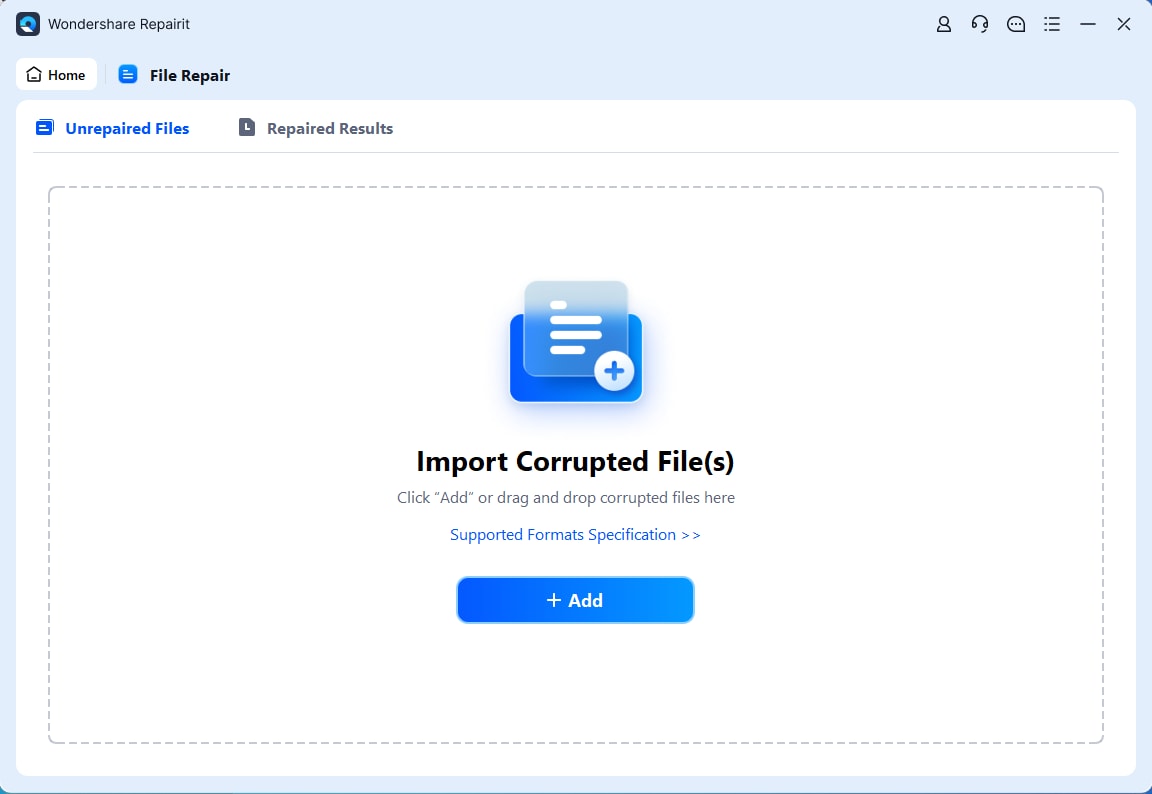
Load your corrupted files on Repairit
Open Repairit and look at the main interface for a list of available drives, partitions, and common folders. Select the disk or specific folder where your problematic PSD files were saved, such as your project directory or external drive. Confirm this selection so Repairit knows exactly where to search for damaged or lost data related to your Photoshop work.
-
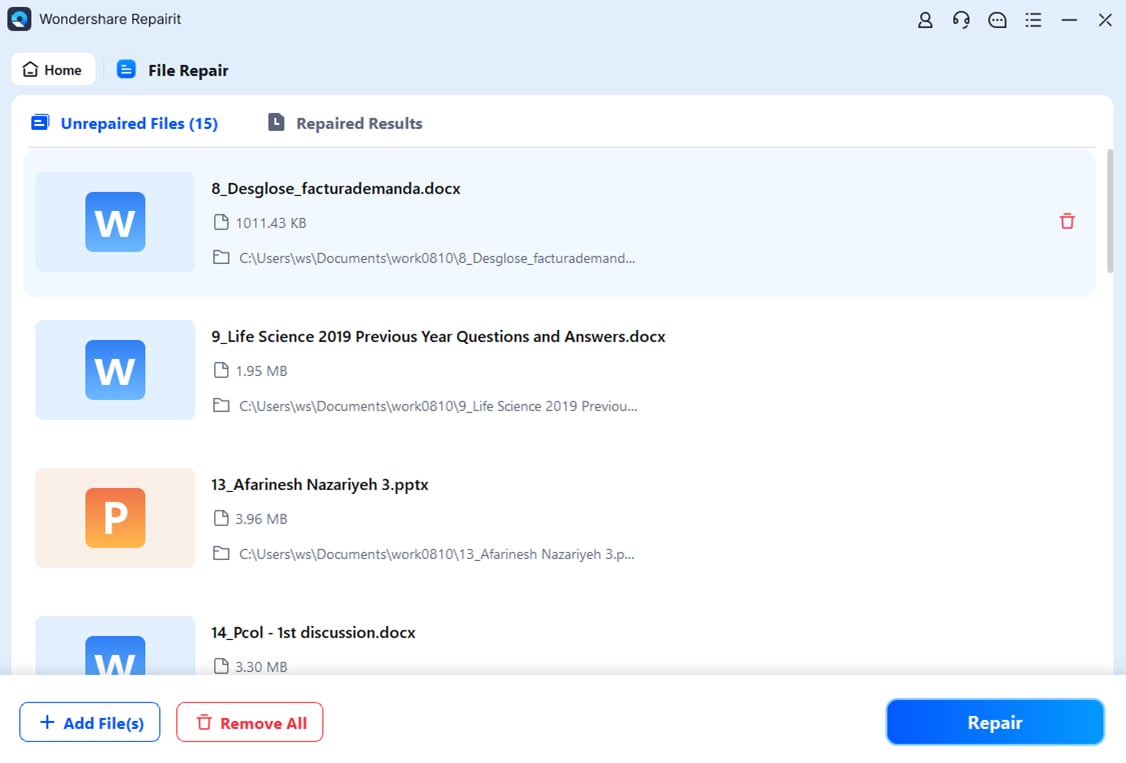
Start the repair process
Click the scan button to start a deep analysis of the chosen location. Repairit will examine the storage area sector by sector, looking for file signatures, fragmented data, and corrupted structures that belong to PSD files and other supported formats. You can watch the progress in real time while new items appear in the results list, and you do not need to interact until the scan has fully completed.
-
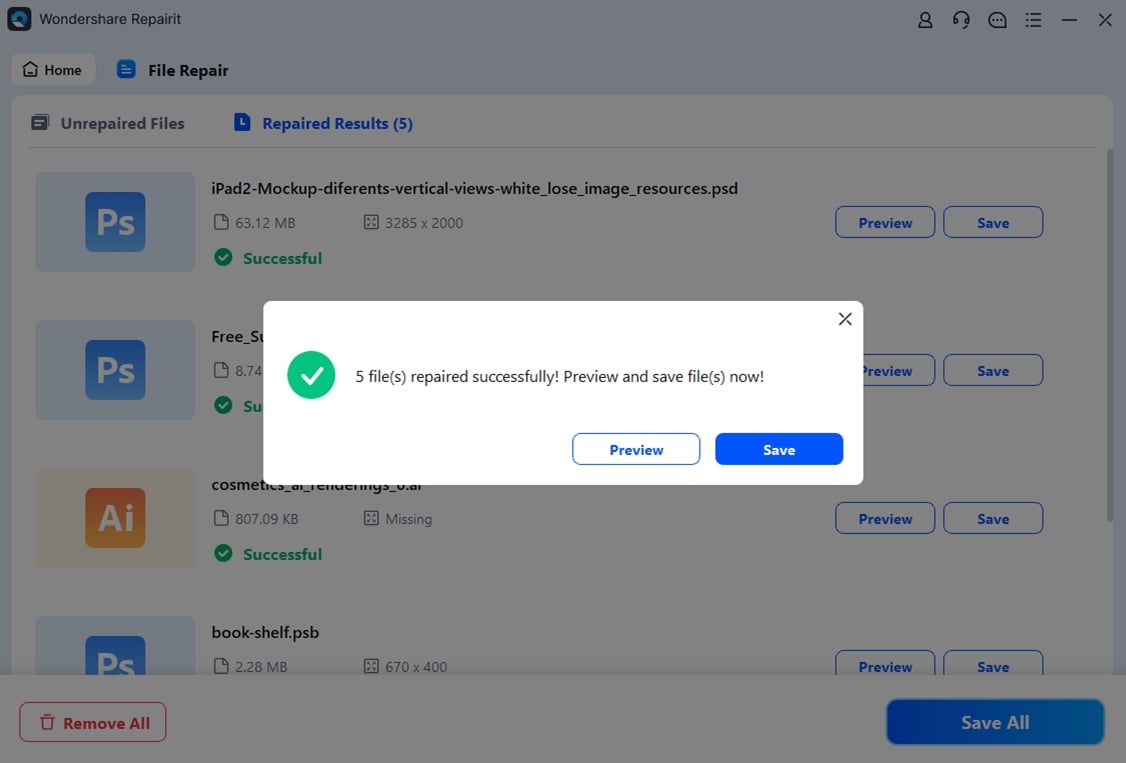
Save Your Desired Data
When the scan finishes, browse the results panel to locate your PSD projects. Use the preview function to check whether layer content, image quality, and overall structure look acceptable. Select the PSD files you want to restore, then click the recover button and choose a different, secure destination to save the repaired versions. This way, your original damaged files remain untouched while you work from fresh, fixed copies.
Conclusion
PSD files are the backbone of many creative workflows, capturing every layer, mask, and effect you need for professional-grade editing in Adobe Photoshop and compatible tools. Understanding how this format works, how to open it on different platforms, and what common errors look like helps you manage projects more confidently.
When a PSD becomes corrupted or simply refuses to open, do not assume your work is gone. Combine basic checks in Photoshop with a dedicated repair solution like Wondershare Repairit to scan the storage location, preview recoverable content, and save usable copies of your files. Regular backups, careful saving habits, and trusted repair software together provide strong protection for your design assets.
Next: What is PSB File?
FAQ
-
1. What is a PSD file used for?
A PSD file is Adobe Photoshop's native format for storing layered image projects. It is used for photo retouching, web and app UI mockups, marketing graphics, print layouts, and any design that requires editable layers, masks, and effects. -
2. How can I open a PSD file without Photoshop?
You can open many PSD files using free tools such as GIMP, or online editors like Photopea. These applications can display and often edit layers, though some advanced Photoshop features or effects may not be perfectly preserved. -
3. Why will my PSD file not open in Photoshop?
If a PSD file will not open, it might be corrupted, partially saved, created with a much newer Photoshop version, or affected by insufficient RAM or disk space. Try updating Photoshop, resetting preferences, opening a copy, or moving the file to a different drive before attempting dedicated repair. -
4. Can a corrupted PSD file be repaired?
In many situations, yes. You can try opening an older backup, using "Open As" or importing into a new document, or rely on specialized tools like Wondershare Repairit to scan the storage location and recover a working copy of your damaged PSD file. -
5. How do I prevent PSD file corruption in the future?
To reduce the risk of corrupt PSD files, save frequently using incremental filenames, avoid shutting down or unplugging drives while saving, keep Photoshop and your operating system updated, use reliable storage devices, and maintain regular backups of critical projects.