

A KEY file is the native presentation format created by Apple Keynote on Mac, iPhone, and iPad. These files bundle your slides, layouts, animations, and media into a single package. If you share presentations with Windows users, move between devices, or rely on iCloud, understanding how KEY files work, how to open them on different platforms, and how to repair them when they become corrupted will help you avoid data loss and presentation delays.
Repair Corrupted Files To Save Your Data
 Security Verified. Over 7,302,189 people have downloaded it.
In this article
What Is KEY File
A KEY file is the default presentation file format created by Apple Keynote, part of the iWork suite on macOS, iOS, and iPadOS. It stores slides, master layouts, text, images, shapes, audio, video, animations, and transitions in a single package, similar to how PPTX works for Microsoft PowerPoint.
Modern KEY files use a bundle structure that is effectively a compressed folder containing XML data, fonts, thumbnails, and embedded media. This design allows Keynote to support rich visual effects, high-resolution images, and smooth animations while keeping the presentation reasonably portable across Apple devices and iCloud.
Although KEY is optimized for the Apple ecosystem, files can be exported or converted to more universal formats such as PPTX, PDF, or MOV. Understanding this structure is important when troubleshooting issues because corruption can affect either the main document XML, the embedded media, or both.
How to Open KEY Files
Open KEY files on Mac, iPhone, and iPad
If you are using Apple hardware, opening a KEY file is usually straightforward through the Keynote app.
On macOS
- Double-click the KEY file in Finder to launch it directly in Keynote.
- Or open Keynote, click "File" > "Open", and browse to your file.
- If the file came from an older or newer Keynote version, Keynote will usually offer to update it automatically.
On iPhone and iPad
- Save the KEY file to the Files app, iCloud Drive, or a cloud service linked to your device.
- Tap the file and choose to open it with Keynote when prompted.
- Alternatively, open Keynote, tap the "+" icon, and import the KEY file from your storage location.
Once opened, you can edit slides, adjust themes, and export the presentation to other formats such as PPTX or PDF for sharing outside the Apple ecosystem.
Open or convert KEY files on Windows and the web
Windows does not natively support KEY files, but you have several effective workarounds to open or convert them.
Use iCloud Keynote in a browser
- Sign in to iCloud Keynote with your Apple ID in any modern browser.
- Upload the KEY file to iCloud Drive and open it in the Keynote web app.
- From there, view, edit, or export the presentation to formats like PPTX or PDF.
Ask the sender to export from Keynote
- On a Mac or iOS device, the sender can open the KEY file in Keynote.
- Use "File" > "Export To" > "PowerPoint" (PPTX) or "PDF".
- Send the exported file so you can open it in PowerPoint or a PDF viewer on Windows.
Convert using third-party tools
- Some online converters accept KEY file uploads and output PPTX or PDF.
- Only use reputable services, because you may be uploading sensitive content.
- After conversion, open the resulting file with PowerPoint, Google Slides, or another compatible viewer.
For sensitive or confidential presentations, it is safer to rely on iCloud Keynote or a trusted Apple device rather than unknown converters.
Common KEY File Errors
Even though Apple Keynote is stable, problems with a KEY file can appear due to interrupted saves, storage issues, or version mismatches. Recognizing the symptoms helps you choose the right fix.
Typical KEY error messages and symptoms
- Keynote says the file is invalid, unreadable, or cannot be opened.
- The app freezes or crashes when you try to open a particular presentation.
- Slides, images, or embedded videos appear blank or missing.
- The file size suddenly becomes much smaller than expected (indicating lost content) or abnormally large (hinting at corruption).
- You see compatibility warnings when moving files between older and newer Keynote versions.
Common causes behind KEY file issues
| Cause | How it affects KEY files |
|---|---|
| Interrupted save or power loss | Leaves the KEY file incomplete, so Keynote cannot read its internal structure. |
| Disk or storage errors | Bad sectors or failing drives corrupt parts of the presentation, often damaging media first. |
| Transfer or download failures | Partially copied or downloaded files do not contain all required data, leading to "file is damaged" errors. |
| Version or compatibility conflicts | Very old or very new Keynote formats may not open cleanly on outdated apps without updating the file. |
| Malware or third-party tools | In rare cases, untrusted cleaners or malware modify or truncate presentation files. |
Before assuming total data loss, try opening the file on another Mac, restoring a previous version from Time Machine or cloud backups, and then consider specialized file repair tools.
How to Use Repairit to Fix a Corrupted KEY File
Why use Repairit for damaged KEY files
When a KEY file will not open, repeatedly retrying in Keynote usually does not fix the underlying damage. In such cases, a dedicated repair tool helps you recover as much content as possible. Repairit by Wondershare is designed to handle corrupted files from different locations and storage devices, including presentations that fail to load after crashes, transfers, or unexpected shutdowns. You can explore the software and its supported formats on the Repairit official website.
Key features of Repairit
- Repairs a wide range of corrupted files, including presentations, documents, images, and videos.
- Automatically scans local drives and external storage to locate broken or inaccessible data.
- Provides a clear workflow with preview options before you save the repaired results.
Step-by-step: repair a corrupted KEY file
The Repairit interface is designed to guide you through repairing damaged presentations with minimal manual effort. Follow these three steps to attempt recovery of a problematic KEY file.
- Load your corrupted files on Repairit
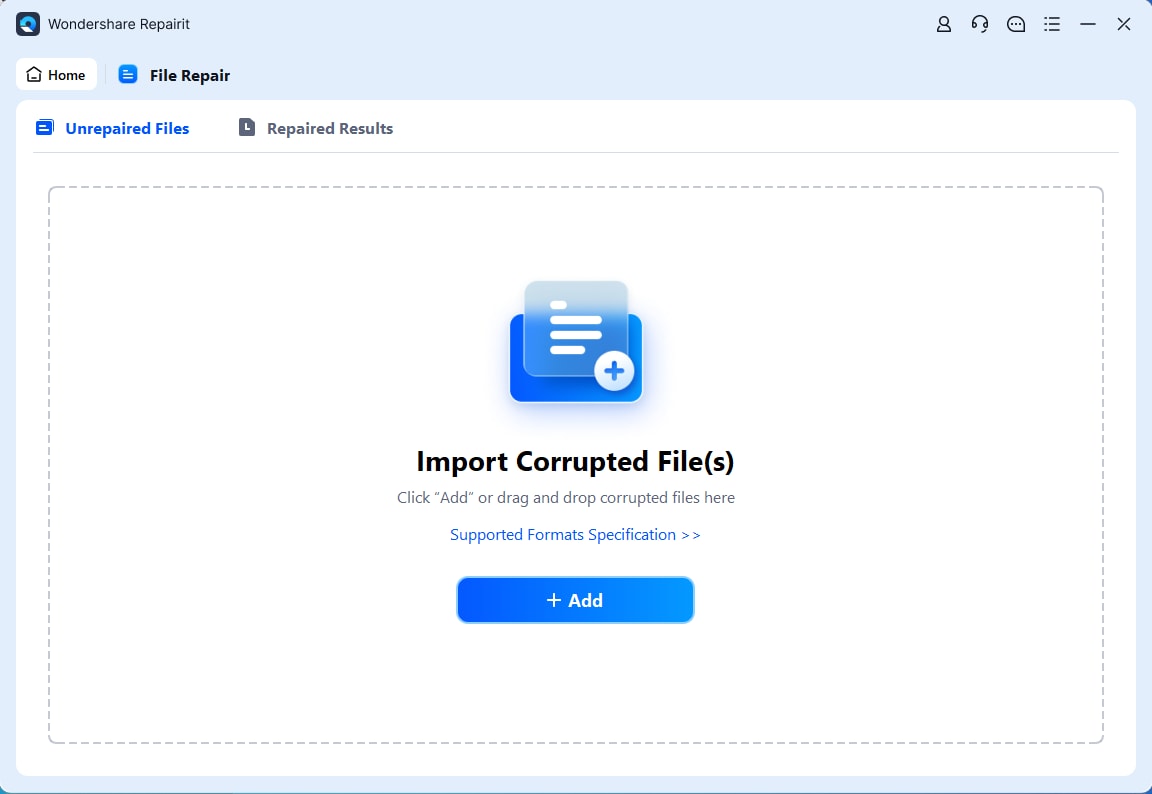
Launch Repairit and look for the option to select a drive, folder, or external device for scanning. Point it to the location where your corrupted KEY presentation is stored, such as your Documents folder, a project directory, or a USB drive. Confirm your selection so Repairit knows exactly where to search for damaged files.
- Start the repair process
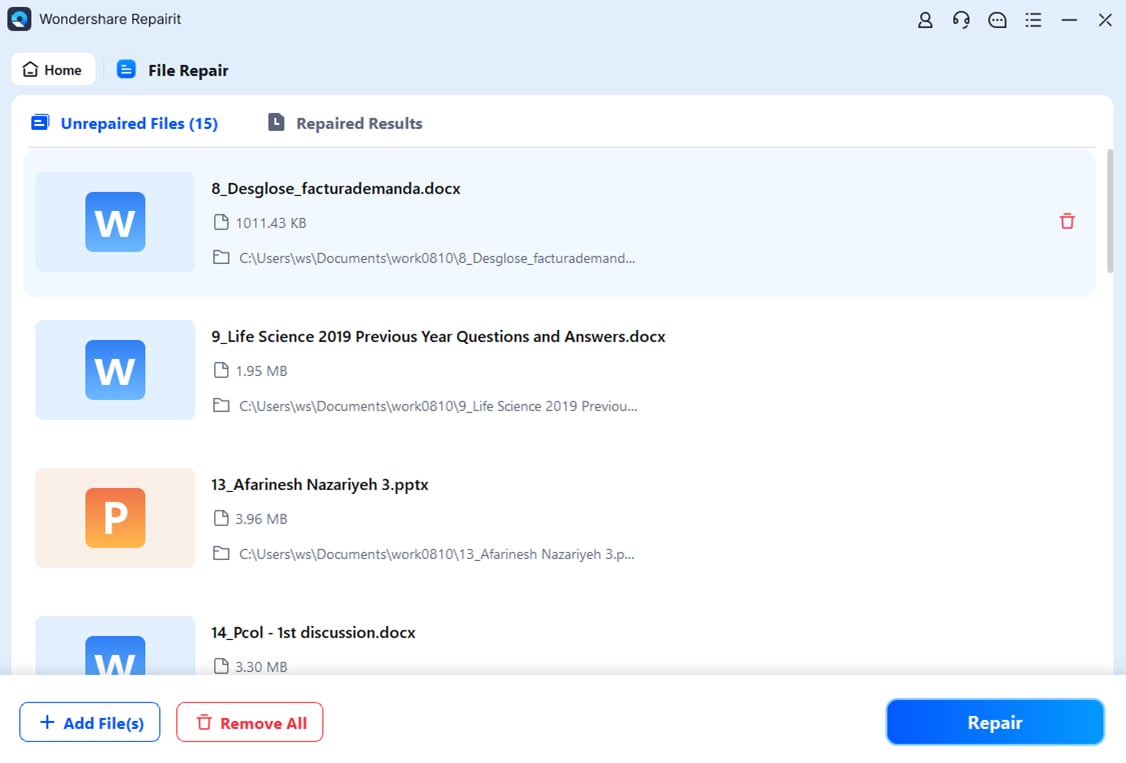
Start the deep scan to let Repairit analyze the chosen location in detail. The tool will detect files that appear corrupted or unreadable, including KEY files that Keynote cannot open. During this process, you can usually monitor progress and see how many potentially recoverable items are being found. Allow the scan to complete to get the most accurate list of repairable files.
- Save Your Desired Data
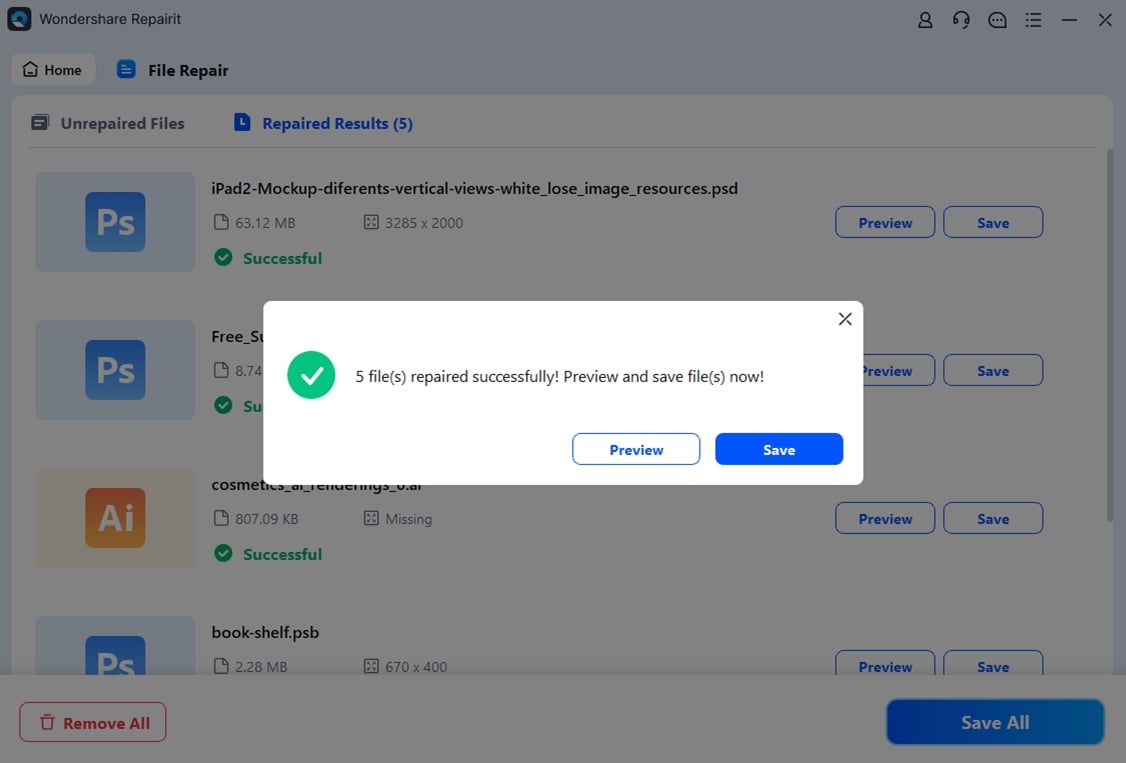
When the scan finishes, browse the results and locate your KEY presentation. Use the preview feature, if available, to verify that the repaired content appears consistent, focusing on critical slides and embedded media. Once you are satisfied with the preview, proceed to repair and save the recovered KEY file or its exported content to a safe destination different from the original storage, reducing the risk of overwriting or further damage.
Conclusion
KEY files are the backbone of Apple Keynote presentations, packaging your slides, themes, and media into a format tailored for macOS, iOS, and iPadOS. By knowing how to open and convert them on Mac, Windows, and the web, you can collaborate smoothly even when your audience does not use Apple devices.
When a KEY presentation stops opening or shows missing content, do not rush to recreate your slides from scratch. Try opening the file on another device, restore earlier versions from backup, and, if needed, turn to a specialized repair solution like Repairit to salvage slides, text, and media and keep your projects on track.
Next: What is ODT File?
FAQ
-
1. What is a KEY file used for?
A KEY file is the native presentation format for Apple Keynote. It stores your slides, text, images, animations, transitions, and multimedia elements, allowing you to design and present slide decks on macOS, iOS, and iPadOS. -
2. How can I open a KEY file on Windows?
You can open or convert a KEY file on Windows by uploading it to iCloud Keynote in a browser, asking a Mac user to export it as PPTX or PDF from Keynote, or using reputable online conversion tools that turn KEY into PowerPoint or PDF formats. -
3. Why will my KEY file not open in Keynote?
If a KEY file does not open, it may be corrupted due to an interrupted save, disk errors, or transfer issues. It can also happen when the file was created in a much newer Keynote version than the one you are using. Updating Keynote, re-downloading the file, or using a repair tool can help. -
4. Can I convert a KEY file to PowerPoint format?
Yes. In Keynote, choose "File" > "Export To" > "PowerPoint" to create a PPTX file. In iCloud Keynote, open your KEY file, then use the download options to save it as a PowerPoint presentation for use in Microsoft PowerPoint or other compatible apps. -
5. How do I know if a KEY file is corrupted?
Signs of a corrupted KEY file include error messages when opening, Keynote freezing or crashing on that specific file, missing slides or media, or an unexpected change in file size. If these appear, avoid repeatedly saving over the same file and consider using Repairit or restoring from a backup.