
When videos refuse to play or show glitches, choosing the right repair tool can save time and frustration. In this comparison, we will look at Repairit vs MiniTool Video Repair, a utility-style repair tool from the broader MiniTool disk-and-system software family. By focusing on workflow, ease of use, and everyday scenarios, you will see when Repairit offers a more guided, repair-focused experience and when MiniTool Video Repair is a comfortable option, especially for users already familiar with the MiniTool utilities on Windows.
Repair Corrupted Files To Save Your Data
 Security Verified. Over 7,302,189 people have downloaded it.
In this article
- Repairit vs MiniTool Video Repair: Quick Verdict
- Repairit vs MiniTool Video Repair: Key Differences
- Repairit vs MiniTool Video Repair: Comparison Table
- What Repairit and MiniTool Video Repair Are Best For
- Repairit vs MiniTool Video Repair: Features and Capabilities
- Repairit vs MiniTool Video Repair: Supported Formats and Compatibility
- Repairit vs MiniTool Video Repair: Workflow and Ease of Use
- Repairit vs MiniTool Video Repair: Pricing and Trial Options
- Who Should Choose Repairit
- Who Should Choose MiniTool Video Repair
- Pros and Cons of Repairit and MiniTool Video Repair
- How to Repair Corrupted Videos After Choosing the Right Tool
Repairit vs MiniTool Video Repair: Quick Verdict
In most everyday video issues, both tools can help restore damaged playback, but they feel different to use. Repairit is built as a dedicated, guided video repair environment, while MiniTool Video Repair behaves more like a practical Windows utility that fits into the wider MiniTool suite.
Repairit is a stronger choice for users who care about a clear, media-centric workflow and may face more than just light glitches. MiniTool Video Repair may be enough if you already rely on MiniTool utilities and occasionally need to fix corrupted clips on a Windows machine without adopting a new style of interface.
Repairit vs MiniTool Video Repair: Key Differences
The key difference in the Repairit vs MiniTool Video Repair comparison is focus. Repairit is centered entirely on repairing corrupted videos and other media, with a step-by-step flow that walks you from import to preview. MiniTool Video Repair, in contrast, feels like another tool within a larger system toolbox, which can be comfortable for users who already manage disks or partitions with MiniTool.
This matters if you want more guidance and a media-focused layout rather than a generic utility panel. If you mainly need to repair a few videos from time to time and already use MiniTool, staying inside that ecosystem may feel more natural, even if the experience is less specialized.
Repairit vs MiniTool Video Repair: Comparison Table
| Dimension | Repairit |
|---|---|
| Best for | Users needing a dedicated, guided tool for mild to more severe video corruption across different scenarios |
| Best for (MiniTool Video Repair) | Users already familiar with MiniTool utilities who want a practical, utility-style video repair on Windows |
| Ease of use | Simple, repair-focused interface with clear steps and prompts |
| Ease of use (MiniTool Video Repair) | Straightforward for existing MiniTool users; may feel more like a standard utility panel |
| Repair depth | Designed around video repair as a core function, suitable for a range of issues |
| Repair depth (MiniTool Video Repair) | Geared to common, everyday corruption issues rather than deep, specialized repair |
| Workflow | Streamlined, guided flow centered only on media repair tasks |
| Workflow (MiniTool Video Repair) | Moderate, utility-style workflow that fits into a broader MiniTool toolbox |
| Strengths | Focused repair environment, clear guidance, and broad use cases |
| Strengths (MiniTool Video Repair) | Known utility-brand feel, practical for general Windows users in the MiniTool ecosystem |
| Weaknesses | May feel more specialized than needed for very occasional, light Windows-only use |
| Weaknesses (MiniTool Video Repair) | Less distinctive video-repair specialization and may not go as deep for complex issues |
What Repairit and MiniTool Video Repair Are Best For
MiniTool Video Repair sits inside a broader disk-and-system utilities brand, giving it a familiar, utility-style feel for people who already use MiniTool tools. This positioning makes it appealing to users who want a practical way to fix everyday video issues on Windows without learning a completely new environment.
Repairit, on the other hand, is built as a dedicated media repair solution. It tends to suit users who treat video reliability as important, need clear steps, and may be fixing more than just a single clip with minor artifacts.
Repairit vs MiniTool Video Repair: Features and Capabilities
Both tools aim to repair corrupted videos so they can play back more smoothly, but they frame their capabilities differently. Repairit focuses on a dedicated, guided repair environment, while MiniTool Video Repair adopts a practical, utility-style design that fits into a broader system toolbox. This means Repairit usually emphasizes a more specialized video repair experience, whereas MiniTool leans on its familiar Windows utility brand feel and moderate workflow.
For basic needs, both options cover similar ground:
- Import corrupted video files and attempt to restore normal playback.
- Handle common issues like videos that will not open or play correctly.
- Provide a simple interface that general users can navigate without advanced technical skills.
When you look at deeper capabilities, some nuances emerge:
- Repairit typically emphasizes a more guided repair flow to help with trickier corruption scenarios.
- MiniTool Video Repair fits into a wider suite of system utilities, which can be convenient if you already manage disks and data with MiniTool.
- Repairit generally focuses more on specialized video-repair options, while MiniTool keeps video repair as one capability among many tools.
Repairit vs MiniTool Video Repair: Supported Formats and Compatibility
Supported video formats and devices are an important part of choosing between these tools, especially if you handle footage from different cameras or platforms. Both Repairit and MiniTool Video Repair are designed to work with common video formats and typical consumer devices, such as videos from phones, cameras, and computers.
Repairit tends to present its format and device support within a dedicated media repair context, which can feel reassuring if you are dealing with clips from mixed sources. MiniTool Video Repair usually focuses on popular formats used by most Windows users and integrates naturally into a general MiniTool-based workflow. If your work is heavily Windows-centric and uses standard formats, MiniTool may cover what you need; if you juggle a wider mix of clips and repair scenarios, Repairit can feel more tailored.
Repairit vs MiniTool Video Repair: Workflow and Ease of Use
Workflow is often the deciding factor in a video repair comparison. Repairit centers its interface entirely around video and media repair, giving users a clear, step-by-step process that feels focused from import to export. The layout, labels, and prompts are all geared toward repairing corrupted videos rather than general system tasks.
MiniTool Video Repair, by contrast, uses a moderate, utility-style workflow that will feel familiar to users who already handle disk or system tasks in the MiniTool ecosystem. If you are used to MiniTool panels and menus, this can make video repair feel like just another straightforward option. However, users looking for a more studio-like, media-centric experience may find Repairit more in line with how they think about clips and projects.
Repairit vs MiniTool Video Repair: Pricing and Trial Options
For most users, pricing and trial flexibility help determine whether a tool fits into their budget. Both Repairit and MiniTool Video Repair typically offer free or limited trial options so you can test the interface and basic results before committing. Exact pricing and licensing can vary by edition, duration, and promotions, so it makes sense to compare their official sites rather than rely on static numbers.
In many cases, your choice will depend more on workflow preference, repair needs, and whether you already use other MiniTool utilities. If you are already paying for MiniTool products and only occasionally repair videos, keeping everything in one suite may feel efficient. If video repair is a regular part of your work or content creation, investing in a more focused environment like Repairit can feel more justified over time.
Who Should Choose Repairit
Repairit from Wondershare is a dedicated media repair solution focused on fixing corrupted or unplayable video files. Through its clear, step-driven interface and repair-focused design at https://repairit.wondershare.com/, it helps users address a range of common video issues without needing deep technical knowledge.
Repairit is particularly suitable for:
- Users who want a dedicated, guided video repair experience with a clear workflow.
- People dealing with multiple corrupted clips or more persistent playback problems.
- Creators and professionals who regularly handle important video files for work or content.
- Users who value a focused repair environment rather than a general system utility panel.
Who Should Choose MiniTool Video Repair
MiniTool Video Repair tends to make the most sense for users who are already in the MiniTool ecosystem and prefer a familiar utility design. It keeps video repair as one feature among many, which can be convenient if you like having all your utilities from a single vendor.
MiniTool Video Repair may be a better fit if you:
- Are already familiar with MiniTool utilities and want video repair that matches that environment.
- Are a Windows user who only occasionally needs to fix basic video corruption issues.
- Like having video repair as one tool inside a broader disk and data utility toolkit.
- Prefer a moderate, utility-style workflow over a more specialized repair interface.
Pros and Cons of Repairit and MiniTool Video Repair
Repairit Pros and Cons
MiniTool Video Repair Pros and Cons
How to Repair Corrupted Videos After Choosing the Right Tool
Once you understand how Repairit vs MiniTool Video Repair compare on workflow, depth, and typical use cases, the next step is actually fixing your corrupted clips. Regardless of which tool you lean toward, the basic process is similar: add damaged files, run the repair, and check the results. If you prefer a more guided experience, using Repairit can make those steps feel clearer and more streamlined, especially when dealing with multiple videos.
Key Features
Some of the practical capabilities that stand out when you repair corrupted videos with Repairit include:
- Dedicated video repair interface with a guided workflow.
- Support for repairing multiple corrupted clips in one session.
- Practical tools aimed at everyday and more persistent video playback problems.
Step-by-step guide
Here is how you can repair corrupted or unplayable videos in Repairit using a straightforward three-step flow.
- Add corrupted videos
Open Repairit, go to the video repair module, and import the clips that stutter, freeze, or refuse to open. You can add several videos at once if you want to handle multiple issues in a single batch.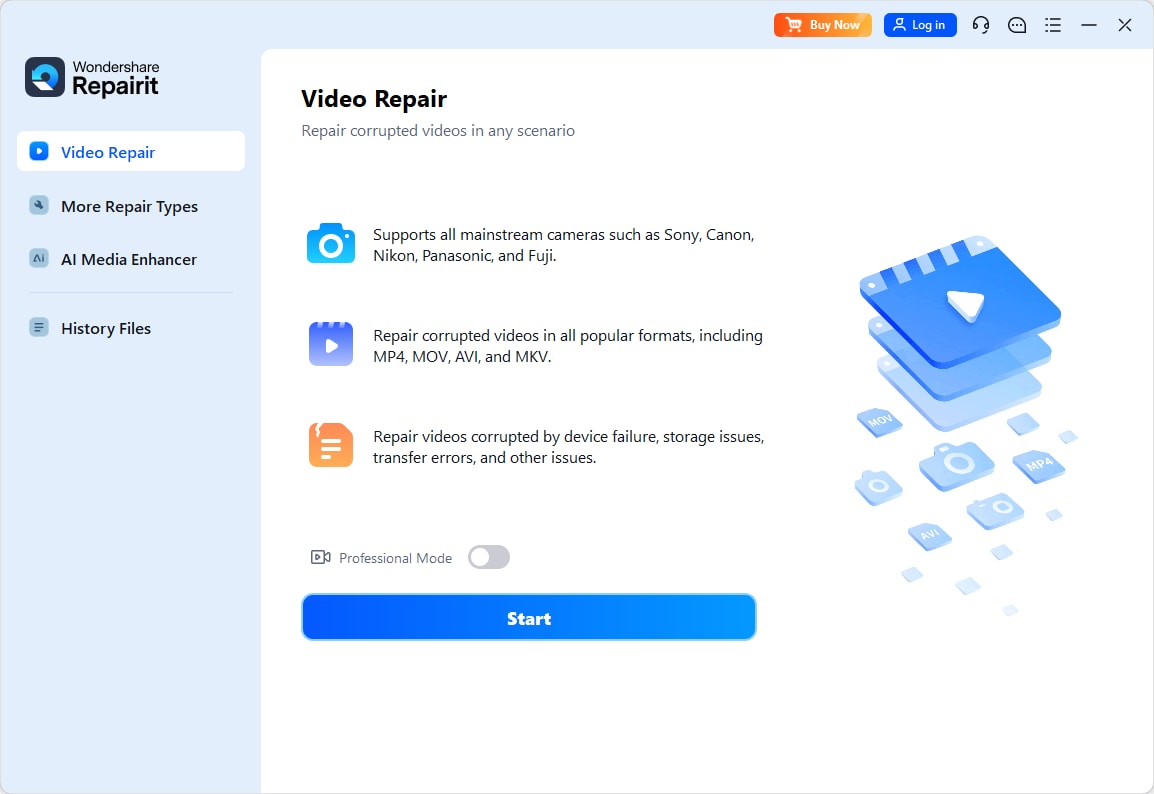
- Run the repair
Start the repair process so Repairit can analyze the selected files and attempt to fix the underlying corruption. Let the scan complete without interruption and follow any prompts that appear on screen.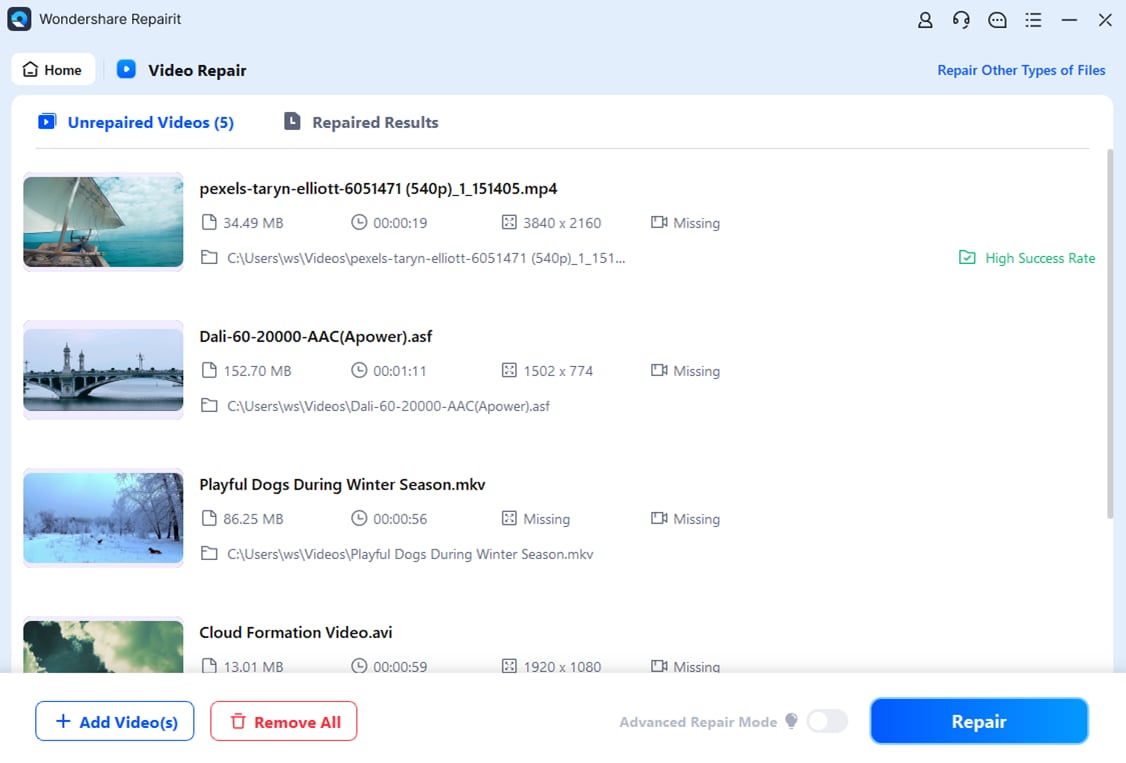
- Preview and export
When the repair finishes, preview the output to confirm that playback looks and sounds acceptable. If you are satisfied, export the repaired videos and save them to a safe folder or drive.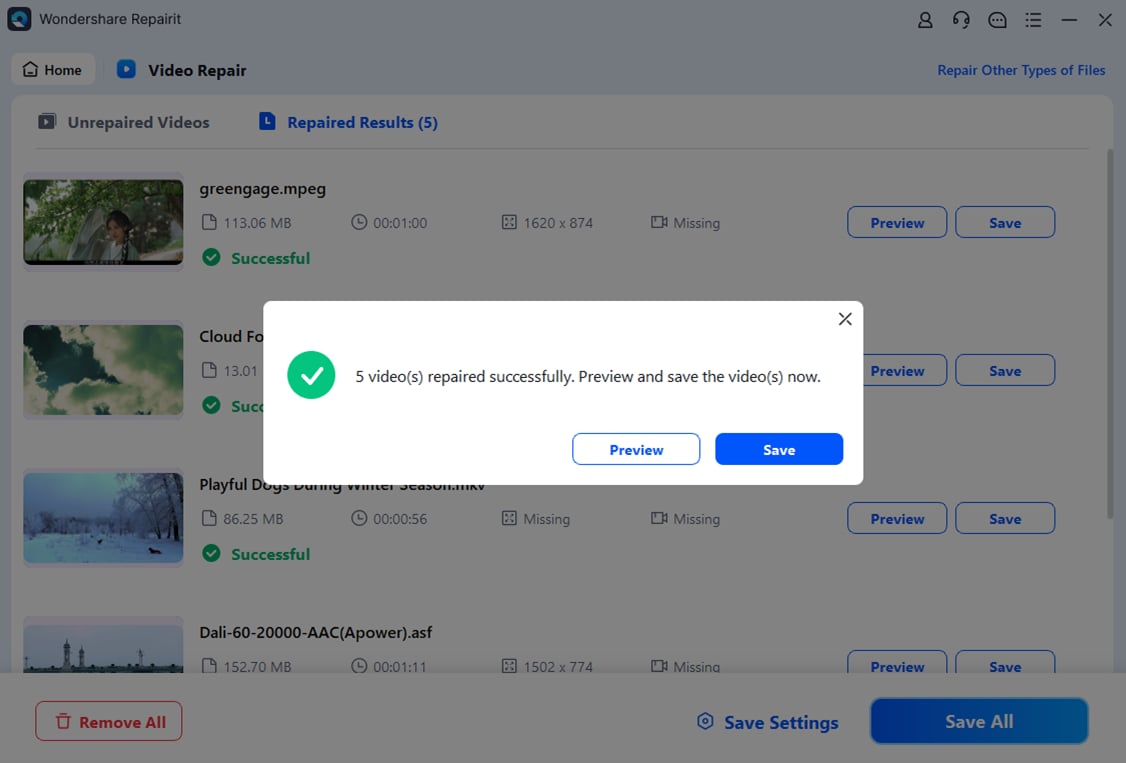
Final Verdict
In the end, neither tool is universally better; the right choice depends on how often you repair corrupted videos and what kind of interface you prefer. Repairit is a stronger choice for users who want a dedicated, guided video repair solution and expect to handle anything from mild glitches to more stubborn corruption. Its focused design and clear workflow make it a good fit for creators, professionals, and anyone who treats video reliability as important.
MiniTool Video Repair, on the other hand, may be enough if you are already invested in MiniTool utilities, primarily use Windows, and only need a practical, utility-style tool for occasional video repair. In those cases, having video repair integrated into a familiar MiniTool environment can be convenient and efficient, even if it feels less specialized than a dedicated media repair application.
FAQ
-
1. Is Repairit better than MiniTool Video Repair for serious video corruption?
Repairit is typically a stronger choice for more serious or recurring video corruption because it is built as a dedicated media repair tool, while MiniTool Video Repair is positioned more as a general utility-style option. -
2. When should I choose MiniTool Video Repair instead of Repairit?
MiniTool Video Repair may be enough if you mainly use Windows, already rely on MiniTool utilities, and only need to fix occasional, everyday video issues with a familiar utility-style interface. -
3. Can I use both Repairit and MiniTool Video Repair on the same videos?
Yes, you can test both tools on copies of the same corrupted video files. Many users try each workflow to see which delivers acceptable playback results for their specific issues.