
Choosing between Repairit vs 4DDiG Video Repair can feel confusing when all you want is to fix a broken clip and move on. Repairit aims to cover a wider range of video corruption issues with guided workflows, while 4DDiG Video Repair focuses on being a lightweight desktop video repair application that is easy to start with. This guide compares both tools, explains where each one shines, and helps you decide when 4DDiG Video Repair may be enough and when stepping up to Repairit makes more sense.
Repair Corrupted Files To Save Your Data
 Security Verified. Over 7,302,189 people have downloaded it.
In this article
- Repairit vs 4DDiG Video Repair: Quick Verdict
- Repairit vs 4DDiG Video Repair: Key Differences
- Repairit vs 4DDiG Video Repair: Comparison Table
- What Repairit and 4DDiG Video Repair Are Best For
- Repairit vs 4DDiG Video Repair: Features and Capabilities
- Repairit vs 4DDiG Video Repair: Supported Formats and Compatibility
- Repairit vs 4DDiG Video Repair: Workflow and Ease of Use
- Repairit vs 4DDiG Video Repair: Pricing and Trial Options
- Who Should Choose Repairit
- Who Should Choose 4DDiG Video Repair
- Pros and Cons of Repairit and 4DDiG Video Repair
- How to Repair Corrupted Videos After Choosing the Right Tool
Repairit vs 4DDiG Video Repair: Quick Verdict
If you often handle multiple corrupted clips, different formats, or more severe playback issues, Repairit is generally a stronger choice because of its guided, flexible workflows. 4DDiG Video Repair, on the other hand, can be a good fit when you want a very simple, lightweight way to repair a few mildly damaged videos.
In many situations, 4DDiG Video Repair works well as a first attempt on simpler issues, while Repairit becomes more helpful when you need deeper repair options or you work with a wider variety of devices and formats.
Repairit vs 4DDiG Video Repair: Key Differences
The key differences between Repairit vs 4DDiG Video Repair revolve around repair depth, workflow control, and who each tool is aimed at.
- Best for: Repairit is better suited to users who need to handle moderate to severe video corruption across varied formats and devices. 4DDiG Video Repair is oriented toward beginners and people who want quick first-pass repair for a few damaged clips.
- Ease of use: Repairit keeps the interface simple but adds more guidance and options as you go. 4DDiG Video Repair keeps things very minimal and straightforward, which can feel less overwhelming if you only need basic fixes.
- Repair depth: Repairit is designed to cover broader and more complex corruption scenarios. 4DDiG Video Repair is geared more toward common playback glitches rather than heavily damaged files.
- Workflow: Repairit uses a step-based workflow that supports multiple repair scenarios, previews, and refinements. 4DDiG Video Repair focuses on very quick, one-off repair runs.
- Positioning: Repairit leans toward users who expect ongoing repair needs or more demanding use cases, while 4DDiG Video Repair is positioned as a lightweight, easy starting point.
Repairit vs 4DDiG Video Repair: Comparison Table
| Dimension | Repairit | 4DDiG Video Repair |
|---|---|---|
| Best for | Users who need to handle moderate to severe video corruption across varied formats and devices | Beginners and users who want quick first-pass repair for a few damaged clips |
| Ease of use | Simple interface with more guided options and deeper control when needed | Very straightforward and beginner-friendly, with minimal options to configure |
| Repair depth | Designed to cover broader and more complex corruption scenarios | Geared toward lighter, common issues rather than deeply complex cases |
| Workflow | Step-based workflow that supports multiple repair scenarios and refinements | Very simple and fast workflow focused on quick one-off fixes |
| Main strengths | Guided repair flow, versatile capabilities, and support for more demanding use cases | Lightweight setup, simple UI, and approachable process for new users |
| Typical weaknesses | May feel more involved than necessary for a single small repair | Lighter positioning for advanced cases and less depth for complex workflows |
What Repairit and 4DDiG Video Repair Are Best For
4DDiG Video Repair is positioned as a lightweight desktop video repair tool with a beginner-friendly pitch, best for users who want quick first-pass repair and do not need a lot of configuration. Compared with the more capable and guided approach of Repairit, 4DDiG Video Repair focuses on simplicity and speed rather than advanced, in-depth workflows. This difference matters if you regularly handle many files or heavy corruption.
Repairit can be more suitable when you are dealing with recurring video issues, clips from several different cameras or phones, or videos that show more serious symptoms such as severe glitches, freezes, or files that refuse to open at all.
Repairit vs 4DDiG Video Repair: Features and Capabilities
Both tools focus on helping you repair corrupted videos and restore damaged playback, but they emphasize different levels of control.
Overall approach
Both Repairit and 4DDiG Video Repair aim to fix corrupted or unplayable videos, but they take different approaches. Repairit leans into broader repair coverage and guided flows, while 4DDiG Video Repair keeps things extremely straightforward, with a simple UI and very fast setup that suits one-off fixes but offers less depth for advanced scenarios.
Core capabilities shared by both
- Repair common video playback issues such as glitches, freezing, or failing to open.
- Desktop-based interfaces that let you add files and start repair with a few clicks.
- Preview repaired output so you can confirm whether the video is usable again before saving.
Where Repairit tends to go further
- Repairit provides more flexible workflows for handling different corruption severities and larger repair tasks.
- It typically supports broader format and device scenarios, making it more suitable for mixed media libraries.
- Guided prompts and options can give you more control if the first attempt does not fully fix the video.
Where 4DDiG Video Repair focuses
- 4DDiG Video Repair remains lightweight, favoring quick, simple runs over complex, multi-step strategies.
- It generally suits people who only occasionally need to fix an unplayable video.
- Fewer choices on screen mean less to learn, which may appeal to first-time users.
Repairit vs 4DDiG Video Repair: Supported Formats and Compatibility
Both Repairit and 4DDiG Video Repair are designed to work with popular video formats and typical consumer devices, such as camera, phone, and drone footage. In most cases you can expect support for common formats used in everyday recording apps, action cameras, and DSLRs.
Repairit is generally a stronger choice if you rely on a mix of formats and sources, or you are not sure which device a clip originally came from. Its broader positioning makes it more suitable for users who work across different platforms and need flexibility.
4DDiG Video Repair is more suited to common, everyday files where in-depth format handling is less critical, such as basic phone recordings or simple camera clips.
Repairit vs 4DDiG Video Repair: Workflow and Ease of Use
Workflow design is one of the clearest differences in the Repairit vs 4DDiG Video Repair comparison.
Repairit workflow and usability
- Offers a guided, step-based workflow that walks you through adding files, repairing, and previewing results.
- Adapts better when you deal with multiple files or more complex corruption, as you can manage several clips in one session.
- Provides more options without making the interface feel overly technical, which helps if you are not an expert but still need control.
4DDiG Video Repair workflow and usability
- Emphasizes a very simple and fast workflow that fits its lightweight desktop design.
- Makes sense if you just want to drop in a video, repair it quickly, and move on.
- May feel more approachable to absolute beginners, though there is less room for fine-tuning.
Repairit vs 4DDiG Video Repair: Pricing and Trial Options
Pricing can change over time, so it is always best to check each official site for the latest offers. In broad terms, though, the way plans are structured reflects how each tool is positioned.
- Repairit tends to offer plans aligned with broader, ongoing repair needs. This can be a better fit for creators, professionals, or anyone who expects to repair corrupted videos regularly.
- 4DDiG Video Repair often appeals to users who want an accessible option for occasional or one-time fixes, with simpler choices for getting started.
- In most cases, both tools provide some form of trial or free preview so you can test the repair process before committing, typically allowing you to see whether the repaired output looks acceptable.
Before you decide, it is wise to look at each product site for current plan details, any trial limits, and which features are included in the options you are considering.
Who Should Choose Repairit
Repairit is aimed at users who need more than an occasional quick fix. According to its positioning and workflows, it tends to be the better option when your situation looks like this:
- Users who often encounter moderate to severe video corruption or multiple damaged files.
- Creators and professionals who need more reliable, guided repair workflows for important footage.
- People managing mixed-format video libraries from various cameras, phones, and devices.
- Anyone who prefers a structured process with more repair options and flexibility instead of a one-click-only approach.
If your videos are valuable and you cannot easily replace the footage, choosing a tool with more depth, like Repairit, can help you feel more confident that you have tried a thorough repair route.
Who Should Choose 4DDiG Video Repair
4DDiG Video Repair is better suited to lighter, more occasional needs where speed and simplicity matter more than maximum flexibility.
- Beginners who want a lightweight desktop video repair tool that feels unintimidating.
- Users who need quick first-pass repair on a small number of clips rather than large repair batches.
- People who prefer a very simple UI and minimal setup for one-off fixes.
- Those who mostly face mild corruption and do not need deep workflow customization or advanced options.
If you rarely encounter serious video problems and simply want something easy to run when a clip misbehaves, a straightforward option like 4DDiG Video Repair can be enough.
Pros and Cons of Repairit and 4DDiG Video Repair
Looking at strengths and limitations side by side can clarify which video repair tool fits your situation better.
Repairit Pros and Cons
4DDiG Video Repair Pros and Cons
How to Repair Corrupted Videos After Choosing the Right Tool
Once you have compared Repairit vs 4DDiG Video Repair and decided which type of workflow suits you, the next step is to actually repair your corrupted video files. No matter which tool you start with, the basic idea is to import the damaged clip, let the software analyze and fix it, and then review the repaired version to ensure playback looks right.
If you want a practical, guided approach that is comfortable for both beginners and more advanced users, you can follow a Repairit style workflow to structure your repair process.
Key Features
- Guided video repair with clear, step-based prompts that reduce guesswork.
- Support for multiple files and a variety of common formats so you can fix several clips in one session.
- Preview options to verify results before you save repaired videos to your device.
Step-by-step guide
You can follow this straightforward, three-step process when using Repairit to fix unplayable or corrupted video files.
- Add corrupted videos
Launch Repairit and import the damaged video files from your computer or storage device. You can add multiple clips if you need to fix several at once.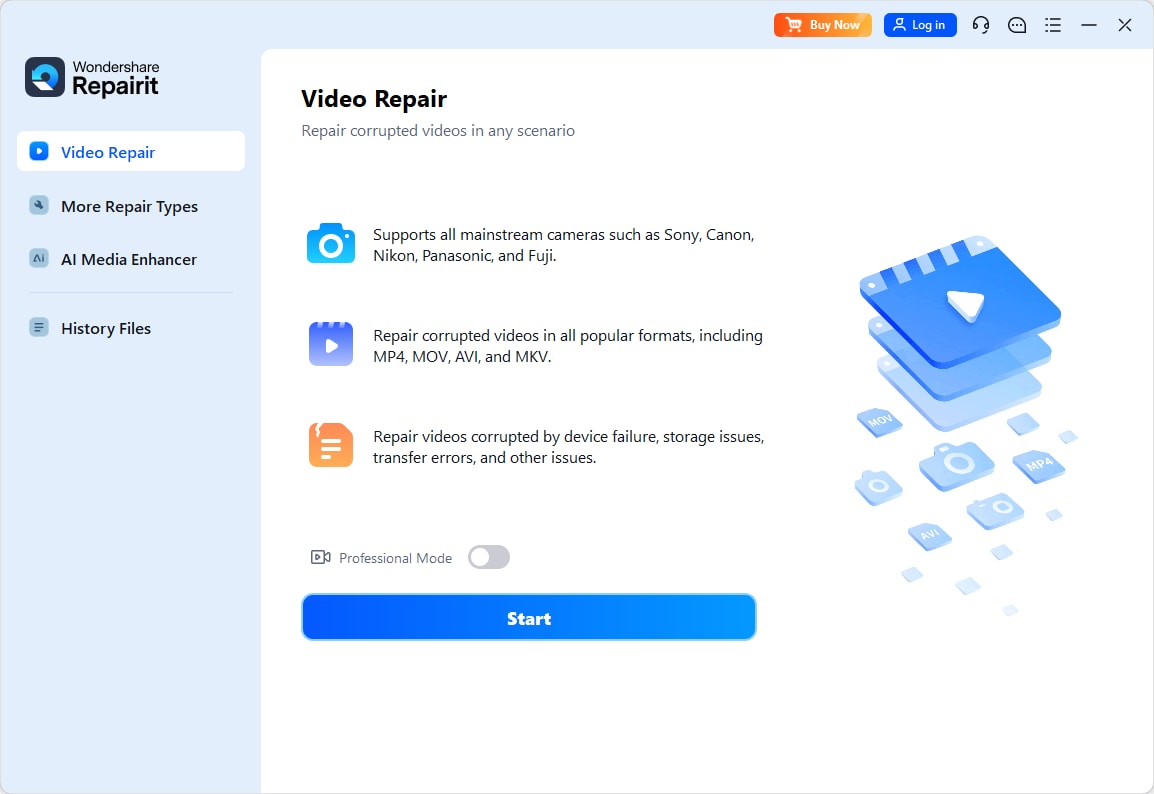
- Run the repair
Choose the repair option and let Repairit analyze the clips and attempt to fix the underlying corruption. Follow the on-screen guidance if the software suggests additional actions.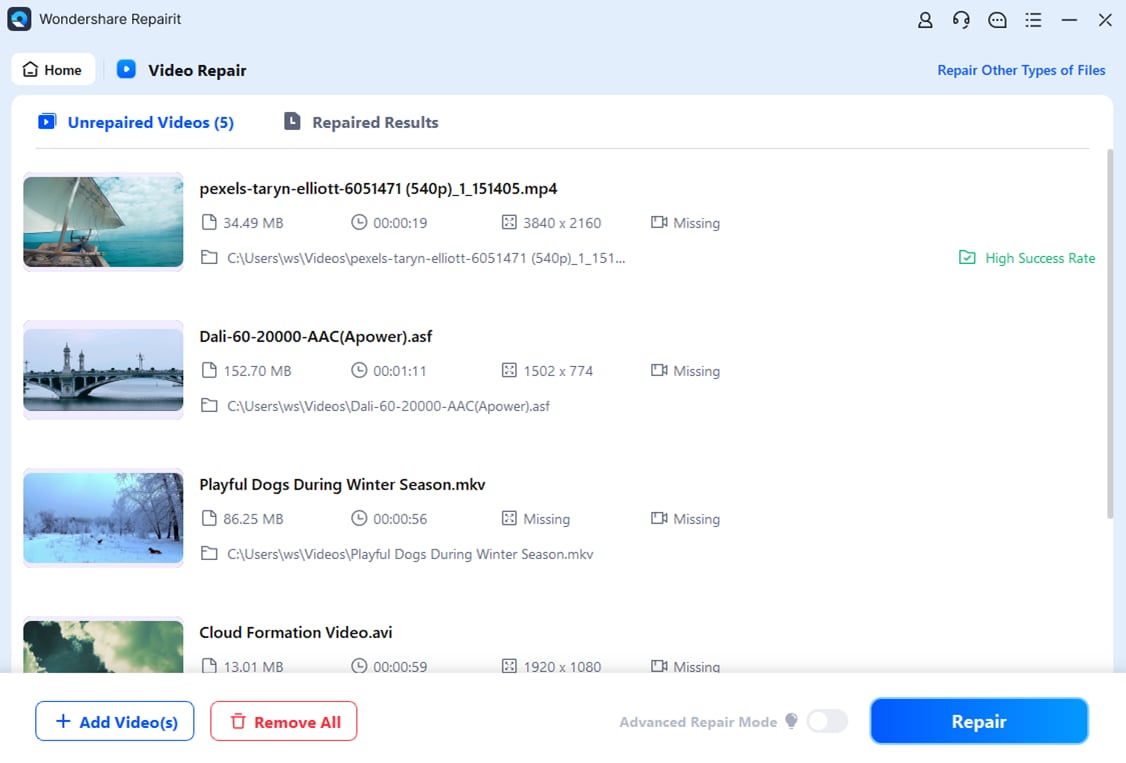
- Preview and export
After the process completes, preview the repaired videos to confirm that they play smoothly and audio looks in line with expectations. When you are satisfied, export and save the fixed files to a safe location.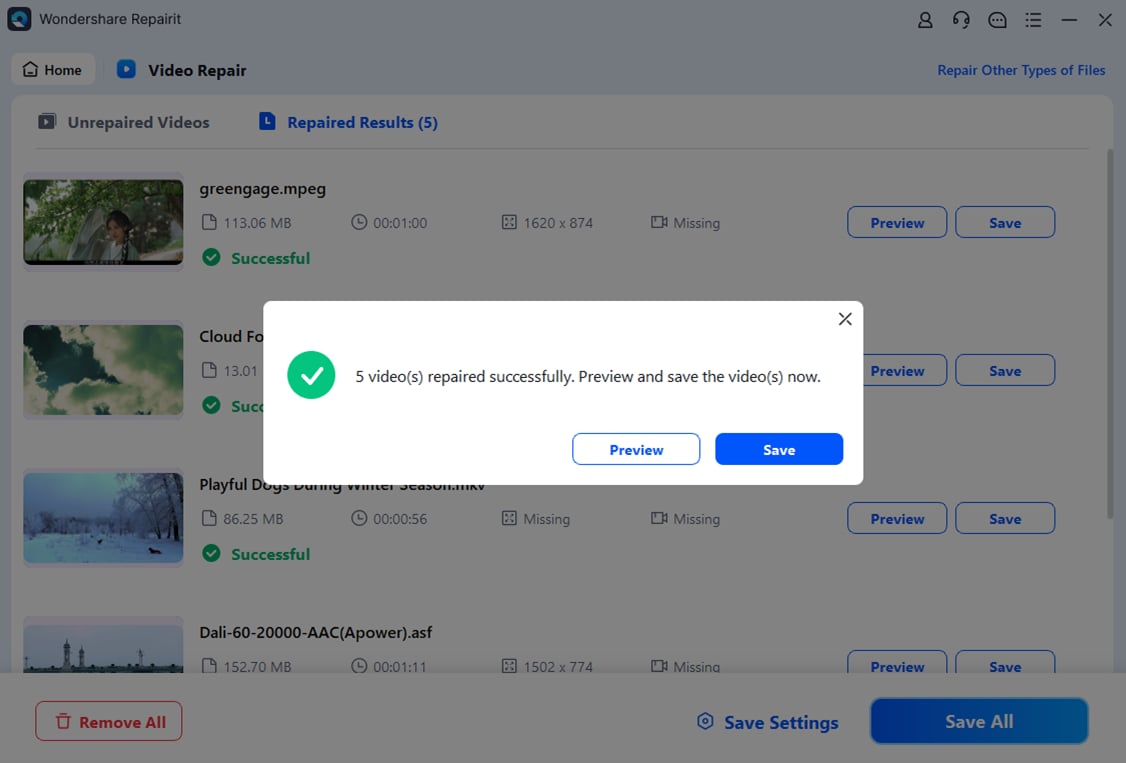
Final Verdict
In the Repairit vs 4DDiG Video Repair comparison, neither tool is universally better; they simply aim at different needs.
- Choose Repairit if you often deal with moderate to severe video corruption, manage clips from many devices, or want guided workflows that give you more confidence when repairing important footage.
- Choose 4DDiG Video Repair if you are a beginner, primarily face mild corruption, and prefer a lightweight desktop video repair tool with a very simple, fast workflow for occasional fixes.
For some users, 4DDiG Video Repair can act as a quick first-pass tool, while Repairit becomes the more capable, flexible solution when you need deeper options or are working with particularly valuable or complex video files.
FAQ
-
1. Is Repairit better than 4DDiG Video Repair for heavily corrupted videos?
Repairit is generally a stronger choice for heavier or more complex corruption because it offers more guided workflows and broader repair options than a lightweight tool like 4DDiG Video Repair. -
2. When should I use 4DDiG Video Repair instead of Repairit?
4DDiG Video Repair can be a good fit if you are a beginner, only need quick first-pass repair, and mainly deal with a few mildly corrupted clips rather than ongoing, complex issues. -
3. Can I try both Repairit and 4DDiG Video Repair before buying?
In most cases, both tools provide some type of trial or preview so you can see how well they repair your videos before purchasing. You should check each product site for current trial details and any limitations.