
Repairit Audio Repair vs Descript Studio Sound is really a question of whether you need deep file-level audio repair or in-editor AI enhancement for spoken content. Repairit Audio Repair and Descript Studio Sound tackle different sides of the same problem: audio that does not sound right. One focuses on repairing corrupted or unplayable files, while the other provides AI voice enhancement inside the Descript editor. Understanding where Descript Studio Sound excels at quick voice cleanup and where Repairit Audio Repair is better for fixing damaged recordings helps content creators pick the right tool before they hit publish.
Repair Corrupted Audio Files With Repairit Audio Repair
 Security Verified. Over 7,302,189 people have downloaded it.
In this article
- Repairit Audio Repair vs Descript Studio Sound: Quick Verdict
- Repairit Audio Repair vs Descript Studio Sound: Key Differences
- Repairit Audio Repair vs Descript Studio Sound: Comparison Table
- What Repairit Audio Repair and Descript Studio Sound Are Best For
- Repairit Audio Repair vs Descript Studio Sound: Audio Repair Capabilities
- Repairit Audio Repair vs Descript Studio Sound: Supported Audio Formats and Use Cases
- Repairit Audio Repair vs Descript Studio Sound: Workflow and Ease of Use
- Repairit Audio Repair vs Descript Studio Sound: AI Processing and Automation
- Repairit Audio Repair vs Descript Studio Sound: Pricing and Accessibility
- Who Should Choose Repairit Audio Repair
- Who Should Choose Descript Studio Sound
- Pros and Cons of Repairit Audio Repair and Descript Studio Sound
- How to Repair Corrupted Audio Files After Choosing the Right Tool
Repairit Audio Repair vs Descript Studio Sound: Quick Verdict
The main difference is that Repairit Audio Repair focuses on repairing corrupted or unplayable audio files, while Descript Studio Sound focuses on fast AI enhancement and noise reduction for already playable voice tracks.
In most real-world cases, Repairit Audio Repair is more suitable when you need to fix unplayable audio, restore damaged playback, or repair files that standard editors cannot open cleanly. Descript Studio Sound may be enough if your recordings already play but simply sound noisy, echoey, or dull and you want quick AI voice cleanup while editing in Descript.
Repairit Audio Repair vs Descript Studio Sound: Key Differences
The key difference is file-level audio repair versus in-editor enhancement. Repairit Audio Repair works as a dedicated repair stage before editing, while Descript Studio Sound is an enhancement layer inside a broader editing environment.
From an audio workflow perspective, this matters if your issue is a broken file (cannot import, constant glitches, heavy artifacts) rather than a noisy but usable recording. Repairit Audio Repair aims to make problematic audio playable again, while Descript Studio Sound refines the sound of clips that already behave normally in Descript.
- Repair depth: Repairit Audio Repair analyzes and repairs damaged playback and severe artifacts; Descript Studio Sound focuses on clarity, noise reduction, and room tone smoothing.
- Workflow position: Repairit Audio Repair comes before your DAW or NLE; Descript Studio Sound runs inside Descript as you edit.
- Use case focus: Repairit Audio Repair targets corrupted, distorted, or unplayable files; Descript Studio Sound targets spoken-word polish for podcasts, tutorials, and similar content.
- Editor dependency: Repairit Audio Repair is a standalone repair tool; Descript Studio Sound is tied to the Descript platform.
Repairit Audio Repair vs Descript Studio Sound: Comparison Table
This quick comparison shows how Repairit Audio Repair and Descript Studio Sound differ on the main decision factors creators face.
| Dimension | Repairit Audio Repair | Descript Studio Sound |
|---|---|---|
| Best for | Repairing corrupted, unplayable, or severely distorted audio files before editing | Content creators improving spoken audio quickly inside Descript projects |
| Ease of use | Guided, task-focused interface for file-level audio repair | Very simple one-click style AI enhancement within an existing Descript workflow |
| Repair depth | Designed to fix file-level issues like damaged playback and serious artifacts | Focused on enhancement and cleanup, not deep repair of corrupted files |
| AI capability | AI helps identify and fix damaged or noisy sections in problematic files | Strong AI voice cleanup for noise reduction and room tone smoothing |
| Workflow | Import problematic files, repair, then send clean audio to your editor | Apply AI processing directly on clips while editing in Descript |
| Strengths | Good for fixing unplayable audio and restoring damaged audio playback | Convenient AI-driven enhancement and noise reduction for spoken content |
| Weaknesses | Not an all-in-one editor for scripting and video editing | Not designed to repair corrupted files that fail to play or import correctly |
What Repairit Audio Repair and Descript Studio Sound Are Best For
Repairit Audio Repair is more suitable when your priority is repairing corrupted audio files and restoring damaged playback, while Descript Studio Sound is better when you mainly need AI enhancement, noise reduction, and voice clarity for clips that already work in your editor.
In most real-world workflows, users turn to Repairit Audio Repair when a client sends a distorted interview, a field recorder produces glitchy files, or exported audio refuses to play properly. Descript Studio Sound tends to shine when your podcast or tutorial is structurally fine but needs a faster way to reduce room noise and make speech sound more consistent.
According to the provided overview, Descript Studio Sound is an AI voice enhancement feature inside Descript that boosts clarity, reduces background noise, and polishes speech for content creators improving spoken audio quickly. Repairit Audio Repair instead focuses on repairing corrupted, noisy, or unplayable audio files before they reach your editing timeline. The main difference is enhancement versus true file-level repair.
Repairit Audio Repair vs Descript Studio Sound: Audio Repair Capabilities
The key difference is that Repairit Audio Repair aims to fix damaged playback at the file level, while Descript Studio Sound aims to enhance audio that already plays correctly.
The provided feature summary explains that both tools use AI, but Repairit Audio Repair concentrates on fixing damaged audio files, while Descript Studio Sound streamlines voice enhancement and noise reduction inside an editing workflow. In practice, this means:
- Repairit Audio Repair capabilities: fix distorted or noisy audio and restore damaged playback for common formats, with AI-guided repair for corrupted or unplayable files that standard editors cannot handle. It can also reduce heavy noise, glitches, and artifacts to help audio sound more natural.
- Descript Studio Sound capabilities: AI-based voice enhancement and background noise reduction for voice tracks, with integrated enhancement inside text-based editing for podcasts and videos. It focuses on improving clarity and controlling room tone.
This matters if your main issue is that a file will not play, will not import, or is full of harsh glitches. In those situations, Repairit Audio Repair is a stronger choice. If your file is technically fine but sounds noisy or thin, Descript Studio Sound may be enough as a cleanup step.
Repairit Audio Repair vs Descript Studio Sound: Supported Audio Formats and Use Cases
The main difference in this area is that Repairit Audio Repair is oriented around importing problematic audio files from many sources, while Descript Studio Sound focuses on audio that is already inside a Descript project.
In most real-world workflows, users work with formats like MP3, WAV, M4A, AAC, or FLAC across desktops and laptops. Repairit Audio Repair is built around importing problematic audio files from typical recording devices and repairing them for playback. Once repaired, the files can move into any DAW, NLE, or podcast platform.
Descript Studio Sound processes audio already in a Descript project, so if a file will not import or play correctly, you generally need file-level repair from a tool like Repairit Audio Repair first. A common pattern is:
- Use Repairit Audio Repair when exported interviews, voice notes, or field recordings are corrupted or distorted.
- Use Descript Studio Sound when the audio imports cleanly into Descript and you want better clarity, less noise, and more consistent tone.
Repairit Audio Repair vs Descript Studio Sound: Workflow and Ease of Use
The key difference is where each tool sits in your workflow: Repairit Audio Repair acts as a pre-edit repair stage, while Descript Studio Sound works as an in-editor enhancement step.
According to the workflow description, Repairit Audio Repair is used before editing: you load problematic audio, repair it, then bring the fixed file into your DAW or editor. Users often treat it like a gatekeeper step that turns unusable recordings into files that can survive editing and mixing.
Descript Studio Sound is in-editor: you enable AI enhancement on tracks as you edit. Users often notice that Studio Sound feels faster for routine cleanup, since you are already working in the Descript timeline and can toggle processing on or off without leaving the project.
- Repairit Audio Repair ease of use: guided, task-focused interface, where the main goal is to add damaged files, run repair, and export.
- Descript Studio Sound ease of use: very simple one-click style AI enhancement for speech within an existing Descript workflow.
Repairit Audio Repair vs Descript Studio Sound: AI Processing and Automation
The main difference is that Descript Studio Sound uses AI to enhance and clean up voice recordings, while Repairit Audio Repair uses AI to analyze and repair corrupted or heavily damaged audio segments.
Both tools lean on AI automation, but with different goals. Descript Studio Sound emphasizes AI voice enhancement, noise reduction, and room tone control to make speech clearer in a few clicks. It is tuned for spoken content where intelligibility and polish are the priority.
Repairit Audio Repair uses AI to analyze and repair corrupted segments, address clicks, glitches, or heavy artifacts, and fix distorted or noisy audio that enhancement alone cannot solve. The key difference is enhancement versus repairing damaged file structures or playback. This becomes important when dropping an audio file into an editor causes errors, crashes, or constant digital noise that standard denoise tools will not address.
Repairit Audio Repair vs Descript Studio Sound: Pricing and Accessibility
The key difference is that Descript Studio Sound is tied to Descript subscription plans, while Repairit Audio Repair is offered as a dedicated audio repair product with its own licensing.
Descript Studio Sound is bundled within Descript plans, so access depends on the subscription tier you choose for editing and collaboration. If you already rely on Descript for scripting, collaboration, and publishing, Studio Sound can feel like a convenient add-on rather than a separate purchase.
Repairit Audio Repair is available as its own product, and users can typically try it in a limited way before committing. Instead of focusing on price alone, it usually makes more sense to choose based on whether you mainly need AI cleanup or true file-level audio repair:
- If your problems are mostly background noise and room tone in spoken content, Descript Studio Sound within your existing subscription may be sufficient.
- If you regularly receive corrupted, unplayable, or badly distorted recordings, investing in Repairit Audio Repair makes more sense as a specialized tool.
Who Should Choose Repairit Audio Repair
Repairit Audio Repair is more suitable when you frequently deal with corrupted, unplayable, or technically damaged audio files that need repair before editing.
Based on the outlined use cases, Repairit Audio Repair is a strong fit for:
- Creators dealing with corrupted or unplayable audio they cannot use in any editor.
- Users who need to repair damaged recordings from interviews, events, or field work.
- Editors who want a dedicated pre-edit step to fix serious artifacts and glitches.
- Teams that already have an editing setup but lack reliable audio repair software.
If your daily work involves client-supplied recordings, remote guests, or field audio where you cannot easily re-record, having Repairit Audio Repair on hand can prevent entire sessions from being lost due to technical issues.
Who Should Choose Descript Studio Sound
Descript Studio Sound may be enough if your audio already imports and plays correctly and you mainly want faster AI voice enhancement and noise reduction while editing in Descript.
According to the provided guidance, Descript Studio Sound is best for:
- Content creators editing directly in Descript who want quick AI voice enhancement.
- Podcasters and video narrators needing fast noise reduction and clearer speech.
- Users whose audio already plays fine but sounds dull, echoey, or slightly noisy.
- Creators who prioritize a simplified, AI-driven workflow over deep repair controls.
If your main challenge is polishing many hours of spoken content rather than rescuing broken files, using Descript Studio Sound can streamline your audio cleanup without switching tools.
Pros and Cons of Repairit Audio Repair and Descript Studio Sound
The key difference in pros and cons is whether you value deep repair for problematic files or integrated enhancement inside an editor.
Repairit Audio Repair Pros and Cons
Descript Studio Sound Pros and Cons
How to Repair Corrupted Audio Files After Choosing the Right Tool
Once you understand how Repairit Audio Repair and Descript Studio Sound differ, the next step is actually repairing the corrupted audio files that are blocking your project. Enhancement inside an editor will not help if the file itself is broken, so starting with a focused repair pass is often essential.
In most real-world cases, the practical workflow is to repair the file first with a dedicated tool, then apply any AI enhancement you like. This is where Repairit Audio Repair fits as a guided, pre-edit stage that prepares your audio for further editing or polishing.
Key Features
For creators who regularly handle problematic recordings, the following capabilities are especially relevant:
- Repairs damaged or unplayable audio files that standard editors and enhancers cannot open or fix.
- Reduces heavy noise, glitches, and artifacts to restore more natural-sounding playback.
- Exports repaired audio so you can continue editing in any DAW, NLE, or podcast platform.
Step-by-step guide
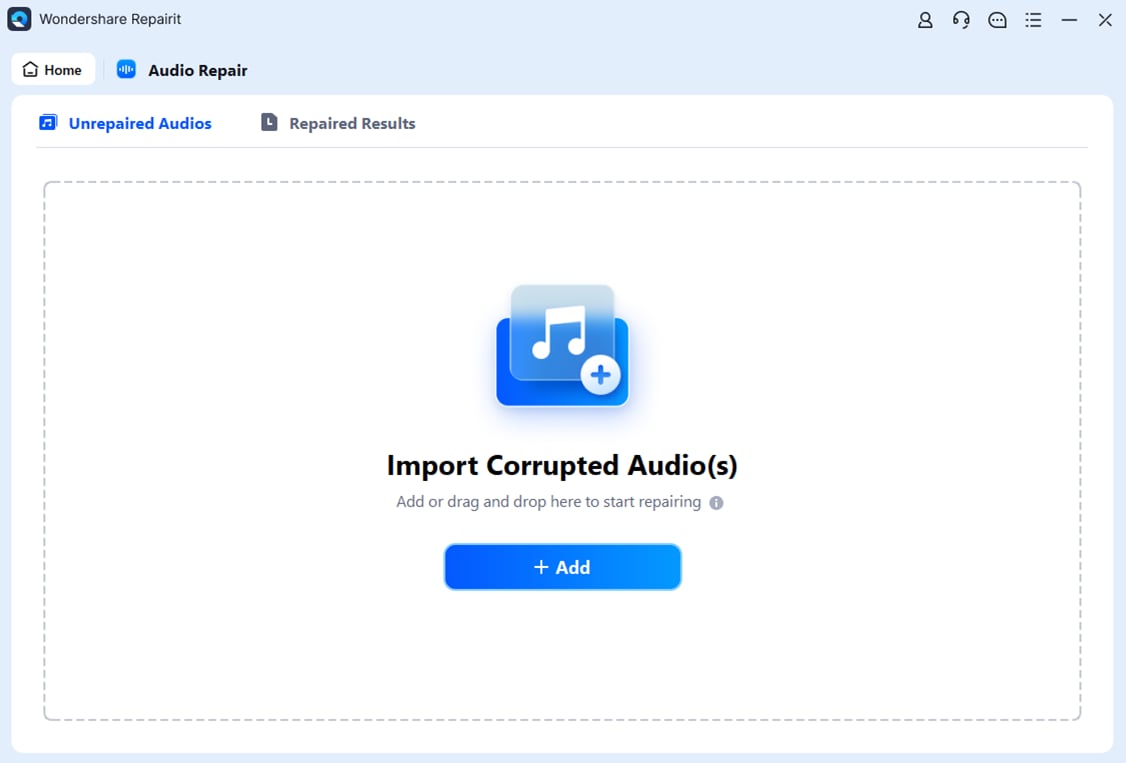
Step 1. Import the damaged audio files you want to fix into Repairit Audio Repair to begin the repair process smoothly.
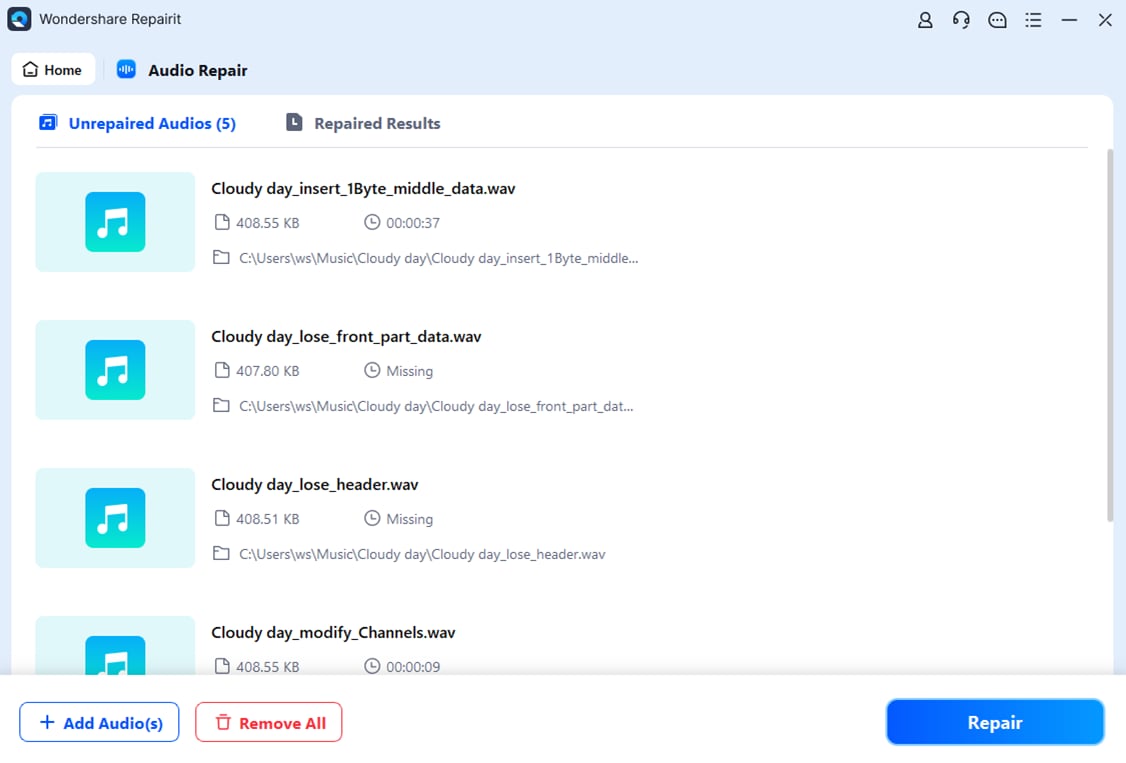
Step 2. Click the repair button to let Repairit Audio Repair automatically analyze and repair the corrupted audio files efficiently.
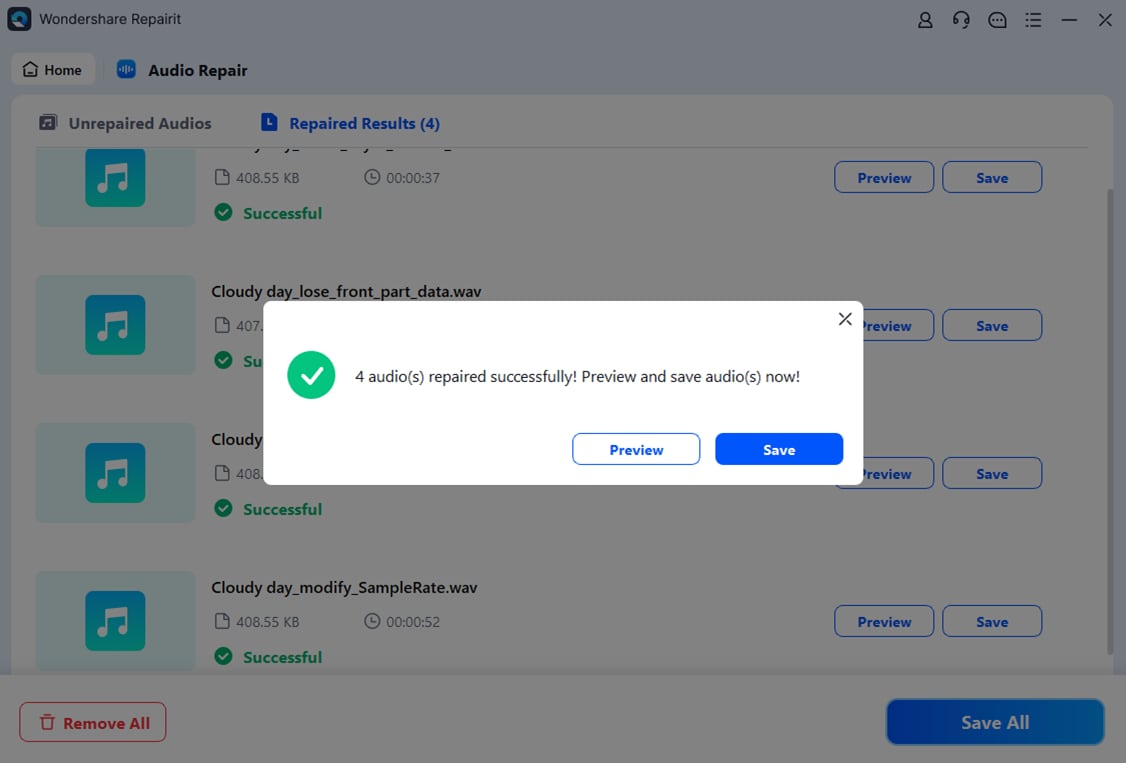
Step 3. Preview the repaired audio results, then save the successfully repaired files to your device.
Final Verdict
The main difference between Repairit Audio Repair and Descript Studio Sound is depth of repair versus speed of enhancement. Repairit Audio Repair is stronger when you need to repair corrupted audio files, fix unplayable audio, or restore damaged audio playback before editing. Descript Studio Sound may be enough if your files are already playable and you primarily want AI voice enhancement, noise reduction, and a streamlined Descript-based workflow.
In practice, many content creators benefit from using Descript Studio Sound for everyday cleanup while keeping Repairit Audio Repair on hand for recordings that AI enhancement alone cannot rescue. If your audio problem starts with a broken or glitchy file, begin with Repairit Audio Repair; if the file simply sounds noisy or flat, applying Descript Studio Sound during editing can be a practical finishing step.
Next: Repairit Audio Repair vs Krisp Audio
FAQ
-
1. Is Descript Studio Sound a full audio repair tool like Repairit Audio Repair?
Descript Studio Sound focuses on AI voice enhancement, noise reduction, and room control inside Descript, and it works well when audio already imports and plays correctly. Repairit Audio Repair is designed for fixing corrupted or unplayable audio files and restoring damaged playback, which goes beyond what typical enhancement features provide. -
2. When should I use Repairit Audio Repair before Descript Studio Sound?
Use Repairit Audio Repair first when a file will not import, will not play, or is full of heavy glitches and artifacts. Once the audio is repaired and plays reliably, you can bring it into Descript and optionally apply Studio Sound for extra polish, voice clarity, and light noise reduction. -
3. What is the difference between audio repair and audio enhancement?
Audio repair focuses on fixing corrupted audio files, restoring damaged playback, and resolving issues like dropouts or severe distortion that can make a file unplayable. Audio enhancement or cleanup, such as AI denoise or voice enhancement, assumes the file already plays and simply improves clarity, reduces background noise, or smooths room tone. This difference matters if your file is broken rather than just noisy.