

As you prepare to start a new project, a sudden error stops everything. Many times, you see a message saying, "This app can't run on your PC." This annoying popup often appears without any clear warning or explanation. It can feel very confusing when your computer refuses to open basic software.
Most users do not know if the problem is the file or Windows. Hence, this guide will help you explore why the system blocks these programs from opening. In addition, you will even discover simple fixes to get those favorite tools working again.
Table of Contents
Part 1. What Does the "This App Can't Run on Your PC" Error Mean on Windows 11
On Windows 11, this message acts as a general block for your software. It indicates that the system decided a program is not safe to launch. Still, when seeing "This app can't run on your PC Windows 11," confusion occurs. Often, the software is simply not compatible with the newest version of Windows. The application might have never received an update for this specific modern system.

Sometimes, the app architecture does not match the processor inside your laptop. You might try running software built for a completely different type of CPU. The hardware components could also fail to meet what the program expects. Essentially, the system blocks the program due to compatibility or architecture conflicts. So, this warning helps users avoid crashes that could harm their important digital files.
Part 2. Understanding Why This App Can't Run on This PC - Hidden Causes
Several underlying issues trigger the message "This app can't run on this PC." Thus, you can explore these specific technical reasons to identify why your software will not start:
- Wrong Architecture: The program may target another system architecture, such as 32-bit or 64-bit. This mismatch prevents the operating system from executing the program code.
- Corrupt Files: Sometimes the installation files are missing or damaged during a recent download. Windows cannot read the broken data required to launch the application.
- SmartScreen Block: The native security filter might stop an unrecognized program for your safety. This feature blocks apps that are unrecognized or lack reputation data.
- Antivirus Interference: Your security software could mistakenly flag a safe file as a threat. The antivirus stops the process to keep the rest of the system secure.
- Permission Issue: Limited user rights prevent certain apps from running specific administrative functions. Without those privileges, Windows refuses access to protected system resources.
Part 3. Top Step-by-Step Fixes for "This App Can't Run on Your PC"
When the "This app can't run on your PC" error appears, it usually feels confusing. Therefore, the following 5 solutions will help you fix the issue and make your applications work again:
Solution 1. Check App Compatibility
You must verify that your current hardware meets the minimum requirements for the software. So, visit the developer website to see if the program supports your modern OS. When facing "This app can't run on your PC Windows 11" errors, this tool highlights specific mismatches. Moreover, verify the app pages list Windows 11 or 64-bit support before downloading files. This prevents wasted time and repeated failed attempts.
Solution 2. Run in Compatibility Mode
This makes Windows think it is an older version to run apps. Besides, it adjusts settings so older programs run without crashing or blocking. Such changes adjust legacy settings so older programs can start properly. When you see the "This app can't run on this PC" error, this option may resolve it. Thus, go through the steps below to enable this specific mode on your computer:
Step 1. Initially, select the "Properties" option as you right-click the problematic program.

Step 2. Upon seeing a new prompt window, check "Run This Program in Compatibility Mode for." Here, select an earlier Windows version for which the app is confirmed to function and press "OK."

Solution 3. Run as Administrator
Running software with administrative rights grants elevated permissions required by some applications. This method bypasses blocks when "This app can't run on your PC" occurs. Many older applications need deeper permissions to work on your modern PC. Therefore, granting these rights allows the tool to modify necessary folders for its startup. So, apply the following instructions to launch your favorite software as an administrator:
Instructions. Upon right‑clicking the program showing this error, opt for "Run as Administrator."

Solution 4. Check Antivirus and Security Settings
Security software also blocks programs to keep your modern operating system safe. This protection might trigger errors like "This app can't run on your PC Windows 11." As a result, disabling these safety features for a short time can solve your opening errors. You can also add the software to your antivirus exclusion list for users. Still, you can use the steps below to check and modify settings on your device:
Step 1. To initiate, type "Windows Security" in the "Search" bar and click "Open."

Step 2. After that, you need to head to the "Apps & Browser Control" section.

Step 3. Moving forward, click the "Reputation‑based Protection Settings" option.

Step 4. Here, see if "Check Apps and Files" or related options are blocking the app. Here, you can temporarily turn "Check Apps and Files" off as a test.

Solution 5. System File Check (SFC Scan)
A System File Check helps fix the core files inside your operating system. This native tool scans any damaged data that might cause errors. The scan replaces corrupted system files using cached Windows system copies. Moreover, using this command ensures your Windows environment is stable and healthy for apps. Thus, follow this specific command to start scanning and fix "This app can't run on this PC:"
Step 1. You need to click "Run as Administrator" upon searching for the "Command Prompt."

Step 2. Going ahead, run the "sfc /scannow" command to start scanning and fixing your system files.

Part 4. 4 Advanced Ways to Fix "This App Can't Run on Your PC"
In case basic methods fail, you might need to use deeper system repair tools. So, try these 4 advanced strategies to resolve persistent software blocks on your computer:
Solution 1. Check and Fix Disk Health
Many times, hidden drive damage causes the error "This app can't run on your PC." Therefore, checking your storage drive for physical errors can solve many deep system problems. A healthy disk ensures that all your application data stays safe and readable. The built-in check tool finds and repairs bad sectors on your hard drive. So, adhere to these instructions to verify the health of your storage disk:
Instruction. On the "CMD" window, run a basic disk health scan by running "chkdsk C: /f." Press "Y" to schedule the scan, then restart your computer and allow CHKDSK to finish.

Solution 2. Create a New User Account
A corrupt user account also prevents certain programs from opening on your system. You should then create a fresh profile to help determine if your current user settings are broken. A new account starts with default settings that may bypass existing software blocks. Besides, it allows the application to run without any personal configuration errors getting in the way. Let's explore how to create a new account on your PC:
Step 1. From the "Accounts" settings, head to the "Other Users" section. On the following display, you need to press the "Add Account" button.

Step 2. Afterward, click the "I Don't Have This Person's Sign‑in Information" option.

Step 3. Moving forward, opt for "Add a User Without a Microsoft Account" on the next display.

Step 4. Following that, enter a username, along with other required details, and click "Next."

Solution 3. Run DISM to Repair Windows Image
The DISM tool repairs the underlying image that powers your whole operating system. It fixes complex errors that a standard file scan might miss during the process. This deep repair often solves "This app can't run on your PC Windows 11." It uses Windows Update sources or local images to repair system data. Anyhow, use these simple commands to start the image repair process on your device:
Step 1. As you access "CMD," run the "DISM /Online /Cleanup-Image /CheckHealth" command. After that, input "DISM /Online /Cleanup-Image /ScanHealth" for a deeper scan and press "Enter."

Step 2. Going ahead, run "DISM /Online /Cleanup-Image /RestoreHealth" to finish repairing the Windows Image.

Solution 4. Use Third-Party File Repair Tool (Repairit) to Fix Damaged App Files
When you can't fix the issue, Repairit is now highly recommended to fix damaged app files. This powerful software's File Repair supports over 30 different file formats for your daily needs. Besides, it offers lossless repair that keeps the original structure and content intact. While fixing, you can even use batch repair for entire project folders to save a lot of time.
In addition, this tool handles specific patterns where files simply refuse to open or load. This helps when the error "This app can't run on this PC" occurs. In addition, the program maintains high success rates even for very badly corrupted media files. A preview feature allows you to check results before saving the repaired versions. Alongside this, it works on both Windows and macOS systems for all modern users.
Key Features
-
Error Pattern Recognition: Analyzes abnormal file behaviors and identifies structural inconsistencies causing loading or access failures.
-
Safe Repair Environment: Processes files in a protected workspace to avoid overwriting or further damaging original data.
-
Selective File Recovery: Lets users repair only chosen files instead of entire folders for more controlled troubleshooting.
Guide to Use Repairit File Repair Tool to Fix Damaged App Files
You can now go through the following step-by-step guide to repair your corrupted app files via Repairit:
Step 1. Access the AI File Repair Feature
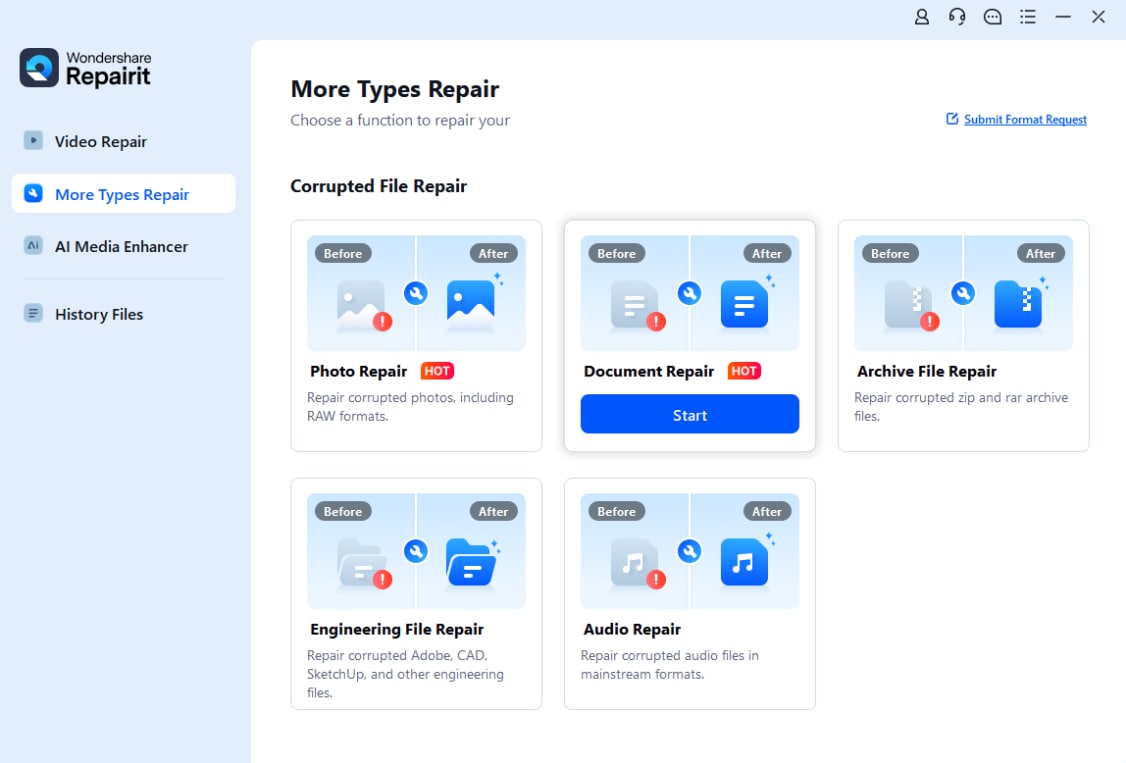
To initiate, select "Document Repair" from the "More Types Repair" tab and click "Start." Press "+Add" on the next screen to import damaged app files.
Step 2. Start Fixing the Damaged App Files
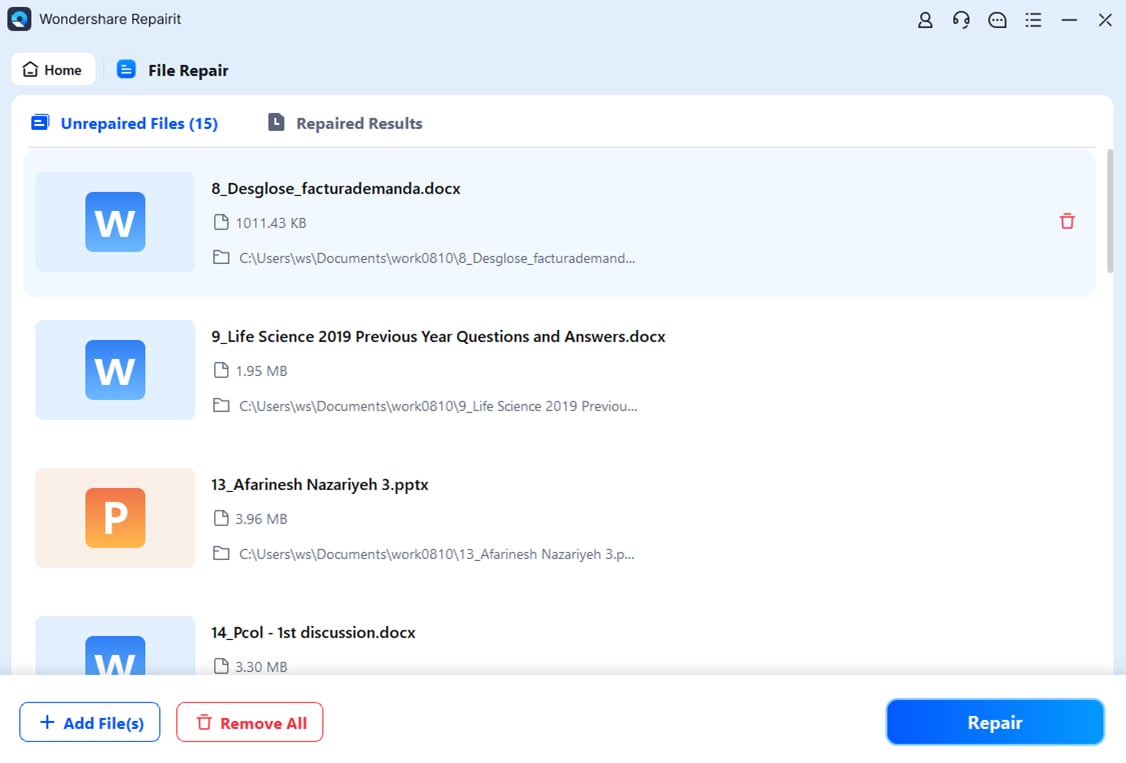
Subsequently, after the files appear under "Unrepaired Files," click the "Repair" button.
Step 3. Save or Export the Repaired Document
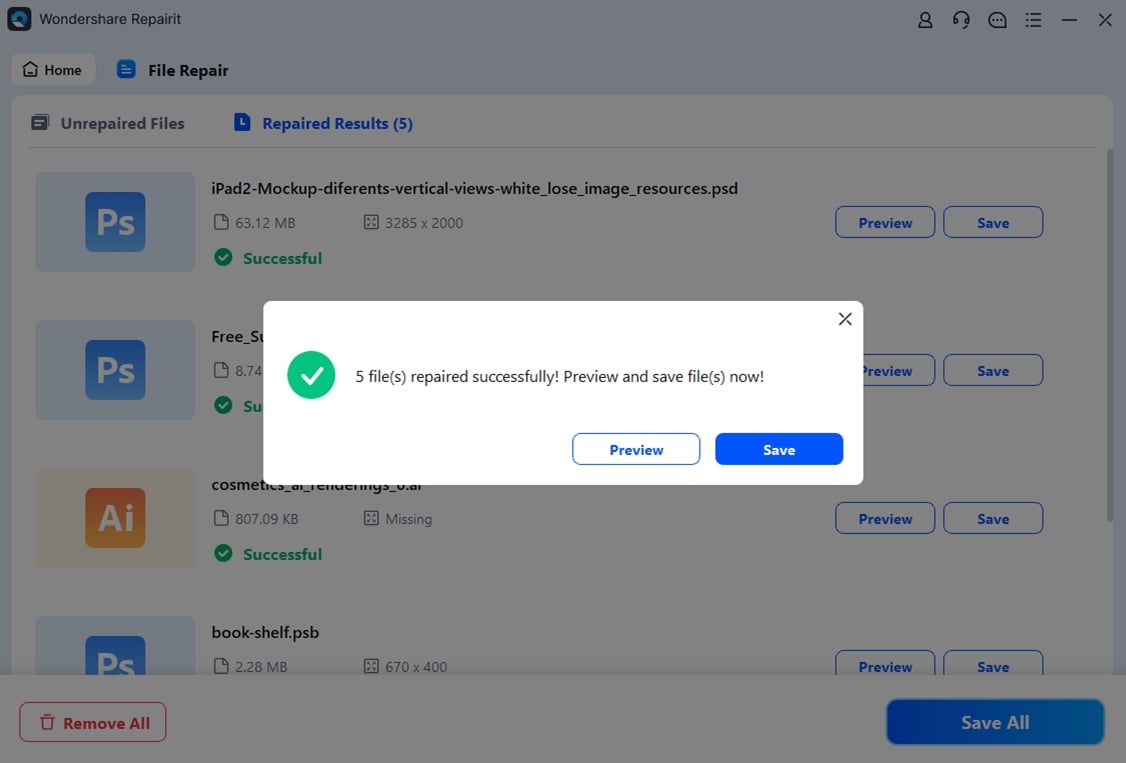
After a while, preview the repaired result as the file's access to "Repaired Result." Subsequently, you then need to press "Save All" to export the restored app files.
Repair Corrupted Files
 Security Verified. Over 7,302,189 people have downloaded it.
Conclusion
To sum up, you now have several ways to fix the message "This app can't run on your PC." Following these simple steps can help you overcome common software blocks. First, try basic fixes before moving to advanced system tools. Most program issues disappear after updating settings or repairing system files. Additionally, use Repairit to restore accessible documents or media if your files remain damaged.
Frequently Asked Questions
-
1. Does a low battery mode prevent some apps from running correctly?
Power-saving modes often limit the performance of heavy tools on your laptop. The system might block certain functions to save energy for more critical tasks. Moreover, connect your charger to ensure that the application receives all necessary power now. -
2. Can I still use very old software on the Windows 11 system?
Most old programs require compatibility mode settings to function on new versions. Some 16-bit applications will never run on modern 64-bit systems without extra tools. You might need to use a virtual machine to open these ancient files. -
3. What should I do if my downloaded setup file is completely broken?
It is recommended to use Repairit to fix your corrupted installer files and data packs. This tool restores the original structure so the installation process can finish safely. Moreover, using this professional software ensures your setup files are healthy and ready.