
Invalid file format: meaning, causes, and quick fixes
Quick Answer: An invalid file format error means the app can’t read or open a file because the file’s internal structure doesn’t match what the program expects.
Most common causes (in plain English):
- Extension mismatch: The file name ends with the wrong suffix (e.g.,
.pdfrenamed to.docx). - Corruption: The file was damaged during saving, transfer, download, storage, or a crash.
- Incomplete file: The download/copy stopped early, so the file is missing data.
- Unsupported format/version: Your software can’t handle the format, encoding, or newer file version.
- Missing components: Codecs/drivers/plugins needed to decode the content aren’t installed.
Try these quick fixes (top-to-bottom):
- Check the extension and confirm it matches the real file type.
- Re-download or re-transfer the file (prefer wired/official source).
- Open with a compatible app (or update the current app).
- Convert the file to a more supported format (e.g., MKV → MP4).
- Repair the file if it’s corrupted and fails across multiple apps/devices.
Tip: If the error happens during upload (not opening), jump to Invalid file format by scenario—upload issues often relate to file type rules, encoding, or naming.
Have you ever followed all the instructions to save a file correctly, only to get an "Invalid file format" error? It happens more often than you’d think. A file may look fine but still be unreadable. So, what causes this problem? More importantly, how can you fix it? This article will explain why files become invalid and the best ways to repair them so they work properly.
In this article
Part 1: What Does an Invalid File Format Mean?
An invalid file format is a file which cannot be read, opened, or recognized due to compatibility or corruption issues. This problem can affect various file types, including documents, images, videos, and more.
Common Causes of an Invalid File Format Error
- Wrong File Extension: The file extension does not match the actual file structure (e.g., renaming a .PDF as .DOCX).
- File Corruption: The file was damaged during download, transfer, or storage.
- Incomplete Downloads: The file was not fully downloaded or copied.
- Incompatible Software: The program you’re using doesn’t support the file format.
- Missing Components: Required codecs or system components are not installed.
Invalid file format by scenario (Windows, Office, uploads, media)
Because “invalid file format” is a general message, the real cause depends on where you see it. Use the matching scenario below to fix it faster.
Scenario A: Windows Media Player / video playback
- Likely causes: unsupported codec/encoding, damaged video header, incomplete download, or a container mismatch (e.g., MKV codec not supported).
- Try: open the file in a modern player (like VLC), update codecs, or convert to MP4 (H.264/AAC). If it still fails everywhere, repair may be needed.
Scenario B: Microsoft Office (Word/Excel/PowerPoint)
- Likely causes: file corruption, mismatched extension (renamed), file created in a newer version, or a partial download from email/cloud.
- Try: re-download from the source, open in the latest Office version, and use built-in “Open and Repair” (for Office files). If the file is broken, use a repair tool.
Scenario C: Upload errors (websites, Google Drive, forms, portals)
- Likely causes: the site blocks certain file types, the file is too large, filename has unsupported characters, or the file’s MIME/encoding doesn’t match the extension.
- Try: rename the file with simple characters, re-export the file (not “rename”), and convert to a widely accepted format (PDF/MP4/JPG). Then upload again.
Scenario D: “Open with…” fails but file seems normal
- Likely causes: you’re using the wrong app, the app is outdated, or the file is from a specialized tool (e.g., PSD, CAD, project files).
- Try: open with the original creator app (or a compatible viewer), then export/save to a standard format.
Quick troubleshooting checklist (find the root cause in 60 seconds)
- Is this an “open” error or an “upload” error? Upload errors usually relate to platform rules, naming, encoding, or file type restrictions.
- Does the file open on another device/app? If yes, it’s likely a compatibility/app issue. If no, suspect corruption or an incomplete file.
- Was the file downloaded or transferred recently? Re-download or re-copy it (many “invalid format” issues come from partial transfers).
- Did you rename the extension manually? Renaming doesn’t change file structure. Restore the original extension or re-export from the source program.
- Is it a media file? Try VLC or convert to MP4. If it still fails, the header may be corrupted.
- Is it an Office file? Try the latest Office version and built-in repair. If the file remains unreadable, repair is the next step.
1. Incorrect File Extension
Every file has an extension, like .jpg for images or .mp4 for videos. This tells the system what type of file it is. But what if the extension is wrong? The system gets confused. Imagine renaming a .pdf file to .docx. Will it turn into a Word document? No, because the content inside hasn’t changed.
This happens when a file is mislabeled or saved with the wrong format. Some programs may still open it, but others will refuse, showing an "invalid file format" error.
2. File Corruption
Corruption happens when something interrupts the file while it's being saved, transferred, or downloaded. A sudden power outage, a faulty USB drive, or even malware can damage files. Sometimes, they open but show distorted content. Other times, they won’t open at all because parts of the file are missing or unreadable.
3. Incompatible Software
Not all programs support every file type. Have you ever tried opening a Photoshop file (.PSD) in a basic image viewer? It won’t work because the viewer doesn’t recognize that format. Some files need specialized software, like CAD drawings or high-quality audio recordings.
4. Partial File Downloads
A partially downloaded video may refuse to play. A document missing crucial data may show an error. Even though the file appears to be there, it’s incomplete. Always check if a download finished properly before trying to open the file.

How to Solve Invalid CSV File Error?
5 Methods to Fix Zip File Is Invalid Problem
5 Ways to Resolve “PDF Invalid Format” Issue
XLSX File Format is Not Valid? Learn 4 Proven Fixes!
Part 2: How to Fix Invalid File Format Errors? 4 Methods
General Fix Steps: Start by confirming the file extension and whether the file was fully downloaded/transferred. Then try a compatible app (or update your software). If compatibility is the issue, convert the file. If the file is corrupted and fails across multiple apps/devices, repairing it is often the most effective solution.
Fixing an invalid file format error doesn’t have to be complicated. Depending on the cause, there are several methods you can try to resolve the issue. Below are four reliable ways to fix this problem.
Method 1. Repair the Invalid File
When files are corrupted or damaged, repairing them is often the best solution. That's where Repairit File Repair becomes useful.
Repairit File Repair is a professional tool designed to fix corrupted or unreadable files, including documents, photos, and videos. Whether your file was damaged during transfer or due to a system crash, this software can help restore it to its original state.
Key Features of Repairit File Repair:
- Supports Multiple File Types. It repairs documents (DOCX, PDF), photos (JPG, PNG), and videos (MP4, MOV).
- Batch Processing. This powerful tool allows you to repair multiple files at once, saving time.
- High Success Rate. It is designed to recover severely corrupted files reliably.
- User-Friendly Interface. Having an intuitive design makes it easy for anyone to use it.
- Cross-Platform Support. Available for both Windows and Mac.
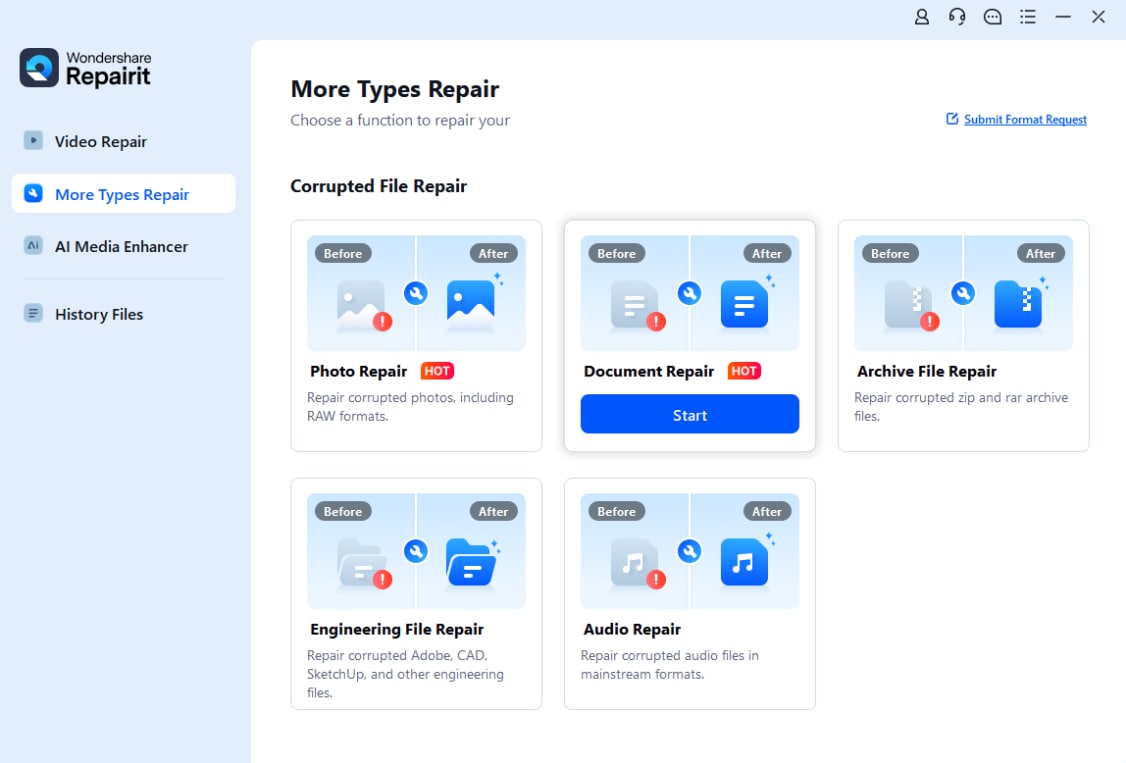
Step 1. Download and install Repairit on your computer. Navigate to More Types Repair, then pick File Repair.
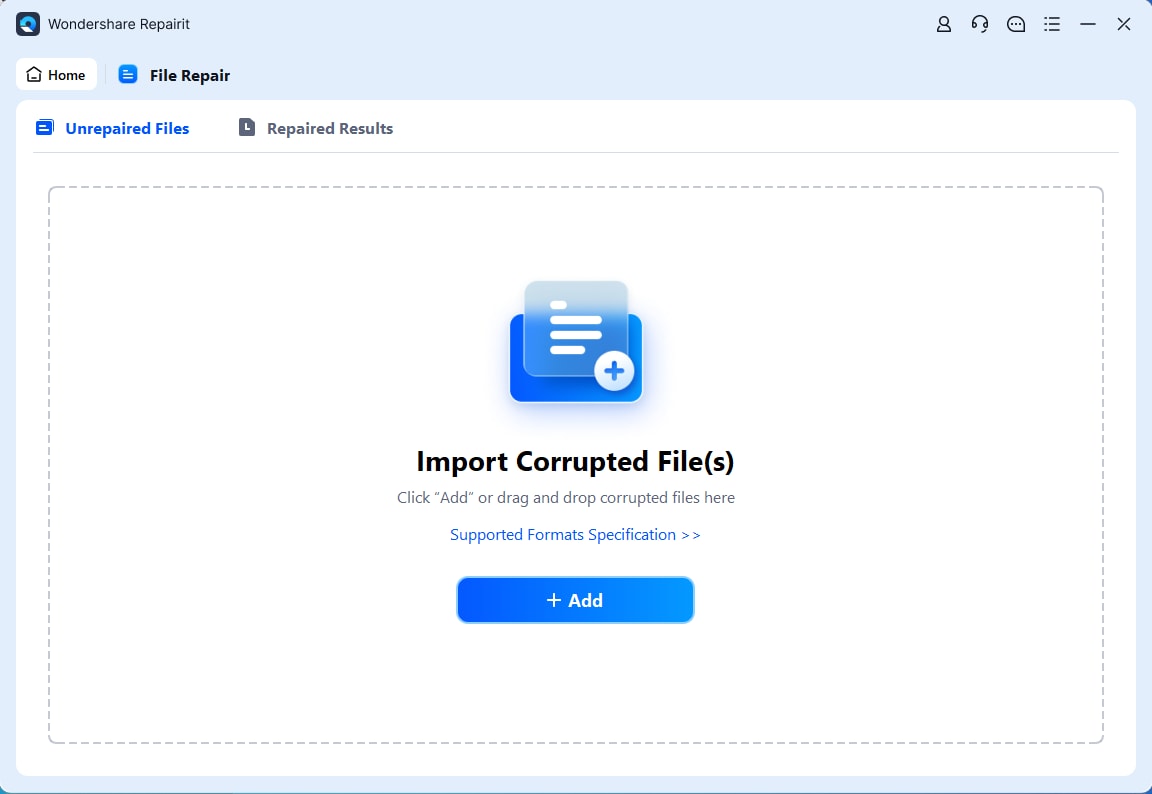
Step 2. Upload the corrupted file by pressing +Add.
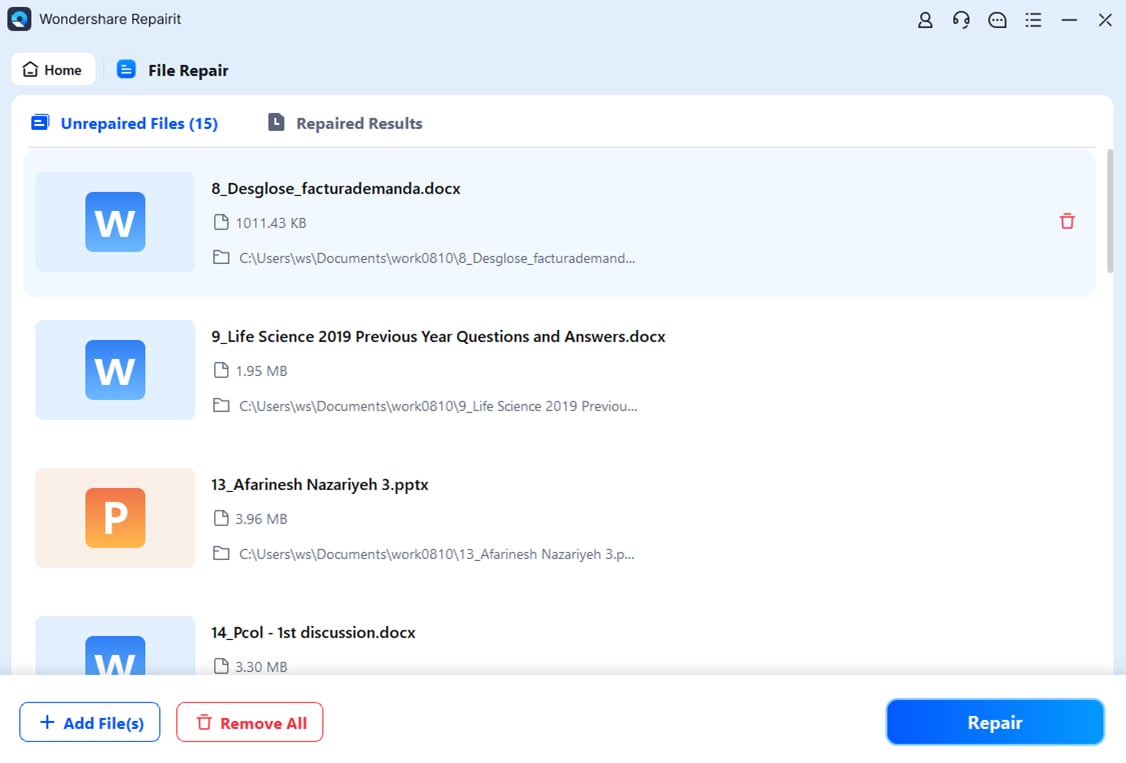
Step 3. Start the process. Just click the Repair button and wait for it to complete.
Step 4. Preview the repaired file to ensure it’s restored correctly, then Save it.
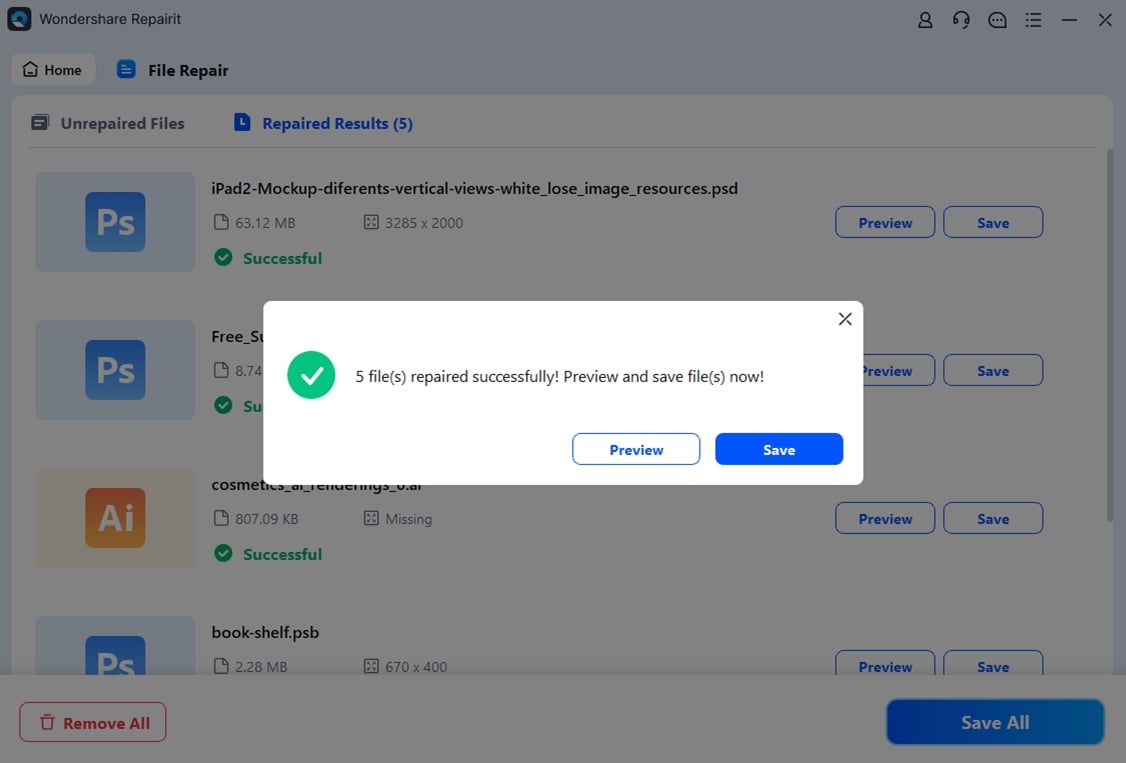
Repair the Invalid File
 Security Verified. Over 7,302,189 people have downloaded it.
Method 2. Verify File Extensions
Sometimes, the issue is as simple as an incorrect file extension. Check whether the file’s extension matches its content. For instance, a .jpg file should contain image data, and a .docx file should be a Word document. If the extension is wrong, rename it only when you’re sure of the real format—or re-save/export the file with the correct format using compatible software.
Step 1. Right-click the file and select Properties (Windows) or Get Info (Mac).

Step 2. Check the file extension and confirm it matches the file type (e.g., .jpg for images).
Step 3. If the extension is incorrect, rename the file with the correct extension and try opening it again.
Method 3. Use Compatible Software
Not all files are universal. Some require specific software to open. For example, .PSD files need Adobe Photoshop, while .MKV videos may need specialized media players like VLC Media Player. Always ensure you’re using the right software for the file type you’re working with.
Step 1. Download or open the correct software for the file (e.g., Adobe Reader for PDFs, VLC for videos).
Step 2. Try opening the file using the appropriate program. If it works, consider exporting/saving a more widely compatible format.
Method 4. Convert the File Format (Win, Mac)
If the file cannot be opened due to compatibility issues, converting it to a different format may help. You can use file conversion tools or software to transform files into a more widely supported format. For instance, converting an .MKV video into .MP4 improves compatibility with most devices and players.
Step 1. Use an online file converter or install a trusted conversion tool like HandBrake or CloudConvert.
Step 2. In CloudConvert, click Select File and choose the desired output format.

Step 3. Press Convert to start the process.

Step 4. Save the new version by clicking Download.

Step 5. Open the converted file to check if it works properly.
Part 3: Preventing Future Invalid File Format Issues
While fixing invalid file format errors is possible, preventing them in the first place is always better. Here are some effective ways to avoid running into this problem:
- Regular Backups. Always create backups of your important files.
- Check Download Sources. Only download files from reliable and secure websites.
- Use Updated Software. Keep your software and operating system updated.
- Be Cautious with Renaming Files. Avoid manually changing file extensions unless you’re certain it’s necessary.
- Enable Safe Ejection for External Devices. Always eject USB drives, external hard drives, and memory cards safely.
Conclusion
Invalid file format errors occur when a file’s structure doesn’t match what software expects. By identifying the root cause—such as incorrect extensions, corruption, incomplete downloads, or compatibility issues—and applying the appropriate fix, you can usually restore access to your files. With the right tools and preventive habits, most invalid file format problems can be resolved quickly and effectively.
FAQ
-
What software should I use to open my file?
It depends on the file type. Some files require specific programs to open properly. For example, Adobe Photoshop is needed for.PSDfiles, while Microsoft Word works best for.DOCXdocuments.If you're dealing with a video file like
.MKV, a media player such as VLC can help. If you're unsure, right-click the file, check its properties, and look for the recommended program. If you don’t have the right software, you may need to install it or convert the file to a more common format. -
Can I open a file if my software is outdated?
Sometimes, older programs may struggle with newer file formats. Software updates often include support for new file types, bug fixes, and compatibility improvements. If your file won’t open, check if an update is available for your software. If updating isn’t an option, try opening the file with a different program that supports the format. -
Can I convert an invalid file format into a working one?
Yes, as long as the file isn’t corrupted. Conversion tools let you change a file into a more widely supported format. For example, converting an.MKVvideo to.MP4makes it easier to play on different devices.