Choosing between a focused desktop ZIP repair tool and a broader, guided file repair solution can be tricky. This comparison of Repairit File Repair vs Kernel Zip Repair explains how each tool handles corrupted ZIP archives, which formats they support, and which type of user each one suits best so you can confidently select the right way to repair unreadable files.
Repairit File Repair is designed as a general-purpose file repair solution that can fix corrupted files across multiple formats, such as office documents, archives, and more. Its guided interface simplifies complex repair tasks, helping non-technical and technical users restore damaged file structures with minimal configuration. In contrast, Kernel Zip Repair is a desktop ZIP repair tool tailored for corrupted archive files, targeting specific ZIP corruption scenarios and helping users repair unreadable ZIP archives and extract content from damaged compressed file structures.
In this article, you will see how both tools compare in terms of workflow complexity, supported file types, typical use cases, and pricing so you can decide which approach better fits your everyday file repair needs.
Repair Corrupted Files with Repairit File Repair
 Security Verified. Over 7,302,189 people have downloaded it.
In this article
- Repairit File Repair vs Kernel Zip Repair: Quick Verdict
- Repairit File Repair vs Kernel Zip Repair: Key Differences
- Repairit File Repair vs Kernel Zip Repair: Comparison Table
- What Repairit File Repair and Kernel Zip Repair Are Best For
- Repairit File Repair vs Kernel Zip Repair: Features and Capabilities
- Repairit File Repair vs Kernel Zip Repair: Supported File Types and Compatibility
- Repairit File Repair vs Kernel Zip Repair: Workflow and Ease of Use
- Repairit File Repair vs Kernel Zip Repair: Pricing and Trial Options
- Who Should Choose Repairit File Repair
- Who Should Choose Kernel Zip Repair
- Pros and Cons of Repairit File Repair and Kernel Zip Repair
- How to Repair Corrupted Files After Choosing the Right Tool
Repairit File Repair vs Kernel Zip Repair: Quick Verdict
At a glance, the main difference between Repairit File Repair vs Kernel Zip Repair is scope. Repairit File Repair is a broader, guided file repair solution that can address multiple common formats, while Kernel Zip Repair is a focused desktop tool for corrupted ZIP archives.
For users who regularly need to repair different types of corrupted files, Repairit File Repair tends to be more versatile. Its guided workflow is suitable for mixed environments where documents, presentations, PDFs, and archives can all become damaged. Kernel Zip Repair, on the other hand, concentrates on ZIP archives and related compressed file structures, which can suit users who mainly troubleshoot broken ZIPs and are comfortable with a more technical, archive-centric interface.
If your main problem is that a batch of ZIP backups or transfer archives will not open, a ZIP-specific utility may be sufficient. If you frequently see corruption across various files in your projects or organization, a multi-format tool is more likely to cover your needs in one place.
Repairit File Repair vs Kernel Zip Repair: Key Differences
Both tools aim to repair unreadable files, but they take different approaches.
- Scope of repair: Repairit File Repair is built for multi-format scenarios, including documents and archives, whereas Kernel Zip Repair focuses on desktop ZIP repair and damaged compressed structures.
- Ease of use: Repairit File Repair emphasizes a guided, step-by-step workflow intended for both technical and non-technical users. Kernel Zip Repair generally expects some familiarity with ZIP archives and archive tools.
- Use-case focus: Repairit File Repair is a stronger choice for environments where many different file types may become corrupted. Kernel Zip Repair may be enough if most of your issues involve ZIP files from backups, transfers, or downloads.
- Long-term flexibility: Over time, users and teams often encounter a mix of corrupted files. In those situations, Repairit File Repair can reduce the need to juggle several single-purpose tools, while a dedicated ZIP repair utility remains helpful for ZIP-heavy workflows.
Repairit File Repair vs Kernel Zip Repair: Comparison Table
| Aspect | Repairit File Repair | Kernel Zip Repair |
|---|---|---|
| Primary focus | Multi-format desktop file repair across common document and archive types | Desktop ZIP repair focused on corrupted ZIP archives |
| Typical users | Office users, project teams, and support staff handling varied corrupted files | Users and technicians working mainly with ZIP backups and transfer archives |
| Ease of use | Guided, step-by-step interface suitable for non-technical users | More technical ZIP-centric workflow |
| Batch handling | Can handle multiple files in one repair run (depending on edition) | Repairs ZIP archives one batch at a time within its interface |
| Best scenario | When you need one tool to repair different corrupted file types | When your issues are almost entirely with corrupted ZIP archives |
What Repairit File Repair and Kernel Zip Repair Are Best For
Each tool fits a distinct type of file repair workflow.
Repairit File Repair is well suited when corrupted files appear in various forms across your desktop or shared drives. If you receive damaged documents from clients, encounter unreadable presentations before meetings, or face occasional archive corruption, having one guided solution can simplify the response.
Kernel Zip Repair is tailored for situations where ZIP archives are central. Examples include compressed project handoffs, archives created for backups or deployment packages, or ZIP files moved between storage devices. When corruption is primarily limited to zipped content, a ZIP-only utility may be sufficient.
In practice, many organizations see a mix of both. In those cases, Repairit File Repair can provide broad coverage, while a dedicated ZIP repair utility can remain an optional, niche tool for particularly complex ZIP corruption cases.
Repairit File Repair vs Kernel Zip Repair: Features and Capabilities
The core feature sets reflect the different design goals of each product.
Repairit File Repair offers multi-format file repair capabilities that cover several common file categories, including documents and archive formats, depending on the specific edition. Its guided repair process walks you through adding, scanning, and fixing corrupted files. Support for batch repair helps when multiple files are damaged at once, and preview options are available for certain file types so you can quickly confirm whether a repaired file is usable before exporting.
Workflows in Repairit File Repair are designed to work for both technical and non-technical users. This makes it easier for teams to standardize on a single approach to repairing files that no longer open correctly, regardless of whether the issue started with storage problems, interrupted transfers, or software glitches.
Kernel Zip Repair is focused on desktop ZIP repair. Its feature set is generally centered around:
- Analyzing and repairing corrupted ZIP archives.
- Handling different corruption patterns across a ZIP file.
- Attempting to restore access to archived content so it can be extracted.
The interface is oriented toward users comfortable working with archive utilities and ZIP-specific concepts, which can be an advantage in technical environments but may feel less approachable to occasional users.
Overall, Kernel Zip Repair offers strong capabilities for ZIP corruption specifically, while users needing to repair various file types may find Repairit File Repair more flexible over time.
Repairit File Repair vs Kernel Zip Repair: Supported File Types and Compatibility
Supported formats and environments are key to deciding whether a tool fits your daily work.
Repairit File Repair supports multiple common file types, including document and archive formats, depending on the edition you choose. It is aimed at desktop environments where files are stored locally or on connected drives. This makes it suitable when corrupted files span different formats across office, personal, and project folders. If a single incident damages several document types and archives, a multi-format tool reduces the time spent switching between separate utilities.
Kernel Zip Repair concentrates on ZIP archives, including damaged or partially corrupted files. It is designed for desktop systems where ZIP archives live on local or mounted storage. When the primary issue is that ZIP archives no longer open after transfers or storage problems, this narrower support can still cover what you need, without the extra options that come with a multi-format tool.
If your issues are limited to ZIP archives, Kernel Zip Repair covers that niche well. If you encounter corrupted files in multiple formats, Repairit File Repair reduces the need for separate specialized tools.
Repairit File Repair vs Kernel Zip Repair: Workflow and Ease of Use
How you interact with each tool can matter as much as the feature list, especially when you are under time pressure to fix a damaged file.
Repairit File Repair workflow is guided and step-by-step. A typical repair involves:
- Launching the application and choosing the module or category that matches your file type.
- Adding corrupted files from local or connected storage.
- Starting the scan and repair with on-screen prompts.
- Previewing supported files, where available, and saving repaired versions to a safe location.
This style usually feels accessible for beginners while still offering enough control for advanced users who need to process many files at once.
Kernel Zip Repair workflow is more technical and ZIP-specific. A typical process is:
- Opening the ZIP repair tool on your desktop.
- Loading the damaged ZIP archive from your drive or storage device.
- Running the repair process so the tool can analyze and attempt to fix the compressed structure.
- Saving the repaired ZIP or extracting whatever content becomes accessible.
This ZIP-focused layout can be efficient if you work with archives frequently, but it may feel less intuitive to users who rarely interact with dedicated archive utilities.
In general, Repairit File Repair emphasizes clarity, automation, and multi-format guidance, while Kernel Zip Repair expects more familiarity with ZIP archives and focuses its interface on that single type of repair.
Repairit File Repair vs Kernel Zip Repair: Pricing and Trial Options
Pricing and trial options change over time, but there are some overall patterns worth keeping in mind.
Repairit File Repair is commercial desktop software, typically offered in editions that differ by supported formats and features. In many cases, a trial is available so you can test how well it repairs your corrupted files before deciding on a license, though there may be limits on saving or the number of files processed. Because Repairit supports multiple common file types, its value often grows with the number of different formats you need to repair across your team.
Kernel Zip Repair is also a commercial product. Details on licenses, editions, and any available trials are usually listed on the official product site. Its value is centered on ZIP-specific repair, so it tends to be most cost-effective when ZIP corruption is a frequent and primary concern in your workflow.
Before you choose, check the latest pricing, licensing terms, and trial limitations for both tools. Then consider how often you need to repair only ZIP files versus a wider range of corrupted documents and archives. This comparison will help you judge whether a narrower ZIP-only solution or a broader file repair tool better fits your budget and needs.
Who Should Choose Repairit File Repair
Repairit File Repair is well suited for users who encounter corrupted files in multiple formats and want a predictable, repeatable way to fix them without managing a different tool for each file type.
It can be a strong fit if you are:
- An office professional dealing with corrupted documents, presentation files, spreadsheets, and occasional damaged archives.
- Part of an IT support or helpdesk team that regularly assists colleagues with unreadable files across departments.
- A project manager or creator who exchanges documents, PDFs, and archives by email or cloud services and sometimes receives files that will not open.
- A user who prefers clear, guided steps over technical archive-centric controls.
Reasons to favor Repairit File Repair include:
- You want one application to address several file repair scenarios, not only ZIP archives.
- You need an interface that other team members can understand quickly.
- You value preview options and step-by-step instructions where available, so you can confirm a repair before overwriting anything important.
You can explore these capabilities directly by installing Repairit File Repair on your desktop and testing it with representative corrupted files.
Who Should Choose Kernel Zip Repair
Kernel Zip Repair is a better fit when your primary concern is corrupted ZIP archives rather than a mix of file formats.
It may make sense if you are:
- Regularly fixing damaged ZIP archives and compressed file structures on desktop systems.
- Technical staff handling large ZIP files for backups, deployments, or transfers.
- Working in an organization that frequently distributes or receives ZIP packages and notices corruption on storage devices or in transit.
- Already using other tools to repair or manage non-ZIP file types and simply need a niche ZIP repair utility.
Reasons to lean toward Kernel Zip Repair include:
- Most of your repair work centers around ZIP corruption cases.
- You prefer a focused desktop tool aligned with ZIP-related workflows.
- You are comfortable with a more technical, archive-oriented interface and do not require broader multi-format support in the same product.
For users who want to read more about the ZIP-focused approach, you can refer once to Kernel Zip Repair as a dedicated example of this type of tool.
Pros and Cons of Repairit File Repair and Kernel Zip Repair
Looking at advantages and trade-offs side by side makes it easier to decide which tool aligns with how you actually work.
Repairit File Repair Pros and Cons
Kernel Zip Repair Pros and Cons
How to Repair Corrupted Files After Choosing the Right Tool
After comparing Repairit File Repair vs Kernel Zip Repair, the next step is actually fixing the corrupted files on your desktop. Once you know whether you face mostly ZIP archive problems or a mix of damaged documents and archives, you can choose the tool that best matches your situation.
For users who need a guided way to repair several different file types, Repairit File Repair can act as a practical, everyday solution. Instead of manually troubleshooting each file, you follow a consistent workflow that helps restore damaged file structure and make unreadable files accessible again.
Key Features
- Addresses different types of file corruption issues within a single application.
- Reduces the need to purchase and maintain separate tools for archives, documents, and other file types.
- Helps restore damaged file structure so previously unreadable files have a better chance of opening again.
- Provides workflows suited for individuals and teams that handle important documents and archives every day.
- Offers a guided experience that is approachable for non-technical users while still useful in technical environments.
Step-by-step guide
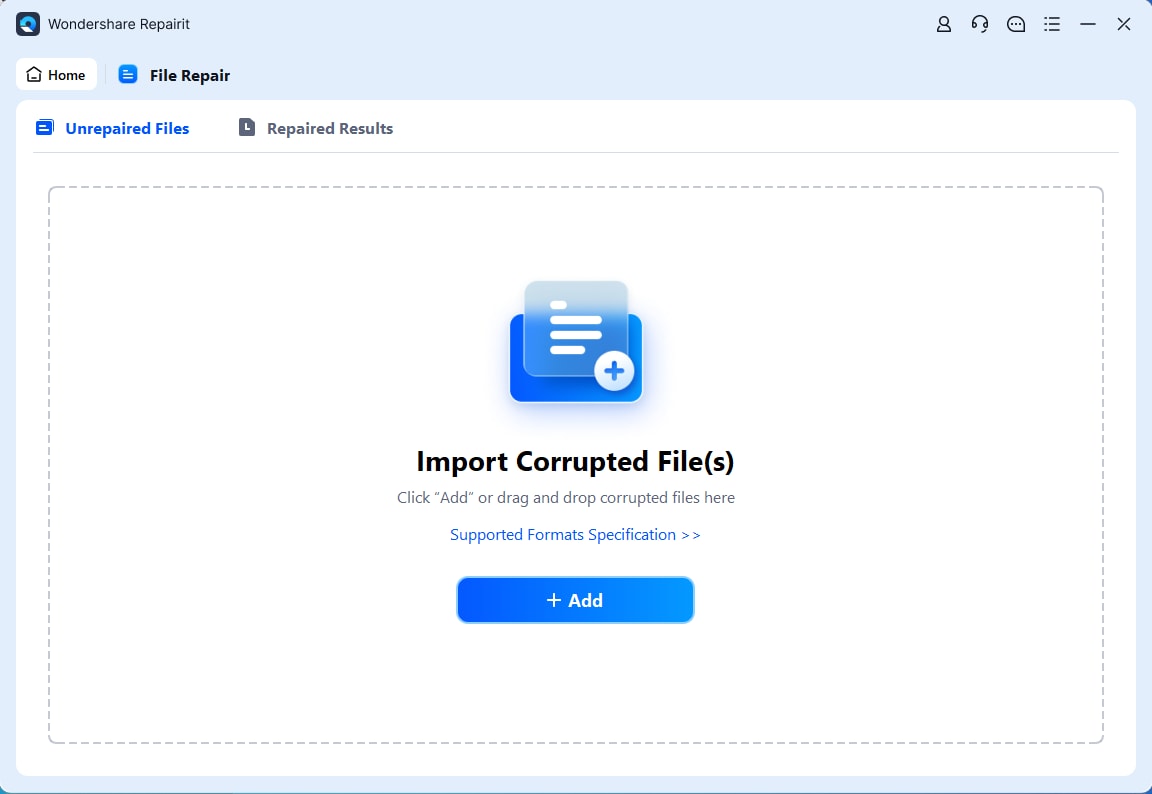
- Add corrupted files
Launch Repairit File Repair and import the damaged or unreadable files you want to fix.
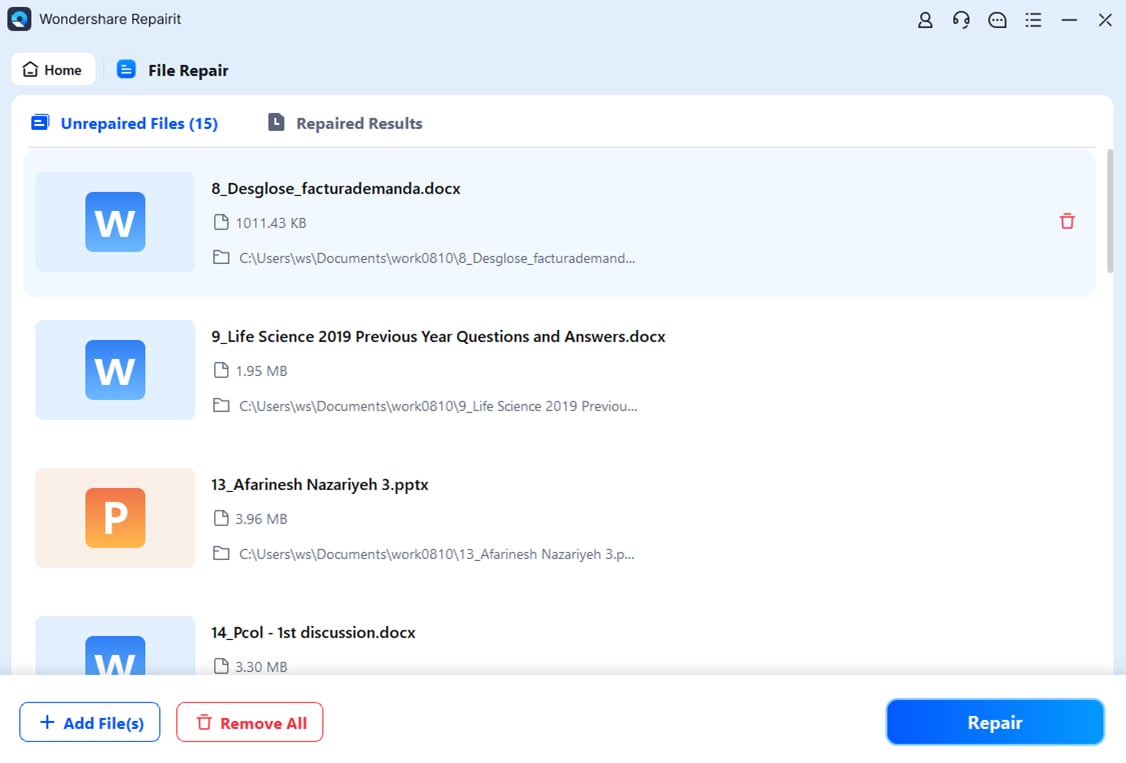
- Start the repair
Click the repair button and let the tool scan and repair the selected files automatically.
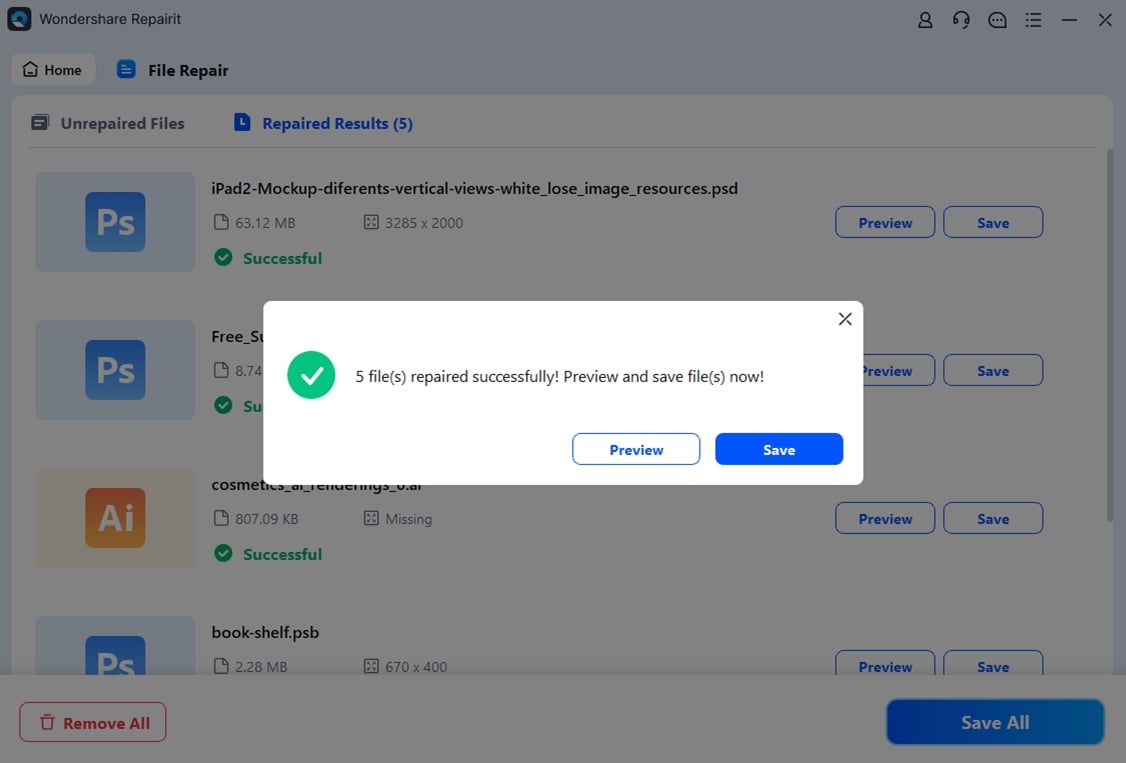
- Preview and save
Preview the repaired results and save the restored files to your preferred location.
Final Verdict
Both tools address corrupted files, but they specialize in different parts of the problem. Kernel Zip Repair focuses tightly on repairing ZIP archives and damaged compressed file structures. It suits users whose work revolves around creating, exchanging, and maintaining ZIP packages and who are comfortable with an archive-oriented interface.
Repairit File Repair provides broader coverage for multi-format file repair. It is often more practical for users and organizations that regularly handle documents, presentations, PDFs, and archives, and want a guided process that less technical colleagues can follow.
In most cases, your choice will come down to the mix of files you handle and how technical your users are. If nearly all of your repair needs involve ZIP archives, a ZIP-focused tool like Kernel Zip Repair may be sufficient. If you want a single, user-friendly solution that can repair corrupted files in more than one format, Repairit File Repair is likely the more flexible long-term option.
Before deciding, assess which file types fail most often and how comfortable your users are with specialized archive tools. Testing each product with sample corrupted files can give you a realistic sense of which workflow feels smoother and more reliable in your environment.
FAQ
-
1. Is Kernel Zip Repair only for ZIP files?
Yes. Kernel Zip Repair is designed specifically to repair corrupted ZIP archives and related compressed file structures, so it is not meant for other file formats. -
2. When should I use Repairit File Repair instead of Kernel Zip Repair?
Use Repairit File Repair when you need to repair various corrupted files, not just ZIP archives, and prefer a guided workflow that different skill levels can follow. -
3. Can these tools fix severely damaged ZIP archives?
Both tools attempt to repair corrupted ZIP archives, but results depend on how badly the archive structure and contents are damaged. Trying a repair is usually the only way to see what can be restored. -
4. Do I need technical knowledge to use Repairit File Repair?
No advanced skills are required. Repairit File Repair is designed with clear steps so non-technical users can repair unreadable files with minimal configuration. -
5. Can I use both Repairit File Repair and Kernel Zip Repair together?
Yes. Some users rely on Kernel Zip Repair for intensive ZIP-focused tasks while using Repairit File Repair to handle corrupted documents, archives, and other supported file types.