
A PY file is the standard format for saving Python source code, used for everything from simple utilities to large-scale applications. Because these files directly control how your programs behave, it is important to know what a PY file is, how to open and edit it safely, and what to do if it becomes damaged or unreadable. This guide walks you through core concepts, common problems, and reliable repair methods.
Repair Corrupted Files To Save Your Data
 Security Verified. Over 7,302,189 people have downloaded it.
In this article
What Is PY File
A PY file is a plain-text file that stores Python source code. Developers, data analysts, and system administrators use these files to automate tasks, build applications, and process data. When you run a PY file, the Python interpreter reads and executes the instructions line by line, turning human-readable code into actions on your system.
Because the content is text-based, you can open and edit a PY script with any code editor. However, the file structure must follow Python syntax rules; otherwise, the interpreter will raise errors when it tries to execute the code.
| Attribute | Details |
|---|---|
| File extension | .py |
| File type | Python script file (plain text) |
| Typical usage | Automation, web apps, data science, scripting, tooling |
| Programs that open it | Python, VS Code, PyCharm, IDLE, Notepad++, and more |
How to Open PY Files
You can open a PY file on any major operating system, but the exact method depends on whether you want to view, edit, or run the script.
Open and edit a PY file in an editor
To safely work with a Python script file, use a code editor that understands Python syntax.
- Install a modern editor such as VS Code, PyCharm, Sublime Text, or Notepad++.
- Right-click the PY file and choose "Open with" to select your preferred editor.
- Enable features like syntax highlighting, code completion, and linting to catch mistakes early.
- Save a backup copy before making big changes so you can roll back if needed.
Run a PY file with the Python interpreter
To execute a PY file, you need Python installed on your system.
- Download and install Python from the official website at python.org.
- Open a terminal or command prompt.
- Navigate to the folder that contains your PY file.
- Run a command such as python scriptname.py or python3 scriptname.py, depending on your setup.
- Review any error messages in the terminal to understand what the script is doing or why it fails.
Common PY File Errors
When a PY file does not run correctly, the issue might come from your code, your Python environment, or actual file damage. Understanding the most frequent problems makes troubleshooting much faster.
Typical error messages in PY files
Most PY file errors fall into a few categories that Python clearly reports in the console.
- SyntaxError – Caused by invalid Python syntax, such as missing colons, unmatched parentheses, or incorrect indentation.
- NameError – The script refers to a variable or function that has not been defined or is out of scope.
- ImportError / ModuleNotFoundError – A required module is missing, incorrectly named, or not installed in the active environment.
- TypeError – An operation is applied to a value of an unexpected type, such as concatenating a string and integer without conversion.
- IOError / OSError – The script cannot access a file or directory, often due to missing paths, permissions, or disk issues.
Why do PY files become corrupted
While many issues are pure coding mistakes, a corrupted PY file can also prevent your script from opening or running.
- Interrupted saves – Power loss, system crashes, or forced shutdowns while saving a PY file can leave it partially written.
- Storage problems – Bad sectors, failing SSDs/HDDs, or unstable USB drives can damage files at the storage level.
- Malware infection – Malicious software may overwrite or encrypt PY scripts along with other data.
- Faulty transfers – Incomplete network transfers or unsafe removal of external drives during copy operations can corrupt the destination file.
- Accidental overwrites – Saving unrelated content over a Python script file can make it unreadable or nonsensical.
How to Use Repairit to Fix a Corrupted PY File
Repairit Introduction
If your PY file will not open or appears damaged, manual fixes are often not enough. Wondershare Repairit is a dedicated data and file repair tool that helps you recover corrupted scripts, documents, photos, and more through a guided process. You can learn about all supported formats and download the latest version from the Repairit official website.
Key Features of Repairit for Damaged PY Files
- Repairs a wide range of corrupted or unreadable file types, including script files, using easy step-by-step workflows.
- Scans specific drives, folders, or external devices to locate damaged data you still want to keep.
- Lets you preview recoverable items before saving them to a safe destination, so you only restore what you actually need.
Step-by-step guide: Repair a corrupted PY file
-
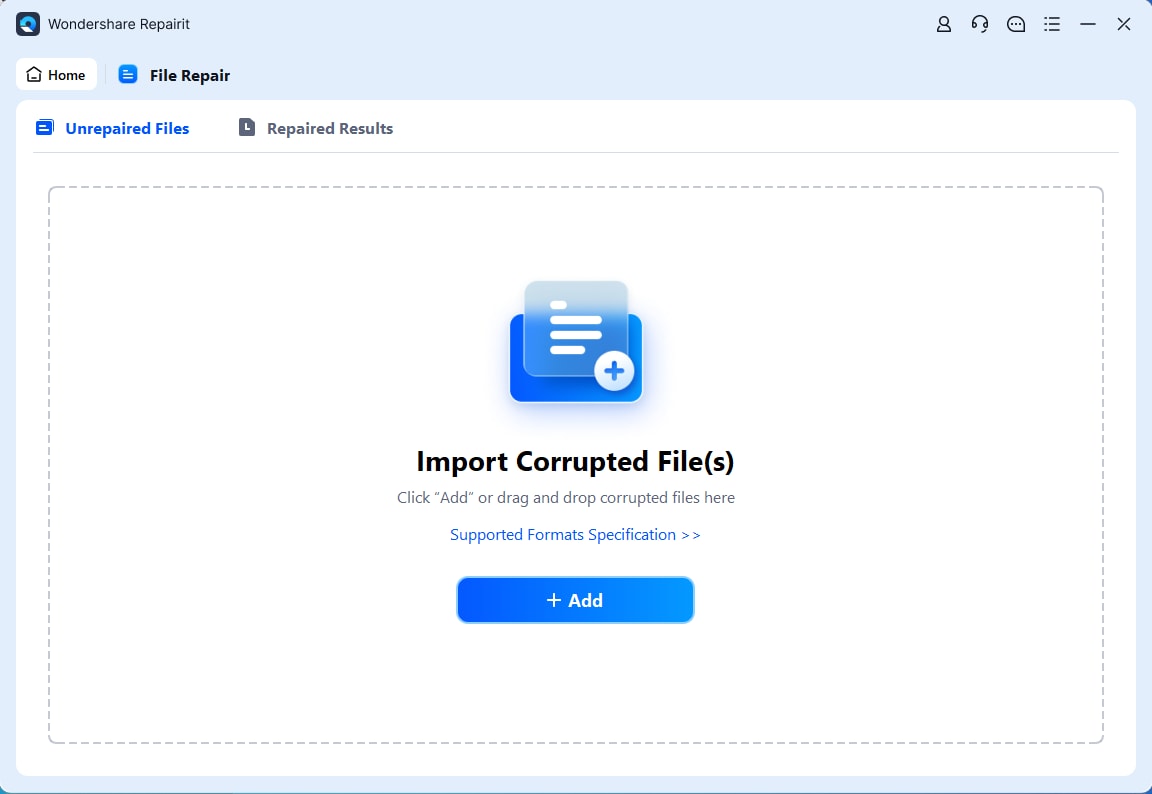
Upload your corrupted files to Repairit
Install and launch Repairit, then select the drive, folder, or external device that contains your corrupted PY file. If you kept your Python projects in a specific workspace directory, point Repairit directly to that path so it can focus on the right area.
-
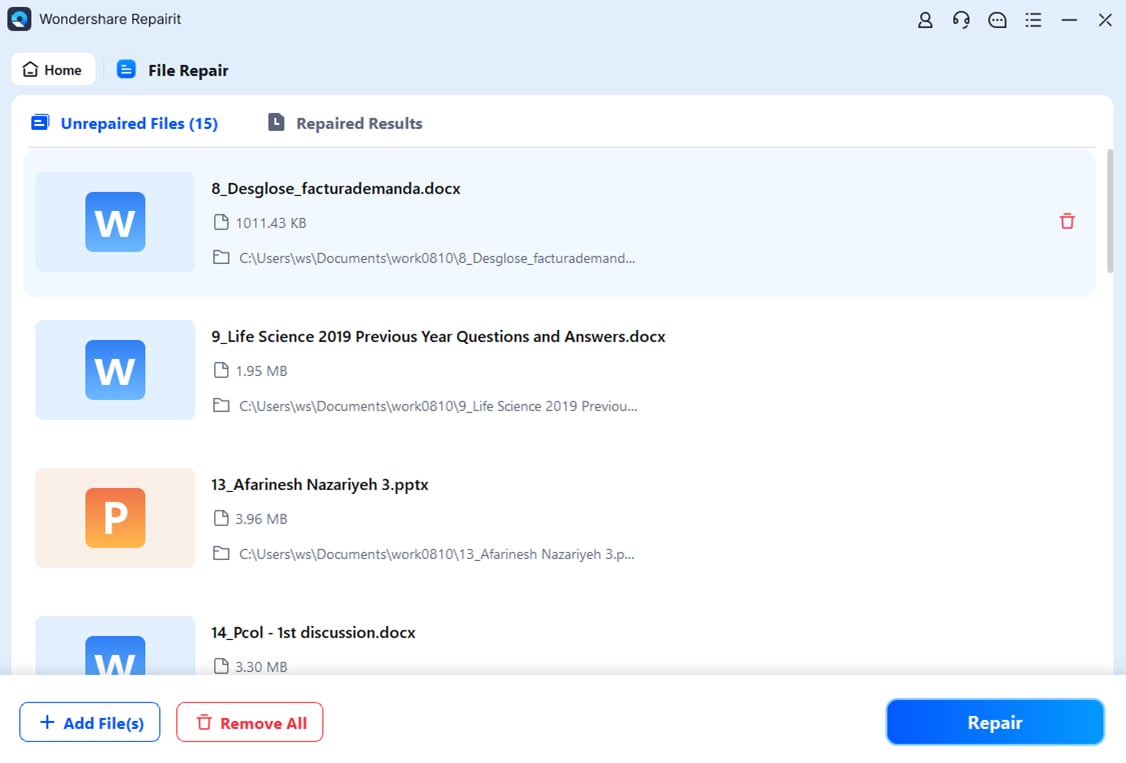
Start the repair process
Start the scan to let Repairit run a thorough check of the selected location. The tool analyzes existing and previously lost files, flags items that seem damaged or inaccessible, and compiles a list of potential recoverable PY scripts along with other file types it finds.
-
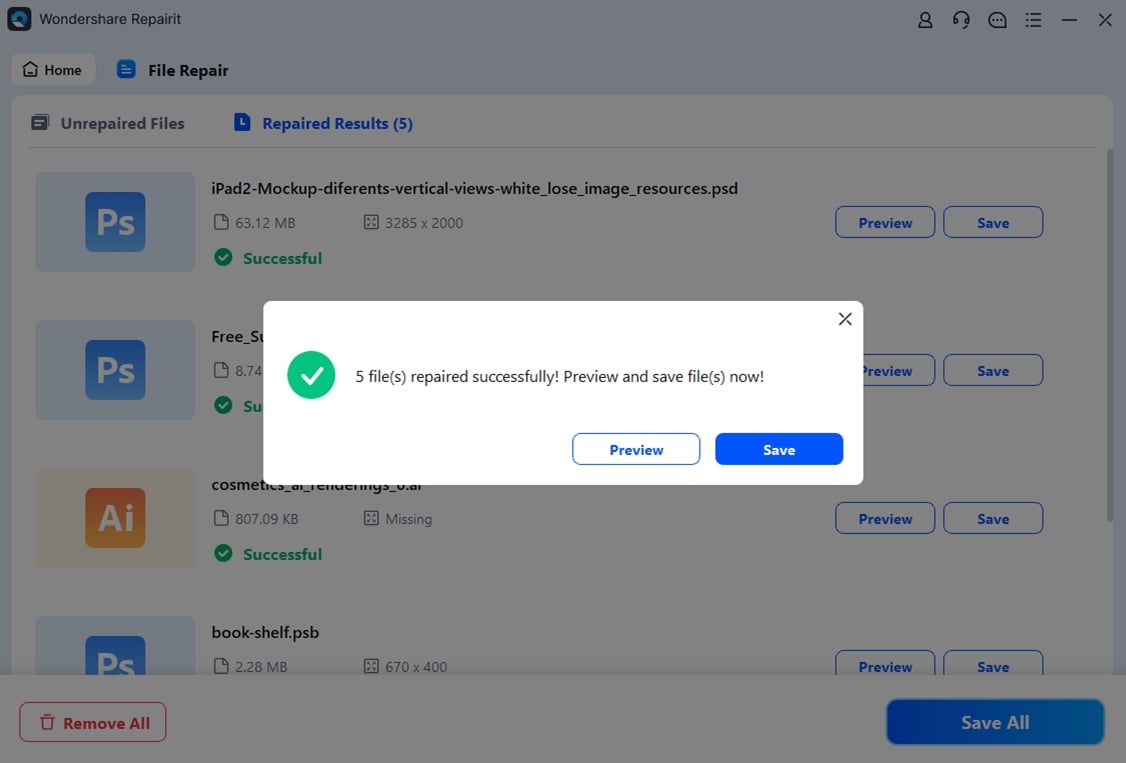
Save Your Desired Data
When the scan is complete, browse through the detected items and, where possible, use the preview pane to verify file integrity or contents. Select the PY file entries you want to restore and click to repair and save them. Always export the repaired files to a different, healthy storage location to avoid further data loss.
Conclusion
PY files are the backbone of Python development, holding the logic that drives automation, data workflows, and full-scale applications. Understanding what a PY file is, how to open it with the right tools, and how to interpret typical error messages helps you keep your projects running smoothly.
When a PY file becomes corrupted or suddenly stops working, backups, version control, and professional repair tools such as Wondershare Repairit can often bring your code back. By combining safe coding practices with reliable repair software, you significantly reduce the risk of losing valuable Python scripts.
Next: What is M File?
FAQ
-
1. What is a PY file?
A PY file is a plain-text file that contains Python source code. When you run it with a Python interpreter, the instructions are executed line by line to perform tasks such as automation, data processing, or running full applications. -
2. How do I open a PY file on my computer?
Install Python and a code editor like VS Code, PyCharm, or another text editor. Open the PY file in the editor to view or modify it, and run it from a terminal using a command such as "python scriptname.py" or "python3 scriptname.py". -
3. Can I open a PY file without installing Python?
You can open and edit a PY file using any text editor because it is just text. However, to execute the script, you need a Python interpreter installed locally or must use an online IDE or code playground that supports Python. -
4. Why will my PY file not run?
A PY file may fail to run due to syntax errors, missing modules, an incompatible Python version, permission issues, or underlying file corruption. Check the error output in the terminal, confirm your environment is set up correctly, and verify that the file itself is not damaged. -
5. How can I recover a corrupted PY file?
First, try restoring the PY file from backups, cloud storage, or version control systems like Git. If no clean copy exists, use a file repair tool such as Wondershare Repairit to scan the storage device, locate corrupted items, and attempt to recover a usable version of your script.