
![How to Fix and Restore a Corrupted AutoCAD Repair File [Solved!]](https://images.wondershare.com/repairit/article/autocad-repair-file-1.jpg)
If you need an autocad repair file solution, first make a copy of the DWG and determine whether the problem is corruption, an incompatible drawing version, a missing reference, or a file-access issue. Then try AutoCAD's RECOVER command, RECOVERALL for drawings with external references, and a BAK or SV$ backup before using a third-party repair workflow. A recovered drawing may lose invalid objects, so inspect the result and save it as a new file.
This guide covers DWG file repair, corrupted AutoCAD drawings, online repair decisions, and supported Repairit workflows. Keep the original file unchanged. If the file is 0 bytes, was overwritten, or was never saved, a repair tool may not have enough drawing data to reconstruct it.
In this article
Part 1. How to Diagnose a Damaged AutoCAD or DWG File
Before you try to repair AutoCAD files, identify what is failing. A drawing that says "Drawing file is not valid" may be corrupted, but an older AutoCAD release, a locked file, a missing Xref, or a network path can produce a similar result. The correct first step depends on the symptom.
Match the symptom to the likely cause
| What you see | Likely cause | First action |
| "Drawing file is not valid" or the file will not open | Damaged DWG data, an interrupted save, or an unsupported file version | Copy the file locally and try RECOVER |
| AutoCAD says the file was created by an incompatible version | The installed AutoCAD release cannot read that DWG version or an exporter created an invalid file | Ask for a compatible export or use an approved DWG conversion workflow before treating it as corruption |
| The drawing opens blank or with missing objects | Invalid objects, missing Xrefs, partial recovery, or display/regeneration problems | Review the recovery report, check Xrefs, and run AUDIT on a copy |
| AutoCAD hangs or crashes while opening | Corrupt objects, Xrefs, add-ons, memory, or storage/network errors | Move a copy to a local drive and try RECOVER or Partial Open |
| The main DWG is unreadable but a BAK or SV$ file exists | An earlier saved or autosaved version may still be usable | Copy and rename the backup to .dwg, then test it separately |
| Only a shared or cloud copy fails | File locking, sync conflicts, transmission errors, or incomplete upload | Obtain a complete local copy and check the source system before repairing |
Make a safe working copy
- Close AutoCAD and any application that may be writing to the drawing.
- Copy the DWG and related Xrefs to a local folder on a healthy drive. Do not work directly on a network, removable, or continuously synchronized copy.
- Rename the copy so that every repair attempt is easy to distinguish, for example
project-recovery-01.dwg. - Keep the original, the copied Xrefs, and any BAK/SV$ files unchanged. Do not save a recovered result over the only source drawing.

Part 2. Why AutoCAD and DWG Files Become Corrupted
AutoCAD drawings can become unreadable for more than one reason. Autodesk lists interrupted saves, repeatedly reused drawings, non-Autodesk or non-RealDWG software, third-party add-ons, network anomalies, degraded storage, defective RAM, operating-system issues, and excessive or duplicate objects as possible causes.
- Interrupted saves: A power loss, crash, or forced shutdown while AutoCAD writes the drawing can leave incomplete or inconsistent data.
- Version or exporter differences: A newer DWG format, an unsupported older application, or a non-RealDWG exporter can cause compatibility errors that are not necessarily file corruption.
- External references and add-ons: A corrupt Xref, proxy object, custom object enabler, or third-party plug-in can make a host drawing hang or open incompletely.
- Network and sync failures: File locking, delayed writes, interrupted transfers, and conflicting cloud versions can produce incomplete copies.
- Storage or system faults: Bad sectors, low memory, defective RAM, malware, or operating-system problems can damage the file or prevent AutoCAD from reading it.
- Drawing complexity: Excessive annotation scales, duplicate objects, unused definitions, and oversized drawings can increase instability and slow recovery.
For a current technical overview, see Autodesk's guidance on repairing damaged or corrupt drawing files in AutoCAD products.
Part 3. Repair a DWG with RECOVER and RECOVERALL
AutoCAD's own recovery commands should be tried before changing the file extension or uploading a confidential CAD drawing. Use a copy, review the recovery report, and save the result under a new name.
1. Use the RECOVER command
RECOVER opens a drawing through AutoCAD's recovery process and checks for errors. It is the first built-in option when a DWG will not open or AutoCAD reports that the drawing is invalid.
- Start AutoCAD and open a blank drawing if the program does not show the command line.
- Type
RECOVERand press Enter. - Select a copied DWG file and choose Open.
- Wait for the recovery process and read the report. Press F2 if you need to review command-line details.
- Inspect the recovered drawing before saving it as a new DWG. Recovery can delete or change invalid objects.
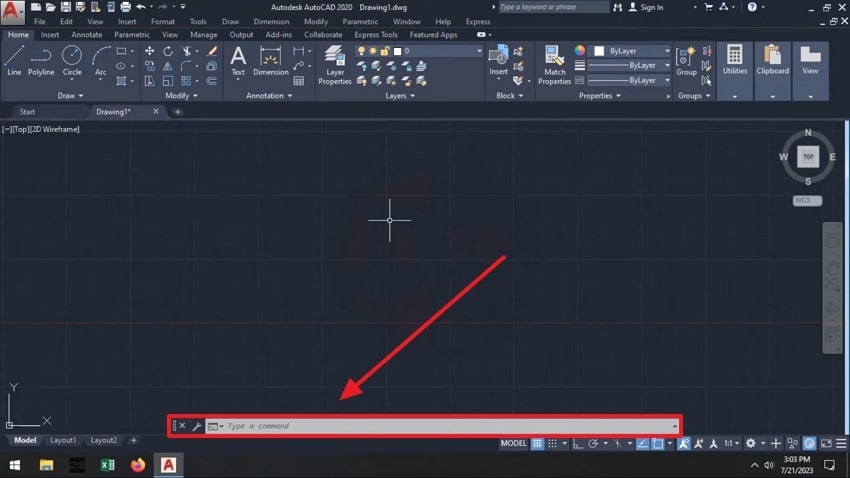
If RECOVER fails, stops near the end, or opens a blank drawing, do not repeatedly overwrite the original. Try the backup, Partial Open, Xref checks, or a new blank drawing instead. Autodesk's drawing recovery instructions describe the current recovery path.
2. Use RECOVERALL for Xrefs
Use RECOVERALL when the host drawing includes external references that may also contain errors. The command checks the host file and its attached Xrefs in one recovery workflow. It does not guarantee that every referenced file can be restored, and a severely damaged Xref may still need to be replaced with an earlier copy.
- Copy the host DWG and its Xrefs to a local working folder while preserving their relative names and paths where possible.
- Open AutoCAD, type
RECOVERALL, and press Enter. - Select the copied host drawing and allow AutoCAD to process the attached references.
- Review the report and inspect the host drawing, layers, blocks, and Xrefs before saving a new result.
If RECOVERALL removes too many objects or cannot complete, use an earlier host/Xref version or try the insert and Partial Open methods below.
Part 4. Rebuild a Drawing in a New DWG
When the file cannot be recovered directly, inserting it into a blank drawing may salvage readable objects. This is a reconstruction workflow, not a promise that every layer, block, proxy object, or 3D feature will survive.
1. Insert or partially open the drawing
- Create a blank drawing from a suitable template, such as
acad.dwt. - Type
INSERTorCLASSICINSERTand select the copied DWG. Accept the insertion settings only after confirming the units and insertion point. - If the full file cannot be opened, try Partial Open from the File Open dialog and select only the layers or areas you need to recover.
- Save the new drawing to a separate filename. Keep the original and the copied source available for comparison.
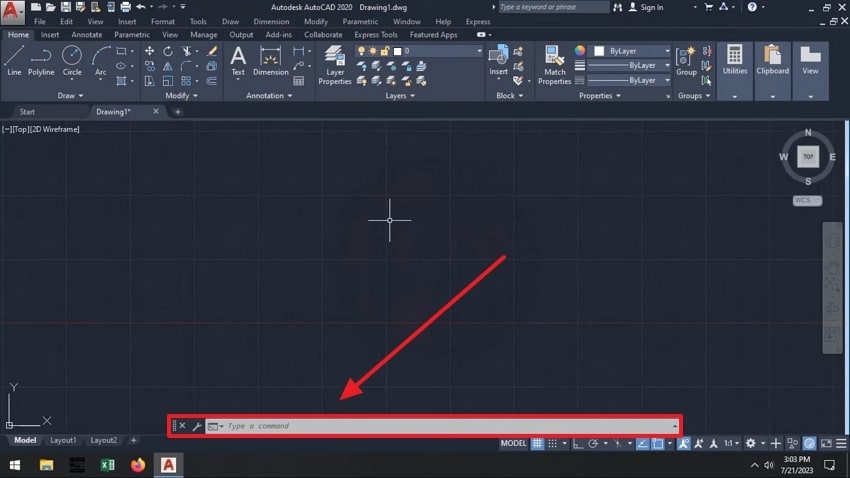
2. Run AUDIT, PURGE, and SAVEAS carefully
After readable geometry is in the new drawing, use AUDIT and choose Yes when AutoCAD asks whether to fix detected errors. Use PURGE to remove unused definitions only after checking the drawing, because purging can remove items that another workflow still expects.
- Type
AUDIT, press Enter, and choose Yes to fix errors in the working copy. - Review layers, blocks, external references, annotation scales, fonts, layouts, and object visibility.
- Run
PURGEonly after confirming that unused layers, blocks, styles, and other definitions can be removed. - Use
SAVEASto write a new DWG. If the drawing opens but remains unstable, consider exporting to DXF and reopening it in AutoCAD, then save a new DWG.
Do not use EXPLODE on every block as a default repair step. Exploding can remove block structure, attributes, and editability. Use it only for a specific salvage task and keep a copy first.
Autodesk also recommends reviewing Purge, Audit, Recover, WBLOCK, and DXF recovery options when the drawing can be opened partially or normally.
Part 5. Recover an AutoCAD File from BAK or SV$
A backup may be more complete than a damaged current DWG. AutoCAD commonly creates a .bak file after a manual save and a .sv$ file during automatic save. These files represent earlier points in time, so compare the recovered version with the current project requirements.
1. Restore a BAK backup
- Find the
.bakfile in the drawing folder or the configured backup location. - Copy it to a separate recovery folder and keep the original BAK unchanged.
- Turn on file-name extensions in Windows File Explorer if necessary.
- Rename the copy from
project.baktoproject-recovered.dwg. - Open the renamed copy in AutoCAD and run AUDIT if it opens.
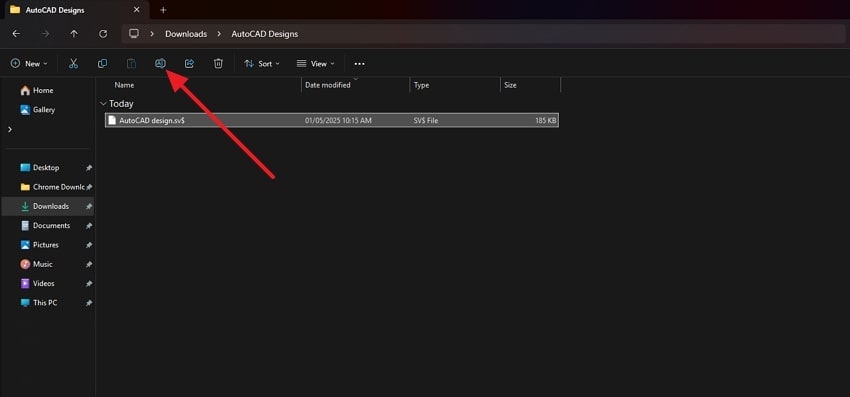
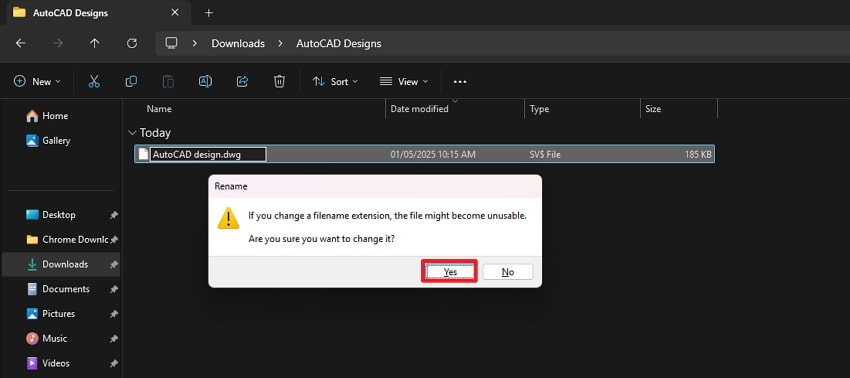
A BAK file is normally the previous saved state, not necessarily the latest edits. If the recovered drawing is missing work, check the SV$ file or an approved project backup.
2. Restore an SV$ autosave
- Open the AutoCAD Automatic Save File Location from the Options dialog, or check the configured temporary folder.
- Find an SV$ file with a matching or similar drawing name and a recent timestamp.
- Copy the file to a new folder and rename the copy from
.sv$to.dwg. - Open the renamed copy in AutoCAD. If it is locked on macOS, close AutoCAD and clear the file's Locked setting in Finder after confirming that you are working on a copy.
Autosave files are deleted or replaced as the drawing is saved or closed, so they may not exist. See Autodesk's current instructions for AutoCAD backup and autosave files and recovering drawings from SV$ and BAK files.
Part 6. Repair Supported AutoCAD Files with Repairit
If AutoCAD's recovery commands and available backups do not produce a usable drawing, Repairit Engineering File Fixer can attempt to repair supported corrupted engineering files. Results depend on the file format, damage level, remaining drawing data, and available structure. Repairit does not repair AutoCAD itself, incompatible installed versions, Xref paths, network failures, storage hardware, deleted files, or overwritten content.
Add the corrupted engineering file
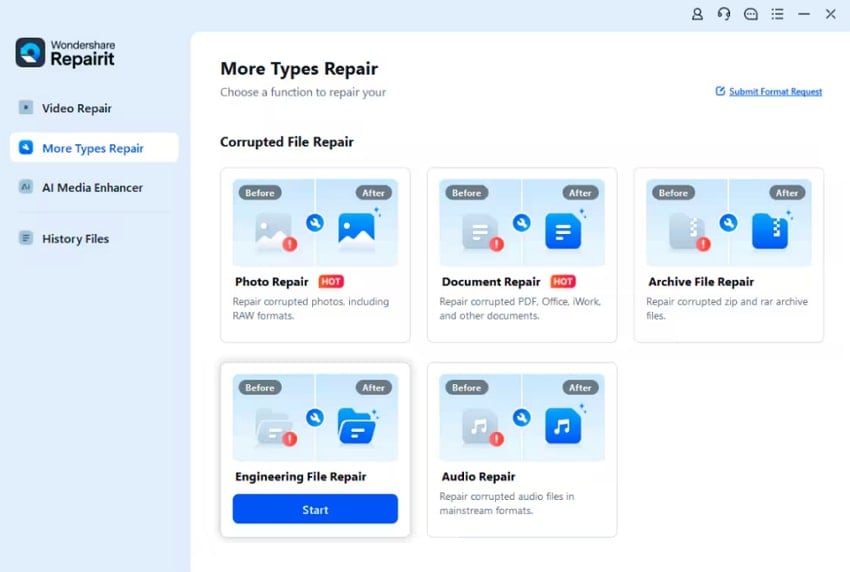
Step 1. Open Repairit and choose More Types Repair. Select Engineering File Repair and click Start.
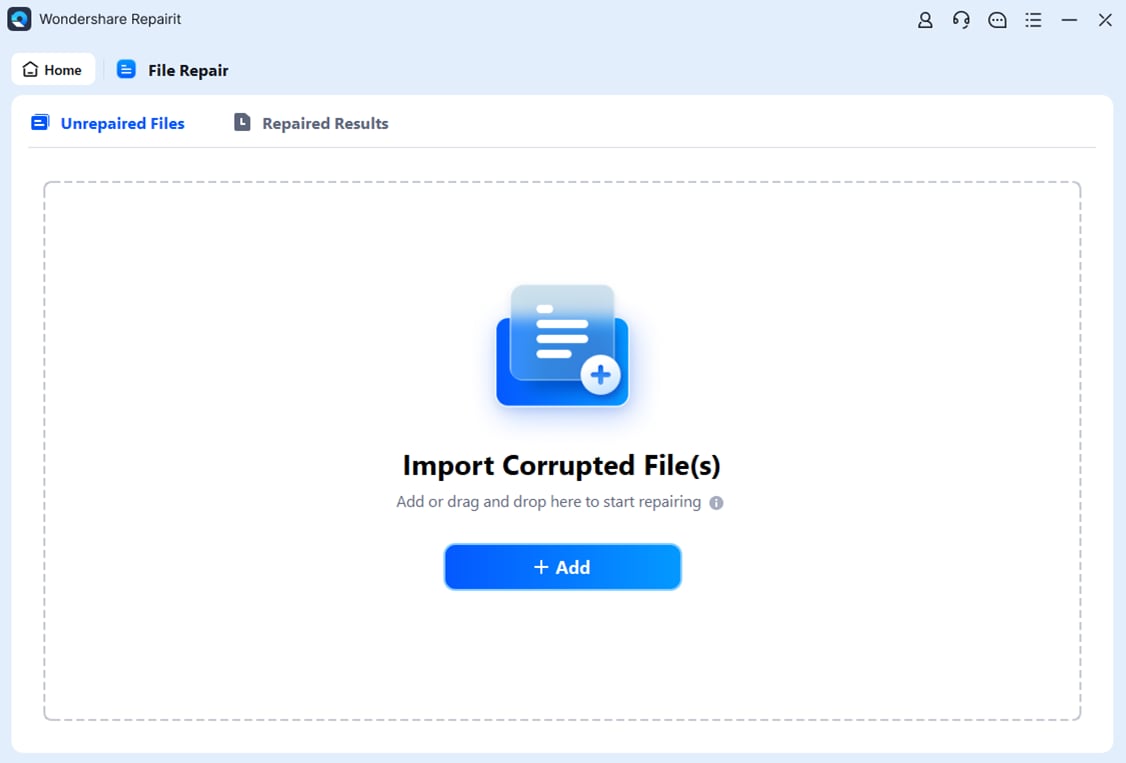
Step 2. Select Add and choose a copied AutoCAD or DWG file from a local folder. Add only files that you are authorized to process.
Repair, preview, and save a new copy
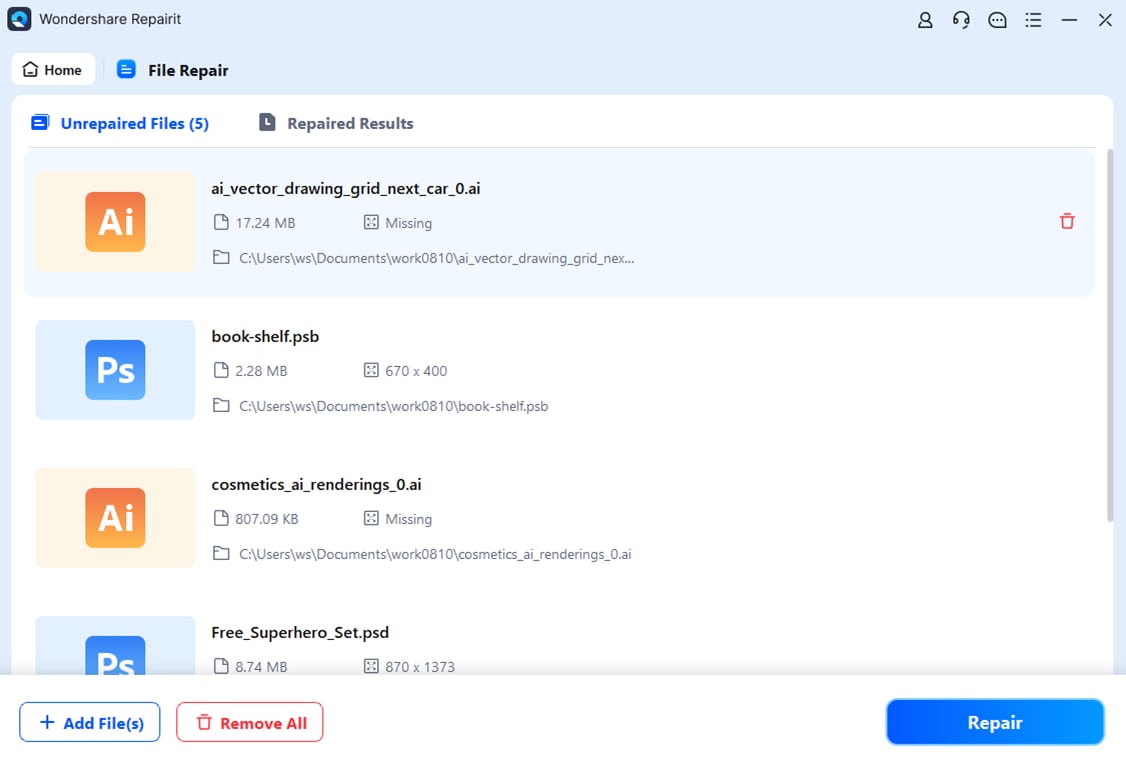
Step 3. Select Repair after the file is added. Keep the computer and source storage available while the process runs.
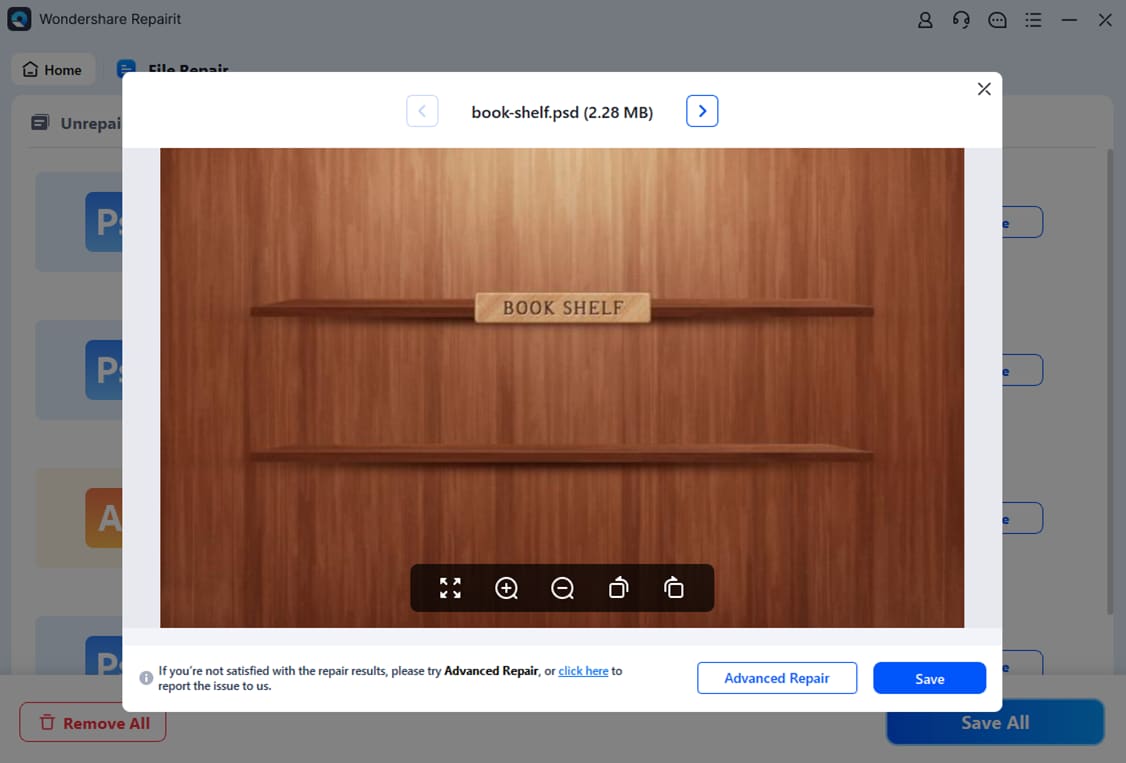
Step 4. Select the processed file to Preview the available result. Use Save to export a new copy to a separate folder, then open and inspect it in AutoCAD.
Fix AutoCAD Files with Repairit Engineering File Fixer
 Security Verified. Over 7,302,189 people have downloaded it.
More related articles:
1. 5 Easy Ways to Convert DWG File to PDF.
2. How to Convert PDF to DXF Format Online Free?.
3. 4 Easy Ways to Convert DWF to PDF Online.
Part 7. Can You Repair an AutoCAD File Online for Free?
Some services advertise repair AutoCAD file online free or DWG repair online workflows, but "free" may cover only a scan, preview, or limited download. Before uploading a drawing, confirm that the service explicitly supports DWG or the required CAD format, state its file-size and privacy limits, explain how the output is delivered, and disclose whether payment is required to download the repaired file.
- Use a copy. Never upload the only version of a drawing or a file that is still being edited.
- Check confidentiality. Plans can contain client, building, manufacturing, or project information. Do not upload confidential drawings unless your organization approves the service and its terms.
- Confirm the output. Download the result to a separate folder, scan it according to your normal security process, and test it in AutoCAD before replacing anything.
- Choose desktop repair for sensitive or large files. A local workflow avoids uploading the drawing and is usually easier to manage for multiple files, Xrefs, or professional projects.
If you use an online repair DWG file online free service, treat the result as a new candidate file rather than proof that the original has been restored. Check the provider's current format, file-size, privacy, and download terms before uploading.
Step 1. Select the provider's file-upload control, choose a copied DWG, and review the supported formats and privacy notice before submitting it.
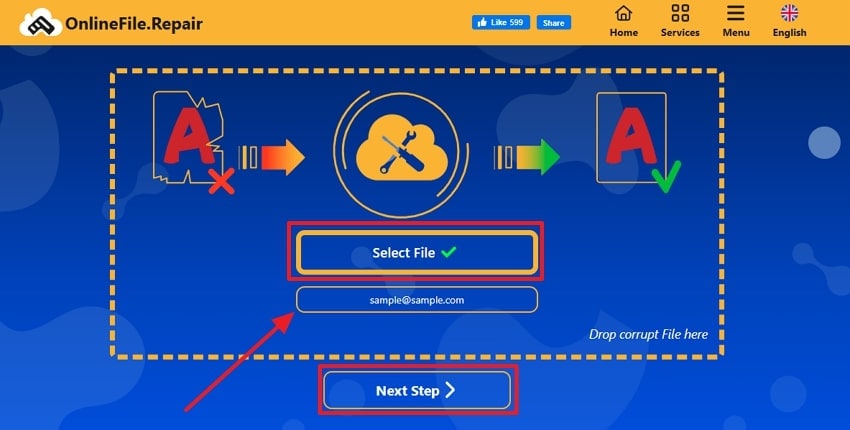
Step 2. Follow the provider's current status, email, or download instructions. Save any returned file to a new location and verify it in AutoCAD.

Prevent Future DWG File Corruption
Prevention reduces the need to repair CAD file damage and makes recovery more reliable when a problem occurs.
- Keep AutoSave enabled. Review the SAVETIME setting and the Automatic Save File Location so that SV$ files are created where your team can find them.
- Create BAK files. Keep the backup-copy option enabled and include the drawing folder in an approved backup routine.
- Maintain version compatibility. Ask collaborators to export to a DWG version your AutoCAD release supports, especially when files come from another CAD product.
- Work locally when possible. Avoid editing the same drawing directly on an unreliable network, removable disk, or unsynchronized folder.
- Update AutoCAD and approved add-ons. Apply updates through official channels and remove or isolate third-party plug-ins when they cause opening or saving errors.
- Audit and purge reviewed copies. Run AUDIT on a working copy, remove unused definitions only after review, and avoid destructive cleanup on the only source.
- Keep project backups. Use dated versions or an approved backup system so a damaged or overwritten DWG can be rolled back.
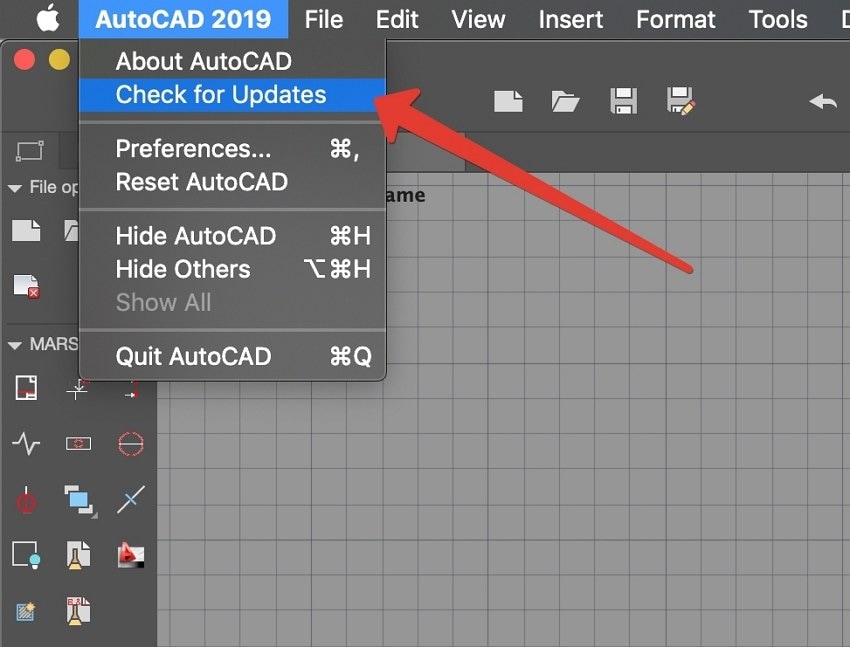
Autodesk's guidance on avoiding drawing-file corruption and data loss also recommends reliable backups and careful handling of network and storage environments.
Conclusion
For an autocad repair file problem, keep the original DWG, identify whether the issue is corruption or version compatibility, and work through RECOVER, RECOVERALL, insertion or Partial Open, AUDIT, BAK/SV$ backups, and a supported repair workflow in that order. Inspect the drawing and save the result under a new name before returning it to production.
Repairit can attempt to repair supported corrupted AutoCAD or engineering files, but it cannot repair an AutoCAD installation, an incompatible version, a missing Xref path, a failing drive, a network failure, or deleted or overwritten drawing data. Online services may be convenient for non-confidential supported files, while local repair is safer for sensitive or large CAD projects.
FAQ
-
Can a corrupted DWG file be repaired?
Often, a damaged DWG can be partially or fully recovered, but the result depends on the corruption, file version, Xrefs, and remaining data. Work on a copy, try RECOVER or a backup first, and inspect the recovered drawing before saving it. -
What does "created by an incompatible version of AutoCAD" mean?
The installed AutoCAD release may not support the DWG version or the file may have been exported by a non-compatible application. Ask for a compatible export or convert the file with an approved Autodesk workflow before assuming that the drawing is corrupted. -
When should I use RECOVERALL instead of RECOVER?
Use RECOVERALL when the host drawing has external references that also need checking. RECOVER checks the selected drawing, while RECOVERALL checks the host file and attached Xrefs together. -
How do I recover an AutoCAD drawing from a BAK or SV$ file?
Copy the BAK or SV$ file to a separate folder, rename the copy's extension to .dwg, and open it in AutoCAD. A BAK file is normally an earlier saved version, while an SV$ file is an autosaved version. Neither is guaranteed to contain the latest edits. -
Can I repair a DWG file online for free?
Some services offer limited online DWG repair or a free preview, but file support, size limits, privacy terms, and download requirements vary. Use a copy, avoid uploading confidential drawings without approval, and verify the returned file in AutoCAD. -
Does Repairit repair AutoCAD or recover a damaged hard drive?
No. Repairit can attempt to repair supported corrupted engineering files, but it does not repair AutoCAD, Windows, a CAD plug-in, a network, a failing drive, or other hardware and software problems. -
Can Repairit recover a deleted or overwritten DWG file?
No. If the DWG was permanently deleted, overwritten, reduced to 0 bytes, or never saved, the original drawing data may not be available for a repair tool to reconstruct.




