Error 0x80070570 usually means Windows cannot read or process a file or directory because the file, file system, update data, or storage volume is corrupted. The right fix depends on where the error appears: while copying or deleting a file, accessing a USB or external drive, installing a Windows update, or opening one specific document.
Start with the least destructive option. Re-download or re-transfer a single affected file first; use Windows disk checks only when the volume itself shows errors; use DISM and SFC when Windows system files or update components are involved. If the storage device repeatedly disconnects, reports I/O errors, or contains important data that is not backed up, avoid aggressive repair attempts until the data is secured.
In this article
-
- Method 1. Re-download or Re-transfer the Affected File
- Method 2. Run Windows Error Checking on the Drive
- Method 3. Run CHKDSK With the Correct Drive Letter
- Method 4. Repair Windows System Files With DISM and SFC
- Method 5. Install Pending Windows Updates
- Method 6. If Error 0x80070570 Prevents You From Deleting a File
Part 1. What Does Error 0x80070570 Mean?
Microsoft identifies 0x80070570 as ERROR_FILE_OR_DIRECTORY_CORRUPTED in Windows Update scenarios. The code can appear when Windows cannot read or process the data it needs because of corrupted files, a damaged component store, file-system errors, bad sectors, or other storage problems.
| Where the error appears | Most likely area | Best first action |
| One downloaded or transferred file | Incomplete download or interrupted transfer | Download or transfer the file again |
| Several files on the same USB, SSD, HDD, or partition | File-system or storage-volume problem | Run Windows Error Checking, then CHKDSK if needed |
| Windows Update or installation | Corrupted update files, component store, or system volume | Install pending updates, then use DISM and SFC when appropriate |
| A file cannot be deleted because it is corrupted and unreadable | Directory or file-system corruption | Check the drive rather than forcing deletion first |
| One Office, PDF, ZIP, or supported project file remains unreadable after the drive is healthy | Individual file corruption | Restore another copy or use a file-repair workflow |

Part 2. 6 Ways to Fix Error 0x80070570 in Windows
Method 1. Re-download or Re-transfer the Affected File
Best for: Error 0x80070570 appears on one file that came from a browser download, email attachment, USB transfer, phone, camera, cloud drive, or network copy.
- Do not keep retrying the same damaged transfer.
- Return to the original source and download or copy the file again.
- If possible, use a different destination folder or storage device.
- Compare the new file size with the failed copy and try opening the new version.
If the new copy works, the problem was likely the transfer rather than Windows itself. If several files on the same drive fail, continue with the drive checks below.
Method 2. Run Windows Error Checking on the Drive
Best for: Multiple files on the same drive show corruption, copy failures, or unreadable-directory errors.
Step 1. Open File Explorer, right-click the affected drive, and choose Properties.

Step 2. Open the Tools tab and select Check under Error checking.

Step 3. If Windows offers to scan the drive, select Scan drive and let the check finish before testing the file again.

Method 3. Run CHKDSK With the Correct Drive Letter
Best for: Windows Error Checking reports a file-system problem, or the affected volume repeatedly produces corrupted-directory errors.
Microsoft documents chkdsk as the Windows command for checking file-system and file-system metadata errors. The /f switch fixes logical disk errors; /r additionally searches for bad sectors and attempts to recover readable information.
Step 1. Search for Command Prompt and choose Run as administrator.

Step 2. Replace E: with the actual drive letter you want to check, then run:
chkdsk E: /f
If Microsoft Windows reports suspected bad sectors and the drive is stable enough to scan, you can use:
chkdsk E: /f /r

The original article used chkdsk /F: /f, which does not correctly specify a drive. The volume must come before the repair switches, such as chkdsk E: /f.
Method 4. Repair Windows System Files With DISM and SFC
Best for: Error 0x80070570 appears during Windows Update, Windows installation, or other system operations rather than only on one personal file.
SFC repairs protected Windows system files; it does not repair an arbitrary corrupted Word, PDF, ZIP, photo, or project file. Microsoft currently recommends running DISM first, followed by SFC.
Step 1. Open Command Prompt as administrator.

Step 2. Run:
DISM.exe /Online /Cleanup-image /Restorehealth
Step 3. After DISM completes successfully, run:
sfc /scannow

Wait until verification reaches 100%, restart Windows, and retry the system operation that produced the error.
Method 5. Install Pending Windows Updates
Best for: The error appears while installing updates or Windows components are already behaving incorrectly.
Open Settings > Windows Update, select Check for updates, and install available updates. If error 0x80070570 itself is blocking Windows Update, use the Windows Update troubleshooting path and system-file checks above rather than assuming the personal file is damaged.

Method 6. If Error 0x80070570 Prevents You From Deleting a File
Best for: Windows says the file or directory is corrupted and unreadable when you try to delete it.
- Check whether other files on the same volume also fail to open, copy, rename, or delete.
- If the problem is limited to the same drive, run Windows Error Checking first.
- Use CHKDSK with the correct drive letter if the file system needs repair.
- Restart Windows after the repair and try deleting the file again.
Force-deleting a directory does not repair the underlying volume corruption. If the drive continues producing errors afterward, treat the drive itself as the problem rather than the stubborn file.
Part 3. How to Repair a Corrupted File After Fixing the Windows or Drive Issue
Once Windows and the storage volume are working normally, one individual document or archive may still be corrupted. In that case, Repairit File Repair supports damaged Word, Excel, PowerPoint, PDF, ZIP, RAR, and other supported file types. The broader Wondershare Repairit platform also includes repair tools for other supported media and project files.
Repairit repairs supported files; it does not repair a failing SSD, HDD, USB controller, Windows component store, or damaged hardware. Fix the storage or Windows issue first when the error is system-wide.
Key Features
- Repair damaged Zip files with all levels of corruption, including Zip files not opening, Zip folder is invalid, CRC error, etc.
- Repair damaged or corrupted Zip files caused by any reason, such as system crash, file format change, virus attack, etc.
- Perfectly repair corrupted Zip files with a very high success rate, without modifying the original file.
- Automatically decompress, extract, and restore repaired files to their original states
- Enable batch repair for ZIP files and files larger than 1 GB.
- Repairit supports repairing damaged or corrupted PDF, Word, Excel, Zip, and PowerPoint files, and supports all file formats and versions.
Repair a Corrupted File With Repairit
Use this workflow only when the file itself remains corrupted after you rule out a failing transfer, Windows problem, and storage-volume error.
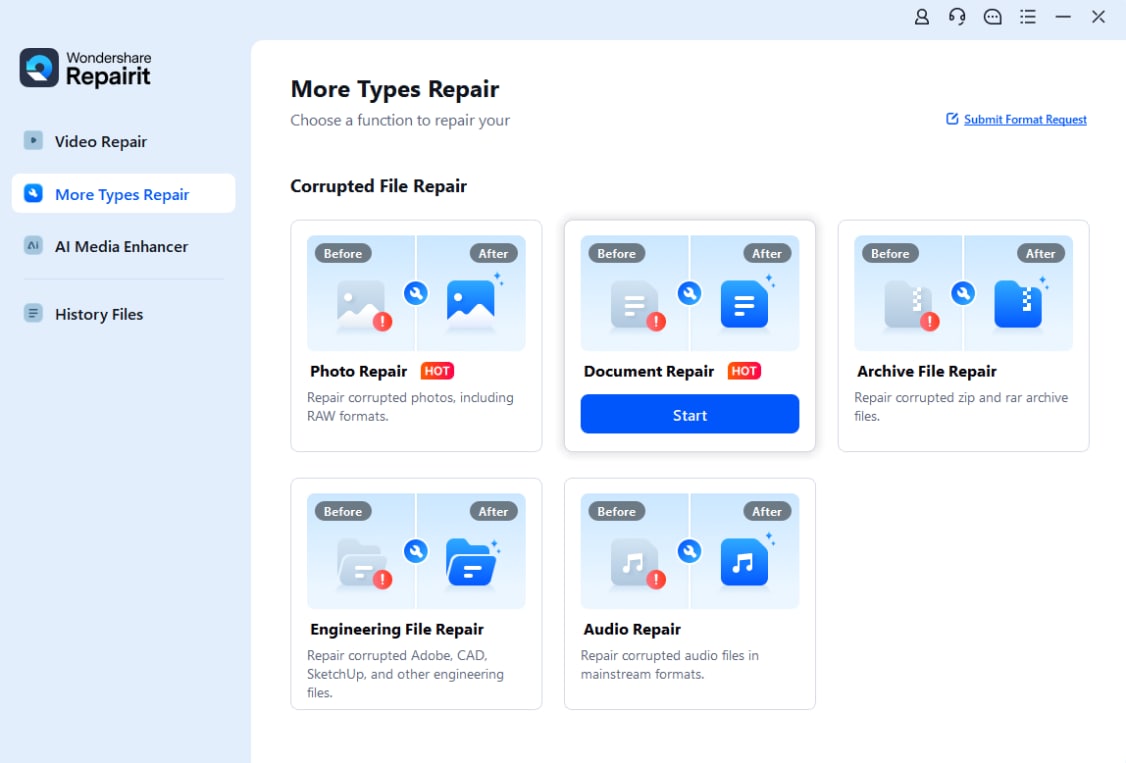
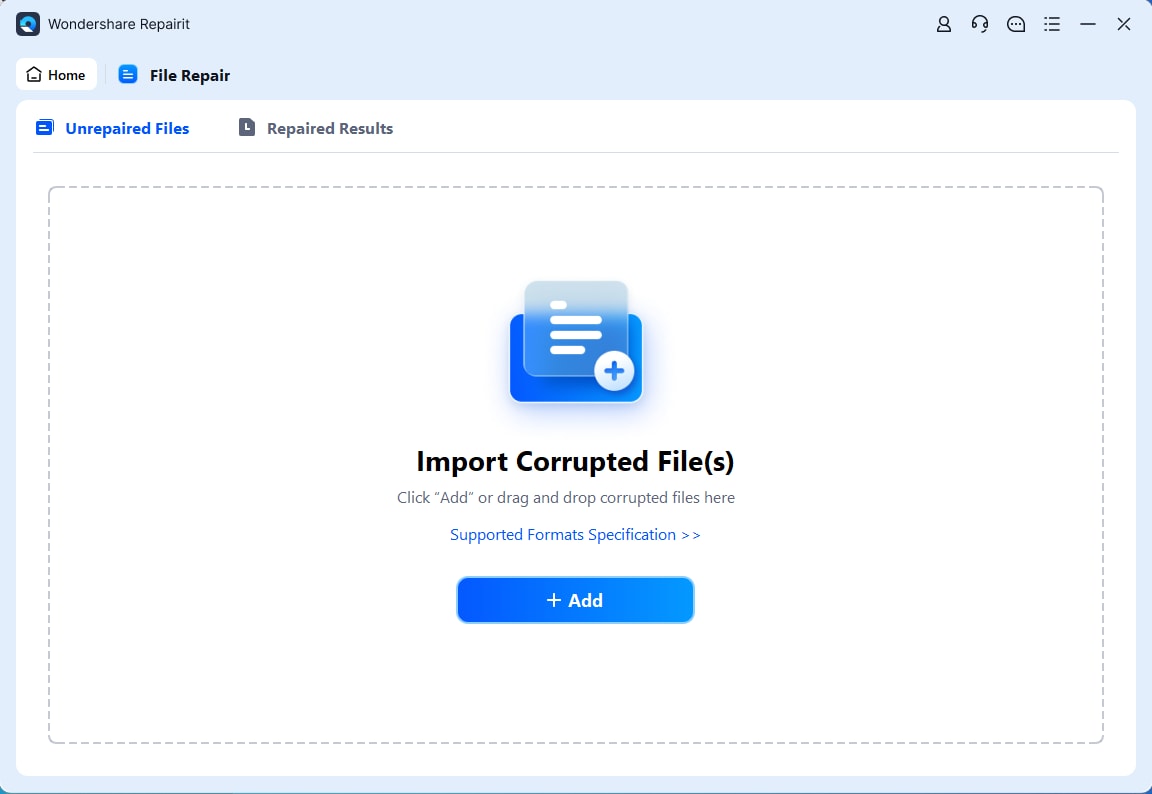
Step 1. Open File Repair and add the damaged file. Launch Repairit, choose More Types Repair > File Repair, and import the affected file.
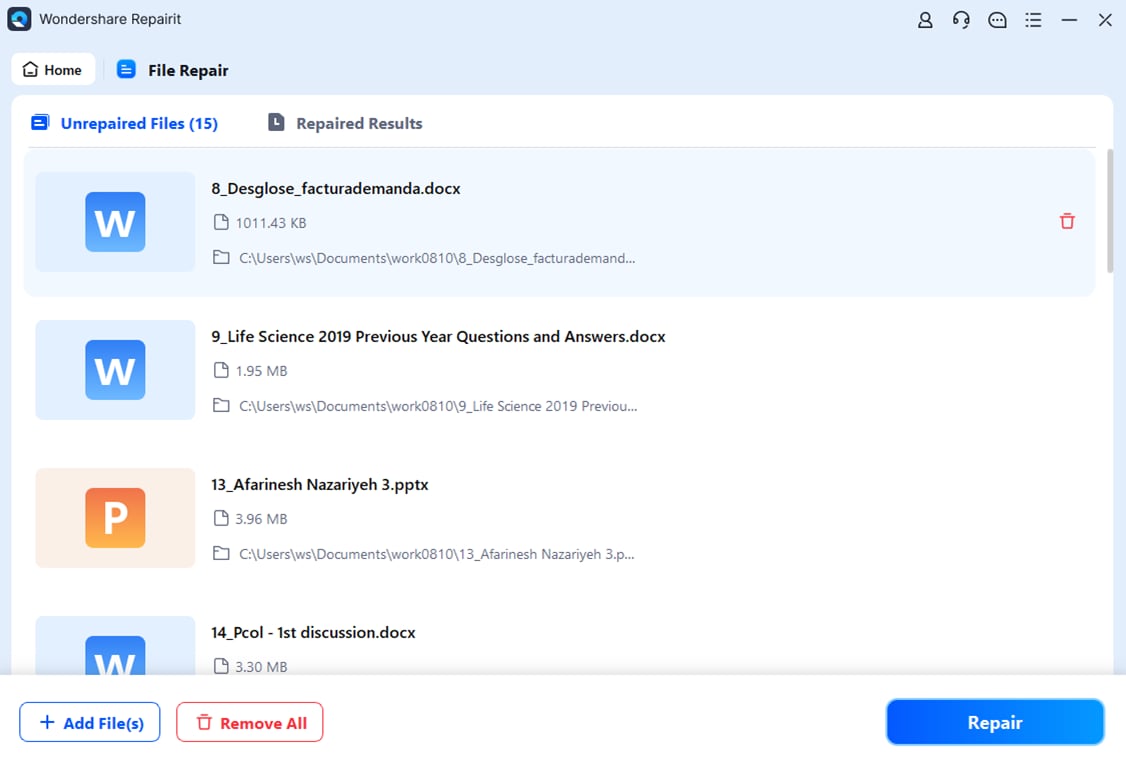
Step 2. Start the repair. Select the imported file and choose Repair.
Step 3. Preview and save the repaired result. Review the repaired file, then save it to a different folder from the damaged source.
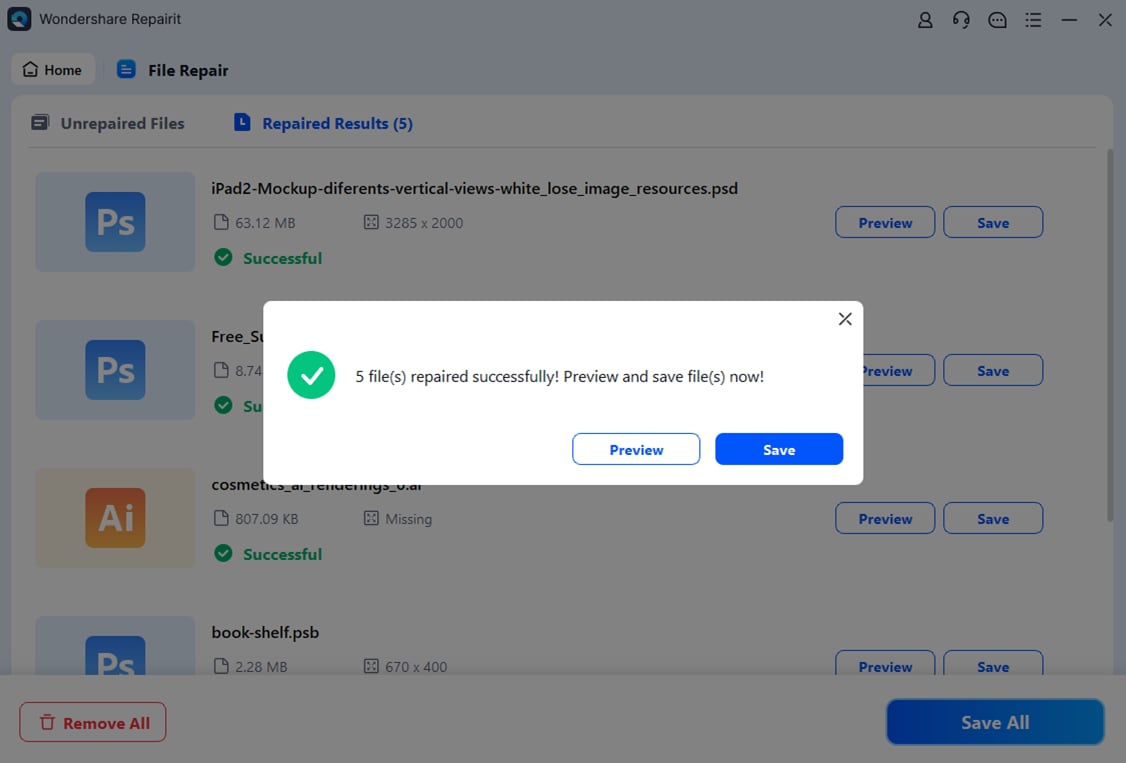
Fix Files that Show 0x80070570 Errors Now.
 Security Verified. Over 7,302,189 people have downloaded it.
Part 4. When Error 0x80070570 May Point to a Failing Drive
Error 0x80070570 does not automatically mean the drive is physically failing, but repeated read/write failures deserve more caution. Watch for these signs:
- The drive disconnects or disappears unexpectedly.
- Many unrelated files become unreadable or corrupted.
- Windows repeatedly reports file-system or I/O errors after repair.
- The drive becomes unusually slow, freezes during reads, or fails health checks.
- CHKDSK repeatedly finds new errors after they were previously repaired.
If the pattern points to the storage device rather than one file, stop adding new data to that drive and prioritize backup or professional recovery of important content. A file-repair tool cannot correct physical disk damage.
Conclusion
Error 0x80070570 is best fixed by identifying whether the problem belongs to one file, the storage volume, or Windows itself. Re-download a single affected file first, use Windows Error Checking and a correctly formatted CHKDSK command for file-system problems, and use DISM plus SFC for Windows system-file corruption. Only after the drive and Windows are healthy should you repair an individual document or archive that remains corrupted.
FAQ
-
What does error 0x80070570 mean?
It generally means Windows cannot read or process a file or directory because the required data is corrupted or unreadable. In Windows Update scenarios, Microsoft identifies 0x80070570 as ERROR_FILE_OR_DIRECTORY_CORRUPTED. -
How do I fix error 0x80070570 when copying files?
Try copying or downloading the file again first. If multiple files on the same drive fail, run Windows Error Checking and then CHKDSK on the affected volume if the file system needs repair. -
What is the correct CHKDSK command for error 0x80070570?
Use the actual drive letter before the repair switch, for example chkdsk E: /f. The /f switch fixes logical file-system errors. Use /r only when a deeper bad-sector scan is justified and the drive is stable enough to scan. -
Can SFC repair a corrupted Word, PDF, or ZIP file?
No. SFC checks and repairs protected Windows system files. It does not repair an arbitrary personal document or archive. Use another clean copy or a dedicated file-repair workflow for an individual corrupted file. -
Can error 0x80070570 happen during Windows Update or installation?
Yes. Microsoft documents 0x80070570 during Windows Update when required update files, the component store, or the system volume is corrupted. In that case, focus on Windows Update troubleshooting, DISM, SFC, and disk health rather than repairing a personal file. -
Should I format the drive to fix error 0x80070570?
Formatting should not be an early fix because it removes the file system and can erase accessible data. Diagnose the drive, secure important files, and try non-destructive repair options first.